Cala Coticcio: Caprera's Most Protected Beach and How to Visit It
Cala Coticcio is a tightly guarded double-bay cove on Caprera Island in the La Maddalena Archipelago, ringed by pinkish granite boulders and reached only by guided trek or boat. Access is strictly regulated by national park quota, which keeps the crowds thin but requires advance planning.
Quick Facts
- Location
- North-eastern coast of Caprera Island, La Maddalena Archipelago, Sardinia (municipality of La Maddalena, SS)
- Getting There
- Ferry from Palau to La Maddalena Island, then drive across the bridge to Caprera; trekking trail to the beach requires an authorized park guide
- Time Needed
- Half day minimum, including the guided trek (allow 3–5 hours total with travel)
- Cost
- National park access ticket (paid via PagoPA on the park website) plus separate authorized guide fee — verify current prices before booking
- Best for
- Nature lovers, snorkellers, hikers, photographers, and anyone willing to earn their beach
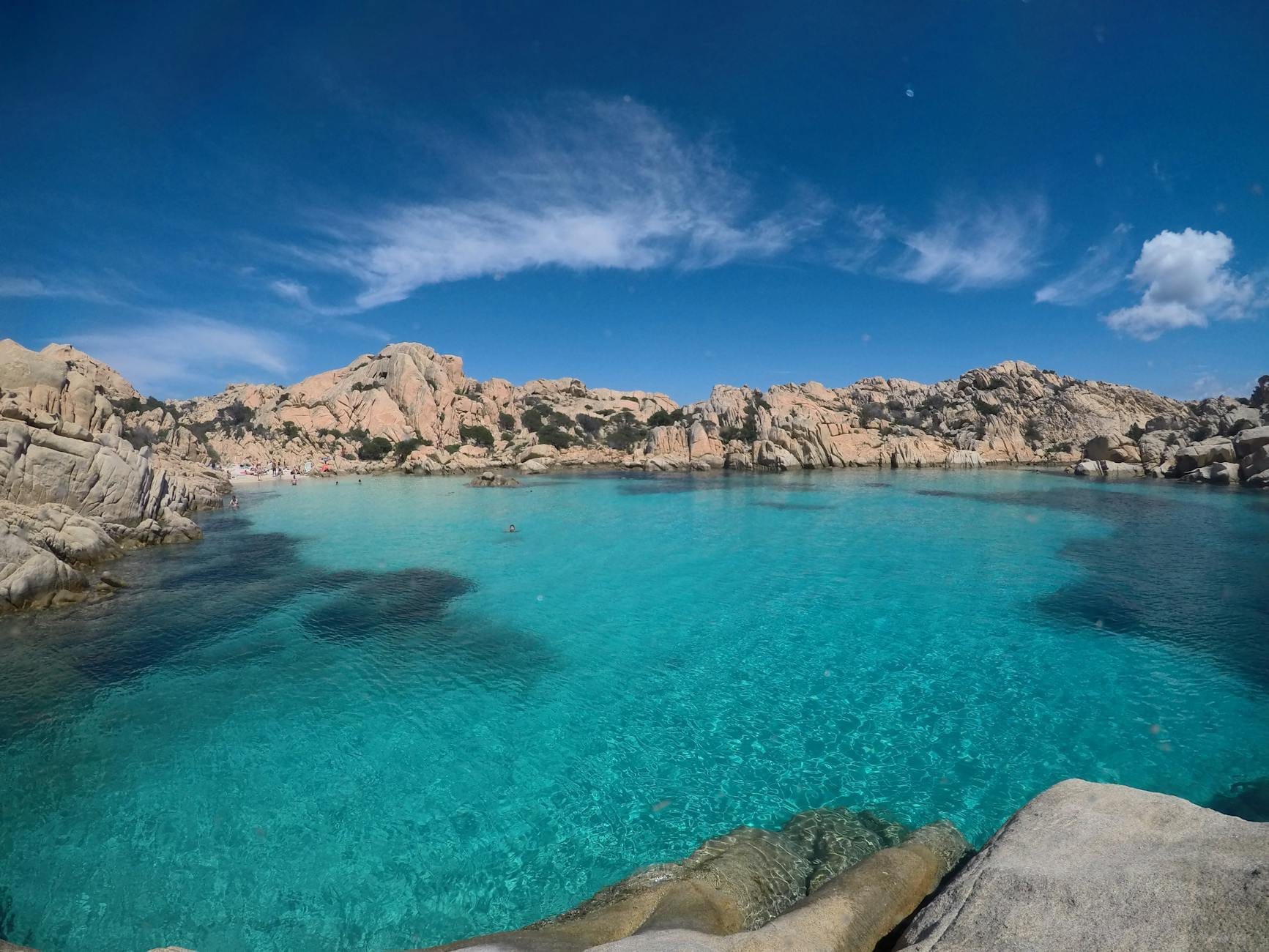
What Cala Coticcio Actually Is
Spiaggia di Cala Coticcio — also called Cala Brigantina in some older references — is not a single beach but two small sandy coves sharing a narrow bay on the north-eastern shore of Caprera Island. They are divided by a tongue of pinkish-orange granite that juts into the water, the same Gallura granite that gives the entire La Maddalena Archipelago its distinctive sculpted look. The sand is pale and fine, the water runs through aquamarine into deep cobalt depending on depth, and the surrounding hillsides are thick with juniper, cistus, mastic, and heather. It looks, frankly, like a postcard — but getting here takes more effort than most postcards suggest.
Caprera sits in the La Maddalena Archipelago, a national park of 180-odd granite islets and islets off the northern tip of Sardinia. Cala Coticcio falls inside the park's Zone A, the strictest protection tier, which means no independent access, no fishing, and a hard daily cap on visitors. That cap is what separates this place from the famous but considerably more crowded beaches of the Costa Smeralda to the south.
⚠️ What to skip
You cannot walk to Cala Coticcio independently. Access on foot requires an authorized park guide, while access by sea is allowed only under the national park’s specific rules for boats and landing. Attempting to visit the beach on foot without both a park ticket (paid as the required environmental contribution via the national park system) and a licensed guide risks a fine and removal from the protected zone.
Getting to Cala Coticcio: The Route Step by Step
The journey begins on the Sardinian mainland at Palau, a small port town roughly 35 km from Olbia. Car and passenger ferries cross to La Maddalena Island in around 15–20 minutes; multiple operators run the route throughout the day in summer, with reduced frequency off-season. Verify current timetables with ferry operators before travel, as schedules shift seasonally.
From La Maddalena Island, a causeway-style road connects to Caprera. Drive south through Caprera in the direction of the Museo Garibaldi or Batterie Arbuticci — Giuseppe Garibaldi, the 19th-century Italian unification general, spent his final decades on Caprera, and the island still carries that weight. The park trail to Cala Coticcio begins inland, crossing rocky scrubland before descending toward the coast. The terrain involves uneven granite surfaces, exposed roots, and short scrambles; sturdy footwear is not optional.
The alternative is arriving by sea. Authorized boat excursions depart from La Maddalena and other nearby ports, sometimes stopping at Cala Coticcio as part of a multi-bay archipelago tour. If you are already planning a boat trip around the La Maddalena islands, this is often the most comfortable way to reach the cove — though swimming access from the sea still comes with park regulations attached.
💡 Local tip
Book your authorized guide and park ticket well in advance during July and August. Daily quotas fill quickly, and walk-up access is not permitted. Check the official park website (lamaddalenapark.iswebcloud.it) for the current booking procedure and the PagoPA payment link.
Tickets & tours
Hand-picked options from our booking partner. Prices are indicative; availability and final rates are confirmed when you complete your booking.
Gulf of Orosei mini cruise from Cala Gonone
From 53 €Instant confirmationFree cancellationSpeedboat Trip to Gulf of Orosei with Aperitif from Cala Gonone
From 119 €Instant confirmationFree cancellationCala Goloritze and Cala Luna dinghy tour from Orosei
From 149 €Instant confirmationFree cancellationSnorkeling in the Gulf of Orosei from Cala Gonone
From 95 €Instant confirmationFree cancellation
The Experience: What You See, Hear, and Feel
The trek itself earns the view. The path winds through dense macchia mediterranea — that low, aromatic scrubland of rosemary, rockrose, and broom that covers so much of northern Sardinia's rocky coast. On a still morning you can hear little beyond cicadas and the distant sound of the sea rising up from below. The granite underfoot is the same warm amber and rose as the rocks at the water's edge, and the light in late morning, when most guided groups arrive, hits both the rock and the water at an angle that turns the bay into something spectacular.
At the beach itself, the two coves feel enclosed and quiet compared to the open beaches of the mainland coast. The water is shallow near the shoreline, deepening gradually, which makes it safe for swimmers of varying confidence. The seabed transitions from coarse sand to granite slabs as you move outward, and underwater visibility in the protected zone is exceptional — the national park restrictions on anchoring and fishing have kept this corner of the sea in notably good condition. Snorkellers will find it rewarding even without specialized equipment.
What the beach does not have: shade structures, sunbeds, a bar, toilets, or any services whatsoever. This is a fully natural cove. Everything you need for the day — water, food, sun protection, a changing towel — must come with you. The granite rocks can store heat through the afternoon, so bring more water than you think you need.
Best Time of Day and Best Season
Morning visits have a clear edge. The light is cooler, the granite is not yet scorched, and the first guided groups typically arrive before the midday sun turns the rocks into a radiator. By early afternoon in July and August, the bay can feel very warm, and the walk back uphill in full heat is significantly harder than the descent.
In terms of season, June and September are the strongest months for Cala Coticcio. The sea temperature is comfortable for swimming (typically above 22°C by June), the vegetation is at its greenest before the summer drought locks in, and the quota system means visitor numbers stay manageable. July and August are the peak access period — the weather is consistently dry and hot, with temperatures across northern Sardinia regularly reaching the high 30s — but competition for guide slots is at its most intense. For a broader picture of when different parts of Sardinia reward a visit, the best time to visit Sardinia guide breaks down the tradeoffs month by month.
Outside high summer, access depends on whether authorized guides are operating. Some run excursions from May through October; others concentrate only on the peak months. Verify availability directly with licensed guides or via the national park before planning a shoulder-season trip.
ℹ️ Good to know
Photography note: the best light for capturing the granite-and-turquoise color contrast falls between 9am and 11am. Midday flattens the tones and the water reads more grey-green than blue in direct overhead light. Late afternoon, if you can stay, brings long shadows across the granite that look excellent — but check your guided slot timing carefully.
The National Park Context: Why the Rules Exist
The Parco Nazionale dell'Arcipelago di La Maddalena was established to protect one of the most ecologically intact coastal systems in the western Mediterranean. The archipelago's waters support Posidonia oceanica seagrass meadows, loggerhead sea turtles, and significant seabird populations. The granite islands themselves host endemic plant species adapted to thin, wind-exposed soils.
Zone A designation, which covers Cala Coticcio, represents the highest level of protection within the park framework. The daily quota on visitors is not bureaucratic inconvenience; it is the mechanism that has kept this bay looking the way it does, while comparable unregulated beaches on Sardinia's northern coast have experienced measurable degradation over the same period. This same protected archipelago is also home to Caprera Island with its Garibaldi museum, and the pink-tinged Spiaggia Rosa on Budelli, another strictly regulated Zone A site.
Understanding this context helps calibrate expectations. Cala Coticcio is not a beach day in the conventional sense. There is no infrastructure, no entertainment, and reaching it requires planning, a paid ticket, and a guided commitment. For visitors who find that kind of friction worthwhile, the reward is a beach that feels like it has not been worn down by volume.
Practical Checklist: What to Bring and What to Know
- Sturdy closed-toe shoes or trail sandals — the path involves uneven granite and loose rock
- Minimum 2 litres of water per person — there is no water source at the beach
- Sun protection: hat, reef-safe sunscreen (standard sunscreen is discouraged in protected marine zones), and a shirt for the hike back
- Snorkel mask — the water quality makes it worth carrying
- Cash and a card for the ferry crossing at Palau and for guide fees
- Your park ticket confirmation downloaded or printed — guides will check it
- No large cooler boxes or glass containers — these are impractical on the trail and generate waste in a no-service zone
Accessibility is limited. The trekking route over rocky terrain is not suitable for people with reduced mobility, young children in buggies, or anyone who struggles with uneven surfaces. The boat access option is more inclusive physically, but the beach landing itself still involves stepping over rocks to reach the sand. There are no disability-adapted facilities on the beach.
If you are traveling with children and want spectacular water without the logistical complexity, the broader La Maddalena area has other accessible options worth considering. The guide to Sardinia with kids covers beaches and activities suited to families across the island.
Who Should Skip Cala Coticcio
If you want a relaxed beach day with umbrellas, a cold drink to hand, and the option to stay as long as you like without a booking, Cala Coticcio is the wrong choice. The guided format means you follow a schedule, not your own rhythm. The absence of any services is not a minor inconvenience — it is the defining characteristic of the place.
Visitors with mobility limitations will find the trek route difficult, and boat access, while possible, does not solve the problem of landing on an unstructured rocky shore. Anyone planning to visit in the last-minute style typical of spontaneous beach trips should also adjust expectations: the booking system and daily quotas mean that during peak season, same-day access is effectively impossible.
Insider Tips
- Book your park ticket and authorized guide simultaneously — the two are separate processes and you need both confirmed before setting out. Doing one without the other wastes the trip.
- If you are already on a multi-day sailing or boat hire itinerary around the archipelago, ask your skipper or charter company whether they hold authorization for Zone A access. This can simplify the whole process considerably.
- The ferry crossing from Palau to La Maddalena can be busy on summer mornings. Taking an early crossing — around 7am or 8am with operators such as Delcomar or La Maddalena Lines — puts you on Caprera before the heat peaks and before most guided groups set out.
- The pinkish granite changes color noticeably depending on cloud cover. Overcast days, which are rare in summer but do occur, actually produce richer saturation in the rock and water — do not dismiss a slightly grey morning as a bad one.
- Bring a dry bag if you are arriving by boat. The final approach to the beach often involves stepping off a dinghy into ankle-deep water, and wet electronics on the walk back are a predictable frustration.
Who Is Spiaggia di Cala Coticcio For?
- Hikers and trekkers who want a coastal payoff for their effort
- Snorkellers looking for pristine, protected water with excellent visibility
- Photographers willing to time their visit for optimal morning light
- Travellers who plan ahead and value low-crowd, high-regulation natural spaces
- Sailors and boat charterers already cruising the La Maddalena Archipelago
Nearby Attractions
Other things to see while in La Maddalena Archipelago:
- Isola di Budelli & Spiaggia Rosa
Spiaggia Rosa on Isola di Budelli is one of the Mediterranean's most photographed beaches — and one of the few you cannot set foot on. Landing has been banned since 1998 to protect its rare pink sand, made from crushed coral, shells, and foraminifera fragments. The only way to experience it is by boat, drifting close enough to see the color shift with the light.
- Isola Caprera
Caprera is a 15.7 km² island connected to La Maddalena by a causeway, entirely protected within the La Maddalena Archipelago National Park. It combines some of northeastern Sardinia's most untouched beaches with the preserved home and tomb of Italian unification hero Giuseppe Garibaldi, making it a rare place where natural drama and living history coexist.