Sardinia in May & June: The Best Shoulder Season Guide
May and June are arguably the best months to visit Sardinia. Temperatures sit in the low-to-mid 20s°C, rainfall is minimal, beaches are largely empty, and prices are a fraction of August rates. This guide covers everything you need to plan a trip during Sardinia's sweet spot.
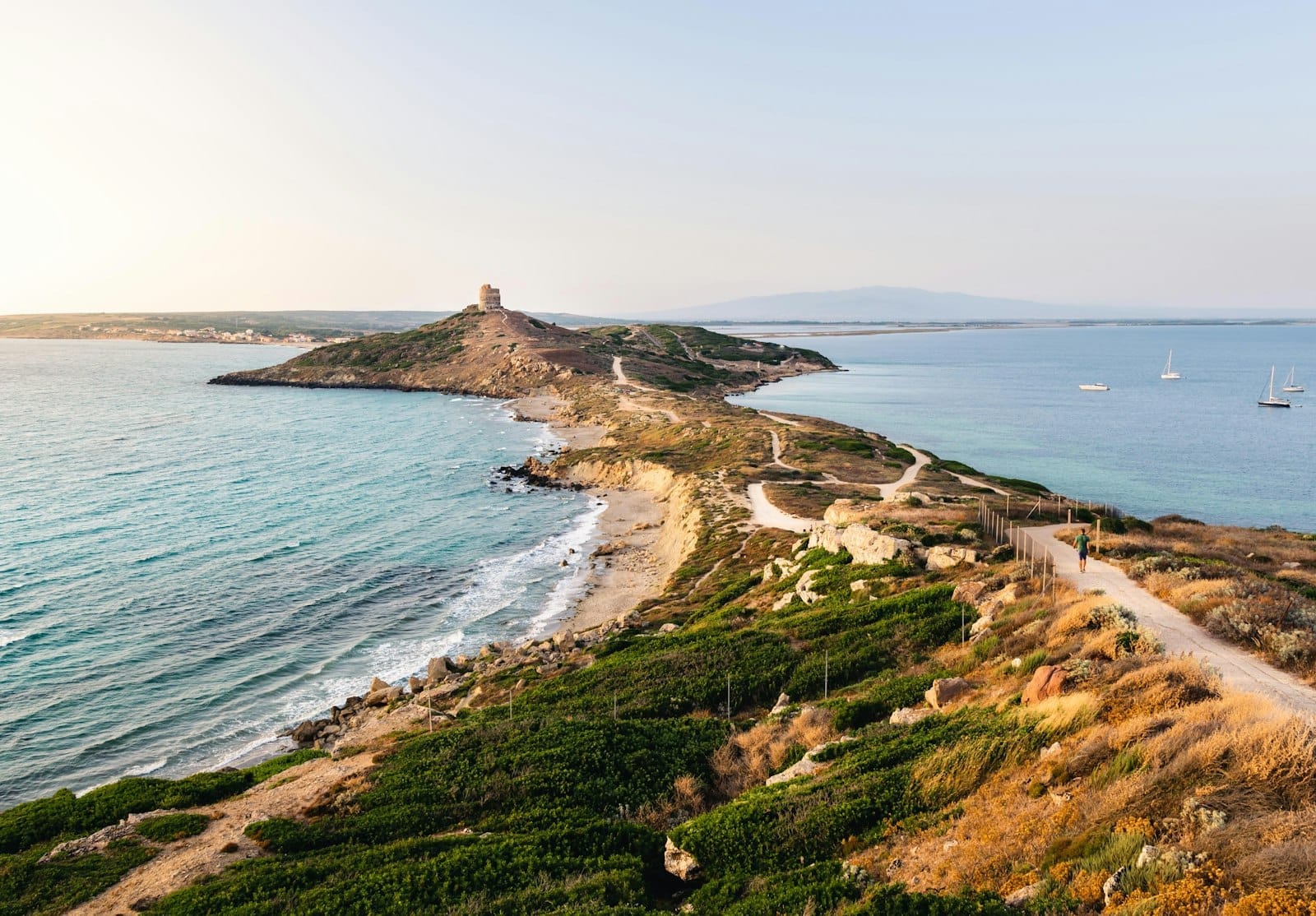
Plan and book this trip
Tools from our partner Travelpayouts help you compare flights and hotels. If you book through them, we may earn a commission at no extra cost to you.
Flights
Hotels map
TL;DR
- May averages around 17–22°C with roughly 9 daily sunshine hours; June climbs to 26–29°C with 10+ hours of sun and very little rain.
- Sea temperatures reach around 20°C by June — swimmable for most visitors, cooler but possible in late May.
- Crowds and prices are significantly lower than July–August; accommodation and flights cost noticeably less, especially in May and early June. See our best time to visit Sardinia guide for a full month-by-month breakdown.
- All three airports (Cagliari CAG, Olbia OLB, Alghero AHO) run expanded seasonal schedules from late spring, and ferry services from mainland Italy are fully operational.
- May is ideal for hiking, archaeology, and culture; June adds reliable beach conditions while keeping you ahead of the August crush.
Weather in May and June: What to Actually Expect
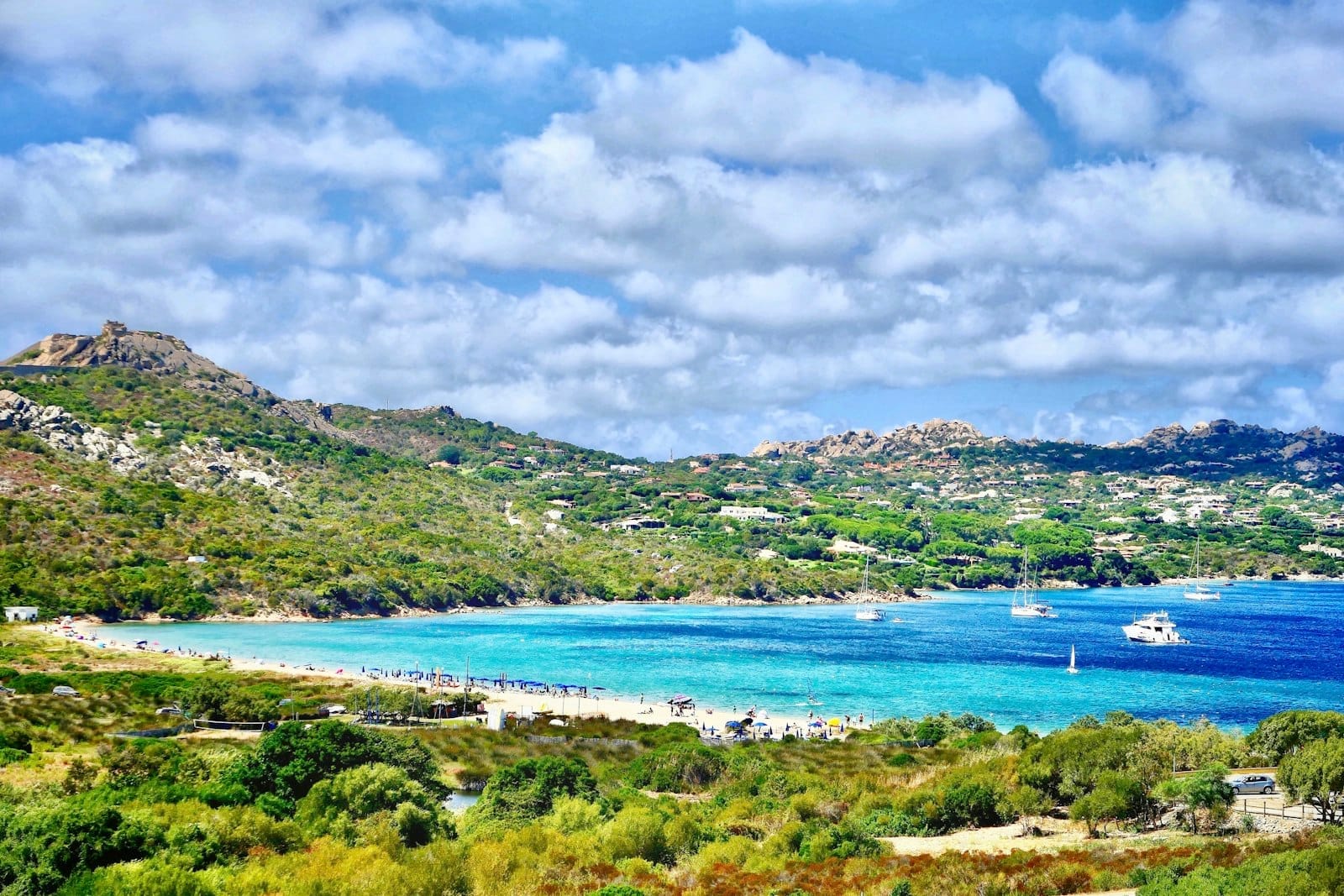
Sardinia in May and June sits in a genuine sweet spot. The Mediterranean climate delivers long, sunny days with low humidity, temperatures that feel warm rather than oppressive, and very little rain. May average temperatures hover around 17°C, with typical daytime highs of 22°C and lows around 12°C at night — comfortable for active sightseeing and evening dining outdoors. Expect roughly 9 hours of sunshine per day and around 9 rainy days across the month, though many of those 'rainy days' amount to a brief shower rather than a full washout.
June is noticeably warmer. Daily highs are typically in the mid-to-high 20s°C through June, often reaching 26–28°C, with lows settling around 16°C. Sunshine stretches to 10 or more hours per day, and rainfall drops sharply — often just 9 to 20mm across the entire month. In practical terms, June is nearly always dry. Pack a light layer for evenings, especially inland or in the mountains, where temperatures drop faster than on the coast.
ℹ️ Good to know
Temperatures above are based on coastal lowland data from Cagliari. Inland areas — particularly the Gennargentu mountains and Barbagia — run 4–6°C cooler, which matters if you're planning hikes. Punta La Marmora, Sardinia's highest peak at 1,834m, can still be cold in May.
- May temperatures Average 17°C, highs around 22°C, lows around 12°C. About 9 sunshine hours per day. Roughly 9 rainy days, often brief showers.
- June temperatures Average 21°C, highs 26–29°C, lows around 16°C. 10+ sunshine hours per day. Very low rainfall (9–20mm for the month).
- Sea temperature Around 18–19°C in May, rising to approximately 20°C by mid-to-late June. Swimmable for most, though wetsuits are used by some in May.
- Wind The Mistral can still blow in May, particularly in the north near Gallura and Stintino. It drops off considerably through June.
Crowds, Costs, and the Shoulder Season Advantage
This is where May and June separate themselves from summer. Most Italian schools break for summer in early to mid-June, and Northern European school holidays fall mainly in July and August. The result: Sardinia's beaches in May are largely peaceful. Even popular spots like Cala Luna and Spiaggia La Pelosa — which see queues and parking chaos in August — are accessible and relaxed.
Accommodation costs reflect the lower demand. A seaside apartment that costs €300–400 per night in August might list at €120–180 in May, sometimes less. The same pattern holds for car hire, which you'll almost certainly need — getting around Sardinia without a car is difficult outside of major cities. Book your hire car early regardless: the island has limited stock and rates spike as summer approaches.
⚠️ What to skip
Early June can see a spike in Italian domestic visitors over the Republic Day public holiday (June 2nd). If your dates fall around that weekend, expect slightly more company at beaches and parks near Cagliari and along the southern coast.
One caveat: some beach facilities — sun lounger rentals, beach bar kiosks, and boat tour operators — open gradually through May and may not be at full operation until mid-June. If your trip depends on a specific beach club or boat excursion to places like Cala Goloritzé, confirm opening dates with operators before you book flights. Most are running by late May, but not all.
Best Activities for May and June
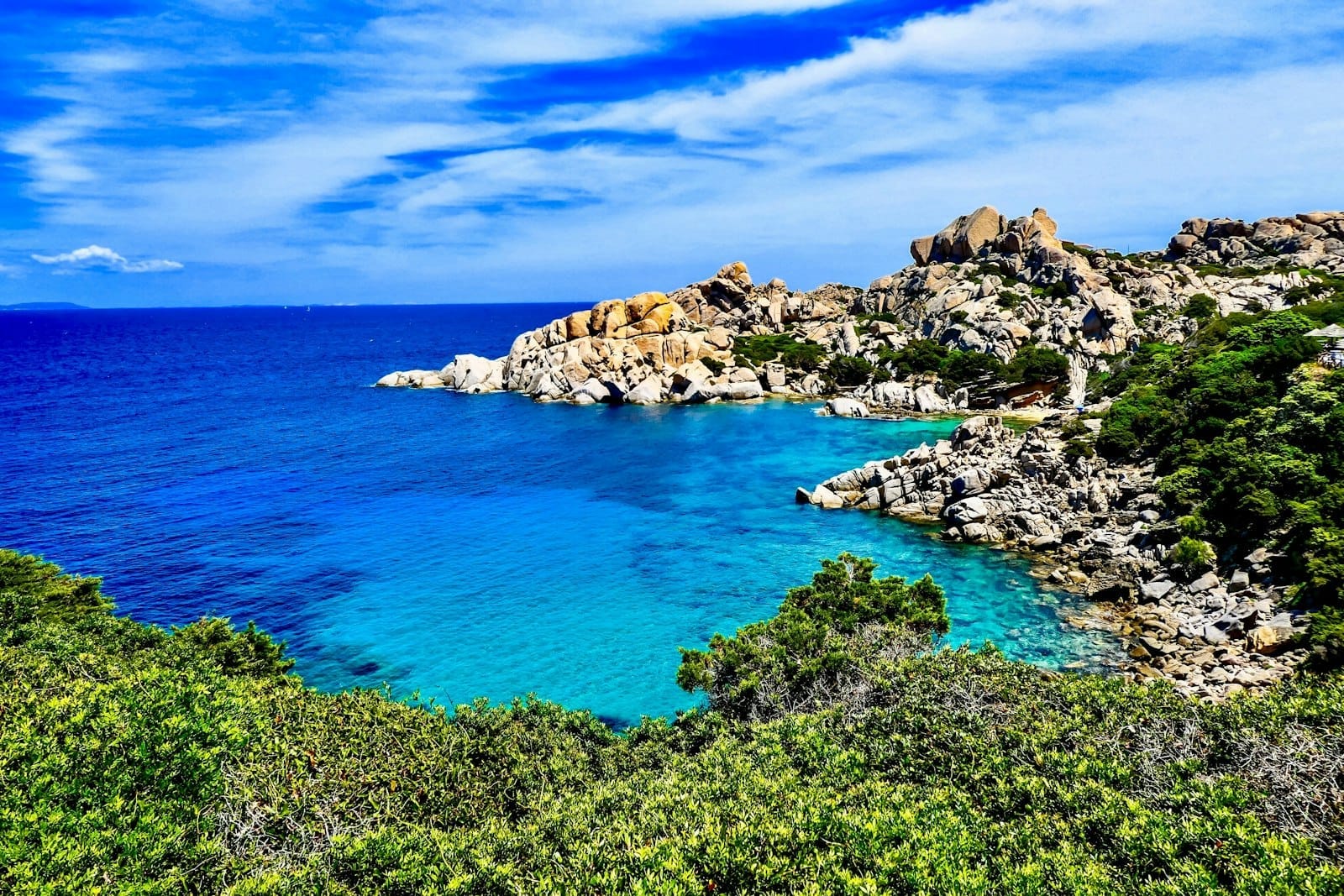
The shoulder season opens up activities that are unpleasant in peak summer heat. Hiking in Sardinia is at its best in May: the landscape is green, wildflowers cover the macchia scrubland, and temperatures stay manageable even on multi-hour trails. The Selvaggio Blu, one of Europe's most demanding coastal treks along the Golfo di Orosei, is typically accessible from mid-spring. Gorropu Canyon — the Gola di Su Gorropu — is ideal in May before summer heat turns the dry riverbed into a furnace.
Nuragic archaeology is another strong reason to visit in May. Sites like Su Nuraxi di Barumini and Nuraghe Santu Antine are far more enjoyable without summer tour groups. Most are open-air, and standing in direct 35°C sun at Tharros in August is far less appealing than exploring the same site on a comfortable May afternoon.
- Hiking: Selvaggio Blu, Gola di Su Gorropu, Monte Limbara, and coastal paths in the Golfo di Orosei are all well-suited to May.
- Beach days: Late May and all of June work for swimming, especially in the sheltered southern beaches around Villasimius and Chia.
- Boat trips: Departures to sea caves and inaccessible coves along the Orosei coast (Cala Luna, Cala Mariolu) begin in earnest from May — with far fewer people than August.
- Archaeology: Su Nuraxi, Tharros, Nora, and other open-air sites are much more comfortable to explore in May and June.
- Food and wine: Spring is peak season for bottarga, lamb, and artichoke dishes. Vermentino and Cannonau producers often host vineyard events through May.
- Festivals: Sardinia's festival calendar is active in late spring — see local event listings for processions, folk events, and food fairs.
For beach lovers, the south and southeast coast lead the pack in May. Villasimius and Costa Rei face south and southeast, giving them the warmest, most sheltered conditions earliest in the season. The beaches around Chia in the southwest are similarly well-positioned for May sun. The north — Costa Smeralda, La Pelosa — tends to be windier in May and can feel more exposed.
Getting There and Getting Around in May and June
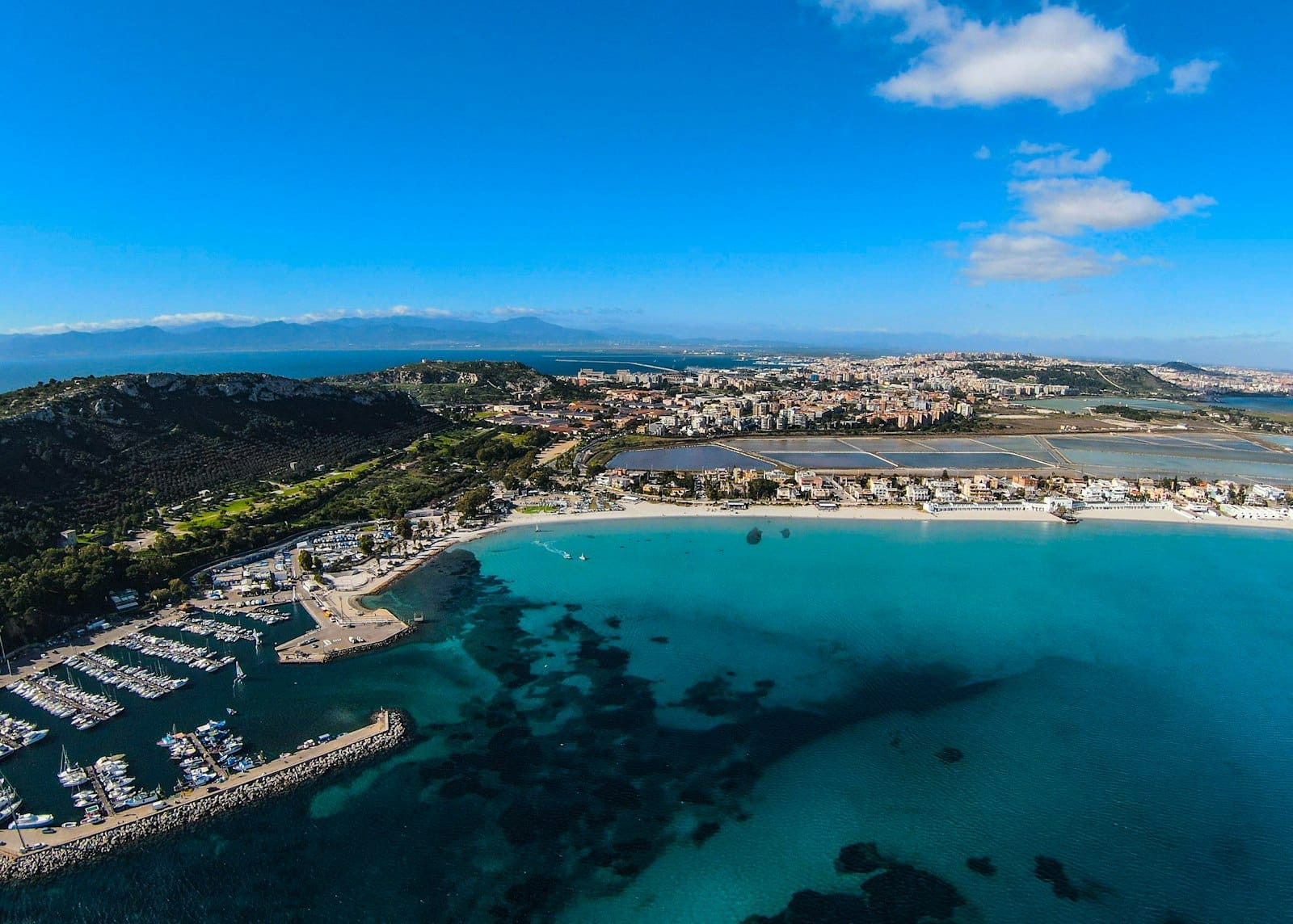
Sardinia has three commercial airports: Cagliari Elmas (CAG) in the south, Olbia Costa Smeralda (OLB) in the northeast, and Alghero-Fertilia (AHO) in the northwest. All three run expanded seasonal schedules from late spring, with direct routes from many European cities increasing significantly in May and peaking through the summer. Budget carriers including Ryanair and easyJet typically add Sardinia routes from April or May. Flights from mainland Italian cities (Rome, Milan) are frequent year-round.
Ferry connections from Genova, Civitavecchia (Rome), Livorno, and Naples to ports including Cagliari, Olbia, Golfo Aranci, and Porto Torres are well-established by May. Operators like Tirrenia, Moby Lines, and Grandi Navi Veloci publish seasonal timetables online. Overnight ferries with a cabin can work well as a combined transport and accommodation option. Once on the island, renting a car is strongly recommended — public transport (ARST buses and Trenitalia regional trains) covers the main cities but leaves many coastal areas and rural sites unreachable. For more on routes and logistics, the Sardinia road trip guide covers the island's main driving circuits in detail.
✨ Pro tip
Book your rental car before you arrive, especially for May bank holiday weekends. Sardinia's car hire pool is limited and prices jump sharply as availability shrinks. Picking up at Cagliari or Olbia airport is convenient, but comparing rates from town-centre offices can save money on drop-off fees.
Where to Stay: Matching Accommodation to the Season
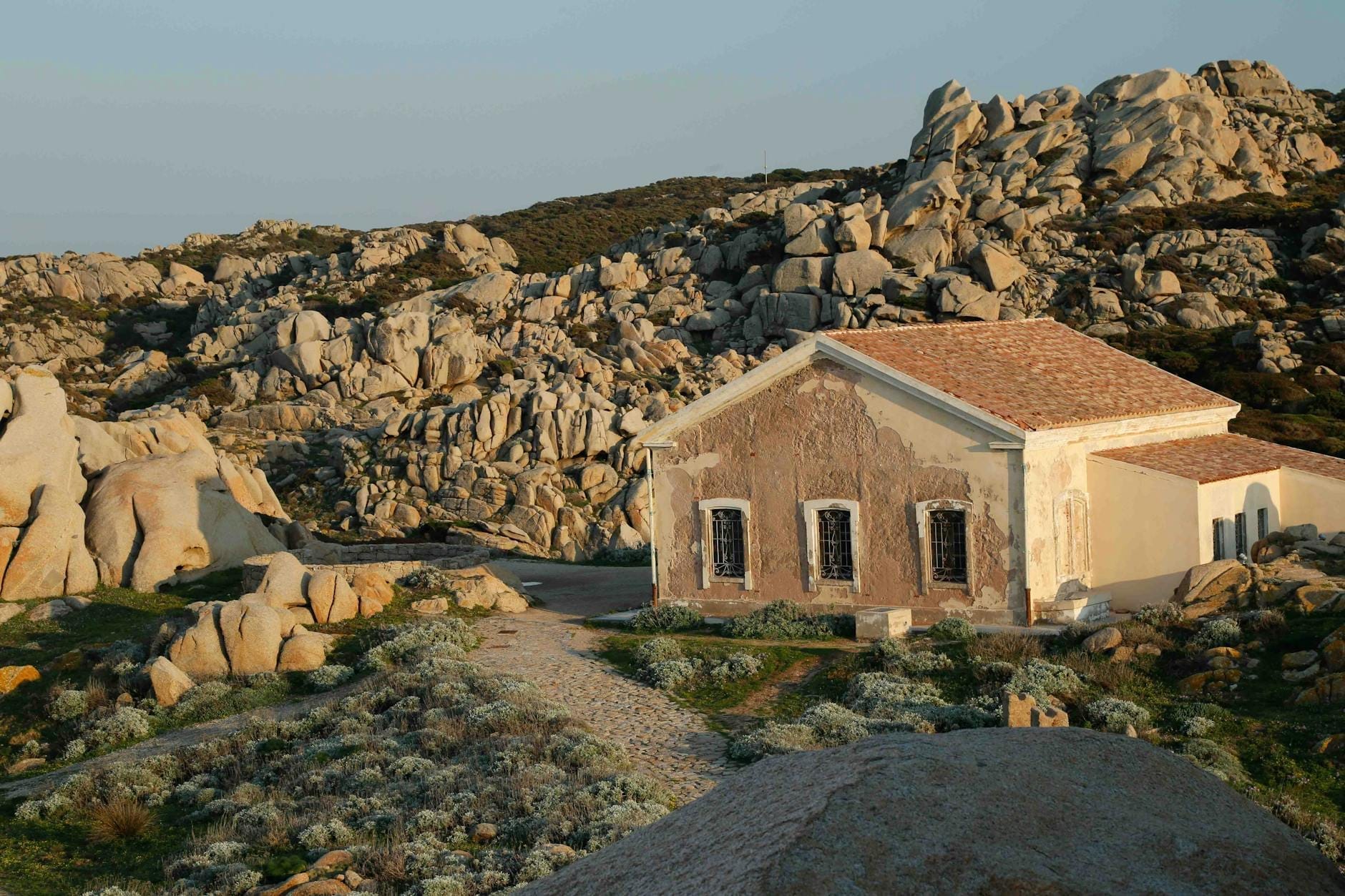
The shoulder season opens up accommodation options that are hard to access in August — including agriturismi, which often prefer guests who stay for at least a few nights and engage with the farm experience rather than treating the property as a cheap hotel. May is an ideal month for this style of travel. For a full breakdown of regions and property types, the where to stay in Sardinia guide covers everything from budget guesthouses to luxury villas.
For beach-focused trips, the southeast (Villasimius, Costa Rei) and south (Chia, Pula) offer the best conditions earliest in May. These areas have a good mix of hotels, apartment rentals, and beach resorts. In June, the north opens up more reliably: Costa Smeralda and the La Maddalena Archipelago are worth considering, though they skew expensive. Alghero on the northwest coast is a solid all-rounder — a genuine town with restaurants, nightlife, and culture, within easy reach of some excellent beaches including Spiaggia La Pelosa.
Practical Information for May and June Visitors
Sardinia is an autonomous region of Italy within the Schengen Area, so EU/EEA citizens can enter with a national ID card. Most non-EU nationals from countries including the US, Canada, Australia, and Japan can visit visa-free for up to 90 days in any 180-day period. The currency is the Euro (EUR). Emergency services are reached on 112 (the EU-wide number); Italian-specific numbers are 113 (police), 115 (fire), and 118 (medical). Tap water is generally potable across the island, though check for local 'acqua non potabile' signs. The time zone is Central European Summer Time (CEST, UTC+2) throughout May and June.
Tipping follows Italian norms: not obligatory, and bills often include a coperto (cover charge) of €1–3 per person. Leaving small change or rounding up the bill is appreciated but not expected. For religious sites — and Sardinia has significant ones, from Romanesque churches in Sassari to the Santuario di Bonaria in Cagliari — cover shoulders and knees. Some coastal towns have local ordinances restricting swimwear in town centres; if you're walking from the beach into a village, throw on a cover-up.
💡 Local tip
May in Sardinia sees the landscape at its greenest before the summer drought turns everything golden-brown. If you're interested in the island's interior — Barbagia, the Gennargentu, the Giara di Gesturi plateau with its wild horses — May is the best month to go. By July, the heat inland is intense and the vegetation has dried out.
Sardinia's food culture is at its best in spring. Markets fill with artichokes, broad beans, and early tomatoes. Lamb (agnello) features heavily on menus, and bottarga — the cured grey mullet roe produced around Cabras and Carloforte — is a year-round staple. The island's wine regions are also worth exploring: Vermentino di Gallura DOCG from the north and Cannonau di Sardegna DOC from the interior are the two flag-carriers. For deeper coverage of what to eat and drink, the Sardinia food guide and Sardinia wine guide are worth reading before you go.
FAQ
Is May a good month to visit Sardinia?
Yes — May is one of the best months for Sardinia. Temperatures average around 17–22°C with roughly 9 hours of sunshine daily, rain is limited, and crowds are well below summer levels. Prices for flights and accommodation are significantly lower than July–August. The only trade-off: some beach facilities and boat tour operators haven't fully opened yet, and sea temperatures (around 18–19°C) are cooler than in high summer.
Can you swim in Sardinia in May?
Yes, though sea temperatures are around 18–19°C in May, which is cool for those accustomed to warmer water. Many visitors do swim, particularly in the sheltered southern bays around Villasimius and Chia. By late June, the sea reaches around 20–21°C, which most swimmers find comfortable.
How crowded is Sardinia in June?
June is noticeably quieter than July and August. Most Italian schools break for summer in early to mid-June, and Northern European families tend to arrive in July. Early to mid-June is particularly good: warm, sunny, and calm at even the most popular beaches. The exception is the Republic Day (June 2nd) long weekend, which draws Italian domestic visitors.
What should I pack for Sardinia in May or June?
Light summer clothing for daytime, a mid-layer (light fleece or linen jacket) for evenings and inland trips. Sun protection is essential by June. Sturdy walking shoes if you plan any hiking — the terrain is rocky. A swimsuit is worth packing even for May, and a cover-up for walking through villages from the beach. Note that plug sockets in Italy use Type C, F, and L — bring an adapter if needed.
Is Sardinia expensive in May and June compared to August?
Considerably less so. Accommodation, car hire, and some tours can cost 30–50% less in May compared to August peak rates. Flights are also generally cheaper in May and early June. Prices begin rising through June as the season builds, so May and early June offer the best value for a beach-plus-exploration trip.