Nuraghe Santu Antine: Inside Sardinia's Most Impressive Bronze Age Tower
Rising 17.5 metres above the Meilogu plain, the Nuragic Complex of Santu Antine is among the best-preserved Bronze Age towers in Sardinia. Built around the 16th to 15th century BC, its central keep, three-lobed bastion, and surrounding village remains form one of the island's most complete archaeological experiences.
Quick Facts
- Location
- SP 21, Torralba (SS), Meilogu region, north-western Sardinia
- Getting There
- Car recommended; approx. 50 km south of Sassari via SS131 and SP21
- Time Needed
- 1.5 to 2.5 hours
- Cost
- Approx. €8–10 per adult (verify current price at nuraghesantuantine.it)
- Best for
- Archaeology enthusiasts, history travellers, and curious visitors of all ages
- Official website
- www.nuraghesantuantine.it
What Is Nuraghe Santu Antine?
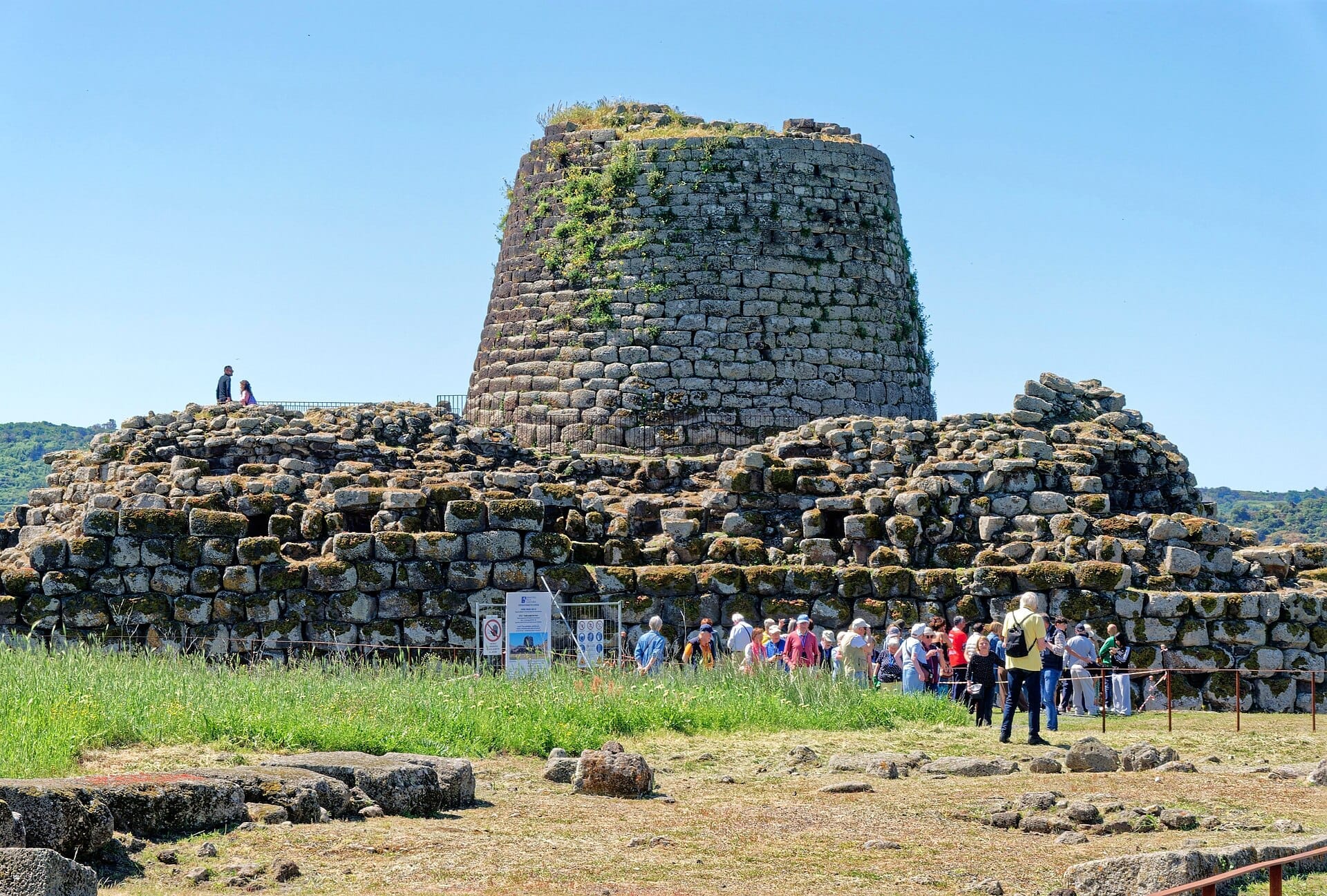
The Nuragic Complex of Santu Antine, also known as Nuraghe Santu Antine, sits on the flat Cabu Abbas plain just outside the village of Torralba in north-western Sardinia. It is one of the largest and most structurally complete nuraghi on the island, and for visitors with even a passing interest in ancient history, it is difficult to leave unimpressed.
A nuraghe is a type of prehistoric stone tower unique to Sardinia, built without mortar using interlocking basalt blocks in a technique that still puzzles engineers today. Sardinia has around 7,000 of them scattered across the island, but Santu Antine stands apart: its central keep originally rose to about 25 metres and still stands at roughly 17.5 metres, making it one of the tallest surviving examples. The complex consists of the main tower, a three-lobed bastion connecting three secondary towers, a surrounding curtain wall, and the remains of a nuragic village spread across the surrounding field.
Nuraghi were constructed during the Bronze Age, and Santu Antine is generally dated to around the 16th to 15th century BC, with occupation continuing through the Iron Age. To put that in context: this structure was already centuries old when Rome was founded. For a broader look at Sardinia's prehistoric sites, the Sardinia Nuragic sites guide covers the island's full range of Bronze Age monuments.
Arriving at the Site: First Impressions
The approach along the SP21 provincial road is part of the experience. The Meilogu plain is wide and largely flat, planted with wheat and bordered by low hills. As you drive, the tower appears on the horizon well before you reach it, a dark basalt mass rising incongruously from the agricultural land. There is a small car park directly off the road, and the site entrance is clearly signed.
Arriving in the morning, particularly on weekdays outside the peak summer months of July and August, you are likely to have the outer village area largely to yourself. The light in the early hours catches the rough texture of the basalt blocks at a low angle, throwing the corbelled stonework into sharp relief. By midday in summer, the plain offers almost no shade and the stones radiate heat, so a morning start is not just aesthetically preferable but practically sensible.
💡 Local tip
Bring water and sun protection regardless of season. The open archaeological field around the nuraghe has no shade, and the basalt surfaces absorb and radiate significant heat from spring through autumn.
Tickets & tours
Hand-picked options from our booking partner. Prices are indicative; availability and final rates are confirmed when you complete your booking.
Tour of the Nuraghe of Barumini and Casa Zapata from Cagliari
From 101 €Instant confirmationFree cancellationTrekking Excursion in Colle of Sant'Elia from Cagliari
From 60 €Instant confirmationFree cancellationCatamaran excursion to La Maddalena from Santa Teresa di Gallura
From 118 €Instant confirmationFree cancellationQuad biking tour from Santa Teresa di Gallura
From 0 €Instant confirmationFree cancellation
Inside the Tower: Climbing the Keep
Entry to the site is paid, with tickets currently reported at approximately €8 to €10 per adult. There is no need to book in advance for individual visits. The ticket includes access to the archaeological area and, depending on timing, may align with a guided tour. Guided tours in English and French are available, and the site also offers a downloadable multilingual audio-guide app through its official website.
Once inside, the first section you explore is the nuragic village: a spread of circular stone foundations covering a substantial area around the main tower. These were once the houses and communal spaces of the Bronze Age community that lived here. The foundations vary in size, and while only the lower courses of stone remain, the scale of the settlement becomes clear as you walk among them. The ground is uneven and often dry and stony, so closed-toe shoes are strongly advised.
The central tower itself is entered through a low corbelled corridor. Inside, the ceiling rises into a tholos dome, a beehive-shaped vault made from progressively overlapping stone rings. The technique required no keystone and no mortar, relying entirely on the weight and precision of the blocks. The interior chamber is cool and dim, with a stone smell that is damp and slightly mineral, noticeably different from the heat outside. Narrow passages lead to the secondary towers of the bastion, and a partly restored staircase allows access to upper levels of the keep.
At the top, the view across the Meilogu plain is unobstructed in every direction. You can see the agricultural patchwork extending towards distant hills, and the scale of the surrounding landscape helps explain why this site was chosen: it commands a clear line of sight across the plain in all directions. The climb involves narrow stone stairs and some low headroom, so those with limited mobility or claustrophobia should consider whether the interior sections are suitable for them.
⚠️ What to skip
The internal passages and staircase have low clearance and uneven surfaces. Detailed step-free accessibility information is not available in official sources; contact the site directly at nuraghesantuantine.it before visiting if this is a concern.
Historical and Cultural Context
The Nuragic civilisation is one of the most architecturally sophisticated prehistoric cultures of the western Mediterranean, yet it remains relatively little known outside Sardinia. The people who built Santu Antine left no written records, and their language, social structure, and religious practices are understood primarily through the physical remains they left behind: towers, sacred wells, giant tombs, and small bronze figurines.
What makes Santu Antine particularly significant is the trilobate plan of its bastion. Three secondary towers connected by curved walls create a clover-shaped defensive perimeter around the central keep. This layout required considerable planning and engineering knowledge, and it is seen in only a handful of sites across the island. The most famous comparison is Su Nuraxi di Barumini, the UNESCO-listed nuraghe in southern Sardinia, though Santu Antine's central tower is generally considered taller and better preserved at the structural level.
The site's name, Santu Antine, is a Sardinian corruption of 'Sant'Agostino' (Saint Augustine), reflecting the medieval Christian reworking of the site's identity long after the Nuragic civilisation had ended. Local farmers historically called the main tower 'Sa Domo de su Re,' meaning 'the house of the king' in Sardinian, a name that captures the monument's imposing presence in the landscape even to communities who had no connection to its original builders.
How the Site Changes Through the Day
The site typically opens at 09:00, with closing times varying seasonally (often around 17:00 in winter and up to 20:00 in peak season) (confirm exact hours at nuraghesantuantine.it before your visit, as seasonal times are subject to change). The first two hours after opening are consistently the quietest, and the low morning light across the plain makes photography significantly more rewarding than at midday.
In July and August, tour groups arrive from mid-morning onward, and the main tower corridor can become congested during peak hours between 11:00 and 14:00. If you are visiting in high summer and want unobstructed time inside the keep, aim to arrive right at opening or after 16:00 when the light is warm and long again and many coach groups have departed.
In shoulder months, particularly May, early June, and September, visitor numbers drop considerably. The surrounding field is quieter, the air is cooler, and wildflowers sometimes grow between the stone foundations of the village in spring. These months offer arguably the best balance of good weather, comfortable temperatures, and a more contemplative atmosphere.
ℹ️ Good to know
Opening hours vary by season: typically 09:00–17:00 in winter and 09:00–20:00 in summer. Always verify current hours and ticket prices at www.nuraghesantuantine.it before visiting.
Getting There: Practical Logistics
Nuraghe Santu Antine is located just off the SP21 provincial road near Torralba, in the province of Sassari. Torralba itself is a small agricultural village with limited public transport connections to the nuraghe, so a car is the most convenient option for most visitors. The site is approximately 50 kilometres south of Sassari via the SS131 state road and then the SP21 turning. From Alghero, the drive is roughly 60 kilometres and takes around an hour.
The site pairs naturally with other visits in the area. The nearby necropolis of Sant'Andrea Priu at Bonorva is one of the most elaborate rock-cut tomb complexes in Sardinia and lies roughly 12 kilometres to the south-east, making a logical half-day combination. Anyone planning a wider archaeological circuit through north-central Sardinia should consult the Sardinia road trip guide for routing options.
There is a small refreshment point at the site, and Wi-Fi is available for visitors who want to use the audio-guide app. That said, the on-site catering is limited, so if you are planning a full day in the area, bringing your own food and drinks is advisable.
Photography Notes
The tower photographs best in the early morning or late afternoon, when the low angle of the sun creates strong shadows across the irregular stonework and gives the basalt blocks a textured, almost sculptural quality. Shooting into the light from the village area in early morning produces a dramatic silhouette of the keep. Inside the tholos chamber, the light is low and diffuse; a phone camera with a night or low-light mode performs reasonably well, but a camera with manual exposure control gives better results.
The view from the top of the tower is wide and flat, which can make the landscape look empty in photography. Including a foreground element, such as a portion of the bastion wall, helps convey the scale and the relationship between structure and plain. In spring, the surrounding field can have enough green and colour to make wider landscape compositions work well.
Who Should Think Twice
Visitors who prefer polished museum environments with extensive interpretive panels, climate control, and level surfaces may find Santu Antine underwhelming in its basic infrastructure. The archaeological site is open-air, the terrain around the village is uneven, and while guided tours add considerable context, self-guided visitors without prior knowledge of Nuragic culture may struggle to fully appreciate what they are looking at.
Travelling with very young children requires attention: the site is open and unfenced in places, the stone surfaces can be hot in summer, and the interior passages are dark and narrow. Older children who have been given some context about prehistoric Sardinia beforehand tend to find the tower exciting, but the visit does not have the kind of interactive or dramatised elements that dedicated family attractions might offer.
If your primary interest is in Sardinia's coastal landscapes rather than its archaeological heritage, your time may be better spent elsewhere. The best beaches in Sardinia guide covers options across the island for a very different kind of day.
Insider Tips
- Download the official multilingual audio-guide app from nuraghesantuantine.it before you arrive, as mobile data coverage on the SP21 plain can be patchy. Having the guide cached offline ensures you can use it throughout the visit.
- If you arrive and a guided tour in English is about to start, join it even if you planned to explore independently. The guides at Santu Antine are archaeologically trained and regularly share interpretations and details that are not on any signage or standard brochure.
- The upper platform of the keep looks directly out over the Meilogu plain towards Monte Rasu and the hills of the Meilogu. On clear days in autumn and winter, the visibility is exceptional and the landscape context for understanding why this location was chosen becomes immediately obvious.
- Combine the visit with a stop in Torralba village, where the small Museo della Valle dei Nuraghi holds artefacts excavated from Santu Antine and the surrounding area, providing important interpretive context that is otherwise absent from the open-air site.
- Avoid the period from late July through mid-August if you dislike crowds. Italian school holidays and the peak tourist season bring coach groups from both the coast and inland, and the tower's internal corridors become uncomfortably congested during late morning hours.
Who Is Nuraghe Santu Antine For?
- Travellers with a genuine interest in prehistoric architecture and Mediterranean archaeology
- History-focused road trippers moving between Sassari, Alghero, or the Barbagia region
- Photographers looking for dramatic ancient stone structures in open landscape settings
- Older children and teenagers who have been given some background on Nuragic Sardinia
- Visitors seeking to go beyond coastal tourism and understand inland Sardinian culture
Nearby Attractions
Other things to see while in Barbagia & Nuoro:
- Giara di Gesturi
Rising to around 550 metres above central Sardinia, the Giara di Gesturi is a 45-square-kilometre basalt plateau formed by Oligocene volcanic activity. Cork oak forests, seasonal wetlands, and an extraordinary population of small wild horses make it one of the most ecologically singular landscapes on the island.
- Gola di Su Gorropu
Gola di Su Gorropu is a karst canyon in Sardinia's Supramonte massif with walls rising over 500 metres and passages as narrow as 4 metres across. It's a serious hiking destination that rewards physical effort with one of the most dramatic landscapes in the Mediterranean.
- Monte Ortobene
Reaching a maximum elevation of 955 metres above sea level near the inland city of Nuoro, Monte Ortobene is a forested mountain with panoramic views across central Sardinia, a landmark bronze statue of Cristo Redentore, and walking paths through fragrant Mediterranean scrubland. Access is free, the road reaches the summit, and the atmosphere is unlike anything on the coast.
- Murales di Orgosolo
Orgosolo, a small hill town in the Barbagia region of central Sardinia, has covered its streets in around 150 murals since the late 1960s. Free to visit at any hour, the Murales di Orgosolo form one of the most politically charged and visually striking open-air art experiences in Italy.