Su Nuraxi di Barumini: Inside Sardinia's Greatest Bronze Age Fortress
Su Nuraxi di Barumini is a remarkably preserved Nuragic complex dating to around 1700 BC, inscribed as a UNESCO World Heritage Site in 1997. Rising from the flat Campidano plain, its massive basalt tower and sprawling Bronze Age village offer the most compelling window into Sardinia's mysterious pre-Roman civilization.
Quick Facts
- Location
- Viale Su Nuraxi, 09021 Barumini (SU), Sardinia, Italy — just outside Barumini village, near the Giara di Gesturi plateau
- Getting There
- Car is the most practical option. From Cagliari (~55–60 km north), take SS131 then SS197 toward Villamar and follow signs to Barumini. No reliable public bus service connects directly to the site.
- Time Needed
- 2–3 hours including the guided tour (approx. 75 min) and a visit to Casa Zapata Museum
- Cost
- Adults €15 / Ages 13–17 €12 / Ages 7–12 €9 / Under 7 free. Combined ticket includes Casa Zapata Museum and Centro Giovanni Lilliu. Verify current prices at fondazionebarumini.it
- Best for
- History enthusiasts, archaeology lovers, families with older children, road-trippers crossing the Campidano plain
- Official website
- www.fondazionebarumini.it/area-archeologica-su-nuraxi
What Su Nuraxi di Barumini Actually Is
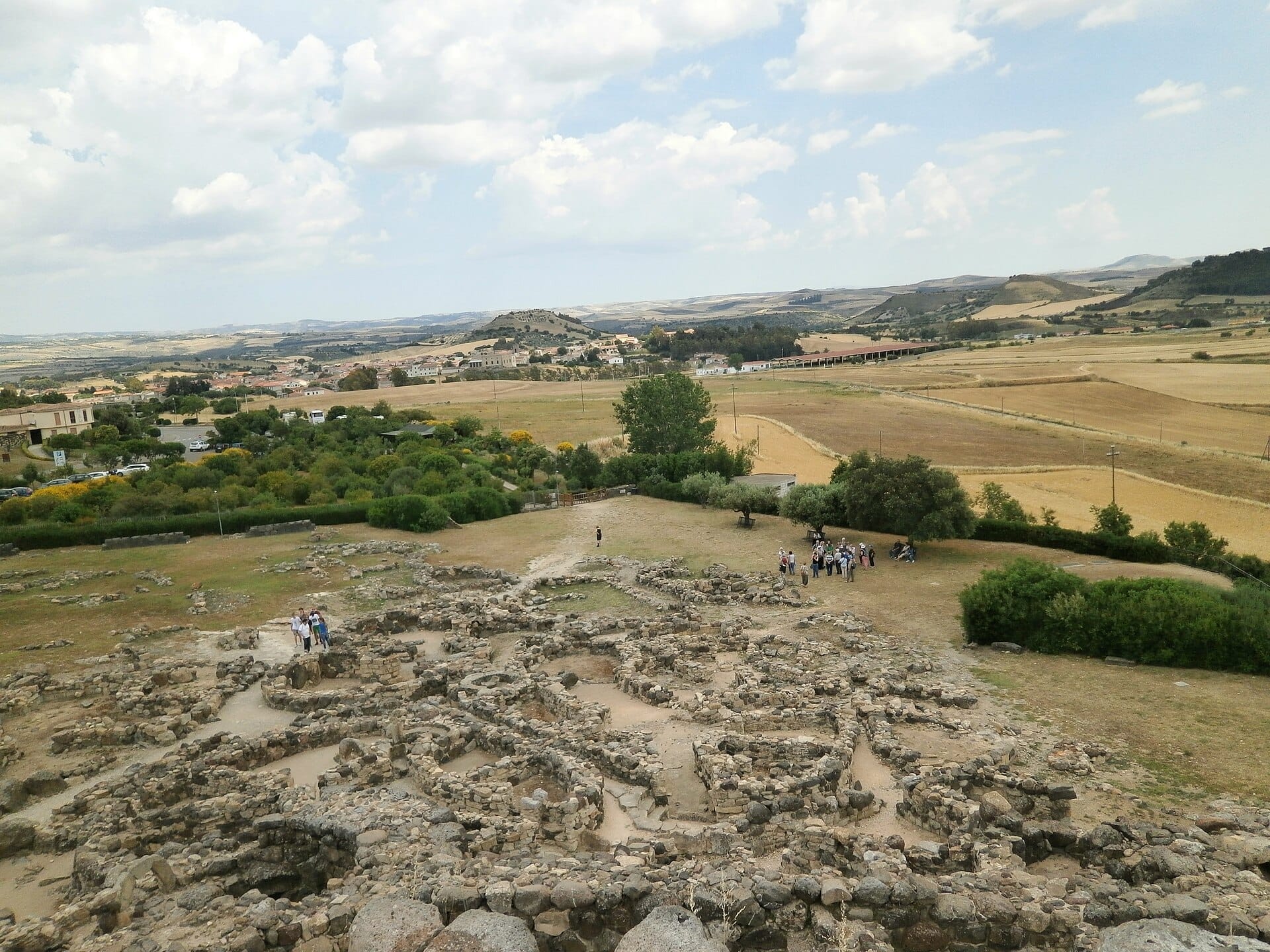
Su Nuraxi di Barumini is the largest and best-preserved nuraghe complex on the island of Sardinia, and the first Sardinian site inscribed on the UNESCO World Heritage List, receiving that designation in 1997. The name translates roughly from Sardinian as 'the nuraghe' — a straightforward title for something anything but ordinary. Standing at the edge of the town of Barumini, with the flat Campidano plain stretching in every direction and the stepped plateau of the Giara di Gesturi rising behind it, the site's physical setting feels almost theatrical.
The central tower dates to around 1700 BC, placing construction firmly in the Middle Bronze Age. Over subsequent centuries, a secondary bastion of four additional towers was added around the main keep, and a dense village of circular stone huts eventually spread across an area of roughly 2,000 square meters. The village remained inhabited from approximately the 13th to the 6th century BC, meaning people lived here through the entire late Bronze Age and into the early Iron Age before the site was eventually abandoned.
The scale and complexity of Su Nuraxi challenges the idea that Bronze Age Sardinia was a peripheral, simple society. For more context on how this fits into island-wide Nuragic culture, the guide to Sardinia's nuragic sites covers comparable complexes across the island.
The Excavation Story: Giovanni Lilliu and a Buried Civilization
For centuries, Su Nuraxi was largely hidden. Centuries of erosion and human settlement had buried much of the village beneath layers of soil, and what remained visible was assumed to be a medieval ruin or natural formation. It was not until the 1950s that Sardinian archaeologist Giovanni Lilliu led systematic excavations that revealed the full extent of the complex. What he uncovered reshaped understanding of prehistoric Sardinia entirely.
Lilliu became the defining scholar of Nuragic civilization, and the Fondazione Barumini — which now manages the site — is named partly in his honor through the Centro Giovanni Lilliu cultural space adjacent to the archaeological area. The discovery was significant enough that UNESCO's 1997 inscription specifically cited the site's 'outstanding universal value' as evidence of a sophisticated prehistoric building tradition unique to Sardinia.
Tickets & tours
Hand-picked options from our booking partner. Prices are indicative; availability and final rates are confirmed when you complete your booking.
Small Group Tour to Su Nuraxi Unesco Site From Cagliari
From 90 €Instant confirmationFree cancellationTour of Barumini UNESCO site and Giara di Gesturi plateau
From 105 €Instant confirmationFree cancellationDaytrip to Barumini and the Giara of Gesturi
From 80 €Instant confirmationFree cancellationTour of the Nuraghe of Barumini and Casa Zapata from Cagliari
From 101 €Instant confirmationFree cancellation
Walking the Site: What You Will See on the Guided Tour
ℹ️ Good to know
Self-guided visits are not permitted. All access is via guided tour only, with departures approximately every 30 minutes from opening until one hour before closing. Tours are available in Italian, English, and French. Plan your arrival to catch an English-language tour, especially outside peak season when frequency may be lower.
The tour begins at the main tower, a truncated basalt cone that still rises to a considerable height despite millennia of weathering. The original construction method involved dry-stone masonry using locally quarried basalt, with no mortar. The sheer mass of the stones used — some weighing several tonnes — is immediately apparent when you stand at the base. The walls taper slightly as they rise, a deliberate technique that distributes load and contributes to structural stability.
Inside the main tower, you descend through a corbelled corridor into a central chamber with a tholos ceiling — a false-dome technique that predates similar structures across the Mediterranean. The interior is cool even on hot summer days, the air noticeably damp and carrying the mineral smell of ancient stone. Your eyes adjust slowly to the dim light filtering through narrow openings. This sensory shift, from the blinding Sardinian sun outside to the cave-like interior, is one of the more striking moments of the visit.
From the upper ramparts — reachable via internal staircases in the bastion towers — the view across the Campidano plain is wide and flat, interrupted only by the distinctive silhouette of the Giara plateau and, on clear days, distant hills. It is easy to understand why this position was chosen: the surrounding terrain is completely exposed, offering maximum visibility in all directions. Whoever built this complex understood landscape as defense.
The village huts surrounding the towers vary in size and layout. Some were clearly domestic dwellings, others appear to have served communal functions. Stone benches line several interiors. Channels and drainage features suggest a degree of planning rarely associated with Bronze Age settlements in popular imagination. Your guide will point out specific structures and interpret their likely use, though it is worth remembering that much remains uncertain — Nuragic culture left no written records.
How the Experience Changes by Time of Day and Season
Morning visits, particularly in spring and autumn, offer the most comfortable conditions. The basalt stones absorb heat quickly, and by midday in July or August the site becomes hot underfoot. Bring water, a hat, and light-colored clothing if you visit in summer — there is almost no shade within the archaeological area itself. The ground is uneven throughout, so proper footwear matters more than it might seem.
In winter, opening hours are shorter (typically around 09:00–17:00 from November through February; confirm exact times in advance), and the light is lower and softer. The site sees far fewer visitors between November and March, which means tours are smaller and guides often have more time for questions. The surrounding plain turns green in winter and early spring, which contrasts dramatically with the grey-black basalt of the complex. Photographically, the overcast winter light eliminates the harsh shadows that complicate summer shots of the towers.
Summer visits are busier, particularly in July and August when the site may stay open into the evening (often around 19:30–20:30, but confirm current closing time). A late-afternoon tour in summer, starting around 17:00 or 18:00, can be rewarding: the heat drops, the low sun turns the basalt amber, and tour groups are somewhat smaller than at midday. The site closes before dark, so there is no opportunity for night visits.
💡 Local tip
Photography tip: The main tower photographs best from the northwest corner of the site, where you can frame it against open sky without competing structures in the foreground. Early morning light in summer comes from the east and illuminates the village huts nicely before the sun climbs too high.
Practical Information: Getting There, Tickets, and Logistics
Su Nuraxi sits on the SP44 provincial road at the edge of Barumini, a small town roughly 55–60 kilometers north of Cagliari. The most practical way to reach it is by car. From Cagliari, take the SS131 northward to the junction for Villamar, then follow the SS197 and local roads through Villamar and Las Plassas to Barumini. The drive takes around 50–60 minutes depending on traffic. Parking is available near the site.
There is no reliable direct public bus connection to the site, which makes it difficult to visit without a car unless you join an organized tour from Cagliari. If you are planning a broader loop through central Sardinia, Su Nuraxi pairs naturally with a stop at the Giara di Gesturi plateau just a few kilometers away, where wild horses still roam freely.
Tickets are sold as a combined pass covering the Su Nuraxi archaeological area, Casa Zapata Museum (housed in a 16th-century Spanish baronial residence in the center of Barumini), and the Centro Giovanni Lilliu cultural space. As of current information, adult entry is €15, with reduced rates for ages 13–17 (€12), children 7–12 (€9), and free entry for children under 7. Prices are subject to change; verify at fondazionebarumini.it before visiting.
Pets are not permitted on site, with the exception of certified guide dogs whose visit must be arranged in advance by contacting the foundation. For visitors with mobility limitations, the uneven stone terrain throughout the site presents real challenges. The foundation advises contacting them directly by phone or email before visiting to discuss accessibility options.
The Broader Context: Barumini and the Nuragic World
Su Nuraxi is the most significant single site in Sardinia's Nuragic heritage, but it is not isolated. The island contains thousands of nuraghe structures of varying complexity. Understanding Su Nuraxi benefits from awareness of that wider landscape. The Sardinia nuragic sites guide provides comparative context, and the Museo Archeologico Nazionale di Cagliari holds artifacts excavated from Nuragic sites across the island, including bronzetti figurines and tools that bring the abstract architecture into human scale.
The town of Barumini itself is small but worth a brief walk before or after your site visit. Casa Zapata, included in your ticket, displays a second nuraghe directly beneath the building's floor — visible through glass panels — discovered during renovation work on the 16th-century mansion. It is an unexpected experience and adds a different layer to the day. For travelers interested in the interior of Sardinia more broadly, the region of Barbagia and Nuoro surrounds this area and offers some of the island's least-visited and most culturally distinct landscapes.
The Nuragic civilization that built Su Nuraxi left no written language, which means archaeology is the only lens available. The scale of the complex — its planning, its engineering, its evident function as both fortress and community center — raises questions about social organization and political structure that remain open. This is not a site where every answer is provided. For curious visitors, that ambiguity is part of the draw. For those who need complete narratives, it can feel frustrating.
Insider Tips
- Book your tour slot in advance during July and August. Walk-up availability exists, but popular morning slots sell out, especially for English-language tours. Check the Fondazione Barumini website or call ahead.
- Combine your visit with Casa Zapata Museum in Barumini village — it is included in the same ticket and the embedded nuraghe beneath the museum floor is surprising. Allow 30–45 minutes extra for this.
- Wear closed-toe shoes with grip. The stone surfaces inside the towers are worn smooth by centuries of use and millions of visitors, and they become slippery when damp. Sandals are poor choices even in summer.
- If you want a small group experience, visit on a weekday morning in May, June, or September. These shoulder-season slots often have 8–12 people per tour rather than the 25–30 common in high summer.
- The Giara di Gesturi plateau is only 8 kilometers away and can be added to the same day trip. It is most interesting in spring when the wild ponies congregate near the plateau's water pools.
Who Is Su Nuraxi di Barumini For?
- History and archaeology enthusiasts who want Sardinia's most important prehistoric monument
- Families with children aged 10 and above who can engage with a 75-minute guided tour
- Road-trippers crossing the Campidano plain between Cagliari and central Sardinia
- Photographers seeking dramatic Bronze Age architecture in natural light
- Travelers who want to understand Sardinian culture beyond beaches and resorts
Nearby Attractions
Other things to see while in Barbagia & Nuoro:
- Giara di Gesturi
Rising to around 550 metres above central Sardinia, the Giara di Gesturi is a 45-square-kilometre basalt plateau formed by Oligocene volcanic activity. Cork oak forests, seasonal wetlands, and an extraordinary population of small wild horses make it one of the most ecologically singular landscapes on the island.
- Gola di Su Gorropu
Gola di Su Gorropu is a karst canyon in Sardinia's Supramonte massif with walls rising over 500 metres and passages as narrow as 4 metres across. It's a serious hiking destination that rewards physical effort with one of the most dramatic landscapes in the Mediterranean.
- Monte Ortobene
Reaching a maximum elevation of 955 metres above sea level near the inland city of Nuoro, Monte Ortobene is a forested mountain with panoramic views across central Sardinia, a landmark bronze statue of Cristo Redentore, and walking paths through fragrant Mediterranean scrubland. Access is free, the road reaches the summit, and the atmosphere is unlike anything on the coast.
- Murales di Orgosolo
Orgosolo, a small hill town in the Barbagia region of central Sardinia, has covered its streets in around 150 murals since the late 1960s. Free to visit at any hour, the Murales di Orgosolo form one of the most politically charged and visually striking open-air art experiences in Italy.