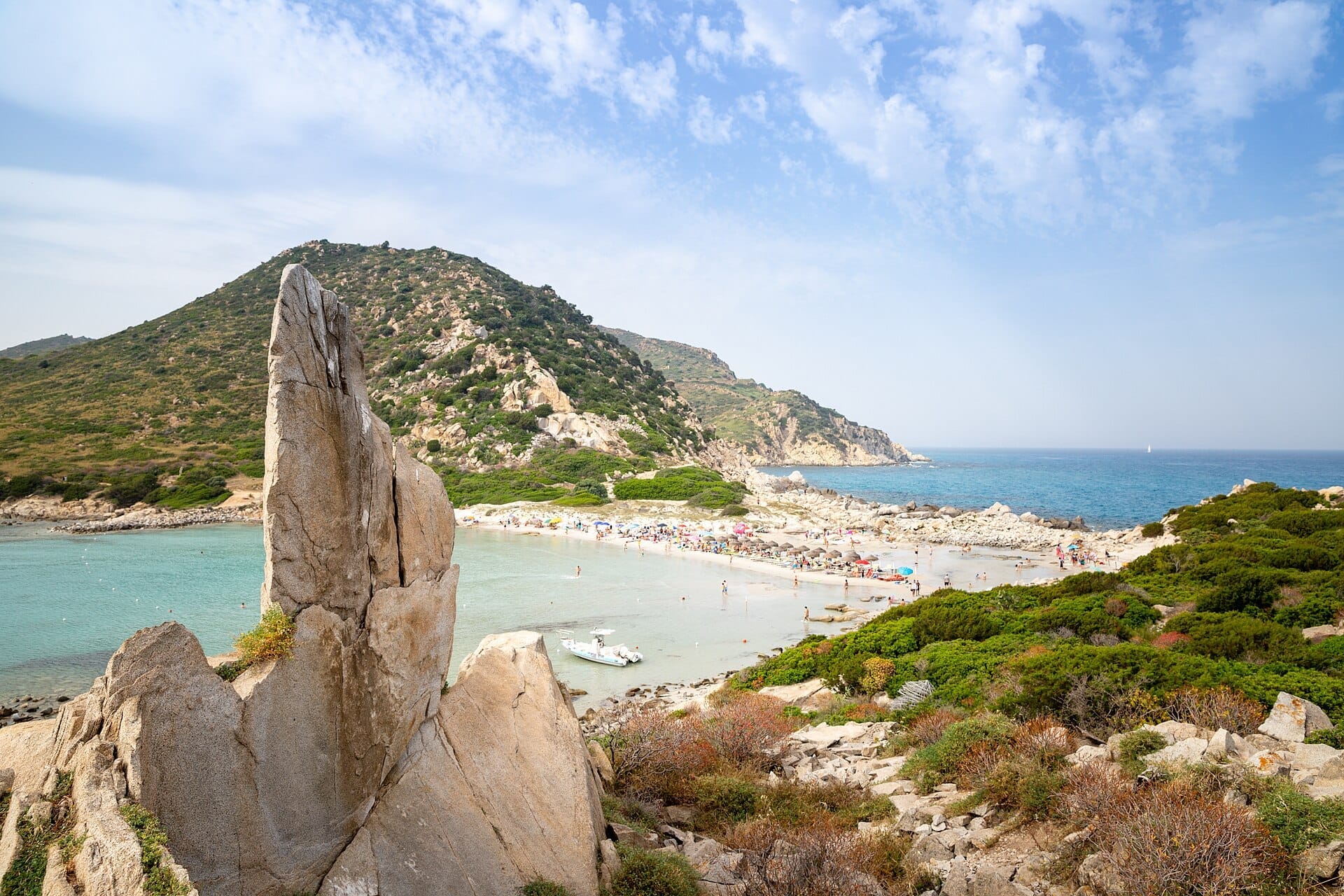
Villasimius and Costa Rei sit on Sardinia's southeast tip, where white-sand beaches stretch for kilometres alongside some of the clearest water in the Mediterranean. This is Sardinia's beach heartland: low-key compared to the Costa Smeralda, but with a quality of coastline that rivals anything on the island.
The southeast corner of Sardinia is where the island shows its most purely coastal self. Villasimius anchors the area with its small town grid and a marine protected area that keeps the water exceptional, while Costa Rei stretches north along a near-continuous ribbon of white sand. Together they form one of Sardinia's most rewarding beach destinations, without the price tag or the pomp of the northeast.
Orientation
Villasimius and Costa Rei occupy the southeastern corner of Sardinia, south and east of Cagliari. The zone runs roughly from Capo Boi and Capo Carbonara in the south up to the rocky headland of Capo Ferrato in the north, encompassing around 30 kilometres of coastline. Administratively, Villasimius sits within the Sud Sardegna province, and Costa Rei falls within the Sarrabus-Gerrei territory, centred on the small settlement of Monte Nai. For more context on how this area fits into the broader island, see our guide to Cagliari and its surrounds.
Villasimius is the area's main town, with a proper centre: a church square, a handful of streets with shops and restaurants, a tourist office, and a supermarket. It sits about 50 kilometres southeast of Cagliari by road, roughly an hour's drive depending on traffic. Costa Rei lies further north along the coast, approximately 20 kilometres from Villasimius. Its central node is Monte Nai, which is less a town and more an organised resort strip with rental villas, apartment complexes, and a few bar-restaurants strung along Via C. Colombo near the beach.
The two areas are connected by the SS125 and a network of coastal roads, but they are not walkable between each other. Anyone basing themselves here without a car will feel the limitations quickly. The Sarrabus region between them is sparsely populated hinterland: scrubby macchia, granite outcrops, and almost no services. That emptiness is part of the appeal, but it underscores how dependent this coast is on private transport.
ℹ️ Good to know
Capo Carbonara and its offshore islands (Isola dei Cavoli and Isola di Serpentara) are protected within the Area Marina Protetta Capo Carbonara, a marine reserve divided into zones with different levels of protection. Boaters, divers, and snorkellers must follow specific rules about speed, anchoring, and diving locations. Zone A is restricted to researchers and staff only.
Character & Atmosphere
In the morning, Villasimius feels like a small Sardinian town that happens to be surrounded by extraordinary beaches. The streets around the main piazza are quiet before nine. A few bars open early for espresso. A bakery or two puts out trays of cornetti. There are dogs asleep in doorways. The heat builds slowly, and by ten the procession towards the coast has begun, cars loaded with umbrellas and cool bags heading for the car parks at Spiaggia del Riso, Simius, or the Notteri sandspit.
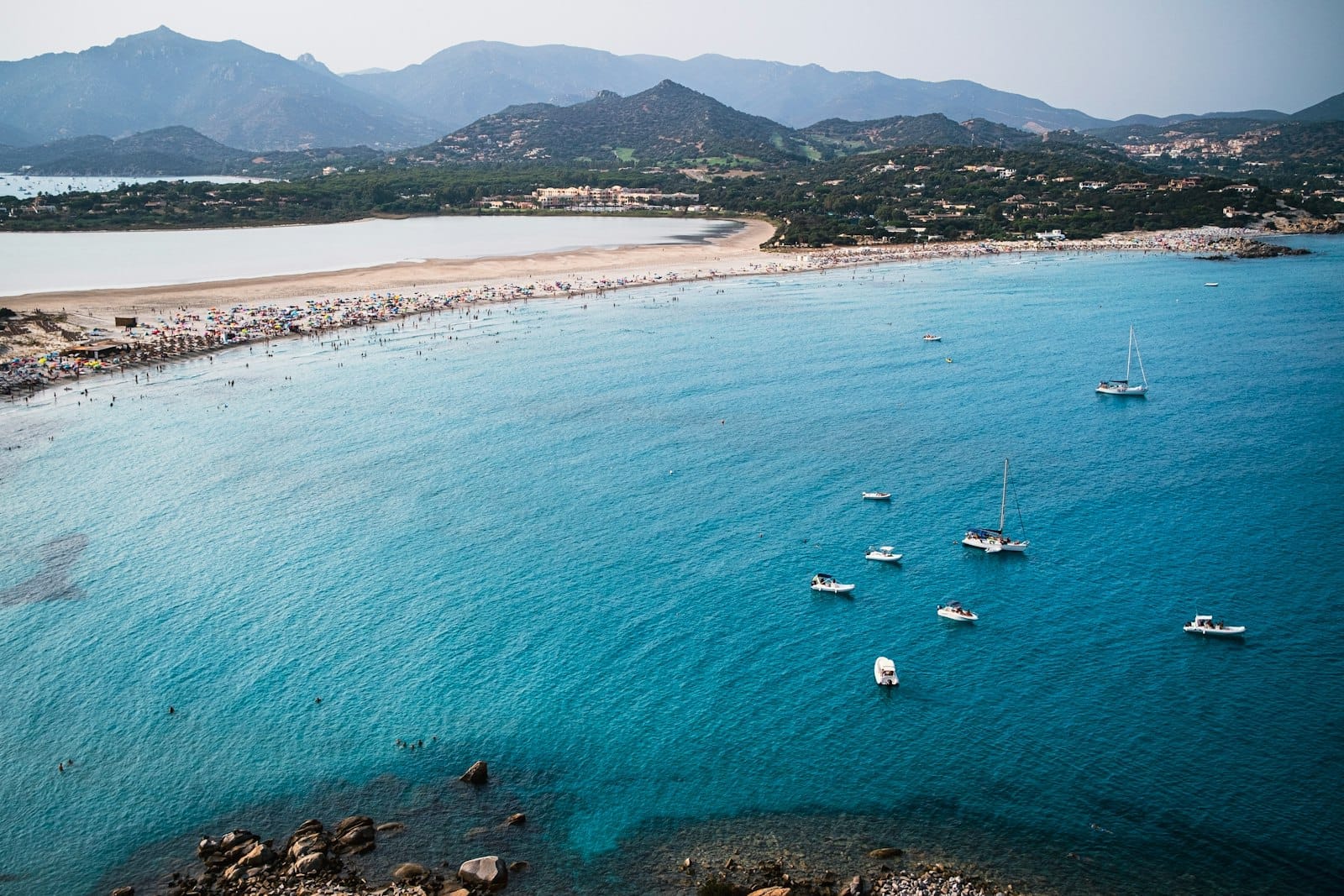
The Notteri area is unusual even by Sardinian standards. A long, narrow sandbar separates the open sea from an inner lagoon, and in the right season, pink flamingos wade in the shallower water behind. The combination of the open beach on one side and the lagoon on the other gives the area a different quality of light, especially in the late afternoon when the sun starts to angle across the water. For beach comparisons across the island, it's worth reading our roundup of the best beaches in Sardinia before deciding where to base yourself.
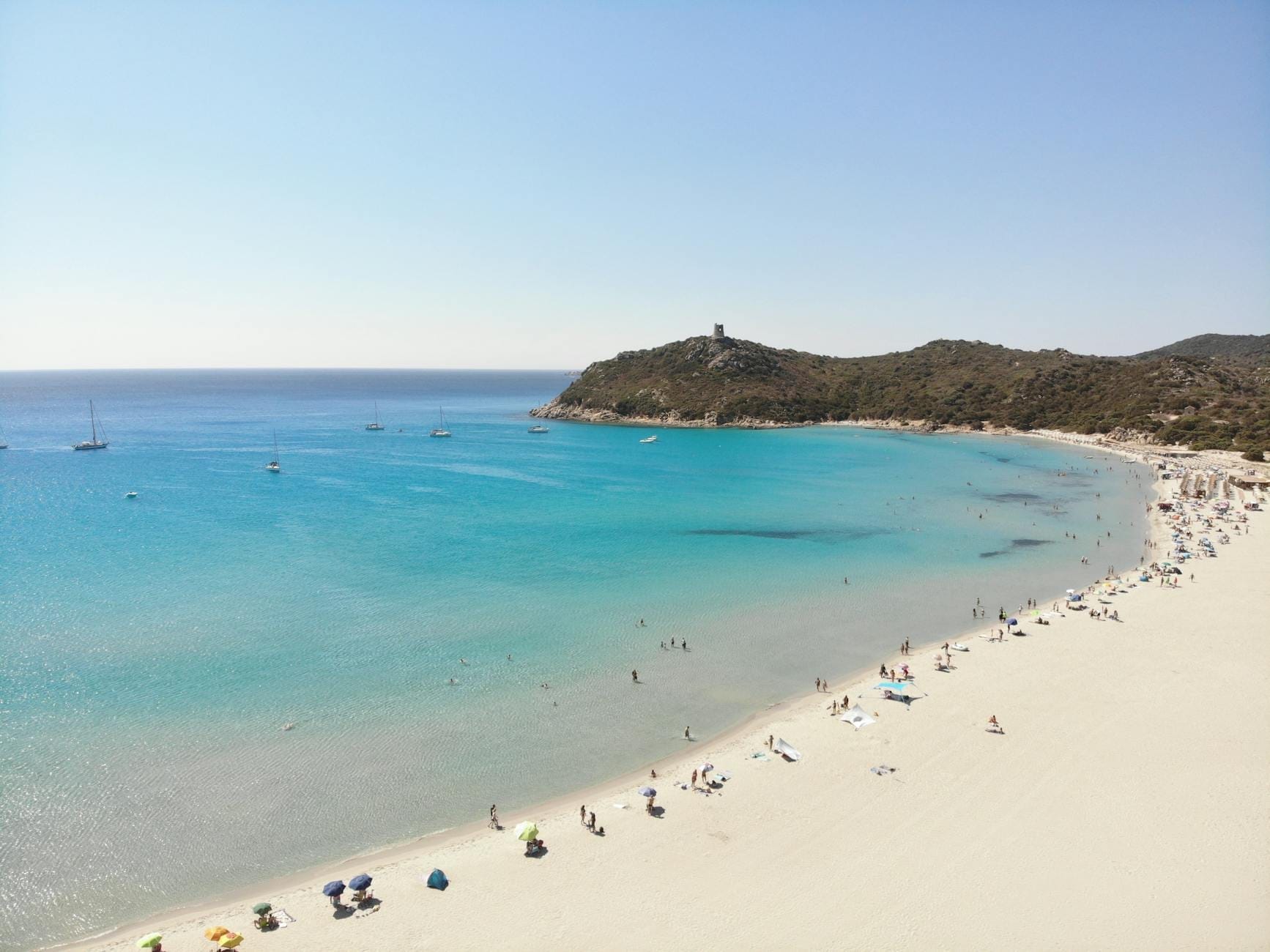
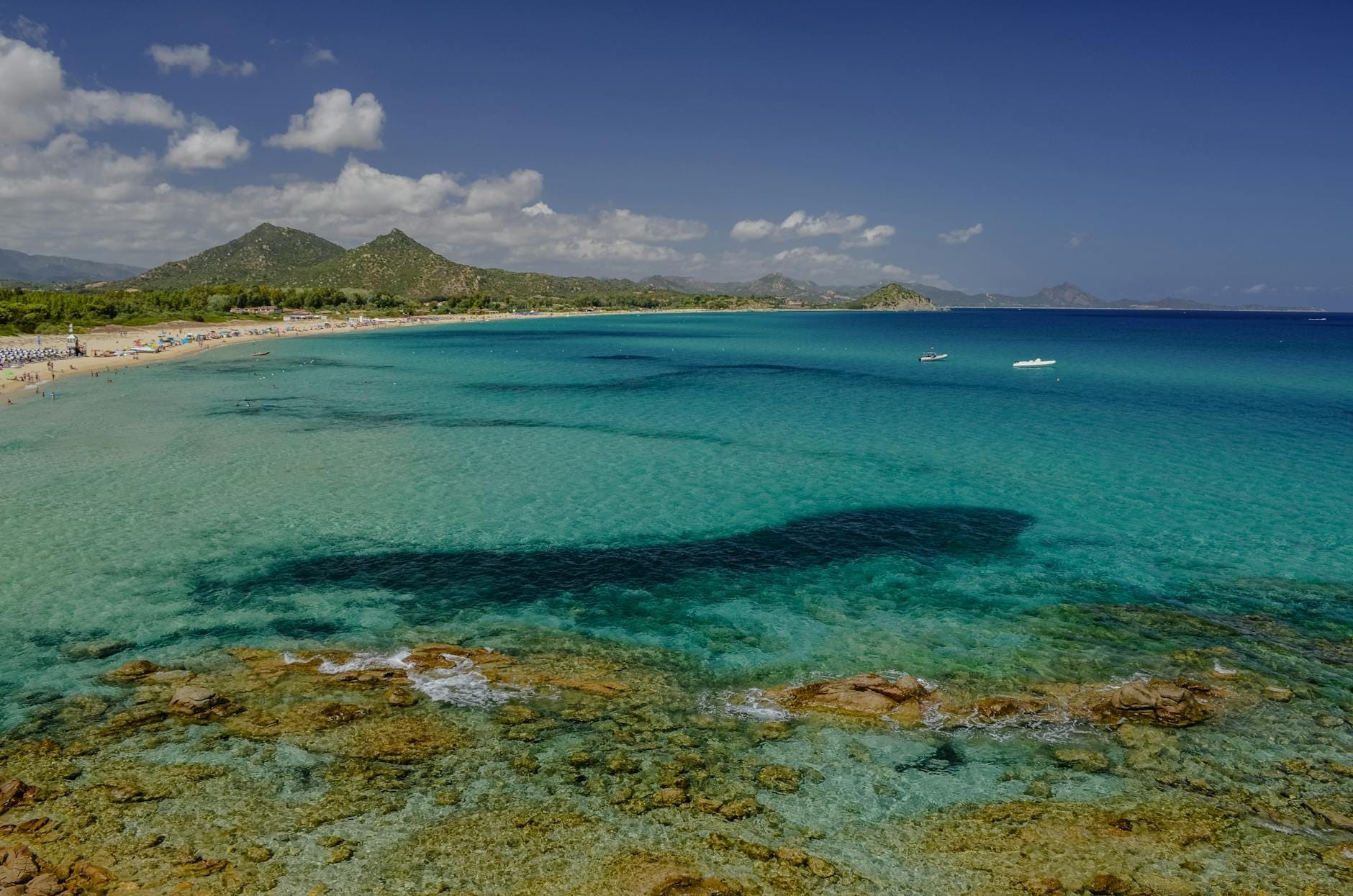
Costa Rei has a different rhythm. It is essentially a resort corridor without a real village centre, and in peak season the beach is the social space. From July to mid-August, the 10 kilometres of white sand between Capo Ferrato and the southern end of the beach fill steadily. The water is shallow for a long way out and the sand is fine and pale. Families dominate. The bars on the beachfront do a steady trade in granita and Aperol spritzes as the afternoon light turns gold. By evening, the beach is almost empty, and the action shifts to the restaurant strips and rental villa terraces.
Outside of peak season, the character changes noticeably. In May, June, and September, both areas are peaceful. The water is still warm enough to swim, the beaches are uncrowded, and prices are considerably lower. Many facilities at Costa Rei only operate from June to September, so visiting in early May means some beach bars and rental equipment operators will be closed or not yet set up. Villasimius, with its permanent resident population and year-round services, is more reliable outside peak season.
What to See & Do
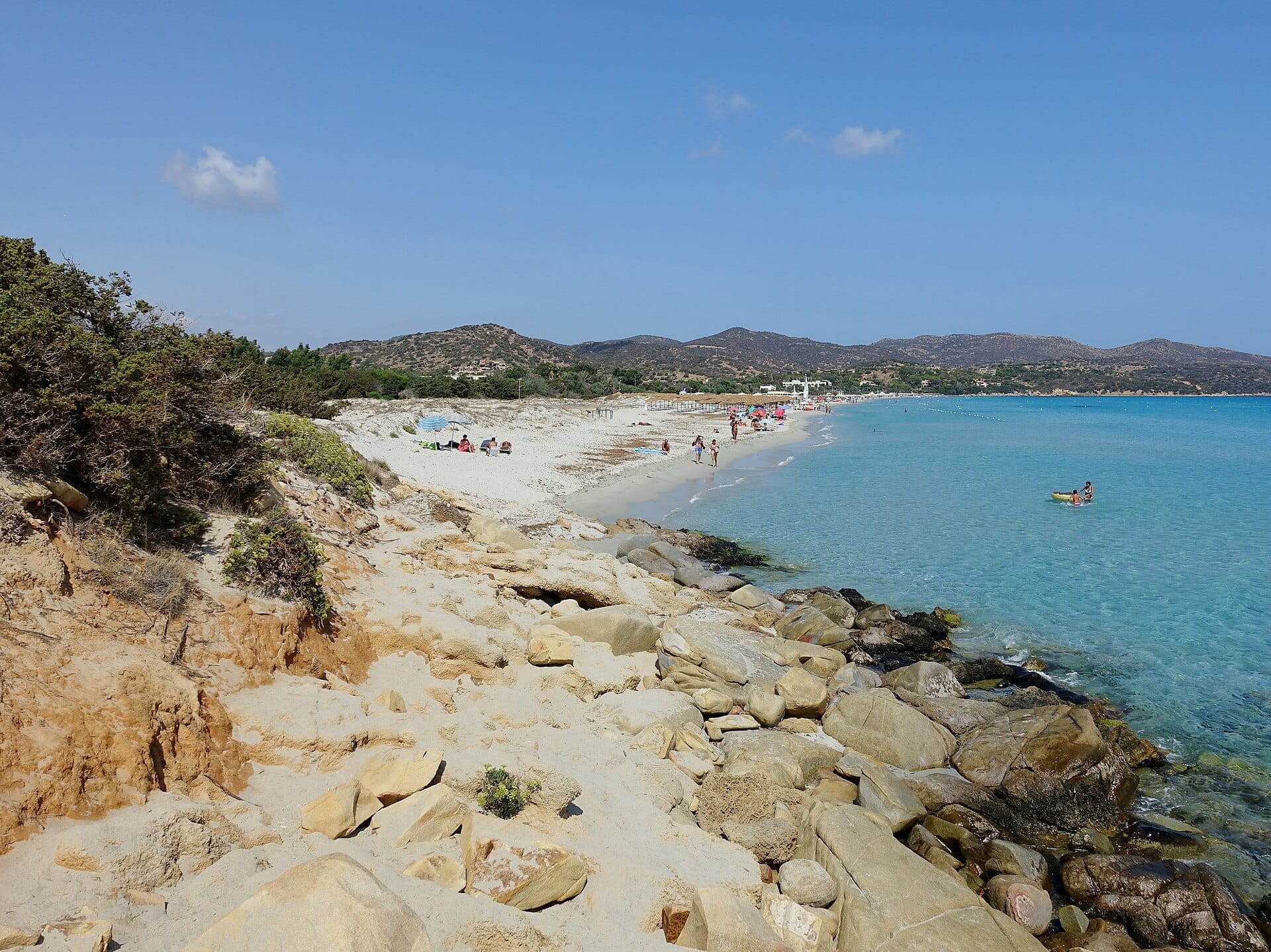
The coastline itself is the main draw. Spiaggia di Villasimius and the Notteri lagoon area rank among the most photographed spots on the island's southern coast. Spiaggia del Simius, immediately south of the town, offers calm, clear water and easy access, while the more exposed beaches to the north of town, like Spiaggia della Fortezza and Campus, draw those looking for slightly less crowded options.
The Porto Giunco beach at Villasimius is one of the area's standouts: a double-curved bay sheltered by headlands with a shallow turquoise entry that deepens gradually. The sandbar between the sea and the Notteri lagoon runs alongside it, making the walk between the two a visual experience in itself.
Snorkelling and diving in the Capo Carbonara Marine Protected Area, where clear water and fish populations are noticeably richer than unprotected stretches
Boat trips to Isola dei Cavoli and Isola di Serpentara, departing from Villasimius harbour
The Museo Archeologico di Villasimius, a small but well-curated collection of finds from the sea floor and from the nearby Nora-area trade routes
Hiking or cycling the Monte Arcosu area near Uta, a WWF-managed nature reserve in the hills northwest of Cagliari
Flamingo watching at the Notteri lagoon, best from spring through autumn
Kayaking along the Costa Rei coastline from Capo Ferrato south toward Cala Sinzias
For those interested in extending their time in the southeast, the archaeological site at Nora lies on the opposite side of Cagliari on the southwest coast, about 90 minutes' drive away, and is worth combining with a wider regional loop. Day trips from the Villasimius area toward the Ogliastra coast to the north are also possible, though the road via the SS125 through Muravera is scenic but slow.
💡 Local tip
Boat trips from Villasimius harbour are the best way to access the most protected coves around Capo Carbonara and to reach the offshore islands. Book in advance during July and August, when places sell out early in the day. Several operators offer half-day and full-day excursions; the tourist office in Villasimius can advise on current licensed operators.
Eating & Drinking
Villasimius has the most diverse food scene in the area, with a range of restaurants from simple pizzerias to seafood-focused trattorias and a few places aiming at a slightly more refined clientele. The streets around the main piazza and leading towards the port area concentrate most of the options. In summer, competition is healthy and quality generally holds up, though prices are higher than you would pay for equivalent food in Cagliari.
Sardinian seafood is the natural choice here: fresh-caught sea bream, sea bass, and mullet prepared simply, bottarga (pressed and dried mullet roe) shaved over pasta, and fregola cooked with clams in a tomato and white wine broth. These are not tourist inventions but standard local preparations that appear in most restaurants. For a fuller picture of what to eat and drink across the island, the Sardinia food guide covers the regional pantry in detail.
Costa Rei's dining is more limited and more seasonal. The strip of restaurants and bar-restaurants along and near Via C. Colombo at Monte Nai operates mainly from June to September. Most serve straightforward Italian beach resort food: pasta, grilled fish, pizza in the evenings, and generous aperitivo spreads. Standards vary more than in Villasimius. The better strategy is to self-cater for lunches using the supermarket in Villasimius and save restaurant eating for dinners.
Wine drinkers should look for Cannonau (the local Grenache) and Vermentino di Sardegna on restaurant lists. Both are produced across the island and pair well with grilled fish and seafood pasta respectively. The Sardinia wine guide explains the regional designations and what to look for on a label.
Getting There & Around
The nearest major airport is Cagliari Elmas Airport (IATA: CAG), located about 7 kilometres northwest of Cagliari city centre. From the airport to Villasimius, the drive is roughly 55 kilometres, following the SS554 ring road east before joining the SS125 southeast toward Villasimius. The journey takes between 55 minutes and 1 hour 15 minutes depending on traffic, which can be heavy on summer weekends and Friday afternoons.
A rental car is the most practical option for anyone staying in this area. The coastal roads between Villasimius, the various beaches, and Costa Rei are not served by frequent public transport, and the distances are too large to cover comfortably without a vehicle. Car hire is available at Cagliari airport from all major operators; booking in advance is strongly advisable in July and August. Roads in the area are mostly in good condition but can be narrow and winding in the Sarrabus hills, and some beach access tracks are unpaved.
ARST regional buses connect Cagliari with Villasimius on a limited schedule, and there are services toward Muravera and Costa Rei, but frequencies are low and services reduce further outside summer. The ARST website lists current timetables, which should be verified before travel as seasonal schedules change. For a broader overview of getting around the island, see the guide to getting around Sardinia.
From Cagliari to Costa Rei, the most direct road route goes via the SS130, joins the SS554, then follows the SS125 direction Muravera before turning toward Castiadas and the Monte Nai junction for Costa Rei. Total distance is around 80 kilometres from Cagliari, taking approximately 1 hour 20 minutes to 1 hour 40 minutes by car. Within the Costa Rei area itself, a bike or scooter is sufficient for moving between beach access points along the main coastal strip.
⚠️ What to skip
There is no motorway network in Sardinia. Journey times on the SS125 can stretch significantly in peak season, particularly on Saturday turnover days when rental villas change hands. If you are arriving by car on a Saturday in August, allow extra time. Fuel stations become sparse south of Cagliari and are limited in the Sarrabus zone between Villasimius and Costa Rei, so fill up before leaving the city.
Where to Stay
Villasimius town is the better base for those who want a mix of beach access and some local life. There are hotels, B&Bs, and apartment rentals within walking distance of the centre, and having a proper town nearby makes evenings more varied. It also means you are not wholly dependent on a single beach. Costa Rei suits those who want a pure beach holiday with a rented villa or apartment, direct beach access, and no real need to go anywhere. For a wider look at accommodation options across the island and how to decide where to base yourself, the where to stay in Sardinia guide is a useful starting point.
The Costa Rei accommodation market is dominated by villa and apartment rentals rather than hotels. Weekly rentals are standard, and the market is strongly seasonal: prices from late June to mid-August are significantly higher than shoulder months, and many properties do not offer short stays during peak weeks. Booking three to six months ahead is not excessive for the best properties in this window.
For families, Costa Rei's shallow, calm water and the low-key resort environment work well. The area is very child-friendly, with minimal road traffic near the beach areas and plenty of space on the sand. Villasimius is also suitable for families and has slightly more infrastructure. For more on travelling Sardinia with children, the guide to Sardinia with kids covers the practicalities.
Couples looking for a quieter, more relaxed version of Sardinia's coastal appeal will find the shoulder season (May to early June, or September to mid-October) well suited to this area. The beaches are uncrowded, the water is warm enough to swim, and prices drop substantially. For honeymoon or romantic travel ideas across the island, the Sardinia honeymoon guide provides additional context.
When to Visit
The southeast coast of Sardinia has a classic Mediterranean climate: dry, hot summers from June to September, mild and occasionally wet winters, and reliable shoulder seasons on either side. The sea temperature allows comfortable swimming from May to October. For a detailed breakdown of seasonal conditions across the island, the Sardinia weather guide and the monthly guides for May and September provide specific advice.
July and August bring peak crowds, peak prices, and guaranteed sun. The beaches at both Villasimius and Costa Rei fill up significantly, particularly at weekends when visitors from Cagliari arrive in numbers. This is when the coast is at its most lively but also its most congested: parking at popular beach access points can be extremely competitive, and restaurant queues without reservations are common.
The most balanced time to visit is June or September, when sea temperatures are still high, tourist density is manageable, and the full range of services is operational. Early October remains possible for beach visits in good years, and the hinterland is particularly pleasant for walks and drives through the Sarrabus hills when the summer heat has lifted. November through April is quiet to the point of emptiness; many Costa Rei facilities close entirely, and Villasimius reverts to a small town with limited visitor services.
💡 Local tip
If you are visiting in summer and want to avoid the worst beach parking scrambles, arrive at the beach before 9am or after 5pm. Many beaches on this coast are at their best in the early morning anyway, when the light is low and the water surface is still calm. Evening swims, after the crowds have gone, are one of the area's underrated pleasures.
Practical Information
Sardinia is part of Italy and therefore the eurozone. Currency is the euro (EUR). The emergency number is 112, as across the EU. Italian tap water is generally potable, though it is worth checking local notices in smaller resort areas. Tipping is not mandatory in Italian restaurants; a small amount left at your discretion is appreciated but not expected. If visiting religious sites, shoulders and knees should be covered, though there are few churches of significance within the immediate resort zone.
Italian electrical sockets use Type C, F, and L plugs at 230V/50Hz. Standard EU or Italian travel adapters cover the main plug types. Sardinia follows Central European Time (CET, UTC+1) in winter and Central European Summer Time (CEST, UTC+2) during daylight saving, in line with mainland Italy. Citizens of EU and EEA countries can enter with a national ID card; most non-EU visitors from countries including the US, Canada, Australia, and Japan can enter visa-free for stays up to 90 days within a 180-day period under Schengen rules. Visa requirements should be verified with official EU or Italian government sources before travel, as they are subject to change.
TL;DR
Villasimius and Costa Rei are Sardinia's most rewarding southeast beach destinations: exceptional water quality, long stretches of white sand, and a marine protected area that keeps the coastline in excellent condition.
A rental car is essential. Public transport connections exist but are infrequent, and the area's beaches and coastal roads are not navigable without your own vehicle.
Villasimius town suits travellers who want a beach base with some local infrastructure; Costa Rei suits those who want a pure villa-and-beach holiday with minimal urban distractions.
June and September offer the best balance of conditions: warm sea, manageable crowds, and reasonable prices. July and August are reliable for weather but significantly busier and more expensive.
The Capo Carbonara Marine Protected Area adds genuine ecological interest: snorkelling and diving here are among the best experiences on the island's southern coast, but boat rules and zone restrictions must be respected.
Fourteen days is the right amount of time to properly explore Sardinia's four coastlines, mountainous interior, and ancient ruins. This itinerary covers the full circuit by car, from Cagliari in the south to Alghero in the northwest, with practical advice on timing, logistics, and where to skip the tourist traps.
Sardinia has about 1,850 kilometres of coastline and some of the clearest water in the Mediterranean. This guide covers the best beaches across the island, from the famous to the hard-to-reach, with practical advice on access, crowds, and when to go.
Sardinia rewards visitors differently depending on when they arrive. This guide cuts through the vague advice to explain exactly what each season delivers, from peak-summer beach conditions to spring wildflower hikes and quiet winter city breaks, so you can match your trip to your priorities.
Cagliari sits at the southern tip of Sardinia, placing you within striking distance of some of the island's finest beaches, archaeological sites, and natural landscapes. These 20 day trips range from quick 30-minute drives to full-day adventures into the island's wild interior.
Sardinia covers 24,090 km² of mountains, coastline, and rural roads with no motorways. This guide breaks down every realistic transport option, from renting a car to catching the right ferry, so you can plan a trip that actually works.
Sardinia is far more than a beach destination. Its limestone canyons, granite peaks, and ancient shepherd paths offer some of the most dramatic hiking in the Mediterranean. This guide covers the best trails from day walks to multi-day epics.
Sardinia is Italy's second-largest island and one of the Mediterranean's most remarkable destinations — but it rewards those who plan well and punishes those who assume it's just another beach holiday. This guide cuts through the marketing to give you a clear-eyed picture of what Sardinia offers, who it suits best, and what to expect.
Sardinia delivers some of Europe's most coveted luxury travel experiences, from the yacht-lined marina at Porto Cervo to secluded villas with private pools above crystalline coves. This guide breaks down where to stay, when to go, and how to build a high-end Sardinian itinerary that goes beyond the obvious.
Olbia is where most visitors to northeast Sardinia first set foot, then immediately drive away toward Costa Smeralda. That's a mistake. This guide covers what the city actually offers, from its Nuragic roots and early Christian basilica to boat trips around Tavolara, the best nearby beaches, and everything you need to arrive, orient yourself, and explore the Gallura region properly.
Seven days in Sardinia is enough time to experience the island's best beaches, ancient sites, and coastal scenery — but only if you plan carefully. This day-by-day itinerary covers the most rewarding route, with practical logistics, timing advice, and the practical details most guides leave out.
Agriturismo is one of the most rewarding ways to experience Sardinia beyond the coast. This guide covers what a real agriturismo is, where to find the best ones, what food to expect, prices to budget for, and how to avoid countryside guesthouses masquerading as working farms.
Sardinia is home to the world's first identified Blue Zone, a cluster of inland villages in the Ogliastra region where living past 100 is far from unusual. This guide breaks down the research, the lifestyle factors, the villages worth visiting, and how to experience the culture behind the longevity — without the tourist traps.
Sardinia's most spectacular landscapes are only reachable by water. This guide covers the best boat trips across the island, from the pink-sand coves of La Maddalena to the towering limestone cliffs of the Gulf of Orosei, with tips on what to expect, when to go, and how to book.
Sardinia has some of the most spectacular camping terrain in the Mediterranean, from cliff-backed coves to pine-shaded coastal pitches. But the rules around wild camping are strict and widely misunderstood. This guide covers the legal framework, regional campsite highlights, realistic costs, and seasonal booking strategy.
Two islands, 11 km apart, yet remarkably different in culture, cost, and character. This guide breaks down the real differences between Sardinia and Corsica so you can choose the one that actually matches your trip.
Sardinia's festival calendar runs nearly year-round, from winter carnival traditions to autumn food fairs. This guide covers the major events by season, what to expect at each, and how to plan your trip around them without getting caught off-guard.
Sardinian food is not Italian food with a regional accent — it is a cuisine shaped by centuries of pastoral life, coastal abundance, and fierce cultural independence. This guide covers the dishes you need to try, the wines worth seeking out, and how to eat well without getting steered toward the tourist menu.
Sardinia rewards those who look beyond the famous beaches. This guide uncovers the island's lesser-known archaeological wonders, dramatic inland landscapes, and coastal stretches that see a fraction of the summer crowds, from Bronze Age cities to wild dune deserts.
Sardinia delivers some of the Mediterranean's most striking coastal scenery, and it rewards couples who look beyond the obvious. This guide covers the best romantic beaches, the right season to visit, where to base yourself, and the experiences that actually make a trip feel special rather than simply scenic.
May and June are arguably the best months to visit Sardinia. Temperatures sit in the low-to-mid 20s°C, rainfall is minimal, beaches are largely empty, and prices are a fraction of August rates. This guide covers everything you need to plan a trip during Sardinia's sweet spot.
September and October are arguably the smartest months to visit Sardinia. The sea is still warm, the beaches clear out, prices drop by up to 50% compared to August, and the island's food and culture festivals hit their stride. This guide covers everything: what the weather is really like, which beaches and attractions to prioritize, what closes early, and how to plan a trip that beats the summer crowds without missing out on anything.
July and August in Sardinia mean scorching heat, crystal-clear water, and the most crowded beaches in the Mediterranean. This guide breaks down exactly what to expect: temperatures, sea conditions, crowd patterns, transport logistics, and the honest trade-offs of visiting during peak season.
Sardinia's drink culture runs much deeper than Cannonau and Vermentino. From bitter chinotto and blood orange spremuta to coffee granita and herbal aperitivi, the island offers a full range of non-alcoholic options rooted in Italian tradition. This guide covers what to order, when to order it, and what to expect to pay.
Sardinia holds more than 7,000 surviving nuraghe, making it the richest Bronze Age landscape in the Mediterranean. This guide covers the essential Nuragic sites across the island, from towering fortress complexes and sacred wells to rock-cut tombs, colossal stone statues, and hidden village ruins inside mountain sinkholes.
Sardinia has a reputation as a playground for superyachts and celebrity holidays. That reputation is earned in places like Costa Smeralda — but it doesn't apply to the rest of the island. With the right timing, transport choices, and a few local habits, visiting Sardinia on a budget is entirely realistic. This guide breaks down exactly how.
Sardinia rewards self-drivers more than almost anywhere in the Mediterranean. This guide covers everything you need: which airport to fly into, how long routes actually take, when to go, what to rent, and the coastal and inland drives worth building your itinerary around.
Sardinia has some of the clearest water in the Mediterranean, protected by a network of marine reserves that have allowed groupers, barracuda, and Posidonia seagrass meadows to thrive. This guide covers the best snorkelling and diving destinations across the island, from the sheltered coves of the Golfo di Orosei to the offshore shoals of Capo Caccia and the archipelago waters of La Maddalena.
Sardinia has one of the most reliable Mediterranean climates in Europe, but the difference between a perfect trip and a sweaty, overpriced one often comes down to timing. This guide breaks down Sardinia's weather month by month, covers regional climate differences, and tells you exactly when to visit based on what you want to do.
Sardinia is one of Europe's premier destinations for windsurfing and kitesurfing, with reliable Mistral winds, warm water, and spots suited to everyone from first-timers to competition riders. This guide covers the island's top locations, from the world-famous flats of Porto Pollo to the wave-lashed beaches of the south.
Sardinia produces some of Italy's most distinctive wines, from the rich, age-worthy Cannonau of the Barbagia highlands to the mineral Vermentino di Gallura DOCG on the granite soils of the northeast. This guide covers every major grape, appellation, regional style, and where to taste them on the island.
Sardinia is one of the Mediterranean's top destinations for families, with shallow turquoise bays, a long swimming season, and a wealth of activities beyond the beach. This guide covers the best family-friendly beaches by region, when to go, how to get around, and what to do when the kids have had enough sun.
Sardinia rewards travelers who look beyond its famous beaches. This guide covers the island's top experiences — prehistoric ruins, sea caves, coastal hikes, boat trips, and cultural towns — with practical advice on timing, costs, and what to skip.
Sardinia is bigger than most visitors expect, and picking the right base makes or breaks a trip. This guide breaks down every major area, from the glamour of Porto Cervo to the cultural depth of Cagliari, with practical advice on prices, seasonal timing, and how many bases you actually need.