Dongdaemun is Seoul's fashion and design district, anchored by the landmark Dongdaemun Design Plaza and surrounded by wholesale clothing markets that run through the night. It sits at the crossroads of historic and contemporary Seoul, where the old city gate stands within walking distance of a Zaha Hadid landmark, and where the streets are genuinely busier at 2am than at 2pm.
Dongdaemun is the district Seoul never sleeps in. Anchored by the Zaha Hadid-designed Dongdaemun Design Plaza and encircled by Korea's largest wholesale fashion market, it operates on a schedule unlike any other neighborhood in the city: quieter in the early afternoon, fully awake by midnight. This is where garment traders, design students, tourists, and street food vendors all share the same pavement, under the glow of towers that stay lit until dawn.
Orientation
Dongdaemun sits in the eastern-central part of Seoul, east of Gyeongbokgung Palace and northeast of Myeongdong. Dongdaemun-gu is a full district, but when most visitors say 'Dongdaemun,' they mean a smaller, denser commercial zone centered on the Dongdaemun History and Culture Park station area, straddling parts of Jung-gu and nearby districts.
The neighborhood's spine is Cheonggyecheon Stream, which flows westward along the southern edge of the market district before continuing toward Gwanghwamun. To the north, the terrain rises gently toward the Seoul City Wall and Naksan Park. To the south, the streets flatten out and connect quickly to Sindang-dong and Seongdong-gu. The result is a neighborhood that feels genuinely transitional: history to the north and west, creative industry to the south, and commerce at its center.
Dongdaemun connects naturally to several adjacent neighborhoods worth combining into a day's itinerary. Jongno and Bukchon lie to the west, offering palaces and traditional alleyways. Seongsu, Seoul's design-forward industrial district, is a 15-minute subway ride southeast. For travelers trying to plan a wider itinerary, the 3-day Seoul itinerary positions Dongdaemun well as an evening or night stop rather than a morning anchor.
Character and Atmosphere
Dongdaemun has a split personality that makes it unlike anywhere else in Seoul. In the late morning, the area around the DDP and Cheonggyecheon is relatively calm: joggers move along the streamside path, vendors set up stalls, and the geometric silver surface of the DDP catches the light in ways that reward a slow walk around its perimeter. The old Heunginjimun gate, the Great East Gate from the Joseon-era city wall, sits nearby.
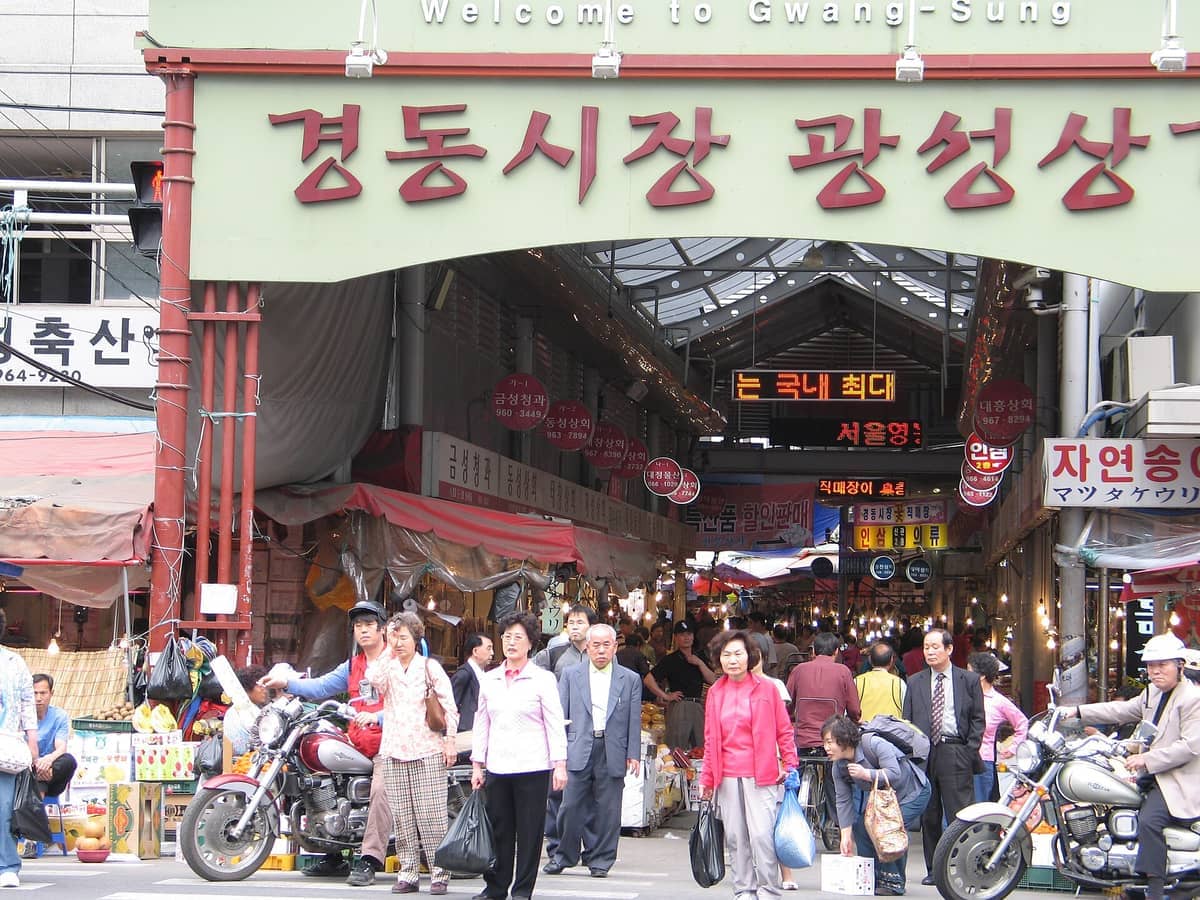
By the afternoon, the wholesale fashion towers start stirring. Buildings like Doota Mall and the cluster of markets along Cheongpyeong-ro fill with buyers carrying large vinyl bags. The streets between the towers narrow and specialize: one block handles fabrics, another is dedicated to trimmings and buttons, another to finished garments. This isn't primarily a tourist shopping zone in the afternoon; it's a working trade district, and the energy reflects that.
After 10pm, the character shifts again, completely. The fashion towers extend their opening hours, the street food stalls along the market perimeter reach full capacity, and the lighting changes from daylight white to neon. Tour buses arrive from other parts of Seoul and from across Korea. The Cheonggyecheon stream walkway fills with couples. The noise level climbs steadily until around 1 or 2am, when the trading floors are at their most active. If you arrive expecting a quiet evening, Dongdaemun will surprise you. If you arrive expecting the city at its most switched-on, it will deliver exactly that.
ℹ️ Good to know
Many of Dongdaemun's wholesale fashion markets operate on unusual hours: they open in the late evening (typically around 8–10pm) and trade through the night until early morning. Retail-oriented floors within the same buildings often keep more conventional hours. Check individual building hours before planning your visit.
What to See and Do
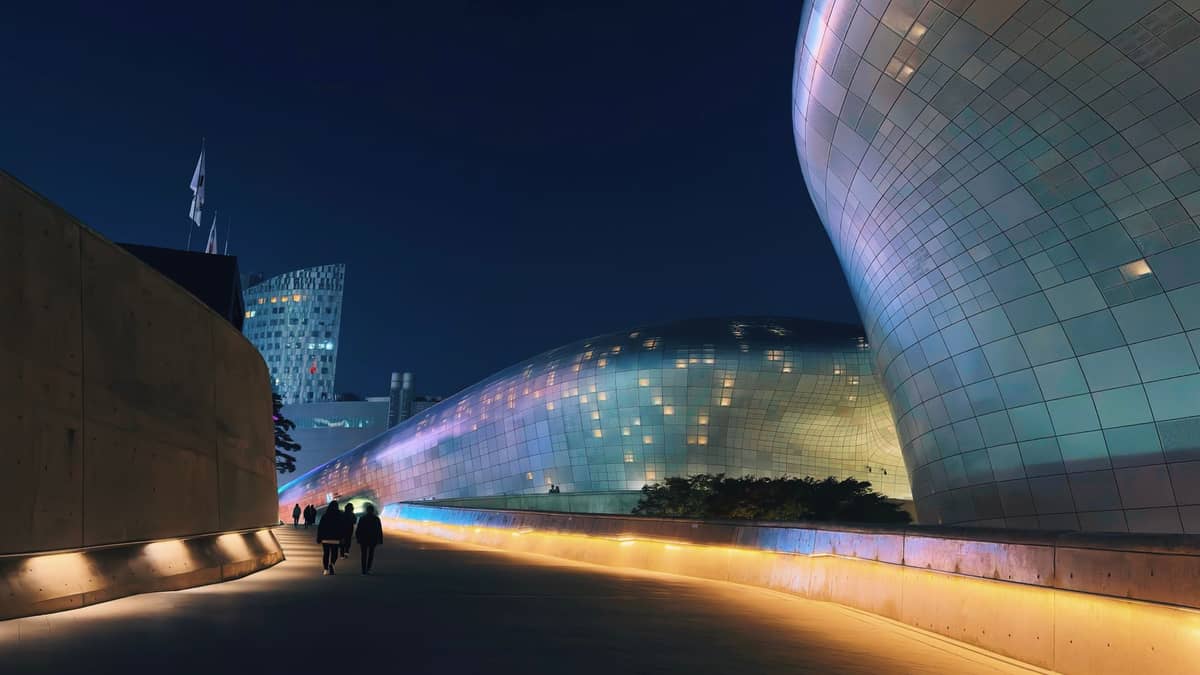
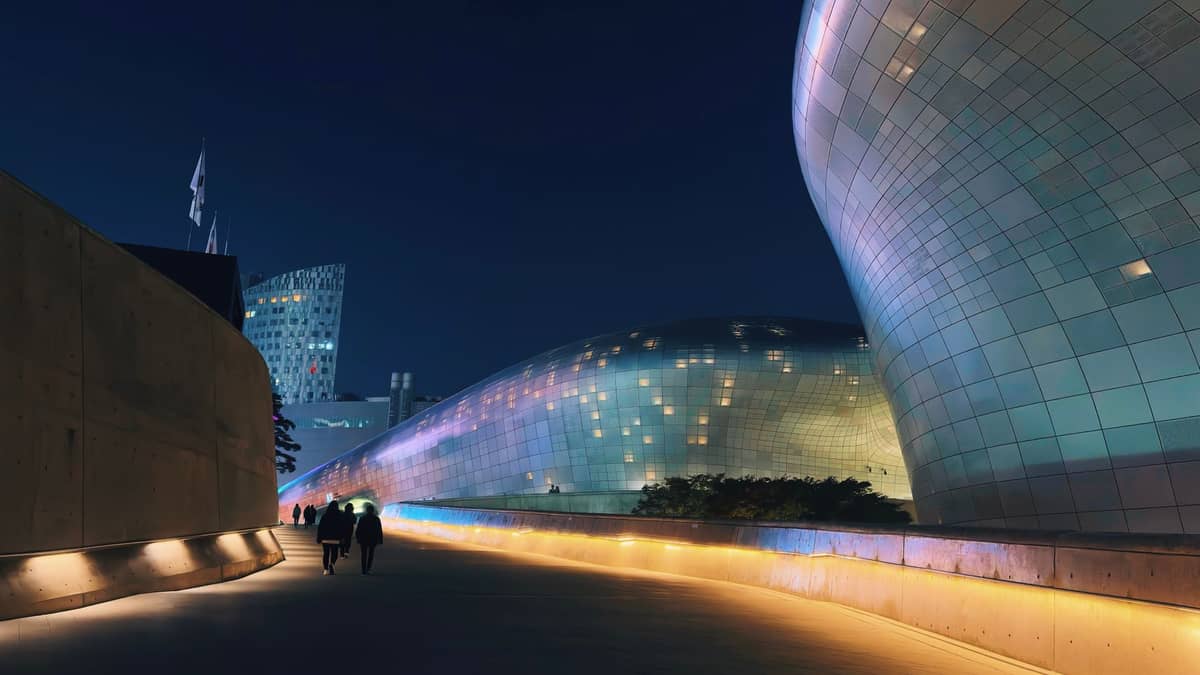
The unmissable starting point is the Dongdaemun Design Plaza, designed by the late Zaha Hadid and completed in 2014. The DDP is more than a landmark building — it houses rotating design exhibitions, fashion shows, and cultural events across its fluid, curve-heavy interior. Even without entering for a paid exhibition, the exterior is worth time: the aluminum-clad surface, the moat-like excavated archaeological site alongside it, and the scale of the structure make it a genuinely arresting piece of urban architecture. Evening visits, when the building is lit up, are especially striking.
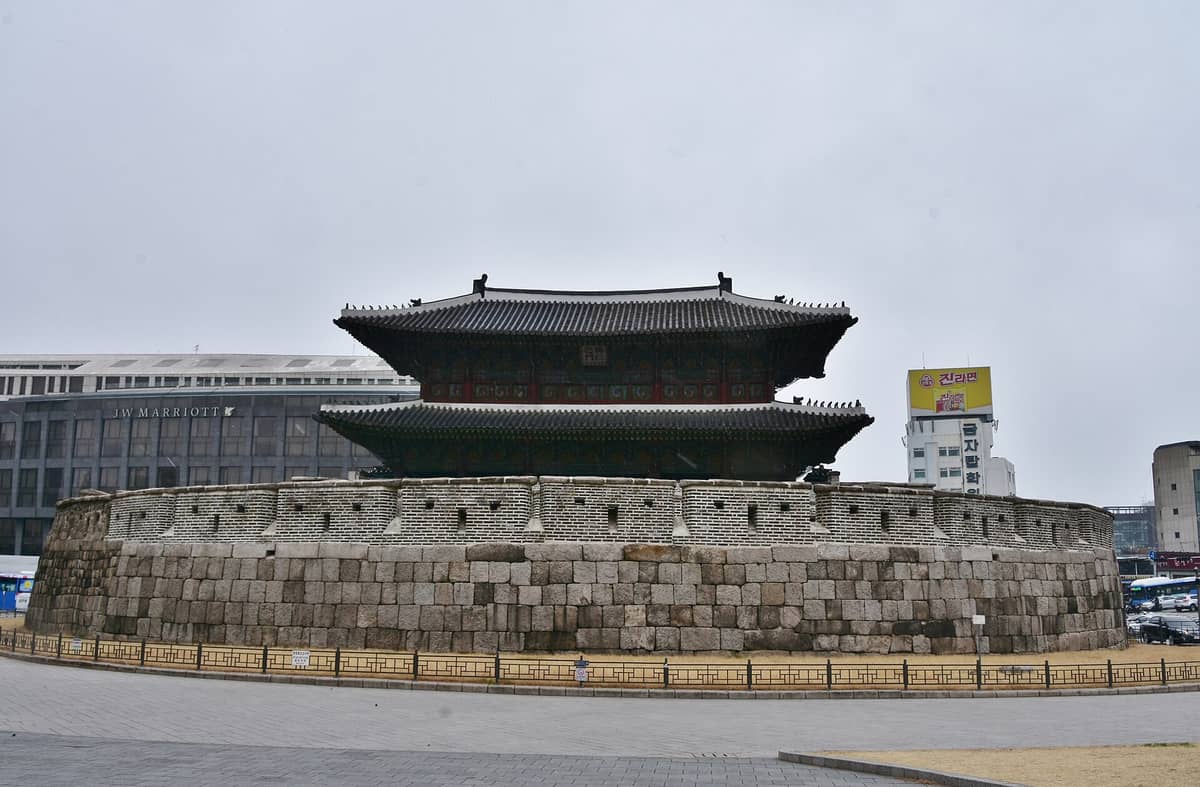
Just north of the DDP, the Heunginjimun Gate stands as one of the four great gates of Seoul's old city wall, dating to the Joseon dynasty. It sits in the middle of a busy intersection, which sounds unglamorous but actually adds something to the experience: the contrast between the 600-year-old wooden gate and the neon-lit wholesale towers behind it captures the specific texture of this part of Seoul better than any single photograph could.
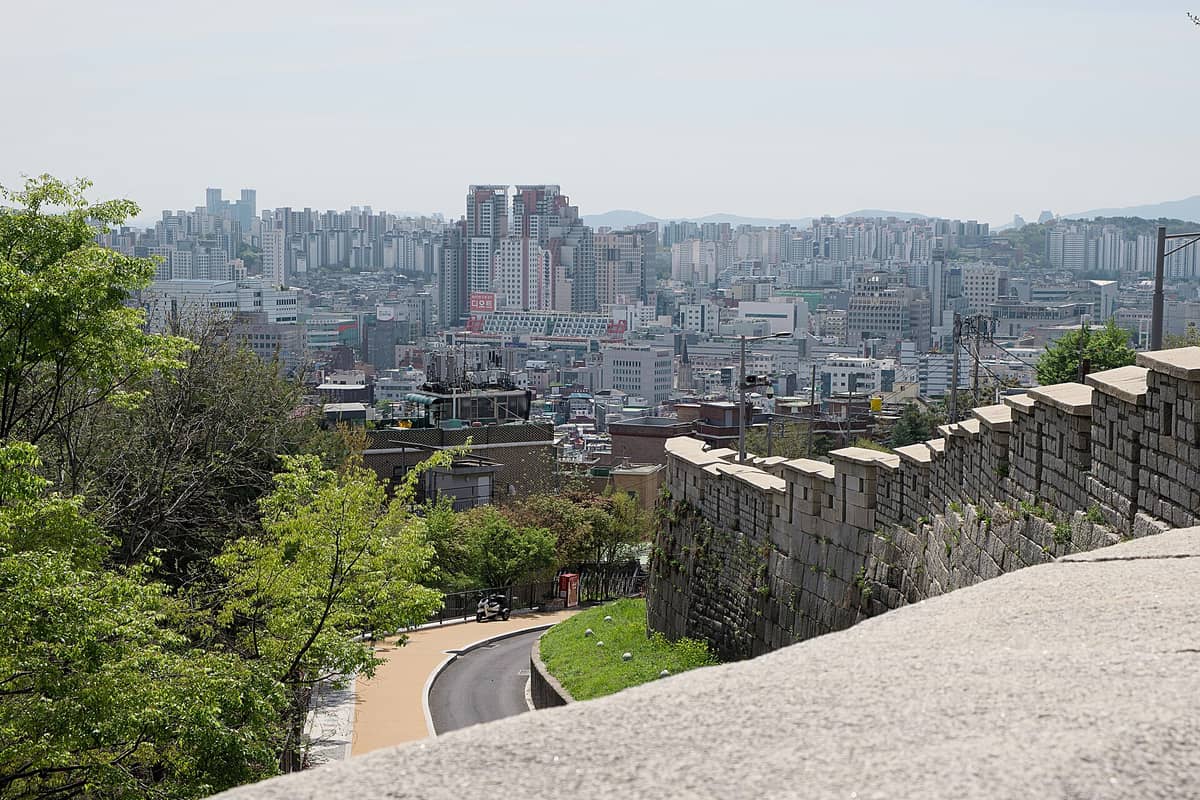
North of the main market district, the trail of the Seoul City Wall climbs toward Naksan Park, offering elevated views back over the Dongdaemun district and across to Namsan beyond. This section of the wall is less walked than the Bugaksan or Inwangsan stretches, which means it tends to be quieter. The approach from Naksan Park side is uphill but manageable. Sunrise from the wall ramparts on a clear morning, looking west over the old city, is worth the early alarm.
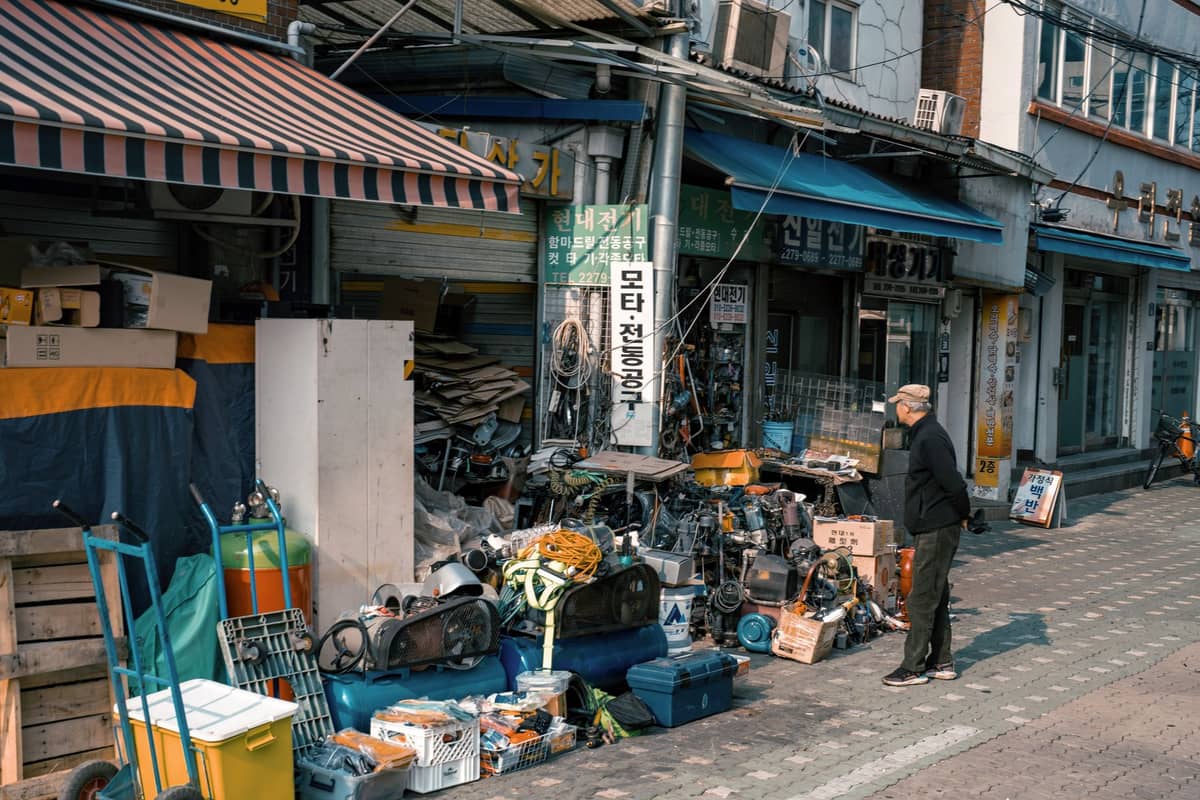
For a different kind of market experience, the Dongmyo Flea Market sits just one subway stop west on Line 1. It's one of Seoul's most atmospheric vintage and secondhand markets, with a noticeably older crowd than the fashion towers and prices that reflect genuine bargaining rather than fixed retail. Combining Dongmyo with an evening at the fashion markets gives a useful sense of the full range of market culture in this part of the city.
Dongdaemun Design Plaza (DDP): architecture, exhibitions, and evening illumination
Heunginjimun Gate: the Great East Gate on its traffic island, best viewed at dusk
Seoul City Wall trail toward Naksan Park: city wall hiking with central Seoul views
Dongdaemun Market: wholesale fashion district, best explored late at night
Dongmyo Flea Market: nearby vintage market, two stops west on Line 1
Cheonggyecheon Stream: streamside walk connecting Dongdaemun toward the historic center
Eating and Drinking
Dongdaemun's food scene is shaped by its market culture and its unusual hours. The most famous eating experience in the area is the cluster of pojangmacha (tent bar-restaurants) and street stalls along the edges of the wholesale market district, which operate through the night and cater primarily to traders and night-market shoppers. Seoul street food staples like tteokbokki (rice cakes in spicy sauce), soondae (blood sausage), twigim (fried snacks), and gimbap are all present here in their most unpretentious forms: plastic stools, paper plates, and serious flavors.
The Sindang-dong neighborhood, just south of the main market area, is historically associated with the original tteokbokki alley, where the dish was reportedly popularized in its current sauce-based form. The street still exists and still specializes in tteokbokki variations. It's not a sophisticated dining destination, but it's a legitimate piece of Seoul food history and the portions are substantial.
Cafes have pushed into the streets surrounding the DDP, particularly along the Cheonggyecheon side, where the daytime foot traffic from design students and architecture tourists sustains a small cluster of specialty coffee shops. These are much calmer than the night market scene and offer a reasonable place to sit down after walking the DDP exterior. For sit-down Korean meals with a wider menu, the streets north of the market district and around Jegi-dong offer neighborhood restaurants oriented toward locals rather than tourists, with correspondingly lower prices.
💡 Local tip
If you're visiting for the night market, eat before midnight. The best pojangmacha stalls near the market entrances often run out of their most popular items by 1am. Arriving hungry at 2am and finding only cold leftovers is a common disappointment that an earlier meal prevents.
Getting There and Around
The central transit hub for Dongdaemun is Dongdaemun History and Culture Park Station (동대문역사문화공원역), served by subway Lines 2, 4, and 5. One stop north on Line 4 is Dongdaemun Station itself, which puts you closer to the gate and the older sections of the market. Heunginjimun Gate is a short walk from Dongdaemun Station.
From Myeongdong, the walk along Cheonggyecheon Stream to Dongdaemun takes around 25 to 30 minutes on foot. From Hongdae or Mapo, the direct connection is via Line 2 with no transfers required. From Gangnam, Line 2 can take you to Dongdaemun History and Culture Park Station in about 30 minutes, depending on the exact starting point and service.
Getting around within the neighborhood is mostly on foot. The main market cluster is compact enough to cover on foot in 20 minutes, though the internal scale of the individual market towers extends that considerably if you go inside. Taxis are easy to hail at street level around the DDP at all hours, and the Kakao T app works reliably here. For practical guidance on Seoul's wider transit network, the getting around Seoul guide covers T-Money card use, bus routes, and taxi apps in detail.
⚠️ What to skip
Dongdaemun's streets around the market towers are heavily trafficked by delivery vehicles and cargo trucks in the late night and early morning hours, particularly on the side streets between buildings. Pedestrian crossings exist but vehicles sometimes have priority of momentum. Stay on the raised pavements and use marked crossings, especially between midnight and 4am when the commercial traffic peaks.
Where to Stay
Dongdaemun has a reasonable spread of accommodation, from budget guesthouses to mid-range hotels, with several properties positioned to take advantage of the DDP view or proximity to the fashion district. The area suits travelers who want direct access to late-night shopping and street food, or those using Dongdaemun as a transit-convenient base for covering both the historic north of the city and the commercial south. For a broader comparison of Seoul's accommodation zones, the where to stay in Seoul guide maps out each district's trade-offs.
The streets immediately north of the DDP, toward the city wall and Naksan Park, have a quieter residential character and several smaller guesthouses and boutique hotels that offer more neighborhood atmosphere than the large commercial properties along the main market roads. If noise is a concern, prioritize accommodation on the northern or eastern side of the district rather than directly adjacent to the wholesale market towers, which generate significant ambient noise through the night.
Dongdaemun is not the obvious first choice for families with young children or travelers primarily interested in history and palaces: the district's energy runs late and the commercial atmosphere can feel overwhelming if you're not there for the markets. Travelers on a fashion-focused itinerary, night owls, design enthusiasts, and those wanting a central base with strong transit links will find it genuinely useful.
Honest Drawbacks
Dongdaemun rewards visitors who come with a specific purpose: the markets, the DDP, the street food at night. Visitors who wander in without a plan often find the area confusing and slightly overwhelming, with the sheer volume of commerce and signage making it difficult to identify what's worth stopping for. The wholesale market buildings in particular are designed for trade buyers who know exactly which floor and which supplier they want; a tourist wandering through them without context can feel lost and under-dressed simultaneously.
The daytime atmosphere, particularly from around noon to 6pm, is the neighborhood's weakest period. Many market areas are partially closed or in a transitional state, the streets lack the energy of the evening, and the area can feel like a building site between performances. The DDP and the stream are the exceptions, but they don't fill a full day on their own. Plan Dongdaemun as a late-afternoon-into-evening destination rather than an all-day base.
The area is safe in the conventional sense: petty crime is not a particular concern, and the night market crowds, while dense, are orderly. The main practical issues are noise, commercial intensity, and the challenge of navigating buildings not designed with casual tourists in mind. Travelers seeking traditional Seoul atmosphere should combine Dongdaemun with a visit to Ikseon-dong Hanok Village or the Insadong gallery district, both accessible within 20 minutes.
TL;DR
Dongdaemun is Seoul's all-night fashion and design district, best experienced from late afternoon through midnight rather than during the day.
The Dongdaemun Design Plaza is a genuine architectural landmark and the best reason to visit even if markets aren't your interest.
Street food around the market perimeter, especially tteokbokki and pojangmacha stalls, is among the most characterful late-night eating in Seoul.
Strong subway access on Lines 2, 4, and 5 makes it an easy addition to any Seoul itinerary, though it works better as an evening stop than a base.
Not ideal for travelers who prefer quiet evenings, daytime sightseeing, or traditional neighborhood atmosphere without commercial intensity.
Three days is enough to get a real feel for Seoul, if you plan by neighborhood instead of trying to crisscross the city. This itinerary covers historic Joseon-era Seoul, the commercial and cultural center, and the newer districts that define the city's contemporary identity, with practical logistics at every step.
Five days is enough to experience historic Seoul, its modern neighborhoods, and at least one compelling excursion beyond the city. This guide organizes each day by district to minimize transit time, with a clear take on what's worth it and what isn't.
Seoul has a deep museum scene, from Korea's vast national collection in Yongsan to cutting-edge contemporary art spaces and sobering historical sites. Whether you have a day or a week, these are the essential museums to put on your itinerary.
Seoul rewards visitors differently depending on the season. Spring brings cherry blossoms and mild temperatures, autumn delivers golden foliage and clear skies, summer is hot and monsoon-affected, and winter is cold but cheap. Here is exactly what to expect, month by month.
Seoul rewards those who look up, climb high, and stay out past sunset. This guide covers the city's finest panoramic viewpoints — from paid observation decks at record-breaking towers to free hilltop parks where locals gather at dusk to watch the city lights come on.
Bukhansan National Park sits inside Seoul's city limits yet delivers genuine mountain terrain, granite ridges, and a 836-meter summit. This guide covers the best trails, transit access, seasonal closures, and practical tips for first-timers and returning hikers alike.
Seoul's location in northwestern South Korea makes it a surprisingly strong base for day trips. From UNESCO fortresses reachable by subway to ancient capital cities served by KTX, this guide covers the best options with honest travel times, costs, and seasonal advice.
The Demilitarized Zone is one of the most visited sites in South Korea, yet most travelers arrive underprepared. This guide covers tour types, current prices, booking logistics, what you'll actually see, and the honest drawbacks before you commit.
Seoul is one of the most rewarding cities in the world to explore on a tight budget. From UNESCO-listed palaces and ancient city walls to world-class museums and sprawling riverside parks, an enormous amount of what makes Seoul great costs absolutely nothing to experience.
Seoul has one of the most efficient urban transit networks in the world, covering virtually every corner of the city by subway and bus. This guide breaks down fares, card options, airport connections, and the practical details that make the difference between a smooth trip and an expensive mistake.
Gwangjang Market is one of Seoul's oldest and most celebrated food destinations, known for bindaetteok, mayak gimbap, and raw beef yukhoe. This guide covers every dish worth ordering, how much to pay, when to go, and how to navigate the market like someone who has been there before.
Renting a hanbok in Seoul is one of the most photogenic things you can do in the city, and it costs less than a decent lunch. This guide covers where to rent, how much to pay, what to expect, and how to get the most out of your few hours in traditional dress.
Seoul preserves several distinct hanok districts, each with its own character. This guide covers the main options, practical logistics, seasonal crowd patterns, and a clear picture of what to expect before you visit.
Seoul rewards curious travelers who look past the obvious. This guide covers the city's lesser-visited neighborhoods, transformed industrial spaces, street art villages, and local markets — with practical logistics, seasonal advice, and a clear take on what's worth your time.
Seoul is one of the few world capitals where you can summit a real mountain, walk a 600-year-old fortress wall, and be back in the city for dinner. This guide covers the best trails for every level, from challenging granite peaks to gentle hilltop park strolls.
Seoul's jjimjilbangs are far more than bathhouses. They are all-hours social institutions where locals come to soak, sweat, eat, sleep, and decompress. This guide covers how they work, what everything costs, the unwritten rules of etiquette, and how to make the most of your visit whatever the season.
Seoul is the global epicenter of skincare innovation, and shopping for beauty products here is a genuinely different experience from buying Korean brands abroad. This guide covers the best stores, the smartest districts, what to prioritize buying, and how to avoid the common traps that leave tourists overpaying at airport duty-free.
Korean BBQ in Seoul is one of the city's defining food experiences, but navigating it well takes more than just showing up hungry. This guide covers the best restaurants by type, how to order confidently, what everything costs, and the etiquette mistakes that mark out first-timers.
Seoul is the undisputed capital of K-pop, but knowing where to actually go matters more than the hype suggests. This guide covers free landmarks, fan-friendly museums, live show recordings, shopping districts, and bookable experiences — with a clear take on what's worth your time.
From palatial five-star hotels in the historic north to slick Gangnam towers, this guide covers where to stay, eat, and spend at the top end — with a clear take on what's special and what's just expensive.
Seoul nightlife runs later, harder, and more diversely than almost any other city in Asia. From Hongdae's student club strips to Gangnam's bottle-service mega-clubs and Itaewon's underground electronic scene, this guide breaks down every major district, what to expect, and how to navigate a night out without the rookie mistakes.
Noraebang are private karaoke rooms at the heart of Seoul's nightlife culture. This guide covers the difference between coin and standard noraebang, where to find the best venues, what to expect, and how to get the most out of the experience without overpaying.
Seoul preserves five Joseon-era royal palaces within its city limits, each with a distinct character and history. This guide covers all five in depth, plus the essential sites, shrines, and neighborhoods that complete a palace-focused visit to the city.
Seoul's café scene is one of the most developed in Asia, divided across distinct neighborhoods where each district has its own personality. This guide breaks down the best coffee districts and concept cafés by area, with honest advice on timing, crowds, and what to actually order.
Seoul offers far more romantic depth than its reputation for K-pop and street food suggests. This guide covers the best things to do in Seoul for couples, from iconic landmarks and scenic parks to low-key neighborhood strolls, with seasonal advice and practical logistics throughout.
Autumn is widely considered the best time to visit Seoul, with crisp temperatures, golden ginkgo avenues, blazing maple trails, and a packed cultural calendar. This guide covers peak foliage timing, the top spots to see autumn color, seasonal festivals, practical logistics, and what most visitors overlook.
Spring is Seoul's most photogenic season, with cherry blossoms peaking in early April and festivals filling the city's parks and riversides. This guide covers bloom timing, the best viewing locations, what the weather is really like, and how to plan around the crowds.
Seoul winters are cold, dry, and genuinely rewarding for travelers who come prepared. From palace snow views to late-night pojangmacha street food, this guide covers everything you need to know about visiting Seoul from December through February.
Seoul's market scene spans centuries and neighborhoods, from ancient covered halls serving mung bean pancakes to weekend flea markets spilling out under highway overpasses. This guide covers the best traditional, flea, and night markets in the city, with practical details on what to buy, what to eat, and when to go.
Seoul is far more affordable than most people expect. This guide breaks down real daily costs, the cheapest ways to get around, where to eat well for under ₩10,000, and which world-class attractions cost nothing at all.
Seoul ranks among the safest major cities in the world for international visitors, but that does not mean zero risks. This guide covers emergency contacts, common scams, neighborhood dynamics, seasonal hazards, and practical precautions so you can travel confidently in Seoul Special Metropolitan City.
Seoul's street food scene is one of the best reasons to visit the city. This guide breaks down the top markets, the snacks worth lining up for, what things actually cost, and the practical details that most guides skip.
Seoul holds a remarkable concentration of sacred sites within its modern boundaries. This guide covers the city's finest Buddhist temples, Confucian shrines, shamanist sites, and other places of spiritual significance — from the lantern-lit courtyards of central Jogyesa to the granite ridges of Inwangsan.
The Seoul to Busan corridor is one of the most-traveled routes in South Korea. This guide breaks down every realistic option, from the KTX high-speed train to intercity buses and flights, with fares, journey times, and practical booking advice.
Seoul is one of Asia's most practical cities for family travel, with a deep mix of free outdoor parks, indoor rainy-day backups, cultural experiences, and full-day theme parks. This guide covers the top family activities across every age group, with real advice on pricing, crowd timing, and seasonal planning.
Seoul's shopping scene is one of the most varied in Asia, spanning underground mega-malls, centuries-old traditional markets, and indie streetwear boutiques. This guide breaks down every major district by what you'll actually find there, how much to spend, and when to go.
Seoul rewards first-time visitors and repeat travelers equally. This guide covers the city's essential experiences across history, food, neighborhoods, and nature, with practical details on costs, timing, and what to skip.
Seoul is one of the world's great eating cities, and knowing what to order makes all the difference. This guide covers the essential Korean food you need to try, from market snacks under ₩5,000 to slow-cooked soups worth planning your day around.
Choosing where to stay in Seoul shapes your entire trip. This guide breaks down the top neighborhoods by traveler type, covering transit access, hotel options, price ranges, and the trade-offs so you can pick the right base before you book.