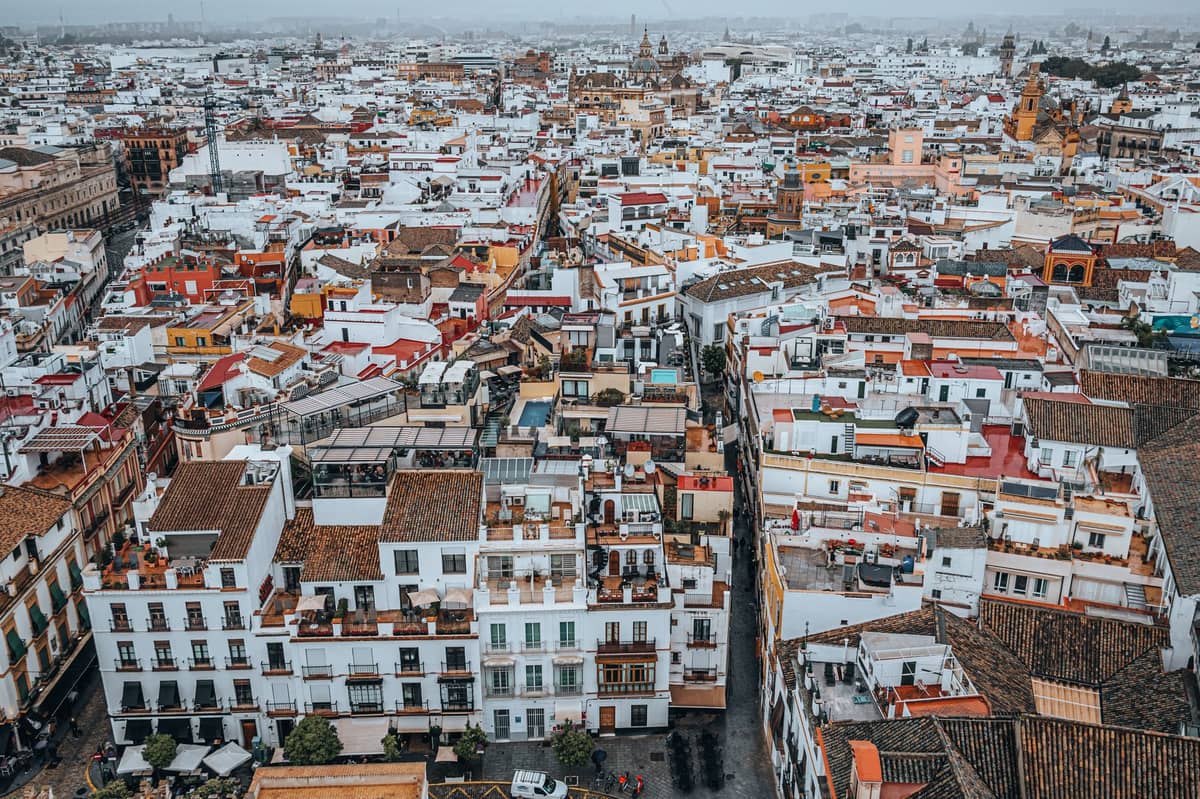
Santa Cruz is the historic heart of Seville, wrapping around the cathedral and the Real Alcázar in a maze of whitewashed lanes, sun-dappled plazas, and orange trees. It concentrates more monument-per-block than almost anywhere else in Spain, and its streets shift from tourist-busy to surprisingly quiet depending on the hour. Whether you're staying here or just passing through, understanding how it works makes all the difference.
Santa Cruz is Seville's former Jewish quarter, a compact knot of narrow streets and small plazas pressed up against the cathedral and the Real Alcázar. It holds more of the city's history per square metre than anywhere else in Seville, and it shows.
Orientation
Santa Cruz sits at the southern tip of the Casco Antiguo, Seville's broad historic centre, and its boundaries are tighter than most visitors expect. The western edge runs along Avenida de la Constitución, the grand ceremonial boulevard that passes the cathedral's main facade. To the north, Calle Mateos Gago marks the threshold between Santa Cruz and the wider old town. The eastern boundary follows Avenida Menéndez Pelayo, a busy modern road that traces the course of Seville's old city walls. To the south, the neighbourhood opens toward Avenida de María Luisa and the Jardines de Murillo, a long strip of shaded gardens that acts as a green buffer between the quarter and Parque de María Luisa beyond.
Within those boundaries, a large portion of the neighbourhood is taken up by institutions rather than streets. The Real Alcázar complex alone occupies roughly a third of the total area, and the cathedral and Archivo de Indias together fill most of the western edge. The part visitors think of as Santa Cruz, the maze of lanes and plazas, is actually a surprisingly small historic core squeezed between those monuments. The key squares are Plaza de Doña Elvira, Plaza de Santa Cruz, Plaza de los Refinadores, and Plaza de la Alianza, all connected by lanes narrow enough that neighbours on opposite sides could shake hands from their balconies.
Santa Cruz borders El Arenal to the west and the broader Casco Antiguo to the north. From the cathedral's front steps, the Triana district is a 20-minute walk west across the Guadalquivir, while the Parque de María Luisa district begins just a few blocks south. The neighbourhood is central enough that almost anywhere in the old town is reachable on foot in under half an hour.
Character and Atmosphere
Early morning is when Santa Cruz briefly belongs to the people who live here. By eight o'clock the light is already warm but not yet harsh, falling in long angles across the whitewashed walls and catching the orange trees in the small plazas. The smell of those trees, particularly in spring when they flower, is one of Seville's most distinctive sensory experiences, sweet and slightly medicinal. A few locals walk dogs. A bar on Calle Mateos Gago puts chairs out. For about an hour, the quarter feels like a residential neighbourhood rather than a monument.
By ten, that changes. The queues form outside the Real Alcázar, tour groups funnel in from the cathedral, and the lanes fill with the sound of multiple languages and the shuffle of rolling suitcases on cobblestones. Between roughly ten in the morning and eight in the evening, Santa Cruz is one of the most tourist-concentrated places in Spain. The souvenir shops on Calle Rodrigo Caro and the restaurant terraces on Plaza de Doña Elvira do most of their business in this window. That is not a criticism, just a fact worth knowing. The monuments that draw those crowds are genuinely extraordinary, and the neighbourhood has been shaped around tourism for decades.
After nine in the evening, the dynamic shifts again. Day-trippers leave, tour groups disperse, and the plazas take on a quieter character. The lanterns cast soft light on the azulejo tilework and wrought-iron railings. A few restaurants fill with locals eating late, as is the Spanish custom. Callejón del Agua, the narrow lane that runs along the outside of the Alcázar wall, is worth walking at dusk when the light fades against the old stonework and the lane is almost empty. It is one of those details that rewards people who stay in the neighbourhood rather than passing through.
💡 Local tip
To see Santa Cruz at its most atmospheric, walk the inner lanes between 8am and 9:30am or after 9pm. Midday in summer, when temperatures regularly exceed 35°C and crowds are at their peak, is the least rewarding time to explore on foot.
What to See and Do
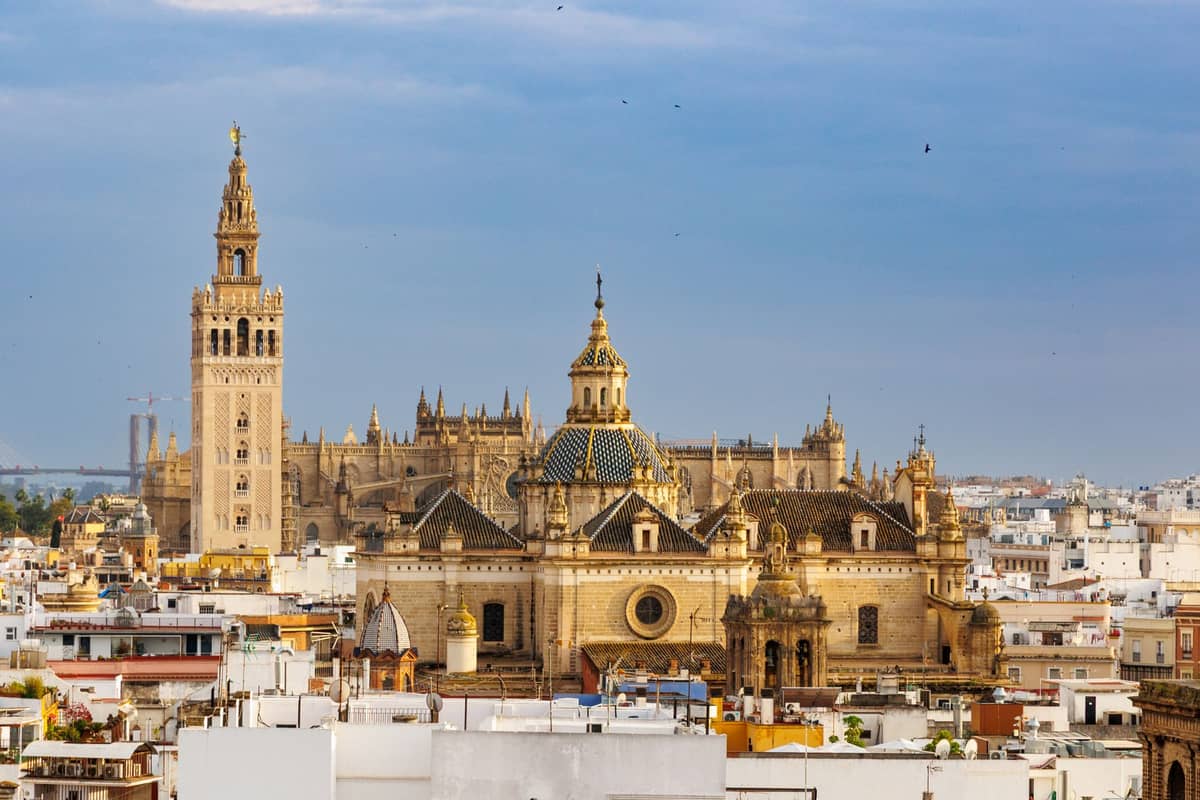
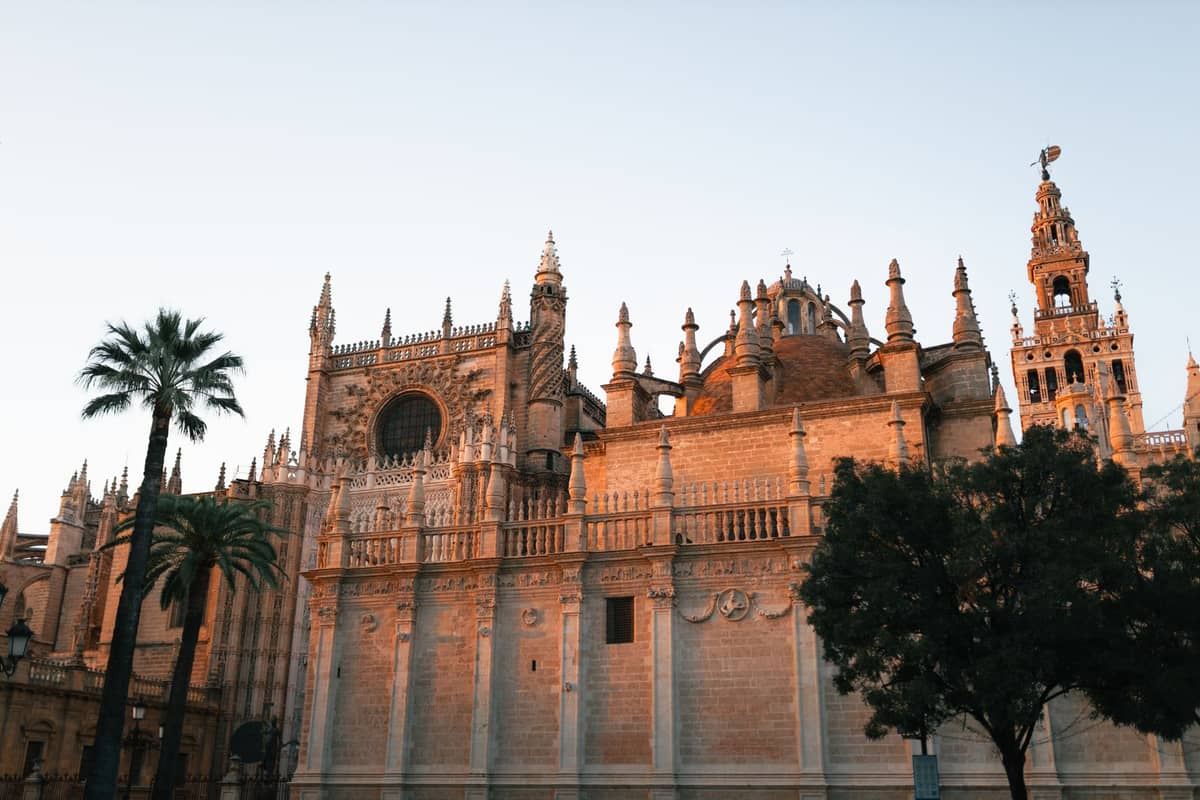
The three monuments grouped around Plaza del Triunfo are the main reason most people come to Santa Cruz, and they justify the reputation. Seville Cathedral is the largest Gothic cathedral in the world by volume, and the scale of it, seen from Calle Alemanes or from the base of the Giralda, is legitimately staggering even if you have seen it in photographs. The Giralda bell tower is climbed via a series of ramps rather than stairs, built that way so that mounted horsemen could ride to the top. The view over the old city from the upper level is the best orientation point for understanding Seville's layout.
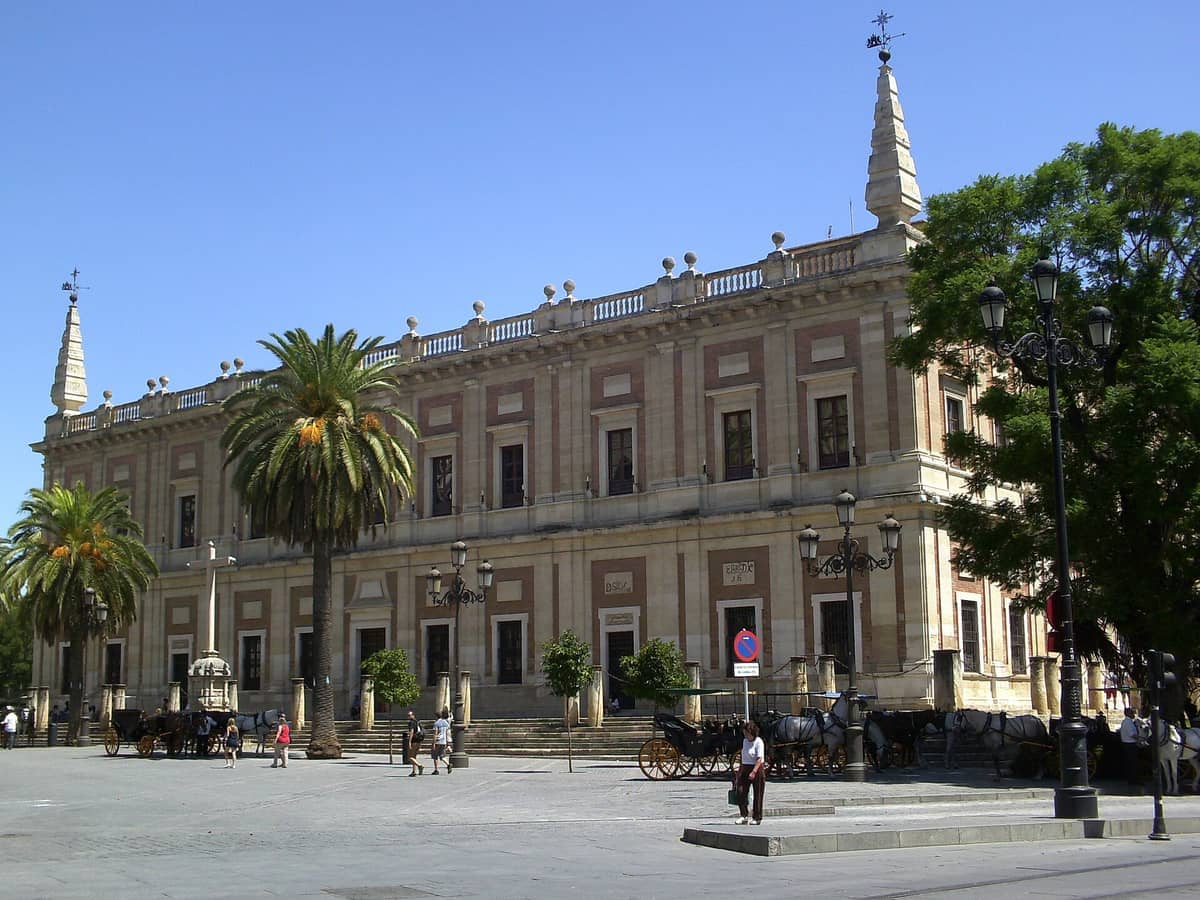
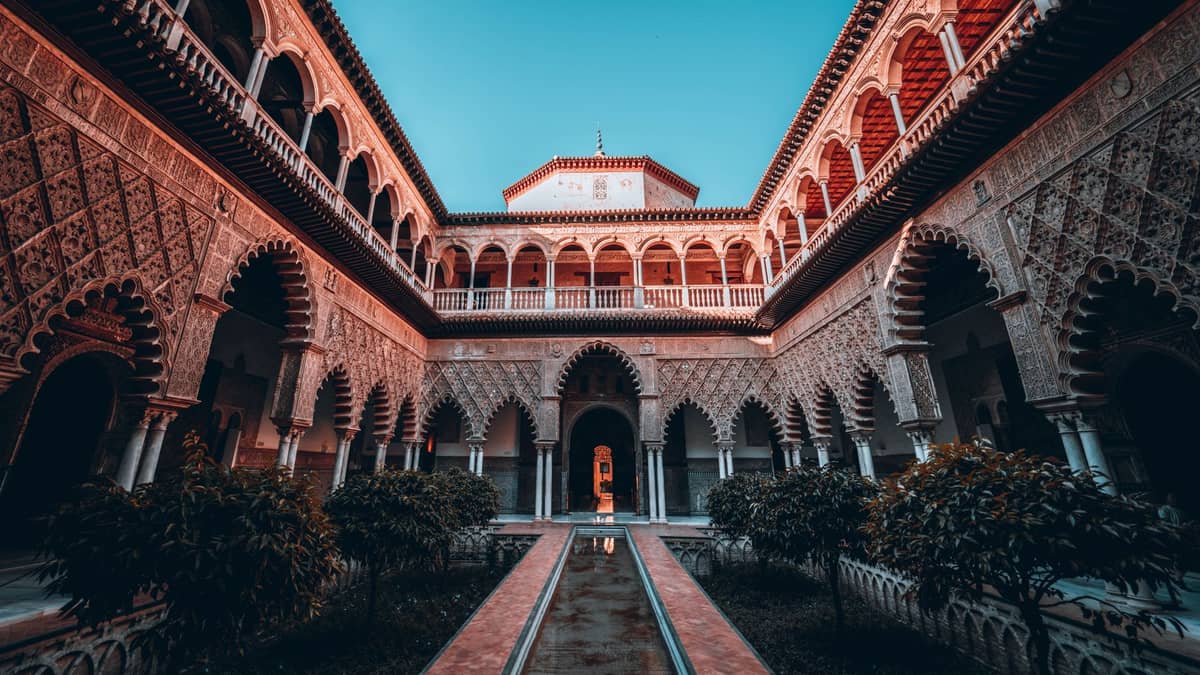
Immediately south of the cathedral, the Real Alcázar is a functioning royal palace, meaning Spanish royals still have rooms here, as well as a succession of Moorish and Mudéjar courtyards and gardens. The tiling, the carved plasterwork, and the garden pavilions are at a level of craft that requires slow, unhurried looking. Book tickets in advance: the Alcázar regularly sells out, particularly on weekend mornings. Next door, the Archivo General de Indias holds the original documents of the Spanish colonial enterprise in the Americas, housed in a Renaissance palace. Entry is free, and it is genuinely undervisited.
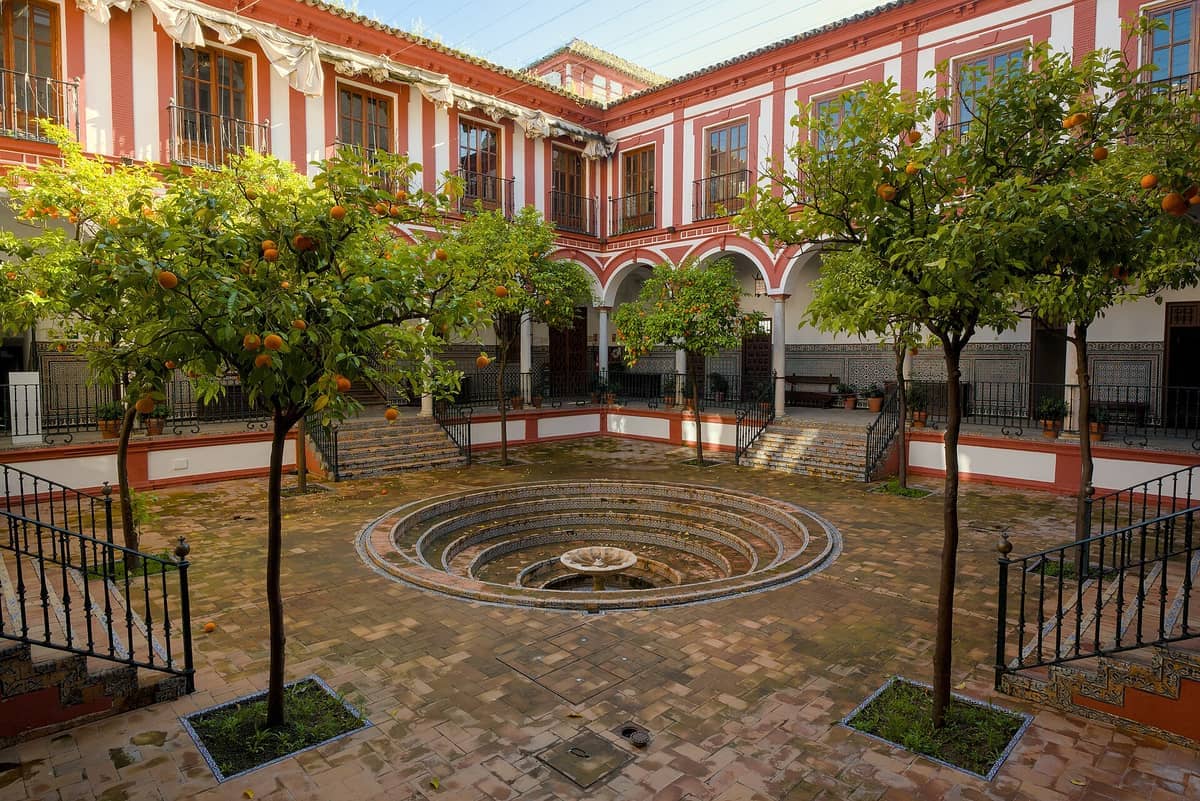
Beyond the three headline monuments, Santa Cruz rewards slower exploration. The Hospital de los Venerables on Plaza de los Venerables is a 17th-century baroque building with a collection focused on Velázquez, set around one of the most beautiful courtyards in the city. The Jardines de Murillo, running along the eastern edge of the Alcázar walls, are a free public garden with benches and shade, useful both for resting and for getting away from the tourist concentration in the inner lanes.
Seville Cathedral and the Giralda: the city's anchor monument, bookable online
Real Alcázar: Moorish and Mudéjar palace complex with extensive gardens
Archivo General de Indias: free Renaissance palace, the archive of Spain's colonial history
Hospital de los Venerables: baroque courtyard and Velázquez collection
Callejón del Agua: narrow lane along the Alcázar wall, best at dusk
Plaza de Doña Elvira and Plaza de Santa Cruz: the neighbourhood's most atmospheric squares
Jardines de Murillo: free shaded gardens along the eastern boundary
⚠️ What to skip
Tickets for the Real Alcázar sell out days in advance during spring and autumn. Book online before you arrive. The cathedral queue without a pre-booked ticket can run to an hour or more in peak season.
Eating and Drinking
The food scene in Santa Cruz is split clearly between two tiers. The tourist-facing strip along Calle Mateos Gago and the terraces around Plaza de Doña Elvira cater heavily to visitors, with menu prices reflecting the location. The food at these spots is rarely bad, but it is rarely the best version of Sevillian cooking either. Expect to pay more for a cerveza here than in almost any other neighbourhood in the city. The tapas served are standard: salmorejo, croquetas, tortilla, montaditos.
The better eating happens at the edges of the quarter, particularly as you move toward Calle Santa María la Blanca, where the crowds thin and the restaurants become more oriented toward a local clientele. Look for places with handwritten menus, no photographs on the boards outside, and a clientele that includes people eating lunch at 2:30pm rather than noon. The Spanish lunch hour is the best time to eat well and pay less, and even in Santa Cruz that window exists if you look for it.
For a broader sense of what to eat in Seville and where to find it outside Santa Cruz, the guide to Seville's food scene covers local specialties in detail, from pescaíto frito to the various forms of cold tomato soup. If your budget is tight, the Seville on a budget guide includes practical advice on eating well without the tourist-strip markup.
There are no markets inside the historic Santa Cruz core itself. The nearest covered market with fresh produce and casual eating is Mercado Lonja del Barranco, about a 10-minute walk west toward the river in El Arenal. For coffee, the smaller cafés on the quieter interior streets serve a better cup at lower prices than the terrace spots on the main pedestrian routes.
Getting There and Around
Santa Cruz is a walking neighbourhood almost by necessity. The lanes inside the historic core are too narrow for vehicles, and several key streets are pedestrianised. The most useful entry points are: from the north via Calle Mateos Gago off the cathedral; from the west via Avenida de la Constitución, which carries Seville's MetroCentro tram line between Archivo de Indias and San Bernardo; and from the east via Avenida Menéndez Pelayo, where buses stop along the ring road.
The MetroCentro tram is the most practical transit connection. The Archivo de Indias stop on the tram line puts you at the southwestern corner of Santa Cruz, directly in front of the Alcázar and the cathedral, in minutes from Plaza Nueva. TUSSAM urban buses serve stops along Avenida Menéndez Pelayo on the eastern edge. Taxis and ride-hailing vehicles drop off on the main avenues at the boundaries of the quarter; none can access the interior lanes. From Seville's main railway station at Santa Justa, Santa Cruz is roughly 25 minutes on foot heading southwest, or a short tram and bus combination.
If you are planning wider exploration of the city from a Santa Cruz base, the guide to getting around Seville covers tram, metro, bus and cycling options across the city in detail.
ℹ️ Good to know
Seville's MetroCentro tram runs along Avenida de la Constitución, the street bordering Santa Cruz to the west. It connects directly to Plaza Nueva and is the quickest way to reach El Arenal, the shopping streets of the city centre, and onward bus connections.
Where to Stay
Santa Cruz is Seville's most requested address for first-time visitors, and hotel prices reflect that. Boutique hotels converted from historic palaces, courtyard guesthouses, and high-end chain properties all operate within or immediately adjacent to the quarter. Staying here means the cathedral and Alcázar are walkable at any hour, and the evening atmosphere of the inner plazas is genuinely rewarding if you are based here rather than commuting in.
The honest trade-off is noise and price. Properties on the main pedestrian streets and near the popular squares pick up noise from restaurant terraces and late-night foot traffic until at least midnight on weekends. Summer nights can be warm even with air conditioning, and the streets do not fully quiet down the way a residential neighbourhood would. If those things matter to you, a property on one of the quieter interior lanes, or just across Avenida Menéndez Pelayo toward the edge of the Jardines de Murillo, will give you proximity without the worst of the noise.
For a comparison of Santa Cruz against other neighbourhood options across the city, the where to stay in Seville guide breaks down each district by character, price range, and travel style. Families or visitors planning longer stays sometimes find the quieter neighbourhoods of La Macarena or Triana better value and more comfortable, while still being easy walking distance from Santa Cruz's monuments.
Practical Notes
Santa Cruz is safe by any reasonable standard, but it is one of the most pickpocket-prone areas in Seville simply because of the concentration of distracted tourists around major sights. The most common situations are crowds around the Alcázar and cathedral entrance queues, packed lanes during peak hours, and restaurant terraces where bags get left unattended. Keep cards and phones in a front pocket or crossbody bag rather than a daypack, and the risk is minimal.
The neighbourhood rewards multiple visits at different times. If you are in Seville for several days, consider doing the monuments in the morning on one day, then returning in the early evening just to walk the lanes without an itinerary. Seville is at its most itself in that golden hour before dinner, and Santa Cruz, for all its tourist concentration during the day, has genuine character when the light drops. For ideas on how to structure a longer stay, the 3-day Seville itinerary puts Santa Cruz in context alongside the rest of the city.
Timing your visit to coincide with Seville's major festivals transforms Santa Cruz completely. During Semana Santa, the processions pass through streets at the edge of the quarter and the atmosphere is unlike anything at other times of year. The best time to visit Seville guide covers seasonal considerations in detail, including how crowds, temperatures, and local events vary across the year.
TL;DR
Santa Cruz holds Seville's three greatest monuments: the cathedral and Giralda, the Real Alcázar, and the Archivo de Indias, all within a few minutes' walk of each other.
The neighbourhood is heavily tourist-oriented during the day but has genuine character in the early morning and evening hours.
Book Real Alcázar and cathedral tickets online in advance: walk-up queues in peak season can be very long and timed slots sell out.
Accommodation here is the most expensive in Seville and can be noisy at night; weigh the convenience of proximity against those trade-offs.
Best suited to first-time visitors to Seville who want to be within walking distance of the major sights; less suited to travellers seeking an authentic residential experience or lower prices.
Three days is enough time to cover Seville's greatest landmarks, explore its best neighbourhoods, and eat and drink well without rushing. This day-by-day itinerary gives you practical routes, current ticket prices, and the kind of logistical detail that makes the difference between a smooth trip and a frustrating one.
Seville makes an ideal home base for a week in Andalusia. With high-speed rail to Córdoba in under 45 minutes and buses to Granada in 3 hours, you can cover the region's highlights without changing hotels. This guide breaks down exactly how to structure 7 days, what to prioritize, and what to skip.
The journey from Barcelona to Seville covers roughly 830 km across Spain. This guide breaks down every transport option, from the high-speed AVE train to budget flights, with practical tips on cost, comfort, and what awaits you in Andalusia's capital.
Seville's skyline is defined by bell towers, domes, and gilded facades accumulated over eight centuries of Christian, Moorish, and Renaissance building. This guide covers the city's finest religious architecture, from UNESCO-listed giants to intimate neighbourhood churches that most visitors walk straight past.
Seville delivers more than its size suggests when it comes to museums. From world-class fine art and Moorish palaces to ceramics, naval history, and flamenco, this guide covers the best museums in Seville across every interest and budget.
Seville's climate is one of the most extreme in Western Europe for a major city. This guide breaks down every month by temperature, rainfall, crowds, and events so you can choose the timing that actually fits your trip.
Seville rewards those who look up and climb high. This guide covers the city's best panoramic viewpoints, from iconic tower climbs to riverside vantage points and rooftop terraces with sweeping skyline views.
Seville sits at the heart of Andalusia, putting some of Spain's most compelling destinations within easy reach. This guide breaks down the best day trips from Seville by travel time, transport options, and what you actually get for the effort — including which ones are genuinely worth the journey and which ones need an overnight.
Seville's Feria de Abril is one of Europe's great street festivals: six days of flamenco dresses, horses, sherry, and late nights on a purpose-built fairground. This guide covers everything from how to get in without an invitation to what things actually cost, when to go, and what to wear.
Seville is the spiritual home of flamenco, and navigating its shows requires more than a hotel concierge recommendation. This guide breaks down the best tablaos, what to expect, how much to pay, and how to avoid the tourist traps, so you leave with a genuine experience of one of Spain's most powerful art forms.
Seville is one of Europe's most rewarding cities to explore on a tight budget. Many of its greatest sights offer free entry on specific days, and its parks, plazas, churches, and neighbourhoods reward hours of walking without spending a cent.
Seville is one of southern Spain's most walkable cities, but knowing which transport option to use, and when, can save you real time and money. This guide covers everything from landing at SVQ airport to hopping trams through the historic centre.
Seville is the capital of Andalusia and one of Spain's most architecturally rich cities, but it's not right for every traveller or every season. This guide breaks down what the city genuinely delivers, where it falls short, and exactly when and how to visit to get the most from it.
The Madrid to Seville route is one of Spain's most travelled corridors, and three competing high-speed rail operators now make it faster and cheaper than ever. This guide breaks down every option, from budget OUIGO tickets to overnight buses, with practical tips on timing, pricing, and what to expect on arrival.
Seville's Semana Santa is one of the most intense religious spectacles in the world, drawing hundreds of thousands of visitors each spring. This guide covers the full schedule, the key brotherhoods, how to secure Carrera Oficial seats, when to go for smaller crowds, and everything else you need to experience Holy Week properly.
Attending a Sevilla FC home match is one of the most authentic experiences Seville, Spain offers. This guide covers how to buy tickets, get to the stadium, pick the right seat, and make the most of match day — without the rookie mistakes.
Seville rewards those who look beyond the Cathedral and Alcázar. These 18 off-the-beaten-path experiences reveal aristocratic palaces, forgotten Roman cities, local markets, and baroque masterpieces that most visitors walk straight past.
Autumn is arguably Seville's most underrated season. Temperatures drop from summer extremes, crowds thin out after peak season, and the city's streets become walkable again. This guide breaks down exactly what to expect each month, from weather data to practical tips.
Spring is Seville's most dramatic season, combining mild weather with two of Europe's biggest festivals. This guide breaks down exactly what to expect each month, when to book, and how to navigate the crowds.
July and August in Seville mean scorching temperatures regularly above 35°C, occasional heatwaves above 40°C, and almost zero rain. This guide gives you the strategies, timing, and specific attractions to make summer work in your favor rather than against you.
Seville in winter is mild, uncrowded, and genuinely good for sightseeing. This guide covers the real weather, the seasonal events worth planning around, what to pack, and how to make the most of Andalusia's capital between December and February.
Seville nightlife runs on Andalusian time: dinner at 22:00, bars at midnight, clubs after 02:30. This guide covers the best neighborhoods, rooftop bars, nightclubs, flamenco shows, and practical details on dress codes, pricing, and the noise regulations that shape the scene.
Seville (Sevilla) is one of southern Spain's most rewarding city breaks, and it doesn't have to be expensive. This guide breaks down real daily costs, free entry windows at major monuments, the cheapest ways to get around, and the exact seasons when prices drop significantly.
Seville is lined with tens of thousands of bitter orange trees, yet almost no one eats the fruit. This guide explains the history, seasonality, and surprising uses of the Seville orange, plus what visitors actually experience walking beneath these famous trees.
Seville rewards shoppers who know where to look. This guide covers the best shopping streets, markets, and authentic products to buy in Sevilla, from azulejos and flamenco accessories to olive oil and vintage finds at El Jueves.
The journey from Seville to Córdoba is one of Andalusia's easiest and most rewarding travel connections. This guide covers every option: high-speed trains that take under an hour, budget buses, and guided day trips, with practical tips on costs, booking, and what to do once you arrive.
The journey from Seville to Málaga is one of the most popular routes in Andalusia, with trains taking as little as 2 hours. This guide breaks down every option — train, bus, and car — with real prices, scheduling advice, and the honest tradeoffs between each.
Both Seville and Granada rank among Spain's most compelling cities, but they offer very different experiences. This guide breaks down the key differences across sightseeing, atmosphere, budget, logistics, and timing so you can choose the right destination or plan both.
From a world-class aquarium and a theme park with a water area to horse-drawn carriage rides and riverfront parks, Seville rewards families who plan well. This guide covers the top kid-friendly attractions, current pricing, seasonal timing, and practical logistics so you can skip the guesswork.
Seville, the capital of Andalusia, packs more history, architecture, and street life into a walkable city than almost anywhere in Spain. This guide covers the essential things to do in Seville, with accurate ticket prices, seasonal advice, neighborhood breakdowns, and clear assessments of what's worth your time.
Seville is one of the most walkable cities in southern Spain, with its major monuments clustered within a compact historic core. This guide covers the best self-guided walking routes by neighbourhood, current entry prices for the Alcázar and Cathedral, seasonal timing advice, and the practical details most visitors overlook.
Seville has one of Spain's most distinctive food cultures: paid tapas ordered gradually, cold soups in summer, and markets that close by mid-afternoon. This guide covers the dishes you need to try, where to find them, how much to pay, and what to skip.
Choosing where to stay in Seville shapes your entire trip. This guide breaks down every major neighbourhood by location, atmosphere, price range, and who it suits best — so you can book with confidence.