Getting Around Seville: Transport, Airport & Navigation Guide
Seville is one of southern Spain's most walkable cities, but knowing which transport option to use, and when, can save you real time and money. This guide covers everything from landing at SVQ airport to hopping trams through the historic centre.
Tickets & tours
Live prices and dates from our booking partner. If you book, we may earn a commission at no extra cost to you.
TL;DR
- The EA airport bus costs around €6 one-way and takes about 35 minutes to the city centre. Taxis cost roughly €24-€35.
- The historic centre is compact and very walkable. For most sightseeing, your feet are the best option.
- TUSSAM buses and the MetroCentro tram cover the city well. A Tourist Card offers unlimited rides for €5 (1 day) or €10 (3 days), but does NOT include the EA airport bus. See our guide to things to do in Seville to plan your route around the main sights.
- Metro Line 1 is useful for reaching outer districts but bypasses the historic core entirely.
- During Semana Santa and Feria de Abril, many routes are diverted or suspended. Plan transport carefully around these dates.
Getting from Seville Airport (SVQ) to the City Centre
Seville Airport (IATA: SVQ), officially Aeropuerto de Sevilla, sits approximately 9-10 km north-east of the city centre. It is small by major airport standards, which keeps arrivals and departures relatively smooth. You have three realistic options for reaching the centre: the EA airport bus, an official taxi, or a pre-booked private transfer.
- EA Airport Bus (Especial Aeropuerto) The most cost-effective option. Runs from the arrivals area to Santa Justa train station, Puerta de Jerez and Plaza de Armas. Single fare is approximately €6, with a same-day return around €8. Buy tickets on board with cash or card. Journey time is around 35 minutes. Departures from the airport run roughly every 20-30 minutes, approximately 05:20-01:00. Services from the city back to the airport begin around 04:30.
- Official Taxi Taxis queue outside the arrivals hall and charge regulated fares. Expect roughly €24-€35 depending on the time of day, with higher supplements at night, on weekends, and on public holidays. Journey time is typically 15-25 minutes in normal traffic. Faster but significantly more expensive than the bus.
- Private Transfer or Ride-Hailing Pre-booked private transfers offer fixed pricing and a meet-and-greet service. Uber and Cabify operate in Seville, though availability from the airport drop-off zone can vary. Confirm pick-up logistics before booking.
⚠️ What to skip
Many older guides and even some booking sites still list the EA airport bus fare as €4 or €5. Current airport and tourism sources now indicate approximately €6 one-way. Always check the Aena Seville Airport website or TUSSAM before travel, as fares are subject to change.
Walking and Cycling: The Best Way to See the Historic Centre
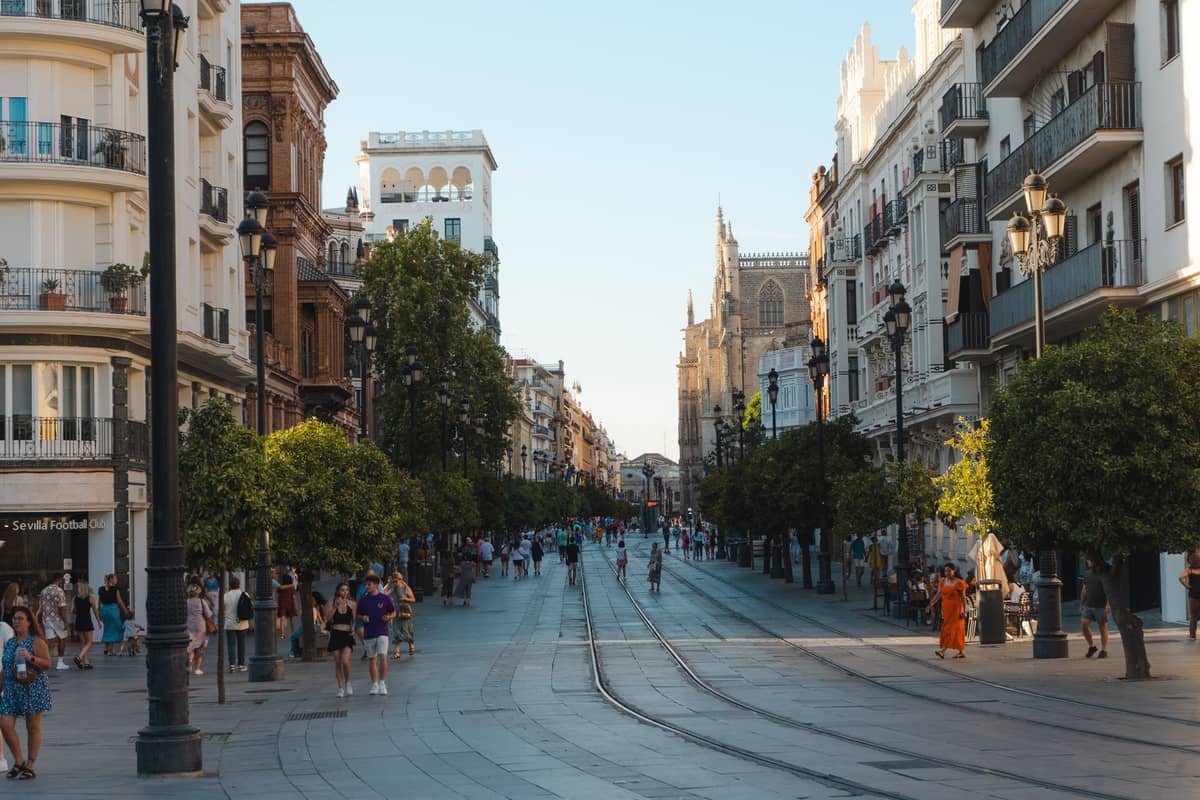
For most visitors staying near the centre, walking is genuinely the best way to get around. The distance from the Seville Cathedral to the Real Alcázar is a few minutes on foot. From there to the Triana neighbourhood across the Guadalquivir is around 20 minutes. The historic districts of Santa Cruz, El Arenal and La Macarena are all within comfortable walking distance of each other.
The main caveat is heat. From late June through August, daytime temperatures routinely exceed 35°C. Walking long stretches between noon and 17:00 during peak summer is genuinely uncomfortable and potentially dangerous. During those months, adjust your schedule: explore in the morning, rest during the hottest hours, and go back out in the evening.
Seville has invested heavily in cycling infrastructure and now has an extensive network of bike lanes, particularly along the riverside and connecting major districts. The Sevici bike-share scheme operates across the city with hundreds of docking stations. Day passes are affordable and practical for covering more ground between neighbourhoods without relying on public transport. Note that cycling in the narrow streets of Santa Cruz is restricted in places, and cobblestones make some historic lanes unpleasant to ride.
💡 Local tip
If you are visiting in spring or autumn, prioritise walking over transport whenever possible. Seville's streets, plazas and riverside paths are part of the experience. The city covers roughly 140 km² but the tourist core is dense and very manageable on foot.
TUSSAM Buses and the MetroCentro Tram
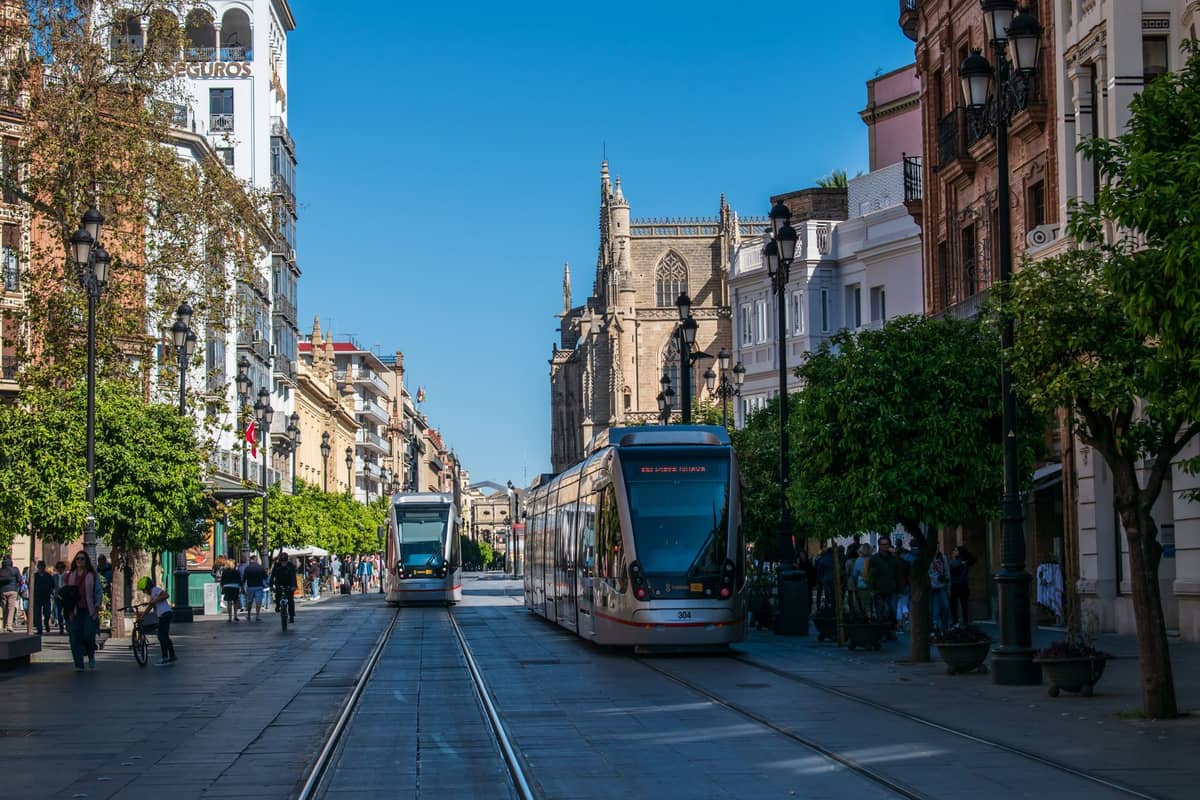
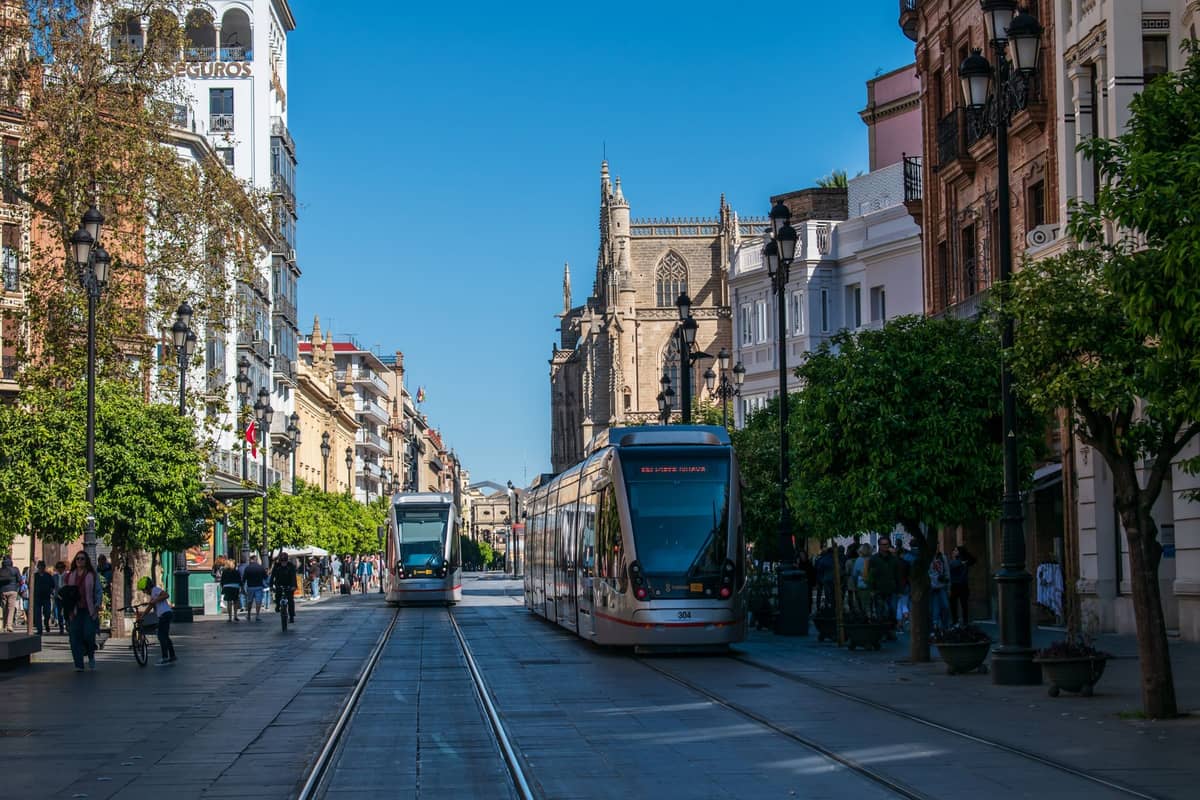
TUSSAM (Transportes Urbanos de Sevilla, Sociedad Anónima Municipal) operates the urban bus network and the surface MetroCentro tram. Together they cover most of the city and are the workhorse of public transport for both residents and visitors.
The MetroCentro tram runs a short central route connecting Plaza Nueva with San Bernardo, passing through Archivo de Indias and Puerta de Jerez. It is useful for moving quickly through the pedestrianised core without walking, and for connecting towards the Santa Justa rail corridor via interchange at San Bernardo. Most city buses run from approximately 06:00 to 23:30, with a limited night bus service from El Prado de San Sebastián operating between midnight and around 02:00.
- Single ticket (bus or tram) Around €1.40, bought on board or at ticket machines. Fine for occasional trips but not economical for frequent use.
- Tarjeta Multiviaje (rechargeable card) Requires a refundable €1.50 card deposit. Discounted per-ride fares of approximately €0.69-0.76 apply, with a transfer discount if you change between services within a set time window. The most practical option for stays of a few days or more.
- Tourist Card (Tarjeta Turística) Unlimited travel on TUSSAM buses and tram for €5 (1 day) or €10 (3 days), plus a refundable card deposit. Does NOT cover the EA airport bus. Available at main transport hubs and tourist offices.
✨ Pro tip
The Tarjeta Turística is worth it if you plan to cross the city multiple times per day, for example combining visits to Triana, Parque de María Luisa and La Macarena in a single day. If you are mostly walking around the historic centre, a multi-trip card or even single tickets may be more than enough.
Metro de Sevilla: When It Helps and When It Doesn't
Seville's Metro Line 1 is a light metro system that runs in an arc around the city, serving outer districts, university campuses and the suburban periphery. It is fast and air-conditioned, which matters in summer. However, it does not stop in the historic centre. The closest useful stops to the main tourist areas are Puerta de Jerez, Prado de San Sebastián, and Nervión. Line 1 does not stop at Santa Justa, so it is rarely the most convenient option for sightseeing around the Santa Cruz quarter or the cathedral.
Where the metro genuinely helps: travelling to the outer residential and commercial zones of Nervión. For Santa Justa, use buses, a taxi, or a short walk from nearby stops rather than expecting a station metro halt. Line 1 operates approximately 06:30-23:00 Monday to Thursday, with extended hours until around 02:00 on Friday and the eve of public holidays, 07:30-02:00 on Saturdays, and 07:30-23:00 on Sundays and public holidays. Fares are distance-based; using a CTMA Consortium Card gives discounted rides and integrates with regional bus services.
Taxis, Ride-Hailing and Getting Around at Night
Official white taxis in Seville are metered and generally reliable. For short city-centre trips, fares are modest, typically a few euros for cross-centre journeys. For longer rides or late-night returns, agree on a rough fare before getting in if you are uncertain, though the meter is the legal standard. Night supplements, weekend supplements and public holiday supplements all apply and are regulated by the city.
Uber and Cabify both operate in Seville. They can be convenient for pre-booking airport transfers or late-night returns after exploring Seville's nightlife. Pick-up in the very narrow streets of Santa Cruz can be difficult; give a nearby main road or plaza as your location. Note that ride-hailing regulations in Spain can change, so verify current availability before relying on these apps exclusively.
⚠️ What to skip
During Semana Santa and Feria de Abril, large sections of the city centre are closed to traffic and many bus routes are temporarily suspended or diverted. Taxis can be difficult to find, and the EA airport bus route may also be affected. If you are travelling to or from the airport during these festivals, allow extra time and check TUSSAM and Aena for current route information.
Seasonal and Practical Notes for Getting Around
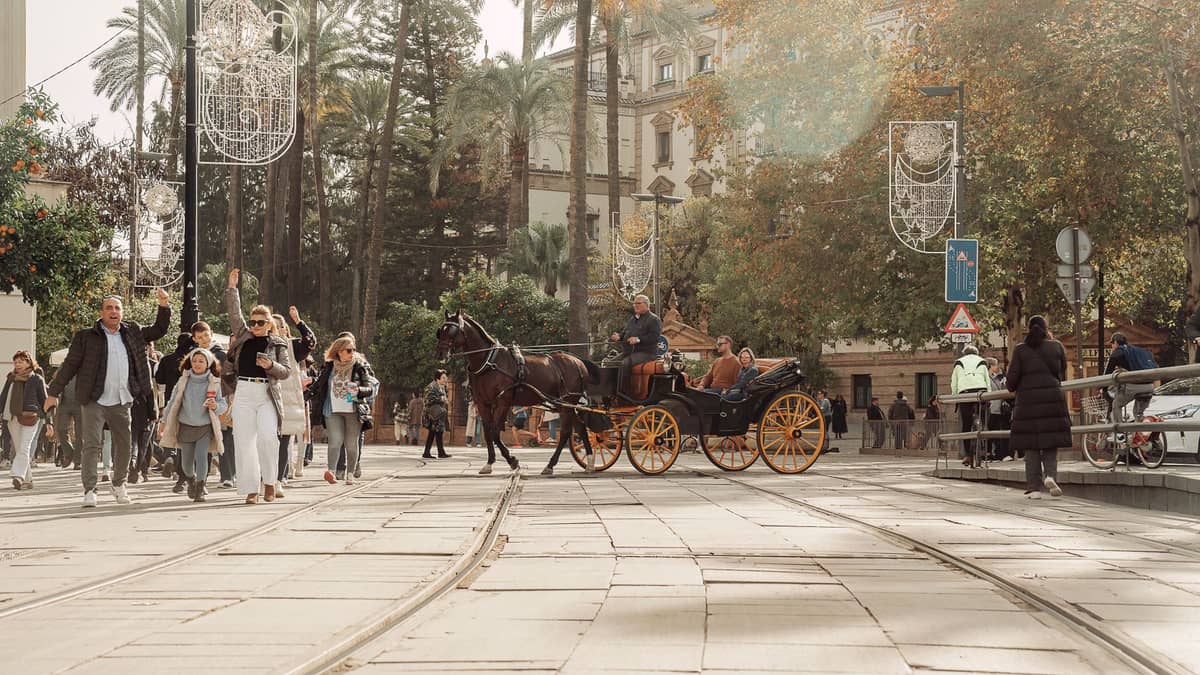
Seville's climate shapes transport choices as much as any timetable. Spring (March to May) and autumn (late September to October) are the most comfortable seasons for walking and cycling, with temperatures in the 14-22°C range. These are also the periods when the city is at its most active, so factor in crowds around major sights. For more on timing your trip, see the guide to the best time to visit Seville.
In summer, the city adapts to the heat through its schedule rather than its infrastructure. Locals and experienced visitors avoid outdoor activity from roughly noon to 17:00. Public transport and taxis become more appealing during these hours. Air-conditioned buses and the metro are a genuine relief when temperatures push above 37°C in July and August.
If you are planning a multi-day trip and want to understand how the city's neighbourhoods connect geographically, the guide to where to stay in Seville breaks down each district's character and proximity to transport links. Staying in or near the historic centre significantly reduces your reliance on buses or taxis for most tourist activities.
- Carry a small amount of cash for on-board bus tickets and taxis, as card readers can occasionally be unavailable on older vehicles.
- Google Maps and Citymapper are reliable for TUSSAM route planning in Seville. Both apps show real-time departures for most lines.
- The main long-distance bus station is Plaza de Armas, close to the riverfront. Santa Justa handles most AVE and Renfe rail services.
- Spain's emergency number is 112. Country calling code is +34. The city operates on Central European Time (UTC+1 in winter, UTC+2 in summer).
- Tipping is not obligatory in taxis or on public transport. Rounding up the fare is common in taxis but entirely optional.
FAQ
How do I get from Seville Airport to the city centre?
The EA airport bus is the most practical option for most travellers. It departs from outside the arrivals hall approximately every 12-20 minutes during the day, stops at Santa Justa station, Puerta de Jerez and Plaza de Armas, and costs around €6 one-way. The journey takes about 35 minutes. Taxis are faster at 15-25 minutes but cost roughly €24-€35 depending on the time of day and supplements.
Is Seville easy to navigate on foot?
Yes, for most tourist sightseeing. The historic core is compact and dense with major attractions within walking distance of each other. The main exception is summer midday heat, when temperatures above 35°C make long walks unpleasant. Adjust your schedule to walk in the morning and evening during July and August.
What is the cheapest way to use public transport in Seville?
The rechargeable Tarjeta Multiviaje card gives discounted per-ride fares of around €0.41 without transfer and €0.46 with transfer, compared to €1.40 for a single ticket. The Tourist Card (€5 for one day, €10 for three days) offers unlimited bus and tram travel and is worth it if you plan multiple daily journeys. Neither card covers the EA airport bus, which requires a separate ticket.
Does Seville have an Uber or ride-hailing app?
Uber and Cabify both operate in Seville. They are useful for airport transfers and late-night trips. However, regulation of ride-hailing in Spain can change, so check current availability before relying on these services. Official white taxis are metered, reliable and widely available across the city.
How does transport change during Semana Santa or Feria de Abril?
Significantly. Large areas of the centre are closed to traffic during both festivals, and many TUSSAM bus routes are suspended or rerouted. Taxis are in high demand. If you need to travel to or from the airport during these periods, allow extra time and check TUSSAM and Aena's Seville Airport website for current service information. Dates for both festivals vary annually.
Tickets & tours
Live prices and dates from our booking partner. If you book, we may earn a commission at no extra cost to you.
Planning a trip? Discover personalized activities with the Nomado app.