Where to Stay in Seville: Best Neighbourhoods & Hotels
Choosing where to stay in Seville shapes your entire trip. This guide breaks down every major neighbourhood by location, atmosphere, price range, and who it suits best — so you can book with confidence.
Tickets & tours
Live prices and dates from our booking partner. If you book, we may earn a commission at no extra cost to you.
TL;DR
- Santa Cruz is the most central option and the priciest, averaging around $213/night — ideal if walkability to the Cathedral and Real Alcázar matters most.
- Triana offers the best value at around $170/night, with a genuine local character and easy access to the centre via the Puente de Triana.
- Book months ahead for Semana Santa and Feria de Abril — prices spike sharply and availability collapses.
- Counterintuitively, August is often one of the cheapest months to book hotels, not the most expensive.
- If you want atmosphere without tourist saturation, consider La Macarena or El Arenal — both within easy reach of Seville's main sights.
How Seville's Neighbourhoods Actually Work
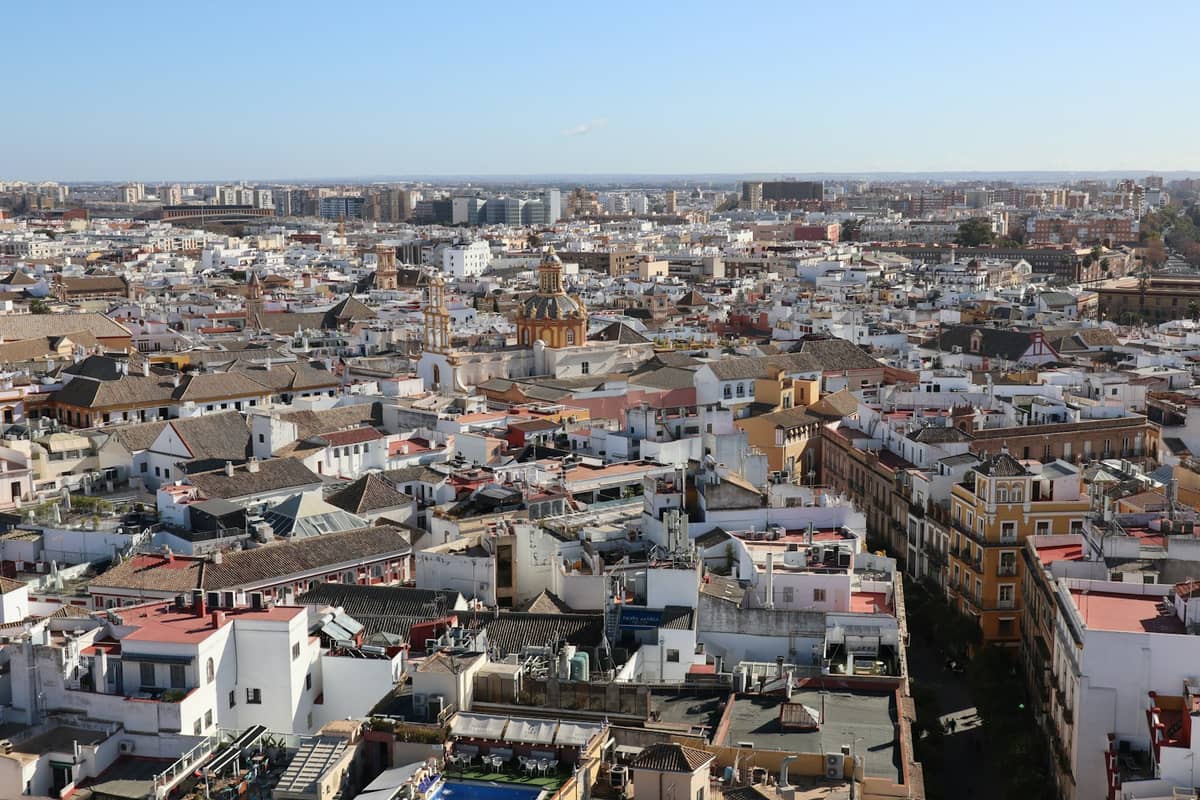
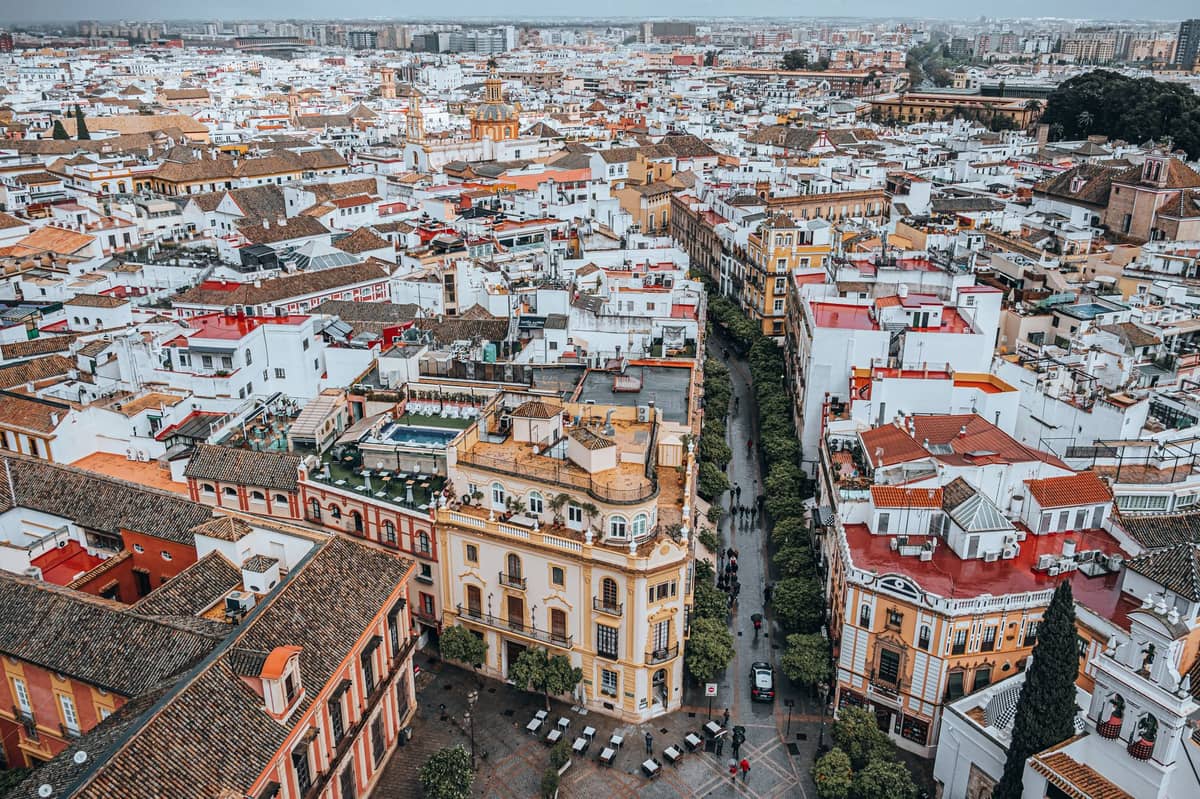
Seville (Sevilla in Spanish) is the capital of Andalusia and one of Spain's most-visited cities, Seville (Sevilla in Spanish) is the capital of Andalusia and one of Spain's most-visited cities. The Guadalquivir River divides the city east-west: the historic core and most hotels sit on the eastern bank, while Triana occupies the western bank. This geography matters for accommodation decisions more than many guides acknowledge.
The city's key districts for visitors are Santa Cruz, El Arenal, La Macarena, Triana, Los Remedios, and Nervión. Each has a distinct character, price point, and set of trade-offs. Before diving into individual neighbourhoods, it helps to understand that Seville's old city is relatively walkable but unevenly navigated — the Santa Cruz quarter, for example, is a labyrinth of narrow lanes where taxis cannot always reach your door. If you have heavy luggage, that matters.
ℹ️ Good to know
Seville operates on Central European Time (CET, UTC+1), switching to CEST (UTC+2) in summer. The city sits at roughly 7–10 metres above sea level near the Guadalquivir River, which historically made it Spain's gateway for Atlantic trade. That river-port heritage explains the tight, medieval street layout of the centre — beautiful to walk, occasionally frustrating to navigate with luggage.
Santa Cruz: The Historic Quarter
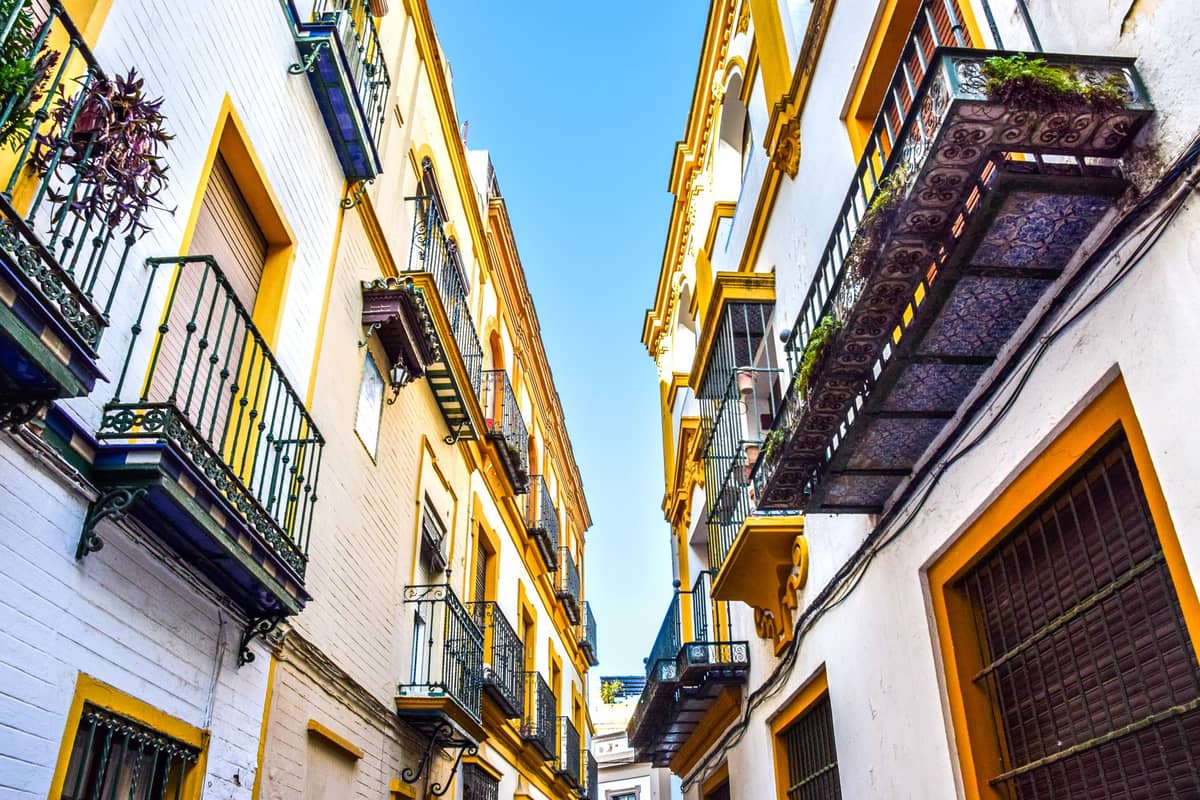
Santa Cruz is the former Jewish quarter (judería) of Seville, and it remains the most popular base for first-time visitors. The neighbourhood wraps around the Cathedral and the Real Alcázar, Santa Cruz is the former Jewish quarter (judería) of Seville, and it remains the most popular base for first-time visitors. The neighbourhood wraps around the Cathedral and the Real Alcázar, meaning you can walk to both from many hotels. Streets are narrow, whitewashed, and lined with orange trees — exactly what most people picture when they think of Seville.
The trade-off is price and noise. Santa Cruz consistently registers the highest average nightly hotel rates in the city, The trade-off is price and noise. Santa Cruz consistently registers the highest average nightly hotel rates in the city. During peak spring travel and festival periods, that figure rises considerably. The neighbourhood also sees heavy daytime tourist foot traffic, and some streets near the Cathedral get genuinely loud until late evening.. During peak spring travel and festival periods, that figure rises considerably. The neighbourhood also sees heavy daytime tourist foot traffic, and some streets near the Cathedral get genuinely loud until late evening.
That said, for visitors on a short trip who want to maximise sightseeing time and atmosphere, Santa Cruz is hard to argue against. You'll be steps from the Giralda tower, the Hospital de los Venerables, and dozens of tapas bars. Hotels range from boutique paradores in converted palaces to modest guesthouses. The mid-range category (roughly €100–160/night outside peak season) offers solid value if you book early.
⚠️ What to skip
Santa Cruz streets are largely pedestrian-only and some alleys are too narrow for standard vehicles. If you arrive by taxi or transfer, you may need to walk the final 200–400 metres with your luggage. Check your hotel's access instructions before you arrive, especially if staying near the Cathedral.
Triana: Best Value and Genuine Character
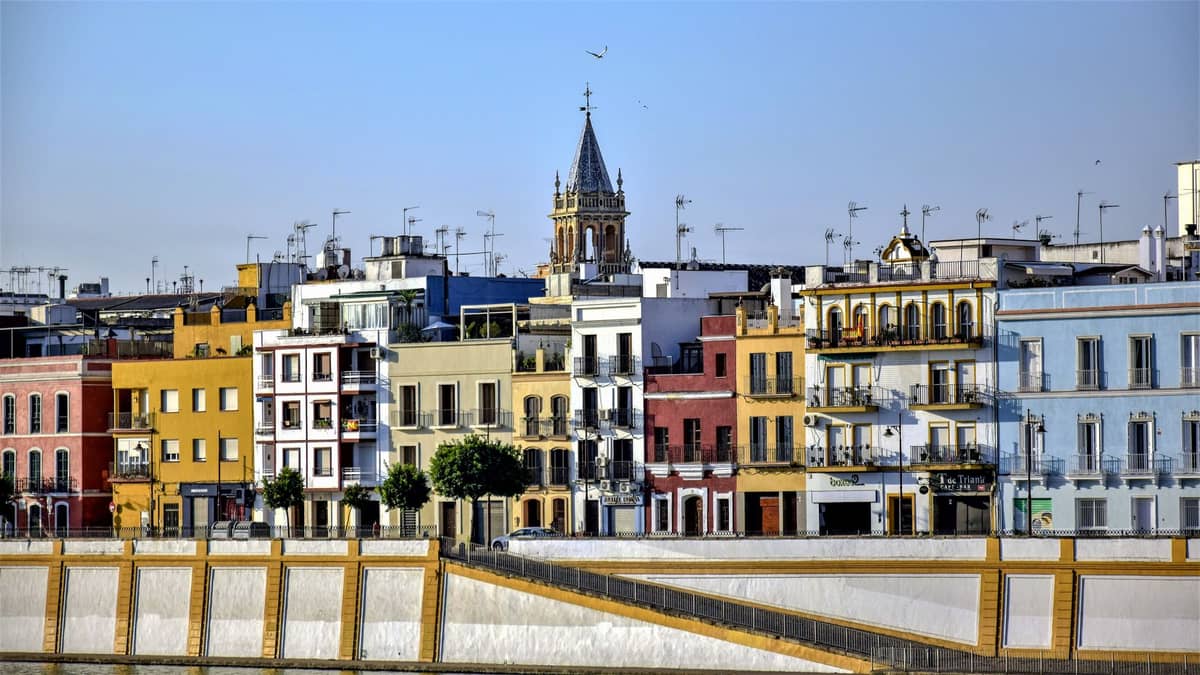
Triana sits on the west bank of the Guadalquivir, connected to the city centre by the Puente de Isabel II (commonly called the Puente de Triana). Historically a neighbourhood of sailors, potters, and flamenco artists, it retains a stronger sense of local identity than Santa Cruz. You'll find fewer souvenir shops and more neighbourhood bakeries, ceramics workshops, and bars frequented by Sevillanos.
On price, Triana is consistently cheaper: On price, Triana is consistently cheaper. The walk to the Cathedral takes about 20 minutes on foot, or 10 minutes by bike. The and the are both worth your time, and the riverside promenade is one of the best spots in the city at sunset. The walk to the Cathedral takes about 20 minutes on foot, or 10 minutes by bike. The Mercado de Triana and the Centro Cerámica Triana are both worth your time, and the riverside promenade is one of the best spots in the city at sunset.
The main drawback is that hotel supply in Triana is thinner than in Santa Cruz. You'll find fewer large hotels and more apartments and small guesthouses. If you need amenities like a hotel pool, gym, or 24-hour concierge, your options narrow. Triana suits travellers who prioritise local atmosphere over convenience services.
El Arenal, La Macarena, and Nervión: The Other Options
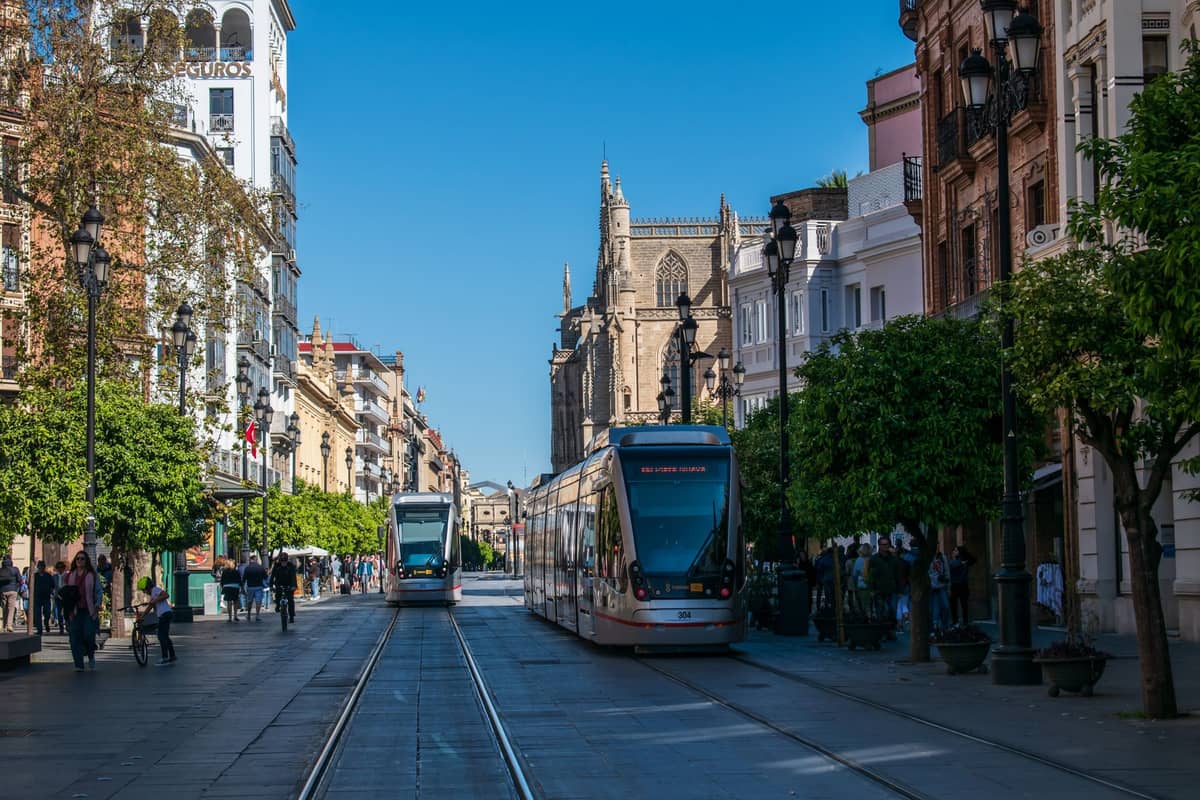
El Arenal sits between the Cathedral and the Guadalquivir riverbank, directly adjacent to the Real Maestranza bullring and the Torre del Oro. It's a strong alternative to Santa Cruz for visitors who want central access without being in the most tourist-dense part of the old city. Prices are slightly lower than Santa Cruz, and the riverside location means better ventilation in summer — useful when temperatures regularly exceed 35°C from June through August.
La Macarena covers the northern section of the historic centre and extends beyond the old city walls. It's less polished than Santa Cruz but has genuine neighbourhood character, a good market at Calle Feria, and the Basílica de la Macarena — one of Seville's most important religious sites, especially during Semana Santa. Hotels here tend to be modestly priced and the area is quieter at night than Santa Cruz.
Nervión is Seville's modern commercial and business district, east of the old city. It's where you'll find shopping centres, chain hotels with parking, and proximity to Estadio Ramón Sánchez-Pizjuán. For leisure visitors, Nervión makes less sense unless you specifically want a larger hotel with business-class amenities, a car, or you're attending a football match. The walk to the Cathedral is 25–30 minutes, and while TUSSAM buses connect the area, it lacks the atmosphere of the central districts.
- Santa Cruz Best for: first-timers, maximum sightseeing convenience. Average: ~$213/night. Trade-off: highest prices, tourist congestion.
- Triana Best for: local atmosphere, better value. Average: ~$170/night. Trade-off: 20-minute walk to main sights, fewer hotel options.
- El Arenal Best for: riverside location, central but less crowded than Santa Cruz. Mid-range pricing. Trade-off: limited nightlife and dining variety.
- La Macarena Best for: budget travellers, repeat visitors. Lower prices, authentic neighbourhood feel. Trade-off: 15–20 minutes from main attractions.
- Nervión Best for: business travellers, those with cars, football fans. Modern amenities, parking. Trade-off: distant from historic sights, minimal local character.
Seasonal Pricing: When to Book and What to Expect
Seville's hotel market is strongly seasonal, but the pattern surprises many visitors. The assumption that summer heat means low demand is partially correct: August is often one of the Seville's hotel market is strongly seasonal, but the pattern surprises many visitors. The assumption that summer heat means low demand is partially correct: August is often one of the cheaper months to book hotels in Seville, with aggregator data showing noticeable price drops compared to spring. This is because daytime temperatures regularly reach 37–38°C, and a significant portion of leisure travellers avoid that heat., with aggregator data showing noticeable price drops compared to spring. This is because daytime temperatures regularly reach 37–38°C, and a significant portion of leisure travellers avoid that heat.
Spring is the genuine peak for hotel pricing, particularly the weeks around Semana Santa (Holy Week, dates vary annually) and the Feria de Abril. During these periods, accommodation availability drops sharply across all neighbourhoods and prices at popular hotels can double or triple their off-peak rates. If your trip coincides with either festival, booking 3–6 months ahead is not excessive — it's standard practice.
Autumn (late September through November) and spring outside festival weeks offer the most balanced conditions: mild temperatures in the 14–22°C range, manageable crowds, and mid-range pricing. For most visitors, these are the most practical windows. For a full breakdown of what each season looks like on the ground, see the guide to the best time to visit Seville.
- Semana Santa and Feria de Abril: book 3–6 months ahead, prices can double or more
- Spring (March–May) outside festivals: popular but bookable 4–8 weeks out
- Summer (June–August): most availability, lowest prices, but temperatures above 35°C are common
- Autumn (September–November): best balance of price, weather, and availability
- Winter (December–February): mild at 10–16°C, quiet, good rates — underrated by most visitors
✨ Pro tip
If you want a central location during Feria de Abril without paying festival-week rates, consider staying in Triana or La Macarena rather than Santa Cruz. You'll save 20–40% on accommodation and the fairground at Los Remedios is actually more accessible from those neighbourhoods than from the deep historic centre.
Practical Tips for Booking Hotels in Seville
Seville Airport (IATA: SVQ) sits roughly 9–10 km from the city centre. The EA airport bus runs every 20–30 minutes to Santa Justa station and Puerta de Jerez for around €5 one way. Taxis from the airport to the centre typically cost about €25–26 plus supplements and take around 15–25 minutes depending on traffic. If you're checking into a hotel in Santa Cruz, confirm access before your driver drops you at the wrong end of a pedestrian zone. Taxis from the airport to the centre typically cost €25–35 and take 15–25 minutes depending on traffic. If you're checking into a hotel in Santa Cruz, confirm access before your driver drops you at the wrong end of a pedestrian zone.
Getting around once you're in Seville is straightforward. The city has an excellent cycling infrastructure and a flat terrain that makes bikes practical for most visitors. TUSSAM buses cover the full city, and the MetroCentro tram connects central plazas. For longer stays or day trips, the high-speed AVE train from Santa Justa station connects Seville to Madrid in about 2.5 hours and to Córdoba in about 45 minutes. See the full guide to getting around Seville for transport details.
A few practical notes before you book: Spain uses Type C and F power sockets at 230V/50Hz, so travellers from the US or UK will need adapters. The official emergency number across Spain is 112. Tipping is not mandatory but rounding up the bill at restaurants or leaving a few coins at a bar is common. Tap water in Seville is potable by national standards, though many locals and visitors prefer bottled water for taste reasons.
💡 Local tip
Short-term rental regulations in Spain, including Seville, have been subject to local policy changes. If you're considering an apartment rental rather than a hotel, verify the property has a valid tourist licence number (VT or AT number) listed on the booking platform. Unlicensed rentals carry legal risk for guests in some circumstances.
FAQ
Which is the best neighbourhood to stay in Seville for first-time visitors?
Santa Cruz is the most convenient base for first-timers — you'll walk to the Cathedral, Real Alcázar, and dozens of tapas bars within minutes. It's the most expensive neighbourhood Santa Cruz is the most convenient base for first-timers — you'll walk to the Cathedral, Real Alcázar, and dozens of tapas bars within minutes. It's the most expensive neighbourhood, but the trade-off in convenience is real. If budget matters, El Arenal is a close second with similar central access at slightly lower rates., but the trade-off in convenience is real. If budget matters, El Arenal is a close second with similar central access at slightly lower rates.
How far in advance should I book hotels in Seville?
For travel during Semana Santa or Feria de Abril, book 3–6 months ahead — good hotels sell out entirely. For spring outside festival weeks, 4–8 weeks is a reasonable buffer. Summer and winter bookings can often be made 2–4 weeks out with no problem, as these are lower-demand periods.
Is it cheaper to stay in Triana than in the historic centre?
Yes, consistently. Yes, consistently. You'll find more apartments and small guesthouses than large hotels, but the savings are meaningful over a multi-night stay. The walk to the Cathedral takes about 20 minutes.
Are Seville hotels expensive in summer?
Counterintuitively, summer — especially August — is often Counterintuitively, summer — especially August — is often one of the cheaper periods to book hotels in Seville. Daytime temperatures exceed 37°C and demand drops, which pushes prices down. Spring, particularly during Semana Santa and Feria de Abril, is when prices peak sharply.
What is the best way to get from Seville Airport to my hotel?
The EA airport bus runs to Santa Justa station and Puerta de Jerez for The EA airport bus runs to Santa Justa station and Puerta de Jerez for around €5 per person, with departures roughly every 20–30 minutes. Journey time is about 35 minutes. Taxis cost €25–35 and take 15–25 minutes. If your hotel is in the pedestrian-only parts of Santa Cruz, a taxi or private transfer to the nearest accessible point followed by a short walk is usually the most practical option., with departures roughly every 20–30 minutes. Journey time is about 35 minutes. Taxis cost €25–35 and take 15–25 minutes. If your hotel is in the pedestrian-only parts of Santa Cruz, a taxi or private transfer to the nearest accessible point followed by a short walk is usually the most practical option.
Tickets & tours
Live prices and dates from our booking partner. If you book, we may earn a commission at no extra cost to you.
Planning a trip? Discover personalized activities with the Nomado app.