Feria de Abril Seville: The Complete Guide to the April Fair
Seville's Feria de Abril is one of Europe's great street festivals: six days of flamenco dresses, horses, sherry, and late nights on a purpose-built fairground. This guide covers everything from how to get in without an invitation to what things actually cost, when to go, and what to wear.
Tickets & tours
Live prices and dates from our booking partner. If you book, we may earn a commission at no extra cost to you.
TL;DR
- The Feria de Abril runs Tuesday to Sunday, and in 2026 it falls 21–26 April.
- Entry to the fairground (Real de la Feria) is free. You pay only for food, drinks, rides, and transport.
- Most casetas are private and invitation-only, but there are public district casetas open to everyone — including Triana–Los Remedios and Casco Antiguo. See the full breakdown in our Seville things to do guide.
- Budget around €30–50 per person for an evening inside: drinks, food, and the TUSSAM Feria bus back.
- Wear a traje de flamenca (women) or traje corto (men) if you want to blend in. Smart casual works fine if you don't own traditional dress.
What Is the Feria de Abril and Where Does It Come From?
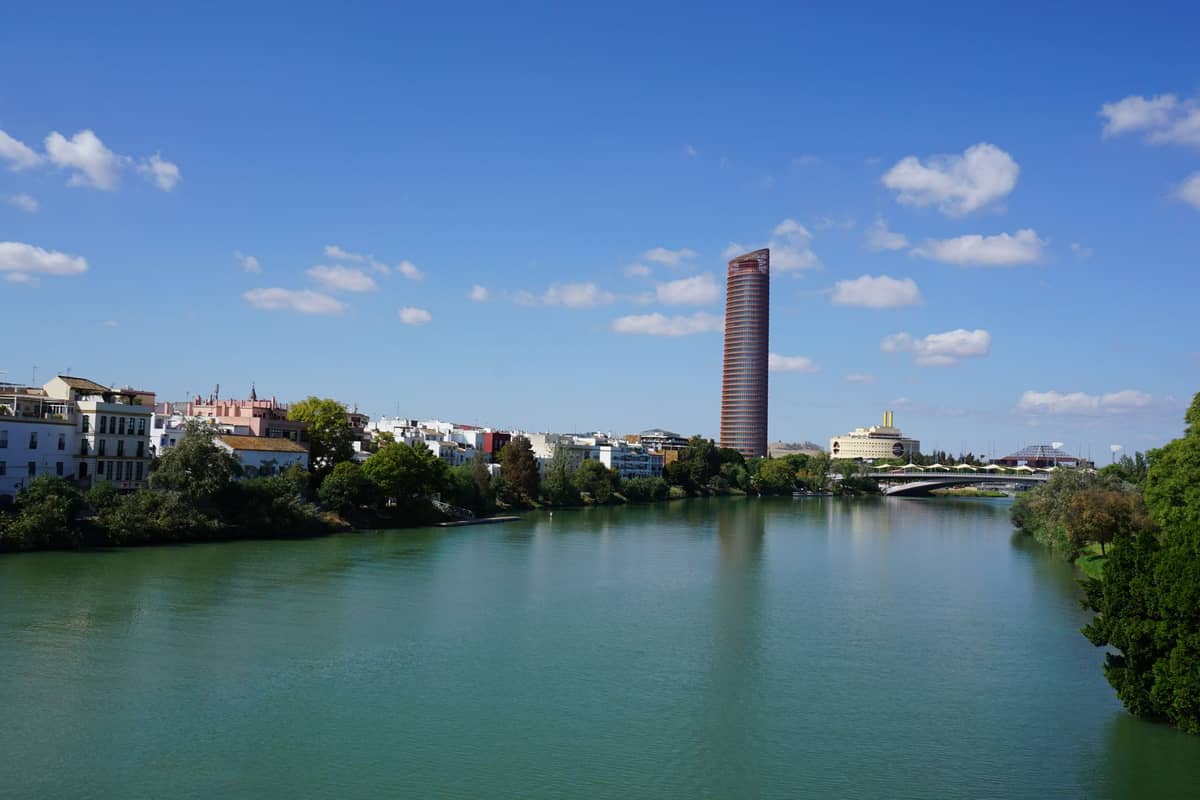
The Feria de Abril started in 1847 as a livestock fair on the banks of the Guadalquivir. Over the following decades it morphed into the social and cultural event it is today: a six-day fair held on a dedicated fairground called the Real de la Feria, located in the Los Remedios district on the west bank of the river. The livestock are long gone. What replaced them is a city within the city: over 1,000 canvas-and-wood casetas (booths), horse-drawn carriages, flamenco dancing that starts at noon and rarely stops before 6am, and a consumption of manzanilla sherry that defies reasonable calculation.
The fair is inseparable from Semana Santa, the Holy Week processions that precede it. By municipal ordinance, the Feria begins on the third Tuesday after Easter Sunday, which means it can fall anywhere from late April to mid-May depending on the year. The name 'de Abril' has stuck despite this scheduling reality.
ℹ️ Good to know
The 2026 Feria de Abril runs from Tuesday 21 April to Sunday 26 April. The Alumbrao — the ceremonial lighting of the main gate — takes place at midnight on the night of 20–21 April. Dates shift every year, so always verify the current year's schedule via the Ayuntamiento de Sevilla website before booking travel.
The Real de la Feria: Layout, Access, and Getting There
The Real de la Feria is a temporary city constructed specifically for the fair each year. It covers a large area of the Los Remedios district, organized into named streets lined with casetas. The main entrance is the Portada, a monumental gate whose design changes annually and which is illuminated during the Alumbrao on opening night. Entry to the fairground itself is free at all times.
Getting there without a car is straightforward. TUSSAM runs a dedicated Especial Feria bus service with a single ticket costing around €1.60 (or €1.50 with a multitravel card). From central Seville, taxis and ride-hailing apps also run frequently, though expect queues after midnight. If you're staying in Triana or Los Remedios, you can walk to the fairground in under 20 minutes. Avoid driving: parking is extremely limited and the surrounding streets become effectively impassable by evening.
- TUSSAM Especial Feria bus Cheapest and most frequent option from the centre. Around €1.60 single. Runs throughout the day and into the early hours.
- Taxi or ride-hailing Useful for late-night returns when bus queues are long. Expect to pay €8–15 from the centre depending on app and time.
- Walking from Triana or Los Remedios Feasible for anyone staying on the west bank. Cross the Puente de Triana and follow the crowds.
- Cycling Seville has an extensive cycle lane network. Sevici city bikes can get you close, though the area immediately around the fairground fills with pedestrian traffic by evening.
⚠️ What to skip
The Feria attracts enormous crowds every evening, particularly Thursday to Saturday. Arriving before 8pm gives you more space to move around and easier access to public casetas. After midnight the main streets are shoulder-to-shoulder. Plan your exit strategy: bus queues can be 30+ minutes from 2am onward.
Casetas: Private Booths, Public Options, and How to Get Inside Both
The caseta is the social unit of the Feria. Each one is a temporary structure fitted with a bar, tables, a small dancefloor, and decorations specific to its owners. In 2025 the Real de la Feria hosts just over 1,000 casetas. The vast majority are private, belonging to families, companies, political parties, trade unions, and civic associations. Members and their guests attend by invitation. Annual membership fees for private casetas can run to around €1,000 per person — this is not a tourist product, it's a social institution.
The good news for visitors is that public casetas do exist and are open to everyone with no invitation required. The Ayuntamiento de Sevilla operates casetas for each city district, including Casco Antiguo, Triana–Los Remedios, and Nervión–San Pablo–Santa Justa. Several NGOs and cultural organisations also run public casetas. These fill up fast in the evenings, but during afternoon hours (noon to 7pm) you can usually find a table. Food and drink prices inside are similar to those in private casetas.
✨ Pro tip
The afternoon session (noon to around 7pm) is when the horse carriages parade up and down the main avenue (the Paseo de Caballos), and when the atmosphere is most photogenic. It is also significantly less crowded than the evening. If you only have one visit in you, the afternoon on a weekday is the most accessible and relaxed option.
If you want to experience a private caseta, your best options are: knowing a Sevillano family well enough to receive an invitation, attending as a guest of a hotel or tour operator who holds membership, or booking a dedicated Feria experience through a local cultural tour operator. Some hotels in the city purchase caseta memberships as a guest benefit — check this when booking accommodation during Feria week.
Food, Drink, and What Everything Costs
The Feria runs on two drinks: rebujito (a long drink of manzanilla sherry mixed with 7UP or similar, served over ice) and manzanilla itself, poured from a bottle or chilled fino. A glass or cup of either costs around €3–4 in most public and private casetas. Cerveza (beer) and soft drinks are also available. The drinking pace at the Feria is steady rather than rapid — this is a social event that lasts 18 hours, not a nightclub.
- Rebujito or manzanilla wine: €3–4 per glass
- Main dishes (pescaíto frito, berberechos, espinacas con garbanzos): €10–15
- Jamón ibérico plate: around €16–18
- Queso curado plate: around €12
- Children's fairground rides: €3.50–4
- Adult rides: around €5
- Large/premium attractions: €6–7
Eating and drinking exclusively inside the Real de la Feria is expensive by Seville standards. A practical approach is to eat a proper meal before arriving — the restaurants of Triana are five minutes' walk from the fairground and serve good food at normal prices. Save the caseta budget for drinks and a shared plate or two. For context on typical Seville food costs, the Seville food guide has detailed neighbourhood-by-neighbourhood breakdowns.
What to Wear: Dress Code for the Feria
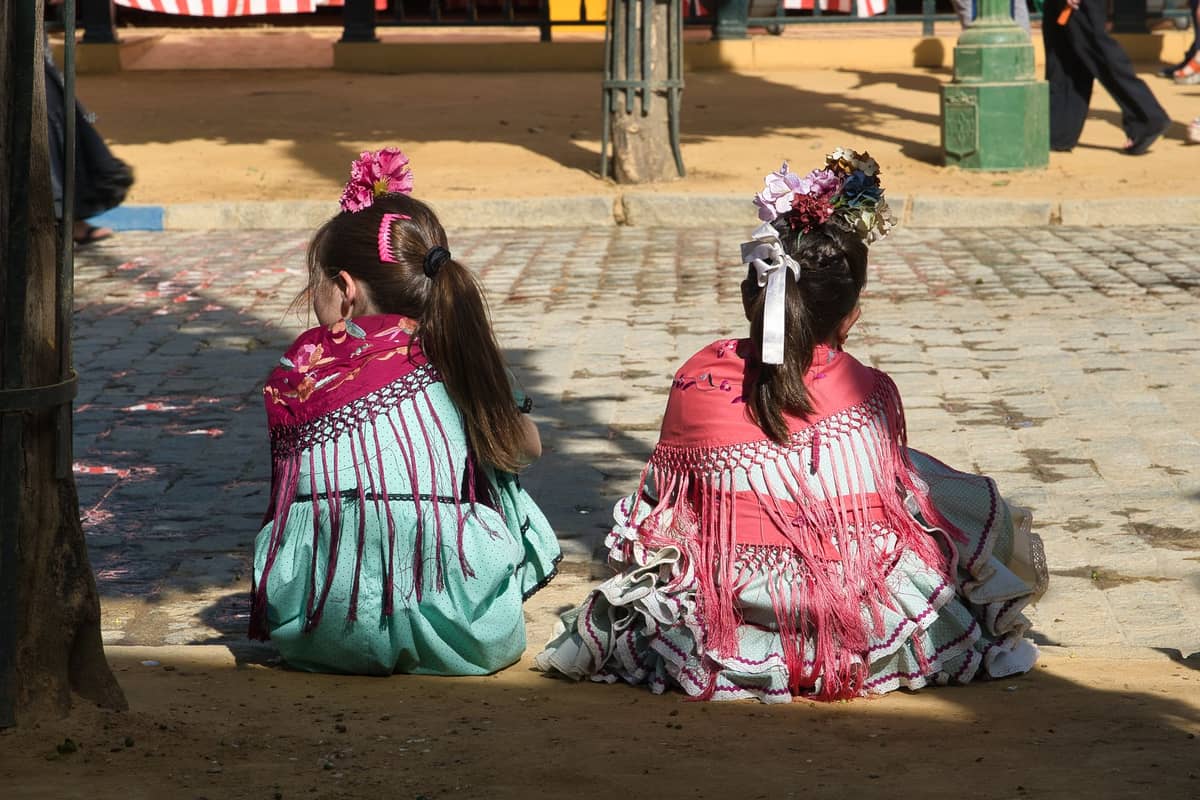
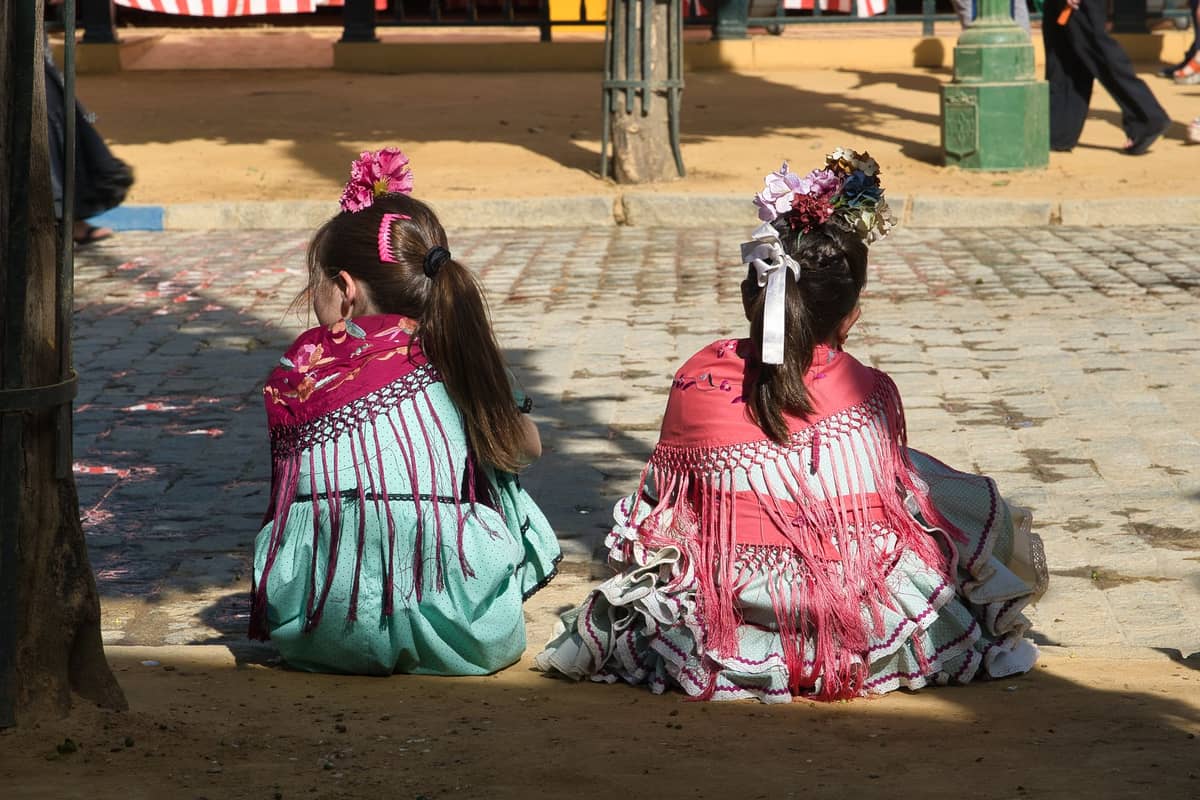
There is no formal dress code for the public areas of the fairground. Smart casual is perfectly acceptable and nobody will stop you at the gate for wearing jeans. However, the Feria is one of the few occasions in modern life where traditional Andalusian dress is worn genuinely and unselfconsciously, not as a costume. Women wear the traje de flamenca (or traje de gitana): a fitted, ruffled dress in bold colours or polka-dot prints, complemented by flowers in the hair, a manton shawl, and high-heeled shoes or boots. Men wear the traje corto: high-waisted trousers, short jacket, boots, and a flat-brimmed hat. For private casetas, traditional dress is more or less expected and showing up in streetwear can feel conspicuously out of place.
Visitors who want to dress the part can rent outfits in Seville in the weeks leading up to the Feria. Several shops in the centre and in the Santa Cruz area offer rental services. Book early: by the last week before the fair, rental stock runs thin. Buying a basic traje de flamenca is possible from around €80–150 for a ready-made version; quality varies widely at that price point. The shoes matter: cobblestones and long nights on your feet will ruin the evening if you prioritise style over comfort.
Practical Tips: Timing, Logistics, and What to Expect
The Feria is one of Seville's two peak tourism moments, the other being Semana Santa. Hotel prices during Feria week are significantly higher than usual and rooms book out months in advance. If you're planning to visit, secure accommodation early. The Seville accommodation guide covers the best neighbourhoods for different budgets, but during Feria week location matters more than usual: staying west of the centre cuts your transport hassle considerably.
The Calle del Infierno (Street of Hell) is the amusement area at the edge of the fairground, running from a few days before the main fair through to its close. In 2026 it operates from the weekend before the fair through Sunday 26 April. This is the most accessible zone for families with children, with rides, games, and snack stalls. For a broader family-friendly perspective on visiting Seville, see the Seville with kids guide.
Beyond the fairground itself, the city continues operating during Feria week. Major monuments like the Real Alcázar and the Seville Cathedral remain open and are actually less crowded than usual during the day, as many tourists spend their time at the Feria. If you have a few days in the city, split your time between the fairground evenings and daytime sightseeing.
- Book accommodation 3–4 months ahead Feria week is one of the most expensive and fully booked periods in Seville's calendar. Don't leave it to the last minute.
- Carry cash Many caseta bars, especially smaller ones, are cash-only. ATMs near the fairground run out of notes by the weekend.
- Don't expect a quiet night The fair runs until 6am daily. If you're a light sleeper, choose accommodation away from the fairground or invest in earplugs.
- The fair is not always in April Check the official Ayuntamiento de Sevilla website for the current year's dates every time. The 2026 edition runs 21–26 April.
- Pickpockets operate in crowds The Feria draws large crowds in a concentrated space. Use a front-facing bag or money belt on busy evenings.
If you're visiting Seville specifically for the Feria, it's worth combining the trip with time in the rest of Andalusia. The Andalusia itinerary from Seville gives a structured plan for seeing Córdoba, Granada, and the surrounding area in conjunction with a Seville base.
FAQ
Is the Feria de Abril free to enter?
Yes, entry to the Real de la Feria (the fairground) is completely free. You pay only for food, drinks, fairground rides, and transport to and from the site. Access to private casetas requires an invitation from a member, but several public casetas operated by the city districts are free and open to all.
When exactly is the Feria de Abril in 2026?
The 2026 Feria de Abril runs from Tuesday 21 April to Sunday 26 April. The ceremonial lighting of the main gate (Alumbrao) takes place at midnight on the night of 20–21 April.
How do I get into a private caseta if I'm a tourist?
The most reliable routes are: receiving an invitation through a local contact, booking a Feria experience package through a reputable local tour operator, or staying at a hotel that holds caseta membership for guests. There is no walk-up entry to private casetas; showing up at the entrance without an invitation will result in a polite refusal.
What is a rebujito and is it strong?
Rebujito is the traditional Feria drink: manzanilla sherry (a dry, salty, pale sherry from Sanlúcar de Barrameda) mixed with a lemon-lime soda like 7UP, served over ice in a long glass. Manzanilla is around 15–17% ABV, but diluted in the mix the drink is relatively light. It's easy to drink quickly, so pace yourself — it adds up over a long evening.
Is the Feria de Abril suitable for children?
Yes, the daytime sessions (roughly noon to 7pm) are family-friendly, with horse carriages, dancing, and the Calle del Infierno amusement area. Late evenings become progressively more adult-oriented. Families with young children generally visit in the afternoon and leave before the evening crowds build.
Tickets & tours
Live prices and dates from our booking partner. If you book, we may earn a commission at no extra cost to you.
Planning a trip? Discover personalized activities with the Nomado app.