Semana Santa in Seville: The Complete Guide to Holy Week
Seville's Semana Santa is one of the most intense religious spectacles in the world, drawing hundreds of thousands of visitors each spring. This guide covers the full schedule, the key brotherhoods, how to secure Carrera Oficial seats, when to go for smaller crowds, and everything else you need to experience Holy Week properly.
Tickets & tours
Live prices and dates from our booking partner. If you book, we may earn a commission at no extra cost to you.
TL;DR
- Semana Santa runs from Palm Sunday to Easter Sunday, shifting annually with the Easter calendar — always verify the exact dates for your year.
- Around 70-76 brotherhoods (hermandades) parade through Seville, with the most dramatic night being La Madrugá, when processions run from midnight until dawn.
- Most processions start between 17:00 and 17:30; the Carrera Oficial near the Cathedral is the official viewing route and gets extremely crowded after 19:00.
- Book accommodation months in advance — this is peak season in Seville. See where to stay in Seville for neighborhood breakdowns.
- Watching from outlying neighborhoods as brotherhoods leave their home churches is free, uncrowded, and often more atmospheric than the central scrum.
What Is Semana Santa and Why Seville Is Different
Semana Santa — Holy Week — is observed across Spain, but Seville's version is in a different category entirely. The city has been staging these processions for centuries, and the scale, artistry, and emotional intensity are unlike anything else in the country. The brotherhoods that participate are ancient religious confraternities, many of them dating back to the 15th and 16th centuries, each with their own patron image, route, music, and deeply loyal following among Sevillanos.
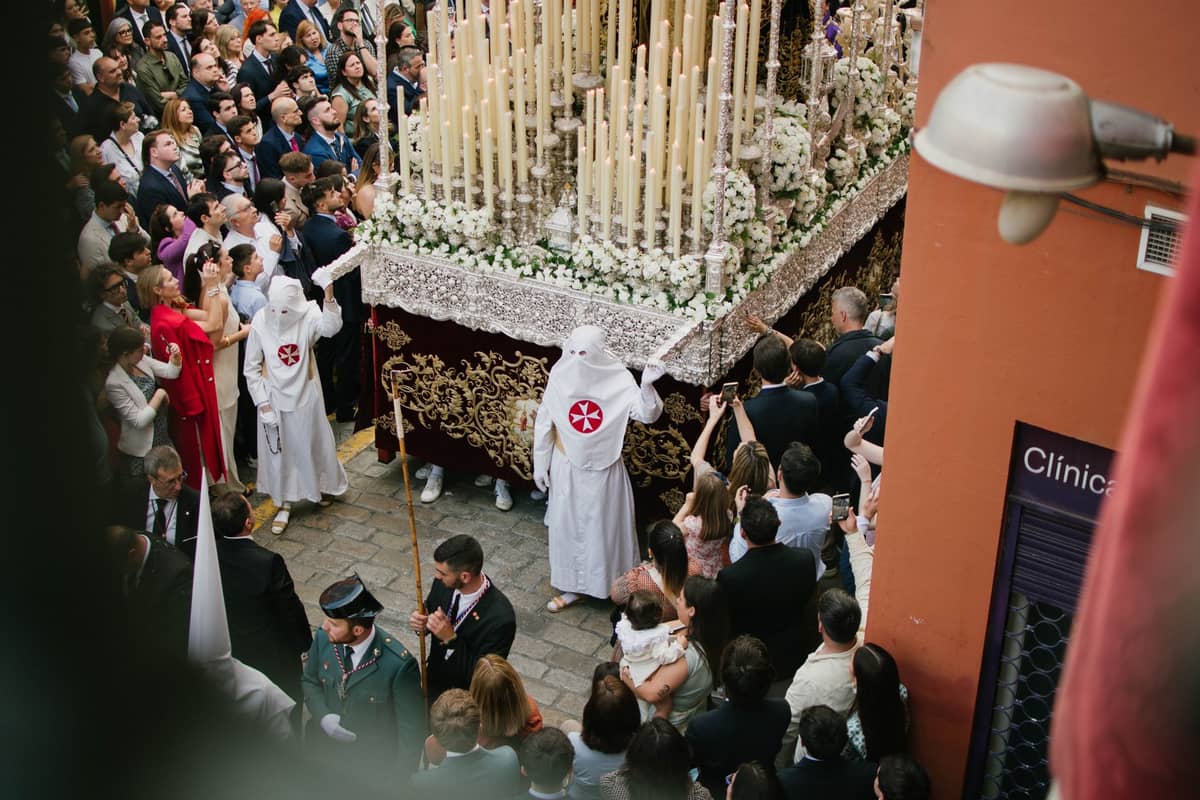
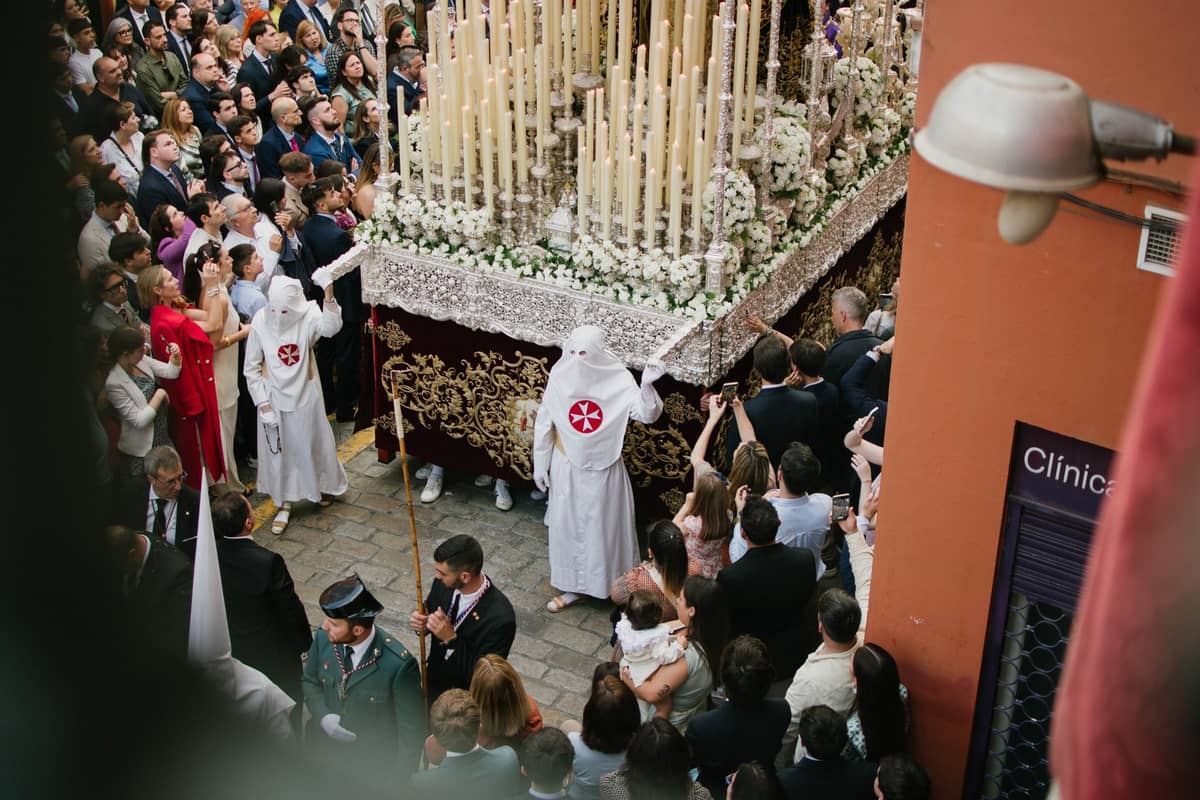
Each hermandad parades two floats (pasos): the first carries a sculptural scene from the Passion of Christ, the second carries an image of the Virgin Mary. The floats are carried on the shoulders of costaleros, who work entirely hidden beneath the float structure, moving it in coordinated steps to the rhythm of a capataz tapping a wooden brace. It is extraordinary physical labor, and watching a five-tonne float emerge from a church doorway — tilting, pivoting, millimetres from the stone arch — is one of those genuinely arresting experiences that no photograph properly captures.
ℹ️ Good to know
Semana Santa dates move annually with Easter. In 2026 it ran from Sunday 29 March (Domingo de Ramos) to Sunday 5 April (Domingo de Resurrección). Always check the official program from the Consejo General de Hermandades y Cofradías de Sevilla before planning travel — do not assume the same dates repeat each year.
The Daily Structure: What Happens and When
The week has a distinct rhythm. Each day, a different set of brotherhoods processes through the city. Most depart their home churches in the late afternoon, around 17:00-17:30, pass through the Carrera Oficial (the official sanctioned route running past the Cathedral and along Calle Sierpes), and return to their churches late at night, often between 23:00 and 01:00. The full itinerary for each brotherhood — departure time, route, and expected return — is published by the Consejo General de Hermandades and reprinted in detail by local media including Diario de Sevilla and 20Minutos.
Not every day carries equal weight. Palm Sunday (Domingo de Ramos) and Good Friday (Viernes Santo) are the most heavily attended. Maundy Thursday transitions into La Madrugá, which is the emotional peak of the entire week. Easter Sunday, while significant religiously, tends to be quieter in terms of street crowds.
- Domingo de Ramos (Palm Sunday) Opens the week with multiple brotherhoods including La Borriquita, the first procession featuring a figure of Christ on a donkey. Streets fill from mid-afternoon.
- Lunes, Martes, Miércoles Santo Monday through Wednesday see a steady rotation of hermandades. These days are less crowded than the bookend days and offer more relaxed viewing.
- Jueves Santo (Maundy Thursday) Processions begin in the afternoon and continue late into the night, transitioning seamlessly into La Madrugá.
- La Madrugá (Thursday night / Friday morning) The most celebrated night of Semana Santa. Major brotherhoods including El Silencio, La Macarena, and El Gran Poder process from midnight onward, passing through the centre between roughly 01:00 and 09:00. Enormous crowds, very little sleep.
- Viernes Santo (Good Friday) Daytime and afternoon processions with a solemn character. Attendance is very high after the all-night Madrugá.
- Sábado Santo and Domingo de Resurrección Saturday has fewer processions historically, and Easter Sunday closes the week. Crowds thin noticeably by Saturday.
La Madrugá: The Night That Defines the Week
La Madrugá is not just a scheduling oddity — it is the emotional and spiritual core of Seville's Semana Santa. The processions that take place between midnight on Thursday and dawn on Friday are the ones Sevillanos care most deeply about. Two brotherhoods in particular, La Macarena and El Gran Poder (Jesús del Gran Poder), generate intense devotion. These are not tourist spectacles; they are genuine religious events that happen to take place on public streets.
The Basílica de la Macarena in the northern part of the old city is one of the departure points for La Madrugá. Arriving in the neighborhood in the hours before the brotherhood departs — well before midnight — gives you a chance to see the preparations, the atmosphere around the church, and the devotion of locals who have followed this procession their entire lives. Plan to be in position early; the streets around the Carrera Oficial will be impassable by 01:00.
⚠️ What to skip
La Madrugá is genuinely exhausting if you try to see multiple processions in full. Crowds in the historic center between midnight and 04:00 are some of the densest of the entire year. If you have children or mobility limitations, La Madrugá is not the right time to be in the center — consider watching from a neighborhood church instead, or plan to arrive early at a fixed spot and stay there.
Where to Watch: The Carrera Oficial vs. Neighborhood Streets
The Carrera Oficial is the official route that all brotherhoods must pass through. It runs from La Campana down Calle Sierpes, through Plaza de San Francisco, along Avenida de la Constitución, past the Cathedral, and ends near Plaza Virgen de los Reyes. Grandstand seats and chairs along this route are sold through the Consejo General de Hermandades y Cofradías. Prices vary by location, category, and year; they are sold through official channels and seasonal passes rather than on-the-day tickets, so check the Consejo's official site well in advance. Many seats sell out months before Holy Week.
Standing along the Carrera Oficial without a seat is free but requires arriving 60-90 minutes early for a decent sightline. The crowds are tightest between 19:00 and midnight. If you are standing, the section along Avenida de la Constitución, with the Cathedral façade as backdrop, is worth the effort — but expect to be hemmed in. The section near Plaza de San Francisco tends to be slightly more manageable on weekday evenings.
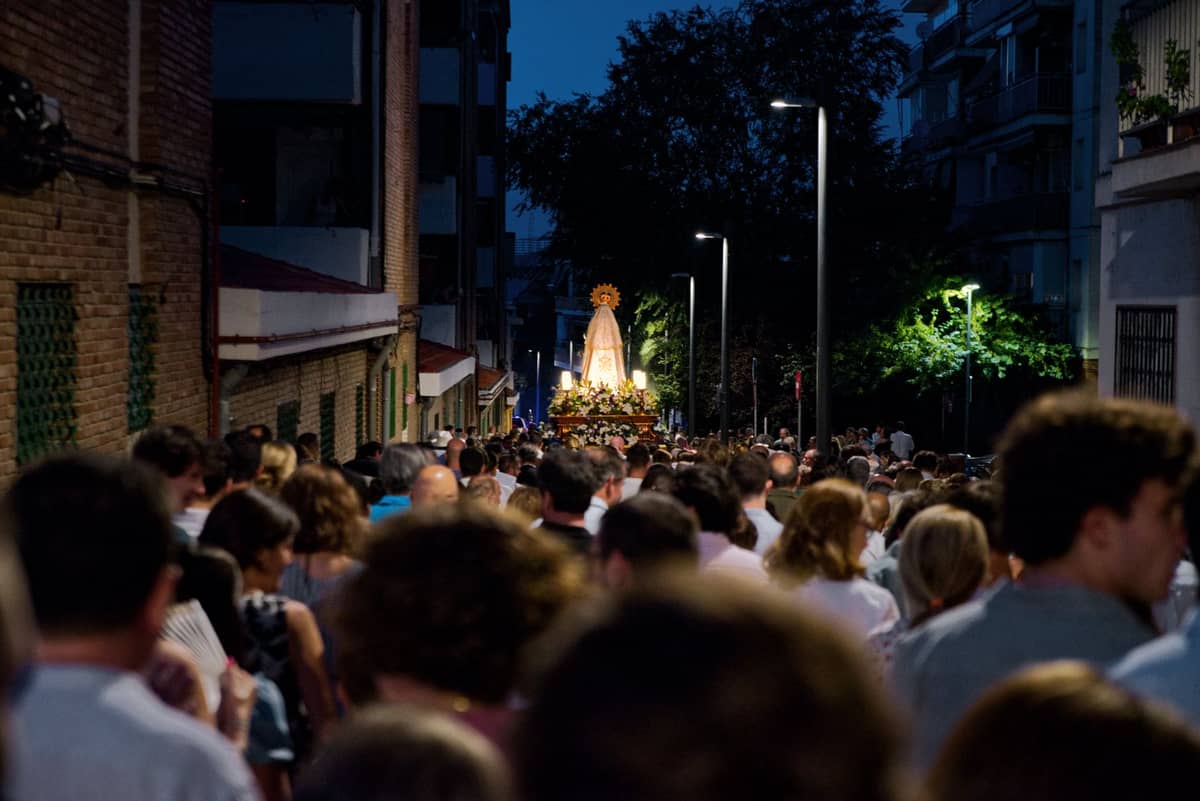
The underrated alternative is to watch brotherhoods depart from their home churches in outlying barrios before they reach the center. Many hermandades begin in neighborhoods like La Macarena, Triana, or further afield in areas like Pino Montano and Torreblanca. The street outside the home church, in the hour before departure, has a completely different energy: local families, emotional farewells, the sound of the saeta (a traditional unaccompanied lament sung to the paso) echoing off narrow walls. This costs nothing and requires no planning beyond checking the brotherhood's departure time.
✨ Pro tip
Download the official program PDF from the Turismo de Sevilla website before you arrive. It includes maps of all itineraries and times for each brotherhood. Cross-reference with local newspaper apps (Diario de Sevilla) for last-minute changes. Some brotherhoods occasionally modify their schedule due to weather — rain can delay or cancel processions entirely, as the floats and costumes are irreplaceable.
Practical Planning: Accommodation, Transport, and Crowds
Semana Santa is the single busiest week of the year in Seville. Hotels, apartments, and hostels in the historic center — particularly in Santa Cruz and El Arenal — book out months in advance at significantly inflated rates. If you are planning to attend, six months' notice is not excessive for accommodation. Staying slightly outside the center, in neighborhoods like Triana or Nervión, can offer better availability and easier access to processions in those areas.
Getting around the city during Holy Week requires patience. Large sections of the historic center are closed to vehicles for hours at a time as processions pass. The MetroCentro tram line that runs along the central axis is interrupted or limited during peak procession hours. TUSSAM city buses are frequently rerouted—do not rely on a fixed bus plan for the evening hours. Walking is almost always the most reliable option, though the streets themselves can be extremely congested. The city publishes updated traffic and pedestrian access maps each year; pick these up at the tourist office on arrival.
- Book accommodation at least 4-6 months ahead for central neighborhoods; 2-3 months may still work for outlying areas or budget options.
- Carry cash: street vendors, some bars, and informal food stalls operate cash-only during Semana Santa.
- Wear comfortable shoes — you will walk 8-15 km per day easily if you are following processions.
- Check the weather forecast daily. Rain causes processions to turn back (a 'recogida'), sometimes mid-route, which draws enormous emotional reactions from the crowd.
- Afternoon slots (16:00-19:00) on Monday, Tuesday, and Wednesday are the best compromise between seeing processions and avoiding maximum crowds.
- The Turismo de Sevilla app and local newspaper apps update in real time with delays and cancellations during the week.
For context on Seville's spring climate during Holy Week — which typically falls in March or April — temperatures average around 14-21°C, with the possibility of rain. See the Seville in spring guide for a fuller picture of what to expect weather-wise. If you are considering extending your trip, the week immediately after Easter sees the city shift into preparations for Feria de Abril, which takes place roughly two weeks after Easter Sunday.
Common Misconceptions and Things to Know Before You Go
Several assumptions about Semana Santa will lead you astray if you do not address them before arrival. First: this is not a carnival or a street festival. It is a religious observance conducted in public. Talking loudly during a saeta, pushing through a procession, or treating the event as a photo opportunity at the expense of the participants is genuinely disrespectful and will earn immediate displeasure from locals. Behave as you would at any serious religious ceremony — quietly attentive, not obstructive.
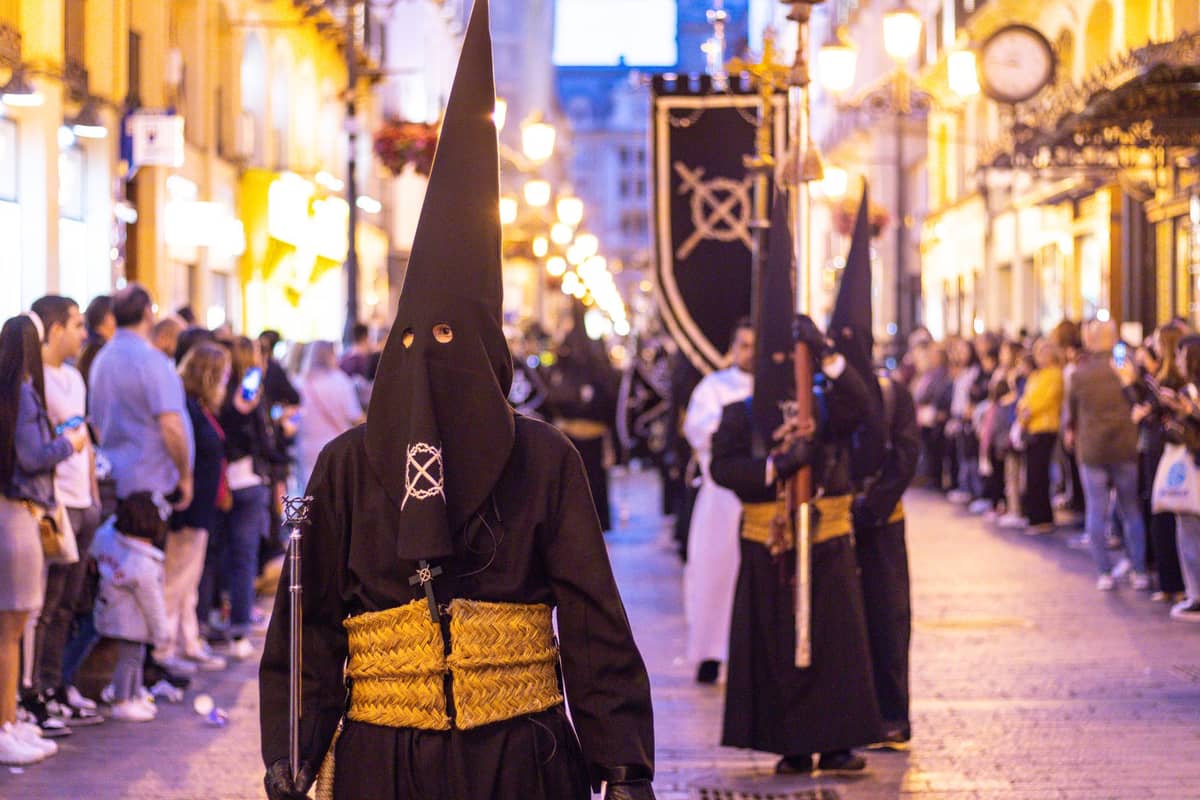
Second: the Nazarenos — the penitents in robes and tall pointed hoods — are not a reference to the Ku Klux Klan. The capirote hood has been part of Spanish Holy Week since the medieval period, predating the American organization by centuries. The confusion is understandable for first-time visitors, but the association is historically incorrect.
Third: not all processions are in the historic center. Many hermandades begin in peripheral neighborhoods and spend hours processing through residential streets before reaching the Carrera Oficial. A brotherhood starting in Pino Montano in the north of the city, for example, may not arrive at the Cathedral zone until three or four hours after its departure. The official itinerary maps from the Consejo General de Hermandades show each brotherhood's full route — use them. For more on navigating the city's districts and transport connections, see the guide to getting around Seville.
💡 Local tip
If you want to combine Semana Santa with broader sightseeing, plan your visits to major attractions like the Real Alcázar and the Cathedral for the mornings of Monday through Wednesday. Many Sevillanos spend the mornings recovering from the previous night's processions, so queues at attractions are actually shorter than usual in the early part of Holy Week. By Thursday, the city is fully in procession mode and sightseeing takes a back seat.
If this is your first time in Seville and you are planning around Semana Santa, it is worth reading the broader things to do in Seville guide to understand what the city offers beyond Holy Week, and the best time to visit Seville guide if you are still deciding whether to time your trip around this event or avoid the crowds entirely.
FAQ
Do I need tickets to watch Semana Santa processions in Seville?
Watching the processions from the street is completely free. Tickets are only required if you want a reserved seat or chair in the grandstands along the Carrera Oficial. These are sold through the Consejo General de Hermandades y Cofradías de Sevilla and tend to sell out well before Holy Week. For the best free viewing, arrive 60-90 minutes early and stake out a spot along the route.
What is La Madrugá and should I stay up for it?
La Madrugá is the night between Maundy Thursday and Good Friday, when the most venerated brotherhoods including La Macarena and El Gran Poder process through Seville from midnight onward. It is emotionally intense and genuinely unlike anything else during the week. However, it requires staying out in packed streets until 03:00-06:00. If you are comfortable with that, it is worth experiencing at least once. If you have children or need sleep, skip it and watch one of the Wednesday evening processions instead.
Can rain cancel Semana Santa processions?
Yes. Rain is the single biggest operational risk of Holy Week. Each brotherhood's ruling council (junta de gobierno) makes the call on whether to proceed. If rain is heavy or expected to damage the irreplaceable floats and garments, the procession is cancelled or turned back (recogida). This can happen minutes before departure or mid-route. Check the weather forecast daily and follow local news apps for real-time updates during the week.
When does Semana Santa take place in Seville?
Semana Santa runs from Palm Sunday to Easter Sunday, so the dates shift each year based on the Easter calendar. In 2026, it ran from 29 March to 5 April. Always look up the specific year's dates before booking travel — do not assume the same week as a previous year.
Is Semana Santa in Seville suitable for children?
Younger children generally find the processions engaging, particularly the music, the giant floats, and the candlelight atmosphere. The main practical challenges are the very late hours and the dense crowds during peak times. Afternoon processions on Monday through Wednesday are more manageable for families than La Madrugá or Good Friday evenings. Watching from a neighborhood church rather than the Carrera Oficial keeps children away from the worst of the crush.
Tickets & tours
Live prices and dates from our booking partner. If you book, we may earn a commission at no extra cost to you.
Planning a trip? Discover personalized activities with the Nomado app.