Seville in Spring: What to Expect in March, April & May
Spring is Seville's most dramatic season, combining mild weather with two of Europe's biggest festivals. This guide breaks down exactly what to expect each month, when to book, and how to navigate the crowds.
Tickets & tours
Live prices and dates from our booking partner. If you book, we may earn a commission at no extra cost to you.
TL;DR
- Spring temperatures rise from around 22°C in March to 27-28°C in May, but May can feel like early summer with a UV index near 10.
- Semana Santa (Holy Week) and Feria de Abril both fall in spring and transform the city completely, expect sold-out hotels and surge prices weeks in advance.
- March brings the most rain, roughly 6 rainy days and around 30–40mm; pack a light waterproof jacket.
- Book accommodation at least 2-3 months ahead if your trip overlaps with either festival, or expect very limited and expensive options.
- If festivals aren't your priority, late April after Feria or early May offers great weather, fewer crowds, and full access to the Real Alcázar and other major sights.
Month-by-Month Weather Breakdown
Spring in Seville doesn't follow a single pattern. The three months span everything from cool, occasionally wet afternoons to near-summer heat. Understanding each month separately is more useful than treating 'spring' as a uniform season.
- March Average daytime high around 20°C, overnight lows near 9-10°C. Expect roughly 6 rainy days and up to 85-97mm of rainfall. Around 9-10 hours of sunshine per day. Bring layers and a waterproof outer layer. The city is green and uncrowded in the first two weeks, then Semana Santa hits.
- April Daytime highs climb to 23-24°C, nights around 11-12°C. Rainfall drops to 5-7 rainy days but showers can still surprise. About 11 hours of sunshine daily. This is the peak festival month. The city is at maximum energy but also maximum prices and logistics stress.
- May Daytime highs reach 26-28°C, nights stay at 14-16°C. Only 2-4 rainy days expected, and sunshine exceeds 12 hours per day. UV index approaches 10, classified as 'very high'. May feels closer to summer than spring. Sunscreen, a hat, and early-morning or late-evening sightseeing are practical necessities.
⚠️ What to skip
Don't assume 'spring' means uniformly pleasant weather. May in Seville regularly hits 28°C with very high UV, and the heat can feel intense if you're not accustomed to southern Andalusian conditions. Plan outdoor activities for before 11am or after 6pm.
Semana Santa: The Most Intense Week of the Year
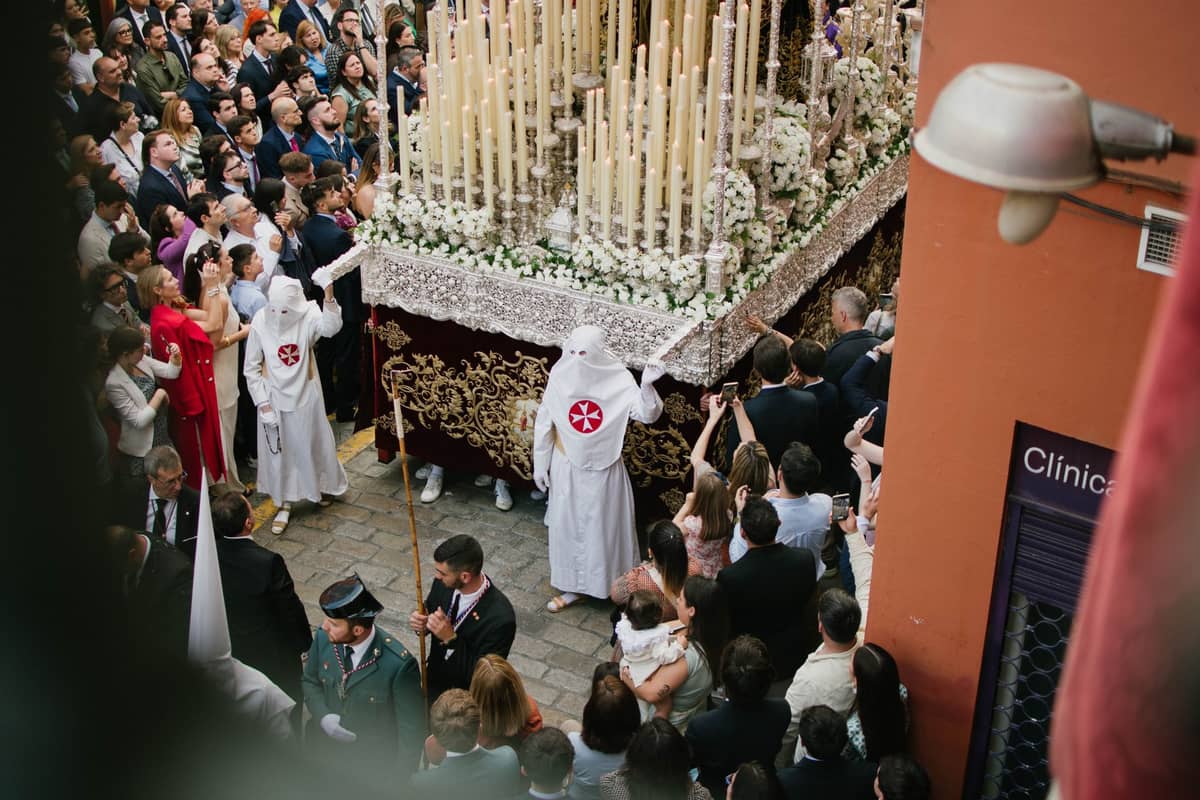
Semana Santa, or Holy Week, is not a tourist spectacle with a tourist crowd standing at the edge. It is a deeply embedded religious and cultural event that takes over the entire city. In 2026, it runs from Palm Sunday (29 March) through Easter Sunday (5 April). For the full scope of what this week involves, the Semana Santa Seville guide covers the processions, cofradías, and viewing strategy in detail.
During Holy Week, around 60 brotherhoods (cofradías) carry enormous floats, called pasos, through the narrow streets of the old city over the course of seven days. The processions move slowly, often passing a single point over several hours. Streets in Santa Cruz and around the Cathedral are completely transformed. Road closures are extensive, taxis become nearly impossible to find, and even walking routes shift daily.
The atmosphere is genuinely unlike anything else in Spain. It is solemn, not carnival-like. Silence, incense, candlelight, and the sound of saetas (improvised flamenco laments sung from balconies) create something that requires being there to understand. That said, it is not for everyone: the crowds are dense, sleep becomes irregular, and the city's normal rhythms disappear entirely for the week.
💡 Local tip
Grandstand seats (sillas) along the official procession route are sold in advance by the Council of Brotherhoods. If you want a seated view of the pasos passing La Campana or the Cathedral, buy tickets at least a month ahead. Standing spots are free but require patience and position-claiming from early evening.
Feria de Abril: A Week Unlike Anything Else
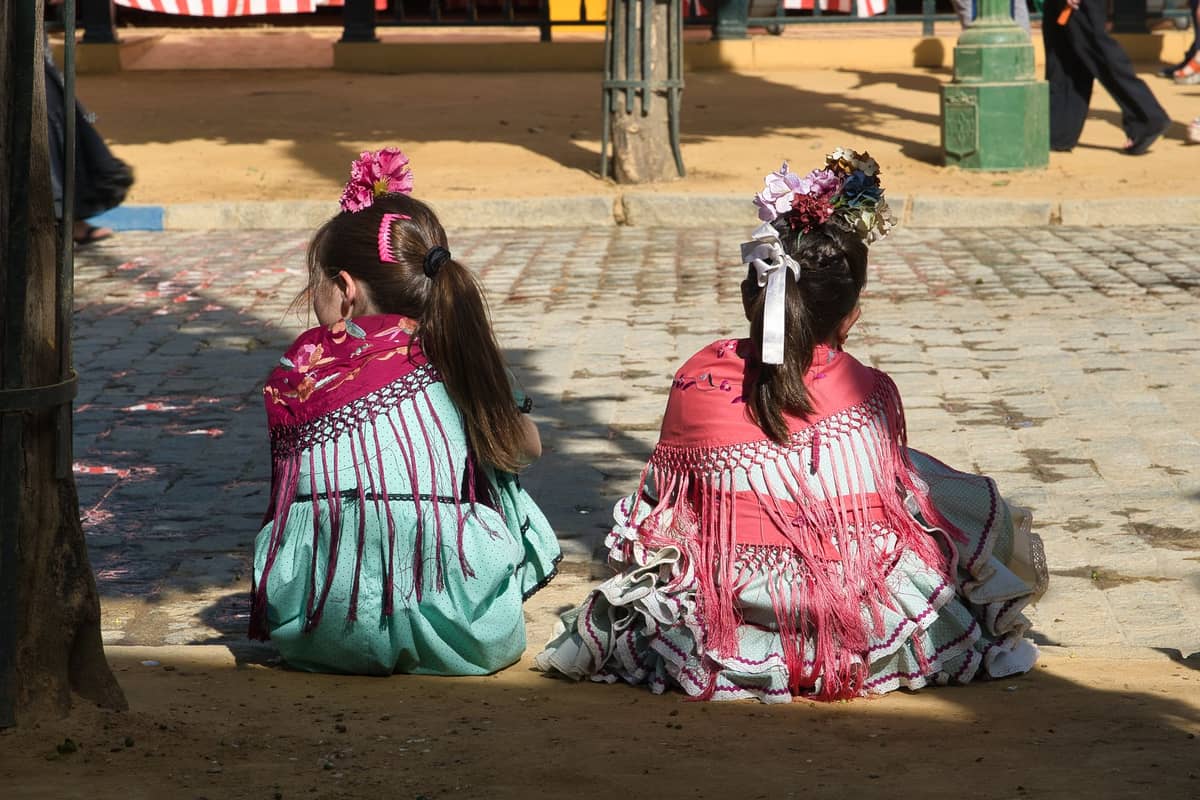
Two weeks after Semana Santa ends, Seville pivots completely. The Feria de Abril is the city's spring fair, and in 2026 it runs from Tuesday 21 April to Sunday 26 April, with the ceremonial lighting (alumbrado) on the evening of Monday 20 April. The fairground is in the Los Remedios area, accessed via the Puente de los Remedios bridge.
The Feria is centred on casetas, which are private tents owned by families, peñas, or political parties. The majority are closed to people without an invitation. A small section of public casetas exists, and some bars and food stalls are open to all, but the core of the Feria is genuinely private. Visitors who don't have contacts in Seville often find the experience more limited than expected. That's not a reason to skip it: the spectacle of women in trajes de flamenca, horse-drawn carriages, and the lights at night is extraordinary. Just understand what you're seeing and what you're not part of.
Afternoons at the Feria typically wind down, then the evening comes alive from around 9pm and runs well past midnight. Bullfights take place at the Real Maestranza during the fair week, one of the most important bullfighting dates in the Spanish calendar. Accommodation prices roughly double during Feria week, and central hotels can sell out well in advance.
✨ Pro tip
If you want to experience the Feria without the logistical stress of finding a caseta, focus on the afternoon horse parade (paseo de caballos) and the evening lighting from outside the fairground entrance. The approach along the main alley (Real de la Feria) is accessible to anyone and gives you the full visual impact without needing an invitation.
Crowds, Prices, and Booking Reality
Spring is Seville's peak tourist season alongside Christmas and summer. The combination of pleasant weather and two major festivals means visitor numbers are at their highest in March, April, and early May. Hotels around Santa Cruz and the Cathedral area fill first. Rates for Semana Santa and Feria week can be two to three times standard rates, and availability shrinks fast.
Attractions see their longest queues of the year during spring. The Real Alcázar and Seville Cathedral are the two biggest bottlenecks. Both require advance ticket booking in spring, ideally several days ahead or more during festival weeks. The same applies to the Casa de Pilatos and popular flamenco shows.
- Book accommodation for Semana Santa (late March/early April) and Feria (late April) at least 2-3 months in advance.
- Pre-book timed entry tickets for the Real Alcázar and Seville Cathedral before arriving in the city.
- Expect taxi and rideshare surge pricing during procession nights and Feria evenings.
- If budget matters, staying in Triana or Nervión is cheaper than Santa Cruz and still walkable to key sites.
- The weeks immediately before Semana Santa (early-to-mid March) and after Feria (late April into May) offer much more manageable crowds.
What to Do in Spring Beyond the Festivals
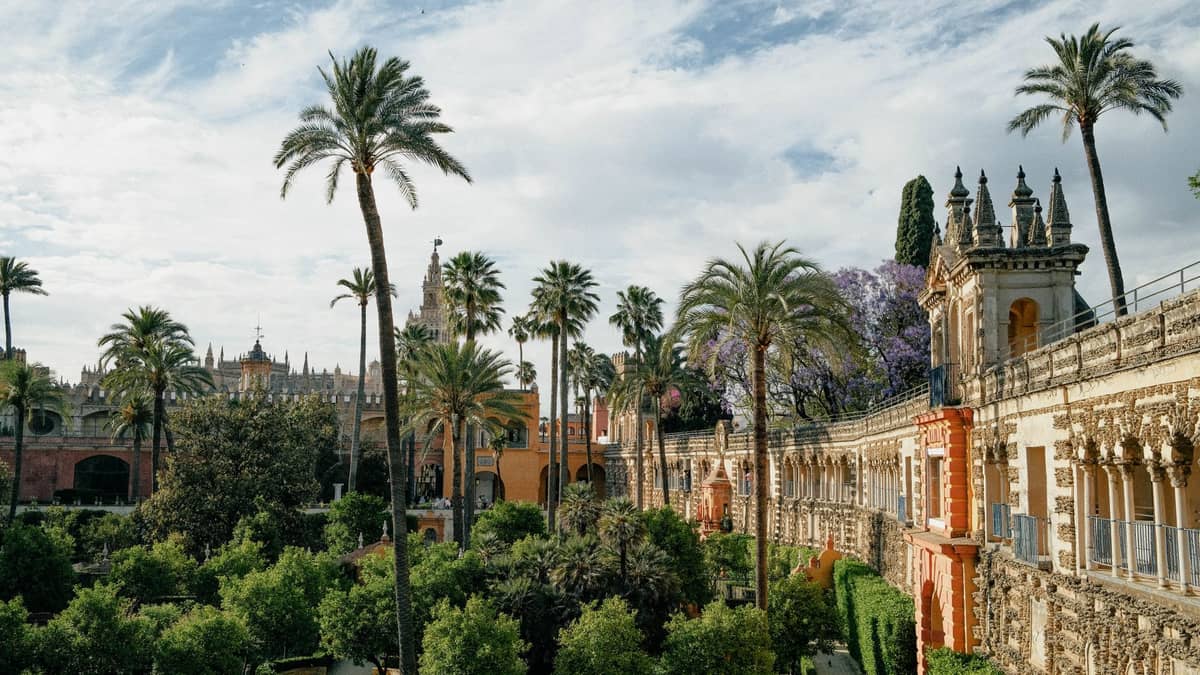
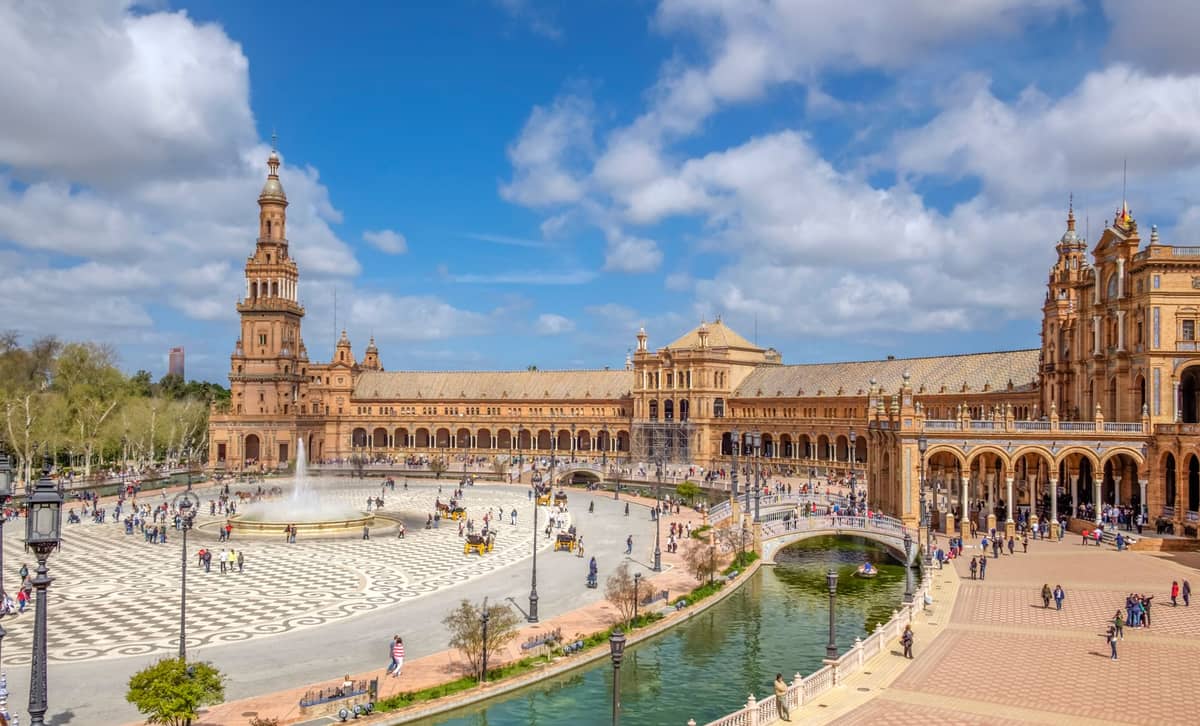
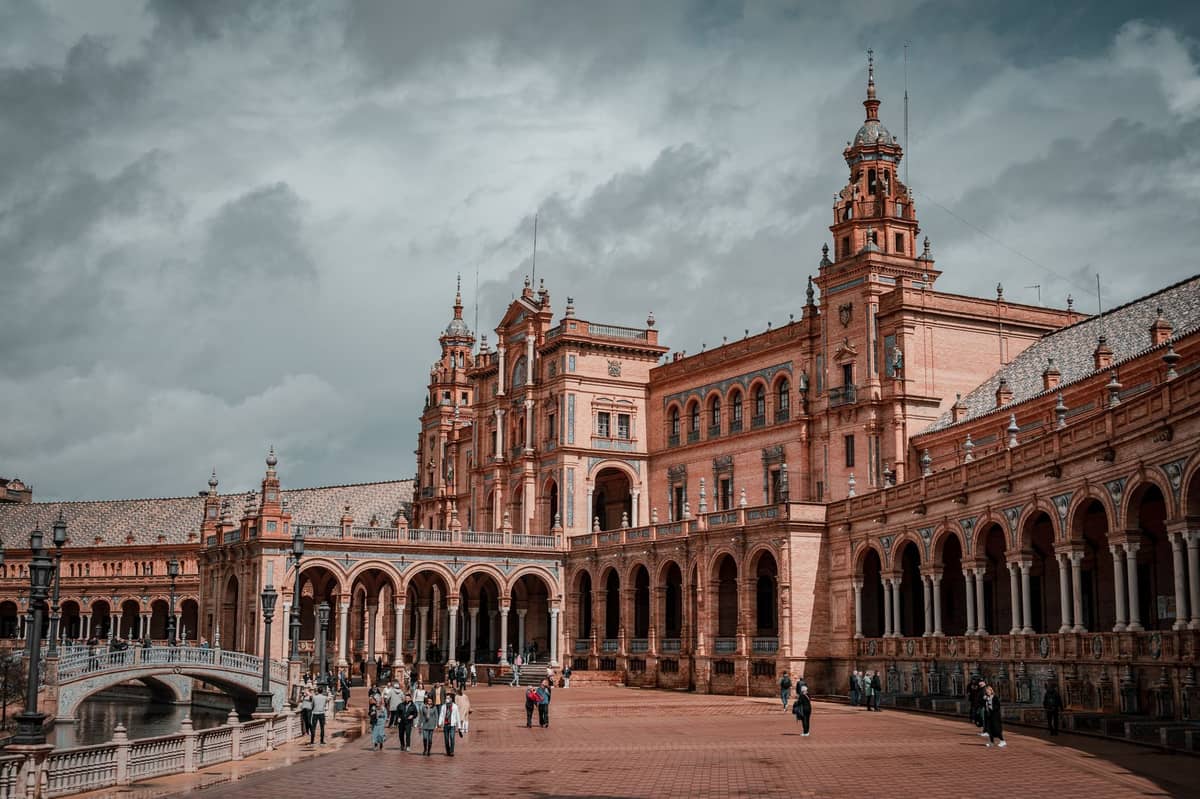
Seville's spring calendar isn't only festivals. The Parque de María Luisa and the adjacent Plaza de España are at their best in spring, with orange blossom scenting the air in March and April. The city's iconic orange trees flower in late March, which is also when the harvest of the bitter Seville oranges ends. The scent genuinely defines the season.
The neighbourhood of Triana across the Guadalquivir is worth a full afternoon in spring. The riverside promenade, the Mercado de Triana, and the Centro Cerámica Triana all reward time spent outside festival season. Triana also has some of the best independent tapas bars in the city, away from the tourist-heavy streets of Santa Cruz.
Spring is also a strong season for day trips. The Roman ruins at Itálica are far more pleasant to explore in 20-24°C than in July heat. Córdoba's Patio Festival falls in May, and the route to Córdoba from Seville takes under an hour by high-speed train.
ℹ️ Good to know
The orange blossom season in Seville peaks roughly between late March and mid-April, when thousands of azahar flowers open across the city's streets. This is one of those sensory details that photographs don't convey. If you're visiting in this window, walking through the Barrio Santa Cruz at dusk is worth scheduling deliberately.
Practical Tips for Spring Visitors
Getting around Seville in spring is straightforward on most days. The city is compact and genuinely walkable if you're staying near the historic centre. The TUSSAM bus network and the MetroCentro tram cover key routes, and cycling infrastructure is good. For a full overview of transport logistics, the getting around Seville guide covers all options including the airport bus EA line (approximately €6 per journey, around 35 minutes to central stops).
- Pack layers for March: mornings can be 9-10°C while afternoons reach 20°C.
- From May onwards, treat it like summer: SPF 50 sunscreen, a hat, and a water bottle are non-optional.
- Light waterproof jacket or small umbrella is worth carrying in March and early April.
- Comfortable walking shoes matter more than anything else: Seville's old city cobblestones are uneven.
- If you attend Feria, women wearing traje de flamenca fit in naturally; men typically wear short jackets (traje corto) or smart casual. Neither is obligatory for visitors, but smart dress is appreciated.
- Tap water in Seville is potable, though some locals prefer bottled due to taste. Bring a refillable bottle to reduce waste.
FAQ
Is spring the best time to visit Seville?
Spring offers the most comfortable temperatures for sightseeing, especially March and April before the heat intensifies. May can already reach 28°C with very high UV. The trade-off is that spring coincides with Semana Santa and Feria de Abril, which means higher prices, sold-out hotels, and significant logistical complexity. If you want mild weather without festival crowds, late April after Feria or early-to-mid October are often better choices.
Do I need to book tickets for Seville's main attractions in spring?
Yes. The Real Alcázar and Seville Cathedral have timed-entry systems and sell out regularly during spring, especially around Semana Santa and Feria weeks. Book both online before you arrive. During festival weeks, book as far ahead as possible. For popular flamenco shows and restaurants, reservations are equally advisable.
What should I pack for Seville in spring?
March requires layers: expect mornings around 10°C and afternoons around 20°C, plus occasional rain. April is similar but drier and warmer. By May, pack summer clothing and prioritise sun protection: SPF 50 sunscreen, a wide-brimmed hat, and sunglasses. A light waterproof jacket is useful for March and early April. Comfortable walking shoes are essential for all three months.
How far in advance should I book hotels for Semana Santa and Feria de Abril?
For both events, 2-3 months minimum is the practical floor, and 4-6 months ahead is not excessive for central locations. Central neighbourhoods like Santa Cruz and El Arenal sell out first. Budget-friendly options in Triana or Nervión stay available slightly longer. Prices during both festival weeks roughly double compared to standard spring rates.
Can tourists attend the Feria de Abril?
The Feria fairground is publicly accessible, and the exterior alley (Real de la Feria), the evening lights, and the horse parade are all open to anyone. However, the casetas (private tents) where most of the eating, drinking, and dancing happen are owned by families and associations. Most require an invitation to enter. A section of public casetas exists, but the experience differs significantly from attending as a guest of a local family. Understanding this in advance avoids disappointment.
Tickets & tours
Live prices and dates from our booking partner. If you book, we may earn a commission at no extra cost to you.
Planning a trip? Discover personalized activities with the Nomado app.