Centro Cerámica Triana: Where Seville's Most Famous Craft Comes to Life
Built on the ruins of an old tile factory, Centro Cerámica Triana traces the centuries-long story of Triana's ceramics industry through kilns, tools, and glazed tilework. At €2.10 entry, it rewards curious visitors with context that makes every tiled surface in Seville suddenly meaningful.
Quick Facts
- Location
- C/ Callao, 16 (corner with C/ Antillano Campos), Triana, Seville
- Getting There
- Walk across the Puente de Triana (Isabel II bridge) from the city centre.
- Time Needed
- 45–90 minutes
- Cost
- General €2.10 / Reduced €1.60 / Free for Seville residents, under-16s, and Real Alcázar ticket holders
- Best for
- Design enthusiasts, history lovers, and anyone curious about Triana's identity beyond the postcard
- Official website
- icas.sevilla.org/espacios/centro-ceramica/informacion-general
What Is Centro Cerámica Triana?
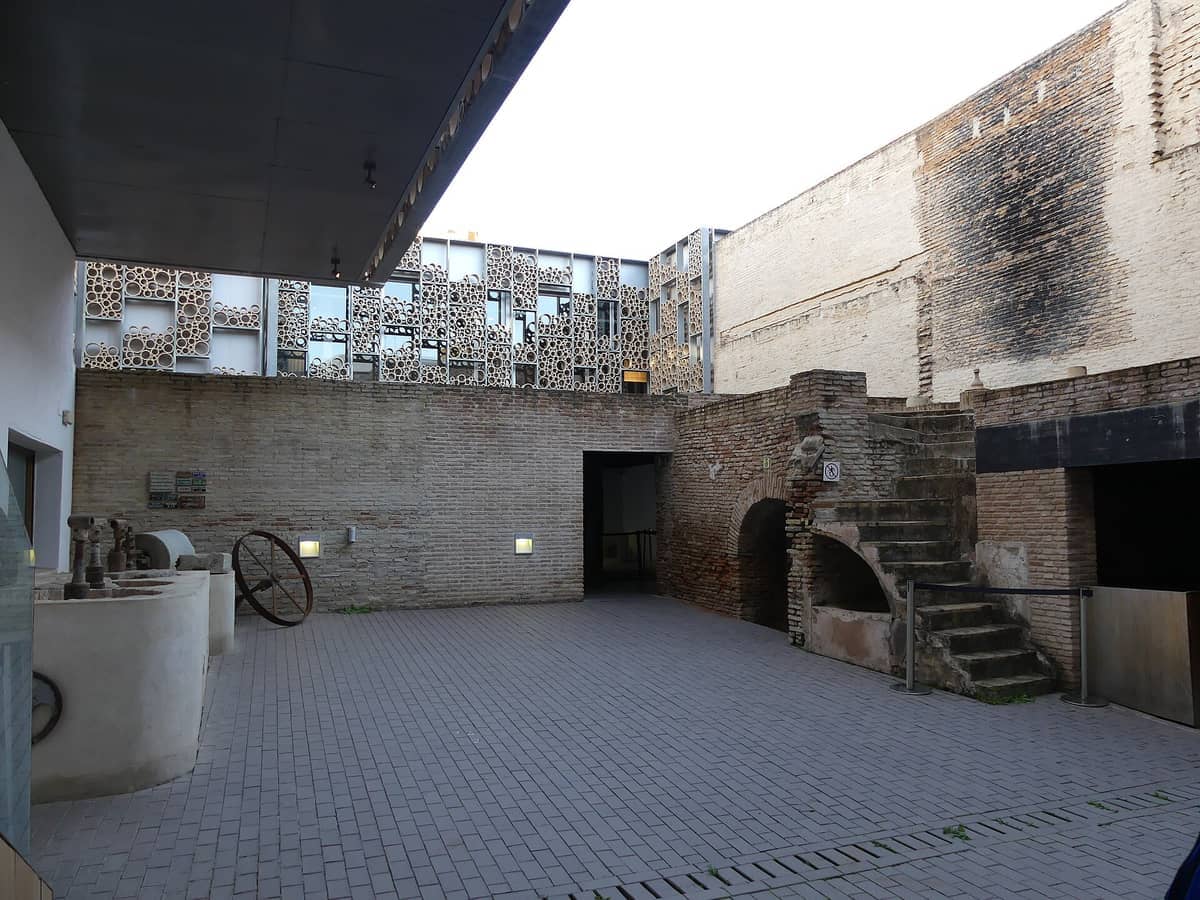
Centro Cerámica Triana is a museum and cultural space housed in the recovered remains of one of the neighbourhood's historic tile workshops, located at the corner of Calle Callao and Calle Antillano Campos in the Triana district of Seville. The centre documents the full arc of Triana's ceramics tradition: from the Moorish-era techniques brought into the Iberian Peninsula through centuries of trade and adaptation, to the industrial-era factories that exported azulejos across Spain and Latin America.
The building itself is the exhibit. Visitors walk through partially excavated factory floors where original kilns, clay-mixing channels, and drying rooms have been preserved in place. The effect is less like a conventional museum and more like an archaeological site that someone has thoughtfully narrated. Interpretive panels are available in Spanish and English, and the scale is compact enough that nothing feels overwhelming.
💡 Local tip
If you hold a Real Alcázar general admission ticket, entry to Centro Cerámica Triana is free. Keep the ticket from your Alcázar visit and bring it along.
The History Behind the Tiles
Triana's identity as a ceramics centre stretches back to at least the medieval period, when potters clustered on the west bank of the Guadalquivir to access the river clay and fuel supplies needed for their kilns. The neighbourhood became the primary source of the hand-painted azulejos that now cover the facades, benches, and courtyards of Seville's most recognisable landmarks. The Plaza de España, the Real Alcázar, countless church interiors: the tiles on all of them trace a direct line back to workshops on these same streets.
The museum makes that lineage tangible. Display cases show the evolution of glaze chemistry and decorative motifs across different periods, from the geometric austerity of early Islamic-influenced work through the bold figurative tiles of the 19th-century revival, when Triana factories supplied ornamental ceramics for grand civic projects across the Spanish-speaking world. If you visit Plaza de España before coming here, the tiled provincial maps you admired there will suddenly have a clearer origin story.
The industrial decline of the 20th century shuttered most of Triana's large ceramic factories, though smaller artisan workshops survived and continue operating today. The Centro is partly a memorial to that lost industry and partly a celebration of what remained. The tension between those two things gives the museum a quiet seriousness that distinguishes it from purely decorative heritage attractions.
Tickets & tours
Live prices and dates from our booking partner. If you book, we may earn a commission at no extra cost to you.
Tapas tour in the Triana neighborhood
From 65 €Instant confirmationFree cancellationTriana historical quarter with Guadalquivir river walking tour
From 20 €Instant confirmationFree cancellationCity Sightseeing Hop-on Hop-off Bus Tour Of Seville
From 31 €Instant confirmationFree cancellationCity Sightseeing Hop-on Hop-off Bus Tour Of Seville
From 40 €Instant confirmationFree cancellation
What You Actually See Inside
The ground level presents the archaeological core: excavated kiln structures, including the distinctive arched chambers used for firing tiles at high temperatures. These kilns are larger than most visitors expect, and seeing their scale helps explain why Triana's ceramics industry required real industrial investment, not just cottage craftsmanship. The clay floors around the kiln bases are visibly worn from generations of use.
Upper levels shift to more conventional museum presentation: glazed tile collections arranged by period and technique, tools from the production process, and documentation of the workshops that once operated in this building. There are examples of the hand-painted tile panels that served as neighbourhood signs and devotional images across Seville, a tradition still visible on dozens of street corners in both Triana and the historic centre.
The collection is focused rather than exhaustive. You are not going to spend three hours here. But for a visitor who has already noticed the extraordinary density of tilework throughout Seville and wants to understand where it came from, the Centro provides exactly the right level of depth. It pairs naturally with a walk through the Mercado de Triana and the ceramic shops lining nearby streets, where some workshops still sell hand-painted pieces made using traditional techniques.
Visiting by Time of Day
The museum opens Tuesday to Sunday at 10:00 and closes at 20:00, with last entry at 19:00. Mornings between 10:00 and 12:00 tend to be the quietest, when group tours have not yet arrived and the excavated kiln rooms can be explored without crowding. The interior is cool even in summer, which makes a mid-morning visit a reasonable escape from Seville's heat between June and September.
Afternoon visits from around 16:00 onwards can coincide with school or tourist groups, particularly in spring and autumn. The space is compact, so groups do affect the atmosphere. Late afternoon on weekdays is generally the most relaxed option if mornings are not possible. On weekends, the attached neighbourhood foot traffic from the Mercado de Triana creates a livelier context for the whole area, which many visitors find adds to rather than detracts from the experience.
⚠️ What to skip
The museum operates a reduced schedule (10:00–15:00, last entry 14:00) during 24 and 31 December, 5 January, Semana Santa and Feria, and is fully closed on 25 December, 1 and 6 January, Jueves Santo and Viernes Santo. Check before visiting during any of these periods.
Getting There and the Surrounding Area
The most direct approach from Seville's historic centre is on foot across the Puente de Triana (the Puente de Isabel II bridge), which takes about 10–12 minutes from the Torre del Oro waterfront. Turn right after crossing, walk north along Calle Betis briefly, then cut inland toward Calle Callao. The walk itself passes tile shops and the riverside promenade, giving a useful introduction to Triana's street character before you enter the museum.
The museum's own policy offers free entry for visitors with disabilities and one accompanying companion, though specific details about internal accessibility within the building are not published on the official page and it is worth contacting the centre directly if this is a concern.
Triana is a full afternoon's territory on its own. After the museum, the ceramic shops along Calle Alfarería are worth browsing for handmade tiles and pottery at a range of price points. The Iglesia de Santa Ana, one of Seville's oldest churches and a neighbourhood landmark, is a short walk away. The riverside bars along Calle Betis begin filling from early evening for anyone staying into the later hours.
Photography and Practical Details
The kiln chambers photograph well in natural and ambient light, with the arched brick structures creating strong geometric compositions. The tile collection panels have a tendency toward reflection under the interior lighting, so slightly oblique angles produce cleaner shots. No flash restrictions are posted on the official information, but standard museum etiquette applies.
The museum address is Calle Callao, 16, Seville 41010. Admission is €2.10 general, €1.60 reduced (for students under 25, youth card holders, pensioners, and visitors over 65), and free for Seville residents, children under 16, people with disabilities and one accompanying person, and holders of the general Real Alcázar ticket. These prices were confirmed as of January 2026 on the official ICAS municipal website and should be verified before your visit.
ℹ️ Good to know
The museum is operated by ICAS, the Instituto de la Cultura y las Artes de Sevilla, the municipal body that manages many of Seville's publicly-run cultural spaces. This means the pricing is intentionally kept low as a civic service, making it one of the most affordable substantive museums in the city.
Who Will Get the Most From This Museum
Visitors who arrive in Triana primarily for food, atmosphere, or flamenco history and spare an hour for the Centro typically leave with a substantially richer sense of the neighbourhood. It is also a strong choice for anyone following Seville's broader architectural story: the tiles you see here connect directly to the Real Alcázar, the cathedral interiors, and the historic churches across Seville, giving those larger sites a layer of craft history they otherwise lack.
Visitors seeking a fast-moving, high-drama experience will find the Centro quiet and understated. The attraction does not stage performances, offer interactive workshops on-site, or run audio-visual spectaculars. It is a thoughtfully preserved industrial heritage site with a focused collection, and it works best for people prepared to look closely at what is there. Families with young children may find the content holds their attention for 30–40 minutes before the excavated kilns have been thoroughly examined and novelty fades.
Insider Tips
- The ceramic shops along Calle Alfarería, a few minutes' walk from the museum, are where working Triana potters still sell their output. Prices are more honest than the tourist-facing shops near the bridge, and you can sometimes watch work in progress through open workshop doors.
- If you visit during Semana Santa or Feria de Abril, double-check the reduced-hours schedule in advance. The museum closes entirely on Holy Thursday and Good Friday, which falls during peak tourist season.
- Seville residents enter free. If you are visiting with a local friend or host, they can accompany you at no charge and often provide context that no interpretive panel can match.
- The Real Alcázar general admission ticket grants free entry here. If you are planning to visit the Alcázar anyway, hold onto your ticket stub and use it at the Centro on the same trip or a later day.
- The neighbourhood around the museum is noticeably less crowded than the Santa Cruz and cathedral area. Visiting the Centro in the morning and then spending the rest of the day in Triana, rather than returning across the river, tends to produce a more relaxed experience of Seville.
Who Is Centro Cerámica Triana & Ceramics Workshops For?
- Design and architecture enthusiasts who want craft context for Seville's ornamental tilework
- Travellers exploring Triana beyond its tourist-facing riverside strip
- Budget-conscious visitors: at €2.10, it is one of the most affordable substantive museums in the city
- History-focused visitors connecting the dots between Moorish Andalusia and 19th-century civic architecture
- Anyone holding a Real Alcázar ticket who wants to make it go further
Nearby Attractions
Other things to see while in Triana:
- Iglesia de Santa Ana (Triana)
Founded under Alfonso X in the late 13th century, Santa Ana is often described as the oldest parish church built new in Seville after the Christian reconquest. Tucked into Triana's residential streets, it holds a stunning 16th-century altarpiece by Pedro de Campaña and remains an active place of worship, giving it an authenticity that more touristed churches have lost.
- Mercado de Triana
Mercado de Triana sits at the Triana end of the historic Isabel II bridge, serving as the beating heart of a neighborhood that has always done things its own way. Free to enter, genuinely local, and Free to enter, genuinely local, and home to a small archaeological space in its basement, it rewards visitors who show up early and stay for a coffee., it rewards visitors who show up early and stay for a coffee.
- Puente de Triana (Puente de Isabel II)
Completed in 1852, the Puente de Isabel II, widely known as the Puente de Triana, is Spain's oldest surviving iron bridge. Spanning the Guadalquivir between the historic city centre and the working-class district of Triana, it offers some of the most compelling river views in Andalusia, and it costs nothing to cross.
Planning a trip? Discover personalized activities with the Nomado app.