Iglesia de Santa Ana (Triana): Seville's Oldest Parish Church
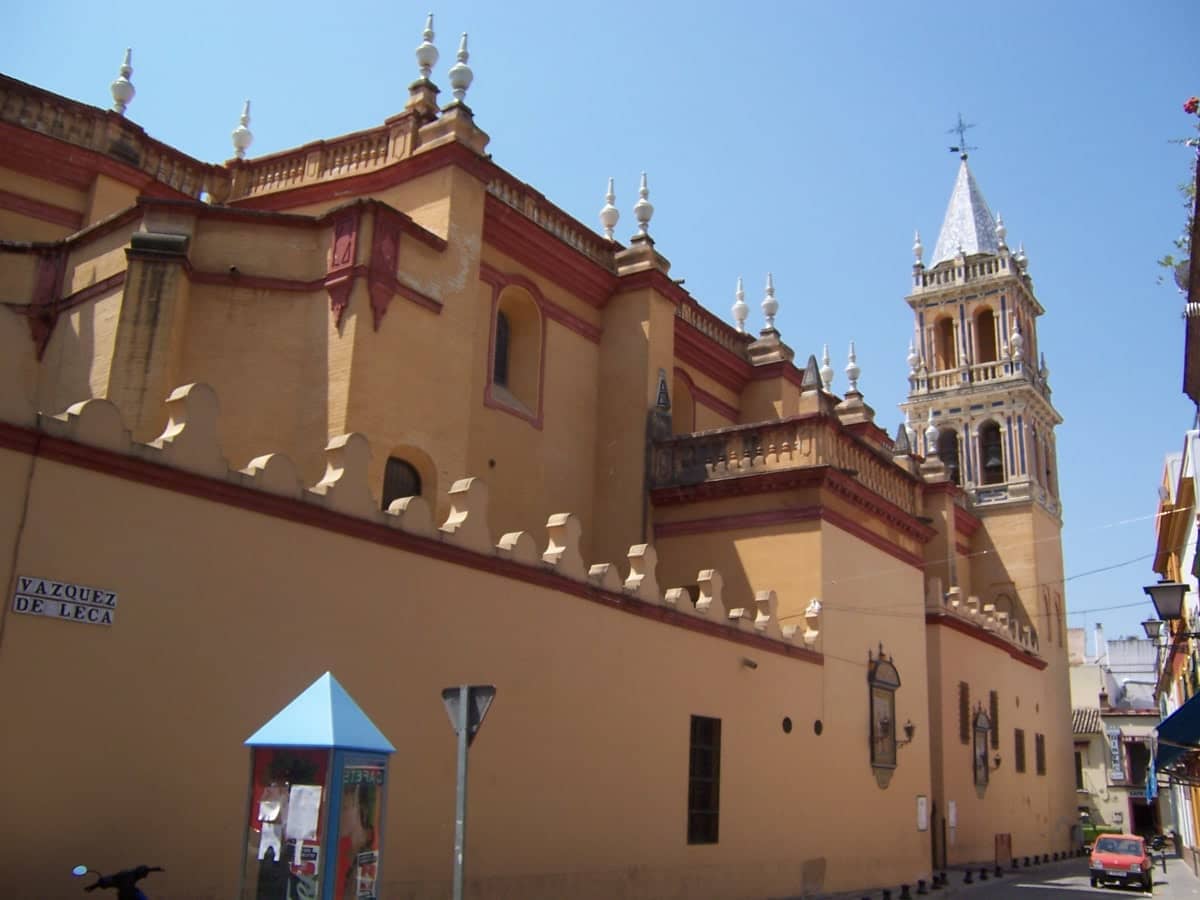
Founded under Alfonso X in the late 13th century, Santa Ana is often described as the oldest parish church built new in Seville after the Christian reconquest. Tucked into Triana's residential streets, it holds a stunning 16th-century altarpiece by Pedro de Campaña and remains an active place of worship, giving it an authenticity that more touristed churches have lost.
Quick Facts
- Location
- Calle Párroco Don Eugenio nº 1, Triana, Seville (41010)
- Getting There
- TUSSAM buses 40 or 43 to Triana; 10-min walk from Puente de Triana (Puente de Isabel II)
- Time Needed
- 30–50 minutes for a cultural visit; longer if you stay for a service
- Cost
- Free entry / voluntary donation for cultural visits; contact parish for current conditions
- Best for
- Architecture lovers, art history enthusiasts, travelers seeking authentic Seville beyond the tourist circuit
- Official website
- santanatriana.org
Why Santa Ana Matters
The Iglesia de Santa Ana is widely regarded as one of the oldest surviving parish churches in Seville, a distinction that carries real weight in a city dense with ecclesiastical architecture. Its founding is traditionally traced to King Alfonso X of Castile in the late 13th century, making it older than much of what tourists flock to in the city centre. While the Seville Cathedral commands the skyline and most of the guidebook attention, Santa Ana has been quietly serving its Triana community for over seven hundred years.
The church's full official name is Real Parroquia de Señora Santa Ana, and that word 'real' (royal) signals its historical patronage. The current structure reflects successive waves of construction: a Gothic-Mudejar skeleton from the medieval period overlaid with Renaissance interventions, giving the interior a layered quality that rewards careful attention. This is not a museum piece — daily Masses are held, local families attend baptisms and weddings here, and the smell of candle wax and stone lingers in the air in a way that only genuinely active churches produce.
ℹ️ Good to know
Cultural visits (non-liturgical tourism) generally run on weekdays in the late morning and early evening and are closed in August for tourist visits, though the church remains open for worship. Hours shift seasonally, so check santanatriana.org before visiting.
The Setting: Triana Before You Enter
The approach to Santa Ana tells you as much as the building itself. The church sits in the residential heart of Triana, the neighborhood that occupies the west bank of the Guadalquivir, separated from the historic centre by the river and, psychologically, by a distinct sense of local identity. Triana has historically been the city's working-class quarter, associated with ceramics workshops, river-port labor, and the roots of Seville's flamenco tradition. Walking from Puente de Triana toward the church, you pass through streets that are notably less polished than Santa Cruz: small grocery shops, neighborhood bars with local prices, tiled house facades that show their age.
The church's exterior on Calle Párroco Don Eugenio is substantial but not overwhelming. Its pale stone facade faces a modest plaza where elderly residents sit in the shade during morning hours and children pass through on their way to and from school. In the late afternoon, when the light drops low over Triana's rooftops, the stonework takes on a warm amber tone. Early mornings, before 10:00, the square is quiet enough that you can hear pigeons and the distant sound of a radio from a nearby window.
Tickets & tours
Live prices and dates from our booking partner. If you book, we may earn a commission at no extra cost to you.
Tapas tour in the Triana neighborhood
From 65 €Instant confirmationFree cancellationTriana historical quarter with Guadalquivir river walking tour
From 20 €Instant confirmationFree cancellationCity Sightseeing Hop-on Hop-off Bus Tour Of Seville
From 31 €Instant confirmationFree cancellationCity Sightseeing Hop-on Hop-off Bus Tour Of Seville
From 40 €Instant confirmationFree cancellation
Inside: Architecture and the Pedro de Campaña Altarpiece
The interior is organized as a three-nave Gothic structure, and the proportions feel considered rather than monumental. The central nave draws the eye toward the main altar with a directness that more ornamented baroque churches sometimes obscure. Stone columns divide the space, and the light entering from side windows is diffused enough to keep the atmosphere cool even on warm mornings.
The altarpiece in the main chapel is the single most important reason to visit. Comprising fifteen painted panels created between approximately 1550 and 1556, it is attributed to Pedro de Campaña, a Flemish-born painter who worked extensively in Seville and whose technique bridged Northern European realism with Italian Renaissance composition. The panels depict scenes from the life of the Virgin and various saints, and the quality of the painting — particularly the handling of light in the figurative scenes — is genuinely striking. Art historians regard this altarpiece as among Campaña's finest surviving work. It is worth spending time in front of it, not simply passing through.
Beyond the main altarpiece, the church contains a series of side chapels with independent retablos and devotional images, several of which carry significant local religious importance for Triana's Semana Santa brotherhoods. The overall experience is of accumulated devotion across centuries rather than a single grand design moment.
💡 Local tip
Bring a small flashlight or use your phone's torch setting. Some of the side chapel paintings are in relatively low light, and even on bright days the interior remains dim enough to obscure detail in the darker corners.
When to Visit and How Hours Work in Practice
Santa Ana’s schedule distinguishes between general temple access (when the church is open for prayer and incidental visits) and organized cultural visits. Throughout the year the temple opens daily in the morning and again in the late afternoon–evening, with adjusted times on Saturdays and Sundays that prioritize Mass schedules. Summer hours are modified, and August is particularly restricted for tourist visits, with the church remaining accessible primarily for liturgical purposes.
The practical implication is that mid-morning on a weekday between October and May is the most reliable window for a thorough cultural visit without conflicting with services. Arriving around 10:30 gives you the building mostly to yourself before any small group tours appear. Late afternoon on a weekday, in the 17:00 to 18:30 range, is also quiet, and the lower angle of sunlight produces warmer interior tones. Avoid arriving immediately before scheduled Mass times, particularly on Sunday mornings, if your goal is unhurried architectural observation.
⚠️ What to skip
Cultural visits for tourists are closed throughout August. The church remains open for worship, but organized tourist access is suspended. Plan accordingly if visiting Seville in summer.
Practical Visit Information
Entry for cultural visits is free or by voluntary donation, though the parish requests that visitors contact them directly for group visits, which are arranged by appointment. For specific queries or accessibility requirements, the parish can be reached by phone at +34 954 27 08 85 or by email at comunicacion@santanatriana.org. The church has ground-level entry from Calle Párroco Don Eugenio, so visitors with mobility concerns are encouraged to consult the parish in advance.
Getting here without a car is straightforward. TUSSAM buses 40 and 43 stop near the church. The walk from Puente de Triana (Puente de Isabel II) takes around ten minutes through Triana's main commercial street. If you're combining this visit with the Mercado de Triana or the ceramics workshops along Calle Alfarería, the church fits naturally into a Triana half-day loop that covers the neighborhood's main points of interest without requiring any transport between stops.
Dress modestly: covered shoulders and no shorts are the standard expectation for entry to any active Catholic church in Andalusia. This applies especially during or near service times. Photography is generally tolerated during cultural visit hours but should be suspended if a service begins.
What Santa Ana Is Not
It would be misleading to describe Santa Ana as a spectacle in the way the Cathedral or the Iglesia de San Luis de los Franceses are spectacles. There are no soaring baroque domes, no theatrical trompe-l'oeil ceilings, and no formal museum layout to guide you through the contents. This is an operating parish church that permits cultural visits, not a heritage attraction with interpretive panels and ticketing infrastructure.
Travelers who need audioguides, clear signage in multiple languages, air conditioning, and a gift shop will find the experience sparse. Those who are comfortable navigating a working church at their own pace, and who find something valuable in visiting a place where the community it serves is visibly present, will find it rewarding. The Pedro de Campaña altarpiece alone justifies the detour for anyone with an interest in Renaissance painting in Seville, as it receives a fraction of the attention it would command if it were in a formal museum setting.
Fitting Santa Ana into a Triana Visit
The church works best as part of a longer exploration of Triana rather than as a stand-alone destination requiring a special trip. Cross from the city centre via Puente de Triana, walk along Calle Betis for views back toward the Torre del Oro, then turn into the neighborhood's interior streets toward Santa Ana. Afterward, the Centro Ceramica Triana is a short walk and provides historical context for the neighborhood's craft traditions. The whole circuit, including time inside the church, can be completed comfortably in two to three hours.
If you're planning a broader visit to Seville's churches, Santa Ana pairs well with the Iglesia de San Salvador in the historic centre, which represents a different scale and era of ecclesiastical architecture. Together they sketch the range of religious building in the city across several centuries. For a full overview of what Seville's churches offer, the guide to the best churches in Seville places Santa Ana in context alongside the city's other major religious sites.
Insider Tips
- The altarpiece by Pedro de Campaña is best viewed from the central nave at a distance first, then close up panel by panel. Many visitors spend only seconds at the altar; the painting repays five to ten minutes of sustained looking.
- If you arrive and a Mass is in progress, wait quietly at the back or return during the next open window. The parish is welcoming to respectful visitors, and attending even part of a weekday Mass gives a clearer sense of why this building has remained central to Triana's identity for seven centuries.
- The plaza in front of the church is a good spot to observe daily Triana neighborhood life. Mornings between 09:30 and 11:00 are particularly active, with residents going about routines that have little to do with tourism.
- Group visits require advance arrangement by email (comunicacion@santanatriana.org). If you're visiting with more than six or seven people, contact the parish beforehand to avoid disrupting ongoing services.
- October to early December and March to May offer the best combination of cooler temperatures and full opening hours, including afternoon cultural visit access. Summer visits require careful planning around August closures and reduced morning-only windows.
Who Is Iglesia de Santa Ana (Triana) For?
- Art history enthusiasts seeking Renaissance painting outside a museum context
- Travelers exploring Triana who want depth beyond ceramics shops and tapas bars
- Architecture-focused visitors tracking the Gothic-Mudejar tradition in Seville
- Those interested in active religious communities and Semana Santa brotherhood culture
- Visitors who prefer quieter, less-touristed sites with genuine local significance
Nearby Attractions
Other things to see while in Triana:
- Centro Cerámica Triana & Ceramics Workshops
Built on the ruins of an old tile factory, Centro Cerámica Triana traces the centuries-long story of Triana's ceramics industry through kilns, tools, and glazed tilework. At €2.10 entry, it rewards curious visitors with context that makes every tiled surface in Seville suddenly meaningful.
- Mercado de Triana
Mercado de Triana sits at the Triana end of the historic Isabel II bridge, serving as the beating heart of a neighborhood that has always done things its own way. Free to enter, genuinely local, and Free to enter, genuinely local, and home to a small archaeological space in its basement, it rewards visitors who show up early and stay for a coffee., it rewards visitors who show up early and stay for a coffee.
- Puente de Triana (Puente de Isabel II)
Completed in 1852, the Puente de Isabel II, widely known as the Puente de Triana, is Spain's oldest surviving iron bridge. Spanning the Guadalquivir between the historic city centre and the working-class district of Triana, it offers some of the most compelling river views in Andalusia, and it costs nothing to cross.
Planning a trip? Discover personalized activities with the Nomado app.