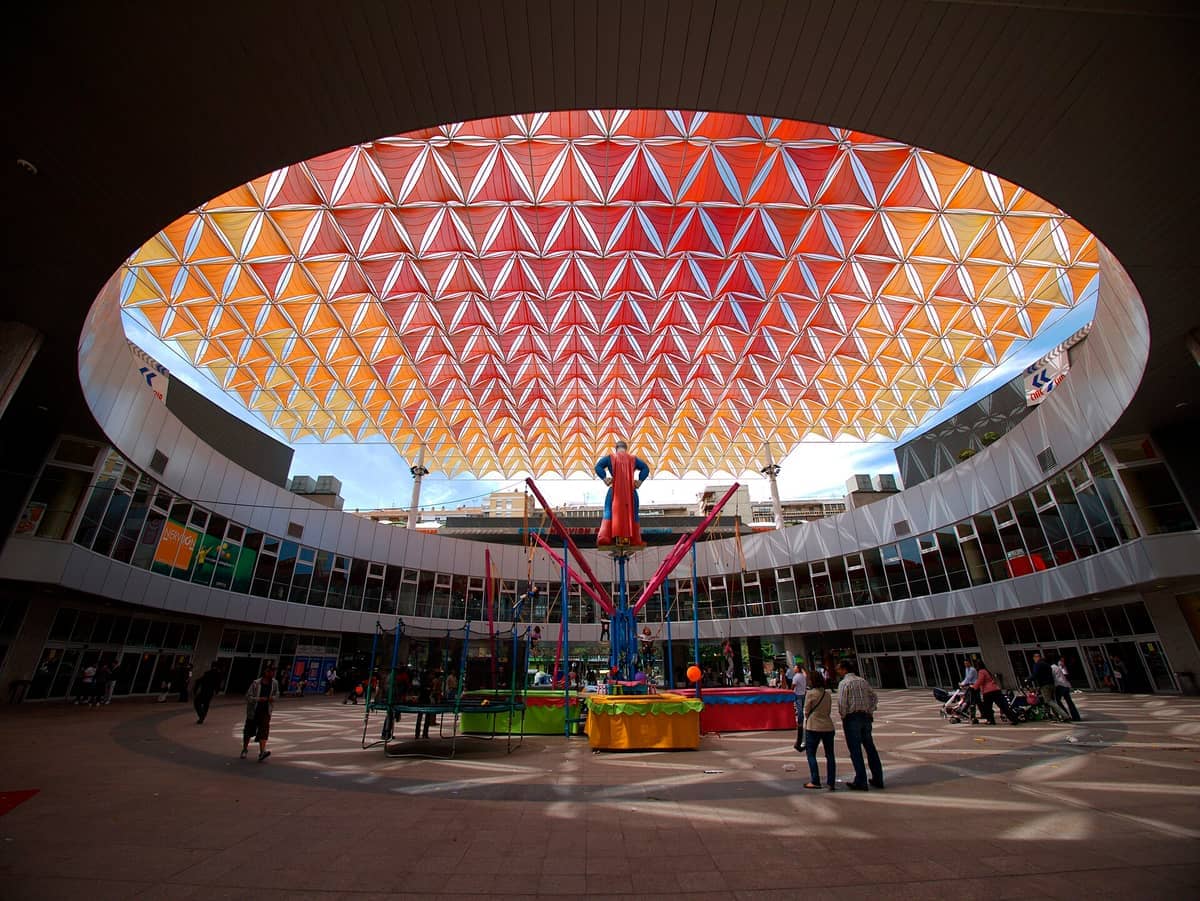
Nervión is the commercial and transport backbone of modern Seville, sitting east of the historic centre with direct metro access, the main high-speed rail station, and a residential character that feels distinctly local. It trades narrow medieval lanes for wide avenues, shopping centres, and business hotels, making it a practical base for travelers who want good connections without the tourist density of Santa Cruz.
Nervión is where everyday Seville gets on with things. East of the Casco Antiguo, this is the city's main commercial district: a place of wide avenues, metro stations, football crowds on match nights, and the high-speed trains that connect Seville to the rest of Spain. It won't give you postcard Andalusia, but it will give you a functioning, well-connected neighbourhood that most visitors underestimate.
Orientation: Where Nervión Sits in Seville
Nervión occupies the central-eastern part of Seville, forming a broad arc between the old city and the outlying suburbs. The Casco Antiguo lies immediately to the west, while Distrito Sur borders it to the south, San Pablo-Santa Justa to the north, and Cerro-Amate to the east. In practical terms, Nervión is the district you pass through when arriving by train or heading to a Sevilla FC match.
Administratively, the Nervión district is larger than its core neighbourhood suggests. It encompasses several distinct barrios: Nervión itself, Huerta del Pilar, La Florida, La Buhaira, La Calzada, San Roque, and Ciudad Jardín. Each has a slightly different residential character, but the area is unified by its modern street grid, relatively wide roads, and the absence of the labyrinthine alleys that define the older parts of the city.
The clearest landmark for orientation is Santa Justa, Seville's main railway station, which sits at the northern edge of the district. From there, the neighbourhood stretches south and west toward the metro station at Nervión itself, with the Ramón Sánchez-Pizjuán stadium marking the northern residential zone. Walking west from Nervión metro, you cross into the commercial fringes of the historic centre within about fifteen minutes.
Character and Atmosphere
If the Barrio Santa Cruz is Seville performing for visitors, Nervión is Seville at work. The streets here are functional: wide enough for bus lanes, lined with pharmacy chains, sports bars, and the kind of neighbourhood bakeries that open before 8am. The architecture is mostly mid-20th century onwards, with apartment blocks rather than Mudéjar courtyards, though pockets of Ciudad Jardín carry a quieter, greener residential feel.
Mornings in Nervión move quickly. The area around Santa Justa station fills with commuters by 7:30am, and the café terraces along the main avenues serve cortados and tostadas con tomate to office workers rather than tourists. The light in autumn and spring falls cleanly along the wide streets, softened by the rows of orange trees that line many of the residential roads. In summer, those same streets bake, and the shade of the commercial arcades becomes genuinely useful.
The atmosphere shifts noticeably on matchdays at the Ramón Sánchez-Pizjuán. Sevilla FC draws a serious, passionate crowd, and the bars near the stadium fill with red-and-white scarves from early afternoon. It's one of the few moments when Nervión generates the kind of street energy more associated with Triana or La Macarena. Outside of match days, evenings in Nervión are quieter than the historic centre, with residents eating dinner at normal Spanish hours and the shopping centres drawing families through the early evening.
ℹ️ Good to know
Nervión has a much larger resident population than most tourist-heavy barrios. That means it functions on Seville's actual daily rhythms: lunch between 2pm and 4pm, dinner rarely before 9pm, and a genuine Sunday quietness outside the commercial strips.
What to See and Do
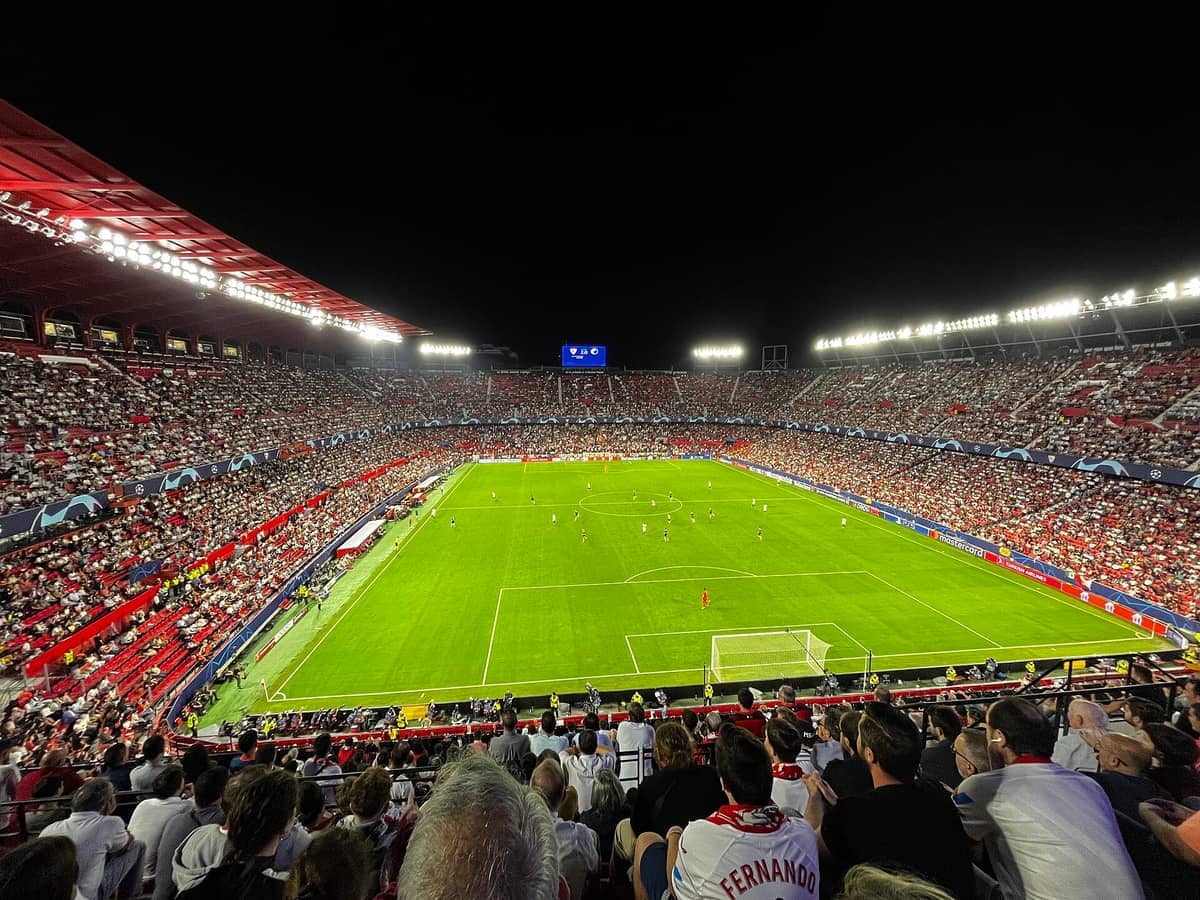
The undisputed focal point for visitors is the Estadio Ramón Sánchez-Pizjuán, home of Sevilla FC. The stadium holds just under 44,000 spectators and hosts some of the most fervent club football in Spain. Attending a match when the team is at home is one of the more authentic things you can do in the city, offering a side of Seville that has nothing to do with flamenco or cathedral tours.
For a broader picture of following football in Seville, including how to get tickets and what to expect at both Sevilla FC and their city rivals, the Sevilla FC guide for visitors covers the practicalities in full.
Beyond the stadium, Nervión is primarily a commercial and residential district rather than a sightseeing zone. The large shopping centres here, including one of the city's main retail complexes, serve locals and are worth knowing about if you need practical shopping rather than artisan souvenirs. The covered shopping arcades are also a genuine refuge during Seville's brutal July and August heat.
The Parque de la Buhaira, a park within the district, offers a calm contrast to the commercial avenues. It's a local green space used by dog-walkers and families rather than tourists, and gives a sense of the residential Nervión that most visitors never see. The park sits near a small lake and includes gardens that were historically associated with the Almohad and later Christian periods of the city's development.
Attend a Sevilla FC match at Ramón Sánchez-Pizjuán (check the fixture calendar before booking accommodation)
Walk through Ciudad Jardín for a quiet residential counterpoint to the commercial avenues
Use the Parque de la Buhaira for a morning walk before the heat sets in
Explore the main shopping centres for practical retail, useful in summer and on rainy winter days
Arrive at or depart from Santa Justa station and take advantage of the direct high-speed rail connections to Madrid and Córdoba
💡 Local tip
If you're planning to visit during a Sevilla FC home fixture, book your accommodation in Nervión at least a few weeks in advance. The area fills quickly and prices rise sharply around derby matches and European nights.
Eating and Drinking
The food scene in Nervión reflects its residential character: solid, neighbourhood-focused, and largely unpretentious. This is not where you go for the city's most celebrated restaurants, but it is where you find the kind of unadorned tapas bars and family-run cafeterías that have been serving the same dishes for decades. Prices here run noticeably lower than in Santa Cruz or the streets around the Cathedral, and the portions tend to be larger.
The bars near the stadium are the most animated in the area, particularly on match days. Away from the football zone, the avenues running south from Santa Justa toward the Nervión metro have a steady concentration of cafés and restaurants catering to office workers, with set-price lunch menus (menú del día) offering two courses, bread, and a drink for around €10-12. For context on what to order and what to expect from Seville's broader food culture, the guide on what to eat in Seville is the right starting point.
Coffee culture in Nervión follows standard Sevillian form: a cortado or solo at a bar counter, rarely to go, usually accompanied by a small glass of water. The café terraces become more active from mid-morning and again in the late afternoon, when residents use them as an extension of social life rather than a caffeine stop.
There are no major, visitor-oriented market halls within Nervión proper. For fresh produce and market food, most residents head toward the markets in the adjacent barrios. The nearest large food market with visitor appeal is across the river in Triana, or the Lonja del Barranco closer to the historic waterfront.
Getting There and Around
Nervión has some of the best transit access of any neighbourhood in Seville. Santa Justa station, at the district's northern edge, is the terminus for many of Seville's high-speed AVE connections, including direct trains to Madrid (approximately 2.5 hours) and Córdoba (around 45 minutes). Renfe commuter services also use Santa Justa for regional routes across Andalusia. If you are arriving in Seville by train, you will land directly in Nervión.
The single metro line in Seville, Line 1 (L1) of the Metro de Sevilla, stops at Nervión station, connecting the district directly westward to Puerta Jerez and Prado de San Sebastián near the historic centre, and eastward toward Olivar de Quintos. The metro is fast, air-conditioned, and the most efficient way to reach the Cathedral and Alcázar area from Nervión. For a full overview of how to move around the city, see the guide on getting around Seville.
TUSSAM buses cover the district extensively, with multiple lines connecting Nervión to the rest of the city. The MetroCentro tram does not extend to Nervión but can be picked up at Prado de San Sebastián after a metro ride. Seville's cycling infrastructure is reasonably good in this part of the city, and the city's Sevici bike-sharing scheme has docking stations throughout the neighbourhood.
From Seville Airport (SVQ), approximately 9-10 km to the northeast, the EA airport bus runs to Santa Justa station before continuing to the city centre. A single fare is approximately €6 (verify before travel, as fares may change), with the journey taking around 35 minutes. Taxis from the airport to Nervión take 15-25 minutes depending on traffic, with typical fares in the €25-35 range.
💡 Local tip
If you are staying in Nervión and want to reach the historic centre without the metro, the walk from Nervión station to the edge of the Casco Antiguo takes around 15-20 minutes on foot along Avenida Luis de Morales and Calle María Auxiliadora. It's a straightforward route and useful for orientation on your first day.
Where to Stay
Nervión is one of the more practical choices for accommodation in Seville, particularly for travelers arriving by train or with an early departure from Santa Justa. The area has a good concentration of business-oriented hotels and modern chain properties that offer more space and lower nightly rates than comparable options in Santa Cruz or El Arenal. For a broader comparison of Seville's neighbourhoods as places to base yourself, the guide on where to stay in Seville covers the tradeoffs clearly.
The tradeoff is atmosphere. Staying in Nervión means trading the immediate immersion of a hotel in the medieval centre for quieter streets, easier driving access, and reliable metro connections. That's a genuine advantage if you are planning day trips out of the city or attending a football match, but it means a short journey (usually under 15 minutes by metro) to reach the Cathedral, Alcázar, and the main sightseeing areas.
The area around Santa Justa station itself has the densest cluster of business hotels. Moving south into the Nervión barrio proper, accommodation options thin out but the neighbourhood feels more residential and less transitional. Families and travelers who value space over centrality often find this part of the city offers better value for longer stays.
⚠️ What to skip
Nervión is not ideal if your priority is stepping out of your hotel into the heart of Seville's historic atmosphere. The walk to the Cathedral area, while manageable, takes you through functional commercial streets rather than scenic ones. Factor this into your decision if walking to sights in the morning heat of summer is a concern.
Nervión in Context: How It Connects to the Rest of Seville
Understanding Nervión means understanding its role as a connector. This is where Seville's arterial roads, rail lines, and metro converge before fanning out to the older, more visited parts of the city. Travelers who treat it only as a transit hub miss the fact that it functions as a complete, well-maintained residential district. Equally, those who expect the character of Santa Cruz or Triana will be disappointed.
For day trips out of the city, Nervión's position near Santa Justa makes it especially convenient. High-speed trains put Córdoba within 45 minutes and Madrid within 2.5 hours. Regional buses and trains connect to destinations across Andalusia. If you are using Seville as a base for wider exploration, whether for the Roman ruins at Itálica, a trip to Córdoba, or onward travel toward Málaga or Granada, Nervión's transit infrastructure is a genuine asset. The guide on day trips from Seville outlines the most worthwhile options.
Nervión also sits within easy reach of the city's main sightseeing corridor. The Metro takes you to Puerta Jerez in minutes, putting the Real Alcázar, the Seville Cathedral, and the streets of the old city within walking distance of the station exit. For a first visit to Seville, Nervión offers an efficient base that keeps options open without requiring full commitment to the higher costs and crowds of the tourist centre.
TL;DR
Nervión is Seville's main commercial and transport district, sitting east of the historic centre with Metro Line 1 and Santa Justa high-speed rail station as its anchors.
It suits travelers arriving by train, football fans attending Sevilla FC matches, and those who want lower accommodation costs with fast metro access to the historic centre.
The atmosphere is residential and functional rather than atmospheric: expect working-city Seville rather than the postcard version.
Eating and drinking here is unpretentious and good value, with local tapas bars and set-lunch menus serving a resident rather than tourist crowd.
Nervión is not the right base if your goal is to step outside and be immediately immersed in historic Seville, but for longer stays, day-trip logistics, or budget-conscious visitors, it is one of the most practical choices in the city.
Three days is enough time to cover Seville's greatest landmarks, explore its best neighbourhoods, and eat and drink well without rushing. This day-by-day itinerary gives you practical routes, current ticket prices, and the kind of logistical detail that makes the difference between a smooth trip and a frustrating one.
Seville makes an ideal home base for a week in Andalusia. With high-speed rail to Córdoba in under 45 minutes and buses to Granada in 3 hours, you can cover the region's highlights without changing hotels. This guide breaks down exactly how to structure 7 days, what to prioritize, and what to skip.
The journey from Barcelona to Seville covers roughly 830 km across Spain. This guide breaks down every transport option, from the high-speed AVE train to budget flights, with practical tips on cost, comfort, and what awaits you in Andalusia's capital.
Seville's skyline is defined by bell towers, domes, and gilded facades accumulated over eight centuries of Christian, Moorish, and Renaissance building. This guide covers the city's finest religious architecture, from UNESCO-listed giants to intimate neighbourhood churches that most visitors walk straight past.
Seville delivers more than its size suggests when it comes to museums. From world-class fine art and Moorish palaces to ceramics, naval history, and flamenco, this guide covers the best museums in Seville across every interest and budget.
Seville's climate is one of the most extreme in Western Europe for a major city. This guide breaks down every month by temperature, rainfall, crowds, and events so you can choose the timing that actually fits your trip.
Seville rewards those who look up and climb high. This guide covers the city's best panoramic viewpoints, from iconic tower climbs to riverside vantage points and rooftop terraces with sweeping skyline views.
Seville sits at the heart of Andalusia, putting some of Spain's most compelling destinations within easy reach. This guide breaks down the best day trips from Seville by travel time, transport options, and what you actually get for the effort — including which ones are genuinely worth the journey and which ones need an overnight.
Seville's Feria de Abril is one of Europe's great street festivals: six days of flamenco dresses, horses, sherry, and late nights on a purpose-built fairground. This guide covers everything from how to get in without an invitation to what things actually cost, when to go, and what to wear.
Seville is the spiritual home of flamenco, and navigating its shows requires more than a hotel concierge recommendation. This guide breaks down the best tablaos, what to expect, how much to pay, and how to avoid the tourist traps, so you leave with a genuine experience of one of Spain's most powerful art forms.
Seville is one of Europe's most rewarding cities to explore on a tight budget. Many of its greatest sights offer free entry on specific days, and its parks, plazas, churches, and neighbourhoods reward hours of walking without spending a cent.
Seville is one of southern Spain's most walkable cities, but knowing which transport option to use, and when, can save you real time and money. This guide covers everything from landing at SVQ airport to hopping trams through the historic centre.
Seville is the capital of Andalusia and one of Spain's most architecturally rich cities, but it's not right for every traveller or every season. This guide breaks down what the city genuinely delivers, where it falls short, and exactly when and how to visit to get the most from it.
The Madrid to Seville route is one of Spain's most travelled corridors, and three competing high-speed rail operators now make it faster and cheaper than ever. This guide breaks down every option, from budget OUIGO tickets to overnight buses, with practical tips on timing, pricing, and what to expect on arrival.
Seville's Semana Santa is one of the most intense religious spectacles in the world, drawing hundreds of thousands of visitors each spring. This guide covers the full schedule, the key brotherhoods, how to secure Carrera Oficial seats, when to go for smaller crowds, and everything else you need to experience Holy Week properly.
Attending a Sevilla FC home match is one of the most authentic experiences Seville, Spain offers. This guide covers how to buy tickets, get to the stadium, pick the right seat, and make the most of match day — without the rookie mistakes.
Seville rewards those who look beyond the Cathedral and Alcázar. These 18 off-the-beaten-path experiences reveal aristocratic palaces, forgotten Roman cities, local markets, and baroque masterpieces that most visitors walk straight past.
Autumn is arguably Seville's most underrated season. Temperatures drop from summer extremes, crowds thin out after peak season, and the city's streets become walkable again. This guide breaks down exactly what to expect each month, from weather data to practical tips.
Spring is Seville's most dramatic season, combining mild weather with two of Europe's biggest festivals. This guide breaks down exactly what to expect each month, when to book, and how to navigate the crowds.
July and August in Seville mean scorching temperatures regularly above 35°C, occasional heatwaves above 40°C, and almost zero rain. This guide gives you the strategies, timing, and specific attractions to make summer work in your favor rather than against you.
Seville in winter is mild, uncrowded, and genuinely good for sightseeing. This guide covers the real weather, the seasonal events worth planning around, what to pack, and how to make the most of Andalusia's capital between December and February.
Seville nightlife runs on Andalusian time: dinner at 22:00, bars at midnight, clubs after 02:30. This guide covers the best neighborhoods, rooftop bars, nightclubs, flamenco shows, and practical details on dress codes, pricing, and the noise regulations that shape the scene.
Seville (Sevilla) is one of southern Spain's most rewarding city breaks, and it doesn't have to be expensive. This guide breaks down real daily costs, free entry windows at major monuments, the cheapest ways to get around, and the exact seasons when prices drop significantly.
Seville is lined with tens of thousands of bitter orange trees, yet almost no one eats the fruit. This guide explains the history, seasonality, and surprising uses of the Seville orange, plus what visitors actually experience walking beneath these famous trees.
Seville rewards shoppers who know where to look. This guide covers the best shopping streets, markets, and authentic products to buy in Sevilla, from azulejos and flamenco accessories to olive oil and vintage finds at El Jueves.
The journey from Seville to Córdoba is one of Andalusia's easiest and most rewarding travel connections. This guide covers every option: high-speed trains that take under an hour, budget buses, and guided day trips, with practical tips on costs, booking, and what to do once you arrive.
The journey from Seville to Málaga is one of the most popular routes in Andalusia, with trains taking as little as 2 hours. This guide breaks down every option — train, bus, and car — with real prices, scheduling advice, and the honest tradeoffs between each.
Both Seville and Granada rank among Spain's most compelling cities, but they offer very different experiences. This guide breaks down the key differences across sightseeing, atmosphere, budget, logistics, and timing so you can choose the right destination or plan both.
From a world-class aquarium and a theme park with a water area to horse-drawn carriage rides and riverfront parks, Seville rewards families who plan well. This guide covers the top kid-friendly attractions, current pricing, seasonal timing, and practical logistics so you can skip the guesswork.
Seville, the capital of Andalusia, packs more history, architecture, and street life into a walkable city than almost anywhere in Spain. This guide covers the essential things to do in Seville, with accurate ticket prices, seasonal advice, neighborhood breakdowns, and clear assessments of what's worth your time.
Seville is one of the most walkable cities in southern Spain, with its major monuments clustered within a compact historic core. This guide covers the best self-guided walking routes by neighbourhood, current entry prices for the Alcázar and Cathedral, seasonal timing advice, and the practical details most visitors overlook.
Seville has one of Spain's most distinctive food cultures: paid tapas ordered gradually, cold soups in summer, and markets that close by mid-afternoon. This guide covers the dishes you need to try, where to find them, how much to pay, and what to skip.
Choosing where to stay in Seville shapes your entire trip. This guide breaks down every major neighbourhood by location, atmosphere, price range, and who it suits best — so you can book with confidence.