Seville vs Granada: Which Andalusian City Should You Visit?
Both Seville and Granada rank among Spain's most compelling cities, but they offer very different experiences. This guide breaks down the key differences across sightseeing, atmosphere, budget, logistics, and timing so you can choose the right destination or plan both.

Tickets & tours
Live prices and dates from our booking partner. If you book, we may earn a commission at no extra cost to you.
TL;DR
- Seville is Andalusia's capital and largest city, with a broader range of monuments, neighbourhoods, nightlife, and festivals. Granada centres almost entirely on the Alhambra but rewards visitors with a more compact, student-city atmosphere.
- The Seville to Granada journey takes around 2 hours by train or 3 to 3.5 hours by bus. Many travellers visit both cities on the same trip. See the Andalusia itinerary from Seville for a practical multi-city route.
- Seville wins on variety: the Real Alcázar, cathedral, flamenco scene, barrio culture, and two major festivals make it a fuller destination. Granada wins on singularity: the Alhambra is one of the world's great buildings and justifies the trip alone.
- Budget travellers will find Granada slightly cheaper for accommodation and food. Seville has more budget and mid-range options overall, but prices spike during Semana Santa and Feria de Abril.
- If you only have time for one city, choose based on what matters more to you: depth and variety (Seville) or one transcendent monument with a distinct Moorish legacy (Granada).
The Core Difference: What Each City Actually Offers

Seville is the capital of Andalusia and a city of around 689,000 people (INE, 2025), with a historic centre dense enough to fill four or five days without repetition. It has the largest Gothic cathedral in the world, a UNESCO-listed royal palace (the Real Alcázar), a neighbourhood fabric worth exploring in depth, and two annual festivals that define the Andalusian calendar. Granada, by contrast, has a population closer to 234,000 and a much tighter tourism circuit. Its old city is genuinely beautiful, but most visitors spend the majority of their time on one site: the Alhambra.
That is not a criticism of Granada. The Alhambra is legitimately one of the finest examples of medieval Islamic architecture anywhere on earth, and the Generalife gardens alone are worth the trip. But if you arrive expecting a city that rivals Seville for breadth, you may feel the contrast sharply. Seville rewards exploration in every direction: across the river into Triana, north into La Macarena, or south through Parque María Luisa. Granada rewards focus.
ℹ️ Good to know
The two cities are not rivals in most travellers' itineraries. Seville and Granada are frequently combined into a single Andalusian trip, with the train journey between them taking around 2.5 hours on direct Avant services. The real question is often not 'which one' but 'in what order and for how long'.
Sightseeing: Monument for Monument
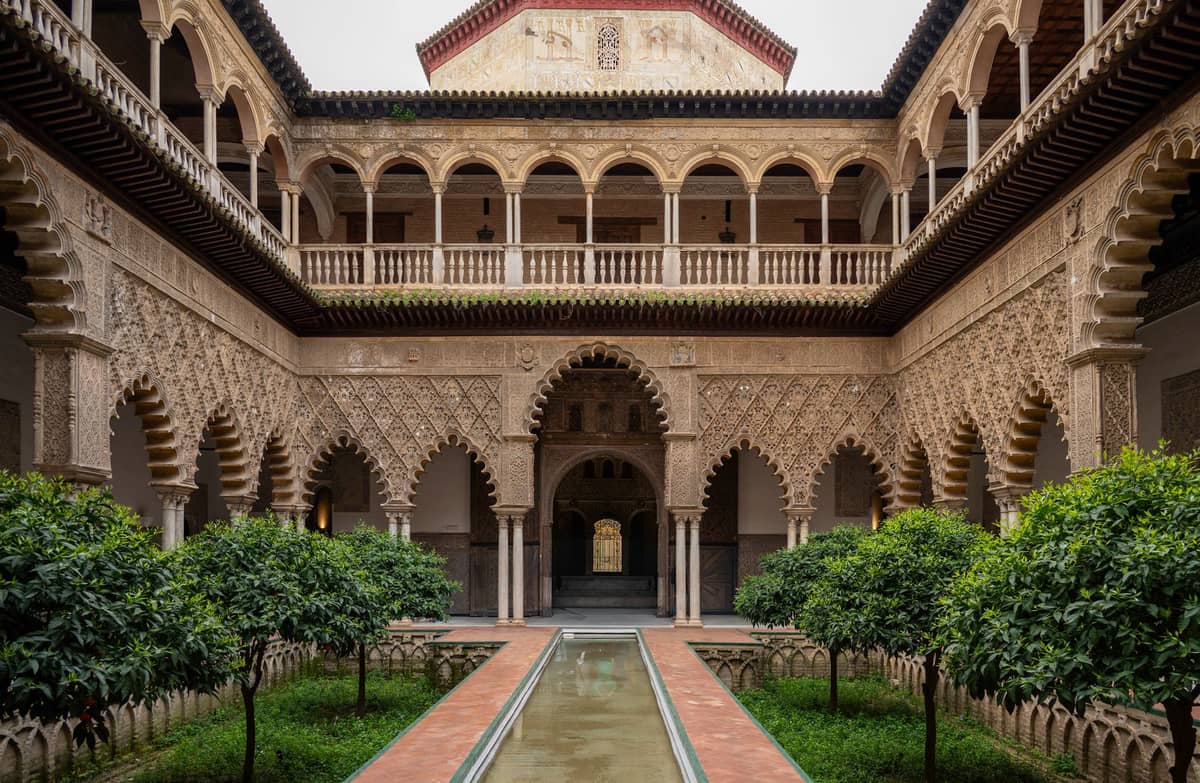
Seville's headline attractions are genuinely world-class and remarkably concentrated. The Seville Cathedral and the attached Giralda tower sit within walking distance of the Real Alcázar and the Archivo General de Indias. That cluster alone forms a UNESCO World Heritage Site. Beyond it, the Plaza de España, the Setas de Sevilla, and the Casa de Pilatos add depth to an already strong lineup.
Granada's Alhambra complex encompasses the Nasrid Palaces, the Alcazaba fortress, the Generalife gardens, and the Palace of Charles V. Admission to the Nasrid Palaces requires a timed entry slot. As of 2026, a standard General Day Visit ticket costs €22.27, covering the Nasrid Palaces, Generalife, and Alcazaba. Night visits to the Nasrid Palaces cost €12.73. The Palace of Charles V and the Alhambra Museum are currently free to enter separately. Prices are set by the Patronato de la Alhambra y Generalife and should be verified before booking on their official portal.
⚠️ What to skip
Alhambra tickets sell out weeks or months in advance, especially in spring and autumn. Online sales open up to three months before the visit date and close exactly at 23:59 the evening before. The only official booking portal is tickets.alhambra-patronato.es. Sites that appear in search results and charge above face value are third-party resellers. Each ticket requires the visitor's full name as shown on their ID document, and entry to the Nasrid Palaces is strictly limited to the specific timeslot printed on your ticket.
Seville also has strong secondary sightseeing options that Granada cannot match in volume. The Museo de Bellas Artes is one of Spain's finest regional art collections. The flamenco museum, the Museo del Baile Flamenco, is small but well-curated. And the city's churches, from the baroque Iglesia de San Luis de los Franceses to the medieval Iglesia de San Salvador, could easily fill a separate itinerary. Granada has the Albaicín and Sacromonte neighbourhoods, the Granada Cathedral, and the Capilla Real, but the supporting cast is thinner.
Atmosphere, Neighbourhoods, and Daily Life
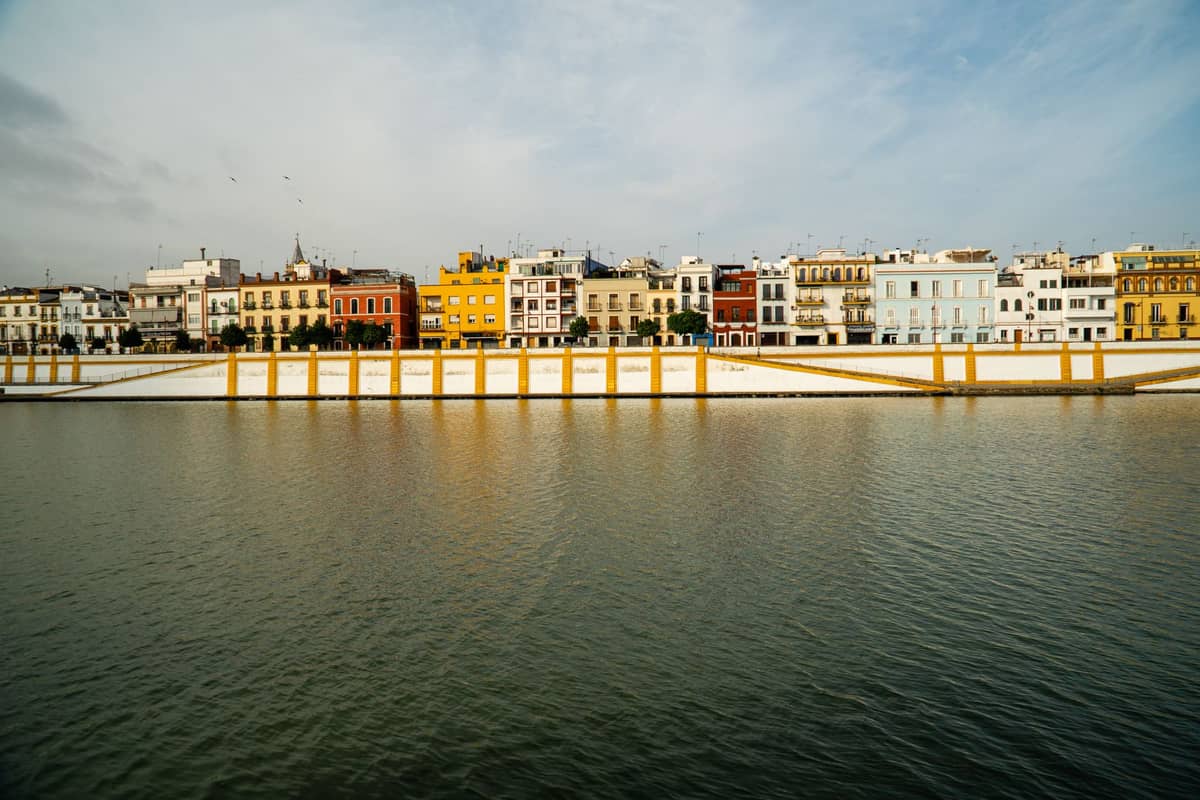
Seville has the more varied urban texture. Santa Cruz, the historic former Jewish quarter, is the obvious starting point for first-time visitors, but it is also the most tourist-dense zone in the city. The real character of Seville reveals itself in Triana's ceramic workshops and riverside bars, in La Macarena's working-class streetlife and street markets, and in Nervión's modern commercial energy around the Ramón Sánchez-Pizjuán stadium. This is a city where residential neighbourhoods and tourist sites coexist within short walking distances.
Granada has a smaller but comparably characterful old city. The Albaicín, the Moorish quarter that climbs the hillside opposite the Alhambra, is a UNESCO-listed neighbourhood of whitewashed houses and narrow lanes. Sacromonte, the cave-dwelling district beyond it, has a distinct Roma cultural identity and is the home of Zambra flamenco, which differs from the Sevillanas flamenco style. Granada also has a large student population that keeps the city lively after dark in ways that surprise visitors expecting a quiet provincial town.
- Seville for neighbourhood depth Multiple distinct barrios, each with their own identity, markets, and local bars. You can spend an entire day in Triana or La Macarena without touching the main tourist circuit.
- Granada for hillside drama The physical setting of Granada is more striking. Views from the Albaicín across to the Alhambra, with the Sierra Nevada as a backdrop, are genuinely remarkable, especially in winter when the mountains are snow-capped.
- Seville for festivals Semana Santa and Feria de Abril are two of the most significant popular festivals in Spain. Both transform the city completely and are experiences in their own right, not just add-ons to a sightseeing trip.
- Granada for student nightlife Granada has a tradition of free tapas with drinks in many bars, a custom that persists more strongly here than in Seville. The Realejo and the area around Plaza Nueva are good starting points for evening drinks.
Getting from Seville to Granada: Train, Bus, and Day Trip Options

The Seville to Granada route is well-served by both rail and coach. Renfe operates Avant trains between Sevilla-Santa Justa station and Granada, with journey times of approximately 2.5 hours. Return fares in 2026 are typically around €40 to €90 depending on how far in advance you book and the travel time. Book directly through the official Renfe website for the best prices and to confirm current schedules before travel.
ALSA coaches depart from Seville's Prado de San Sebastián bus station and reach Granada in around 3 to 3.5 hours. Return fares are typically around €25 to €35, making the bus a cheaper option if time is not the priority. Third-party aggregators sometimes list higher prices for the same routes, so booking directly through ALSA or Renfe is the reliable approach.
Guided day trips from Seville to the Alhambra are widely available and are a practical option for travellers who want to see Granada without organising an overnight stay. These tours typically include transport, Alhambra entry, and a guide, at around €120 to €160 per person. The trade-off is a long day with limited free time. To see Granada properly, including the Albaicín at dusk, at least one overnight stay is worth the extra cost.
✨ Pro tip
If you are combining Seville and Granada on a single trip, travel between the two cities early in your stay rather than at the end. This lets you adjust your time allocation based on how each city feels in person. Many travellers find they wish they had allocated more days to Seville and fewer to Granada once they see the respective scales.
Budget, Costs, and Practicalities
Seville is generally competitive with other major Spanish cities for accommodation and food. Budget travellers can eat well at tapas bars throughout the city, and many cultural sites have free entry periods. A practical overview of cost-saving strategies is covered in the guide to Seville on a budget and the free things to do in Seville guide. Prices in the Santa Cruz tourist zone are noticeably higher than in Triana or La Macarena, where locals eat and drink.
Granada is somewhat cheaper for accommodation, particularly in the Albaicín and Centro areas outside peak season. The free tapas tradition in Granada's bars means a round of drinks often comes with a small plate of food at no extra charge, which genuinely reduces daily food costs. Alhambra tickets are the single significant entry cost, at around €22.27 for a general day visit. Seville's main sights are individually priced, so a full touring itinerary adds up quickly, but the volume of free sights and parks partly offsets this.
- Seville cathedral and Giralda: entry fees apply; check official website for current prices
- Real Alcázar: timed entry tickets available online; book in advance in peak months
- Alhambra (Granada): approximately €22.27 for a general day visit in 2026; book via official portal only
- Transport Seville to Granada by train: approximately €40-90 return (Renfe Avant, 2026)
- Transport Seville to Granada by bus: approximately €40-60 return (ALSA, 2026)
- Guided day trip Seville to Alhambra: approximately €130-180 per person including entry and transport
When to Go: Climate Differences and Seasonal Considerations
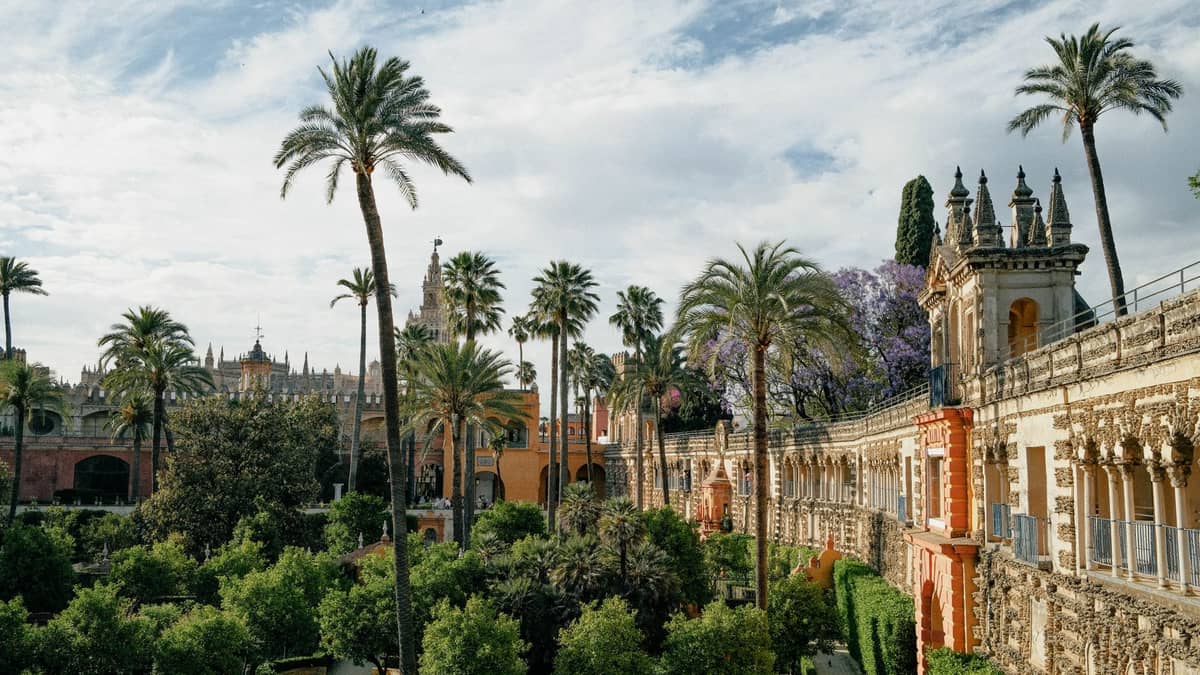
Seville has a hot-summer Mediterranean climate (Köppen Csa), sitting at roughly 7 to 10 metres above sea level near the Guadalquivir River. Summers are extreme: average temperatures in July are around 28°C and in August around 28.5°C, with daytime highs regularly above 35°C. Spring and autumn are far more comfortable for sightseeing, with mean temperatures between 14°C and 22°C in March to May and September to October. A full breakdown of what to expect by season is available in the best time to visit Seville guide.
Granada sits at a significantly higher elevation than Seville, around 730 to 740 metres above sea level, which produces a more extreme temperature range. Winters in Granada can be genuinely cold, with nighttime temperatures dropping near or below freezing, and snow is visible on the Sierra Nevada from the Alhambra for much of the year. Summers are hot but not quite as brutal as Seville. Spring and autumn are the best visiting periods for both cities, which makes combining them straightforward from a logistics standpoint.
One important timing factor for Seville is its two major festivals. Semana Santa (Holy Week, dates vary annually in March or April) and Feria de Abril (roughly two weeks after Easter) both bring massive visitor numbers and significant accommodation price increases. Visiting during these periods is an experience unlike anything else in Spain, but requires advance planning and a larger budget. Granada has no comparable large-scale festival, though the city does get busy in summer around the International Festival of Music and Dance.
FAQ
Is Seville or Granada better for a first visit to Andalusia?
Seville is the stronger first choice for most travellers. It offers more variety across sightseeing, food, nightlife, and neighbourhood character, and its transport connections make it a natural base for day trips. Granada is a deeply rewarding destination but is essentially structured around one monument. If you have a week or more, visit both.
How long does the Seville to Granada journey take?
By Renfe Avant train, the journey between Sevilla-Santa Justa and Granada takes approximately 2.5 hours. By ALSA coach from Prado de San Sebastián bus station, expect around 3 hours on the fastest services and up to 4–5 hours on slower ones. Train is faster; bus is cheaper. Book directly via Renfe or ALSA for current schedules and fares.
Can you visit Granada as a day trip from Seville?
Technically yes, but it is not ideal. A day trip gives you around 3 to 4 hours in Granada after travel time, which is enough for the Alhambra if your tickets are pre-booked, but leaves no time for the Albaicín, local food, or the wider city. One overnight stay makes the trip significantly more rewarding.
Do I need to book Alhambra tickets in advance?
Yes, and well in advance. Alhambra tickets, particularly for the Nasrid Palaces, sell out weeks or months ahead during spring and autumn. The only official booking portal is tickets.alhambra-patronato.es, operated by the Patronato de la Alhambra y Generalife. Entry to the Nasrid Palaces is only permitted during the specific timeslot on your ticket, not at any point during the day.
Which city is better for flamenco?
Seville has the stronger flamenco heritage and the larger number of tablaos and live performance venues. Flamenco has deep roots in the city's working-class barrios, particularly Triana. Granada has a distinct Zambra tradition based in the cave dwellings of Sacromonte, which is worth seeing if you are interested in regional variations. For a broader overview of the Seville flamenco scene, the dedicated flamenco guide covers venue quality, pricing, and what to avoid.
Tickets & tours
Live prices and dates from our booking partner. If you book, we may earn a commission at no extra cost to you.
Planning a trip? Discover personalized activities with the Nomado app.