La Giralda: Seville's Great Tower and Its 800-Year Story
La Giralda began as the minaret of a 12th-century Almohad mosque and was later transformed into the bell tower of the largest Gothic cathedral in the world. At 104 metres tall, it dominates the Seville skyline and rewards visitors with a ramp-based ascent unlike any other tower climb in Spain.
Quick Facts
- Location
- Avenida de la Constitución, s/n, Santa Cruz, Seville
- Getting There
- Tram T1 – Archivo de Indias stop; multiple TUSSAM bus lines on Av. de la Constitución
- Time Needed
- 1.5–2.5 hours (cathedral + tower combined)
- Cost
- €13 online / €14 at the door (standard cultural visit ticket: Cathedral + Giralda + Iglesia del Salvador). Free Sundays 16:30–18:00 with prior online reservation.
- Best for
- Architecture lovers, history enthusiasts, panoramic views of Seville's old city
- Official website
- www.catedraldesevilla.es
What La Giralda Actually Is
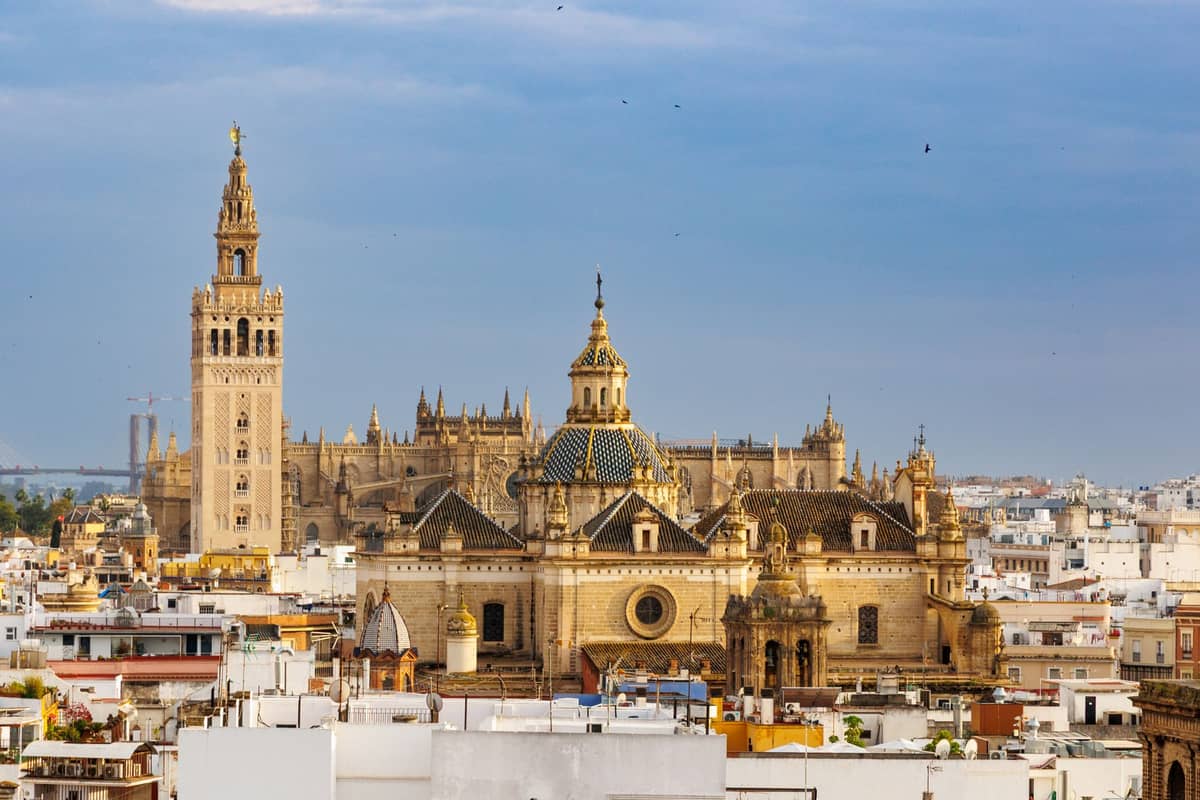
La Giralda is one of those monuments where knowing the backstory transforms what you see. The tower is not purely Gothic, nor purely Moorish. It is both, layered visibly one on top of the other, and that tension is the whole point.
The lower two-thirds of the structure were built in the late 12th century as the minaret of the Great Mosque of Seville, commissioned under the Almohad dynasty. The craftsmanship is extraordinary up close: interlaced sebka brickwork forms geometric diamond patterns across the facade, varying slightly on each cardinal face. These decorative panels, framed by blind arches and paired windows, are among the finest surviving examples of Almohad architecture in Andalusia.
After the Christian reconquest of Seville in 1248, the mosque was converted into a cathedral and the minaret preserved as its bell tower. In the 16th century, the cathedral chapter added a Renaissance belfry on top, completing the current silhouette. The bronze weathervane at the summit, a figure representing Faith that rotates in the wind, gave the tower its popular name: Giralda, from the Spanish verb girar, to turn. The weathervane seen today is a later replica of the 16th-century original, which is preserved inside the cathedral.
ℹ️ Good to know
La Giralda is accessed exclusively through Seville Cathedral. There is no separate entrance. Your cathedral ticket (€13 online, €14 at the ticket office) covers the tower, the cathedral interior, and entry to the Iglesia del Salvador nearby. Verify current prices at catedraldesevilla.es before your visit, as fees are reviewed periodically.
The Ascent: What the Climb Is Actually Like
Most visitors expect stairs. There are none. The Giralda is climbed entirely via a series of 35 ramped galleries that wind around a central core, rising to the viewing platform at the base of the Renaissance belfry. The ramps were designed so that the muezzin could ride a horse to the top to deliver the call to prayer. Today they are wide enough that you rarely feel enclosed, and the gradient is gradual enough for most mobility levels to manage without difficulty.
The climb takes between 10 and 20 minutes depending on pace and crowd density. Small windows punctuate the ascent at regular intervals, offering framed views of the cathedral rooftop and the surrounding streets below, a useful preview of what waits at the top. The walls along the ramps are unadorned brick, cool to the touch even in summer, with the faint smell of old stone and mortar that is particular to medieval towers.
The viewing platform itself sits around 70 metres up, below the bell chamber. The view sweeps across the terracotta roofscape of the Santa Cruz neighbourhood, out over the Guadalquivir River to the west, and toward the Parque de María Luisa to the south. On clear days the terrain flattens to the horizon in every direction. There is no glass barrier, only a low rail, so the exposure feels genuine.
💡 Local tip
Photography tip: the light on Seville's rooftops is most flattering in the two hours after opening and in the hour before closing. Midday light from June through August is harsh and creates deep shadows in the streets below. If you visit in summer, the late-afternoon Sunday slot (14:30–19:00) gives warmer tones from the platform.
Tickets & tours
Live prices and dates from our booking partner. If you book, we may earn a commission at no extra cost to you.
Guided tour of Real Alcazar of Seville, Cathedral and Giralda
From 50 €Instant confirmationSeville Cathedral and Giralda self-guided audio app tour
From 5 €Instant confirmationFree cancellationSeville Cathedral and Giralda small group guided tour
From 49 €Instant confirmationFree cancellationSeville Private Tour: Cathedral, Giralda and Alcazar Tickets
From 240 €Instant confirmationFree cancellation
When to Visit and How Crowds Behave
La Giralda is among the most visited monuments in Spain, and queue management at the cathedral entrance reflects that. During peak spring and autumn months, the ticket office line can stretch along Avenida de la Constitución for a significant distance by mid-morning. Buying tickets online in advance is the single most effective way to avoid waiting, and it secures your timeslot.
The cathedral opens at 11:00 Monday through Saturday for self-guided visits, with the last access to the Giralda at 17:00. Sunday hours are more limited: 14:30 to 19:00. On Sunday mornings the building is in use for religious services and is not open for tourist visits, except for the free-admission cultural slot from 16:30 to 18:00, which requires a prior online reservation and has capped capacity.
Guided cultural visits to the Cathedral and Giralda run from 9:30 on weekdays year‑round. These guided-visit tickets (€20 online, €21 at the door) provide structured access with a guide and are worth considering if you want historical context delivered on-site rather than from a leaflet. Outside of peak periods, mornings from opening to around 12:30 tend to be the quietest window for independent visitors.
Note that during Semana Santa and other major religious festivals, the cathedral schedule changes substantially and access for tourists may be suspended for parts of the day. Check the official website before planning your visit during Semana Santa or Feria de Abril week.
The Cathedral Below: What You Should Not Miss
The ticket includes the full cathedral interior, and treating it as a lobby to the tower is a mistake. The Catedral de Santa María de la Sede is the largest Gothic cathedral in the world by volume, and the scale of the nave does not fully register until you are standing in it. The ceiling vaults rise about 36 metres above the nave floor, and the sheer mass of the building makes the air inside feel different from outside, cooler, slightly muffled, with light arriving in coloured shafts from stained glass windows high on the walls.
The tomb of Christopher Columbus is located inside, carried by four royal pallbearers representing the kingdoms of Castile, León, Aragon, and Navarre. The adjacent Archivo General de Indias on the same plaza houses the documentary archive of Spain's colonial administration and is included in the same UNESCO World Heritage Site designation as the cathedral and the Alcázar.
The Patio de los Naranjos, the orange-tree courtyard on the cathedral's northern side, preserves the ablution fountain of the original mosque and gives the clearest sense of the building's Islamic origins. It is quieter than the main nave and worth spending ten minutes in before entering the tower queue.
Getting There and Practical Logistics
La Giralda sits at the heart of the Santa Cruz neighbourhood, Seville's historic quarter and the area with the highest concentration of monuments. The address is Avenida de la Constitución, s/n, and the main entrance to the cathedral is on the south facade facing that avenue. Tram line T1 (MetroCentro) stops at Archivo de Indias, directly opposite the building. Multiple TUSSAM bus lines serve Puerta de Jerez, a two-minute walk south.
The cathedral is walkable from nearly every central hotel. If you are based in Triana across the river, it is a 15-minute walk across the Puente de Isabel II. For orientation on getting around the city more broadly, the guide to getting around Seville covers tram, bus, and cycling options in detail.
⚠️ What to skip
Accessibility note: the ramp ascent is manageable for most people without mobility aids, but the gradient across 35 consecutive ramps is cumulative. The cathedral does have accessibility measures in place, but visitors with significant mobility limitations should contact the cathedral administration directly before visiting to confirm current provisions. Hours and access may also be modified for extraordinary religious events without advance public notice.
How the Experience Changes by Season
Spring (March to May) is the most comfortable period to visit. Temperatures in Seville average around 14–22°C across those months, the city is in full bloom, and the light from the tower platform has the quality that makes photographs look effortless. It is also the period when the city is most crowded with visitors. If you plan to travel in spring, booking cathedral tickets several days in advance is advisable. The guide to visiting Seville in spring covers timing in more detail.
Summer visits require honest expectations. Seville in July and August records average daytime highs above 35°C, and the tower platform offers no shade. The view is clear, but the climb and exposure can be genuinely uncomfortable in the middle of the day. The early-morning guided visit slots (from 9:30 in summer) make the experience significantly more bearable. Autumn is an underrated window: temperatures moderate from late September, crowds thin noticeably, and the quality of light on the rooftops in October is particularly good. See the Seville in autumn guide for broader seasonal context.
Winter visits are possible and often underestimated. January and February see average highs around 16°C, queue times at the cathedral are minimal, and the interior of the building is more comfortable without summer crowds. The tower view in winter morning light, with mist occasionally sitting over the Guadalquivir, has a quality quite unlike any other season.
Who Should Skip La Giralda
If your primary interest is a panoramic view of Seville from height and you have limited time, there are less expensive and less crowded options. The Setas de Sevilla (Metropol Parasol) offers rooftop views from the Encarnación area without any queue, at a lower ticket price, and with a different perspective of the city. The Giralda's view is historically richer and architecturally more impressive, but if tick-box panoramas are the goal, the comparison is worth making.
Visitors who find enclosed ramp climbs physically tiring, even without stairs, may find the cumulative effort of 35 ramps challenging. Those with a strict schedule who cannot book tickets online in advance should factor in potential queue time of 30–60 minutes on busy days. And if you are planning a broader Seville itinerary and need to decide where La Giralda fits relative to other major sites, the complete guide to things to do in Seville provides a useful framework for prioritising.
Insider Tips
- The ticket includes the Iglesia del Salvador, a baroque church two blocks away. Most visitors skip it, but the interior is extraordinary and almost always quiet. Use the combined ticket on the same day.
- The Patio de los Naranjos (orange courtyard) on the cathedral's north side is accessible before joining the main cathedral queue in the morning. It is the best place to observe the Almohad architectural details at ground level without the interior crowds.
- If you buy tickets at the door, use the ticket machines rather than the staffed windows. The machines accept card payments and the line moves faster.
- The tower's viewing platform has a narrow lip on the exterior. Position yourself near the eastern rail for the best unobstructed view toward Santa Cruz's rooftop maze and, further east, the outline of the Real Alcázar gardens.
- Free Sunday access (16:30–18:00) requires an advance online reservation through the official cathedral website and has limited capacity. Reserve several days ahead during peak season, not on the morning of your intended visit.
Who Is La Giralda For?
- Architecture and history enthusiasts who want to understand Andalusia's layered Islamic and Christian past in a single building
- First-time visitors to Seville for whom La Giralda is a reference point for understanding the city's skyline
- Photographers seeking elevated views of the Santa Cruz roofscape and the Guadalquivir
- Families with older children who can manage the ramp ascent and appreciate the lack of stairs
- Travellers planning a full day in the historic centre who want to combine the tower with the Real Alcázar and the Archivo de Indias in one walkable loop
Nearby Attractions
Other things to see while in Santa Cruz:
- Archivo General de Indias
Standing beside the Cathedral on Avenida de la Constitución, the Archivo General de Indias holds one of the most significant collections of colonial-era documents in the world. Entry is free, the building is architecturally remarkable, and most visitors leave having completely underestimated what's inside.
- Casa de Pilatos
Casa de Pilatos is a 16th-century palace in Seville's historic centre that quietly outshines many better-known landmarks. Its central courtyard, azulejo-lined rooms and classical statuary collection reward visitors who take the time to look closely.
- Hospital de los Venerables
Built in the late 17th century as a refuge for elderly priests, the Hospital de los Venerables is one of Seville's most rewarding architectural and artistic stops. Its church ceiling, Baroque courtyard, and Focus-Abengoa Foundation art collection combine in a space that feels both intimate and historically weighty.
- Iglesia de San Salvador
Standing on the site of Seville's former Great Mosque, the Iglesia del Divino Salvador is the city's second largest church and one of its most rewarding visits. With soaring Baroque nave, layers of Islamic and Christian history, and far fewer crowds than the Cathedral, it earns more attention than most itineraries give it.
Planning a trip? Discover personalized activities with the Nomado app.