Seville in Autumn: What to Expect in September, October & November
Autumn is arguably Seville's most underrated season. Temperatures drop from summer extremes, crowds thin out after peak season, and the city's streets become walkable again. This guide breaks down exactly what to expect each month, from weather data to practical tips.
Tickets & tours
Live prices and dates from our booking partner. If you book, we may earn a commission at no extra cost to you.
TL;DR
- September is still hot (highs around 30-32°C), dry, and busy with late-summer tourists — pack accordingly.
- October is the sweet spot: daytime highs of 25-27°C, fewer crowds, and comfortable conditions for walking and sightseeing.
- November is mild (highs around 19-21°C) with increasing rain, but far warmer than most of Europe at that time of year.
- Book major attractions like the Real Alcázar and Seville Cathedral in advance — autumn demand is still high, especially in October.
- For a full seasonal comparison and help deciding when to go, see the best time to visit Seville guide.
Autumn Weather in Seville: Month-by-Month Breakdown
Seville has a Mediterranean hot-summer climate (Köppen Csa), which means autumn arrives later and more gradually than visitors often expect. The city sits at just 7-11 metres above sea level in inland Andalusia, and it retains heat long after the calendar turns to September. Do not pack a jacket as your primary layer in early autumn.
- September Average highs of 30-32°C, lows around 18-20°C. Rainfall is minimal — roughly 17 mm across the month with only about 1 rainy day. Around 11 hours of sunshine per day. Essentially an extension of summer in practical terms.
- October Average highs of 25-27°C, lows around 15-17°C. Around 4 rainy days and roughly 9 hours of sunshine daily. The heat becomes genuinely comfortable for long walks and outdoor sightseeing.
- November Average highs of 19-21°C, lows around 10-11°C. Around 5 rainy days and 7.5 hours of sunshine. Rain becomes more noticeable but the city is still mild by any northern European standard.
⚠️ What to skip
The biggest misconception about autumn in Seville is that it cools down quickly. September highs regularly hit 32-35°C in the first few weeks, so arriving without sun protection, light clothing, and hydration plans is a mistake. The city's stone streets and buildings retain heat, and midday sightseeing in September without shade can be genuinely uncomfortable.
The rainy season in Seville technically runs from October through April, with December being the wettest month at around 95 mm. But in autumn terms, September is almost entirely dry, October sees the first real showers, and November nudges toward winter patterns. Total annual rainfall is only around 530-540 mm — this is not a wet city. A few days of rain in November does not mean grey skies all week. Showers are often short and the sun returns quickly.
September in Seville: Late Summer by Any Other Name
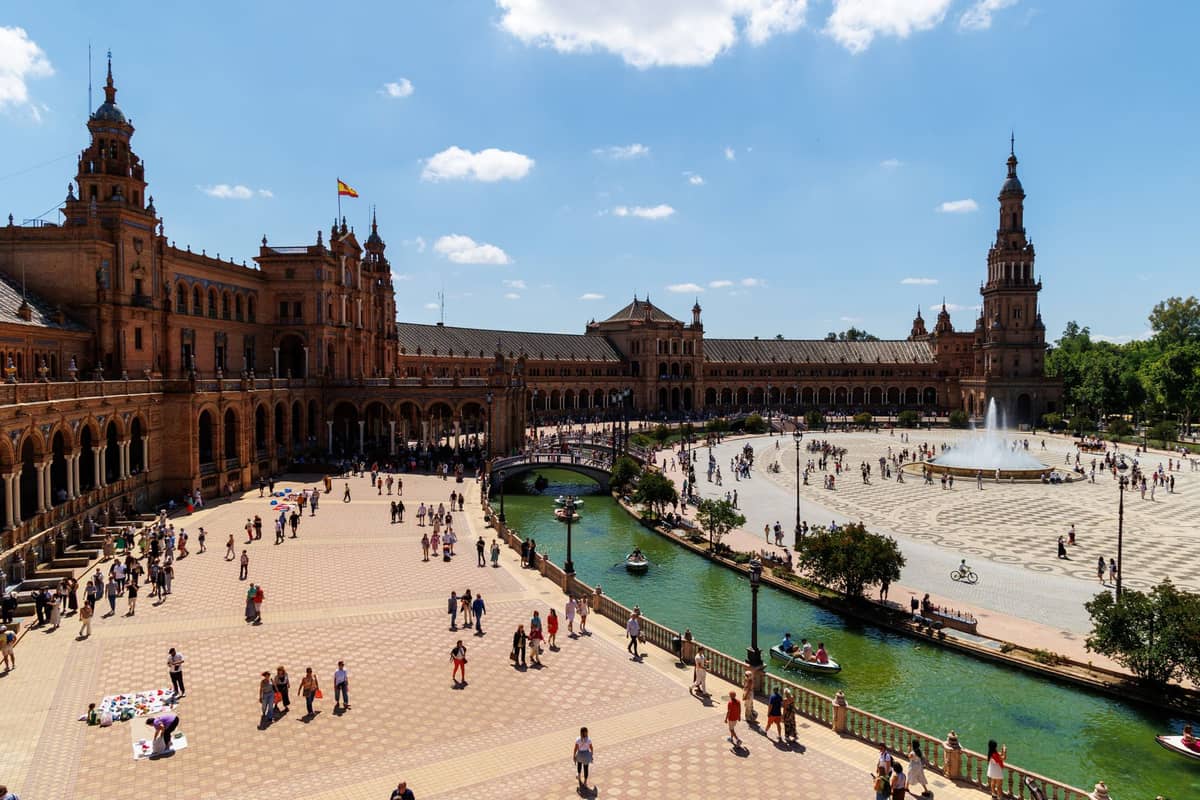
For most practical purposes, September in Seville is summer. Temperatures remain in the low-to-mid 30s Celsius through at least the first two weeks, and the city is still full of tourists — Spanish families on their last break before school starts, plus late-season European visitors. The main sights operate summer hours, queues at the Alcázar and Cathedral are long, and restaurant terraces stay packed in the evenings.
That said, the crowds do begin to ease by mid-to-late September, and the evenings cool noticeably compared to July and August. If you're comfortable in heat, this is actually an excellent time to explore neighbourhoods like Triana and La Macarena where the tourist density is lower and the pace feels more local.
💡 Local tip
In September, plan outdoor sightseeing for before 11:00 or after 18:00. Midday temperatures in the high 20s to low 30s make extended walking in direct sun tiring. Use the 13:00-17:00 window for indoor attractions, air-conditioned museums, or a proper sit-down lunch.
September is also when Seville's cultural calendar picks back up after the August slowdown. Theatres, music venues, and flamenco shows return to fuller programming. Check listings for the Teatro de la Maestranza and local tablaos. The Tablao Los Gallos in Santa Cruz runs year-round and books up quickly in late September.
October in Seville: The Best Month of Autumn
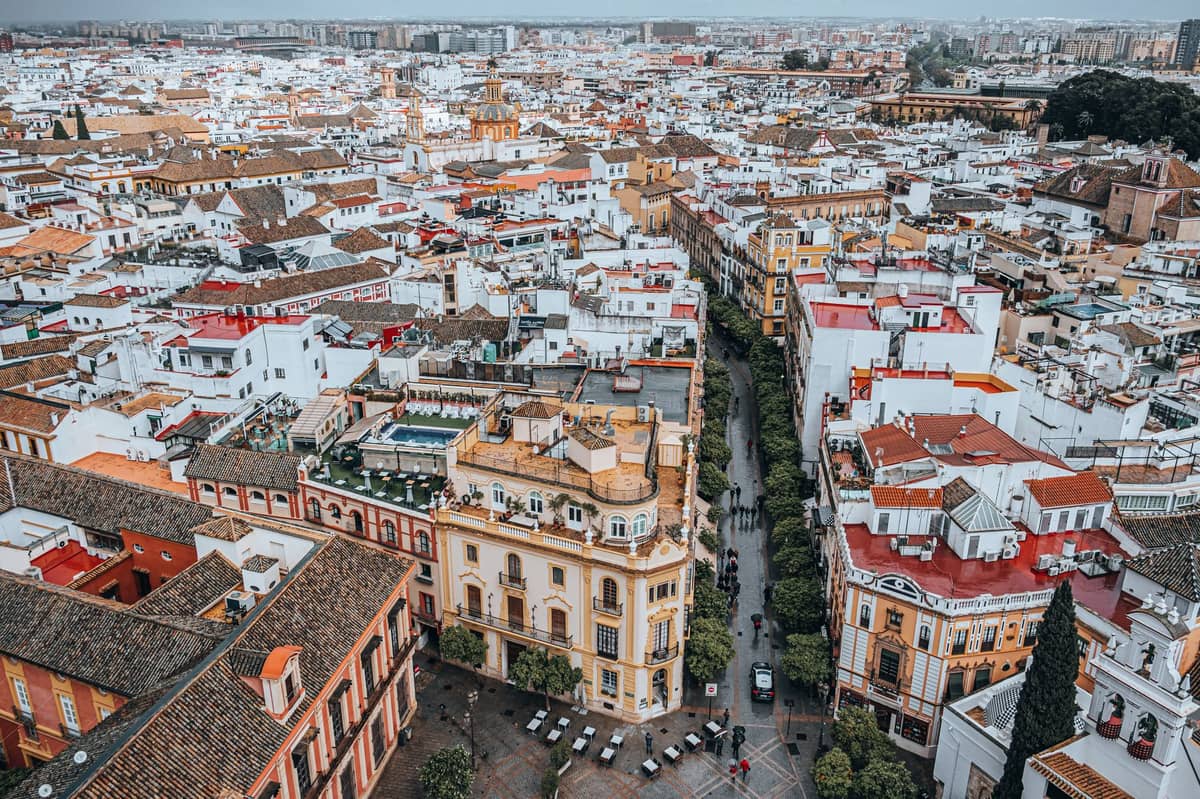
October is consistently the month that rewards visitors most in autumn. Daytime temperatures of 25-27°C are ideal for walking — warm enough to sit outside at lunch, cool enough to cover serious ground on foot without suffering. Nights are pleasant around 15-17°C, which means a light jacket or layer for dinner and evening walks, nothing more.
Tourist numbers drop noticeably compared to the spring and summer peaks. You can walk through Santa Cruz in the morning without fighting through tour groups, and the wait times at the Real Alcázar are shorter than in April or August. That said, 'shorter' does not mean 'no queue' — pre-booking tickets online remains essential, especially on weekends.
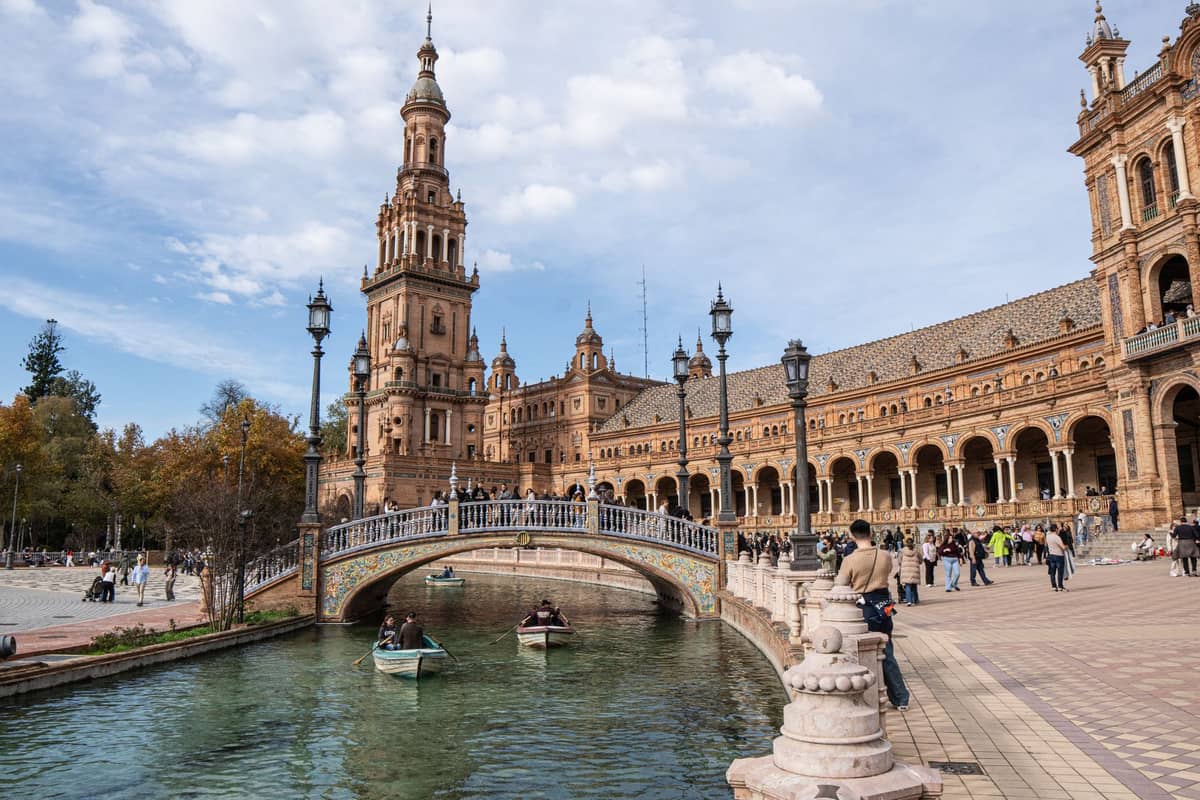
October is also the right time for open-air sights that felt punishing in summer. The Plaza de España is stunning in October light, and the Parque de María Luisa begins to show some autumnal colour. Long walks along the Guadalquivir riverside become genuinely enjoyable rather than a test of endurance.
✨ Pro tip
October weekends draw domestic Spanish tourists from Madrid and other cities who use the long bridges (puentes) around national holidays. The Día de la Hispanidad on October 12 is a public holiday — book accommodation a week in advance if your trip overlaps with that weekend, and expect higher hotel rates.
November in Seville: Mild, Quiet, and Occasionally Wet
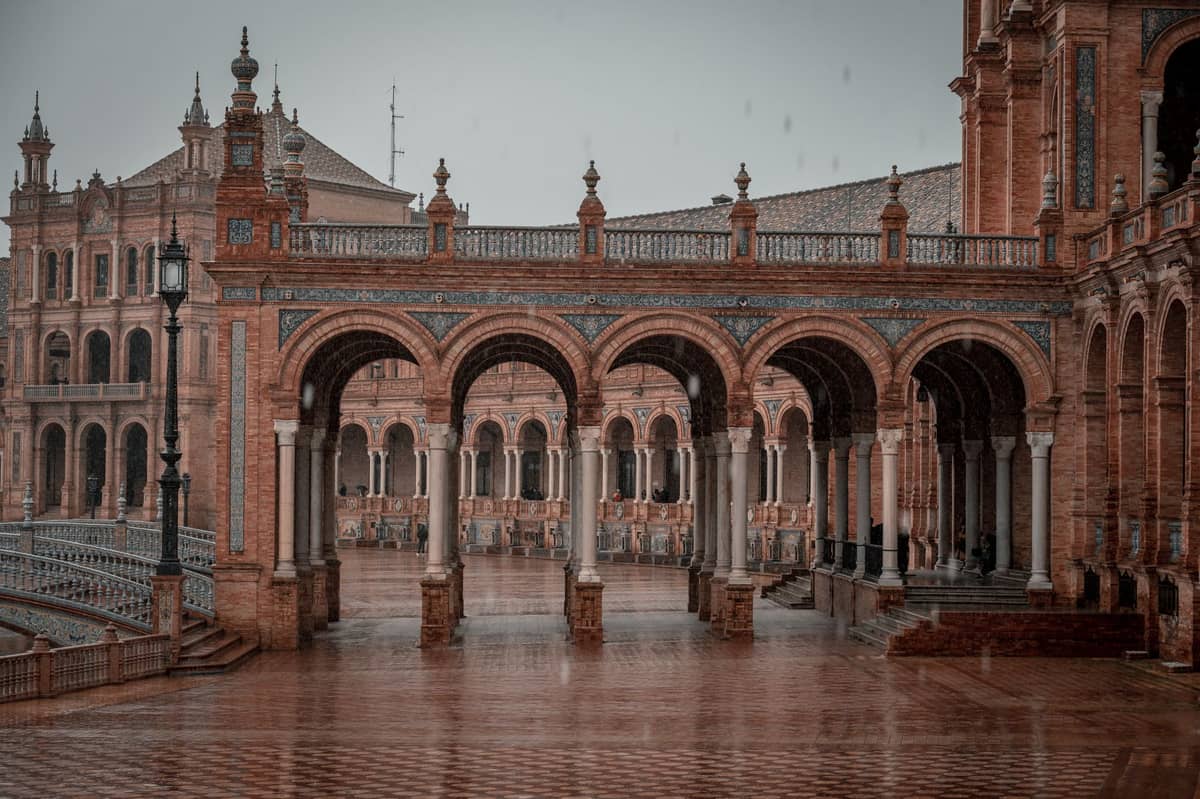
November is Seville at its quietest and most local. The big tour groups are gone. Restaurants stop putting out every last terrace chair. Prices at hotels drop to some of their lowest levels of the year. Average highs around 19-21°C feel distinctly different from the summer heat, but this is still well above what you'd experience in London, Paris, or Berlin at the same time.
Rain becomes more of a factor — roughly 6-7 days with precipitation across the month, and around 80-90 mm total. That is not saturating, but it does mean packing a waterproof layer or umbrella is sensible. The showers tend to arrive quickly and clear. Having a flexible sightseeing plan that mixes outdoor and indoor options makes November visits smooth rather than frustrating.
For culture-focused trips, November is genuinely excellent. The Museo de Bellas Artes and the Museo del Baile Flamenco are far less crowded. The city's churches — and Seville has some of the finest baroque ecclesiastical architecture in Spain — can be visited without the summer shuffle. The Iglesia de San Luis de los Franceses and the Casa de Pilatos palace are particular highlights for this kind of slow, immersive visit.
What to Pack for Seville in Autumn
Packing for a Seville autumn trip varies significantly by month, which catches many visitors off guard. Someone arriving in early September needs sunscreen, linen or lightweight cotton, and sun protection gear. Someone arriving in late November needs a proper waterproof jacket and layers for evenings. The seasonal shift across three months is substantial.
- September: Light summer clothing, sunscreen (SPF 30+), a hat, sunglasses, and comfortable walking shoes with breathable uppers. Evenings remain warm — no jacket needed until late in the month.
- October: Mix of light layers. A long-sleeved shirt or light cardigan for evenings. A compact umbrella or foldable rain jacket for occasional showers.
- November: Proper layers are needed. A medium-weight jacket for daytime and a warmer option for nights around 10-11°C. A waterproof outer layer is practical rather than optional.
- All months: Comfortable walking shoes are non-negotiable. Seville's old city streets are cobblestone-heavy, and a full day of sightseeing involves 10-15 km of walking easily.
- Religious sites: Shoulders and knees should be covered for entry to churches. A lightweight scarf or shawl takes up minimal space and solves this instantly.
Practical Autumn Travel Tips for Seville
Getting into the city from Seville Airport (IATA: SVQ), located roughly 9-10 km east/north-east of the centre, is straightforward. The EA airport bus connects arrivals with Plaza de Armas, Puerta de Jerez, and Santa Justa station. Frequency is around every 12-20 minutes during the day, with the fare around €5-6 (verify before travel). Journey time is approximately 35 minutes. Taxis from the rank outside arrivals typically cost €25-35 depending on time and supplements. For full transport options including getting around the city by tram (MetroCentro), metro, and bus (TUSSAM), see the getting around Seville guide.
Accommodation prices in autumn follow a clear pattern: September remains close to peak summer rates, October sits in the mid-range, and November offers some of the best value of the year. If budget is a priority, late October or November gives you a combination of comfortable weather and lower costs. For neighbourhood-by-neighbourhood lodging advice, the where to stay in Seville guide covers options from the historic centre to Triana.
Autumn is also a good season for day trips. The heat that makes some excursions exhausting in July and August is gone by October, making places like the Roman ruins at Itálica and the historic town of Carmona much more pleasant to explore on foot. See the day trips from Seville guide for a full rundown of options.
ℹ️ Good to know
Spain uses Central European Time (CET, UTC+1) in winter and Central European Summer Time (CEST, UTC+2) in summer. Clocks go back in late October — usually the last Sunday of the month — which means evenings get dark earlier almost immediately after the change. If your trip spans the clock change, factor in that sunset will shift from around 19:00 to around 18:00 overnight.
On a budget in autumn? October and especially November are among the most cost-effective months to visit. Free entry options increase in value when you have the mental bandwidth to explore without rushing between pre-booked slots. The free things to do in Seville guide highlights no-cost options across the city, from the Setas de Sevilla structure to riverside walks and neighbourhood markets.
FAQ
Is October the best month to visit Seville?
October is widely considered the best autumn month for Seville, and a strong contender for the best month overall. Daytime highs of 25-27°C are comfortable for extended walking and outdoor sightseeing, the summer crowds have thinned, and hotel prices are more reasonable than in April or August. The main caveat is the Día de la Hispanidad public holiday on October 12, which can push up prices and crowds around that weekend.
Does it rain a lot in Seville in autumn?
Not excessively. September is nearly dry, with around 20-25 mm of rain and roughly 1-2 rainy days. October sees the first meaningful showers — around 4-6 rainy days and moderate precipitation of roughly 60-70 mm. November brings about 6-7 rainy days and up to around 80-90 mm. Showers tend to be short rather than prolonged. A compact waterproof layer is sensible from October onward, but rain rarely derails a full day of plans.
What temperature is Seville in September?
September in Seville has average daytime highs of around 30-32°C and overnight lows of 18-20°C. Early September can see highs of 32-35°C, making it functionally a continuation of summer. Temperatures drop more noticeably in the last week of the month. Pack light summer clothing and treat September as a hot month, not a mild autumn one.
Is November too cold for Seville?
No. Average highs in November are around 19-21°C, which is mild by most standards. Nights cool to around 10-11°C, so you'll want a jacket in the evenings, but days are perfectly comfortable for sightseeing. November is colder than October but considerably warmer than northern European cities at the same time of year. It is also the quietest month of the three, with lower prices and smaller crowds.
Are there any festivals or events in Seville in autumn?
Autumn is not Seville's main festival season — the big events (Semana Santa, Feria de Abril) are in spring. That said, September sees the cultural calendar restart after the August slowdown, with theatres and music venues resuming full programming. The Día de la Hispanidad on October 12 brings some local events and is a national public holiday. Check local event listings when planning, as one-off exhibitions, flamenco cycles, and neighbourhood fiestas occur throughout the season.
Tickets & tours
Live prices and dates from our booking partner. If you book, we may earn a commission at no extra cost to you.
Planning a trip? Discover personalized activities with the Nomado app.