Parque de María Luisa and Plaza de España form Seville's most theatrical public space: a vast sweep of formal gardens, shaded promenades, and monumental architecture just south of the historic centre. Built for the 1929 Ibero-American Exposition, the area combines civic grandeur with genuine tranquility, and remains one of the most photogenic corners of Andalusia.
Just south of the old quarter, where the city's dense medieval streets give way to wide tree-lined paseos, Parque de María Luisa and the Plaza de España occupy a scale that stops first-time visitors in their tracks. This is Seville at its most ceremonial: a 19th-century royal garden reshaped into exposition grounds, where neo-regionalist towers, canal bridges, and ceramic-tiled alcoves are framed by fountains and orange trees.
Orientation
Parque de María Luisa lies just southeast of Seville’s historic centre, a short distance east of the Guadalquivir and roughly 1.3 to 1.5 kilometres south of the Seville Cathedral and the Real Alcázar. Its northern boundary is marked by Avenida de Isabel la Católica and the Glorieta de San Diego, where Plaza de España commands the most prominent position. To the west runs the Paseo de las Delicias, a long riverside promenade separating the park from the riverbank. The southern edge dissolves into Avenida de la Palmera, and to the east lies the Prado de San Sebastián, one of Seville's main intercity bus terminals, and the San Bernardo rail and metro hub.
The official address for the park is Paseo de las Delicias, s/n, in the 41013 postcode. In practical terms, the whole zone sits between the historic centre to the north and the quieter residential belt of the southern city. It is within easy walking distance of the neighbourhoods of Santa Cruz and El Arenal, and the tower of La Giralda is visible from the northern entrances of the park on clear days.
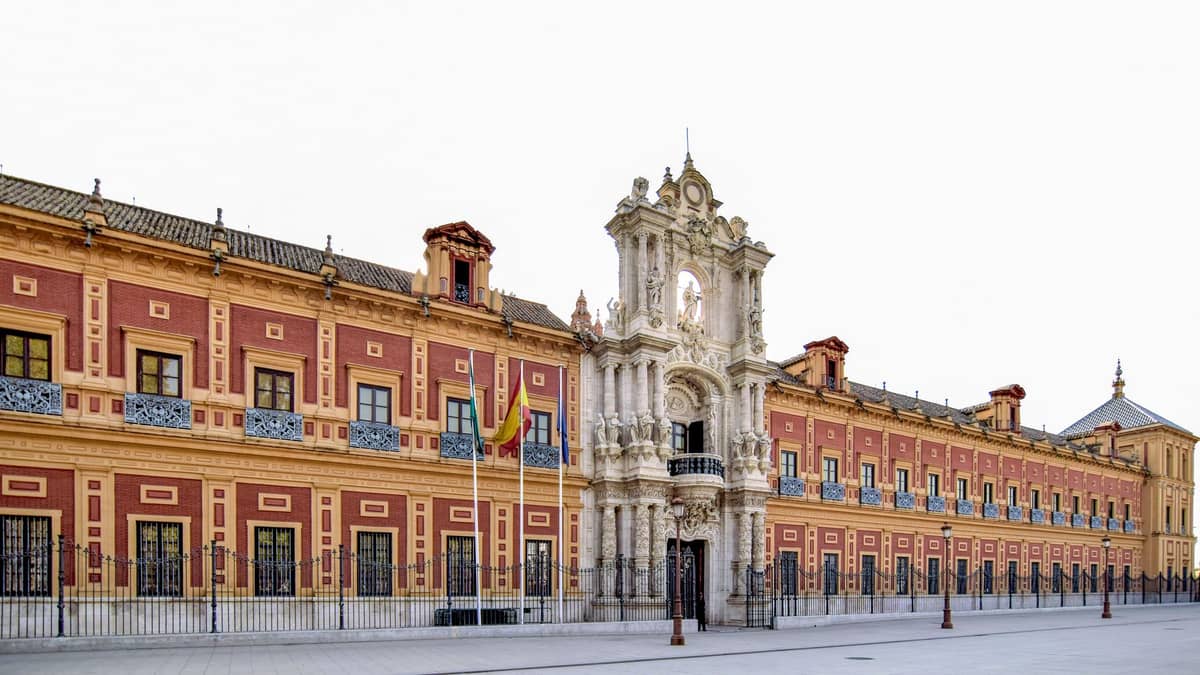
Travellers already familiar with central Seville should think of this district as the southern anchor of the city's sightseeing corridor. From the Seville Cathedral and the Real Alcázar, it is a 10-to-15-minute walk south along Calle San Fernando, which leads directly to the park's main entrance and Plaza de España. The route passes the neoclassical facade of the Palacio de San Telmo and gives a sense of how the city deliberately staged its civic grandeur along this axis.
Character & Atmosphere
The rhythm of this area is unlike anywhere else in Seville. Early mornings in the park belong to joggers, dog walkers, and retirees reading newspapers on the stone benches near the duck ponds. The light at this hour filters through the canopy of planes, orange trees, and ancient dragon trees in long amber shafts. The air smells of damp soil and jasmine, and the only sounds are birdsong and the occasional creak of a bicycle.
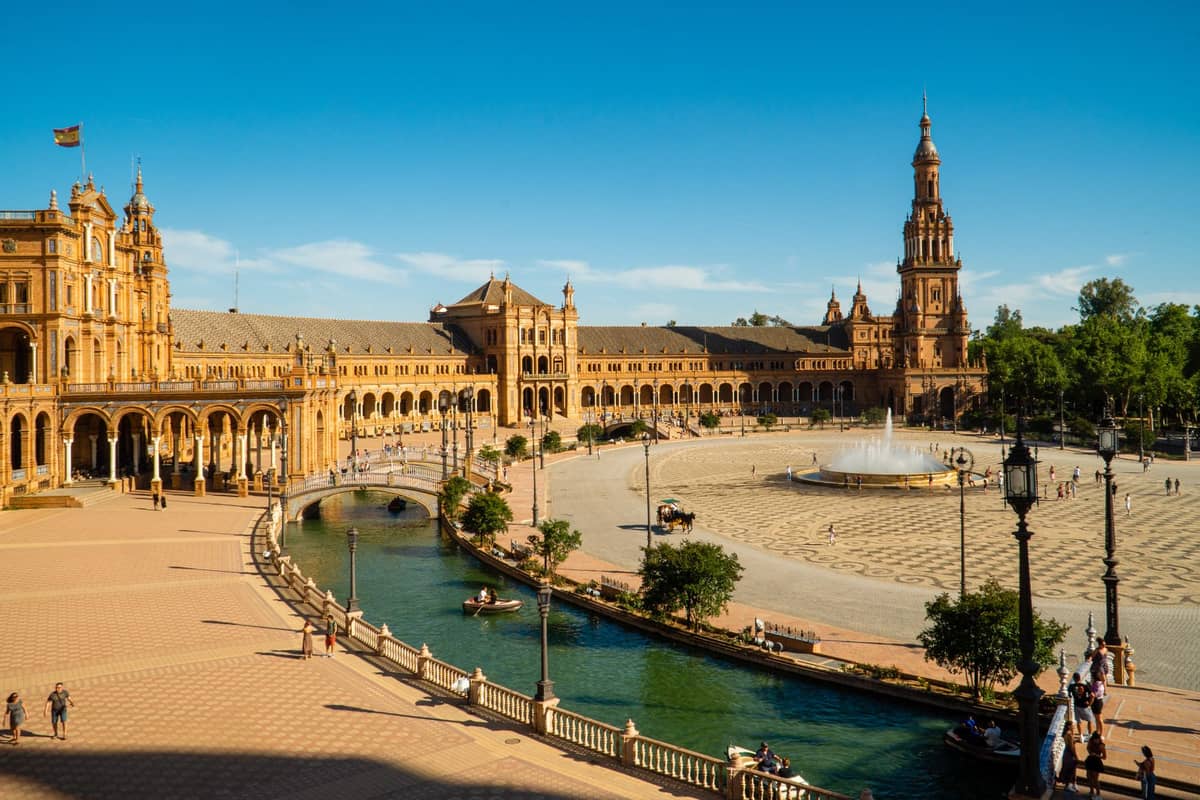
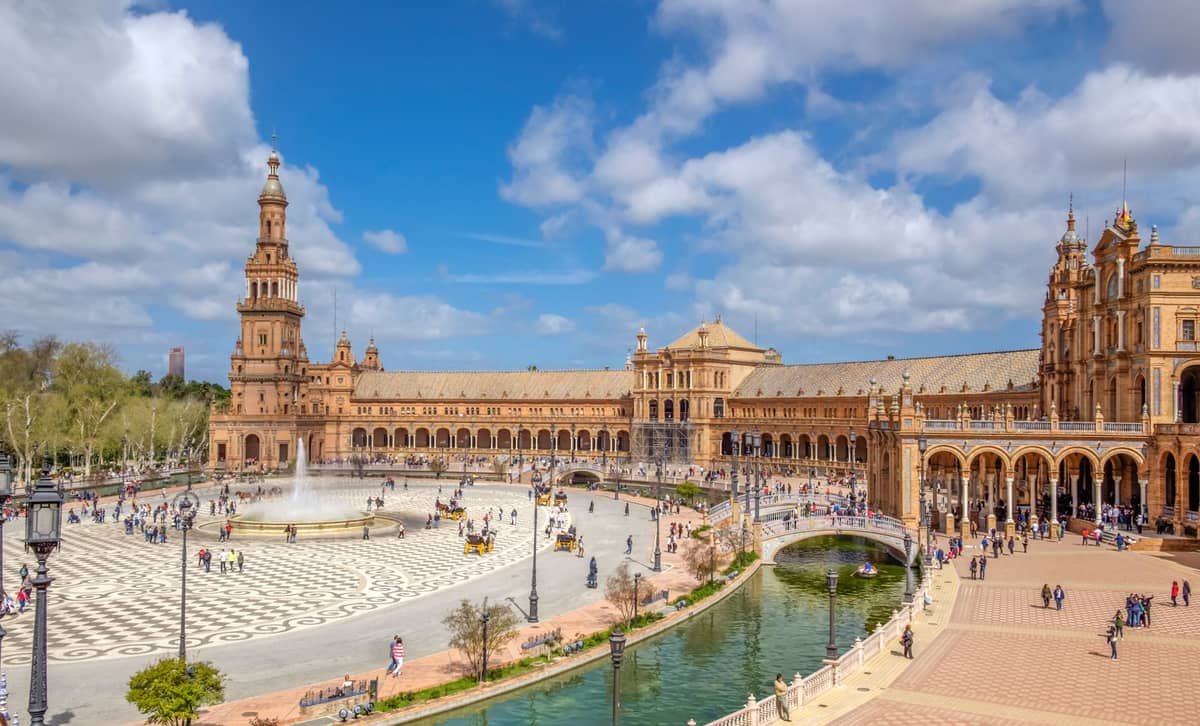
By mid-morning, the dynamic shifts entirely. Tour groups arrive at Plaza de España, often by the coachload, and the great semicircular arcade fills with the noise of cameras, selfie sticks, and guides speaking in a dozen languages. The canal boats come out. The ceramic tile panels representing each Spanish province attract crowds who search for their home region. This is one of Seville's most-visited landmarks, and it shows: between 10:00 and 14:00 on any clear day in spring, the plaza can feel genuinely crowded.
Step into the park itself, however, and the crowds thin almost immediately. The paths leading south toward Plaza de América, past the Glorieta de Bécquer and the rose garden, carry a fraction of the foot traffic of the plaza. On weekday afternoons in October or November, it is entirely possible to sit on a bench beside a fountain and have the whole alley to yourself. The park has a particular quality in the hours before sunset, when the stone buildings turn a deep ochre and the light on the tiled benches becomes almost cinematic.
After dark, the park closes to visitors, typically around 22:00 in winter and as late as midnight in summer. Plaza de España itself takes on a different atmosphere in the early evening: the day-tripper coaches have gone, the light is softer, and the reflections in the canal make for better photographs than anything you will get at midday. Local students and couples tend to take over the steps and bridges at dusk, which gives the space a more relaxed, genuinely Sevillano feel.
💡 Local tip
Visit Plaza de España either early in the morning (before 9:30) or in the hour before sunset. Midday crowds and harsh southern light make both photography and the simple pleasure of being there significantly less enjoyable.
What to See & Do
The Plaza de España is the undisputed centrepiece of the district and one of the most architecturally ambitious public spaces in Spain. Designed by Aníbal González and completed in 1928 for the 1929 Ibero-American Exposition, it takes the form of a 500-metre-wide semicircle of tiered brick towers, arcaded galleries, and a central canal crossed by four ornate bridges. The alcoves along the inner wall each represent a different Spanish province, decorated with hand-painted ceramic tiles showing local maps and historical scenes. It is kitsch in the best possible sense: overwhelmingly detailed, joyfully colourful, and frankly enormous.
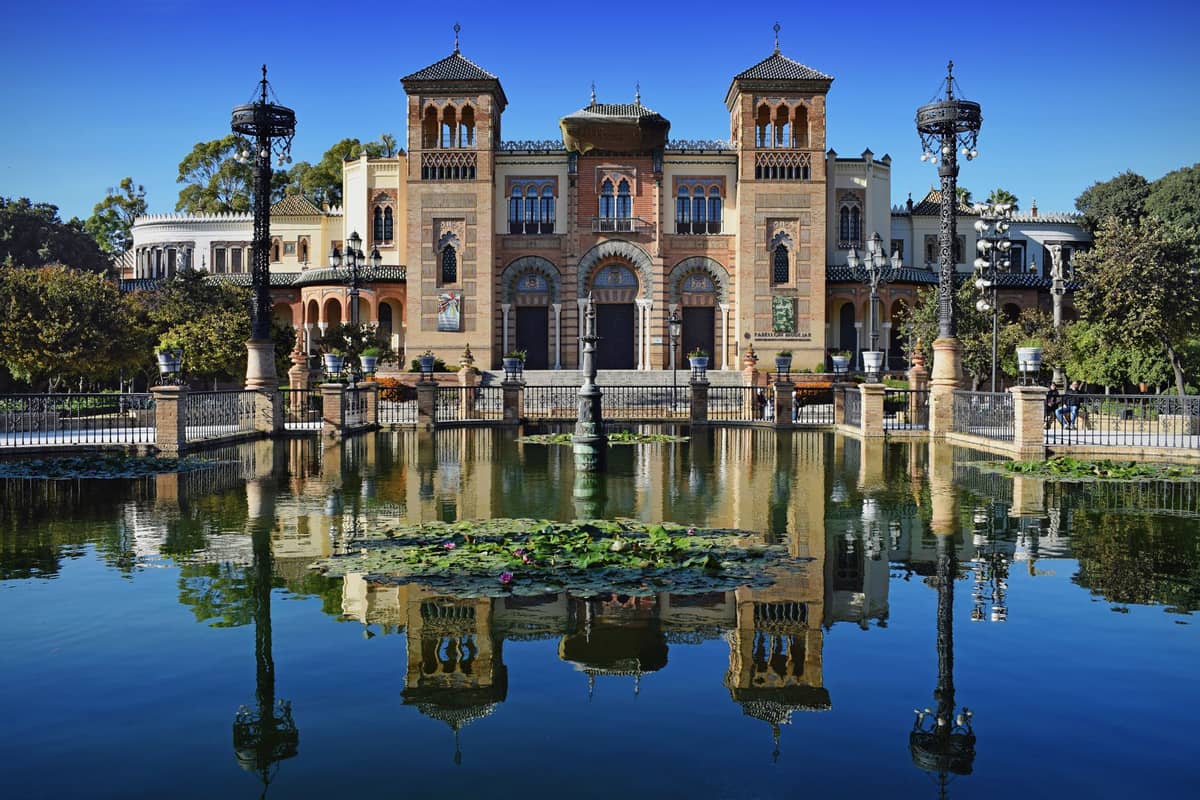
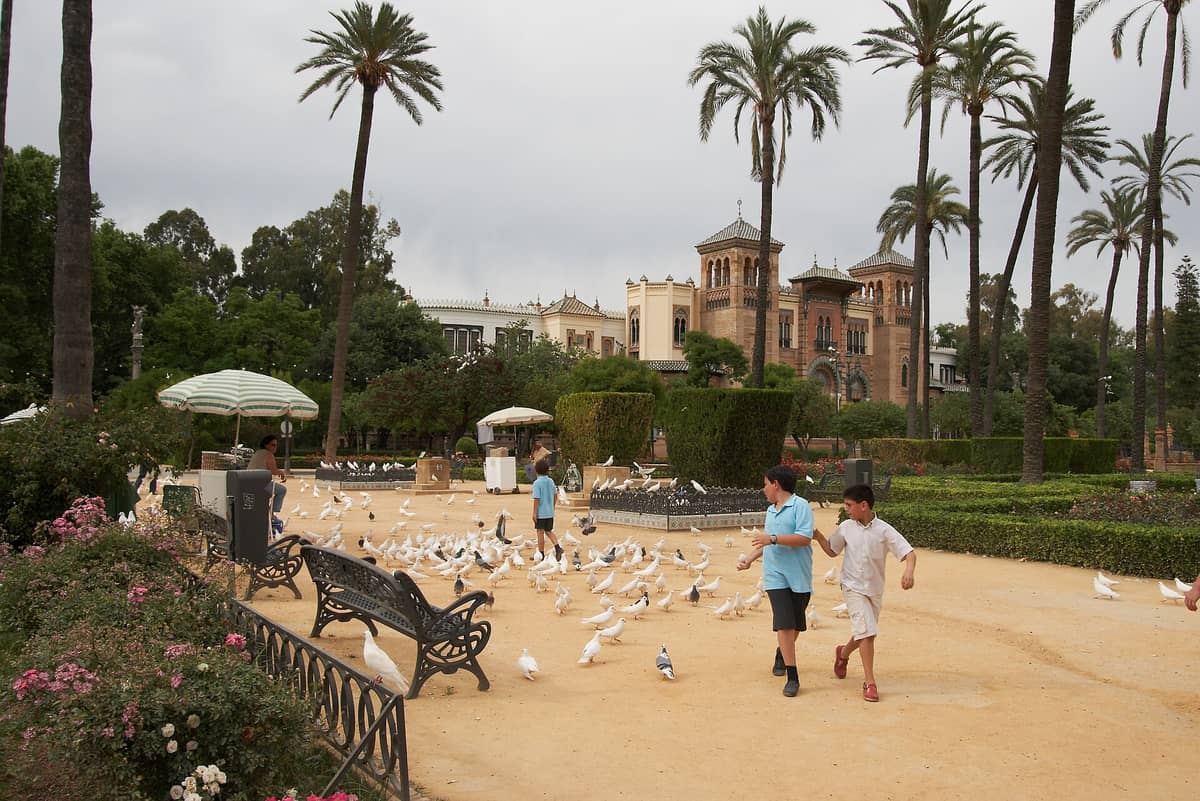
The park itself stretches south from the plaza across roughly 340,000 square metres of landscaped gardens. At its southern end sits Plaza de América, a more intimate space surrounded by three pavilions built for the 1929 exposition. One now houses the Museo Arqueológico de Sevilla and another the Museo de Artes y Costumbres Populares de Sevilla, both worth an hour if you have an interest in the region's deeper history. Pigeons and peacocks share the square with visitors, and the ornamental rose garden alongside it is worth seeing in spring when it is in full bloom.
Throughout the park, you will find a series of glorietas: small garden roundabouts dedicated to writers, painters, and poets, each decorated with ceramic portraits and quotations. The Glorieta de Bécquer, honouring the Romantic poet Gustavo Adolfo Bécquer who was born in Seville, is the most visited, with a famous sculpture representing the stages of love arranged around a large cypress tree. These small monuments reward slow walking more than any itinerary does.
Rent a rowboat on the Plaza de España canal (available during park hours, seasonal)
Walk the full length of the park from north to south: allow at least 45 minutes at a relaxed pace
Visit the Museo Arqueológico de Sevilla in Plaza de América for Roman-era artefacts from the region
Look for the Pabellón Mudéjar, one of the 1929 exposition's most striking remaining buildings
Follow Paseo de las Delicias north toward the Torre del Oro and the El Arenal waterfront
The Paseo de las Delicias, which runs along the park's western edge parallel to the Guadalquivir, connects this district directly to the Torre del Oro and the waterfront of El Arenal further north. On the other side of the river, Triana is visible from the riverside path, making this one of the better walking routes in the city for understanding Seville's geography.
ℹ️ Good to know
Plaza de España has appeared in several major films and television productions, including Star Wars: Episode II. Game of Thrones filmed in Seville at the Real Alcázar, not here. Film tourism adds a noticeable layer to visitor numbers during peak season.
Eating & Drinking
This district is not Seville's strongest neighbourhood for food. The immediate surroundings of Plaza de España are dominated by tourist-facing cafés and kiosk bars that trade primarily on location. The coffee is fine, the food is average, and the prices reflect proximity to one of the city's most-visited sights rather than any culinary ambition. That said, the riverside Paseo de las Delicias has a few terrace bars that offer a reasonable place to sit with a cold beer and watch river traffic, particularly in the late afternoon.
For better eating, walk north along Calle San Fernando toward the Puerta de Jerez, where the options improve considerably. The streets around the Puerta de Jerez and toward the edge of Santa Cruz have a mix of traditional tapas bars and slightly more upscale restaurants catering to visitors staying in the area's hotels. Alternatively, crossing into El Arenal to the west or heading north into the old city will take you into genuinely better-value food territory within 10 to 15 minutes on foot.
There is a bar kiosk inside the park itself, near the northern entrance, and vending facilities near Plaza de América. These are useful for drinks and a snack but not destinations in their own right. The park rules prohibit alcohol consumption in most areas, and it is maintained as a family-friendly public space.
⚠️ What to skip
Be cautious with cafés directly facing Plaza de España: prices for standard drinks can run significantly higher than elsewhere in Seville, and quality rarely justifies the premium. Walk two blocks in any direction for noticeably better value.
Getting There & Around
The district is very well served by public transport. The closest metro stop is Prado de San Sebastián on Metro Line 1, which sits just northeast of the park's main entrance. Santa Justa is not on Metro Line 1; from Prado de San Sebastián, continue by bus or taxi. The tram line T1 (MetroCentro) stops at both Puerta de Jerez and Prado de San Sebastián, linking this area with Plaza Nueva and the heart of the commercial centre in a matter of minutes.
Multiple TUSSAM bus lines serve the area, including routes 1, 3, 6, 30, 31, 34, 37, A5, A6, and C2, with stops distributed around Paseo de las Delicias, Avenida de María Luisa, and the Prado de San Sebastián interchange. For comprehensive transport planning across the city, the getting around Seville guide covers all modes in detail.
Walking from the Seville Cathedral and Real Alcázar takes around 10 to 15 minutes south along Calle San Fernando, a pleasant route that passes the Palacio de San Telmo. From the Triana bridge (Puente de Isabel II), it is approximately 20 minutes on foot along the Paseo de las Delicias. The area is extremely bicycle-friendly, and Seville's Sevici bike-share scheme has docking stations near the park entrances.
Within the park, all navigation is on foot. The internal paths are well-signposted, though the scale of the park means that crossing it end to end takes longer than most maps suggest. Allow at least 20 to 25 minutes to walk from Plaza de España at the northern end to Plaza de América in the south at a comfortable pace, more if you stop along the way.
Where to Stay
The streets immediately bordering the park, particularly around Calle San Fernando and the Paseo de las Delicias, contain some of Seville's more prestigious hotels. The area suits travellers who prioritise quieter surroundings over being in the middle of the old city's nighttime activity: streets here are noticeably calmer after 22:00 than those in Santa Cruz or El Arenal. For a full comparison of Seville's neighbourhoods as bases, the where to stay in Seville guide covers options across all price points.
The location is practical: the park district puts you within easy walking distance of the Cathedral and Alcázar, and the Prado de San Sebastián metro and bus interchange makes it straightforward to reach any other part of the city. For families or travellers who want morning runs or easy access to outdoor space, waking up on the edge of the park is a genuine advantage.
The main tradeoff is that this part of the city feels somewhat formal and institutional compared to the tighter, more social streets of the old quarter. There are fewer neighbourhood bars and late-night options within immediate walking distance. Travellers who want to be in the middle of Seville's bar and restaurant life would be better placed in the streets around Alameda de Hércules, Santa Cruz, or El Arenal.
Practical Notes
Parque de María Luisa is open daily, with hours typically running from 08:00 to around 22:00 in summer and shorter in winter. Closing times are posted at the gates and enforced. Plaza de España itself is an open public space accessible at any time, though the buildings and canal area follow the park's access schedule. Admission to both the park and plaza is free.
Spring, particularly March through May, is the most rewarding season to visit. The park is in full flower, temperatures are comfortable for extended walking, and the light is excellent in the mornings. For context on how the season affects the whole city, including the timing of Semana Santa and Feria de Abril, both of which significantly increase crowds in this part of Seville, the Seville in spring guide is worth reading before you book. Summer visits are possible but demand early starts: by 11:00 in July and August, the open stone surfaces of Plaza de España reflect heat intensely and the lack of shade makes prolonged visits uncomfortable.
For travellers planning a broader itinerary, the park district works well as part of a southern loop that also takes in the Palacio de San Telmo on the way south from the Cathedral, and continues along the riverfront toward the Torre del Oro and the Maestranza bullring. A three-day Seville itinerary can comfortably fit the park into a half-day alongside the main monuments of the historic centre.
TL;DR
Plaza de España and Parque de María Luisa are two of Seville's most architecturally significant public spaces, both built for the 1929 Ibero-American Exposition and still impressive at scale.
The district suits travellers who want a quieter base with quick access to the historic centre: calmer at night than Santa Cruz, but within easy walking or tram distance of the Cathedral and Alcázar.
Crowds at Plaza de España peak between 10:00 and 14:00; early mornings and late afternoons offer the same architecture with a fraction of the visitors.
Food options directly around the plaza are tourist-facing and overpriced: walk north toward Puerta de Jerez or into El Arenal for better value.
Best for: first-time visitors to Seville who want to see the major landmarks without being on top of the crowds; families who appreciate park space; photographers and architecture enthusiasts.
Top Attractions in Parque de María Luisa & Plaza de España
Three days is enough time to cover Seville's greatest landmarks, explore its best neighbourhoods, and eat and drink well without rushing. This day-by-day itinerary gives you practical routes, current ticket prices, and the kind of logistical detail that makes the difference between a smooth trip and a frustrating one.
Seville makes an ideal home base for a week in Andalusia. With high-speed rail to Córdoba in under 45 minutes and buses to Granada in 3 hours, you can cover the region's highlights without changing hotels. This guide breaks down exactly how to structure 7 days, what to prioritize, and what to skip.
The journey from Barcelona to Seville covers roughly 830 km across Spain. This guide breaks down every transport option, from the high-speed AVE train to budget flights, with practical tips on cost, comfort, and what awaits you in Andalusia's capital.
Seville's skyline is defined by bell towers, domes, and gilded facades accumulated over eight centuries of Christian, Moorish, and Renaissance building. This guide covers the city's finest religious architecture, from UNESCO-listed giants to intimate neighbourhood churches that most visitors walk straight past.
Seville delivers more than its size suggests when it comes to museums. From world-class fine art and Moorish palaces to ceramics, naval history, and flamenco, this guide covers the best museums in Seville across every interest and budget.
Seville's climate is one of the most extreme in Western Europe for a major city. This guide breaks down every month by temperature, rainfall, crowds, and events so you can choose the timing that actually fits your trip.
Seville rewards those who look up and climb high. This guide covers the city's best panoramic viewpoints, from iconic tower climbs to riverside vantage points and rooftop terraces with sweeping skyline views.
Seville sits at the heart of Andalusia, putting some of Spain's most compelling destinations within easy reach. This guide breaks down the best day trips from Seville by travel time, transport options, and what you actually get for the effort — including which ones are genuinely worth the journey and which ones need an overnight.
Seville's Feria de Abril is one of Europe's great street festivals: six days of flamenco dresses, horses, sherry, and late nights on a purpose-built fairground. This guide covers everything from how to get in without an invitation to what things actually cost, when to go, and what to wear.
Seville is the spiritual home of flamenco, and navigating its shows requires more than a hotel concierge recommendation. This guide breaks down the best tablaos, what to expect, how much to pay, and how to avoid the tourist traps, so you leave with a genuine experience of one of Spain's most powerful art forms.
Seville is one of Europe's most rewarding cities to explore on a tight budget. Many of its greatest sights offer free entry on specific days, and its parks, plazas, churches, and neighbourhoods reward hours of walking without spending a cent.
Seville is one of southern Spain's most walkable cities, but knowing which transport option to use, and when, can save you real time and money. This guide covers everything from landing at SVQ airport to hopping trams through the historic centre.
Seville is the capital of Andalusia and one of Spain's most architecturally rich cities, but it's not right for every traveller or every season. This guide breaks down what the city genuinely delivers, where it falls short, and exactly when and how to visit to get the most from it.
The Madrid to Seville route is one of Spain's most travelled corridors, and three competing high-speed rail operators now make it faster and cheaper than ever. This guide breaks down every option, from budget OUIGO tickets to overnight buses, with practical tips on timing, pricing, and what to expect on arrival.
Seville's Semana Santa is one of the most intense religious spectacles in the world, drawing hundreds of thousands of visitors each spring. This guide covers the full schedule, the key brotherhoods, how to secure Carrera Oficial seats, when to go for smaller crowds, and everything else you need to experience Holy Week properly.
Attending a Sevilla FC home match is one of the most authentic experiences Seville, Spain offers. This guide covers how to buy tickets, get to the stadium, pick the right seat, and make the most of match day — without the rookie mistakes.
Seville rewards those who look beyond the Cathedral and Alcázar. These 18 off-the-beaten-path experiences reveal aristocratic palaces, forgotten Roman cities, local markets, and baroque masterpieces that most visitors walk straight past.
Autumn is arguably Seville's most underrated season. Temperatures drop from summer extremes, crowds thin out after peak season, and the city's streets become walkable again. This guide breaks down exactly what to expect each month, from weather data to practical tips.
Spring is Seville's most dramatic season, combining mild weather with two of Europe's biggest festivals. This guide breaks down exactly what to expect each month, when to book, and how to navigate the crowds.
July and August in Seville mean scorching temperatures regularly above 35°C, occasional heatwaves above 40°C, and almost zero rain. This guide gives you the strategies, timing, and specific attractions to make summer work in your favor rather than against you.
Seville in winter is mild, uncrowded, and genuinely good for sightseeing. This guide covers the real weather, the seasonal events worth planning around, what to pack, and how to make the most of Andalusia's capital between December and February.
Seville nightlife runs on Andalusian time: dinner at 22:00, bars at midnight, clubs after 02:30. This guide covers the best neighborhoods, rooftop bars, nightclubs, flamenco shows, and practical details on dress codes, pricing, and the noise regulations that shape the scene.
Seville (Sevilla) is one of southern Spain's most rewarding city breaks, and it doesn't have to be expensive. This guide breaks down real daily costs, free entry windows at major monuments, the cheapest ways to get around, and the exact seasons when prices drop significantly.
Seville is lined with tens of thousands of bitter orange trees, yet almost no one eats the fruit. This guide explains the history, seasonality, and surprising uses of the Seville orange, plus what visitors actually experience walking beneath these famous trees.
Seville rewards shoppers who know where to look. This guide covers the best shopping streets, markets, and authentic products to buy in Sevilla, from azulejos and flamenco accessories to olive oil and vintage finds at El Jueves.
The journey from Seville to Córdoba is one of Andalusia's easiest and most rewarding travel connections. This guide covers every option: high-speed trains that take under an hour, budget buses, and guided day trips, with practical tips on costs, booking, and what to do once you arrive.
The journey from Seville to Málaga is one of the most popular routes in Andalusia, with trains taking as little as 2 hours. This guide breaks down every option — train, bus, and car — with real prices, scheduling advice, and the honest tradeoffs between each.
Both Seville and Granada rank among Spain's most compelling cities, but they offer very different experiences. This guide breaks down the key differences across sightseeing, atmosphere, budget, logistics, and timing so you can choose the right destination or plan both.
From a world-class aquarium and a theme park with a water area to horse-drawn carriage rides and riverfront parks, Seville rewards families who plan well. This guide covers the top kid-friendly attractions, current pricing, seasonal timing, and practical logistics so you can skip the guesswork.
Seville, the capital of Andalusia, packs more history, architecture, and street life into a walkable city than almost anywhere in Spain. This guide covers the essential things to do in Seville, with accurate ticket prices, seasonal advice, neighborhood breakdowns, and clear assessments of what's worth your time.
Seville is one of the most walkable cities in southern Spain, with its major monuments clustered within a compact historic core. This guide covers the best self-guided walking routes by neighbourhood, current entry prices for the Alcázar and Cathedral, seasonal timing advice, and the practical details most visitors overlook.
Seville has one of Spain's most distinctive food cultures: paid tapas ordered gradually, cold soups in summer, and markets that close by mid-afternoon. This guide covers the dishes you need to try, where to find them, how much to pay, and what to skip.
Choosing where to stay in Seville shapes your entire trip. This guide breaks down every major neighbourhood by location, atmosphere, price range, and who it suits best — so you can book with confidence.