Self-Guided Walking Tours of Seville: Routes, Tips & Practical Logistics
Seville is one of the most walkable cities in southern Spain, with its major monuments clustered within a compact historic core. This guide covers the best self-guided walking routes by neighbourhood, current entry prices for the Alcázar and Cathedral, seasonal timing advice, and the practical details most visitors overlook.
Tickets & tours
Live prices and dates from our booking partner. If you book, we may earn a commission at no extra cost to you.
TL;DR
- The Real Alcázar (from €15.50) and Seville Cathedral (€13 online) sit side-by-side in the historic centre and form the backbone of any self-guided walking route.
- Book both monuments online in advance — ticket office prices run €1 more, and timed-entry queues can eat into your walking time.
- Spring (March–May) and autumn (September–October) offer the most comfortable walking temperatures; July and August routinely hit 35°C+, making early starts essential. See the best time to visit Seville for a full seasonal breakdown.
- Seville's compact layout means you can walk from Santa Cruz to Triana in under 20 minutes — no metro or taxi needed for most central routes.
- Guided tours are never mandatory: both the Alcázar and the Cathedral allow fully independent visits, with or without an audioguide.
Why Seville Rewards Self-Guided Exploration
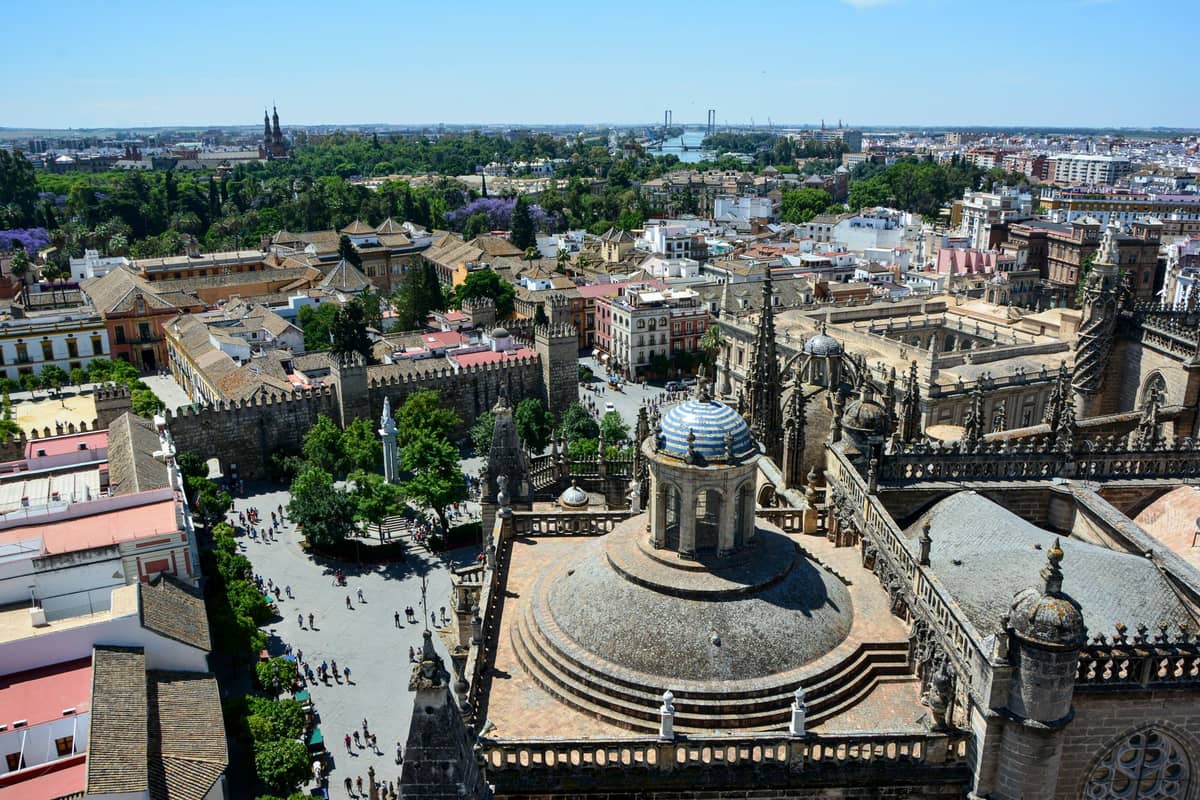
Seville (Spanish: Sevilla) is the capital of Andalusia and one of the great historic cities of southern Spain. Its centre covers a relatively small area — the old city from the Cathedral to the northern walls of La Macarena is roughly 3 km — which means that walking is not just possible but genuinely the best way to understand how the city is structured. Major monuments sit within minutes of each other, neighbourhoods shift character block by block, and the narrow streets of Santa Cruz were not designed for buses.
The terrain helps too. Seville sits at about 7–10 metres above sea level with virtually no hills in the historic core. There are no steep climbs, no confusing gradients — the only genuine physical challenge is the heat between June and September, when midday temperatures regularly exceed 35°C. Plan your walking for mornings before 11:00 or late afternoons after 17:00 during summer months, and you will find the city far more manageable.
⚠️ What to skip
Do not underestimate summer heat. July and August mean averages reach 28–29°C, with daytime highs regularly above 37°C. Wear a hat, carry water, and plan monument visits for the first slot of the morning. The Alcázar's extended summer hours (closing 19:00 April–September) make a late-afternoon visit a genuinely useful option.
Route 1: The Historic Core — Cathedral, Alcázar, and Santa Cruz
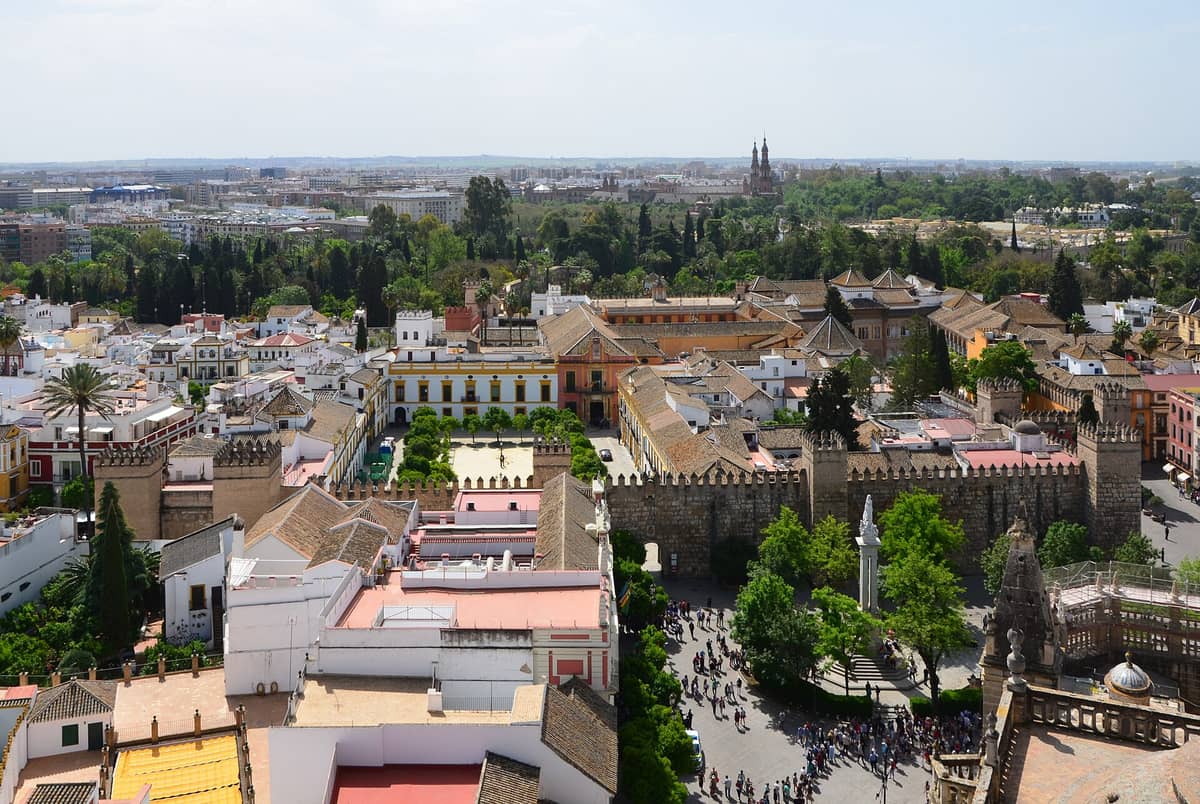
This is the most logical starting point for any self-guided tour of Seville. The Real Alcázar and the Seville Cathedral and Giralda share the same plaza — Plaza del Triunfo — and together represent the densest concentration of world-class architecture in the city. Budget a full morning for both, and follow with an afternoon wander through the Santa Cruz quarter.
- Seville Cathedral + Giralda Cultural visit hours: Monday–Saturday 11:00–18:00 (Giralda access closes 17:00), Sunday 14:30–19:00. General admission: €13 online, €14 at the ticket office. Reduced (over 65, students under 25, disability 33–65%): €7 online / €8 at the door. Children under 13 free with an adult. Audioguide: €5 for a device, €4 via the official app. Note: 'free' Sunday slots exist but require advance online reservation and are limited.
- Real Alcázar de Sevilla Open daily from 09:30. October–March closes 17:00; April–September closes 19:00. Enter via Puerta del León on Plaza del Triunfo; ticket offices in Patio de Banderas. General admission from €15.50, reduced €8, children under 13 free. Book online to avoid queues and save time on entry.
- Santa Cruz neighbourhood Free to walk at any hour. The former Jewish quarter directly east of the Alcázar, characterised by whitewashed courtyards, narrow lanes, and orange trees. Allow 45–60 minutes to wander without a fixed route. Morning light is best for photography.
A practical note on sequencing: the Cathedral opens at 11:00 on weekdays, so start your morning at the Alcázar (opens 09:30) and shift to the Cathedral mid-morning. This avoids the worst of the queue buildup at both sites and gives you cooler temperatures for the Alcázar's outdoor gardens. Do not leave the Giralda tower climb until last — the interior can get congested by noon.
💡 Local tip
Buying tickets online saves €1 per person at the Cathedral and significantly reduces queuing time at the Alcázar. Both official sites offer timed-entry slots. On busy days in spring, Alcázar tickets can sell out 48–72 hours in advance — do not assume you can buy on arrival.
Route 2: Triana and the Riverside
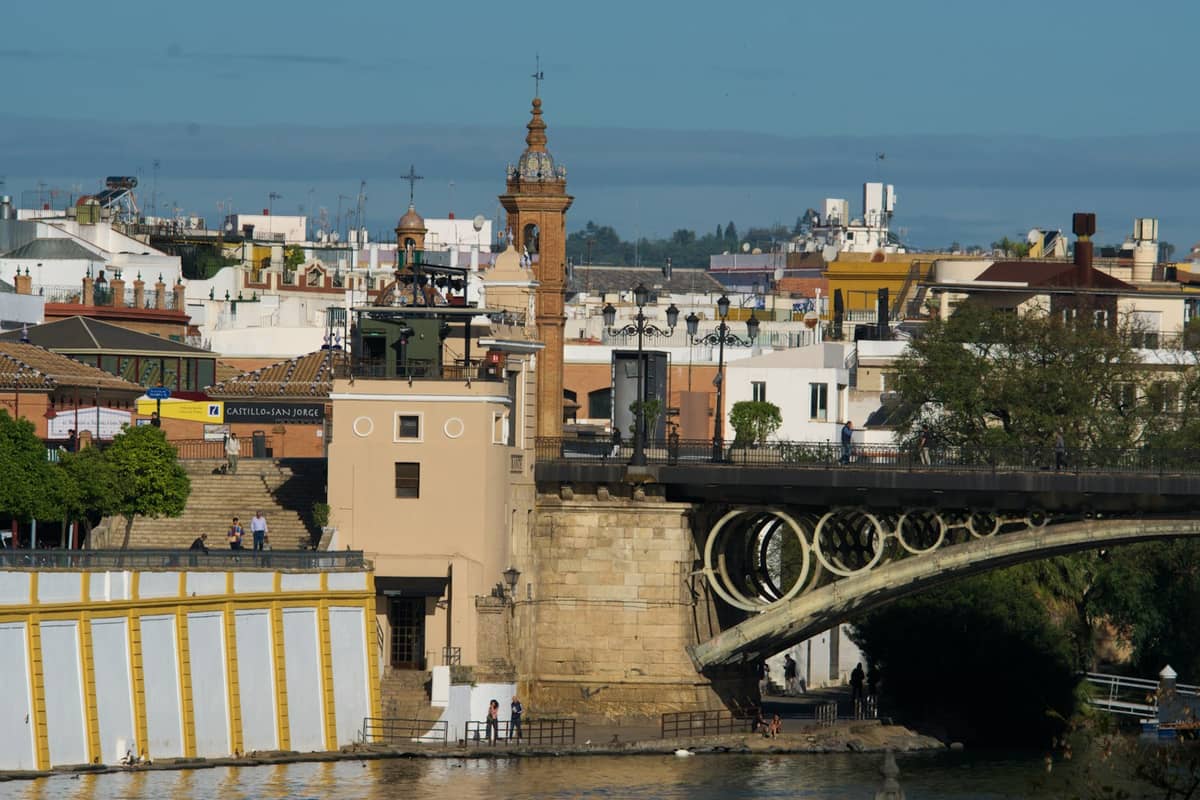
Cross the Puente de Triana (Puente de Isabel II) and the city changes tone immediately. Triana is the barrio across the Guadalquivir historically linked to ceramics production, flamenco, and the river trade — and it remains distinct from the tourist-heavy centre in ways that matter. The streets are wider, the bars are more local, and the Mercado de Triana is a functioning covered market rather than a food-hall concept.
The logical walking loop: cross the bridge, walk south along Calle Betis for river views back toward the Torre del Oro, cut inland through the ceramic tile streets to the market, then visit the Centro Cerámica Triana — a small but genuinely interesting museum built on the site of a former ceramics factory. Return via the riverside promenade. Total distance is around 3–4 km depending on detours, and the route is flat throughout.
✨ Pro tip
The best time to walk Calle Betis is late afternoon, when the light hits the opposite bank and the Torre del Oro is at its most photogenic. Most of the riverfront bars start filling up around 18:00. If you want the view without the crowd, arrive before 17:30.
Route 3: La Macarena, the City Walls, and the Northern Barrios
The northern stretch of the old city is where Seville starts to feel less like a postcard. The La Macarena district is anchored by the Basílica de la Macarena, home to Seville's most venerated Holy Week image and worth visiting even outside of Semana Santa. From there, walking east along the Murallas de Sevilla takes you along the best-preserved stretch of the 12th-century Almohad walls — a 2 km walk that most visitors skip entirely.
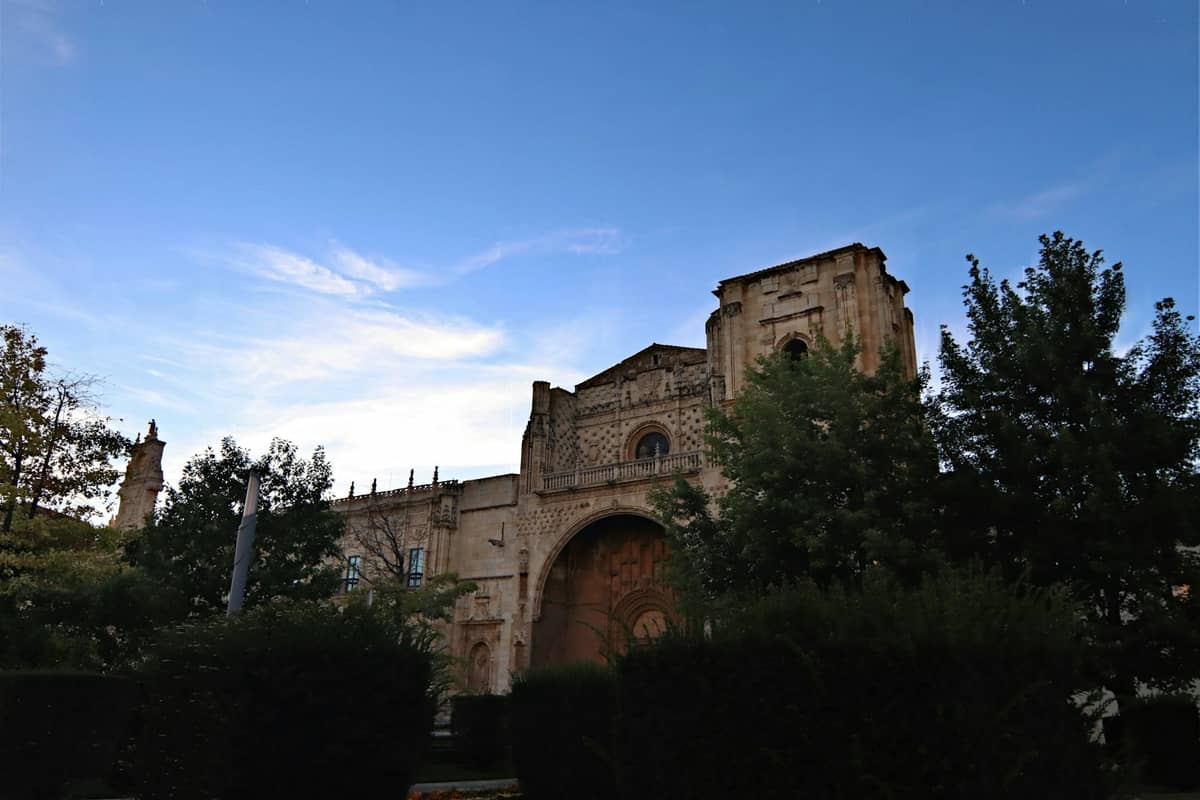
Continue south to Calle Feria and the Thursday street market (El Jueves, one of the oldest markets in Spain), then cut down to the Iglesia de San Luis de los Franceses, one of the most extravagant Baroque church interiors in Andalusia and frequently overlooked by visitors concentrating on the Cathedral. Admission is low and queues are non-existent.
Route 4: Parque de María Luisa and the Plaza de España Quarter
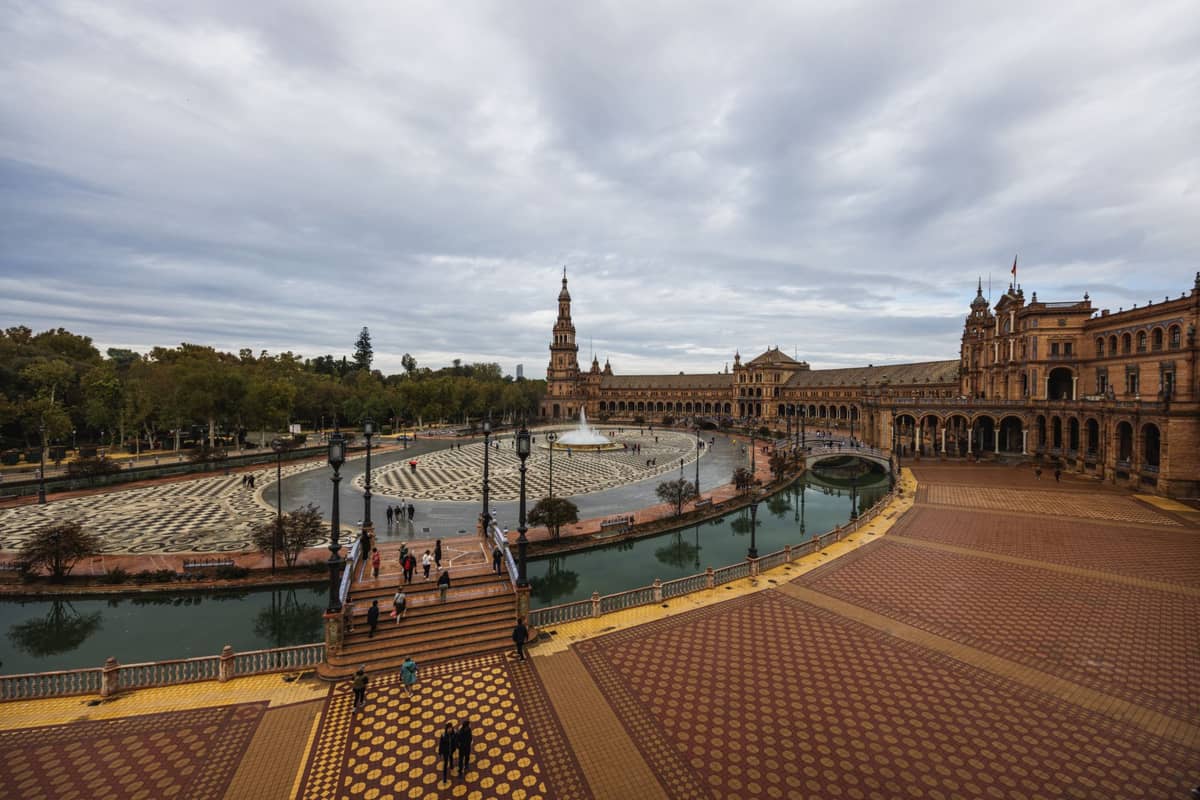
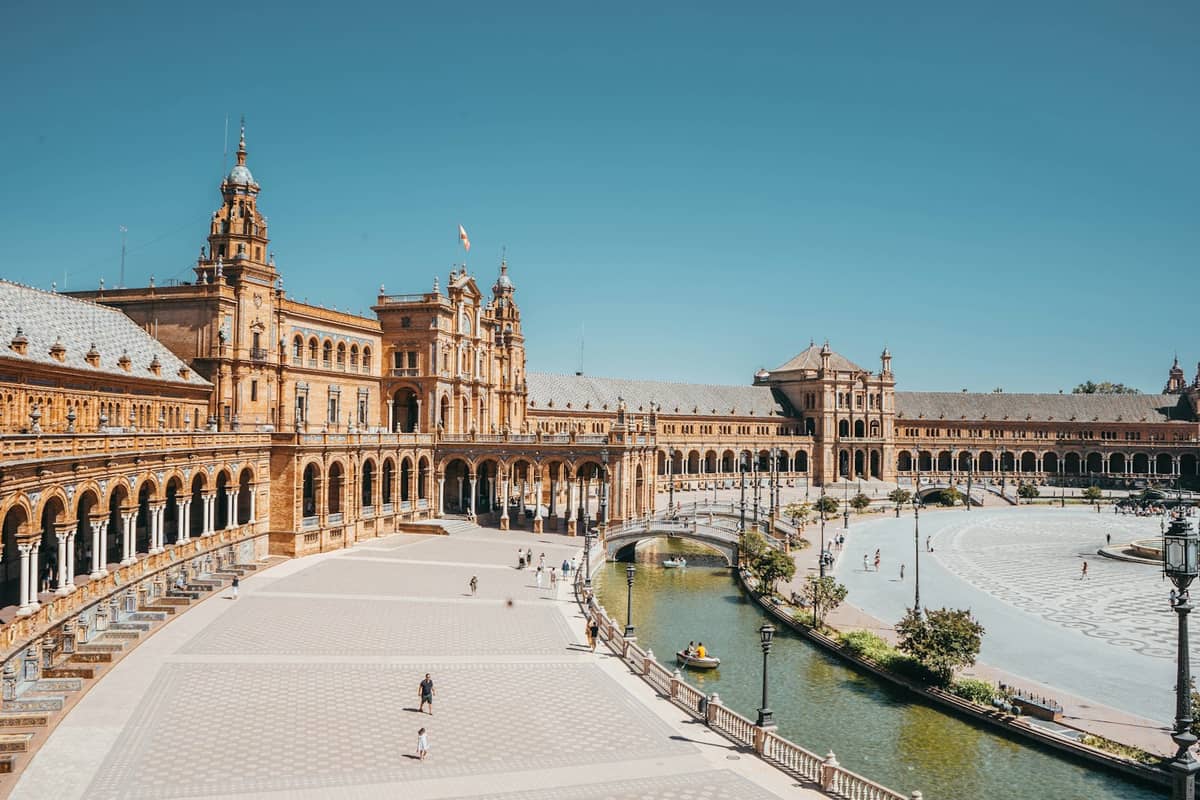
South of the old city, the Parque de María Luisa and the Plaza de España form a self-contained walking circuit that takes around 90 minutes at a relaxed pace. The Plaza de España — built for the 1929 Ibero-American Exposition — is one of the most architecturally ambitious public spaces in Spain, and entry is free. The park itself is shaded by mature trees, making it the most comfortable midday walking option in summer.
This area connects naturally with the Museo de Bellas Artes to the north (housed in a converted convent, with a strong collection of Sevillian Baroque painting) and the Palacio de San Telmo to the west. If you are combining this with the historic core, the walk from the Cathedral to the Plaza de España takes about 15 minutes on foot.
Practical Logistics: What to Know Before You Start Walking
Seville's public transport system — Metro de Sevilla (Line 1), the MetroCentro tram, and TUSSAM urban buses — is useful for reaching outer neighbourhoods, but the four walking routes above require almost no public transport. The historic core, Triana, La Macarena, and the Parque de María Luisa are all reachable on foot from each other within 20–30 minutes. Comfortable walking shoes and sun protection matter more than any transport card for central itineraries.
- Dress code: shorts and light clothing are fine for streets and parks, but covered shoulders are required at some religious sites including the Cathedral. Carry a light layer.
- Water: tap water in Seville is safe to drink. Refill a bottle before heading out rather than buying single-use plastic throughout the day.
- Timing: Spanish lunch runs 14:00–16:00 and many smaller attractions, shops, and even some churches close during this window. Plan monument visits for the morning and use the lunch break strategically.
- Payment: most attractions and cafés accept card, but a small amount of cash is useful for market stalls, smaller bars, and the occasional church entry box.
- Language: Spanish is the working language of Seville. In the historic core, English is widely understood in tourism contexts, but a few words of Spanish go a long way in local neighbourhoods like La Macarena or Triana.
- Emergency number: 112 (police, fire, ambulance). Country calling code: +34.
For a deeper look at how to connect these walking routes into multi-day itineraries, the 3 days in Seville itinerary provides a day-by-day structure. If you are planning around specific events, check dates for Feria de Abril and Semana Santa well in advance — both festivals transform the city's walking dynamics significantly.
ℹ️ Good to know
Seville operates on Central European Time (CET, UTC+1), shifting to CEST (UTC+2) in summer. Monument opening times listed here are from official sources but are subject to change — always verify on the official Alcázar (alcazarsevilla.org) and Cathedral (catedraldesevilla.es) websites before your visit.
FAQ
Do I need to book tickets in advance for self-guided tours of Seville's monuments?
For the Real Alcázar and the Seville Cathedral, advance online booking is strongly recommended, especially from March to October. The Alcázar in particular can sell out 48–72 hours ahead during peak spring weeks. Online tickets also save €1 per person at the Cathedral compared to the ticket office price. The Plaza de España, Parque de María Luisa, and most neighbourhood walking routes are completely free and require no booking.
How long does it take to walk the main sights of Seville on a self-guided tour?
The Real Alcázar requires at least 1.5–2 hours to do justice to the palace rooms and gardens. The Cathedral and Giralda take another 1.5–2 hours including the tower climb. A thorough walk through Santa Cruz adds 45–60 minutes. A dedicated morning (09:30–14:00) covers the core historic route comfortably. Triana and the riverside are best saved for a separate afternoon. The Parque de María Luisa and Plaza de España circuit takes 90 minutes at a relaxed pace.
Is it safe to walk in Seville at night?
The main tourist areas — Santa Cruz, the Cathedral quarter, the riverfront, and the Alameda de Hércules — are busy and well-lit until late. Seville has an active late-night culture and streets remain lively well past midnight in warmer months. Standard city precautions apply: keep bags close in crowded areas and be alert on quieter streets. Pickpocketing, particularly around the Cathedral and on busy tourist routes, is the most common issue.
What is the best season for self-guided walking tours in Seville?
March to May and late September to November offer the most comfortable walking temperatures, typically between 14°C and 25°C. Spring also coincides with Semana Santa and Feria de Abril, which brings crowds but adds atmosphere. July and August are the hardest months for extended walking due to heat exceeding 35°C; if visiting in summer, walk before 11:00 or after 18:00. Winter (December–February) is mild at around 10–16°C and uncrowded, though some attractions have reduced hours.
Are there free self-guided walking routes in Seville?
Yes. Large sections of the city cost nothing to walk: the Santa Cruz neighbourhood, the Murallas de Sevilla, Calle Betis and the Triana riverfront, Parque de María Luisa, and the Plaza de España are all free. Several churches charge small entry fees (typically €2–5) but some can be visited for free during Mass. The Cathedral does have a restricted free-entry Sunday slot, but it requires advance online reservation and is limited in availability.
Tickets & tours
Live prices and dates from our booking partner. If you book, we may earn a commission at no extra cost to you.
Planning a trip? Discover personalized activities with the Nomado app.