Murallas de Sevilla: Walking Seville's Medieval City Walls
The Murallas de Sevilla are among the most complete surviving medieval fortifications in southern Spain. The best-preserved section runs through the La Macarena neighborhood, free to visit at any hour, with towers, gates, and centuries of layered history visible from the street.
Quick Facts
- Location
- La Macarena, Seville — best access near Puerta de la Macarena, Calle Parlamento de Andalucía 336, 41009 Sevilla
- Getting There
- Several TUSSAM bus lines stop near Basílica de la Macarena, adjacent to the walls. No metro stop is directly at the site; the area is walkable from the old city centre.
- Time Needed
- 45–90 minutes for a leisurely walk along the main stretch between Puerta de la Macarena and Puerta de Córdoba
- Cost
- Free — no ticket required, open 24 hours daily
- Best for
- History enthusiasts, photographers, early-morning walkers, and anyone wanting a crowd-free heritage experience
What the Murallas de Sevilla Actually Are
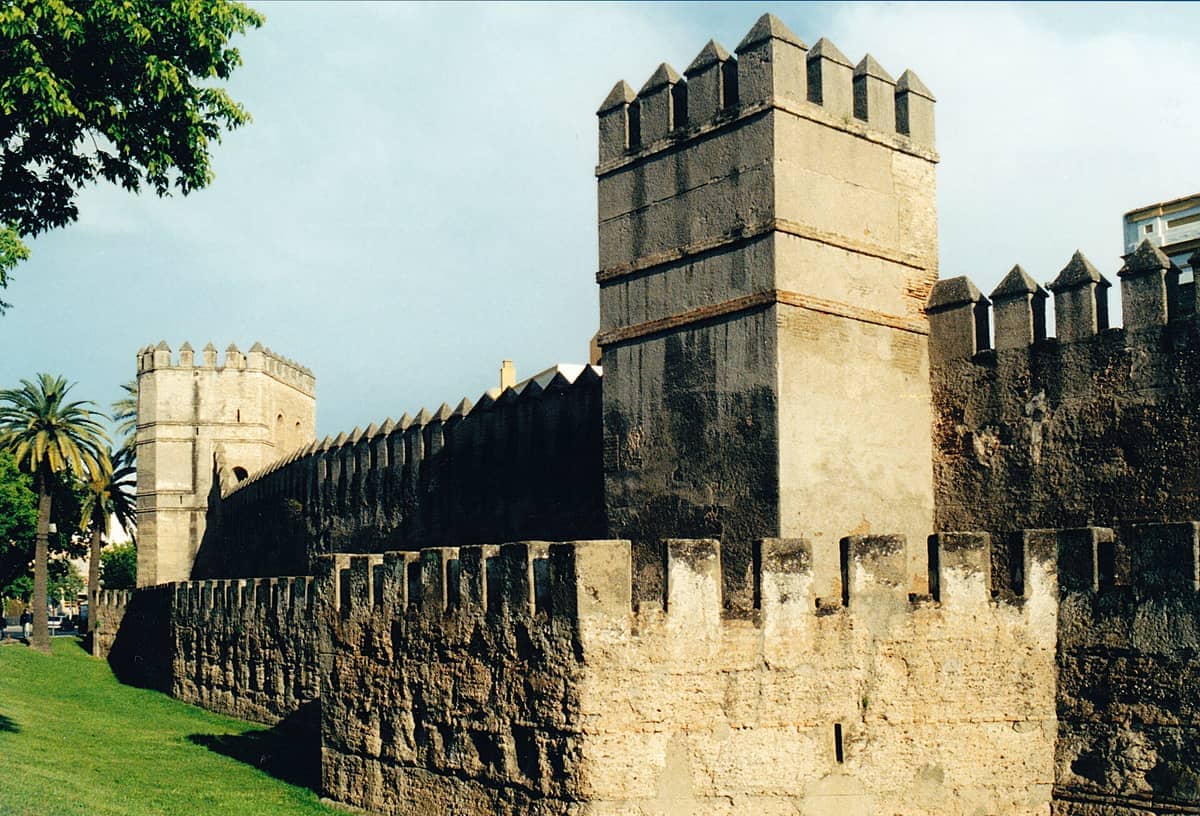
The Murallas de Sevilla are the surviving remains of a defensive wall system that once encircled the entire old city of Seville. At their most complete, historical accounts describe roughly 7 km of walls, 166 towers, and over a dozen gates protecting one of medieval Iberia's most important cities. What stands today is a fraction of that, but it is still impressive. The best-preserved stretch runs for approximately 500 to 600 meters through the La Macarena neighborhood in the northeast of the city, connecting the Puerta de la Macarena — the main surviving gate — to the Puerta de Córdoba further along the wall.
Unlike Seville's ticketed monuments, the walls are not a gated attraction with a visitor centre and gift shop. They are a public heritage site that you simply walk up to. There are no admission fees, no opening hours to track, and no queues. This makes them unusual among Seville's major historic sites, and genuinely accessible in a way that the Alcázar or Cathedral are not.
ℹ️ Good to know
Access to the exterior walls is free and available 24 hours a day. There is no ticket office or controlled entry point. Simply walk to the Macarena neighborhood and the walls are there on the street.
History and Context: From Roman Foundations to Almohad Fortification
The walls as they stand today date primarily from the 12th century, when Seville was a key stronghold of the Almohad dynasty, a Berber Muslim empire that controlled much of the Iberian peninsula and North Africa. The Almohads undertook major construction projects across Seville, including the minaret that would later become the Giralda and, most significantly for this site, a major fortification of the city's defenses. The walls were built using a combination of rammed earth (tapial) and stone, with rectangular towers positioned at regular intervals to allow archers and defenders to cover every angle of approach.
Earlier Roman and Visigothic fortifications almost certainly preceded the Almohad walls on parts of the same alignment, and sections were reinforced or modified after the Christian Reconquista takeover of the city in 1248 under Fernando III of Castile. Over subsequent centuries, as Seville's importance as a trading hub grew — particularly after 1492 and the opening of Atlantic trade routes — the walls became less militarily relevant and were gradually dismantled, built over, or absorbed into later urban fabric. What survived in the Macarena area did so partly because this northern zone developed more slowly than the commercial and religious heart of the old city.
For visitors interested in the broader arc of Islamic architecture in Seville, the walls pair well with other Almohad-era structures. La Giralda is the most iconic survivor of that period, and the Real Alcázar contains layers of construction from the same era and beyond.
Tickets & tours
Live prices and dates from our booking partner. If you book, we may earn a commission at no extra cost to you.
Sevilla FC Ramon Sanchez-Pizjuan Stadium tour
From 10 €Instant confirmationSevilla Alcazar and cathedral guided tour with priority access tickets
From 59 €Instant confirmationFree cancellationSevilla Alcazar guided tour with priority access tickets
From 32 €Instant confirmationFree cancellationSevilla Cathedral guided tour with priority access tickets
From 30 €Instant confirmationFree cancellation
Walking the Walls: What You Will Actually See
The walk along the outer face of the walls begins most naturally at the Puerta de la Macarena, the large horseshoe-arched gate that still stands intact beside the Basílica de la Macarena. The gate is visually striking from the street: its proportions are genuinely monumental, and the warm ochre-tan of the stonework glows in strong morning or late-afternoon light. Immediately adjacent, the wall stretches away in both directions, its surface textured with centuries of repair, patching, and weathering that no restoration has fully smoothed over.
Walking northeast along the wall toward the Puerta de Córdoba, you pass a succession of rectangular towers including Torre Blanca, which rises noticeably above the wall line. The inner face of the wall is lined with a narrow public path, while on the outer side the wall drops to a lower ground level, giving a sense of the original defensive advantage. In several places you can see the different building phases clearly: darker, rougher stone at the base, lighter repairs higher up, patches of exposed rammed earth between stone facings.
The Puerta de Córdoba at the far end of the main stretch is less visually dramatic than the Macarena gate but historically significant. By the time you reach it, you have walked one of the most complete surviving sections of medieval urban fortification in Andalusia. The walk is mostly flat and at street level, though the path immediately beside the walls can have uneven paving in places.
💡 Local tip
Walk on the outer side of the walls (away from the city) for the best sense of their scale and height. From the inner side, the wall blends more into the surrounding street level.
How the Experience Changes by Time of Day
Early morning is the most rewarding time to visit. Before 9am, the area around the Macarena gate is quiet: a few locals walking dogs or heading to work, the bells of the adjacent basilica occasionally audible, and the light coming in at a low angle that picks out every texture and shadow in the stonework. In spring and autumn, this light can be extraordinary. In summer, this is also the only practical time to walk the walls before the heat becomes oppressive.
By late morning, tour groups begin arriving at the Basílica de la Macarena, and the piazza in front of the gate becomes considerably busier. The walls themselves never get truly crowded — most visitors photograph the gate and move on rather than walking the full stretch — but the atmosphere at midday is noticeably less contemplative. Late afternoon, roughly from 5pm onward, brings warm directional light again and a second quieter window before the evening paseo brings local foot traffic through the area.
At night, the Puerta de la Macarena is illuminated and genuinely beautiful, with the arch lit against a dark sky. However, the path along the outer wall is not well lit away from the gate, and walking the full stretch after dark is less practical.
The La Macarena Neighborhood Around the Walls
The walls sit in the heart of the La Macarena neighborhood, one of the most distinctly local parts of Seville's historic centre. Unlike the heavily touristic Santa Cruz area to the south, Macarena retains a strong residential character. The streets immediately behind the walls are filled with ordinary Sevillian daily life: neighbourhood bars serving breakfast torrijas or bocadillos, small shops, and schools. This context matters for how you experience the walls — they are not isolated in a heritage park but embedded in a living city.
The Basílica de la Macarena, immediately adjacent to the gate, houses the venerated image of the Virgen de la Esperanza Macarena. During Semana Santa, the procession of La Macarena from this basilica is one of the most emotionally charged events in the city's calendar. The walls form the physical backdrop to that procession route, making them inseparable from the devotional life of the neighborhood.
A short walk north along Calle Feria from the walls brings you to one of Seville's most interesting street markets. The Calle Feria Thursday market (El Jueves) is one of the oldest street markets in Spain and worth combining with a morning visit to the walls.
Practical Information for Visiting
Getting to the Puerta de la Macarena is straightforward from central Seville on foot or by bus. The address most commonly used as a reference point is Calle Parlamento de Andalucía 336, 41009 Sevilla. Several TUSSAM city bus routes serve the area, with stops near the Basílica de la Macarena. From the historic centre (Plaza Nueva or the Cathedral area), the walk takes about 20 to 25 minutes through the old city streets.
Footwear matters more than most people expect at this site. The path along the outer wall includes sections of uneven historic paving, and the ground can be slippery in wet weather, which is most likely between October and April. Comfortable walking shoes or trainers are more practical than sandals.
Photography: the walls are best photographed in morning or late-afternoon light. The ochre and honey tones of the stone respond dramatically to low-angle light. A wide-angle lens or smartphone in landscape orientation works well for capturing the full height and length of the wall. The illuminated gate at night is a strong subject for tripod photography.
⚠️ What to skip
In July and August, daytime temperatures in Seville regularly exceed 35°C. The walls offer almost no shade, so visiting after 10am in summer without water and sun protection is genuinely uncomfortable. Early morning or evening are the only reasonable options in peak summer.
Accessibility: the street-level path along the outer face of the walls is largely flat and step-free, making it generally accessible for wheelchair users, though uneven paving near the towers requires some care. There are no stairs required to view the best sections of the walls or the Macarena gate.
Is This Worth Your Time? An Honest Assessment
For visitors with deep interest in medieval history, Islamic architecture, or urban fortification, the Murallas de Sevilla are genuinely one of the best free heritage experiences in the city. The scale and condition of the surviving stretch are impressive, and the lack of crowds or ticket barriers means you can take your time and look closely at the construction details without being moved along.
For visitors who are primarily interested in grand interiors, museum collections, or iconic skyline views, the walls may feel like an outdoor walk past old stonework — perfectly pleasant but not essential. They do not compare, in terms of spectacle, to the Alcázar's interior courtyards or the Cathedral's nave. What they offer is different: texture, age, and a rare sense of genuine unmediated contact with a medieval city.
If you are planning a broader exploration of Seville's architectural heritage, the walls fit naturally into a Macarena half-day that also takes in the Basílica de la Macarena, the Iglesia de San Luis de los Franceses, and the neighborhood's street life. For a broader look at how these sites connect, the things to do in Seville guide covers the full range of the city's historic attractions.
Insider Tips
- The outer (northern) face of the wall, away from the city, gives you the best sense of the structure's height and defensive logic. Most casual visitors only see the inner face from the street and miss the full scale of what they are looking at.
- The Thursday El Jueves flea market on Calle Feria is a 10-minute walk from the walls and is one of the oldest street markets in Spain. Combining the two makes for a full and genuinely local Macarena morning.
- If you visit during Semana Santa, arrive at the Puerta de la Macarena in the very early hours of Good Friday to witness the Virgen de la Macarena procession returning to the basilica at dawn. The walls form the backdrop to one of the most extraordinary scenes in the Spanish calendar.
- Torre Blanca, midway along the wall toward Puerta de Córdoba, is the most photogenic of the surviving towers. It rises higher than the adjacent wall sections and shows the distinct Almohad construction style most clearly.
- The walls are at their most photogenic in the 30 to 45 minutes after sunrise and in the hour before sunset, when the low-angle light turns the stonework from beige to deep amber. At midday, the flat overhead light flattens the texture entirely.
Who Is Murallas de Sevilla (City Walls) For?
- Medieval history enthusiasts who want to understand how Almohad Seville was built and defended
- Photographers seeking dramatic architectural subjects in natural light without crowds
- Early-morning walkers who want a peaceful heritage experience before the city fully wakes up
- Budget travelers looking for substantive historic content that costs nothing
- Visitors combining a Macarena neighborhood walk with the Basílica and local street life
Nearby Attractions
Other things to see while in La Macarena:
- Alameda de Hércules
Dating to 1574, the Alameda de Hércules is a long tree-lined promenade in Seville's historic centre, anchored by two ancient Roman columns topped with statues of Hercules and Julius Caesar. Free to enter as a public square, it functions as a family park by day and a lively social hub by night.
- Basílica de la Macarena
The Basílica de la Macarena is Seville's most emotionally charged religious site, home to the beloved image of Nuestra Señora de la Esperanza Macarena. Entry to the basilica is free, the attached museum costs €5, and the experience is unlike anything else in Andalusia's religious calendar.
- Calle Feria & El Jueves Market
Every Thursday morning, Calle Feria in the La Macarena district transforms into one of Seville's oldest and most atmospheric street markets. Known locally as El Jueves, it's a free, open-air bazaar of antiques, second-hand curiosities, and neighbourhood life that draws both locals and curious visitors.
- Convento de Santa Paula
One of Seville's most atmospheric religious sites, the Convento de Santa Paula is a Hieronymite convent founded in the late 15th century that still houses an active community of nuns. Its small museum preserves an unexpectedly rich collection of religious art, tucked inside a quarter of La Macarena that rewards slow exploration.
Planning a trip? Discover personalized activities with the Nomado app.