Casa de la Ciencia Seville: The Science Museum Worth Adding to Your Itinerary
Housed in the Peru Pavilion from the 1929 Ibero-American Exposition, Casa de la Ciencia is Seville's public science museum run by Spain's National Research Council (CSIC). With a planetarium, interactive exhibits, and tickets starting at €3, it stands by Parque de María Luisa and works especially well as a family stop or a cultural detour when the afternoon heat peaks.
Quick Facts
- Location
- Avenida de María Luisa s/n, Pabellón de Perú, 41013 Seville (next to Parque María Luisa)
- Getting There
- Urban TUSSAM buses serving Avenida de María Luisa; walkable from the Plaza de España area
- Time Needed
- 1.5 to 2.5 hours (add 30–45 min for a planetarium session)
- Cost
- Museum €3 / Planetarium €3 / Combined €5. Discounts for students, over-64s, groups. Free for under-3s.
- Best for
- Families with children, science enthusiasts, visitors seeking shade on hot afternoons
- Official website
- www.casadelaciencia.csic.es
What Is Casa de la Ciencia?
Casa de la Ciencia is Seville's public science museum, operated by the CSIC (Consejo Superior de Investigaciones Científicas), Spain's national research council. It occupies the Peru Pavilion on Avenida de María Luisa, a short walk from the iconic Plaza de España and inside the green envelope of Parque de María Luisa. The combination of a historically significant building, serious scientific content, and very affordable admission makes it one of the more straightforward value propositions in the city.
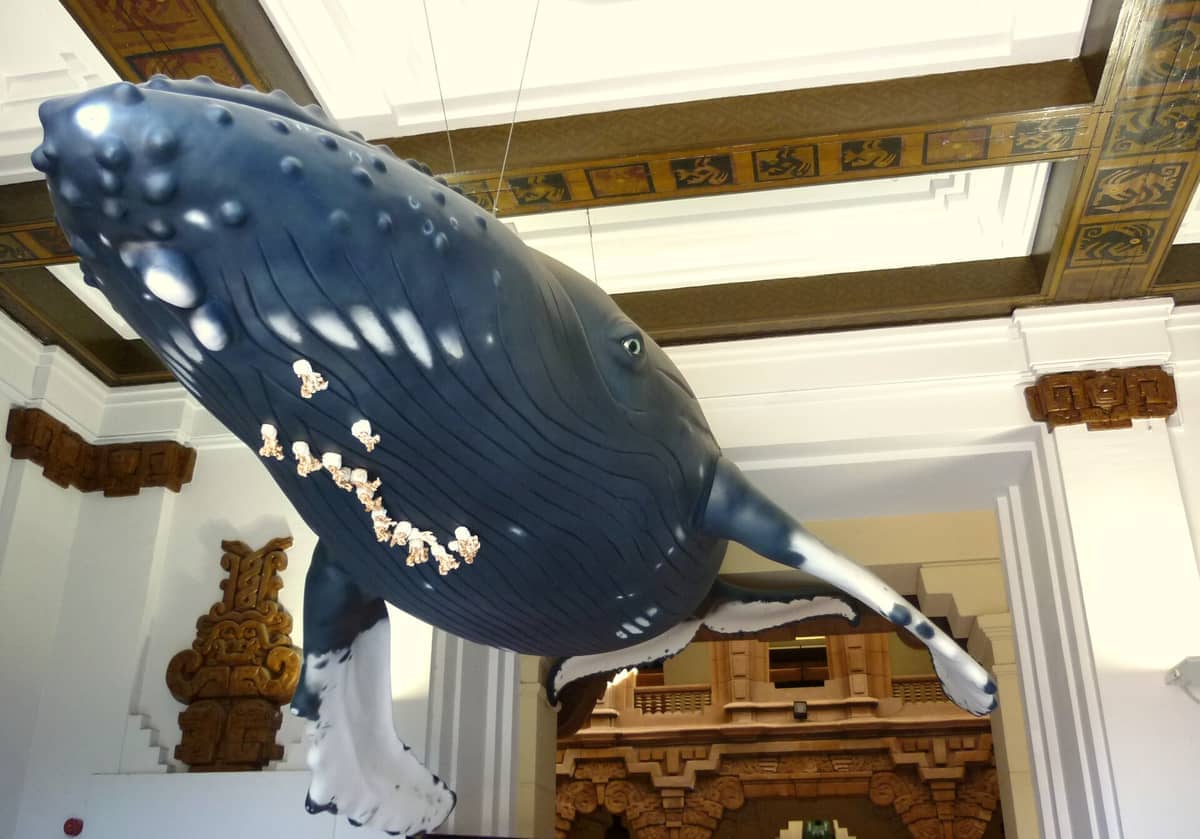
The museum's mandate is public scientific and environmental literacy, which means the exhibits lean practical and interactive rather than purely display-based. You'll find sections on biodiversity, geology, astronomy, and the natural environments of Andalusia, alongside the headline feature: a full planetarium with scheduled projection sessions. It is not a vast institution — a focused visitor can see the permanent collection comfortably in 90 minutes — but the depth of individual exhibits rewards curiosity rather than rushing.
💡 Local tip
Planetarium sessions run on a fixed schedule and capacity is limited. Check the session times on the official website before you arrive, especially on weekends or during school holidays when spots fill quickly.
The Building: A 1929 Exposition Pavilion
The Peru Pavilion was built for the Ibero-American Exposition of 1929, a landmark international exhibition that transformed this part of Seville and produced several of the city's most recognized architectural set pieces, including the Plaza de España. The pavilion itself is a well-preserved example of the Neo-Mudejar and regionalist revival styles common to the exposition's national pavilions: ceramic tilework, arcaded façades, and the kind of ornamental brickwork that announces its Andalusian context clearly.
Arriving from the park side, you approach through trees along Avenida de María Luisa. In the morning, light filters through the canopy at an angle that makes the tilework on the facade glow distinctly. By midday the building sits fully in the sun, and the contrast between cool white plaster and the cobalt blue of the azulejos is at its sharpest. Even visitors with no particular interest in science will want to pause outside for a few minutes. The courtyard entrance is calm, typically free of queues except on weekends.
The pavilion sits in the broader Parque María Luisa district, which concentrates several of the city's significant 1929 Exposition buildings within walking distance. A visit here pairs naturally with the archaeological collections at the nearby Plaza de América.
Tickets & tours
Live prices and dates from our booking partner. If you book, we may earn a commission at no extra cost to you.
Sevilla Alcazar guided tour with priority access tickets
From 32 €Instant confirmationFree cancellationSevilla Cathedral guided tour with priority access tickets
From 30 €Instant confirmationFree cancellationGranada and the Alhambra day trip from Seville
From 149 €Instant confirmationFree cancellationSeville kayaking tour on the Guadalquivir river
From 35 €Instant confirmationFree cancellation
Inside the Museum: What You Actually See
The permanent exhibition spaces cover several interconnected themes. The natural history sections focus on Andalusia's ecosystems, with particular attention to geology and local biodiversity. Display cases hold mineral samples with a satisfying weight of information beside them: not just identification labels, but explanations of formation conditions and regional distribution. The lighting inside is warm and steady throughout most of the museum, which makes it a comfortable environment even for visitors who find large, high-ceilinged institutions tiring.
Interactive elements are scattered throughout rather than concentrated in a single zone. Some are hands-on mechanical exhibits; others are screen-based. The exhibits are primarily in Spanish, with some supplementary English text in selected areas. Visitors without Spanish will still extract considerable value from the visual and tactile elements, but it is worth noting this limitation before bringing non-Spanish-speaking children who need text to stay engaged.
The planetarium is housed in a dedicated dome space and runs projection sessions on a fixed daily schedule. Sessions typically last around 30 to 45 minutes and cover astronomical themes aimed at a general audience rather than specialists. The seats recline and the dome fills almost your entire field of vision, which makes even a modest programme feel immersive. The air conditioning in the planetarium is reliable, which makes an afternoon session during Seville's summer heat a particularly attractive option.
ℹ️ Good to know
The combined museum and planetarium ticket costs €5. If you only want the planetarium, a single ticket is €3 — the same price as museum-only entry. The combined ticket is almost always the better choice unless your time is very limited.
Best Time to Visit and How the Experience Changes
Tuesday to Friday mornings are the quietest periods. School groups arrive in numbers on weekday mornings during term time, so arriving before 10:30 or after 12:30 helps avoid the heaviest corridor traffic near the interactive exhibits. Weekend afternoons can feel more crowded but rarely to an uncomfortable degree — this is a mid-sized museum, not a major blockbuster venue.
Seasonally, the museum makes particular sense during Seville's summer months (June through August), when afternoon temperatures routinely exceed 35°C outdoors. The building is air-conditioned throughout and provides a genuinely comfortable two-hour retreat from the heat. In spring and autumn, when outdoor sightseeing is more pleasant, the museum works better as a morning activity followed by a walk through the adjacent park. In winter, the museum has no weather-specific advantage, but remains one of the more affordable indoor options in the city.
Note that the museum is closed on Mondays (except public holidays), and has reduced hours on 24 and 31 December and 5 January, with full closure on 25 December, 1 January, and 6 January. If you are planning a visit around the winter holiday period, consult the official site beforehand. For the broader question of timing your Seville trip around climate and crowds, see the guide on the best time to visit Seville.
Getting There: Practical Logistics
The museum is at Avenida de María Luisa s/n, inside the Peru Pavilion. From the city centre (around the Cathedral or Plaza Nueva), it is roughly a 20 to 25 minute walk south, passing through Puerta de Jerez and along the Paseo de las Delicias. The walk is flat and straightforward, following a clearly signposted route past the river.
Multiple TUSSAM urban bus lines serve Avenida de María Luisa and the Parque de María Luisa area. The closest stop depends on which line you take; confirm current routes using the TUSSAM official app or website as schedules adjust seasonally. There is no direct metro stop — Metro de Sevilla Line 1 does not extend to this part of the city — so the bus or walking are the practical options.
Cycling is a reasonable alternative for visitors already using Seville's bike-share network. The Parque de María Luisa has dedicated paths, and bike parking is available near the park entrances. The neighborhood around the museum has minimal traffic on most days, making arrival by bike straightforward.
💡 Local tip
If you have a ticket from the Acuario de Sevilla or the Pabellón de la Navegación, bring it — it qualifies you for the discounted admission rate of approximately €2 at Casa de la Ciencia.
Accessibility and Visitor Comfort
The museum is fully wheelchair accessible, with ramp and lift access to all visitor areas including the entrance. An accessible toilet is available inside. Assistance dogs are permitted subject to documentation requirements under Andalusian and Spanish regulations; if this applies to your visit, contact the museum in advance to confirm current requirements.
The layout is compact enough that it does not require extended walking between areas. Families with pushchairs will find the floor plan manageable. There is no dedicated café inside the museum, but the park immediately outside has shaded benches and food kiosks depending on the season, making it easy to combine the visit with time outdoors.
Who This Works For, and Who Might Skip It
Casa de la Ciencia fits cleanly into a Seville itinerary for families with children, science-curious adults, and visitors who want to understand Andalusia's natural environment in more depth than a walk through the park offers. It also suits travelers on a tight budget: at €5 for the combined ticket, it is one of the least expensive ticketed indoor experiences in the city. For a broader picture of low-cost options, see free and affordable things to do in Seville.
Visitors primarily interested in Seville's art history, religious architecture, or Moorish heritage may find the museum less central to what they came for — and with only a day or two in the city, those travelers might reasonably prioritize other sites. The museum is also best avoided as a first-stop choice for adults without children who find interactive science exhibits aimed at a broad public audience less engaging. It is a solid museum, but it does not aim for the international prestige of a major natural history collection.
If your main reason for being in the neighborhood is the park itself, the museum works well as a complementary stop rather than a primary destination. The surrounding area rewards extended exploration: Plaza de América is a few minutes' walk away, and the entire parkland that grew out of the 1929 Exposition grounds is worth at least a half-day in good weather.
Insider Tips
- The discounted admission rate (approximately €2) applies to visitors who already have a ticket from the Acuario de Sevilla or the Pabellón de la Navegación. If you are combining several science-themed attractions, visit those first and keep your ticket.
- Planetarium sessions have fixed start times and limited capacity. Weekends and public school holidays fill up the early sessions fast. If you arrive without checking the schedule, you may wait an hour for the next available session.
- The museum is closed on Mondays. This is easy to overlook if you are planning a full day in the Parque de María Luisa area — confirm your visiting day before making the trip.
- The Peru Pavilion's exterior is worth photographing from the park-side approach in the early morning, when the light is softer and the building is less likely to be crowded with other visitors. The azulejo tilework on the facade is particularly detailed around the ground-floor arches.
- Children under 3 enter free with an accompanying adult. Unemployed visitors also receive free admission — you will need to show appropriate documentation at the ticket desk.
Who Is Casa de la Ciencia (Science Museum) For?
- Families with children looking for an interactive, air-conditioned indoor activity
- Budget travelers: the combined museum and planetarium ticket is €5
- Visitors curious about Andalusia's geology, biodiversity, and natural history
- Architecture enthusiasts interested in the 1929 Ibero-American Exposition pavilions
- Travelers needing a practical midday retreat from summer heat
Nearby Attractions
Other things to see while in Parque de María Luisa & Plaza de España:
- Acuario de Sevilla (Seville Aquarium)
Housed in the historic port of Seville, the Acuario de Sevilla takes visitors on a journey through 33 tanks organized around the Magellan-Elcano circumnavigation route. It is one of Andalusia's more thoughtfully designed family attractions, with full wheelchair and stroller access and a setting right on the Guadalquivir waterfront.
- Palacio de San Telmo
The Palacio de San Telmo is one of Seville's most ornate Baroque monuments, built in the 17th century and today serving as the seat of the Junta de Andalucía. Free guided tours are available by prior reservation, offering rare access to a working government palace that most visitors only admire from the street.
- Parque de María Luisa
Donated to the city in 1893 and redesigned for the 1929 Ibero-American Exposition, Parque de María Luisa is Seville's most significant public garden. Spanning 34 hectares of shaded paths, ornamental ponds, and tiled pavilions, it anchors the southern edge of Seville’s historic centre. Admission is free.
- Plaza de América
Plaza de América sits at the southern heart of Parque de María Luisa, framed by three landmark pavilions designed by Aníbal González for the 1929 Ibero-American Exposition. Entry to the square is free, peacocks wander the central gardens, and two of the pavilions now house museums with surprisingly low admission fees.
Planning a trip? Discover personalized activities with the Nomado app.