Acuario de Sevilla: The Riverfront Aquarium That Follows Magellan's Wake
Housed in the historic port of Seville, the Acuario de Sevilla takes visitors on a journey through 33 tanks organized around the Magellan-Elcano circumnavigation route. It is one of Andalusia's more thoughtfully designed family attractions, with full wheelchair and stroller access and a setting right on the Guadalquivir waterfront.
Quick Facts
- Location
- Muelle de las Delicias, s/n, 41012 Sevilla — southern end of the Port of Seville, Parque María Luisa district
- Getting There
- Puerta de Jerez metro station (15-min walk); TUSSAM buses 3 and 6 stop at La Palmera
- Time Needed
- 1.5 to 2.5 hours for most visitors; families with young children may take longer
- Cost
- Adults €18, children (4–14) €13, seniors (65+) €15, under 4 free. Discount Thursdays from 15:00 (non-holiday): adults €12, children €8. Family pack (2 adults + 2 children, online only) €46
- Best for
- Families with children, visitors seeking indoor relief from Seville's summer heat, anyone interested in ocean ecosystems or maritime history
- Official website
- www.acuariosevilla.es
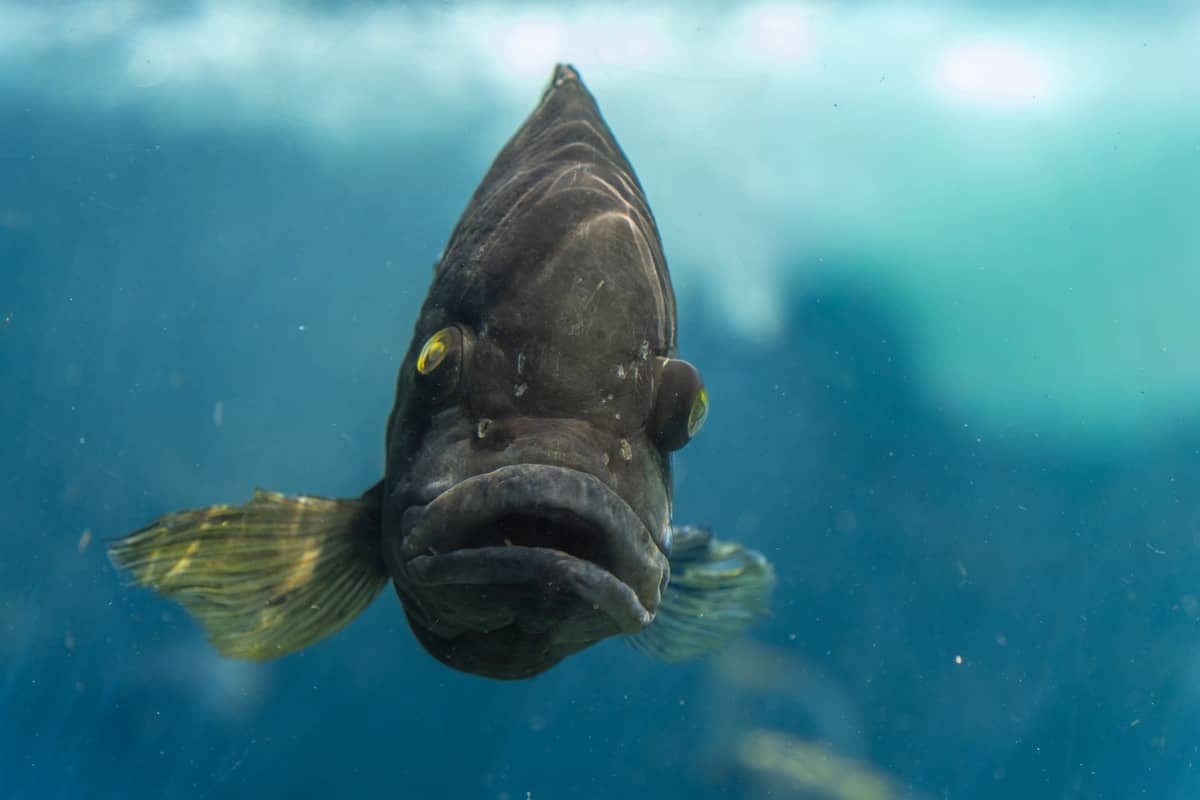
What the Acuario de Sevilla Actually Is
The Acuario de Sevilla opened on the southern stretch of the Muelle de las Delicias, a working port quay on the east bank of the Guadalquivir. The building sits low against the riverfront, and from the outside it reads more like a converted industrial structure than a purpose-built attraction. Inside, the aquarium organizes its tanks around a single conceptual spine: the Magellan-Elcano expedition of 1519 to 1522, the first recorded circumnavigation of the globe. That voyage sailed from Seville down this stretch of the Guadalquivir before heading out to the Atlantic from Sanlúcar de Barrameda, which gives the theme real local weight rather than feeling like a marketing afterthought.
The route through the aquarium traces the expedition geographically, moving from the Atlantic coast of Spain through South America, across the Pacific, into the Indian Ocean, and back. Each zone uses different tank sizes, lighting temperatures, and species to evoke a distinct marine environment. The progression from cold Atlantic waters to the warmer, more colorful Indo-Pacific section is one of the more effective design choices: you actually feel the shift in mood as well as temperature.
ℹ️ Good to know
Ticket office and access to the route close one hour before the aquarium closes. During the standard season (September–June), the aquarium closes at 18:00 on weekdays and 19:00 on weekends. In July and August, closing is at 19:00 on weekdays and 20:00 on weekends. Special reduced hours apply on 24 and 31 December, 5 January (closing at 16:00), and 25 December, 1 and 6 January (opening at 12:00, closing at 18:00).
Moving Through the Tanks: What You Will See
The route begins in the Atlantic zone, where larger tanks hold species familiar to Spanish and Portuguese waters: rays gliding along sandy floors, schools of fish moving in slow unison, and several shark species in the larger tank that anchors the first hall. The lighting here is cooler and slightly dimmer, giving it a more subdued, oceanic feel. Children tend to slow down at the ray tank, which has a low viewing angle that puts the animals almost at eye level.
As the route continues into the South American and Pacific sections, the tanks become more varied in scale. Some are floor-to-ceiling columns of water packed with reef fish; others are shallow and wide, designed to show benthic species resting on substrates. The jellyfish display, typically encountered mid-route, is one of the quieter moments in the visit: backlit tanks with slow-moving medusas draw even restless toddlers into a brief stillness.
The Indo-Pacific zone near the end of the route is the most visually dense, with coral reef recreations and a broader color palette. This is where most visitors spend the most time and where photography tends to happen. Natural light does not reach these interior zones, so the aquarium relies entirely on tank illumination; bring a phone or camera that handles low light reasonably well, or use portrait mode to minimize blur.
The aquarium also includes a freshwater section covering Amazonian river ecosystems, which is easy to rush through but rewards a closer look. Piranhas, arapaima, and several species of catfish occupy these tanks. If you are visiting with children, this is also worth contextualizing alongside the Parque de María Luisa nearby, where the natural history and geography of the region come together in a different format.
Tickets & tours
Live prices and dates from our booking partner. If you book, we may earn a commission at no extra cost to you.
When to Go: Time of Day and Crowd Patterns
The aquarium draws a consistent flow of families on weekends throughout the year. On Saturday and Sunday mornings between 11:00 and 13:00, the entrance area and the first two tank zones can become crowded enough to slow the pace noticeably, particularly around the shark tank where people tend to cluster. If you are visiting on a weekend, arriving right at opening (10:00) gives you a clear 30 to 45 minutes before groups begin to thicken.
Weekday visits are considerably calmer. School groups arrive in morning slots, typically between 10:00 and 12:00, so a weekday visit starting around 13:00 to 14:00 often means navigating a largely empty aquarium. The Thursday afternoon discount (the "Día del esPEZtador") on non-holiday Thursdays from 15:00 onward is a practical option for solo visitors or adults traveling without children: adult tickets drop to €12 and child tickets to €8, and the post-lunch timing tends to be quiet.
💡 Local tip
In July and August, when Seville regularly records daytime highs above 35°C, the Acuario de Sevilla becomes a useful mid-afternoon refuge. The interior is fully air-conditioned. A visit between 14:00 and 16:00 on a summer weekday typically means thin crowds and genuine relief from the heat outside.
Getting There and Practical Logistics
The aquarium sits at the southern end of Muelle de las Delicias, a 10 to 15-minute walk south from Puerta de Jerez, which is served by Seville's metro. TUSSAM buses 3, 6, and 34 stop at La Palmera, from which the aquarium is a short walk toward the river. By bicycle, the riverside cycle path runs directly past the building and connects conveniently to the rest of the city's bike infrastructure. There is no dedicated parking lot at the aquarium itself, though street parking is available in the surrounding area with varying restrictions.
The Muelle de las Delicias location places the aquarium within easy walking distance of the Torre del Oro and the southern edge of Parque de María Luisa. Combining the aquarium with a walk along the riverfront and a visit to the park makes for a full half-day itinerary that stays within a compact geographic area.
The entire visitor route is designed for full accessibility. The path uses ramps and elevators throughout, with no steps between zones. Manual wheelchairs are available for loan at the ticket office on request. The route is also fully navigable with strollers, which is a genuine practical advantage over many of Seville's historic buildings where access is restricted by age and architecture.
The Magellan Connection: Why It Matters Here
The Magellan-Elcano circumnavigation departed for the Atlantic from Sanlúcar de Barrameda in 1519 after sailing down the Guadalquivir from Seville, but its organizational hub and the port from which the fleet was provisioned and assembled was Seville. The Casa de Contratación, which managed Spain's trade with the Americas, was based here. The Guadalquivir was the commercial artery linking Seville to the Atlantic world. Placing an aquarium themed around that voyage on the Muelle de las Delicias is not arbitrary; the quay has a direct historical connection to the era of exploration the aquarium references.
Visitors with a particular interest in this maritime history will find the thematic framing adds depth to the experience. The Archivo General de Indias, a UNESCO World Heritage Site just north of the cathedral that houses the original documents of Spain's colonial trade, offers a complementary perspective on the same historical period. The two attractions pair well for anyone spending more than a day exploring Seville's relationship with the Age of Discovery.
An Honest Assessment: Who This Suits and Who It Does Not
The Acuario de Sevilla is a well-executed mid-sized aquarium. It is not among Europe's largest or most technically ambitious: the tank volumes are modest compared to major facilities in Lisbon, Genoa, or Barcelona. Serious marine biology enthusiasts or adults who have visited larger European aquariums may find the range of species underwhelming. At €18 for adults, the price reflects the quality of the experience accurately, but it is worth calibrating expectations accordingly.
For families with children roughly between three and twelve years old, it consistently delivers: the route is well-paced, the tanks are at child-accessible heights throughout, the air conditioning is reliable in summer, and the on-site café provides a natural break point. For visitors on a tight schedule with only one or two days in Seville, the aquarium would not typically rank ahead of the Real Alcázar, the Cathedral, or the Parque de María Luisa. But for those with extra time, or traveling with young children who need variety in the itinerary, it earns its place.
If you are building a broader itinerary, the Seville with kids guide covers how to sequence family-friendly attractions across the city, including the aquarium alongside other options in the same southern district.
Photography and What to Bring
The aquarium's interior is entirely artificially lit. Smartphone cameras with night mode or portrait mode handle the low-light conditions reasonably well, but flash is both ineffective through glass and disorienting for the animals. Compact cameras with fast lenses perform better than DSLRs with slow zoom lenses in these conditions. The jellyfish and the coral reef zones are the most photogenic; the South American river section tends to have murkier water and lower contrast in images.
There are no bag size restrictions noted at entry, so bringing a small backpack with water and snacks for children is practical, particularly since the on-site café tends to be priced at tourist-attraction rates. The visit does not require special clothing or footwear.
Insider Tips
- The Thursday afternoon discount ("Día del esPEZtador") applies to all non-holiday Thursdays from 15:00: adult tickets drop from €18 to €12 and child tickets from €13 to €8. This is the best value entry point for adults visiting without a family group.
- The aquarium's riverside position means the walk from Puerta de Jerez along the Paseo de Cristóbal Colón is itself a worthwhile 15 minutes. You pass the Torre del Oro and the Real Maestranza bullring before reaching the port area.
- If you are visiting in summer with children, the 14:00 to 16:00 window combines three advantages: peak heat means the air-conditioned interior is genuinely welcome, school groups have departed, and the extended summer hours mean you are not rushed before closing.
- The family pack (2 adults + 2 children, €46) is only available online and cannot be purchased at the ticket window. Book in advance if your group fits this configuration and you will save compared to individual tickets.
- The ticket office closes one hour before the aquarium does. Arriving within the last 90 minutes of the day means a quieter experience but also means you need to move at a reasonable pace to see the full route before staff begin closing zones.
Who Is Acuario de Sevilla (Seville Aquarium) For?
- Families with children aged 3 to 12, particularly those who need a paced indoor activity with clear wayfinding
- Summer visitors looking for a reliable air-conditioned break during the hottest hours of the day
- Travelers with a specific interest in the Age of Discovery and the Magellan-Elcano circumnavigation
- Visitors with mobility considerations who need a fully accessible, step-free route through an attraction
- Those building a half-day itinerary in the southern riverfront area combining the aquarium with the Torre del Oro and Parque de María Luisa
Nearby Attractions
Other things to see while in Parque de María Luisa & Plaza de España:
- Casa de la Ciencia (Science Museum)
Housed in the Peru Pavilion from the 1929 Ibero-American Exposition, Casa de la Ciencia is Seville's public science museum run by Spain's National Research Council (CSIC). With a planetarium, interactive exhibits, and tickets starting at €3, it stands by Parque de María Luisa and works especially well as a family stop or a cultural detour when the afternoon heat peaks.
- Palacio de San Telmo
The Palacio de San Telmo is one of Seville's most ornate Baroque monuments, built in the 17th century and today serving as the seat of the Junta de Andalucía. Free guided tours are available by prior reservation, offering rare access to a working government palace that most visitors only admire from the street.
- Parque de María Luisa
Donated to the city in 1893 and redesigned for the 1929 Ibero-American Exposition, Parque de María Luisa is Seville's most significant public garden. Spanning 34 hectares of shaded paths, ornamental ponds, and tiled pavilions, it anchors the southern edge of Seville’s historic centre. Admission is free.
- Plaza de América
Plaza de América sits at the southern heart of Parque de María Luisa, framed by three landmark pavilions designed by Aníbal González for the 1929 Ibero-American Exposition. Entry to the square is free, peacocks wander the central gardens, and two of the pavilions now house museums with surprisingly low admission fees.
Planning a trip? Discover personalized activities with the Nomado app.