Madrid to Seville: Train, Bus & All Your Travel Options
The Madrid to Seville route is one of Spain's most travelled corridors, and three competing high-speed rail operators now make it faster and cheaper than ever. This guide breaks down every option, from budget OUIGO tickets to overnight buses, with practical tips on timing, pricing, and what to expect on arrival.
Tickets & tours
Live prices and dates from our booking partner. If you book, we may earn a commission at no extra cost to you.
TL;DR
- The fastest way from Madrid to Seville is by high-speed train: around 2 hours 30 minutes, with direct services from Madrid Puerta de Atocha to Sevilla-Santa Justa.
- Three operators run the route: Renfe AVE/AVLO, iryo, and OUIGO Spain. OUIGO fares start from around €9 in advance. Book early for the best prices, especially around Semana Santa and the Feria de Abril.
- Renfe AVE tickets include a free Cercanías local train connection in both Madrid and Seville under the Combinado Cercanías scheme — a detail many travellers miss.
- Bus is significantly slower (around 6 hours) but costs less. Flying is rarely worth it when the train is this fast.
- Once in Seville, the city is compact and largely walkable. See our guide on getting around Seville for local transport options.
Why the Train Is the Right Choice for Most Travellers
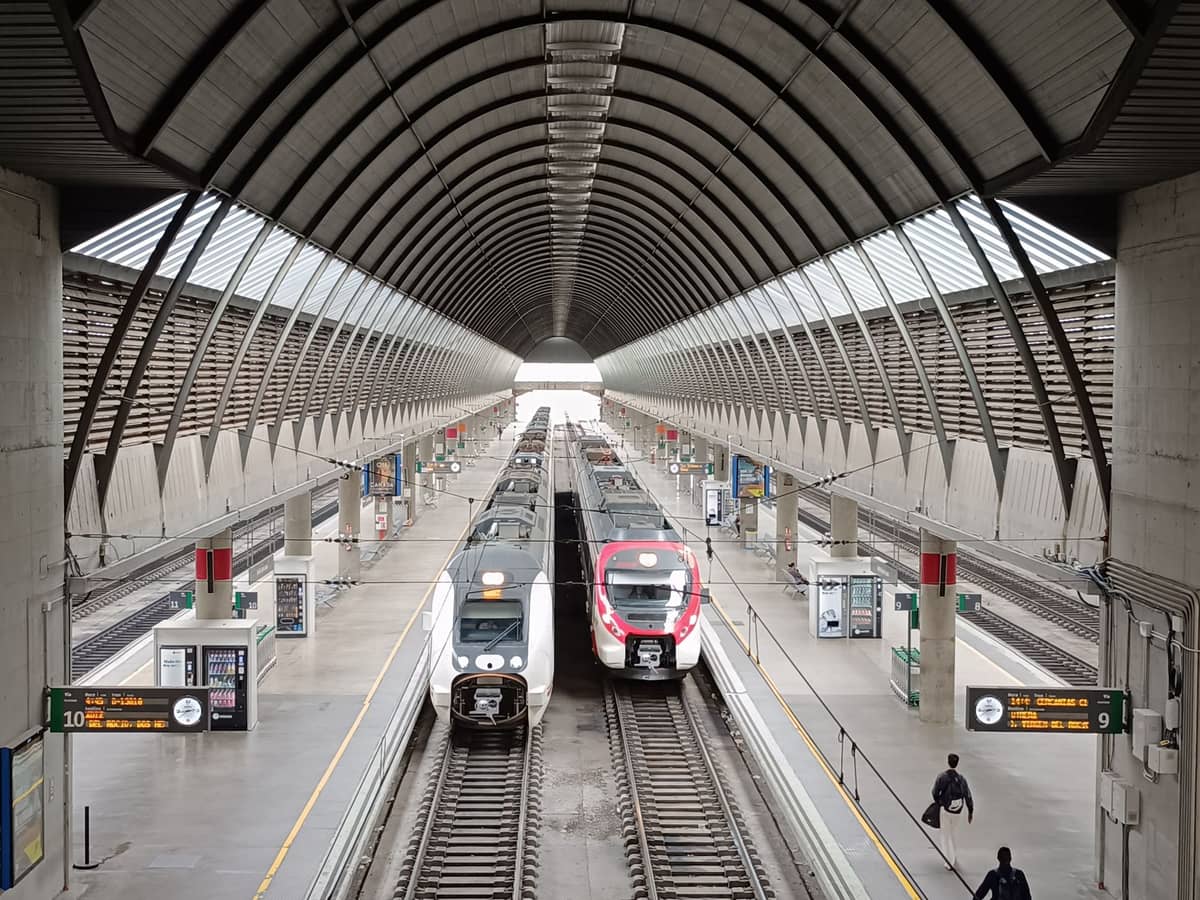
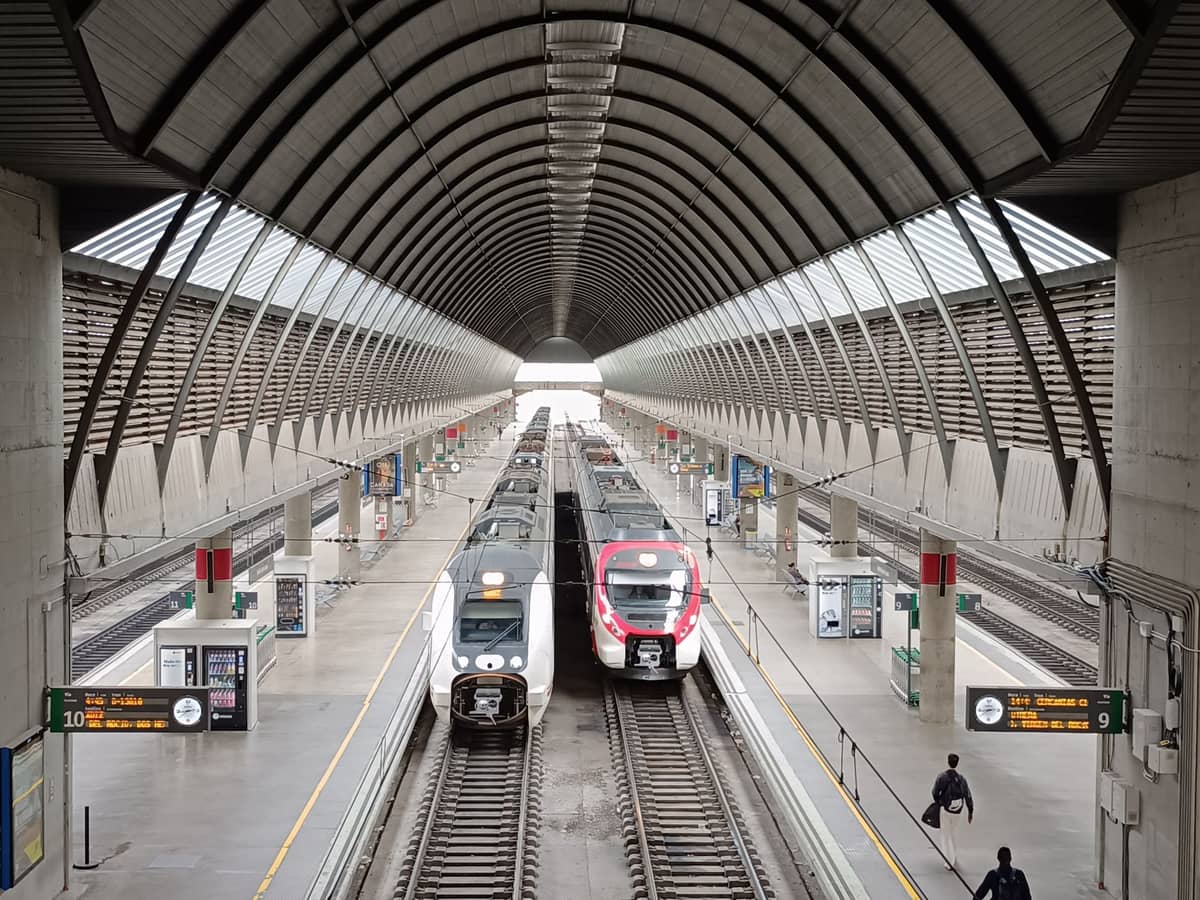
The 390-395 km between Madrid and Seville is one of Europe's most competitive high-speed rail corridors. Since the Spanish government opened the route to private operators, three companies now compete for passengers: Renfe (the national operator with its AVE and low-cost AVLO services), iryo, and OUIGO Spain. That competition has pushed prices down significantly. You can realistically travel this route for under €20 if you book a few weeks ahead, and the fastest trains cover the distance in about 2 hours 30 minutes.
Compare that to flying: Seville Airport (IATA: SVQ) sits roughly 9-10 km from the city centre, and getting there from Madrid involves a city-centre-to-airport transfer at both ends, check-in time, and then an airport bus or taxi on arrival. Door-to-door, a flight rarely saves time over the train, and it almost never saves money once you factor in airport costs. The train wins on convenience, price, and carbon footprint.
✨ Pro tip
Renfe's Combinado Cercanías scheme gives you a free local Cercanías commuter train journey in both Madrid and Seville when you buy an AVE or long-distance ticket. In Seville, this means a free connection from Santa Justa station into the centre. Most travellers never claim it — don't be one of them.
The Three High-Speed Train Operators: Who to Book With
All three operators depart from Madrid Puerta de Atocha Almudena Grandes and arrive at Sevilla-Santa Justa, directly, with no changes. Journey times are broadly similar across all operators: the fastest services clock in at around 2 hours 30 minutes, with some slower services running closer to 2 hours 45 minutes. The main differences are price structure, onboard experience, and booking flexibility.
- OUIGO Spain The budget option. Fares start from around €9 when booked well in advance. OUIGO services stop in Córdoba en route, adding a few minutes to the journey. Luggage allowances are strict and extras cost extra — check the fare conditions before booking. Best for flexible travellers who book early and travel light.
- iryo Advance fares typically start around €14-17 and climb to €30-40 for most standard dates. iryo is generally considered a step up from OUIGO in comfort and on a par with Renfe's better services. Their app is straightforward and last-minute changes are handled reasonably well on higher fare tiers.
- Renfe AVE / AVLO Renfe's AVLO is its own low-cost product, with advance fares from around €16-25. Standard AVE Turista class runs €35-50 in advance and can exceed €100 if you book last minute. The key advantage of Renfe is the Combinado Cercanías scheme and the widest range of departure times. Renfe runs by far the most daily frequencies on this corridor.
In total, sources report around 22 to 30 or more trains per day on this corridor, with near-hourly departures at peak times. For a spontaneous same-day trip, there will almost always be a seat available — but prices escalate sharply as you approach the departure date. Last-minute AVE tickets frequently exceed €80-100 one-way.
💡 Local tip
Book directly through the operator's own website (renfe.com, iryo.eu, ouigo.com) for the cheapest prices. Aggregators like Trainline, Omio, Rail Europe, and Wanderu are useful for comparing schedules across operators at a glance, but they sometimes add booking fees.
Prices: What to Realistically Expect in 2026
Advertised 'from' prices on this route are technically real but require booking weeks or months ahead for popular departure times. For practical planning purposes, here is a more honest breakdown of what you are likely to pay.
- Best-case advance price €9-16 one-way (OUIGO or iryo, booked 4-8 weeks out, off-peak dates, no flexibility needed).
- Typical advance price €25-45 one-way (any operator, booked 1-3 weeks ahead, standard weekday or weekend travel).
- Last-minute or peak travel €60-110+ one-way (Renfe AVE standard fare, booked within a few days of travel, or during Easter, Feria de Abril, or summer weekends).
The advance-purchase fares are capacity-controlled, which means prices genuinely increase as seats fill up — this is not just a marketing claim. If you are travelling during Semana Santa or Feria de Abril, book as early as the booking window opens. Trains sell out entirely on some of those dates.
⚠️ What to skip
Fares fluctuate constantly and the specific prices in this guide are indicative. Always check the operator's website for current pricing before making any decisions. Prices in this guide reflect publicly available data from 2024-2026 sources and will change.
The Bus Option: Slower but Cheaper
If budget is your absolute priority, long-distance buses run between Madrid and Seville with a journey time of roughly 6 hours. Operators including Alsa serve this route, with tickets frequently available for €15-30 even on relatively short notice. Departures are from Madrid's Estación Sur bus terminal (Méndez Álvaro) and arrive at Seville's Plaza de Armas bus station.
The honest assessment: unless you are travelling overnight (some night buses allow you to sleep through the journey and save a night's accommodation) or your budget is genuinely stretched, the bus does not make much sense when the train takes less than half the time. A €9 OUIGO train ticket bought early beats a €25 bus on every metric except perhaps flexibility of last-minute availability.
Getting Around Seville After You Arrive
Trains arrive at Sevilla-Santa Justa station, which sits about 2 km northeast of the historic centre. The station is well connected: the EA airport bus stops here, city buses serve the front of the station, and taxis queue outside. If you have a Renfe ticket with Combinado Cercanías, you can pick up a free Cercanías connection directly. The city's local transport network also includes the MetroCentro tram and TUSSAM urban buses. For most central accommodation, a taxi from Santa Justa costs around €8-12.
Seville's historic centre is compact. The Santa Cruz neighbourhood, the Real Alcázar, and the Cathedral and Giralda are all within easy walking distance of each other. Most visitors find they need very little public transport once they have checked in, as long as they are staying centrally.
If you are planning to explore beyond the historic centre, areas like Triana across the river and La Macarena to the north are easily reached on foot or by bike. Seville has an extensive public bicycle network (Sevici) with docking stations throughout the city, and the flat terrain makes cycling genuinely practical.
Extending Your Trip: Other Routes from Seville by Train
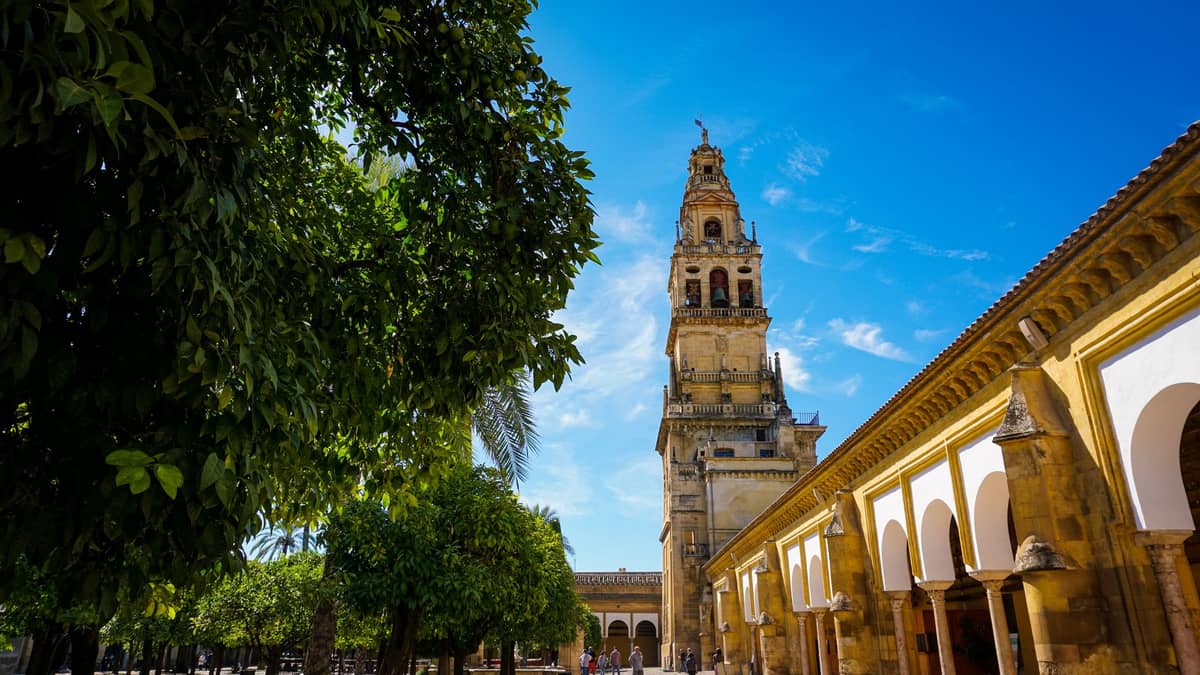
Once you are in Seville, the high-speed network opens up Andalusia and beyond. The Seville to Córdoba train takes around 45 minutes and fares start very low — Córdoba's Mezquita-Catedral makes for an excellent day trip from Seville. The Seville to Málaga train takes roughly 2 hours on the fastest services, making it feasible as a day trip or a stop on a wider journey to the Costa del Sol.
The Seville to Barcelona train is a longer journey of around 5.5 to just over 6 hours on direct high-speed services, but it remains a comfortable option for those avoiding budget airline luggage fees. Seville to Lisbon is not served by a direct fast train — the most common route involves a bus connection through Huelva or Badajoz, or a train to Portugal via Madrid, making this a journey worth planning carefully. For a broader picture of where to base yourself in Andalusia, our Andalusia itinerary guide covers multi-city routing in detail.
FAQ
How long does the train from Madrid to Seville take?
The fastest high-speed services take approximately 2 hours 30 minutes. Some services, including certain OUIGO trains that stop in Córdoba, run slightly longer at around 2 hours 40-45 minutes. Slower Alvia and Intercity services take 3 hours or more.
What is the cheapest way to get from Madrid to Seville?
The cheapest option is usually a OUIGO or iryo advance-purchase high-speed train ticket, with fares starting from around €9-14 when booked several weeks ahead. Long-distance buses cost €15-30 but take around 6 hours. Budget airlines fly the route but rarely beat early train prices once airport transfers are included.
Do I need to book Madrid to Seville trains in advance?
You do not need to book in advance — trains run frequently enough that same-day travel is possible. However, prices rise significantly closer to departure, and advance fares can be four to five times cheaper than last-minute tickets. During Easter week (Semana Santa) and Seville's Feria de Abril, trains sell out entirely on some dates, so early booking is strongly recommended.
Which station in Madrid do trains to Seville depart from?
All high-speed trains to Seville depart from Madrid Puerta de Atocha Almudena Grandes (commonly known as Madrid Atocha), the main intercity rail hub in Madrid. Trains arrive at Sevilla-Santa Justa, Seville's only major rail station.
Is it worth flying from Madrid to Seville instead of taking the train?
Rarely. When you factor in airport check-in time, security, the Madrid airport transfer (Adolfo Suárez Madrid-Barajas is around 13 km from the centre), and then the Seville airport bus or taxi on arrival, a flight adds at least 3-4 hours to your door-to-door time. The high-speed train is faster overall, usually cheaper, and significantly more comfortable.
Tickets & tours
Live prices and dates from our booking partner. If you book, we may earn a commission at no extra cost to you.
Planning a trip? Discover personalized activities with the Nomado app.