Estadio Ramón Sánchez-Pizjuán: Inside Sevilla FC's Cathedral of Football
Opened in 1958, the Ramón Sánchez-Pizjuán is one of Spain's most storied football stadiums and the beating heart of Sevilla FC. Whether you're a dedicated supporter or simply curious about the club that has lifted the UEFA Europa League six times, the stadium tour offers a compelling look at football culture in Andalusia's capital.
Quick Facts
- Location
- Calle Sevilla Fútbol Club, s/n, 41005 Sevilla (Nervión district)
- Getting There
- Bus lines to Nervión; short taxi or ride-hail from Santa Justa station
- Time Needed
- 1.5 to 2 hours for the full stadium tour
- Cost
- Approx. €14 adult — verify current prices and any age-based discounts before booking
- Best for
- Football fans, sports history enthusiasts, families, travellers on a matchday visit
- Official website
- sevillafc.es/en/tour-sevillafc
What Is the Ramón Sánchez-Pizjuán?
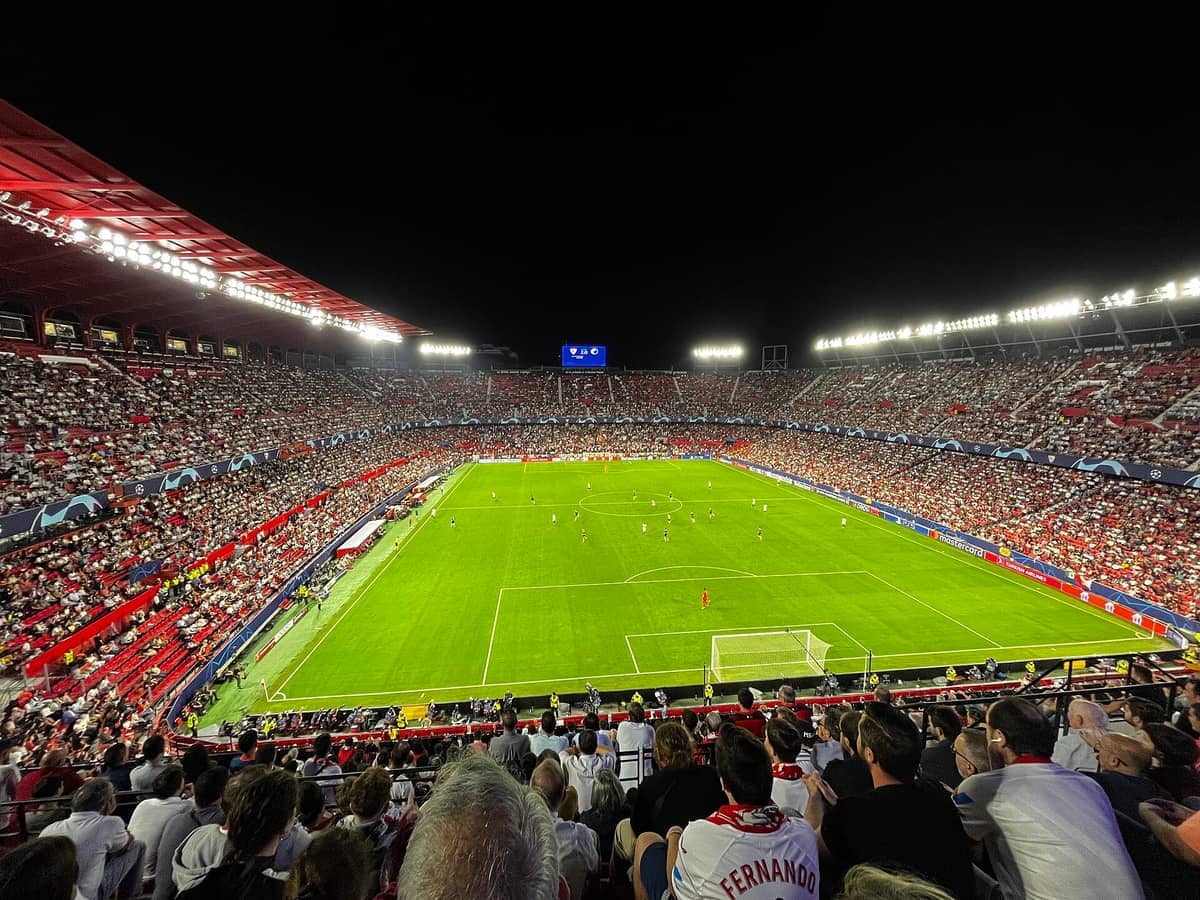
The Estadio Ramón Sánchez-Pizjuán is the home ground of Sevilla FC, one of the most successful clubs in European football history and the record holder for UEFA Europa League titles. The stadium sits in the Nervión district, Seville's modern commercial quarter east of the historic centre, and it has been in continuous use since its inauguration on 7 September 1958. Named after a former club president, the ground holds a capacity of roughly 43,000 spectators and has hosted fixtures as significant as European Cup finals and Spanish national team matches.
For non-football visitors, the stadium functions as a museum of the club's identity and a window into the role football plays in Andalusian civic life. Sevilla FC is not simply a sports club to its supporters; it is woven into neighbourhood pride, family ritual, and seasonal rhythm in a city where the calendar already revolves around Semana Santa and Feria de Abril. Walking through the stands on a quiet Tuesday morning, when the rows of red-and-white seats stretch empty to the upper tier, gives a particular sense of scale and atmosphere that a game-day visit cannot replicate in the same meditative way.
ℹ️ Good to know
The stadium tour is closed to visitors on Tuesdays and on matchdays. Always check the official tour schedule at sevillafc.es before planning your visit, as times shift around fixtures.
The Stadium Tour: What You Actually See
The self-guided or hosted tour follows a route through the areas normally reserved for players and officials. You begin in the museum rooms, which trace the club's history from its 1905 founding through its decades of domestic competition and into the era of European dominance. Trophy cabinets display Europa League hardware alongside Copa del Rey silverware, and archival photographs document the club's evolution through different eras of Spanish football.
From the museum, the route moves into the players' zone: the home dressing room, the technical area tunnel, and the access corridor that leads pitchside. Standing at the edge of a 105 by 68 metre pitch with the upper tiers overhead gives a physical sense of what matchday noise must feel like when around 43,000 people are present. The pitch itself is not accessible for walking on, but the pitchside vantage point and the dugout area are included in the standard tour.
Higher tiers are accessible during the tour, giving views across the Nervión skyline and the wider city. On clear days, the orientation of the stadium means you can see toward the historic centre, though the view is urban rather than panoramic in the conventional sightseeing sense.
💡 Local tip
Bring a telephoto lens or zoom camera if you want detail shots of the pitch and trophy displays. The museum lighting is relatively low, so a camera that handles indoor conditions well is useful.
Tickets & tours
Live prices and dates from our booking partner. If you book, we may earn a commission at no extra cost to you.
History and Architectural Context
The stadium was designed and built in the late 1950s as part of a broader modernisation of Spanish football infrastructure under the Franco era, when clubs were expanding their grounds to accommodate growing supporter bases. Its inauguration in 1958 made it one of the larger purpose-built football stadiums in Spain at the time. Successive renovations have modified the seating layout and added roofing to most tiers, but the fundamental oval bowl structure remains recognisable from early photographs.
Architecturally, the Pizjuán is not an example of the kind of landmark stadium design that has emerged since the 1990s. It is a functional working ground built for atmosphere and density rather than aesthetic statement. What it lacks in architectural spectacle it compensates for in acoustic reputation: the enclosed bowl, particularly the curvas (the curved end stands), is known for generating concentrated noise during European nights, and the stadium has a documented reputation among visiting clubs as a difficult environment.
The stadium sits about two kilometres east of the city's monumental core, which includes the Seville Cathedral and the Real Alcázar. The Nervión district around it is primarily residential and commercial, with shopping centres and broad avenues characteristic of mid-20th-century urban expansion in Spanish cities.
Opening Hours, Tickets, and Getting There
Tour hours as listed by Sevilla FC are: Monday 11:00–15:00 (last admission 13:45) and 17:00–21:00 (last admission 19:45); Wednesday 17:00–21:00 (last admission 19:45); Thursday through Sunday 11:00–15:00 (last admission 13:45) and 17:00–21:00 (last admission 19:45). The stadium tour is closed on Tuesdays and on days when first-team matches are scheduled. Hours may also shift around European competition fixtures, so the official website should be your first check.
Approximate ticket prices from third-party sources indicate around €14 for standard individual entry, with some discounts for members, families, and groups; these figures are not confirmed directly by the club's own published pricing and should be treated as indicative, so verify current costs at sevillafc.es before booking.
The stadium address for tour access is Calle Sevilla Fútbol Club, s/n, 41005 Sevilla. Several TUSSAM bus lines serve the Nervión area, and the ground is accessible by taxi or ride-hailing apps in roughly ten minutes from Santa Justa railway station. There is no metro stop directly at the stadium; the nearest Metro de Sevilla station, Nervión (Line 1), requires a short walk. Walking from the historic centre takes around 25 to 30 minutes and passes through standard urban Seville streetscape rather than anything particularly scenic.
⚠️ What to skip
On matchdays, the entire stadium precinct becomes congested from around two hours before kick-off. If your visit coincides with a home fixture, approach from the Nervión shopping area side and allow extra time. Tour access is suspended on match days.
Accessibility and Practical Notes
Third-party booking sources describe the tour route as wheelchair accessible, with elevators serving the main areas. Some pitchside sections reportedly include small steps, so visitors with mobility considerations should confirm specifics with the club directly before arrival. The museum and dressing room sections appear to be fully level access.
Photography is generally permitted throughout the tour, though flash photography in trophy and exhibit areas may be restricted. There are official club merchandise stores within the stadium complex, which remain open during tour hours and offer the full range of replica kits, scarves, and memorabilia.
If you want context on Sevilla FC's footballing history and how to experience the club as a visitor more broadly, the dedicated Sevilla FC guide for visitors covers matchday attendance, ticket purchasing, and supporter culture in detail.
How the Experience Changes by Time of Day
Morning sessions, particularly on weekdays, tend to draw fewer visitors. The stadium is quiet, the light through the upper roof gaps falls cleanly across the pitch, and there is time to linger in the museum rooms without competing for space in front of display cases. If you want a reflective, unhurried visit, the 11:00 opening slot on a Thursday or Friday is generally less crowded than weekend afternoons.
Evening sessions (17:00 to 21:00) attract more visitors, particularly families and tourists who have spent the day in the city centre before making their way east. The atmosphere is livelier and more social, and the club shop sees more traffic. Neither time slot is dramatically superior; it depends on whether you prefer a contemplative or a more animated experience.
For visitors building a broader Seville itinerary, the Nervión district pairs well with a stop at the Parque de María Luisa, which is a 20-minute walk or short bus ride away, or an evening in the city centre before or after the tour. See the complete Seville things to do guide for broader planning context.
Who This Experience Is and Isn't For
The Ramón Sánchez-Pizjuán tour is clearly most rewarding for people with a genuine interest in football or in Sevilla FC specifically. The trophy room and historical archive make the most impact when you understand what the club's Europa League record represents in European football. Casual visitors without that context will find the tour competent and visually interesting but will not feel the full weight of the experience.
Families with children who follow football tend to rate the visit highly; the dressing room and pitchside access are the kind of close-up access that is difficult to replicate with match tickets alone. Travellers primarily focused on Seville's Moorish architecture, religious heritage, or culinary scene may find better use of two hours elsewhere. The stadium is not a substitute for the city's historic monuments; it is an addition for those with a specific interest.
Visitors attending Seville in spring or autumn, the seasons with the most comfortable temperatures and the most active La Liga fixture calendar, may also find it easier to combine a tour with a live match, which is a categorically different and more intense experience than the self-guided tour. The two complement rather than replace each other.
Insider Tips
- Book the tour slot directly on the official Sevilla FC website rather than through third-party platforms when possible; it confirms current pricing and avoids scheduling conflicts with fixtures that third-party calendars sometimes miss.
- The Wednesday evening slot (17:00–21:00) is the least heavily attended session of the week based on general visitor patterns; if flexibility allows, this is the quietest entry point.
- The tunnel walk toward the pitch is the most photographed moment on the tour. Position yourself near the rear of your group as you approach the pitchside exit so you can take the shot without other visitors in frame.
- The club shop inside the stadium stocks items not always available at the smaller satellite stores near the Cathedral or Triana; if you plan to buy official merchandise, the stadium shop has the widest selection.
- If you are visiting during La Liga season (August to May), check the fixture list for a midweek European home match; the atmosphere in the surrounding streets and bars hours before kick-off is worth experiencing even if you do not attend the game.
Who Is Estadio Ramón Sánchez-Pizjuán (Sevilla FC) For?
- Sevilla FC supporters and European football enthusiasts
- Families with children interested in behind-the-scenes stadium access
- Sports history travellers combining culture and football
- Visitors with a half-day free in the Nervión area
- Travellers planning a live match visit who want context before attending
Planning a trip? Discover personalized activities with the Nomado app.