El Arenal is Seville's historic riverside quarter, wedged between the Cathedral and the Guadalquivir. Once the city's main port, it now combines major monuments, a legendary bullring, and some of the best tapas bars in the city centre.
El Arenal occupies a narrow wedge between Seville's cathedral complex and the Guadalquivir river, making it the most historically loaded stretch of riverfront in the city. Once the sandy port that dispatched fleets to the Americas, it is now the neighbourhood that most clearly shows how Seville layers centuries of ambition into a few city blocks: a UNESCO-listed archive next to a baroque bullring, a historic charity hospital next to an opera house, and tapas bars filling the gaps in between.
Orientation
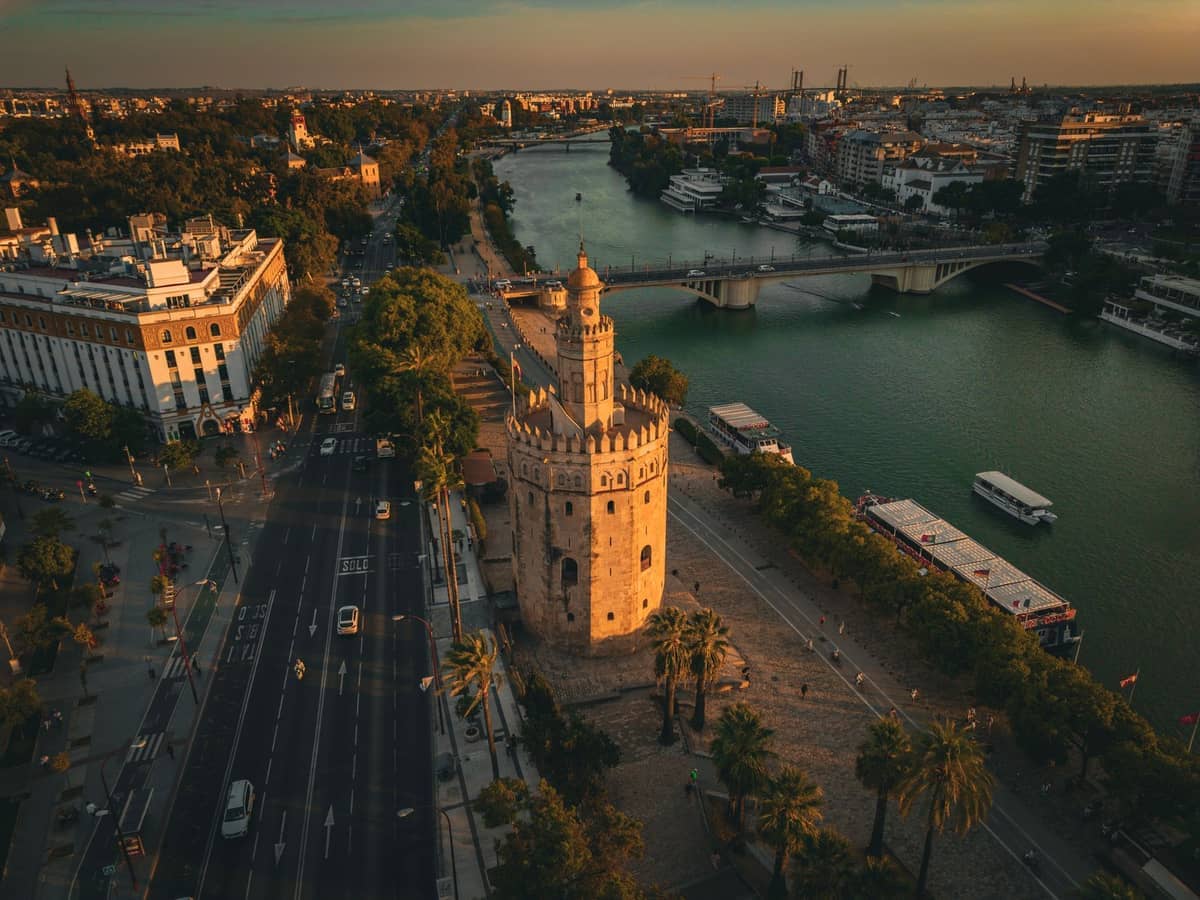
El Arenal forms a compact triangle in the western edge of Seville's Casco Antiguo. Its eastern boundary runs roughly along Avenida de la Constitución and Calle Santander, placing it immediately west of the Cathedral and the Alcázar gardens. Its western edge is the Guadalquivir itself, fronted by the Paseo de Cristóbal Colón. The neighbourhood tapers to a point at Puerta de Jerez in the south, where Avenida de la Constitución meets the river road, and opens northward along the riverfront toward the Puente de Triana (formally the Puente de Isabel II).
The result is one of the most walkable patches of the city centre: at its widest it is barely 400 metres across. You can enter from the Cathedral square on its east side, exit onto the river promenade on the west, and cover the full distance in under ten minutes on foot. This compactness means El Arenal functions less as a neighbourhood in the residential sense and more as a monumental corridor, dense with things to see and eat.
Directly across the Guadalquivir lies Triana, reachable in a five-minute walk across the Puente de Triana at the northern end of the Paseo de Cristóbal Colón. To the south-east, past Puerta de Jerez, the city opens toward the Parque María Luisa district and the broad avenues of the 1929 Ibero-American Exposition grounds. To the north-east, the streets fold into the narrow lanes of Santa Cruz, Seville's former Jewish quarter.
Character & Atmosphere
In the early morning, El Arenal is one of the quieter corners of the historic centre. The Paseo de Cristóbal Colón belongs to joggers and dog walkers, the river light is low and golden, and the Torre del Oro reflects in the water with very little competition from traffic. The bars are pulling up their shutters and setting out chairs. The smell of frying churros drifts from the café terraces near the bullring, and the streets between the Maestranza and the Hospital de la Caridad are empty enough to appreciate the scale of the buildings without dodging crowds.
By midday, the dynamic shifts. Tour groups move along the river promenade between the Torre del Oro and the Puente de Triana. The streets parallel to Avenida de la Constitución fill with a mix of tourists orientating themselves toward the Cathedral and locals cutting through on their way to lunch. The tapas bars on Calle García de Vinuesa and the streets leading down toward the river start filling from around 1pm, and on bullfight days the area around the bullring and the approaches to the Maestranza takes on a very specific, charged atmosphere that is unlike anywhere else in the city.
After dark, El Arenal divides neatly in two. The stretch along the Paseo de Cristóbal Colón attracts a younger crowd, particularly on weekend nights when the bars near the river and toward the Puente de Triana get loud and stay open late. The streets closer to Avenida de la Constitución and around the Teatro de la Maestranza are calmer, oriented toward restaurant dining and people leaving evening opera or concert performances. The neighbourhood does not have the concentrated nightlife of the Alameda de Hércules to the north, but it is far from quiet, and light sleepers should account for weekend noise if considering accommodation near the river end.
ℹ️ Good to know
El Arenal sits within Seville's historic centre, roughly 700 metres west of the Cathedral's main entrance. Most of the neighbourhood's key sites are within a ten-minute walk of each other, making it realistic to cover on foot in a half-day visit.
What to See & Do
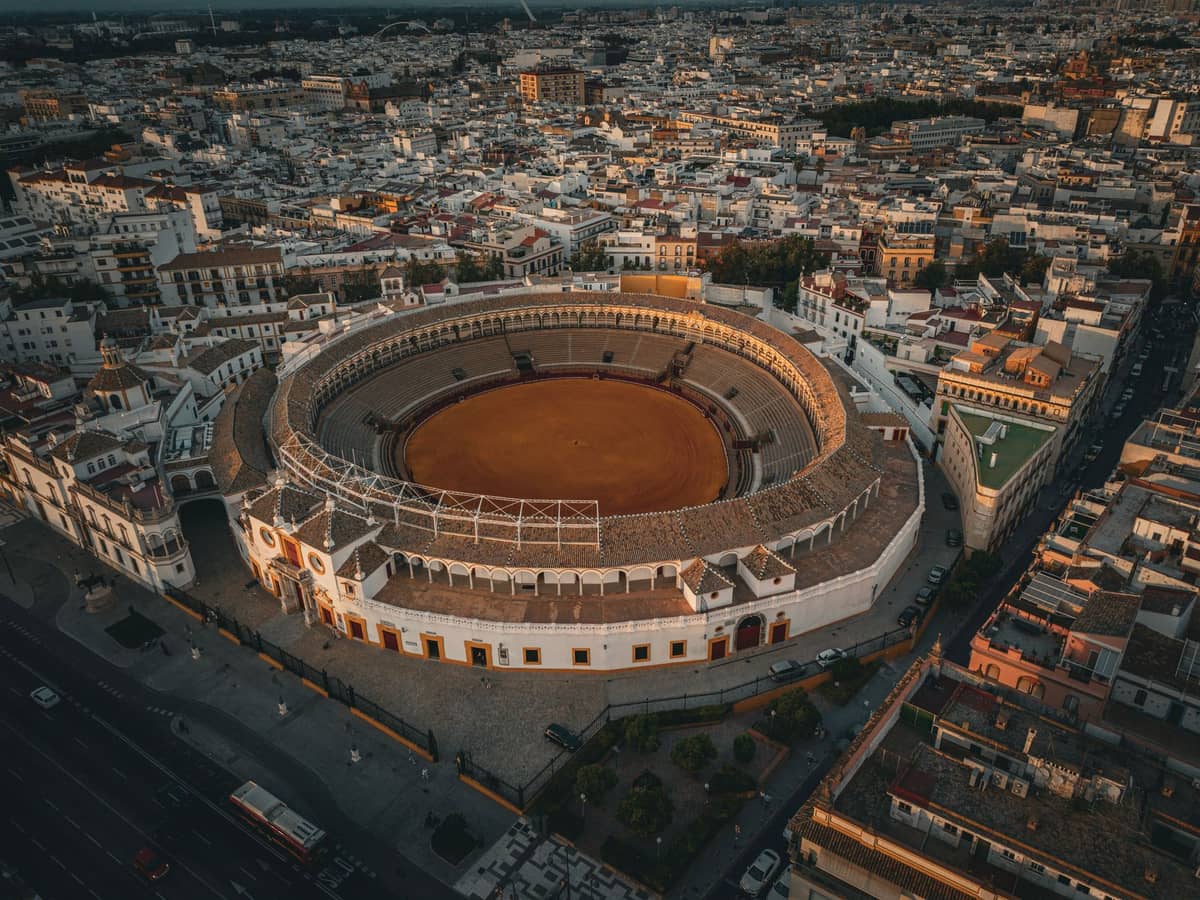
The neighbourhood's dominant landmark is the Plaza de Toros de la Real Maestranza de Caballería, one of the oldest and most architecturally significant bullrings in Spain. The Maestranza dates to the 18th century and its distinctive ochre and white exterior is as recognisable as any building in the city. Whether or not bullfighting interests you, the museum inside is worth the entry price for its paintings, costumes, and context on Seville's relationship with the corrida. The bullfighting season runs from Easter to October, and tickets for the most important Sunday fights sell out weeks in advance.
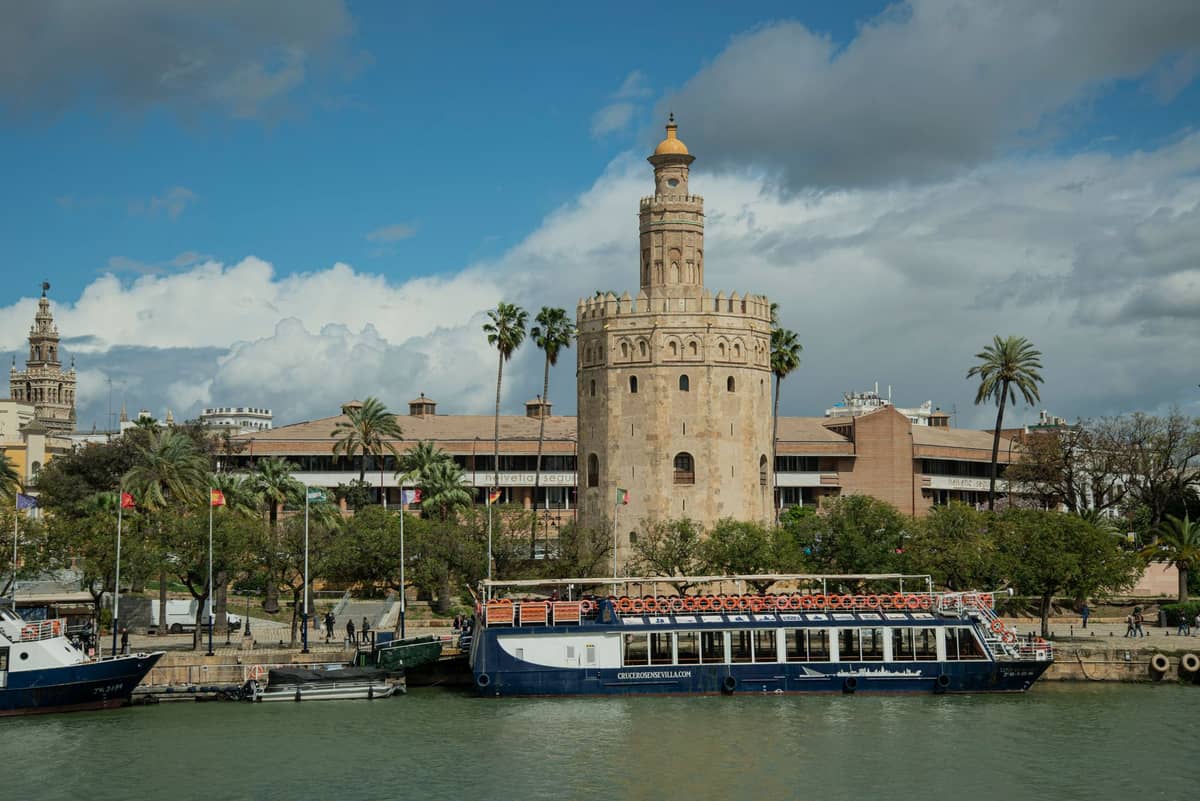
On the riverfront, the Torre del Oro is El Arenal's most photographed building. The 13th-century dodecagonal tower was part of the city's defensive wall system and later served as a watchtower controlling river access. Today it houses a small naval museum. Its position at the water's edge makes it a reference point for the whole neighbourhood, and the view back from the Triana side of the river, with the tower framed against the city, is one of the better angles on Seville's skyline.
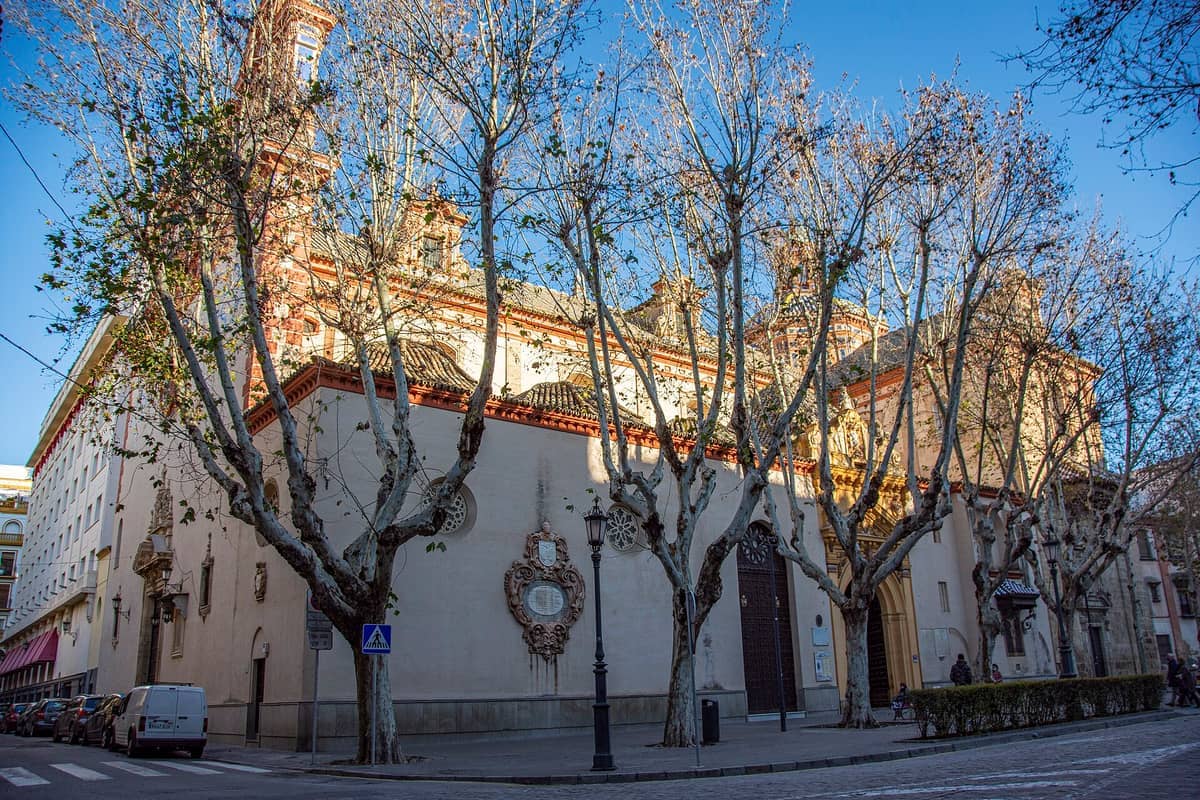
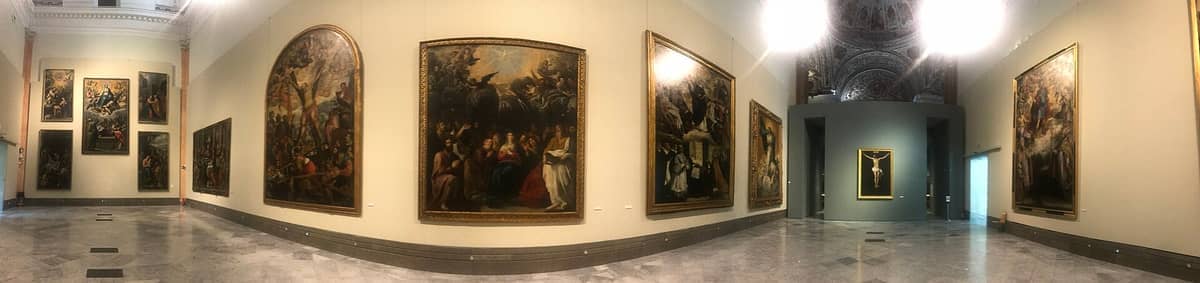
The Real Maestranza bullring sits on the south end of the Paseo de Cristóbal Colón, and just a short walk inland from it is the Hospital de la Caridad, a 17th-century charity hospital founded by Miguel de Mañara. The interior church contains paintings by Murillo and Valdés Leal, including Valdés Leal's disturbing meditations on mortality, which are among the most confronting works of Spanish baroque art still in their original setting. The hospital remains a functioning charity institution. A few streets east, near the foot of Avenida de la Constitución, the Archivo General de Indias occupies a 16th-century exchange building and holds the documentary archive of Spain's colonial empire, including original correspondence from Columbus, Magellan, and Cortés. Entry is free and the building alone justifies a visit.
Real Maestranza bullring: museum visits year-round, corridas Easter–October
Torre del Oro: naval museum, open Monday–Sunday
Hospital de la Caridad: church with Murillo and Valdés Leal paintings
Archivo General de Indias: free entry, extraordinary colonial-era documents
Teatro de la Maestranza: Seville's principal opera and concert venue
Paseo de Cristóbal Colón: riverside walk connecting the Puente de Triana to Puerta de Jerez
Mercado Lonja del Barranco: converted 19th-century iron market, now a food hall
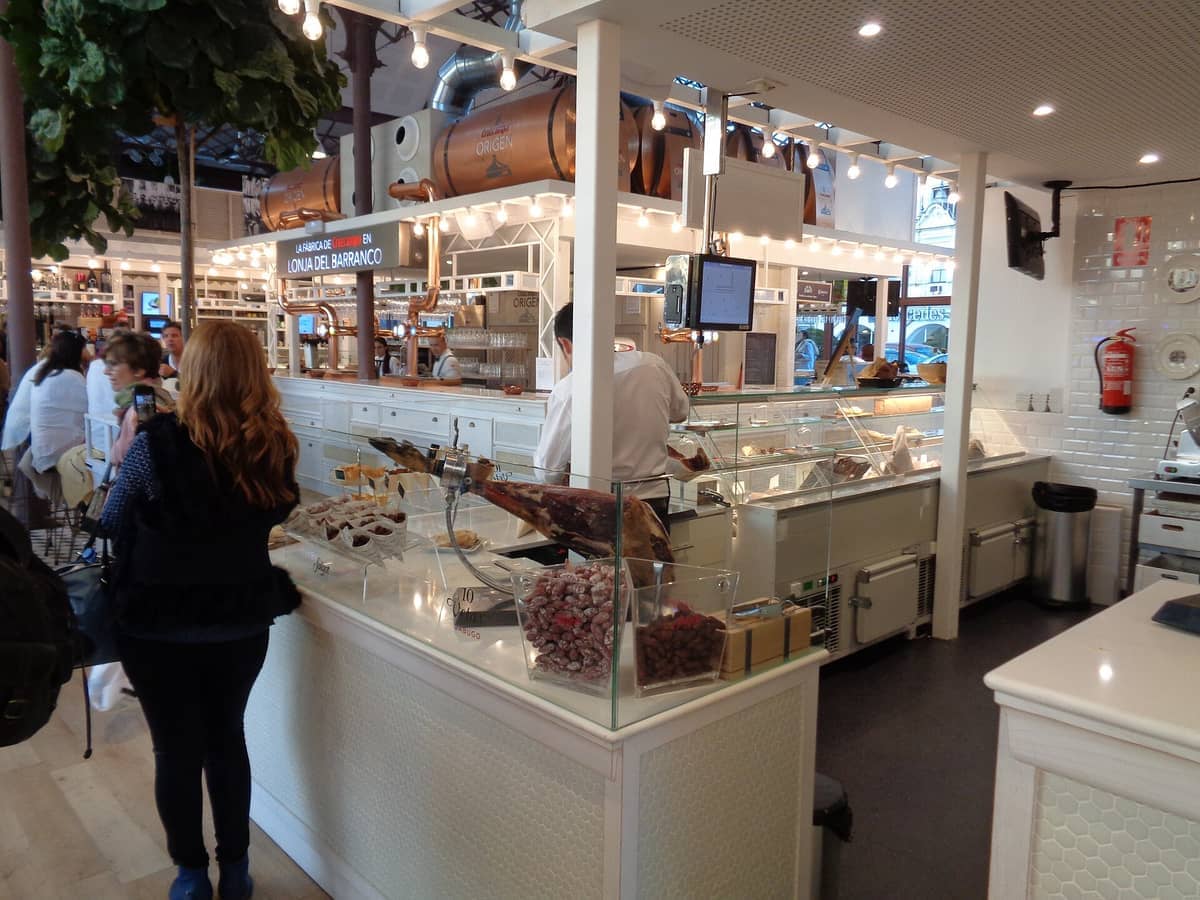
The Mercado Lonja del Barranco occupies a restored iron-frame market building from 1883, now operating as a gourmet food market with around 20 stalls. It is positioned directly on the riverfront near the Puente de Triana. The architecture, designed by Gustave Eiffel's studio, is worth seeing regardless of whether you stop to eat.
Eating & Drinking
El Arenal has a reputation as one of the better areas in central Seville for eating, though it requires some navigation. The streets closest to the riverfront and immediately around the bullring contain a higher concentration of tourist-facing restaurants with printed menus in six languages and mediocre food at elevated prices. The better eating is a street or two inland, on Calle García de Vinuesa, Calle Arfe, and the smaller streets connecting them.
The local speciality is the kind of traditional Seville tapas that elsewhere in Andalusia gets simplified for export: good montaditos (small open sandwiches), fried fish in the Seville style, decent jamón, and cold fino sherry served properly chilled. For a broader overview of what to order across the city, the what to eat in Seville guide covers the essentials. In El Arenal specifically, the bars with the most regular local clientele tend to be those slightly back from the main tourist corridors, on streets that require turning away from the river.
The Mercado Lonja del Barranco on the riverfront is better for a lunchtime visit than an evening one. The stalls cover everything from Iberian cured meats to sushi, with prices roughly in line with what you would pay at a sit-down restaurant. The setting inside the iron market building is comfortable and the river views through the windows are good. It draws tourists and locals in roughly equal measure at lunch, then skews tourist-heavy in the evening.
For drinks, the area around the Paseo de Cristóbal Colón and toward the Puente de Triana has a concentration of open-air bars that fill up from early evening on warm nights. These are informal, sociable, and not expensive. On bullfight nights, the whole strip between the Maestranza and the river operates at a different pitch: standing room only in the bars, crowds in their best clothes, and a festive atmosphere that lasts well into the night regardless of the result in the ring.
💡 Local tip
Avoid the restaurants on the Paseo de Cristóbal Colón itself unless you are specifically after the river view. Walk one block east toward the Cathedral and the price-to-quality ratio improves noticeably. Calle García de Vinuesa is a reliable street for traditional tapas bars.
Getting There & Around
El Arenal is most naturally reached on foot from anywhere in the historic centre. From Seville Cathedral, the neighbourhood begins immediately to the west, with the Archivo General de Indias at the corner of Avenida de la Constitución marking the transition. From the Setas de Sevilla (Metropol Parasol) in the north, the walk south through the Casco Antiguo to the riverfront takes about 20 minutes on foot. For a fuller picture of how to navigate the city, the getting around Seville guide covers all transit options.
The MetroCentro tram stops at Puerta de Jerez, immediately south-east of El Arenal, connecting the neighbourhood to Plaza Nueva and the commercial centre of the city. From Puerta de Jerez you can also pick up multiple TUSSAM bus routes heading north, east, and across the river. The C4 circular bus runs along the Paseo de Cristóbal Colón itself, useful for reaching the northern riverfront or continuing south toward the María Luisa park area.
From Seville's main railway station at Santa Justa, the neighbourhood is about 2.5 kilometres west: a 30-minute walk through the historic centre, or a short taxi or tram-plus-walk combination. The EA airport bus from Seville Airport stops at Puerta de Jerez, making El Arenal one of the first central stops on the airport connection, with a journey time of around 35 minutes and a single fare of approximately €6 (verify current fares before travel).
The neighbourhood itself requires no transport: it is entirely flat, compact, and pedestrianised in its busiest sections. The Paseo de Cristóbal Colón carries some traffic but has wide pavements. Cycling is possible along the riverfront, where a dedicated lane runs the length of the Paseo.
Where to Stay
El Arenal is a practical base for first-time visitors to Seville who want to be within walking distance of the Cathedral, Alcázar, and river simultaneously. Hotels here tend to sit in the four-star bracket, occupying historic buildings with internal courtyards and the accompanying noise management challenges. For a full comparison of where to base yourself across the city, the where to stay in Seville guide covers all the main neighbourhoods.
The best-positioned hotels in El Arenal are those on the streets between Calle Santander and the river, close enough to the monuments to walk everywhere but not directly on the tourist thoroughfares. The eastern edge of the neighbourhood, near Avenida de la Constitución, is noisier and more trafficked. The southern end near Puerta de Jerez puts you between the historic centre and the Parque de María Luisa, which works well if you plan to spend time in both areas.
⚠️ What to skip
Accommodation near the Paseo de Cristóbal Colón and the riverfront bars will experience significant weekend noise until at least 2am. If you are a light sleeper or travelling with young children, look for hotels on the quieter eastern streets of the neighbourhood, or consider the streets of Santa Cruz one block further east.
El Arenal suits travellers who want immediate access to the big sights without paying the premium of a Santa Cruz address. It is less atmospheric at street level than Santa Cruz, more open and commercial in character, but it has the advantage of being slightly less overwhelmed by tourism in its residential pockets. Families, couples on a short break, and anyone whose priority is monument access over neighbourhood immersion will find it a workable choice.
History: The Sandy Shore That Launched an Empire
The name Arenal simply means sandy shore in Spanish, and it describes precisely what this neighbourhood was before the river embankment was formalised: a stretch of river beach where ships were dragged ashore, loaded, and launched. From the late 15th century through the 17th century, El Arenal was the economic centre of the Spanish empire. Every ship leaving for the Americas departed from this riverbank, and every cargo returning from the New World, gold, silver, cochineal, cacao, was landed here. The Casa de Contratación, the royal institution that controlled all trade with the Americas, operated just across the street from what is now the Cathedral.
The Archivo General de Indias, which sits at the corner of El Arenal and the Cathedral square, was built as the Lonja de Mercaderes (merchants' exchange) in the 16th century, a measure of how much commercial weight this neighbourhood carried. When Seville eventually lost its monopoly on American trade to Cádiz in 1717 and the river began silting up, the neighbourhood shifted from port to memory. The Torre del Oro remained as a reminder of the Almohad defensive system that once controlled river access, while the Hospital de la Caridad, founded in the 1670s, absorbed some of the social consequences of a city adjusting to economic decline.
The Maestranza bullring, constructed in stages through the 18th and 19th centuries, gave the neighbourhood its contemporary identity. Bullfighting in Seville carries a cultural weight that requires context rather than judgment: the Maestranza is considered one of the most prestigious venues in the world for the corrida, and the neighbourhood around it has calibrated itself accordingly, in the quality of the tapas bars, the formality of dress on fight days, and the general sense that this is a place where Seville takes itself seriously.
For visitors interested in how this history connects to the wider city and its relationship with Andalusia, the things to do in Seville guide provides a broader framework, while the best museums in Seville guide covers the collections that sit in and around this neighbourhood in more detail.
Honest Assessment: Is El Arenal Worth Your Time?
El Arenal is not a neighbourhood to wander aimlessly hoping to discover something. Its pleasures are specific: the Maestranza, the Archivo de Indias, the Torre del Oro, a good lunch on Calle García de Vinuesa, an evening walk along the river. It does not have the atmospheric density of Santa Cruz or the lived-in character of Triana. Several stretches of the Paseo de Cristóbal Colón are occupied by tourist-trap restaurants and souvenir sellers that compare unfavourably to almost anywhere else in the city.
What it does offer is concentration. The three or four hours needed to see the Archivo de Indias, Torre del Oro, Hospital de la Caridad, and the Maestranza exterior (with a museum visit) can all be done without leaving a very small area. For a first visit to Seville, that efficiency is worth something. For a return visit, El Arenal is probably less interesting than lesser-known parts of the city to the north or across the river.
TL;DR
El Arenal occupies the western edge of Seville's historic centre, between the Cathedral and the Guadalquivir river, walkable from every major sight in the Casco Antiguo.
Key attractions include the Real Maestranza bullring, Torre del Oro, Hospital de la Caridad, Archivo General de Indias, and the Mercado Lonja del Barranco.
Best suited to first-time visitors who want monument access and riverside position in one compact, walkable area.
The riverfront strip has tourist-facing restaurants to avoid; better eating is one block inland on streets like Calle García de Vinuesa.
Weekend nights near the river are loud and lively; not the right base for travellers wanting quiet evenings or an authentic residential atmosphere.
Three days is enough time to cover Seville's greatest landmarks, explore its best neighbourhoods, and eat and drink well without rushing. This day-by-day itinerary gives you practical routes, current ticket prices, and the kind of logistical detail that makes the difference between a smooth trip and a frustrating one.
Seville makes an ideal home base for a week in Andalusia. With high-speed rail to Córdoba in under 45 minutes and buses to Granada in 3 hours, you can cover the region's highlights without changing hotels. This guide breaks down exactly how to structure 7 days, what to prioritize, and what to skip.
The journey from Barcelona to Seville covers roughly 830 km across Spain. This guide breaks down every transport option, from the high-speed AVE train to budget flights, with practical tips on cost, comfort, and what awaits you in Andalusia's capital.
Seville's skyline is defined by bell towers, domes, and gilded facades accumulated over eight centuries of Christian, Moorish, and Renaissance building. This guide covers the city's finest religious architecture, from UNESCO-listed giants to intimate neighbourhood churches that most visitors walk straight past.
Seville delivers more than its size suggests when it comes to museums. From world-class fine art and Moorish palaces to ceramics, naval history, and flamenco, this guide covers the best museums in Seville across every interest and budget.
Seville's climate is one of the most extreme in Western Europe for a major city. This guide breaks down every month by temperature, rainfall, crowds, and events so you can choose the timing that actually fits your trip.
Seville rewards those who look up and climb high. This guide covers the city's best panoramic viewpoints, from iconic tower climbs to riverside vantage points and rooftop terraces with sweeping skyline views.
Seville sits at the heart of Andalusia, putting some of Spain's most compelling destinations within easy reach. This guide breaks down the best day trips from Seville by travel time, transport options, and what you actually get for the effort — including which ones are genuinely worth the journey and which ones need an overnight.
Seville's Feria de Abril is one of Europe's great street festivals: six days of flamenco dresses, horses, sherry, and late nights on a purpose-built fairground. This guide covers everything from how to get in without an invitation to what things actually cost, when to go, and what to wear.
Seville is the spiritual home of flamenco, and navigating its shows requires more than a hotel concierge recommendation. This guide breaks down the best tablaos, what to expect, how much to pay, and how to avoid the tourist traps, so you leave with a genuine experience of one of Spain's most powerful art forms.
Seville is one of Europe's most rewarding cities to explore on a tight budget. Many of its greatest sights offer free entry on specific days, and its parks, plazas, churches, and neighbourhoods reward hours of walking without spending a cent.
Seville is one of southern Spain's most walkable cities, but knowing which transport option to use, and when, can save you real time and money. This guide covers everything from landing at SVQ airport to hopping trams through the historic centre.
Seville is the capital of Andalusia and one of Spain's most architecturally rich cities, but it's not right for every traveller or every season. This guide breaks down what the city genuinely delivers, where it falls short, and exactly when and how to visit to get the most from it.
The Madrid to Seville route is one of Spain's most travelled corridors, and three competing high-speed rail operators now make it faster and cheaper than ever. This guide breaks down every option, from budget OUIGO tickets to overnight buses, with practical tips on timing, pricing, and what to expect on arrival.
Seville's Semana Santa is one of the most intense religious spectacles in the world, drawing hundreds of thousands of visitors each spring. This guide covers the full schedule, the key brotherhoods, how to secure Carrera Oficial seats, when to go for smaller crowds, and everything else you need to experience Holy Week properly.
Attending a Sevilla FC home match is one of the most authentic experiences Seville, Spain offers. This guide covers how to buy tickets, get to the stadium, pick the right seat, and make the most of match day — without the rookie mistakes.
Seville rewards those who look beyond the Cathedral and Alcázar. These 18 off-the-beaten-path experiences reveal aristocratic palaces, forgotten Roman cities, local markets, and baroque masterpieces that most visitors walk straight past.
Autumn is arguably Seville's most underrated season. Temperatures drop from summer extremes, crowds thin out after peak season, and the city's streets become walkable again. This guide breaks down exactly what to expect each month, from weather data to practical tips.
Spring is Seville's most dramatic season, combining mild weather with two of Europe's biggest festivals. This guide breaks down exactly what to expect each month, when to book, and how to navigate the crowds.
July and August in Seville mean scorching temperatures regularly above 35°C, occasional heatwaves above 40°C, and almost zero rain. This guide gives you the strategies, timing, and specific attractions to make summer work in your favor rather than against you.
Seville in winter is mild, uncrowded, and genuinely good for sightseeing. This guide covers the real weather, the seasonal events worth planning around, what to pack, and how to make the most of Andalusia's capital between December and February.
Seville nightlife runs on Andalusian time: dinner at 22:00, bars at midnight, clubs after 02:30. This guide covers the best neighborhoods, rooftop bars, nightclubs, flamenco shows, and practical details on dress codes, pricing, and the noise regulations that shape the scene.
Seville (Sevilla) is one of southern Spain's most rewarding city breaks, and it doesn't have to be expensive. This guide breaks down real daily costs, free entry windows at major monuments, the cheapest ways to get around, and the exact seasons when prices drop significantly.
Seville is lined with tens of thousands of bitter orange trees, yet almost no one eats the fruit. This guide explains the history, seasonality, and surprising uses of the Seville orange, plus what visitors actually experience walking beneath these famous trees.
Seville rewards shoppers who know where to look. This guide covers the best shopping streets, markets, and authentic products to buy in Sevilla, from azulejos and flamenco accessories to olive oil and vintage finds at El Jueves.
The journey from Seville to Córdoba is one of Andalusia's easiest and most rewarding travel connections. This guide covers every option: high-speed trains that take under an hour, budget buses, and guided day trips, with practical tips on costs, booking, and what to do once you arrive.
The journey from Seville to Málaga is one of the most popular routes in Andalusia, with trains taking as little as 2 hours. This guide breaks down every option — train, bus, and car — with real prices, scheduling advice, and the honest tradeoffs between each.
Both Seville and Granada rank among Spain's most compelling cities, but they offer very different experiences. This guide breaks down the key differences across sightseeing, atmosphere, budget, logistics, and timing so you can choose the right destination or plan both.
From a world-class aquarium and a theme park with a water area to horse-drawn carriage rides and riverfront parks, Seville rewards families who plan well. This guide covers the top kid-friendly attractions, current pricing, seasonal timing, and practical logistics so you can skip the guesswork.
Seville, the capital of Andalusia, packs more history, architecture, and street life into a walkable city than almost anywhere in Spain. This guide covers the essential things to do in Seville, with accurate ticket prices, seasonal advice, neighborhood breakdowns, and clear assessments of what's worth your time.
Seville is one of the most walkable cities in southern Spain, with its major monuments clustered within a compact historic core. This guide covers the best self-guided walking routes by neighbourhood, current entry prices for the Alcázar and Cathedral, seasonal timing advice, and the practical details most visitors overlook.
Seville has one of Spain's most distinctive food cultures: paid tapas ordered gradually, cold soups in summer, and markets that close by mid-afternoon. This guide covers the dishes you need to try, where to find them, how much to pay, and what to skip.
Choosing where to stay in Seville shapes your entire trip. This guide breaks down every major neighbourhood by location, atmosphere, price range, and who it suits best — so you can book with confidence.