Iglesia de la Magdalena: Seville's Most Underrated Baroque Church
The Real Parroquia de Santa María Magdalena stands as one of Seville's great Baroque achievements, a richly decorated 18th-century church tucked into the El Arenal district just minutes from Plaza Nueva. Entry is free, crowds are thin, and the interior rewards anyone who takes the time to look up.
Quick Facts
- Location
- Calle San Pablo 12, 41001 Seville (El Arenal district)
- Getting There
- Several TUSSAM bus lines stop on Calle San Pablo; a 10-minute walk from Plaza Nueva or the MetroCentro tram
- Time Needed
- 30–60 minutes
- Cost
- Free (donations welcomed); private guided visits available for €5 per person
- Best for
- Baroque architecture, religious art, avoiding Cathedral-area crowds
- Official website
- rpmagdalena.org
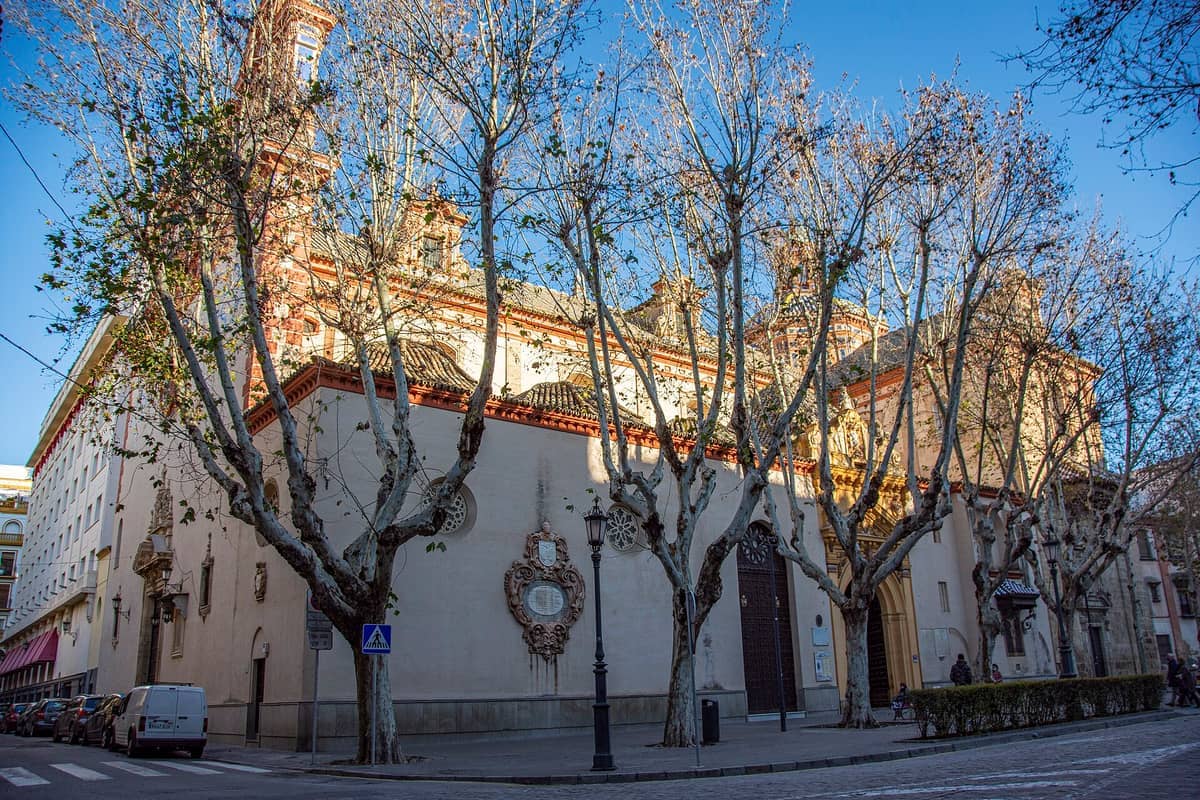
What Is the Iglesia de la Magdalena?
The Real Parroquia de Santa María Magdalena, universally known in Seville as the Iglesia de la Magdalena, is one of the most significant Baroque churches in Andalusia. It sits on Calle San Pablo in the El Arenal district, within comfortable walking distance of the city centre but removed from the concentrated tourist flow around the Cathedral and the Real Alcázar.
The current structure dates from the 18th century, rebuilt on the site of an earlier medieval parish in the full flush of Spanish Baroque ambition. The interior is dense with chapels, frescoes, painted vaulting, and sculptural altarpieces, the kind of accumulated religious art that took decades to commission and arrange. It remains an active parish church, which means the atmosphere shifts noticeably between a quiet Tuesday morning visit and a Saturday when a congregation is present.
💡 Local tip
Entry is free of charge, though the parish asks visitors to make a contribution toward conservation. Come on a Wednesday or Thursday morning when the church stays open until 13:30 specifically for tourist visits.
The Baroque Interior: What You Will Actually See
Walking through the main door on Calle San Pablo, the first thing that registers is the scale. The nave is wide and high, with the vault rising above painted decoration that covers almost every available surface. Natural light enters through windows positioned high in the walls, cutting across the gilded altarpieces in a way that changes substantially depending on the hour and the season.
The side chapels are where much of the best detail lives. Each one functions almost as a small autonomous room, with its own sculptural programme, its own quality of light, and its own devotional atmosphere. Several chapels house works by significant Seville-school artists, and the church is associated with the Brotherhood (hermandad) tradition that runs deep through Sevillian Catholic life, making it a working religious space as much as an artistic monument.
Look at the ceiling fresco work carefully. The painted vaulting in a mature Baroque church like this involves illusionistic techniques that flatten into abstraction if you walk quickly. Stand under each bay for a moment and the compositions become legible: figures arranged around light sources, architectural trompe-l'oeil framing, clouds dissolving into colour. This is not a church you absorb in ten minutes.
ℹ️ Good to know
Photography is generally possible for personal use, but flash and tripods are typically unwelcome in active parish churches in Seville. Behave as you would in any working place of worship.
Tickets & tours
Live prices and dates from our booking partner. If you book, we may earn a commission at no extra cost to you.
Guided tour of the white villages of Andalusia: Ronda, Grazalema and Zahara
From 79 €Instant confirmationFree cancellationSevilla FC Ramon Sanchez-Pizjuan Stadium tour
From 10 €Instant confirmationSevilla Alcazar and cathedral guided tour with priority access tickets
From 59 €Instant confirmationFree cancellationSevilla Alcazar guided tour with priority access tickets
From 32 €Instant confirmationFree cancellation
How the Experience Changes by Time of Day
The church opens in the morning from around 07:45 on weekdays. At this hour it functions primarily as a parish church, and the atmosphere is quiet and devotional. A handful of locals may be attending early Mass or sitting in prayer. The light at this hour is cool and the interior feels hushed in a way that rewards reflection.
Mid-morning, between 10:00 and 12:00, is the most comfortable window for visiting as a tourist. The church is open, staffed with enough attention to answer questions, and the light has improved. On Wednesdays and Thursdays the extended opening to 13:30 gives you unhurried time. Summer hours are slightly compressed in the morning session, so check the current schedule on the parish website before visiting in July or August.
The evening opening (18:30 to 21:00, or from 19:30 in summer) has a different quality entirely. The church fills with warm artificial and candlelight, and the Brotherhood activities that animate so much of Sevillian parish life may be underway. This is a less predictable visit for tourists, but it offers a glimpse into how Sevillians actually use this space.
Historical and Cultural Context
The Magdalena church stands on ground with a long religious history. The medieval parish that preceded the current building served the neighbourhood for centuries before the Baroque reconstruction transformed it in the 18th century. The rebuilding was part of a broader period of ecclesiastical investment in Seville, when the city's religious institutions channelled considerable wealth into architectural and artistic commissions.
Seville's Baroque religious heritage is extensive, and the Magdalena competes for attention with better-known churches like the Iglesia de San Salvador and the Iglesia de San Luis de los Franceses. What distinguishes the Magdalena is its combination of scale, the completeness of its interior decoration, and the fact that it remains a genuinely active parish rather than a converted museum space.
The Brotherhood of the Cachorro, one of Seville's famous Semana Santa brotherhoods, has deep ties to this church, which explains the particular attention given to certain chapels and sculptural groups within the interior. If you visit during Holy Week preparations, you may see the church transformed by the logistics of procession preparation, a spectacle in its own right.
Getting There and Practical Logistics
The church address is Calle San Pablo 12, in the El Arenal district. El Arenal sits between the historic centre and the Guadalquivir riverfront, making it easy to combine this visit with other nearby sights. The Real Maestranza bullring and the Torre del Oro are within a 10-minute walk to the south. Plaza Nueva and the Cathedral axis are a similar distance to the east.
Multiple TUSSAM bus routes serve Calle San Pablo. Alternatively, the MetroCentro tram runs from Plaza Nueva toward San Bernardo, and from Plaza Nueva it is roughly a 10-minute walk to the church. The area is flat and walkable, and Seville's compact historic centre means that cycling is a practical option if you are using one of the city's rental bikes.
Opening hours are set by the parish and differ between weekdays and weekends. On Mondays and Fridays the church closes at 11:00, which is early for a tourist who is still planning their morning. Wednesdays and Thursdays offer the most visitor-friendly window, with morning opening running to 13:30 outside the summer period. Saturdays, Sundays, and public holidays open from 08:45 and run to 14:00 (13:00 in summer). These hours are subject to parish needs and should be verified on the official parish website before your visit.
⚠️ What to skip
Seville summer heat (July and August daily highs commonly exceed 35°C) can make churches feel like genuine relief. However, morning opening hours are slightly reduced in summer. Plan to visit before 11:00 or come in the evening session.
Guided Visits and Access for Groups
Individual visits are free of charge. The parish's position is that visits are free but that any contribution toward conservation is greatly appreciated. This is not a tourist attraction with a ticket booth; it is a functioning church that welcomes visitors.
A guided visit option is organized by the parish itself on Tuesdays (excluding days of precept and the July–August period), with a suggested donation of about 5 euros per person and requiring advance reservation by email. The parish also accommodates school groups and organized tours during the mid-morning opening window on weekdays.
If you want broader context for Seville's church circuit before arriving, the guide to the best churches in Seville covers the full landscape of options across different neighbourhoods and styles.
Who Might Not Enjoy This Visit
Travelers who find the density of Spanish Baroque art overwhelming, where every surface is painted, carved, or gilded, may struggle with the interior. This is not a space that breathes; it is a space that accumulates. If you prefer the austerity of Romanesque churches, or the spare geometry of Moorish architecture, the Magdalena may feel excessive.
Visitors on a very compressed itinerary who have already seen the Cathedral and the Alcázar may reasonably decide that a third major religious interior is one too many. The church also has limited visitor infrastructure: no gift shop, no audio guide available for independent visitors, and no dedicated tourist entrance. It rewards preparation and curiosity, not passive sightseeing.
Insider Tips
- Wednesday and Thursday mornings are the best days for a relaxed visit. The parish keeps extended hours to 13:30 specifically for tourist and group visits on these days, which means staff are more present and the church feels open rather than about to close.
- The side chapels require your eyes to adjust. After the brightness of the nave, step into each chapel and wait a moment before judging what you see. The painted and gilded surfaces reveal considerably more detail once your vision adapts to the lower light.
- If you are in Seville during Semana Santa, check whether the church is participating in procession departures. The Magdalena is the home base for one of Seville's significant Brotherhoods, and the weeks before Easter involve intense preparation activity inside the church that is unlike any normal visit.
- Dress modestly by default. Exposed shoulders or very short clothing will attract pointed looks or a quiet request to cover up. A light scarf or shirt in your bag resolves this without effort.
- Combine this visit with the riverfront. Walk south from the church for 10 minutes to reach the Torre del Oro and the Guadalquivir riverside path, which offers a complete contrast to the dimly lit interior you just left.
Who Is Iglesia de la Magdalena For?
- Architecture enthusiasts interested in Spanish Baroque decoration at scale
- Travelers who have covered the Cathedral and want a quieter, deeper alternative
- Visitors interested in Seville's Brotherhood and Semana Santa traditions
- Budget-conscious travelers: free entry, easy to walk to from the centre
- Anyone exploring El Arenal and the riverfront on foot
Nearby Attractions
Other things to see while in El Arenal:
- Mercado Lonja del Barranco
Housed in a 19th-century iron fish market beside the Guadalquivir, Mercado Lonja del Barranco brings together over 20 food and drink stalls under one beautifully restored roof. Entry is free, the hours run late, and the location next to the Triana Bridge makes it one of the most atmospheric food stops in central Seville.
- Museo de Bellas Artes de Sevilla
The Museo de Bellas Artes de Sevilla holds one of Spain's finest collections of Golden Age painting, housed in a former Baroque convent at Plaza del Museo. Admission is just €1.50 for non‑EU visitors, and EU citizens enter free. Here is everything you need to visit well.
- Real Maestranza de Caballería de Sevilla (Bullring)
The Real Maestranza de Caballería de Sevilla is one of the oldest and most architecturally significant bullrings in Spain, standing on the Guadalquivir riverfront since the 18th century. Whether you follow bullfighting or not, the arena offers a serious window into Andalusian history, art, and civic identity. This guide covers the visit in honest detail.
- Torre del Oro
Standing 36 metres tall on the bank of the Guadalquivir River, the Torre del Oro is one of Seville's most photographed landmarks. Built around 1220–1221 as a military watchtower, it now houses a small naval museum and offers some of the most dramatic riverfront views in Andalusia. Admission costs just €3, with €1.50 concessions, making it one of the best-value monuments in the city.
Planning a trip? Discover personalized activities with the Nomado app.