Mercado Lonja del Barranco: Seville's Riverside Gourmet Market
Housed in a 19th-century iron fish market beside the Guadalquivir, Mercado Lonja del Barranco brings together over 20 food and drink stalls under one beautifully restored roof. Entry is free, the hours run late, and the location next to the Triana Bridge makes it one of the most atmospheric food stops in central Seville.
Quick Facts
- Location
- Calle Arjona, s/n, 41001 Seville (El Arenal, beside Puente de Triana)
- Getting There
- Bus lines 03, 21, 40, 41, C3 stop nearby. Walkable from the Cathedral (~12 min on foot)
- Time Needed
- 1 to 2 hours for a relaxed meal and a look around
- Cost
- Free entry. Tapas approx. €2–5, mains approx. €8–15 per stall
- Best for
- Casual lunches, evening grazing, food lovers, families, rainy-day eating
- Official website
- mercadodelbarranco.com
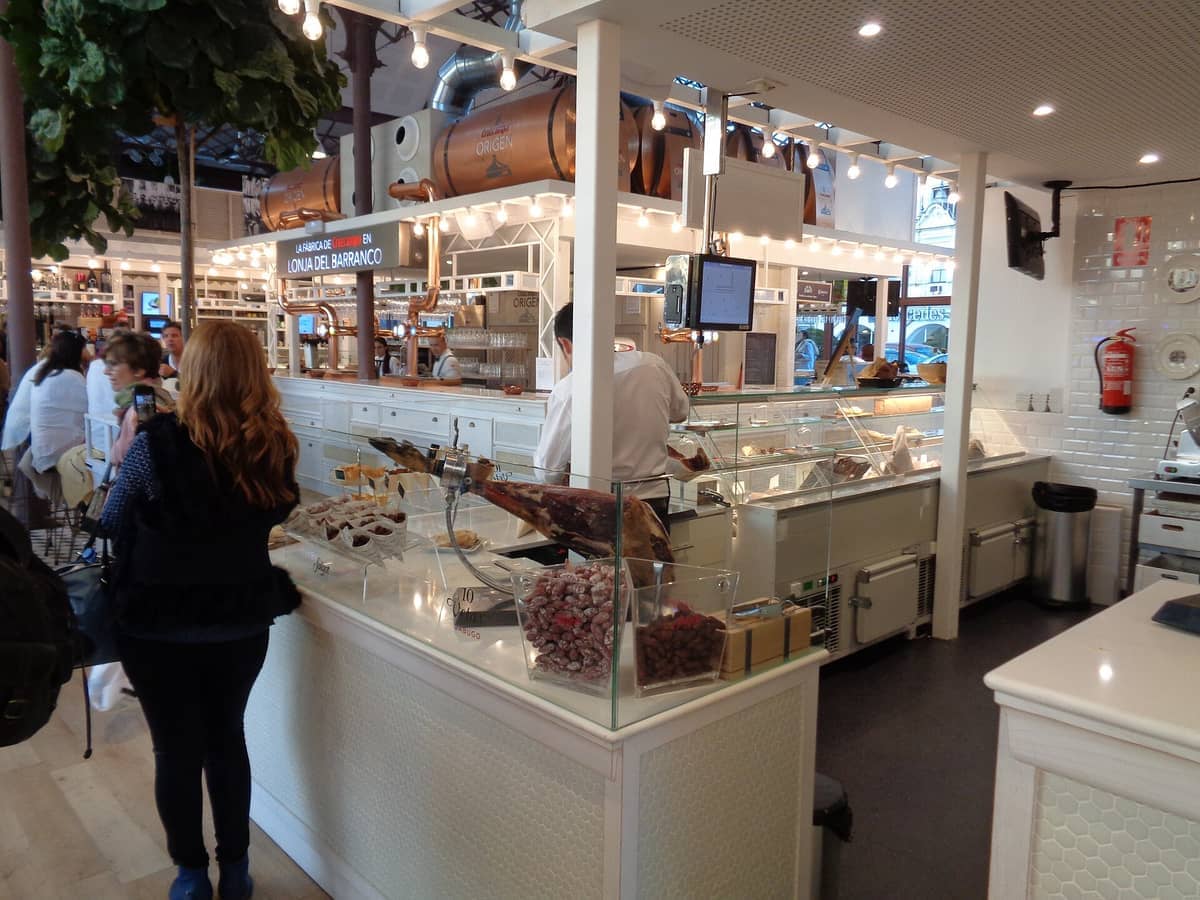
What Mercado Lonja del Barranco Actually Is
Mercado Lonja del Barranco is a gourmet food market and social eating space occupying a 19th-century iron-framed building on the east bank of the Guadalquivir River. The structure was originally built as the Pescadería del Barranco, Seville's municipal fish market, and its bones still speak to that industrial heritage: cast-iron columns, a tall vaulted interior, and large glazed openings that flood the hall with natural light during the day and glow amber after dark.
The conversion into a food court opened the space up to more than 20 individual stalls selling everything from Iberian charcuterie and fresh seafood to sushi, artisan pizza, local cheese, and craft beer. This is not a traditional street market where produce changes hands in the morning and closes by noon. It runs through the afternoon and well into the night, which immediately sets it apart from most of Seville's food options.
ℹ️ Good to know
Opening hours: Sunday to Thursday 10:00–24:00, Friday and Saturday 10:00–02:00. Entry is always free. Check the official site before visiting during public holidays, when hours may vary.
The Building: Why the Architecture Matters
The Lonja del Barranco building sits at the foot of the Puente de Triana, the city's oldest surviving bridge, and its position on the riverbank is not incidental. This stretch of water was the commercial artery of Seville for centuries: goods from the Americas arrived here, fish was traded here, and working boats lined this bank long before the area became a leisure zone. The iron structure itself belongs to a tradition of 19th-century market halls across Europe that used industrial materials, cast iron and glass, to create large, covered public spaces for commerce.
Standing inside, the ribs of the roof draw the eye upward. The scale is generous without being overwhelming, and the proportion of the hall means that even on a crowded Friday evening, the space does not feel suffocating. If you want to understand the building's riverfront context fully, it sits within the broader El Arenal neighborhood, a stretch of Seville that also contains the Torre del Oro, the Real Maestranza bullring, and a riverside promenade that connects directly to the market's entrance.
Tickets & tours
Live prices and dates from our booking partner. If you book, we may earn a commission at no extra cost to you.
Seville Archive of Indies, Torre del Oro and Salvador Church tour
From 16 €Instant confirmationFree cancellationCaminito del Rey trekking tour from Seville
From 99 €Instant confirmationFree cancellationGuided tour of the white villages of Andalusia: Ronda, Grazalema and Zahara
From 79 €Instant confirmationFree cancellationSevilla FC Ramon Sanchez-Pizjuan Stadium tour
From 10 €Instant confirmation
How the Market Feels at Different Times of Day
Mid-morning on a weekday is quiet. A handful of stalls are setting up, the cleaning crew finishes mopping the stone floor, and the smell is still more fresh bread and coffee than garlic and grilled fish. This is the least photogenic but most relaxed time to visit, good for getting a coffee and a pastry without navigating crowds. The light through the glazed walls is clean and even at this hour.
Lunchtime from around 13:00 to 15:30 brings the first real surge. Office workers from the surrounding streets, tourists coming from the nearby Cathedral or Torre del Oro, and local families all arrive roughly simultaneously. The noise level rises sharply: the clatter of glasses, the hiss of something hitting a hot pan at a seafood stall, and the steady buzz of conversation in Spanish, English, and a revolving set of other languages. Finding a free table at peak lunch hour requires patience or luck.
Late afternoon, from about 16:30 to 19:00, is arguably the most comfortable window on a hot summer day. The lunch crowd has thinned, the stalls are fully stocked, and the heat outside makes the high interior ceiling a genuine relief. By 20:00 the evening crowd begins to build again, and by 22:00 on a weekend the bar stalls see the longest queues of the day.
💡 Local tip
Best time to visit: arrive at 13:00 on the dot for lunch (before the main rush), or come after 16:30 for a quieter afternoon snack. Avoid the 14:00–15:00 window if you dislike crowds.
What to Eat: Navigating the Stalls
The stall lineup covers a wider range than most food markets in Andalusia. You will find a dedicated seafood counter where Huelva white prawns appear regularly, a stall specializing in Iberian ham carved to order, at least one spot doing solid montaditos and local-style tapas, and several options leaning into more international territory. Prices are transparent and posted at each counter: tapas portions generally run from around €2 to €5, and a more composed plate with fish or meat typically falls between €8 and €15.
The drinks situation is equally varied. Several stalls pour local Andalusian wines, Manzanilla sherry from Sanlúcar, and craft beer. There is no single bar for the whole market; each vendor runs their own operation, so you order where you eat and pay per stall rather than running a single tab.
If you are building a broader picture of Seville's food culture, the Lonja del Barranco gives a useful shortcut: many regional specialties are represented under one roof. For more context on what to look for, the guide to eating in Seville covers the wider food landscape, from local taverns in Santa Cruz to the street snacks of the Feria season.
The Riverfront Location and What It Adds
The market's entrance faces directly onto the Guadalquivir promenade, which means arriving and leaving is part of the experience. On a clear evening, the walk along the river toward the Torre del Oro takes less than five minutes and offers one of the better informal views of the city at dusk. The golden tower itself is lit from dusk onward and reflects off the river when the water is calm.
Across the Puente de Triana, visible from the market's riverside entrance, is the Triana neighborhood, with its ceramic workshops, neighborhood taverns, and the Mercado de Triana just a short walk past the bridge. If you have time after eating, crossing on foot takes under two minutes and opens a genuinely different side of Seville.
The Torre del Oro stands barely 200 meters south along the riverside path. Combining both in a single afternoon, the market for a late lunch and the tower for the short museum inside before it closes, is an efficient use of time in El Arenal.
Practical Details: Getting There, Accessibility, and What to Bring
The market is walkable from most central Seville hotels. From the Cathedral, the walk takes roughly 12 minutes along Avenida de la Constitución and then west toward the river. From the Setas de Sevilla or the Alameda de Hércules, budget around 20 minutes on foot. Bus lines 03, 21, 40, 41, and C4 all have stops in close proximity to Calle Arjona.
The building is classified as accessible. There are no significant steps at the main entrance, and the interior floor is level throughout, making it straightforward for wheelchair users and visitors with pushchairs. The main seating areas have a mix of high stools at counters and lower tables; not every stall has low seating, so it is worth a quick scan of the floor plan when you arrive.
In summer, Seville's heat is intense, and the market's shaded interior offers genuine relief from midday temperatures that regularly exceed 35°C in July and August. For more on timing a visit to the city around the climate, the guide to the best time to visit Seville breaks down monthly conditions in practical terms.
⚠️ What to skip
On weekend evenings in summer, the market fills quickly. If you plan to eat at a specific stall, arrive before 21:00 to avoid queuing or losing your preferred table. Card payment is accepted at most stalls, but carrying some cash is useful at smaller counters.
Honest Assessment: What Works and What Does Not
The Lonja del Barranco does several things well. The building is genuinely handsome, the variety of stalls is broader than most food halls in the city, the late hours make it one of few places to eat a proper meal after midnight, and the riverside location adds context that a generic food court cannot replicate. For visitors who want to sample multiple types of food without committing to a single restaurant, or families with children who cannot agree on a single cuisine, it solves a real problem.
What it does less well: the atmosphere skews heavily toward tourists during peak season, and prices at some stalls reflect that footfall. A local Sevillano wanting a quick lunch is more likely to head to a neighborhood bar than to the Lonja. The food quality across stalls is uneven; some counters are clearly operating at a higher standard than others, and the difference is noticeable. It is not the place to find the cheapest meal in Seville, nor is it the most authentic representation of how the city eats day to day.
Travelers looking for a more local-facing market experience should also consider the Mercado de Triana, just across the river, which operates primarily as a traditional food and produce market and draws a more mixed crowd of residents and visitors.
Insider Tips
- The best seafood stalls sell out of premium items like fresh prawns by early afternoon on weekdays. If Huelva white prawns are on your list, arrive before 14:00.
- Tables on the river-facing side of the market are the most sought after on weekend evenings. Arrive 10 minutes before you plan to eat and claim one before you order.
- The market regularly hosts live music events, particularly on weekend evenings. Check the official site (mercadodelbarranco.com) a day or two before your visit to see if there is a scheduled performance, which changes the atmosphere considerably.
- Combining the Lonja del Barranco with a walk across Puente de Triana and into the Triana neighborhood gives a natural half-day riverside loop that requires no transport and covers two very different sides of Seville.
- If you are visiting in winter, note that the iron-framed building is less insulated than it might appear. On cold January evenings, a jacket is useful even once you are inside.
Who Is Mercado Lonja del Barranco For?
- Travelers who want to sample multiple Andalusian specialties in one sitting without committing to a single restaurant
- Families with children where different people want different food
- Visitors arriving on a Sunday when many traditional restaurants are closed or have reduced hours
- Night owls and late diners who want a proper meal after 22:00, especially on weekends
- Architecture enthusiasts interested in 19th-century industrial market hall design alongside a meal
Nearby Attractions
Other things to see while in El Arenal:
- Iglesia de la Magdalena
The Real Parroquia de Santa María Magdalena stands as one of Seville's great Baroque achievements, a richly decorated 18th-century church tucked into the El Arenal district just minutes from Plaza Nueva. Entry is free, crowds are thin, and the interior rewards anyone who takes the time to look up.
- Museo de Bellas Artes de Sevilla
The Museo de Bellas Artes de Sevilla holds one of Spain's finest collections of Golden Age painting, housed in a former Baroque convent at Plaza del Museo. Admission is just €1.50 for non‑EU visitors, and EU citizens enter free. Here is everything you need to visit well.
- Real Maestranza de Caballería de Sevilla (Bullring)
The Real Maestranza de Caballería de Sevilla is one of the oldest and most architecturally significant bullrings in Spain, standing on the Guadalquivir riverfront since the 18th century. Whether you follow bullfighting or not, the arena offers a serious window into Andalusian history, art, and civic identity. This guide covers the visit in honest detail.
- Torre del Oro
Standing 36 metres tall on the bank of the Guadalquivir River, the Torre del Oro is one of Seville's most photographed landmarks. Built around 1220–1221 as a military watchtower, it now houses a small naval museum and offers some of the most dramatic riverfront views in Andalusia. Admission costs just €3, with €1.50 concessions, making it one of the best-value monuments in the city.
Planning a trip? Discover personalized activities with the Nomado app.