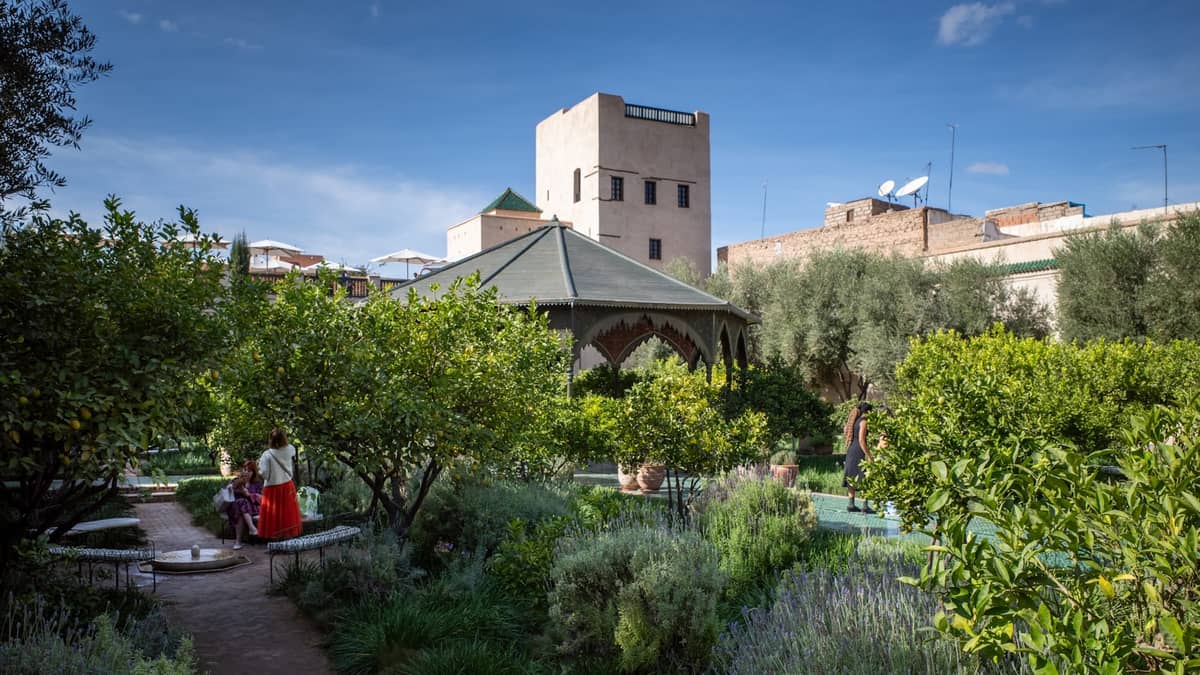
The Marrakech Medina is the UNESCO-listed historic core of the city, enclosed by about 19 km of ramparts and home to iconic landmarks, labyrinthine souks, and centuries of Islamic architecture. Founded by the Almoravids around 1070, it remains the cultural and commercial center of Marrakech, with Jemaa el-Fna square at its heart.
The Marrakech Medina is not a neighborhood you ease into gradually. From the moment you pass through one of its monumental gates, the scale of it pulls you in: narrow derbs branching off main souk arteries, a 12th-century minaret visible from almost every rooftop terrace, and a square that transforms completely from morning to midnight. It is the historic walled city that gives Marrakech its identity, and for most visitors, it is the entire reason for coming.
Orientation
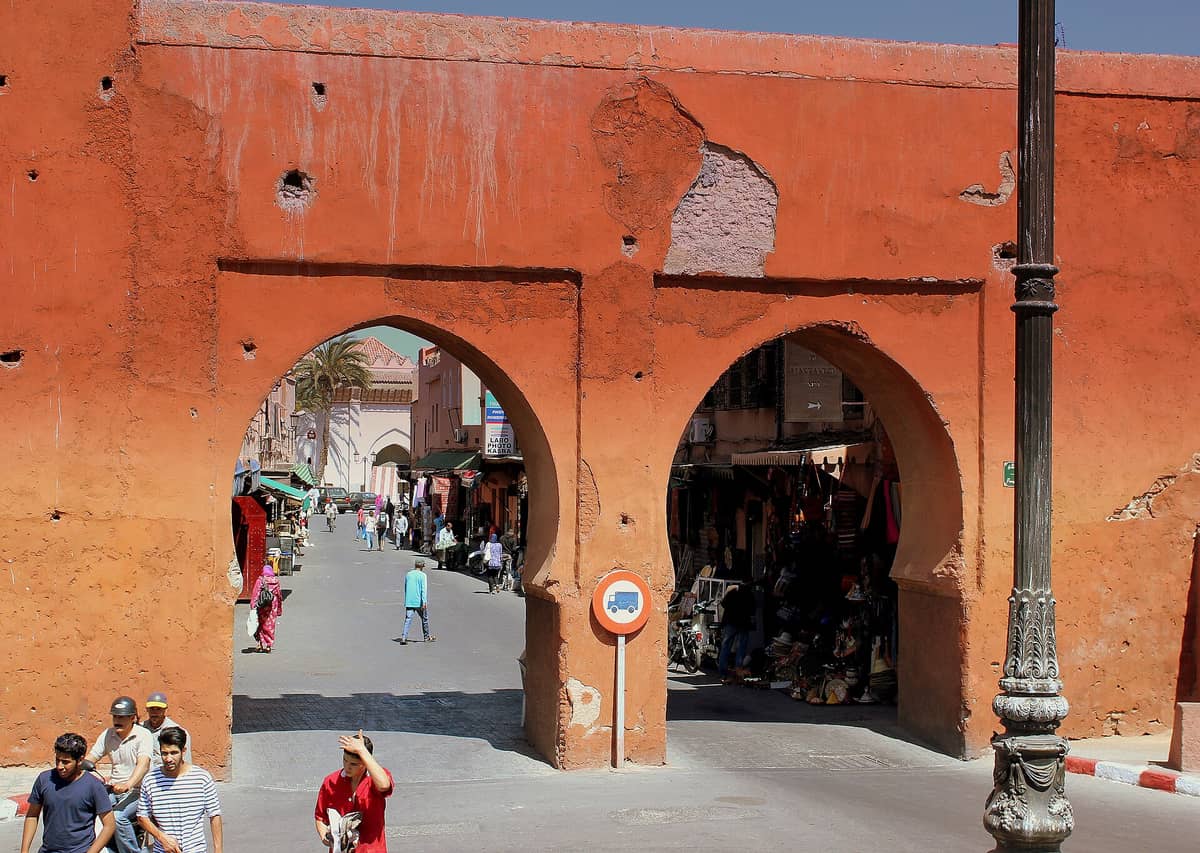
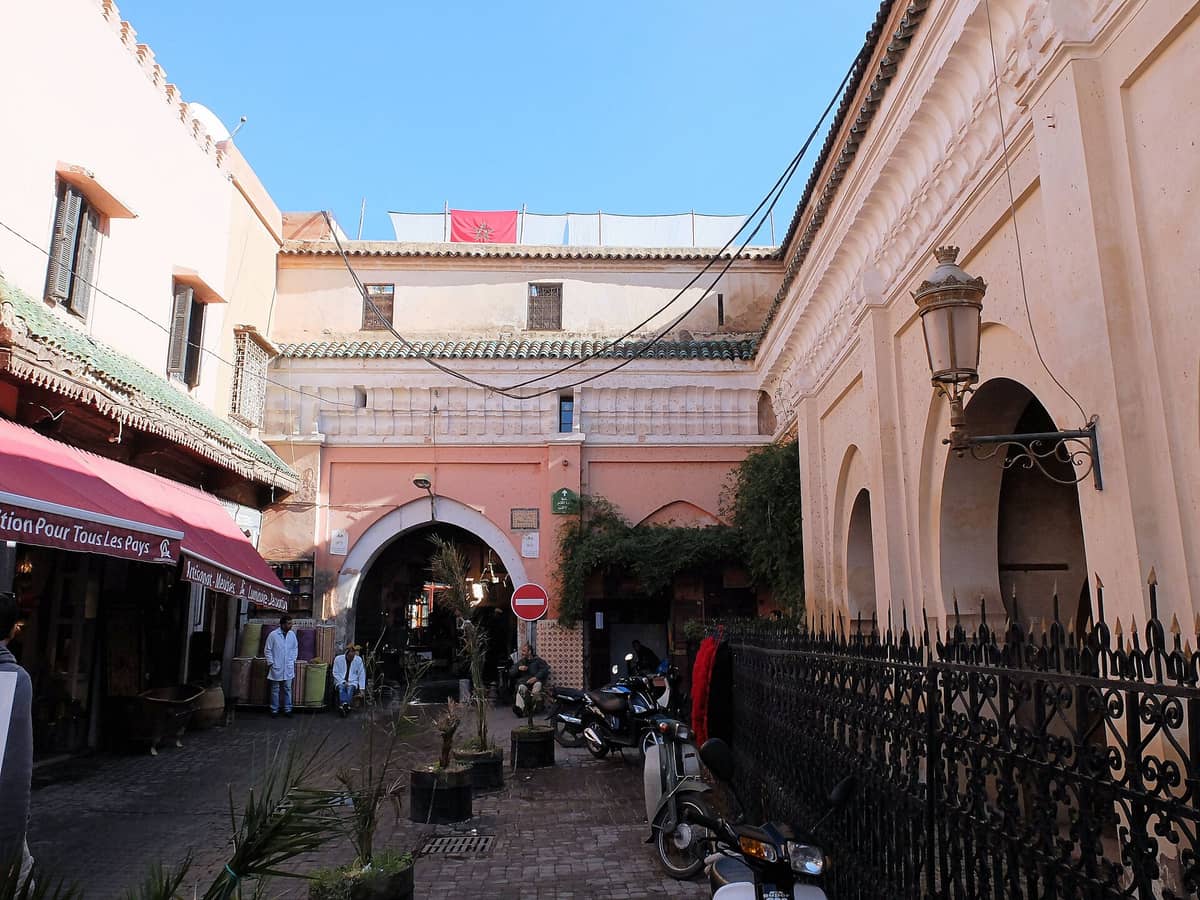
The Medina sits at the geographic and psychological center of Marrakech. It is encircled by roughly 19 km of pinkish-ochre ramparts, punctuated by monumental babs (gates) that once controlled entry to the city. The walls were constructed primarily during the Almoravid period and reinforced by subsequent dynasties, and they remain largely intact today. Inside those walls lies a dense urban fabric covering around 700 hectares, inscribed as a UNESCO World Heritage Site under the name "Medina of Marrakesh."
The main reference point for navigating the Medina is Jemaa el-Fna, the large open square in the western part of the old city. From there, the principal souk axes run northward toward the Ben Youssef Madrasa and the northern neighborhoods, while the Kasbah district extends south toward the Saadian Tombs and the Bab Agnaou gate. The Mouassine quarter sits to the northwest of the square, and the Mellah (the historic Jewish quarter) lies to the southeast, near Bahia Palace.
Immediately outside the Medina walls to the northwest lies Gueliz, the modern new town, reachable on foot in about 20 minutes along Avenue Mohammed V. To the south, Hivernage runs parallel to the walls with its wide hotel-lined boulevards. The Marrakech railway station is approximately 1.7 km from the Medina's western edge, roughly a 20-25 minute walk or a short petit taxi ride.
ℹ️ Good to know
The Medina's street layout was never designed on a grid. Streets narrow unexpectedly, change names, and loop back on themselves. Offline maps (Maps.me or Google Maps downloaded for offline use) are useful here. Getting briefly lost is normal, and rarely a problem in daylight.
Character & Atmosphere
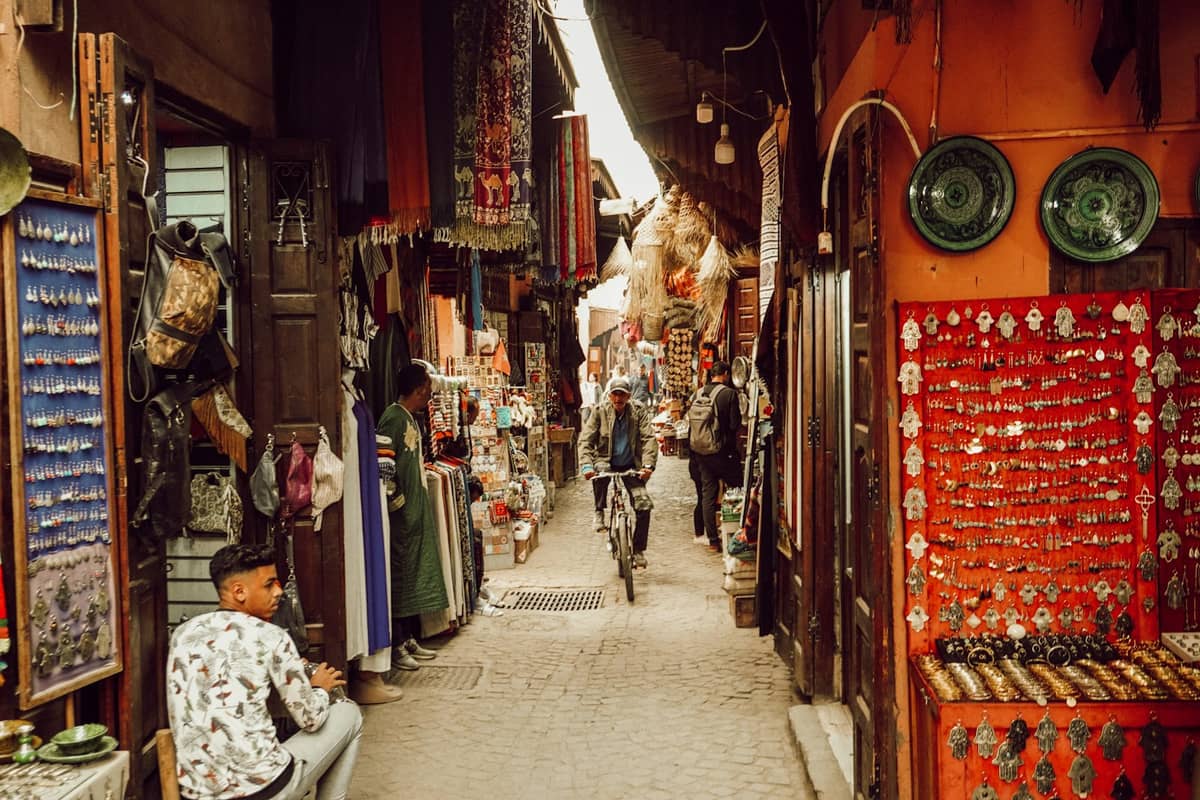
Walking the Medina at different times of day is a different experience each time. In the early morning, before 9am, the main derbs are quiet enough to hear pigeons on rooftop edges and the call to prayer echoing between buildings. Shopkeepers are rolling up metal shutters, bread is being carried from communal ovens on wooden boards, and the light falls at a low angle that makes the rose-colored plaster walls glow amber. This is the Medina that residents actually live in, before the tourist traffic builds.
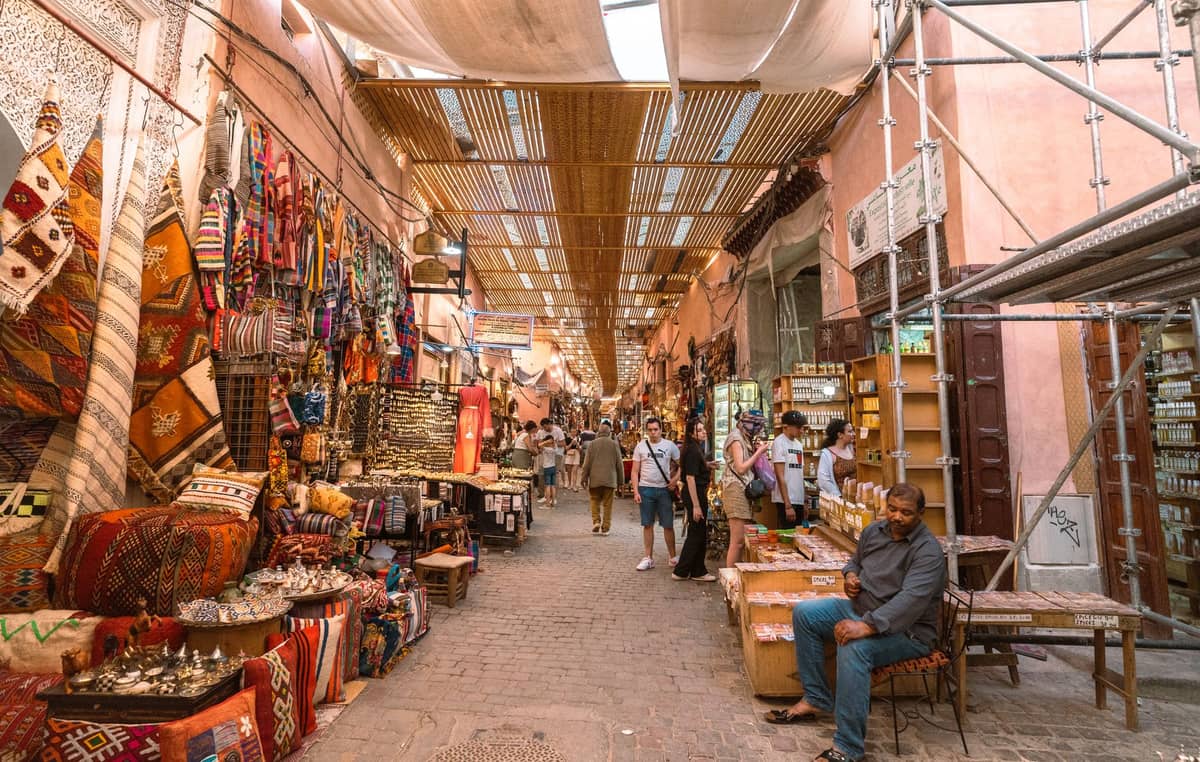
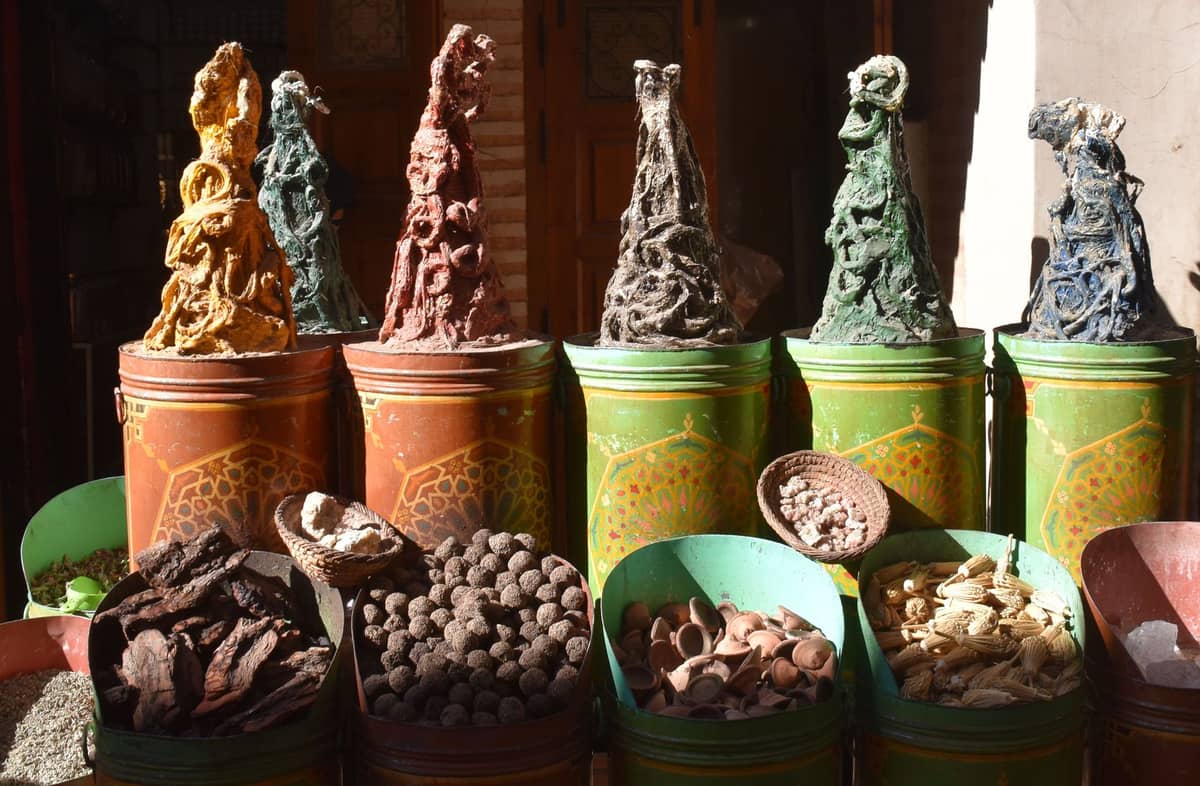
By mid-morning, the souk arteries between Jemaa el-Fna and the Ben Youssef Madrasa are fully active. The Souk Semmarine, the main covered market street running north from the square, fills with a mix of locals shopping for fabric and hardware alongside visitors navigating the stalls. The air carries the smell of fresh leather from the tanneries district, cumin from spice vendors, and occasionally the sharp edge of ammonia used in dyeing processes near the Souk des Teinturiers.
Afternoons in summer are hot, and the Medina's narrow streets provide more shade than anywhere else in the city. Many riads and guesthouses close their doors during the midday hours, and the pace noticeably slows. This is a good time for sitting in a courtyard café near the Mouassine Fountain or visiting the cool interior spaces of major monuments. The Medina does not have the air-conditioned escape routes of a modern city.
After sunset, Jemaa el-Fna transforms in a way that is hard to describe in advance. Food stalls set up in the center of the square, smoke from grills rises in columns, and the sound of Gnawa musicians, storytellers, and street performers fills the space. The Jemaa el-Fna square at night is the defining experience of the Medina for most visitors, and for good reason. The surrounding streets are lit by shop interiors and fluorescent stall lights, and the energy is high until around 11pm.
The friction is real. The main souk corridors near Jemaa el-Fna are heavily trafficked by tourists, and the persistent attention from some vendors and self-appointed guides can be exhausting, particularly on a first day. Walking further north or east, toward the quieter derbs of the Bab Doukkala neighborhood or the residential areas around the Rue de Bab Doukkala, the Medina shifts character entirely into something closer to an ordinary, lived-in city.
What to See & Do
The Koutoubia Mosque is the architectural anchor of the Medina and, at about 69 meters, the tallest structure in Marrakech. Built in the 12th century under the Almohad dynasty, its minaret became the template for the Giralda in Seville and the Hassan Tower in Rabat. Non-Muslims cannot enter, but the surrounding gardens and the view of the minaret at dusk are accessible and worth taking time with.
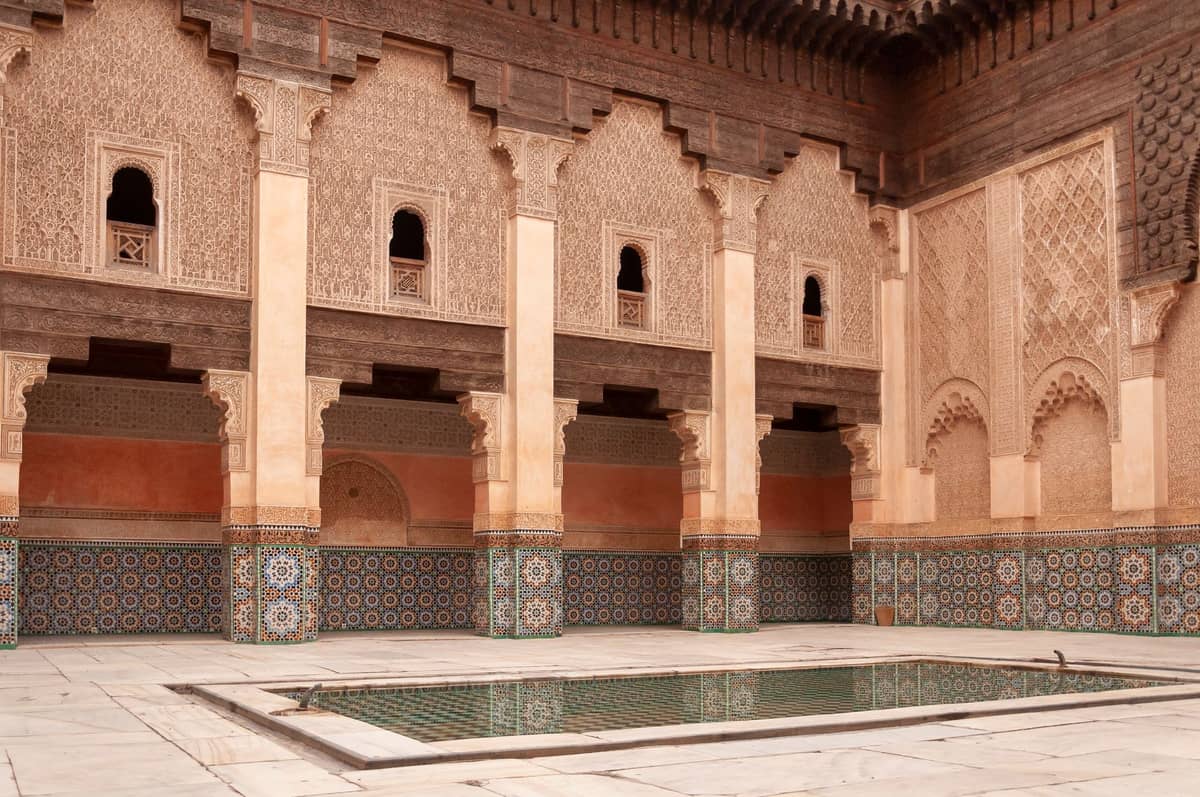
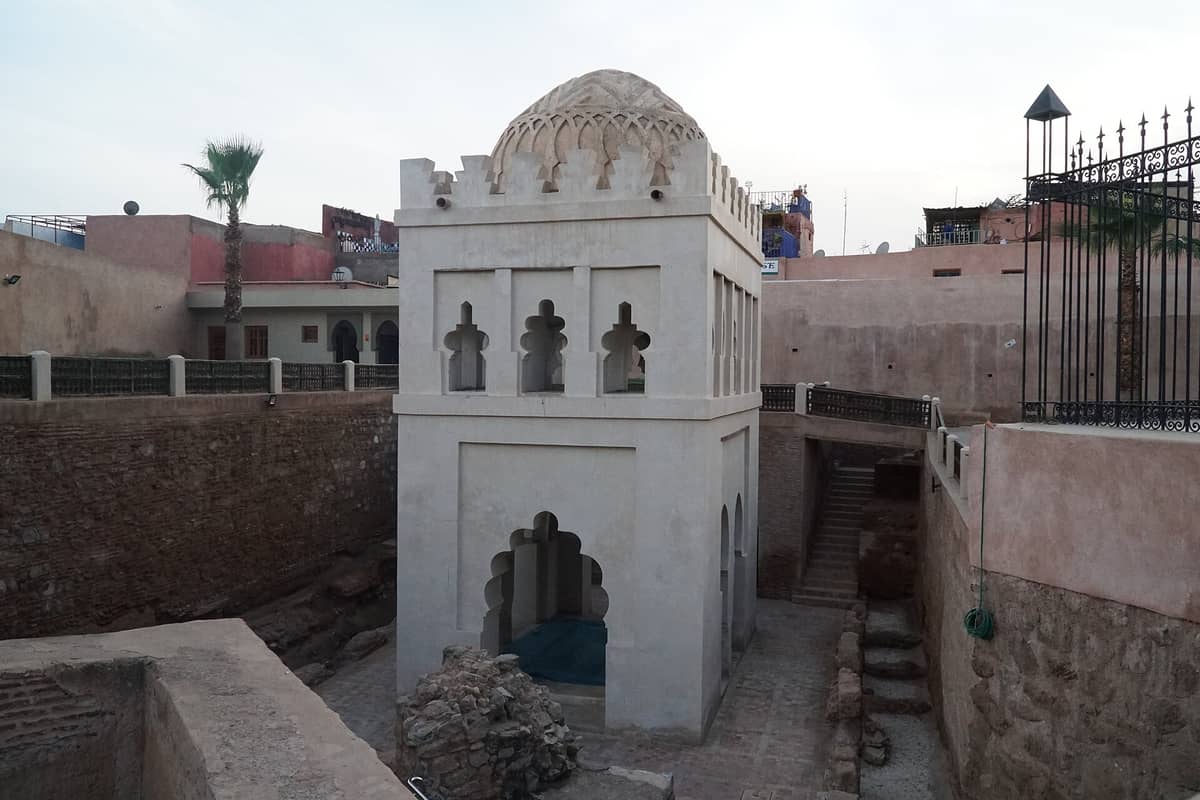
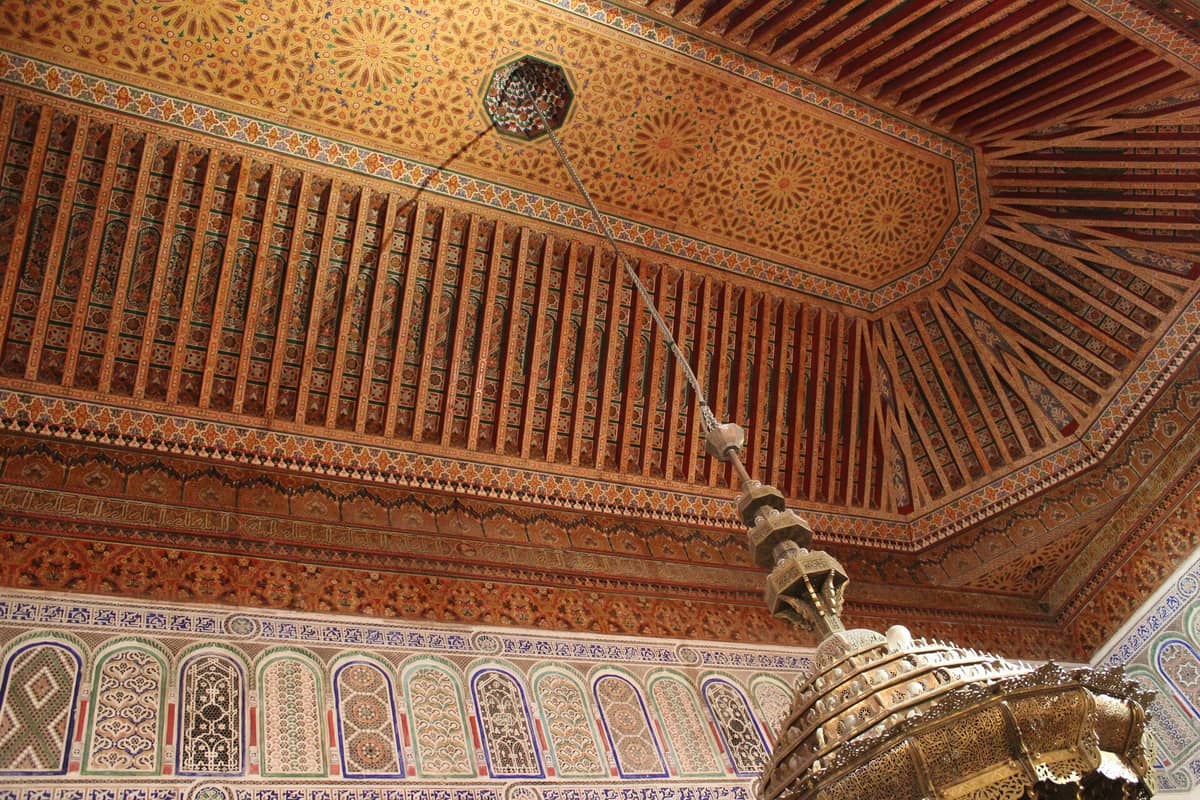
The Ben Youssef Madrasa is the single most architecturally impressive interior in the Medina. This 14th-century Quranic school, restored and now open as a monument, contains some of the finest examples of Moorish stucco carving and zellij tilework in Morocco. Arrive early to see the central courtyard without crowds. Nearby, the Koubba Ba'adiyn is the only surviving Almoravid structure in the city, dating to the early 12th century.
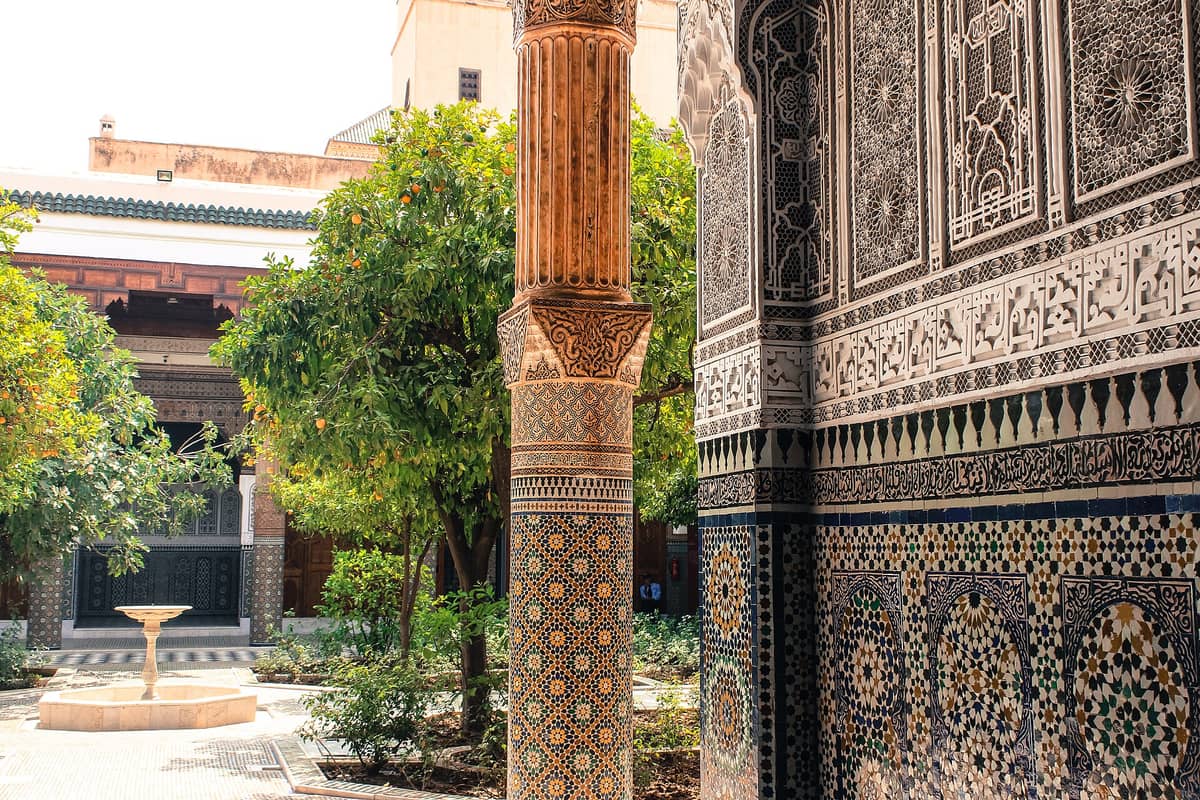
In the southern Medina, the Bahia Palace offers an insight into the domestic architecture of the 19th-century Moroccan elite, with elaborately decorated reception rooms arranged around a series of garden courtyards. A short walk away, the Saadian Tombs contain the royal necropolis of the Saadian dynasty, sealed for centuries and only rediscovered in 1917. The chamber of the Twelve Columns is particularly striking.
Marrakech Museum (inside the Medina, housed in the 19th-century Dar Menebhi palace, with rotating exhibitions and a courtyard café)
Maison de la Photographie (near Bab Doukkala, a rooftop gallery with a strong collection of historical Moroccan photography)
Dar el Bacha / Musée des Confluences (a beautifully restored pasha's palace near the Mouassine quarter)
El Badi Palace (ruined 16th-century palace in the Kasbah district, with storks nesting on the ramparts)
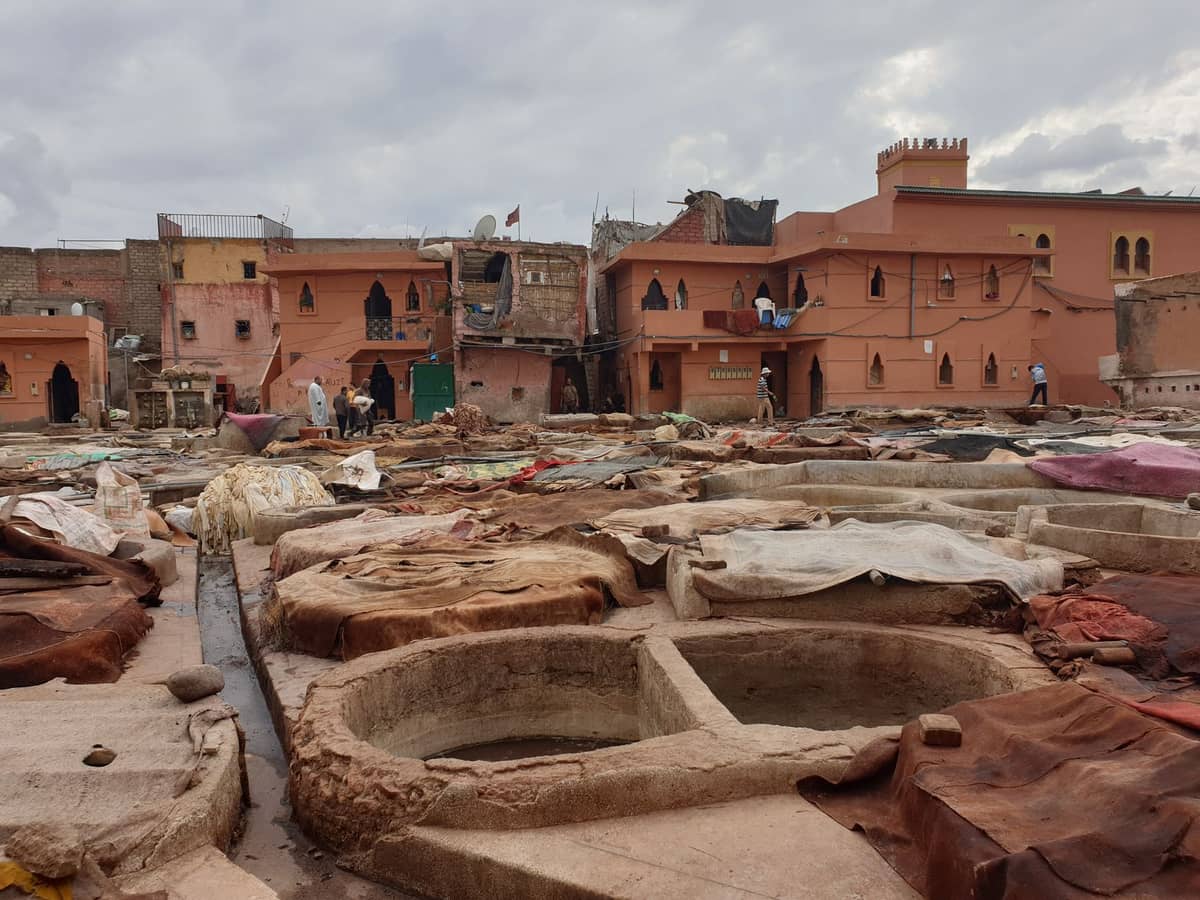
The leather tanneries quarter (best viewed from rooftop terraces of nearby leather shops, most vivid in the morning when dye vats are active)
The Marrakech souks are not a single market but a series of specialized trade corridors: the Souk des Bijoutiers for jewelry, the Souk Cherratine for leather goods, the Souk des Teinturiers for dyed yarn and fabric, the Souk Haddadine for ironwork and lanterns. Each has its own sound and smell. A useful guide to shopping in the Marrakech souks can help you navigate with purpose rather than wandering in circles.
Eating & Drinking
The food options in the Medina range from rooftop restaurant terraces charging European prices to street stalls where a full plate of harira, bread, and dates costs a few dirhams. For context on the full range, the Marrakech food guide covers the city's eating scene across all neighborhoods. Inside the Medina specifically, the cooking leans heavily on traditional Moroccan dishes: slow-cooked tagines, couscous on Fridays, pastilla (a flaky pastry filled with pigeon or chicken and almonds), and harira soup.
The food stalls on Jemaa el-Fna at night are a spectacle and a meal simultaneously. The stalls are numbered, and vendors compete actively for your attention, sometimes using aggressive tactics. Prices are generally posted on boards, but agree on the total before sitting down and check your bill carefully. The quality is consistent across most stalls; grilled merguez, sheep's head, and fresh-squeezed orange juice (sold at the edges of the square, not from the stalls) are all reliable.
For a quieter meal, the restaurant streets in the northern Medina near Place Bab Ftouh and in the Mouassine neighborhood have smaller family-run establishments where the food is often more carefully prepared and the atmosphere less theatrical. Café des Épices, near the Rahba Kedima spice square, has one of the better rooftop terraces for a mid-afternoon mint tea break with a view over the souk roofline.
💡 Local tip
Fresh orange juice sold by vendors around the perimeter of Jemaa el-Fna is typically 4-5 MAD per glass and is among the best value refreshments in the city. The juice stalls at the edges of the square are preferable to those directly at the central food stalls, where the pricing can be less transparent.
The Medina has no licensed bars as such, given its character as a largely residential and traditional neighborhood. Riad guesthouses often serve wine and beer to guests in their interior courtyards, and some upmarket restaurant terraces hold alcohol licenses. For a broader nightlife scene with cocktail bars, the neighborhood to look toward is Gueliz, about 20 minutes on foot from the northern edge of the Medina.
Getting There & Around
From Marrakech Menara Airport (IATA: RAK), located about 6 km southwest of the Medina, the most straightforward public transport option is ALSA Bus Line 19, which runs every 20-30 minutes directly to Jemaa el-Fna. The journey takes around 20-30 minutes depending on traffic. A petit taxi from the airport rank typically runs 70-100 MAD to the Medina and takes 15-20 minutes. Pre-booked private transfers are also widely available. For a full breakdown of options, the Marrakech airport transfer guide covers fares and practicalities in detail.
From the Marrakech railway station in Gueliz, the Medina is approximately 3 km away, around a 20-25 minute walk along Avenue Mohammed V, or a short petit taxi ride for about 15-30 MAD. Taxis cannot enter the Medina's pedestrian interior, so you will be dropped at one of the perimeter gates.
Within the Medina itself, movement is almost entirely on foot. The main souk arteries are wide enough for motorbikes and donkey carts, which share the space with pedestrians and require awareness. The key entry points on foot are Bab Doukkala to the north, Bab Agnaou and Bab er-Robb to the south, and the main avenue approach from Gueliz to the west near the Koutoubia. Bus stops at Bab Rob serve city routes including lines 6 and 33.
⚠️ What to skip
Be cautious of unsolicited offers from individuals near the main gates who offer to guide you 'for free' or claim your riad has moved or closed. This is a known tactic in tourist areas of the Medina. If you need directions, ask a shopkeeper or café owner rather than someone who approaches you on the street.
Where to Stay
Staying inside the Medina means staying in a riad, a traditional courtyard house that has been converted into a guesthouse. The experience is different from a hotel: rooms arranged around a central fountain, breakfast served on a rooftop terrace, and the sounds of the city filtered through thick walls. The complete guide to staying in a riad explains what to expect, what to look for, and how to choose.
The best location within the Medina for accommodation depends on what you want. Riads near Jemaa el-Fna put you at the center of everything but also at the center of the noise, which persists well past midnight on weekends. The Mouassine and Bab Doukkala neighborhoods offer a slightly quieter atmosphere while remaining walkable to the main attractions. The Kasbah area in the south is the quietest part of the Medina and particularly suited to travelers who want proximity to the Saadian Tombs and Bahia Palace without being in the thick of souk traffic.
For travelers who prefer a more modern hotel setting with easier taxi access, Hivernage and Gueliz are both reasonable bases. The where to stay in Marrakech guide compares all neighborhoods side by side for different traveler types.
Safety & Practical Notes
The overall safety picture in the Medina is reassuring for most travelers. Violent crime against tourists is uncommon. The primary risks are petty theft, particularly pickpocketing in the most crowded sections near Jemaa el-Fna and the main souk entrances, and various forms of tourist-targeted hassle such as misleading directions, commission-driven shop referrals, and inflated prices on unmarked goods. Staying alert in dense crowds, keeping phones and cameras out of easy reach, and using maps confidently without appearing disoriented significantly reduces the likelihood of problems.
After dark, the main areas around the square and the lit souk streets remain active and generally safe. The quieter residential derbs deeper in the Medina are less reassuring at night for solo travelers, particularly women traveling alone. The Marrakech safety guide provides a detailed, honest assessment of risks by area and traveler type. Dress code in the Medina leans conservative: covering shoulders and knees is advisable and will reduce unwanted attention, especially in the quieter residential sections.
ℹ️ Good to know
Morocco uses the Moroccan dirham (MAD), which is not freely convertible outside the country. Currency exchange offices are found throughout the Medina, including near Jemaa el-Fna, but rates vary. The main banks near the square and along Avenue Mohammed V in Gueliz generally offer more reliable rates. Keep small denominations handy for market purchases, as large notes are often refused by small stall vendors.
For travelers planning a wider visit, the Medina is the natural base for day trips to the surrounding region. The High Atlas mountains, the Ourika Valley, and the Agafay Desert are all within 1-2 hours. The day trips from Marrakech guide covers all realistic options from the city.
TL;DR
The Marrakech Medina is a UNESCO World Heritage Site encircled by about 19 km of ramparts, containing nearly 1,000 years of Islamic architecture, active souks, and the famous Jemaa el-Fna square.
Best suited to travelers who want full immersion in Moroccan urban life: narrow streets, riad guesthouses, traditional food, and constant sensory stimulation.
Key attractions include the Koutoubia Mosque, Ben Youssef Madrasa, Bahia Palace, Saadian Tombs, El Badi Palace, and the network of specialized souk corridors.
Petty theft and tourist-targeted hassle are the main friction points; the Medina is generally safe in the main arteries but warrants more caution in quiet areas after dark.
Not ideal for travelers who need easy car access, air-conditioned retail, or a quiet base. Those travelers are better placed in Gueliz or Hivernage with day trips into the Medina.
Three days is enough time to cover Marrakech's essential medina landmarks, the Jardin Majorelle complex, the souks, and at least one excellent meal in Gueliz. This itinerary is built around realistic walking distances, opening hours, and the things most guides get wrong — like Majorelle's timed-entry system and Bahia Palace's tiered ticket pricing.
Marrakech rewards visitors year-round, but the experience changes dramatically by season. This guide breaks down temperatures, crowd patterns, pricing shifts, and cultural events so you can choose the timing that fits your travel style.
Marrakech sits at the center of an extraordinary region. Within a few hours, you can be on an Atlantic beach, hiking in North Africa's highest mountains, exploring a UNESCO-listed ksar, or watching 110-meter waterfalls. This guide covers the best day trips from Marrakech, organized by theme, with practical notes on logistics.
From the airport shuttle to navigating the medina on foot, this guide covers every realistic way to get around Marrakech — with current prices, clear trade-offs, and the practical details most guides leave out.
Marrakech divides opinion more than almost any city in North Africa. This guide cuts through the hype and the horror stories to give you a clear, practical picture of what visiting Morocco's most famous city actually involves, from the medina's sensory overload to the Atlas Mountains on your doorstep.
Marrakech delivers a rare kind of luxury: palace hotels enclosed by ancient medina walls, Agafay desert camps under open skies, and hammam rituals refined over centuries. This guide covers the best high-end stays, spas, experiences, and practical logistics — with a clear look at what is worth the price and what is not.
Seven days in Marrakech gives you enough time to go deep into the medina, escape to the Atlas Mountains, and decompress in a hammam without rushing. This itinerary is structured by district and theme, with frank notes on what to skip, what to book in advance, and how to move around without getting fleeced.
The Agafay Desert sits less than an hour from Marrakech and offers a genuine desert experience without a two-day drive to the Sahara. This guide covers exactly what Agafay is, how to get there, what activities are worth paying for, how overnight camps differ by season, and the practical trade-offs you should know before booking.
Marrakech Menara Airport (RAK) sits just 6 km from the city centre, but knowing which transfer option to choose can save you time, money, and hassle. This guide covers every realistic option, from the 30 MAD public bus to pre-booked private transfers, with a realistic look at what to expect at each price point.
Marrakech is far more than medinas and souks. The city hosts one of Africa's most serious contemporary art ecosystems, anchored by MACAAL, the annual 1-54 Contemporary African Art Fair, and a growing network of galleries in Gueliz and the Medina. This guide covers every layer of that scene with practical details, seasonal timing, and a clear look at what's worth your time.
Marrakech has a stronger museum scene than many visitors expect. From fashion collections in Gueliz to centuries-old palace interiors in the Medina, these are the museums that reward a dedicated visit.
The Sahara is not a day trip from Marrakech. This guide covers the real routes, realistic prices, best seasons, and what to expect on a multi-day desert tour from Morocco's most visited city — so you can plan without surprises.
Ramadan transforms Marrakech in ways most travel guides get wrong. This guide covers the real daily rhythm, where to eat, how to behave respectfully, and why the evenings are worth staying for.
Marrakech is one of North Africa's great eating cities, where tagine-fuelled lunches, slow-cooked tanjia, and 5-dirham snail soup sit alongside rooftop restaurants charging ten times as much. This guide covers every dish worth trying, what it should cost, and exactly where in the medina to find the real thing.
Marrakech delivers a rare kind of romance: ancient medina alleys lit by lanterns, private riad courtyards with plunge pools, and hot air balloons drifting over desert plains at sunrise. This guide covers everything couples and honeymooners need to know, from choosing the right riad to booking a private hammam ritual, with current pricing and practical notes on timing.
From 10–40 MAD neighborhood hammams to 800–1,500 MAD palace rituals, Marrakech offers every tier of the traditional Moroccan bath experience. This guide covers real prices, practical etiquette, what actually happens inside, and how to choose the right hammam for your trip.
Hot air balloon rides over Marrakech offer some of the most dramatic morning views in North Africa, from the Atlas Mountains to the ochre plains of the Palmeraie. This guide covers prices, operators, seasonal timing, what the experience actually involves, and how to avoid common booking mistakes.
December is one of the most underrated months to visit Marrakech. Mild sunny days, manageable crowds, festive hotel programming, and lower prices outside the Christmas peak make it a smart choice for winter travel. Here is everything you need to plan it well.
Spring unlocks Marrakech at its most rewarding: temperatures sit between 22°C and 30°C, the souks and gardens are at their most photogenic, and the brutal summer heat hasn't arrived yet. This guide covers the month-by-month weather reality, what to do, what to watch out for, and how to plan a spring trip that actually delivers.
Marrakech holds some of the finest examples of Islamic architecture in North Africa. This guide covers the key monuments, what you can actually enter as a non-Muslim, current entry fees, the best times to visit, and how to get the most from each site.
Marrakech has two hotels that genuinely deserve the word 'legendary': La Mamounia and Royal Mansour. This guide breaks down what each actually costs by season, what you get for the money, and which alternatives are worth considering if your budget or travel style calls for something different.
Marrakech nightlife is more layered than most visitors expect. From atmospheric medina rooftops overlooking Jemaa el-Fna to sleek cocktail lounges in Gueliz and proper clubs in Hivernage, this guide covers where to go, what to spend, and how to navigate the scene without the usual tourist pitfalls.
Marrakech is one of Africa's most affordable city-break destinations, but it rewards those who know where to spend and where to save. This guide covers every budget category: transport, accommodation, food, attractions, and shopping, with clear cost breakdowns and the traps that drain wallets faster than they should.
Marrakech preserves some of the Islamic world's most extraordinary palatial architecture. This guide covers the Bahia Palace, El Badi Palace, the Saadian Tombs, and other historic monuments — with current ticket prices, opening hours, seasonal advice, and a clear take on what each site delivers.
Marrakech is generally safe for tourists, but the city has its share of scams, pushy touts, and transport traps that catch unprepared visitors off guard. This guide cuts through the noise with a practical breakdown of real risks, neighborhood-by-neighborhood advice, and exactly what to watch out for on the ground.
Marrakech is one of the most rewarding solo destinations in Africa, but it rewards preparation. This guide covers everything from airport transfers and neighborhood choices to safety realities, cultural customs, and the best ways to structure your time alone in Morocco's most iconic city.
The medina's souks are the commercial heart of Marrakech, a labyrinth of specialized markets selling everything from hand-tooled leather to raw saffron. This guide breaks down which souks to visit, when to go, how to haggle, and what to watch out for so you spend your time and money well.
The route from Marrakech to Casablanca is one of Morocco's most-traveled corridors, with frequent trains completing the journey in under three hours. This guide breaks down every transport option, compares fares, and tells you exactly what to expect before you board.
The coastal city of Essaouira sits about 175–190 km from Marrakech and is one of the most rewarding day trips or overnight escapes you can make from the city. This guide breaks down every transport option, with real prices, clear trade-offs, and practical tips for planning the journey.
The journey from Marrakech to Fes is one of Morocco's classic inter-city routes, connecting the country's two most celebrated imperial cities. This guide breaks down every transport option, with current prices, realistic journey times, and practical tips for making the trip smoothly.
The High Atlas Mountains sit less than 90 minutes from Marrakech, making them one of the most accessible mountain ranges for city-based trekkers anywhere in the world. This guide covers every level of trek, from easy valley walks to the summit of Mount Toubkal, with practical notes on costs, seasons, and how to avoid common mistakes.
The Marrakech medina is one of the most walkable historic city centers in North Africa, with landmark palaces, royal tombs, souks, and mosques all within 20 minutes of Jemaa el-Fna. This guide maps out a practical self-guided route with real entry prices, opening hours, timing advice, and warnings about common tourist mistakes.
Marrakech has a reputation for strict dress rules that is, frankly, exaggerated. This guide cuts through the confusion with season-by-season packing lists, candid notes on cultural norms, and specific guidance for mosques, hammams, and the souks. Know exactly what to bring before you pack.
Marrakech rewards curious families with sensory-rich souks, open-air squares, and day trips that children actually remember. This guide covers the best kid-friendly attractions, how to get around with young travellers, when to visit, and what to realistically expect from a medina with a stroller.
A riad is the definitive Marrakech accommodation experience: courtyard architecture, rooftop terraces, and medina immersion that no hotel chain can replicate. This guide covers how riads work, what they cost, where to find the best ones, and what first-timers consistently get wrong.
Marrakech rewards visitors with centuries of Islamic architecture, world-class gardens, hammams, mountain day trips, and one of the most theatrical main squares on the planet. This guide covers the best things to do in Marrakech, with real prices, seasonal advice, and a clear take on what is worth your time.
Marrakech serves one of the most distinctive food cultures in North Africa, from smoky food stalls on its famous main square to candlelit riad dining rooms. This guide covers every budget tier, the best neighborhoods for eating, what to order, and which tourist traps to skip.
Choosing where to stay in Marrakech shapes your entire trip. This guide breaks down every major area, from the labyrinthine medina to the palm-lined Palmeraie, with straightforward notes on who each neighborhood suits and what to expect at every price point.
Yves Saint Laurent first visited Marrakech in 1966 and the city never let him go. This guide covers everything you need to know about his legacy in the city: the cobalt-blue Jardin Majorelle, the Musée Yves Saint Laurent Marrakech, the Berber Museum, ticket prices, booking strategy, and how to visit without wasting a morning in the wrong queue.