What to Wear in Marrakech: The Complete Dress Code & Packing Guide
Marrakech has a reputation for strict dress rules that is, frankly, exaggerated. This guide cuts through the confusion with season-by-season packing lists, candid notes on cultural norms, and specific guidance for mosques, hammams, and the souks. Know exactly what to bring before you pack.
Tickets & tours
Live prices and dates from our booking partner. If you book, we may earn a commission at no extra cost to you.
TL;DR
- Marrakech is modest but not strict: covering shoulders and knees is the baseline in the medina, but full-length robes are not expected of tourists.
- Loose, breathable fabrics (linen, cotton) work for almost every season. Avoid synthetic fabrics in summer when temperatures regularly exceed 35°C.
- A lightweight scarf or pashmina is the single most versatile item you can pack: sun protection, modesty cover, and site entry all in one.
- Dress requirements tighten around religious sites like the Ben Youssef Madrasa and residential neighbourhoods. Tourist areas and modern districts like Gueliz are considerably more relaxed.
- Pack a light layer even in summer. Evenings cool quickly, riads are often cold at night, and air-conditioned restaurants can be genuinely chilly.
Understanding the Dress Code: What It Actually Means in Practice
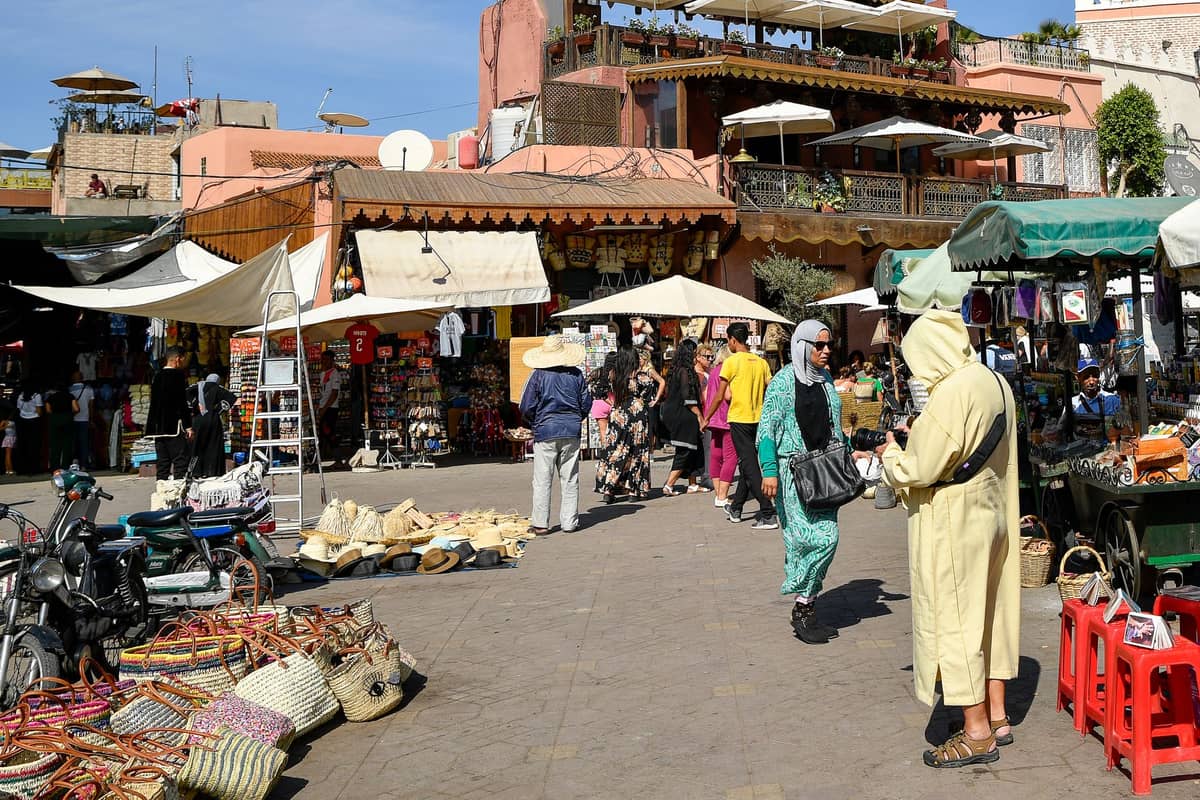
The dress code in Marrakech is one of the most misrepresented topics in travel content. You will find advice ranging from 'dress exactly as you would in London' to 'cover everything from wrist to ankle.' Neither is accurate. Morocco is a predominantly Muslim country, and Marrakech is a culturally conservative city by Western standards, but it receives millions of international visitors every year. The practical baseline is straightforward: cover your shoulders and knees in the medina, and dress more conservatively near mosques, madrasas, and residential neighbourhoods away from tourist routes.
Below-the-knee shorts are generally fine in tourist-facing areas of the medina and the souks. Vest tops and sleeveless shirts will draw attention and, in some contexts, persistent vendor interest that can be avoided simply by adding a lightweight shirt. This is not about strict enforcement. There are no dress police. It is about reading the environment and dressing in a way that makes your experience smoother and shows basic respect for local norms.
💡 Local tip
A loose linen shirt over a vest top or a sarong tied around shorts takes less than 10 seconds and makes a real difference in how you are treated in traditional neighbourhoods and market areas. Keep something lightweight in your bag specifically for this purpose.
The distinction between tourist zones and residential areas matters more than most guides acknowledge. Around Jemaa el-Fna and the main souk streets, you will see visitors in a wide range of clothing. Venture into the quieter residential lanes of the medina, the Mellah, or the streets around the Koutoubia Mosque, and you will notice that conservative dress receives a visibly warmer reception from local residents.
What to Wear by Season: Temperature-Led Packing
Marrakech has a semi-arid climate with hot summers, mild winters, and two very comfortable shoulder seasons. Packing correctly by season is as important as dressing modestly, because the wrong fabrics in the wrong weather will make even a well-chosen outfit genuinely unpleasant.
- Summer (June–August): above 35°C, often reaching 40°C in July–August Prioritise loose linen or cotton in light colours. Avoid black or dark fabrics in direct sunlight. Long, loose trousers are cooler than shorts in direct sun because they block UV radiation. Pack a sun hat with a brim, not just a cap. Breathable sandals with ankle support for the medina's uneven cobblestones are worth bringing.
- Spring (March–May): 20–30°C, with cooler mornings and evenings The most forgiving season to pack for. Light trousers, cotton shirts, and a mid-layer fleece or light jacket for evenings cover most scenarios. Temperatures in March can still feel cold in the shade, so a packable down gilet is genuinely useful early in the season.
- Autumn (September–November): hot in September (32–34°C), cooling sharply by November September dressing is almost identical to summer. From October, add a proper jacket for evenings. November can see overnight temperatures drop to around 12–15°C, which feels genuinely cold after warm days, especially in a riad with traditional architecture and no central heating.
- Winter (December–February): 15–20°C by day, near or below 10°C at night Winter is the season most visitors under-pack for. Mid-layers, a warm jacket, and warm socks are all necessary. Rain is more frequent between November and February, so a compact waterproof layer is worth the space in your bag.
⚠️ What to skip
Riads are beautiful but often poorly insulated. Stone walls and tiled floors retain cold at night even when daytime temperatures feel pleasant. Pack warmer sleepwear than you think you need, especially for winter and early spring visits.
Specific Situations: Souks, Religious Sites, Hammams, and Restaurants
Different parts of Marrakech carry different expectations, and treating them as one uniform environment leads to either over-packing or avoidable discomfort.
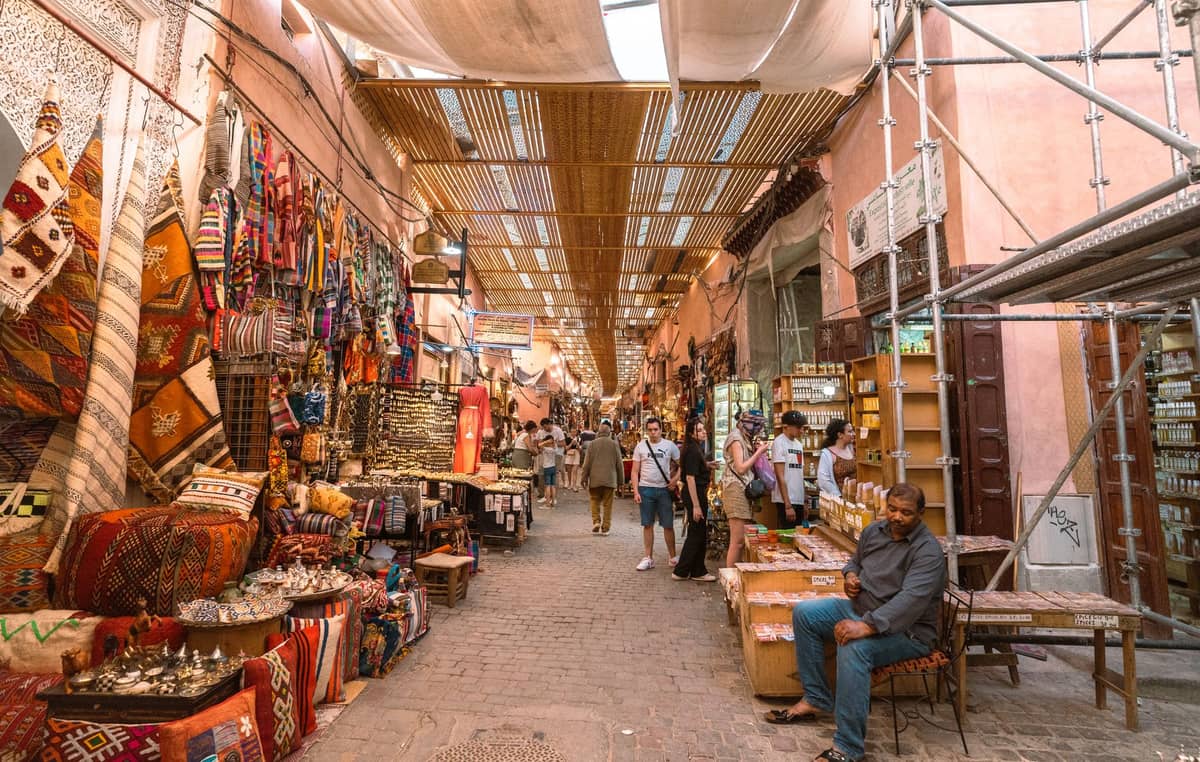
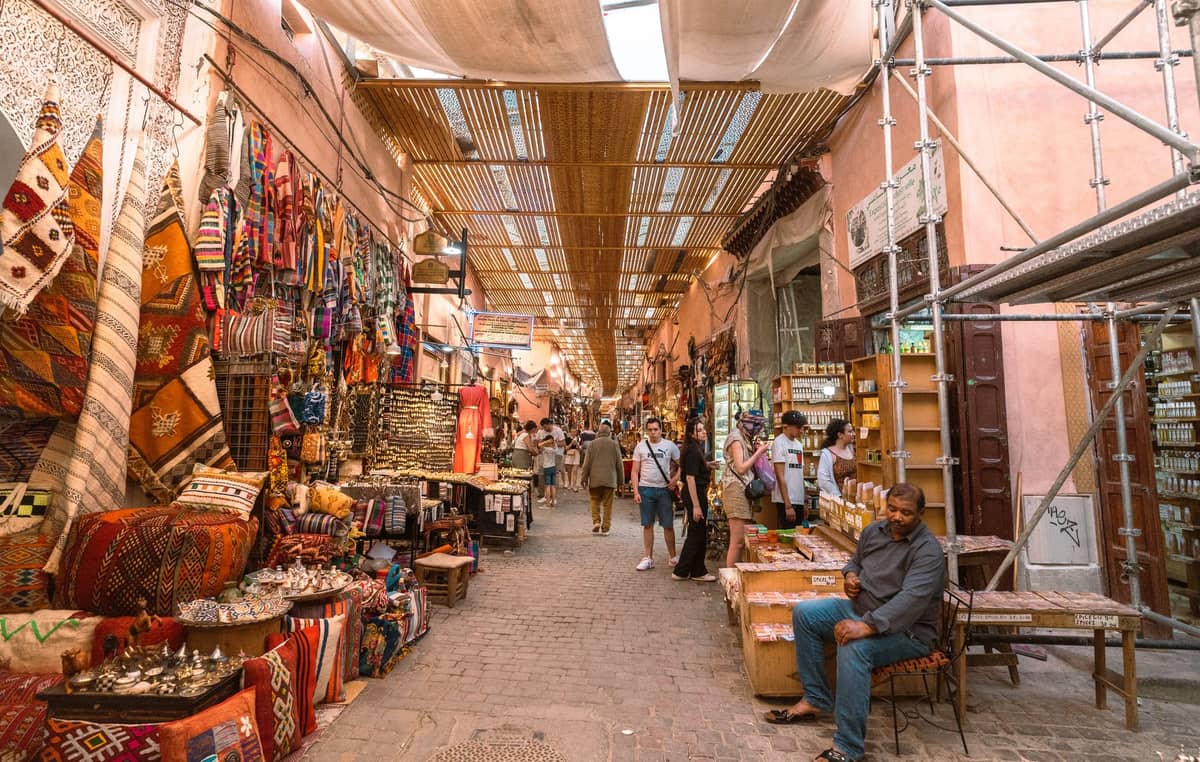
For the souks, prioritise practicality alongside modesty. Closed-toe shoes or secure sandals are strongly preferable to flip-flops: the lanes are uneven, occasionally wet, and heavily trafficked. A crossbody bag or money belt worn under clothing is more secure than a backpack in the narrower, more crowded passages. Light, loose trousers and a breathable shirt work for most of the year.
Religious and heritage sites require proper covering. At the Ben Youssef Madrasa and the Saadian Tombs, shoulders and knees should be covered as a minimum. Entrance to functioning mosques is generally not permitted to non-Muslims in Morocco, so this is less of an issue for most visitors, but the same modest approach applies when walking past or near any mosque. Women are not required to cover their hair in these sites, but a scarf carried in your bag gives you flexibility.
For a traditional hammam experience, you typically wear minimal clothing inside: swimwear or underwear is standard, and most hammams provide a wrap. Bring flip-flops for the changing area. The walk to and from a hammam in the medina should be in standard modest clothing. If visiting a hammam in a hotel or upscale spa context, swimwear rules are more relaxed and Western norms apply.
For restaurants and cafés, dress codes vary by context. In the medina's traditional restaurants and rooftop terraces, smart-casual works well without being overdressed. In Gueliz and Hivernage, where the majority of upscale and international restaurants operate, Western dress norms apply almost entirely. For nightlife venues in Hivernage, standard European smart-casual or club wear is the norm.
The Essential Packing List for Marrakech
This is a practical core list, not an exhaustive inventory. Adjust quantities based on trip length and season. Every item below earns its weight in your bag.
- Lightweight linen or cotton trousers (2–3 pairs) Works for the souks, restaurants, site visits, and day trips. Loose-fit styles in neutral colours are the most versatile and the most comfortable in heat.
- Long-sleeved, breathable shirts (2–3) A thin linen or cotton long-sleeved shirt does more work than a T-shirt: sun protection, modesty cover, and temperature regulation when moving between heated streets and cool interiors.
- A large lightweight scarf or pashmina The single most useful item in Marrakech. Use it as a sun shield, a shoulder cover for sites, a layer in cold evenings, or a makeshift skirt over shorts when entering more conservative areas.
- Comfortable, closed or secure footwear Sandals with straps (not backless flip-flops) or lightweight trainers. You will walk several kilometres a day on uneven surfaces. Blisters are genuinely common among visitors who prioritise style over function.
- A packable mid-layer (fleece, light down, or cardigan) Necessary from October to April and useful year-round for evenings and air-conditioned spaces.
- High-SPF sunscreen and a wide-brimmed hat UV intensity in Marrakech is high even in winter. Sunscreen is available locally but often expensive and limited in high SPF options outside pharmacies.
- Swimwear Required for hotel pools and hammams. Not visible in public outside these contexts.
Common Mistakes and Practical Warnings
Several recurring packing errors are worth addressing directly, because they come up repeatedly in traveller forums and could genuinely affect your trip.
Wearing very revealing clothing in the medina is not illegal, but it does attract more aggressive vendor attention and, in quieter residential streets, visible discomfort from local residents, particularly older women. This is not a cultural judgment on your choices at home. It is a practical note about how your experience in Marrakech will be shaped by what you wear.
Wearing a traditional djellaba purchased in the souks is a common tourist impulse and is generally received with warmth rather than offence, especially if worn with some care. It is not cultural appropriation in any meaningful sense in this context. That said, cheap synthetic djellabas are hot, unflattering, and tend to fall apart quickly. If you want one as a souvenir or practical layer, spend slightly more for a cotton version.
✨ Pro tip
Buy a light cotton scarf or shawl in the souks on your first day for roughly 40–100 MAD rather than packing one from home. They are lighter, locally appropriate in style, and you can leave it behind at the end of the trip if you are travelling light.
For anyone visiting during Ramadan, dress more conservatively than usual across all areas of the city, not just the medina. Eating, drinking, or smoking in public during daylight hours is also considered disrespectful. More context on navigating this period is available in the guide to visiting Marrakech during Ramadan.
Dressing for Day Trips Outside the City
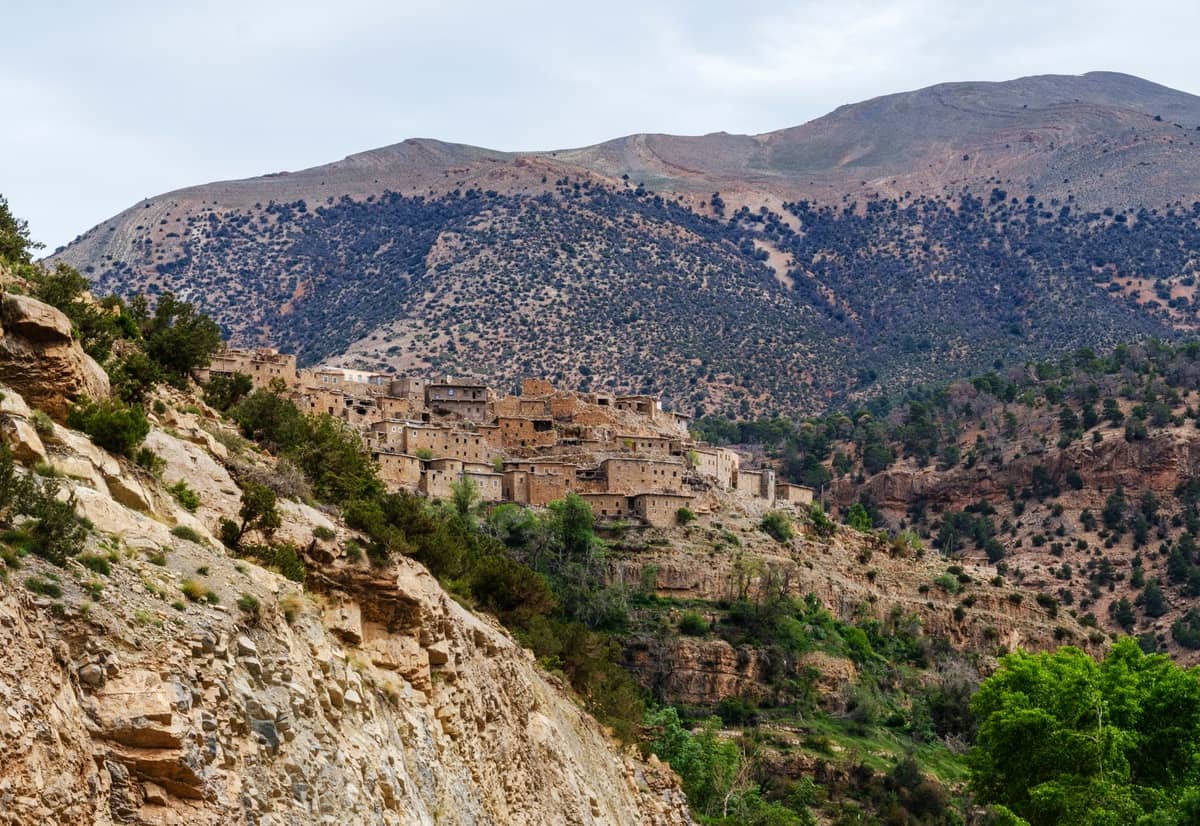
If you are planning day trips from Marrakech into the Atlas Mountains or to villages like Imlil, conservative dress becomes more important, not less. These are traditional rural communities where very few tourists venture beyond the established trekking routes. Long trousers and covered shoulders are the right call, and they double as sun and wind protection at altitude.
For activities in the Agafay Desert or on a hot air balloon flight, comfort and layering are the priority over strict modesty. Mornings in the desert are cool year-round. Add a warm mid-layer for any early start, and expect to need sun protection by mid-morning.
FAQ
Do I have to cover my hair in Marrakech?
No. Women are not required to cover their hair anywhere in Marrakech as a tourist, including when visiting heritage sites like the Ben Youssef Madrasa. A scarf is worth carrying for practical reasons (sun, dust, warmth), but it is not a site entry requirement at any of the main attractions.
Can I wear shorts in Marrakech?
Yes, in most tourist-facing areas. Below-the-knee shorts are widely acceptable in the medina, souks, and around Jemaa el-Fna. Very short shorts are not illegal but will attract more attention in conservative areas. In Gueliz and hotel zones, standard Western shorts norms apply.
What should I wear to visit the Ben Youssef Madrasa or Saadian Tombs?
Cover your shoulders and knees as a minimum. A lightweight scarf or shirt tied around the waist works for legs if you are wearing shorts. There is no formal enforced dress code with inspectors at the entrance, but dressed modestly you will have a smoother experience and show appropriate respect for the sites.
Is Marrakech more conservative than other Moroccan cities?
Marrakech is broadly comparable to other major Moroccan cities like Fes in terms of dress expectations. It is more conservative in traditional areas than Casablanca or Essaouira, which have more cosmopolitan beach or business cultures. In the tourist zone around Jemaa el-Fna, it can feel quite relaxed.
What fabrics work best in Marrakech's summer heat?
Linen and lightweight cotton are the best choices: they breathe, dry quickly, and feel comfortable in direct sun. Avoid polyester and synthetic blends, which trap heat and cause sweating rapidly. Light colours also make a significant difference in direct sunlight when temperatures exceed 35°C.
Tickets & tours
Live prices and dates from our booking partner. If you book, we may earn a commission at no extra cost to you.
Planning a trip? Discover personalized activities with the Nomado app.