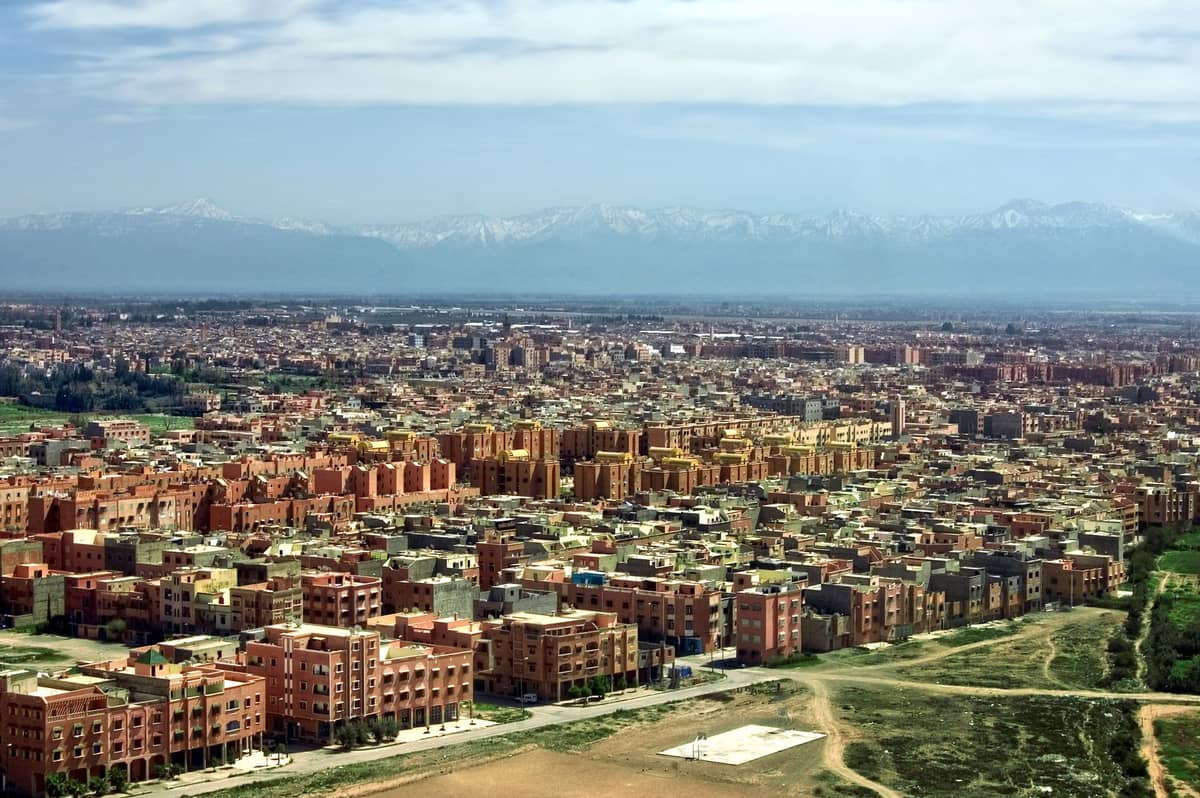
Gueliz, also called Ville Nouvelle, is the modern heart of Marrakech, built during the French Protectorate west of the old medina walls. Wide avenues lined with Art Deco buildings, a serious food and café culture, and proximity to the Jardin Majorelle make it a compelling base and a genuine destination in its own right.
Gueliz is where Marrakech exhales. West of the medina's ancient ramparts, this French Protectorate-era district trades narrow alleys for wide boulevards, riad courtyards for terrace cafés, and centuries of history for a sharp contemporary edge. It is the city's commercial and creative spine, and for travelers who want modern comforts alongside easy access to the old city, it consistently delivers.
Orientation: Where Gueliz Sits in Marrakech
Gueliz occupies the northwest quadrant of Marrakech's urban core, positioned directly west of the historic medina. Its approximate boundaries run from Boulevard Mohammed VI to the west, Rue Ibn Aïcha and Rue Yacoub Al Mansour to the north, Avenue Khalid Ibn El Oualid to the east, and Avenue Moulay El Hassan to the south. That last edge is where Gueliz bleeds into Hivernage, the hotel-heavy district that sits between the new town and the Menara Gardens.
The spine of the entire neighborhood is Avenue Mohammed V, the long commercial artery that runs southeast from Gueliz's central intersection with Avenue Hassan II all the way to the Koutoubia Mosque and the edge of Jemaa el-Fna. If you walk that avenue in one direction, you get Gueliz: banks, pharmacies, design boutiques, and French-influenced café terraces. Walk it the other way and the street gradually narrows, the buildings age, and you are in the medina within twenty minutes on foot.
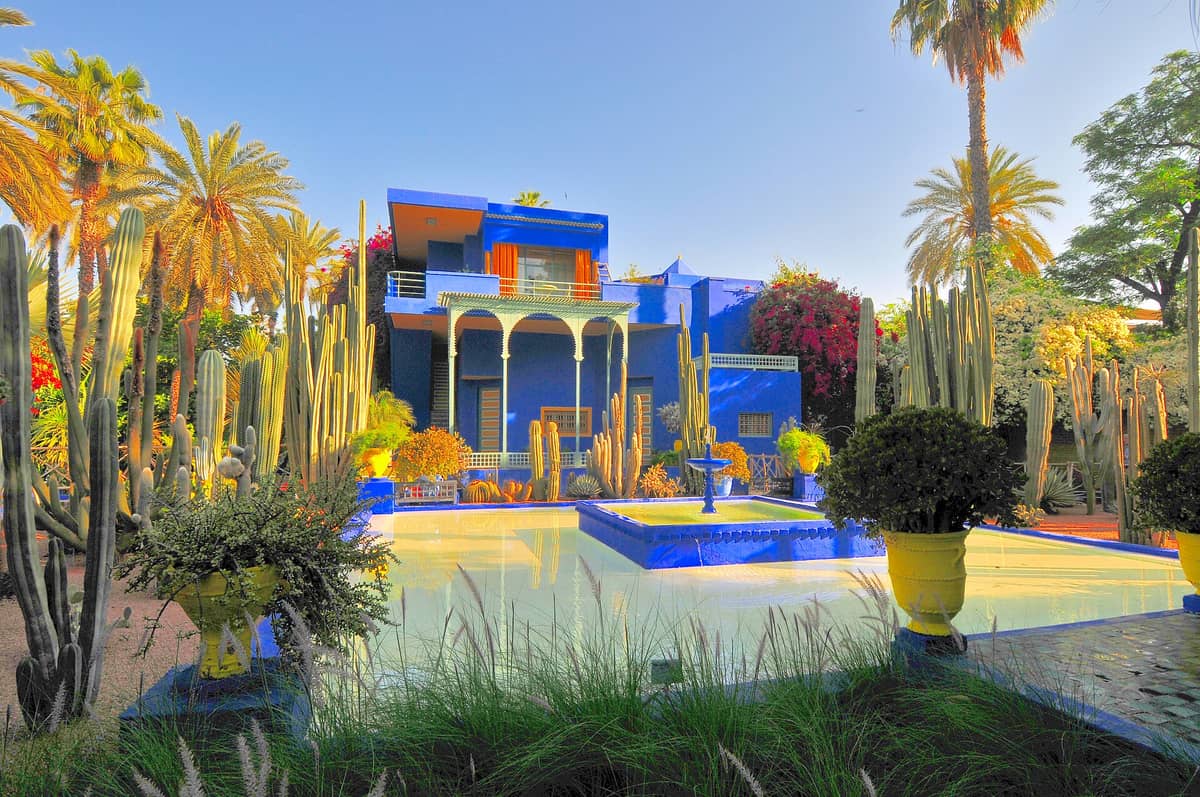
The Jardin Majorelle sits on the northeastern fringe of Gueliz, close enough to walk to from most of the neighborhood's hotels, yet technically occupying a liminal zone between the Ville Nouvelle and the medina's northern edge. To the east, the Marrakech Medina begins almost without warning once you pass through the old city walls. To the north, beyond Rue Ibn Aïcha, the urban fabric becomes more residential and less touristic before eventually reaching the Palmeraie road.
Character and Atmosphere
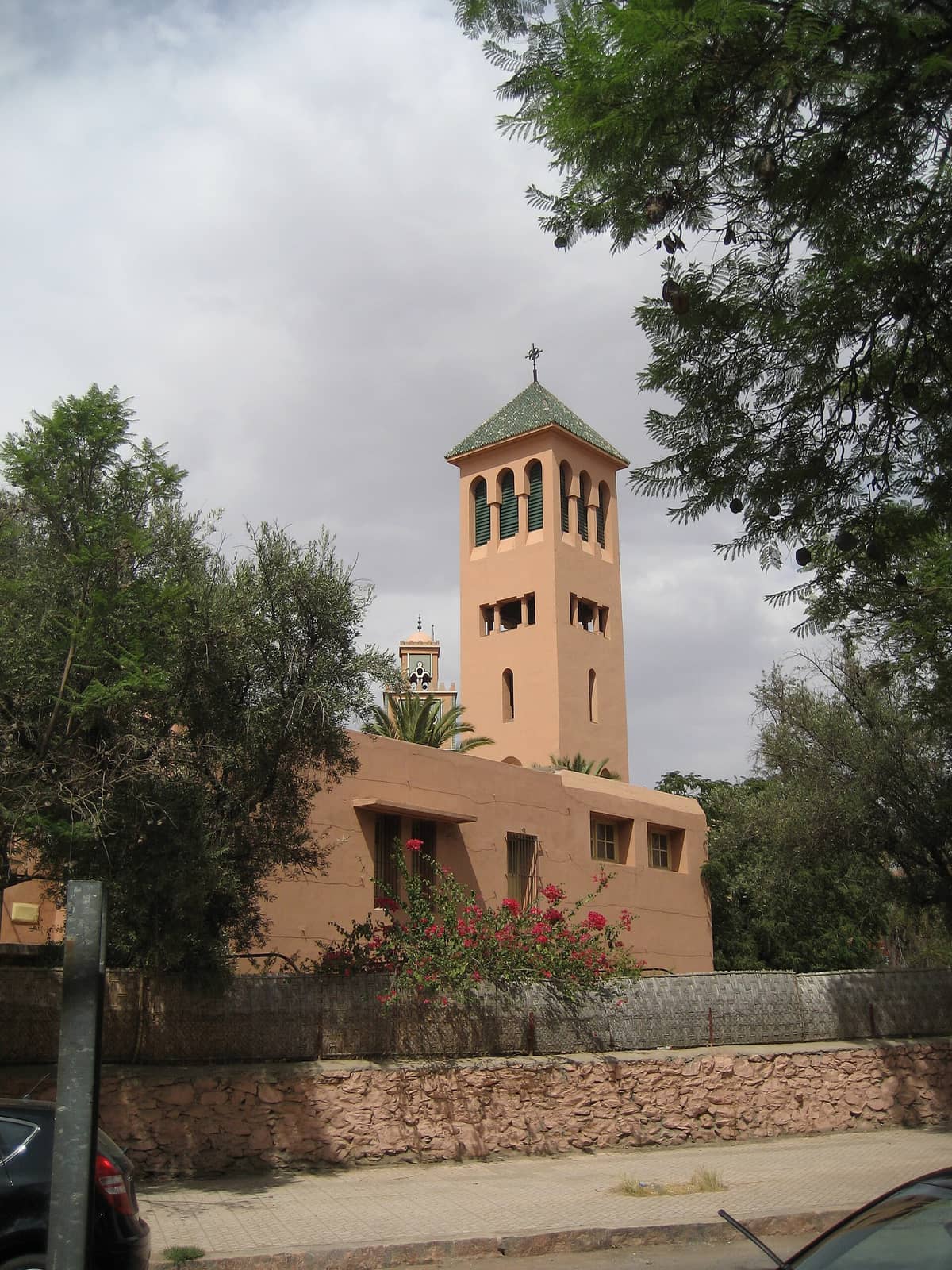
Gueliz was developed during the French Protectorate period, which lasted from 1912 to 1956, as the administrative and commercial new town designed to house European settlers and colonial offices separate from the traditional medina. That history is still legible in the architecture: look up on almost any block along Avenue Mohammed V or Rue de la Liberté and you will spot the clean geometric lines and decorative ironwork of 1930s and 1940s Art Deco buildings, some well-preserved, others weathered and peeling in a way that makes them even more atmospheric.
Today Gueliz functions as the city's commercial and professional hub. Mornings here feel purposeful rather than touristic. Cafés fill with locals reading newspapers over espresso and msemen, offices open along the side streets off Avenue Hassan II, and the fruit and vegetable market on Rue Ibn Tachfine draws a local crowd. The tourist presence is real but diluted compared with the medina: you are one person among many going about ordinary business.
By afternoon the pace slows slightly under the heat, but the café terraces fill back up. The light in Gueliz in the late afternoon has a particular quality: the wide streets mean the sun stays on the facades longer than in the narrow medina alleys, and the rose-tinted plaster of older buildings glows a deep amber in the hour before sunset. By evening, the neighborhood's restaurants, wine bars, and gallery spaces animate the streets in a way that feels cosmopolitan. This is where Marrakech's young architects, gallerists, and creative professionals socialize.
Gueliz also has clear drawbacks. The streets are wide but not always beautiful: heavy traffic runs along the main arteries, mopeds weave between cars, and some stretches of Boulevard Mohammed VI feel more like a North African ring road than a neighborhood. Pedestrian crossings are theoretically observed. The character here is also deliberately modern, which means it lacks the visual density and historical texture that draws most visitors to Marrakech in the first place. If you are here for the souks, the riads, and the call to prayer echoing off ancient walls, you will need to walk or taxi to the medina.
What to See and Do
The single most significant attraction within walking distance of Gueliz is the Jardin Majorelle, the extraordinary botanical garden created by French painter Jacques Majorelle in the 1920s and 1930s, later restored and owned by Yves Saint Laurent and Pierre Bergé. The deep cobalt blue of the garden's central pavilion is one of Marrakech's most recognizable images, but the garden itself rewards slower attention: nearly 300 plant species, a quiet pool, and paths shaded by bamboo groves and towering cacti. It is about a 15-minute walk north from the central intersection of Gueliz, or a short taxi ride.
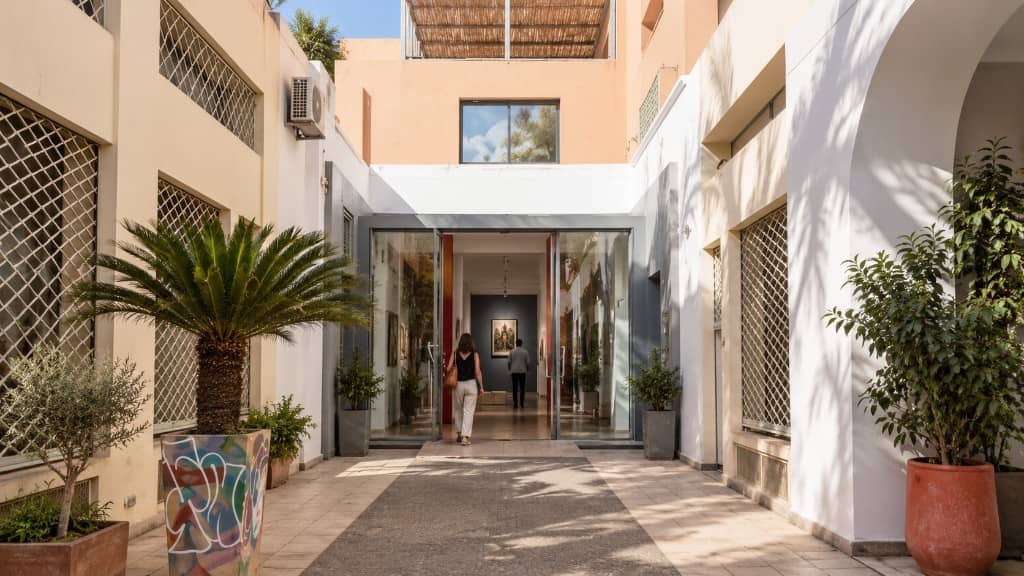
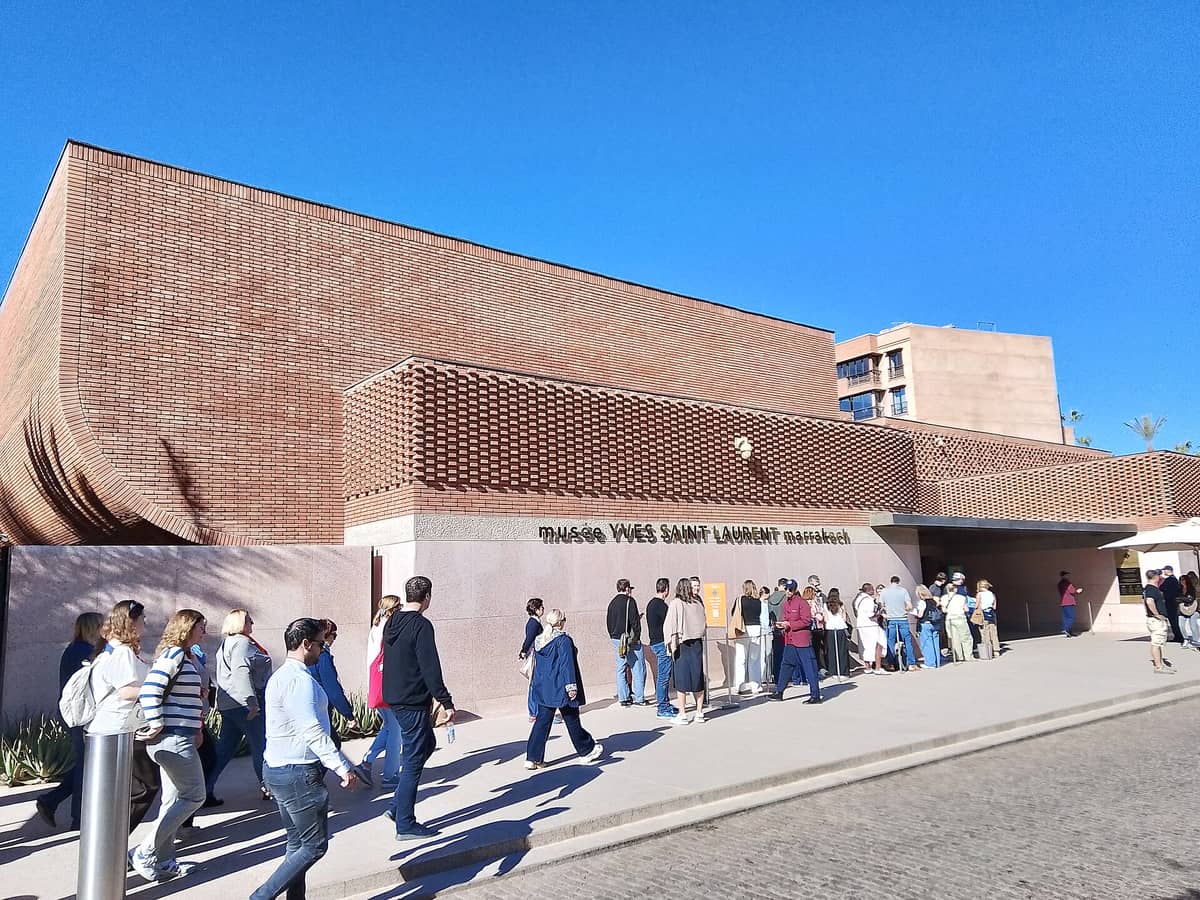
Directly adjacent to the Jardin Majorelle, the Yves Saint Laurent Museum Marrakech opened in 2017 and has quickly become one of the city's most visited cultural spaces. The permanent collection traces YSL's fashion career with rotating displays of garments and sketches, while the building itself, designed by Studio KO, is a piece of architecture worth examining. Given that Saint Laurent spent decades drawing inspiration from Moroccan color and craft, the museum has a genuine contextual argument for being here rather than in Paris.
Gueliz is also the center of Marrakech's contemporary art scene. Several serious galleries operate here and in the surrounding streets. For a broader overview of where the city's art scene is heading, the Marrakech art scene guide covers the gallery landscape across the whole city.
Jardin Majorelle: botanical garden and iconic blue pavilion, 15-minute walk north of central Gueliz
Yves Saint Laurent Museum: fashion and design retrospective in a purpose-built building adjoining the garden
Art Deco architecture: self-guided walk along Avenue Mohammed V and Rue de la Liberté
Local markets: Rue Ibn Tachfine food market for produce, spices, and ordinary Marrakchi commerce
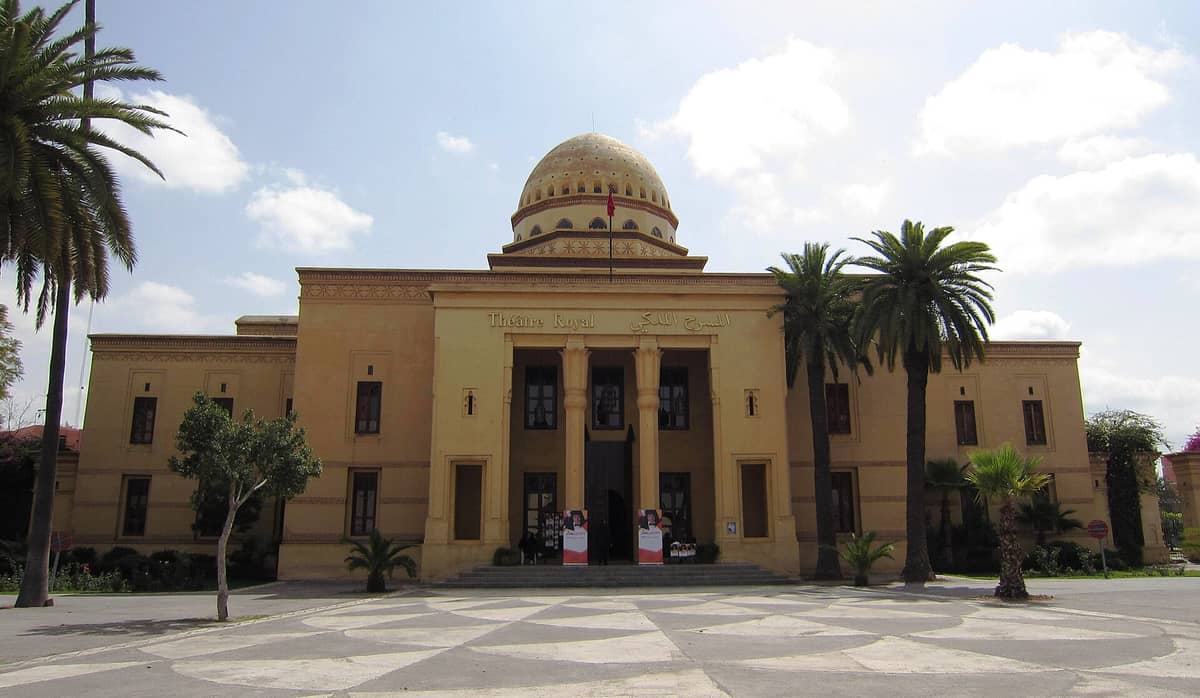
Theatre Royal: landmark building on Boulevard Mohammed VI, impressive even if productions are infrequent
💡 Local tip
The Jardin Majorelle and YSL Museum attract significant visitor numbers, particularly on weekend mornings. Arriving at opening time on a weekday avoids the worst of it. Buy tickets online in advance during peak season (March to May and September to November) as same-day entry can sell out.
Eating and Drinking
Gueliz has the best and most diverse restaurant scene in Marrakech outside the medina, and for certain categories of dining it is better than anything in the old city. The concentration of international residents, working professionals, and design-conscious locals has produced a neighborhood where you can find genuine Italian pizza, Japanese-influenced small plates, serious wine lists, and craft cocktails all within a few blocks of each other. Prices are generally higher than the medina's street food but lower than the rooftop medina restaurants that charge a premium for their views.
The streets around Rue de la Liberté and the parallel Rue Ibn Aïcha are the densest eating corridor. Here you will find pavement terraces on almost every block, most open from around noon through to midnight. Moroccan classics, French brasserie food, and modern fusion menus all appear in this area. For Moroccan cooking specifically, look for restaurants slightly off the main drag: the lamb tagines and couscous on Avenue Mohammed V itself tend to cater to passing tourists rather than regulars.
Café culture is embedded in Gueliz. The neighborhood has been a café district since the Protectorate era, and that tradition still shapes the streets. Several cafés along Avenue Mohammed V and its side streets serve specialty coffee alongside Moroccan mint tea, and the morning terrace scene has a specific rhythm: newspapers, phone calls, the smell of fresh bread from nearby bakeries. For a full overview of where and what to eat across Marrakech, the Marrakech eating guide covers all the main neighborhoods and cuisines.
Gueliz is also the most accessible part of Marrakech for travelers who want to drink alcohol. While the medina is almost entirely dry except within riad restaurants, several wine bars and bars operate openly in Gueliz. They tend to be mixed crowds of tourists and local expats rather than exclusively one or the other. The nightlife scene is modest compared with a European city but exists here in a way it does not in the old town. Keep expectations calibrated: this is a wine bar and lounge scene rather than a late-night club district.
ℹ️ Good to know
During Ramadan, most cafés and restaurants in Gueliz that serve food to non-Muslims during daylight hours will screen their terraces from the street. The neighborhood remains fully open to visitors but the visible daytime food culture is considerably more muted. See the guide to Marrakech during Ramadan for what to expect.
Getting There and Around
From Marrakech Menara Airport (IATA: RAK), located roughly 6 km southwest of the city center, Gueliz is typically a 15 to 20 minute drive in normal traffic. Petit taxis from the airport to central Gueliz cost in the range of 70 to 100 MAD, though fares are subject to change. Bus Line 19 (ALSA) runs from the airport to Jemaa el-Fna in the medina with intermediate stops in Gueliz along Boulevard Mohammed VI and near the railway station, making it a reasonably convenient option for new arrivals heading to the Ville Nouvelle. A ride-hailing app such as Careem or inDrive offers app-fixed pricing and removes the negotiation element. For a full breakdown of all airport transfer options, see the Marrakech airport transfer guide.
Within Gueliz itself, the neighborhood's grid layout makes it significantly more walkable than the medina. Avenue Mohammed V runs straight and wide enough that orientation is straightforward: if you can locate that avenue, you can find your way to most of the neighborhood's main points within 10 to 15 minutes on foot. The central intersection with Avenue Hassan II is the natural reference point for the entire district.
Between Gueliz and the medina, the most direct route on foot follows Avenue Mohammed V southeast for approximately 20 minutes until it reaches the Koutoubia Mosque. From there, Jemaa el-Fna square is a two-minute walk. Petit taxis cover the same route in 5 to 10 minutes depending on traffic. Marrakech has no metro system, so for longer crosstown distances in heat or with luggage, taxis are the practical option. The city's ALSA bus network does serve Gueliz along its main arteries but schedules and routes change; taxis are far easier for visitors.
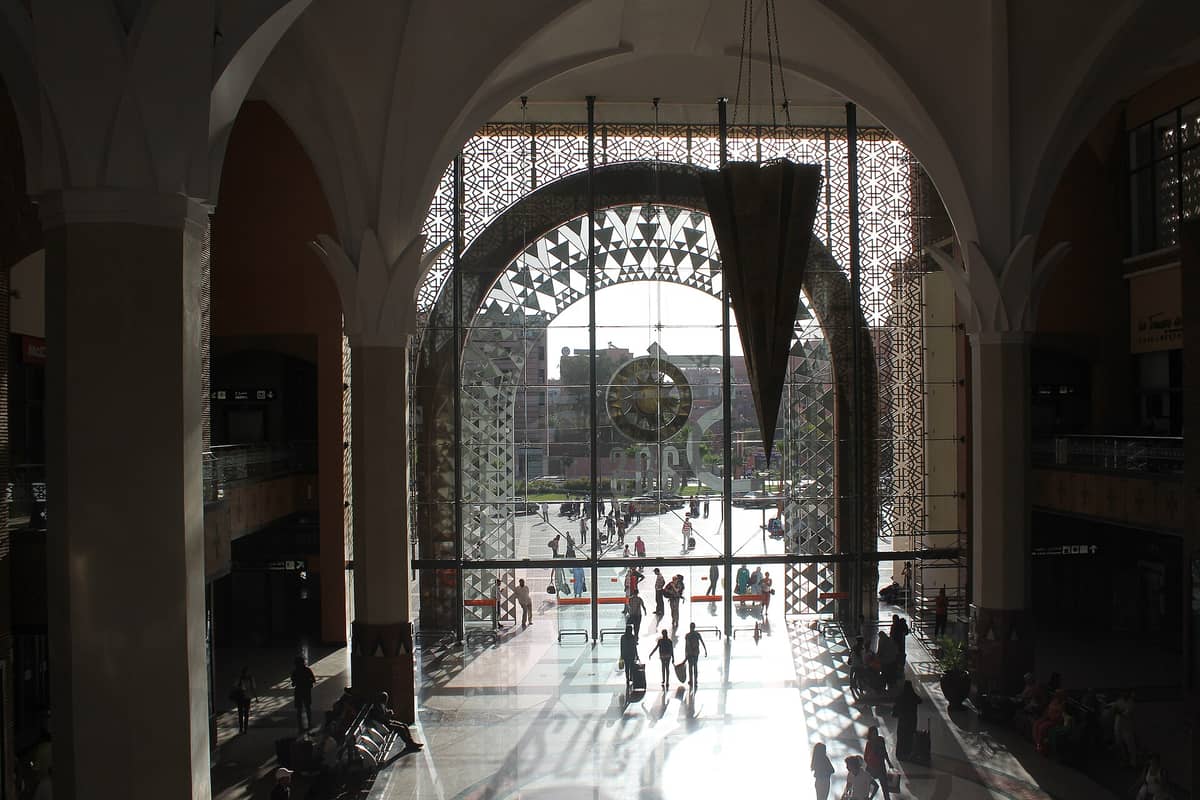
The Marrakech railway station sits on the western edge of Gueliz, just off Avenue Hassan II. Trains connect to Casablanca, Rabat, and Fes. If you are arriving by train from elsewhere in Morocco, the station puts you in Gueliz immediately, without the need to navigate the medina at all.
⚠️ What to skip
Petit taxis in Marrakech are required to use their meters, but this does not always happen, particularly on routes from tourist areas. Agree on a price before getting in, or insist on the meter. From Gueliz to Jemaa el-Fna, a fair metered fare should be well under 30 MAD. Significantly higher initial quotes are common and negotiable.
Where to Stay
Gueliz is the best base in Marrakech for travelers who prioritize modern hotel infrastructure over riad atmosphere. International hotel groups, boutique design hotels, and mid-range business hotels all operate here, with most offering things that can be hard to find in medina riads: reliable Wi-Fi, elevators, parking, swimming pools, and the kind of service scaled for larger groups. For travelers staying a week or more, the combination of walkable restaurants, grocery stores, and a functioning street life makes Gueliz genuinely livable. See the complete guide to where to stay in Marrakech for a full comparison of all the city's neighborhoods.
The best accommodation is concentrated along and just off Rue de la Liberté, the streets around Avenue Mohammed V between the Hassan II intersection and the railway station, and the quieter residential streets to the north of Avenue Hassan II. The Rue de la Liberté corridor puts you within a short walk of the neighborhood's best restaurants while being removed from the traffic noise of the main avenues. Streets closer to Boulevard Mohammed VI are more convenient for the railway station but feel less central to what makes Gueliz interesting.
Gueliz suits couples on city-break trips, business travelers, and anyone visiting Marrakech who wants medina access without medina living. It is also a natural choice for travelers combining a city stay with excursions: the railway station is in the neighborhood, and most operators running day trips from Marrakech to the Atlas Mountains, the Ourika Valley, or the Agafay Desert pick up from Gueliz hotels with no problem. What Gueliz does not offer is the riad-in-the-medina experience that defines Marrakech for many visitors. If that is central to your trip, stay in the medina and visit Gueliz for dinner.
Practical Notes: Safety and Etiquette
Gueliz is considered one of the lower-stress parts of Marrakech for first-time visitors. The wide streets, clear grid layout, and significant local working population create an environment that feels significantly less pressured than the narrow souks of the medina. Standard urban precautions apply: keep valuables secured, be aware of your surroundings in busy commercial areas, and use licensed taxis rather than unofficial drivers. Current government travel advisories should be checked before travel. The Marrakech safety guide covers the full picture across all neighborhoods.
On dress, Gueliz is more relaxed than the medina but Marrakech remains a predominantly Muslim city and modest dress is respected and appreciated throughout. Shorts and short sleeves are common on tourists in Gueliz without causing offense, but visitors will find the local population generally dresses more conservatively, particularly away from the restaurant-heavy streets. The guide to what to wear in Marrakech gives practical advice for different parts of the city and different seasons.
TL;DR
Gueliz (Ville Nouvelle) is Marrakech's modern commercial and creative district, built during the French Protectorate west of the medina walls, characterized by wide avenues, Art Deco architecture, and a serious café and restaurant culture.
Best suited to: travelers who want modern hotel infrastructure, good restaurants, and easy medina access without the noise and disorientation of staying inside the old city.
Key anchors: Avenue Mohammed V (main artery), the Jardin Majorelle and YSL Museum (15-minute walk north), Marrakech Railway Station (western edge of neighborhood), and a concentrated dining corridor on Rue de la Liberté.
Drawbacks: lacks the atmospheric texture of the medina; traffic on main boulevards is heavy; the most touristic parts of Marrakech require a walk or taxi ride.
Getting there: 15-20 minutes by taxi from Menara Airport; 20-minute walk or 5-minute taxi to Jemaa el-Fna; direct train access via Marrakech Railway Station for arrivals from Casablanca, Rabat, and Fes.
Three days is enough time to cover Marrakech's essential medina landmarks, the Jardin Majorelle complex, the souks, and at least one excellent meal in Gueliz. This itinerary is built around realistic walking distances, opening hours, and the things most guides get wrong — like Majorelle's timed-entry system and Bahia Palace's tiered ticket pricing.
Marrakech rewards visitors year-round, but the experience changes dramatically by season. This guide breaks down temperatures, crowd patterns, pricing shifts, and cultural events so you can choose the timing that fits your travel style.
Marrakech sits at the center of an extraordinary region. Within a few hours, you can be on an Atlantic beach, hiking in North Africa's highest mountains, exploring a UNESCO-listed ksar, or watching 110-meter waterfalls. This guide covers the best day trips from Marrakech, organized by theme, with practical notes on logistics.
From the airport shuttle to navigating the medina on foot, this guide covers every realistic way to get around Marrakech — with current prices, clear trade-offs, and the practical details most guides leave out.
Marrakech divides opinion more than almost any city in North Africa. This guide cuts through the hype and the horror stories to give you a clear, practical picture of what visiting Morocco's most famous city actually involves, from the medina's sensory overload to the Atlas Mountains on your doorstep.
Marrakech delivers a rare kind of luxury: palace hotels enclosed by ancient medina walls, Agafay desert camps under open skies, and hammam rituals refined over centuries. This guide covers the best high-end stays, spas, experiences, and practical logistics — with a clear look at what is worth the price and what is not.
Seven days in Marrakech gives you enough time to go deep into the medina, escape to the Atlas Mountains, and decompress in a hammam without rushing. This itinerary is structured by district and theme, with frank notes on what to skip, what to book in advance, and how to move around without getting fleeced.
The Agafay Desert sits less than an hour from Marrakech and offers a genuine desert experience without a two-day drive to the Sahara. This guide covers exactly what Agafay is, how to get there, what activities are worth paying for, how overnight camps differ by season, and the practical trade-offs you should know before booking.
Marrakech Menara Airport (RAK) sits just 6 km from the city centre, but knowing which transfer option to choose can save you time, money, and hassle. This guide covers every realistic option, from the 30 MAD public bus to pre-booked private transfers, with a realistic look at what to expect at each price point.
Marrakech is far more than medinas and souks. The city hosts one of Africa's most serious contemporary art ecosystems, anchored by MACAAL, the annual 1-54 Contemporary African Art Fair, and a growing network of galleries in Gueliz and the Medina. This guide covers every layer of that scene with practical details, seasonal timing, and a clear look at what's worth your time.
Marrakech has a stronger museum scene than many visitors expect. From fashion collections in Gueliz to centuries-old palace interiors in the Medina, these are the museums that reward a dedicated visit.
The Sahara is not a day trip from Marrakech. This guide covers the real routes, realistic prices, best seasons, and what to expect on a multi-day desert tour from Morocco's most visited city — so you can plan without surprises.
Ramadan transforms Marrakech in ways most travel guides get wrong. This guide covers the real daily rhythm, where to eat, how to behave respectfully, and why the evenings are worth staying for.
Marrakech is one of North Africa's great eating cities, where tagine-fuelled lunches, slow-cooked tanjia, and 5-dirham snail soup sit alongside rooftop restaurants charging ten times as much. This guide covers every dish worth trying, what it should cost, and exactly where in the medina to find the real thing.
Marrakech delivers a rare kind of romance: ancient medina alleys lit by lanterns, private riad courtyards with plunge pools, and hot air balloons drifting over desert plains at sunrise. This guide covers everything couples and honeymooners need to know, from choosing the right riad to booking a private hammam ritual, with current pricing and practical notes on timing.
From 10–40 MAD neighborhood hammams to 800–1,500 MAD palace rituals, Marrakech offers every tier of the traditional Moroccan bath experience. This guide covers real prices, practical etiquette, what actually happens inside, and how to choose the right hammam for your trip.
Hot air balloon rides over Marrakech offer some of the most dramatic morning views in North Africa, from the Atlas Mountains to the ochre plains of the Palmeraie. This guide covers prices, operators, seasonal timing, what the experience actually involves, and how to avoid common booking mistakes.
December is one of the most underrated months to visit Marrakech. Mild sunny days, manageable crowds, festive hotel programming, and lower prices outside the Christmas peak make it a smart choice for winter travel. Here is everything you need to plan it well.
Spring unlocks Marrakech at its most rewarding: temperatures sit between 22°C and 30°C, the souks and gardens are at their most photogenic, and the brutal summer heat hasn't arrived yet. This guide covers the month-by-month weather reality, what to do, what to watch out for, and how to plan a spring trip that actually delivers.
Marrakech holds some of the finest examples of Islamic architecture in North Africa. This guide covers the key monuments, what you can actually enter as a non-Muslim, current entry fees, the best times to visit, and how to get the most from each site.
Marrakech has two hotels that genuinely deserve the word 'legendary': La Mamounia and Royal Mansour. This guide breaks down what each actually costs by season, what you get for the money, and which alternatives are worth considering if your budget or travel style calls for something different.
Marrakech nightlife is more layered than most visitors expect. From atmospheric medina rooftops overlooking Jemaa el-Fna to sleek cocktail lounges in Gueliz and proper clubs in Hivernage, this guide covers where to go, what to spend, and how to navigate the scene without the usual tourist pitfalls.
Marrakech is one of Africa's most affordable city-break destinations, but it rewards those who know where to spend and where to save. This guide covers every budget category: transport, accommodation, food, attractions, and shopping, with clear cost breakdowns and the traps that drain wallets faster than they should.
Marrakech preserves some of the Islamic world's most extraordinary palatial architecture. This guide covers the Bahia Palace, El Badi Palace, the Saadian Tombs, and other historic monuments — with current ticket prices, opening hours, seasonal advice, and a clear take on what each site delivers.
Marrakech is generally safe for tourists, but the city has its share of scams, pushy touts, and transport traps that catch unprepared visitors off guard. This guide cuts through the noise with a practical breakdown of real risks, neighborhood-by-neighborhood advice, and exactly what to watch out for on the ground.
Marrakech is one of the most rewarding solo destinations in Africa, but it rewards preparation. This guide covers everything from airport transfers and neighborhood choices to safety realities, cultural customs, and the best ways to structure your time alone in Morocco's most iconic city.
The medina's souks are the commercial heart of Marrakech, a labyrinth of specialized markets selling everything from hand-tooled leather to raw saffron. This guide breaks down which souks to visit, when to go, how to haggle, and what to watch out for so you spend your time and money well.
The route from Marrakech to Casablanca is one of Morocco's most-traveled corridors, with frequent trains completing the journey in under three hours. This guide breaks down every transport option, compares fares, and tells you exactly what to expect before you board.
The coastal city of Essaouira sits about 175–190 km from Marrakech and is one of the most rewarding day trips or overnight escapes you can make from the city. This guide breaks down every transport option, with real prices, clear trade-offs, and practical tips for planning the journey.
The journey from Marrakech to Fes is one of Morocco's classic inter-city routes, connecting the country's two most celebrated imperial cities. This guide breaks down every transport option, with current prices, realistic journey times, and practical tips for making the trip smoothly.
The High Atlas Mountains sit less than 90 minutes from Marrakech, making them one of the most accessible mountain ranges for city-based trekkers anywhere in the world. This guide covers every level of trek, from easy valley walks to the summit of Mount Toubkal, with practical notes on costs, seasons, and how to avoid common mistakes.
The Marrakech medina is one of the most walkable historic city centers in North Africa, with landmark palaces, royal tombs, souks, and mosques all within 20 minutes of Jemaa el-Fna. This guide maps out a practical self-guided route with real entry prices, opening hours, timing advice, and warnings about common tourist mistakes.
Marrakech has a reputation for strict dress rules that is, frankly, exaggerated. This guide cuts through the confusion with season-by-season packing lists, candid notes on cultural norms, and specific guidance for mosques, hammams, and the souks. Know exactly what to bring before you pack.
Marrakech rewards curious families with sensory-rich souks, open-air squares, and day trips that children actually remember. This guide covers the best kid-friendly attractions, how to get around with young travellers, when to visit, and what to realistically expect from a medina with a stroller.
A riad is the definitive Marrakech accommodation experience: courtyard architecture, rooftop terraces, and medina immersion that no hotel chain can replicate. This guide covers how riads work, what they cost, where to find the best ones, and what first-timers consistently get wrong.
Marrakech rewards visitors with centuries of Islamic architecture, world-class gardens, hammams, mountain day trips, and one of the most theatrical main squares on the planet. This guide covers the best things to do in Marrakech, with real prices, seasonal advice, and a clear take on what is worth your time.
Marrakech serves one of the most distinctive food cultures in North Africa, from smoky food stalls on its famous main square to candlelit riad dining rooms. This guide covers every budget tier, the best neighborhoods for eating, what to order, and which tourist traps to skip.
Choosing where to stay in Marrakech shapes your entire trip. This guide breaks down every major area, from the labyrinthine medina to the palm-lined Palmeraie, with straightforward notes on who each neighborhood suits and what to expect at every price point.
Yves Saint Laurent first visited Marrakech in 1966 and the city never let him go. This guide covers everything you need to know about his legacy in the city: the cobalt-blue Jardin Majorelle, the Musée Yves Saint Laurent Marrakech, the Berber Museum, ticket prices, booking strategy, and how to visit without wasting a morning in the wrong queue.