Marrakech on a Budget: The Complete Practical Guide
Marrakech is one of Africa's most affordable city-break destinations, but it rewards those who know where to spend and where to save. This guide covers every budget category: transport, accommodation, food, attractions, and shopping, with clear cost breakdowns and the traps that drain wallets faster than they should.
Tickets & tours
Live prices and dates from our booking partner. If you book, we may earn a commission at no extra cost to you.
TL;DR
- The ALSA Bus 19 airport shuttle costs 30 MAD one-way (around €3) and runs every 30 minutes to Jemaa el-Fna, making it the smartest first budget decision you can make.
- The medina is free to wander, but the major historic sites (Bahia Palace, El Badi, Saadian Tombs, Ben Youssef Madrasa) cost 50–100 MAD each. Budget around 350 MAD for all four.
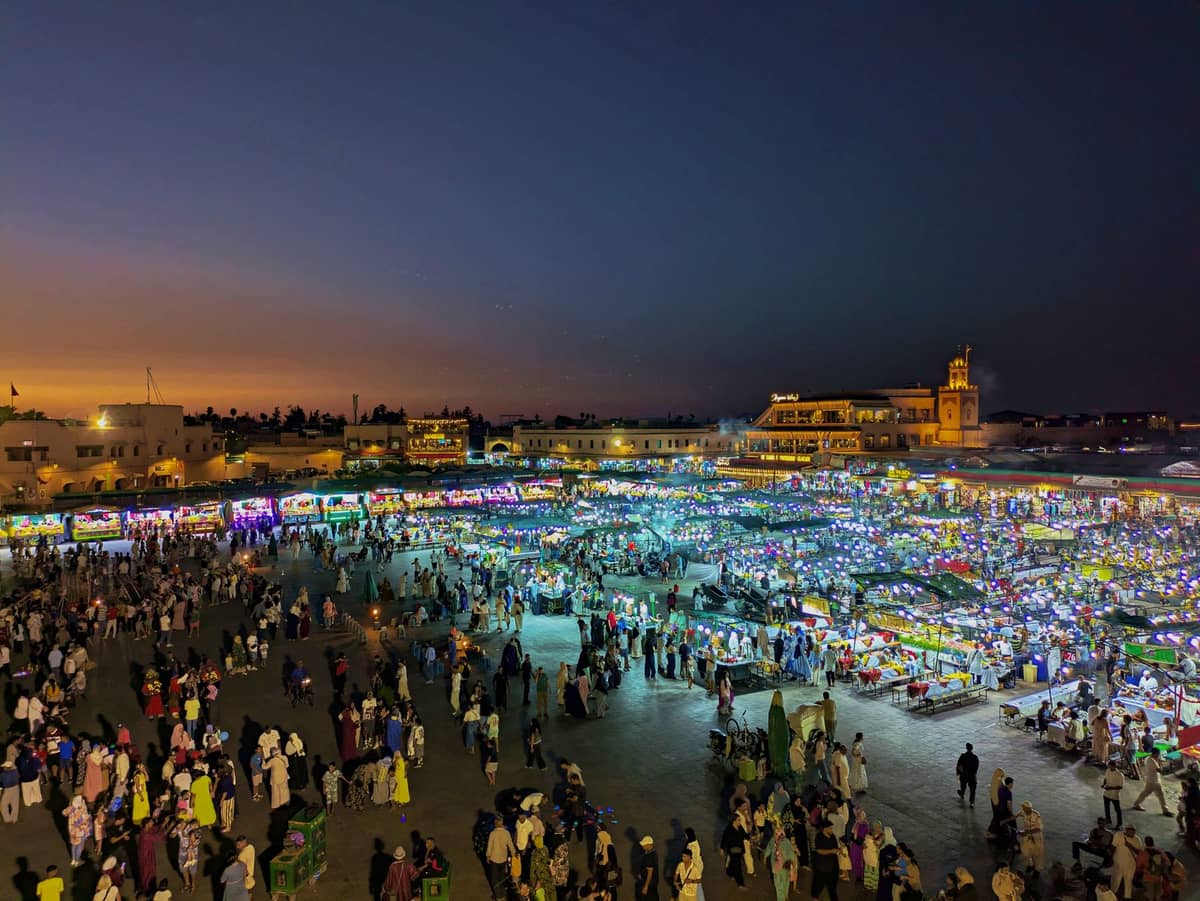
- Street food around Jemaa el-Fna is genuinely cheap. A bowl of harira soup costs around 5 MAD; fresh-squeezed orange juice runs 5–10 MAD. Sit-down restaurant prices are fair in local spots but tourist-facing terraces triple the price.
- Spring (March–May) and autumn (September–November) are the most comfortable seasons; Easter week and October are peak, so they are not automatically cheaper than winter.
- Getting around inside the medina is mostly on foot. City buses cost around 4 MAD per ride for longer distances. For full transport context, see the getting around Marrakech guide.
Getting Into the City Without Overpaying
Marrakech Menara Airport (IATA: RAK) sits about 6 km southwest of the city centre. In normal traffic, that is a 15–20 minute drive, but it is also where many first-time visitors make their most expensive mistake: accepting an unofficial taxi offer inside the terminal. Before anything else, understand your three realistic budget options.
- ALSA Bus 19 (cheapest) 30 MAD one-way, 50 MAD return. Runs every 20–30 minutes from around 06:20 to approximately 22:50, stopping at the train station and Jemaa el-Fna. Journey time is 30–40 minutes depending on traffic. Keep your return ticket — it stays valid for the duration of your stay.
- Petit taxi (metered) 70–100 MAD to the medina if you insist on the meter or agree a fare before getting in. Fast, around 15–20 minutes, but prices are negotiable in the wrong direction if you appear unsure.
- Ride-hailing (Careem / inDrive) App-fixed fares typically in the 70–100 MAD range, similar journey time to taxis. Useful for avoiding negotiation, though availability at the airport can vary and regulations are subject to change — check the app before arrival.
⚠️ What to skip
Bus 19's last departure is usually between about 21:00 and 23:30; check the posted times on arrival. If your flight lands late at night, budget for a taxi or pre-book a private transfer. A 100 MAD taxi at midnight is still cheap; an unofficial airport tout at 400 MAD is not.
Once you are in the city, regular ALSA urban buses cost around 4 MAD per ride and cover the main routes between the medina, Gueliz, and Hivernage. They are crowded and not always on time, but for budget travelers moving between the old and new town, they are perfectly functional. The medina itself is compact enough that most sites are walkable from any central riad.
Where to Stay on a Tight Budget
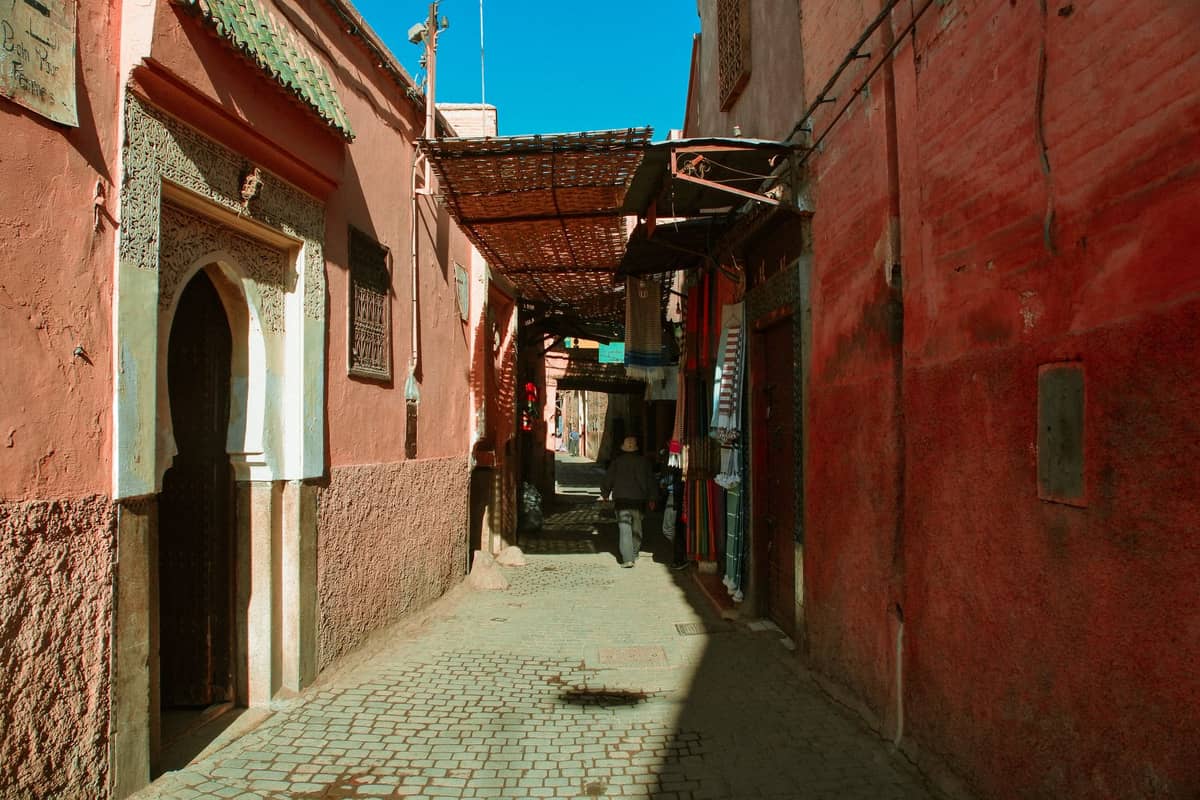
The medina is the obvious choice for budget accommodation because it puts you within walking distance of everything worth seeing. Small riads and guesthouses with basic rooms can be found for 200–400 MAD per night (roughly €18–36) if you book directly or use local booking platforms rather than international aggregators, which tend to markup medina properties.
Hostels with dorm beds exist in the medina and in Gueliz, generally in the 100–200 MAD range per person. Gueliz is Marrakech's modern district with wider streets, contemporary cafes, and supermarkets — practical for longer stays, though less atmospheric than the medina. If you want a riad experience without the luxury price tag, look for smaller family-run properties on side streets away from Jemaa el-Fna rather than the design riads that dominate travel magazines.
💡 Local tip
Avoid booking accommodation directly around Jemaa el-Fna square for noise reasons as much as budget ones. Riads one or two streets back from the main arteries of Rue Mouassine or Derb Dabachi cost less and sleep better. The walk to the square is rarely more than 5–10 minutes.
For a fuller picture of where to stay across all price points, the guide to staying in a riad in Marrakech explains what separates a 300 MAD riad from a 3,000 MAD one, and whether the difference is worth it.
Eating Well for Very Little
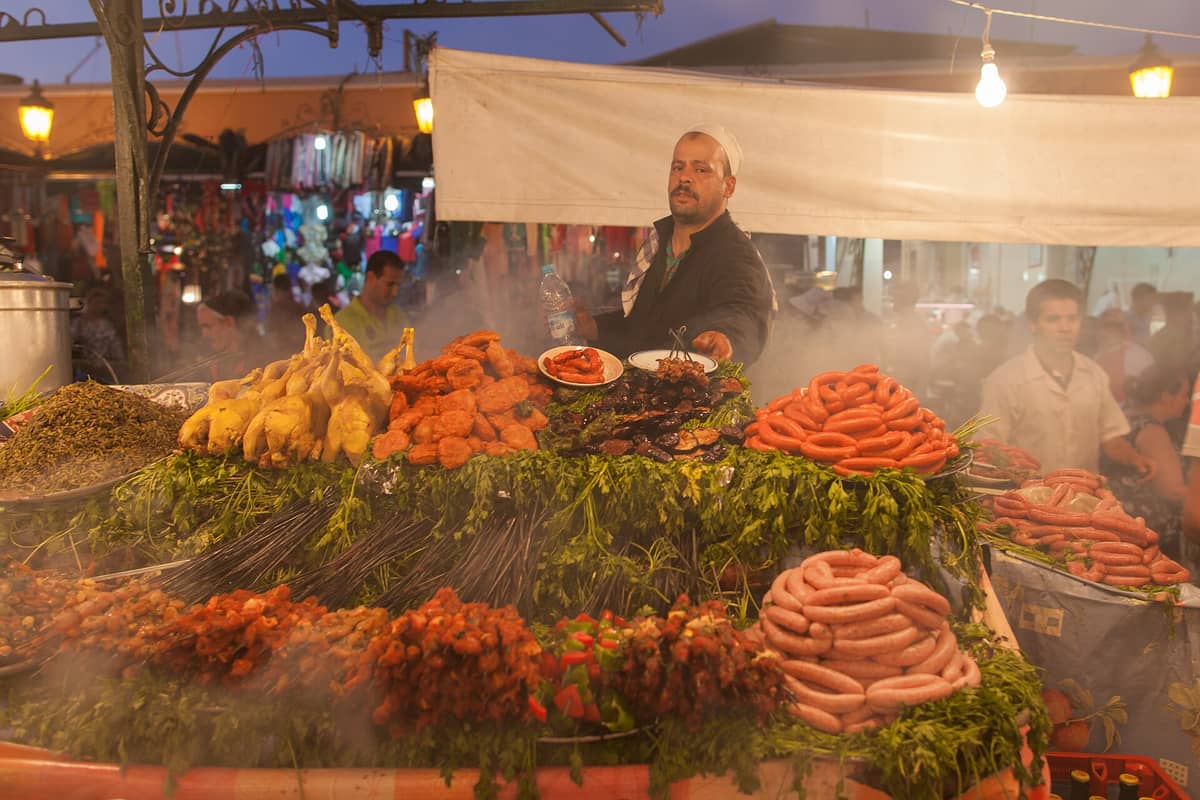
Marrakech is one of the better cities in North Africa for budget eating, provided you skip the tourist-facing restaurant terraces around Jemaa el-Fna square. Those rooftop cafes with views of the square charge 60–100 MAD for a mint tea and a pastilla that would cost a third of that two streets away. The view is genuinely nice once, but it is not a repeatable budget strategy.
- Harira soup (the classic tomato-lentil-chickpea base): 5–10 MAD at a food stall
- Fresh orange juice pressed to order at medina stands: 5–10 MAD
- Kefta or merguez sandwich from a street grill: 15–25 MAD
- Full couscous or tagine lunch at a local restaurant away from the square: 40–80 MAD
- Mint tea at a neighbourhood cafe in Gueliz or the northern medina: 5–15 MAD
- Msemen (flatbread with honey or argan oil) at a small bakery: 2–5 MAD per piece
The evening food stalls on Jemaa el-Fna square are worth trying once for the atmosphere, but prices are negotiated rather than fixed. Agree on the cost before you sit down or you will face an inflated bill. Locals eat at the snail soup and sheep head stalls on the outer edge, where prices tend to be more consistent. For a proper breakdown of Marrakech food options across all budgets, the Marrakech food guide covers everything from souks to sit-down restaurants.
Attractions: What Costs What, and What Is Free
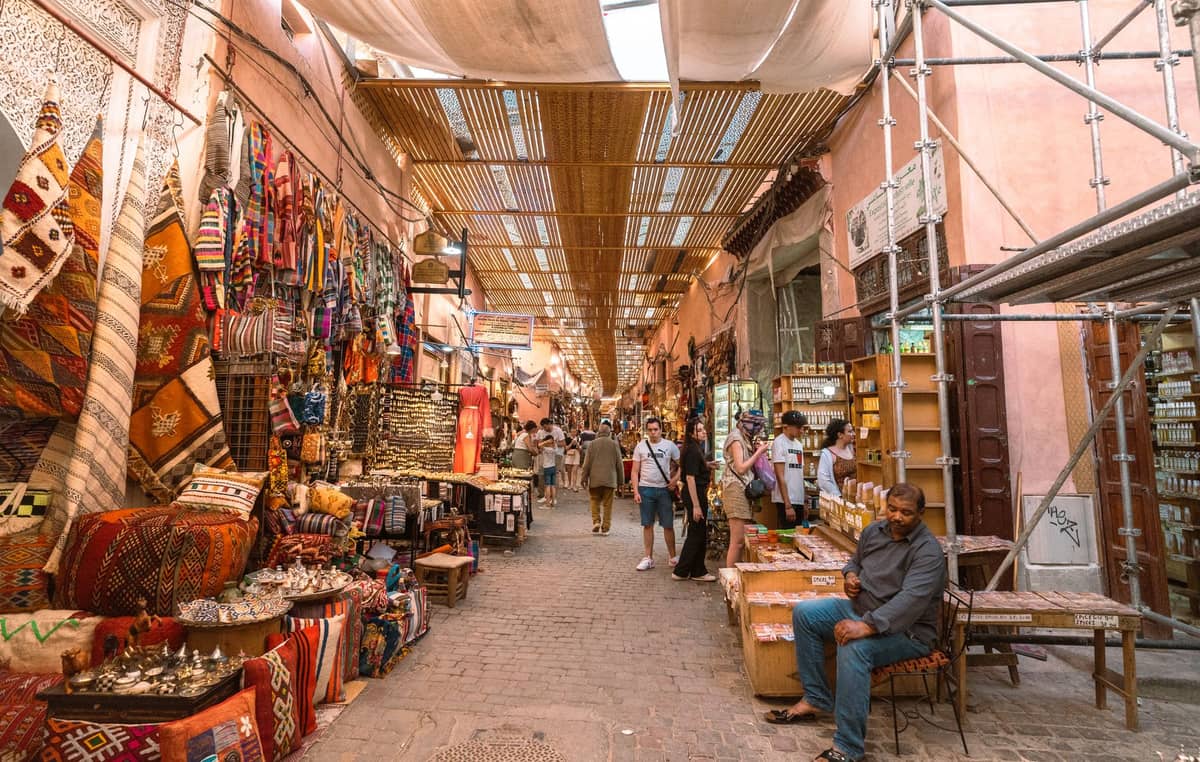
A common misconception among first-time visitors is that the medina is mostly free to explore. Wandering the souks and watching the square is free. But every significant historic monument now charges an entry fee, and they add up quickly if you visit all of them in one trip.
- Bahia Palace 100 MAD for foreign adults. One of the most photogenic interiors in Marrakech, with detailed zellij tilework and painted cedar ceilings. Worth the price for architecture enthusiasts.
- Saadian Tombs 100 MAD for foreign adults. A 16th-century royal necropolis sealed for centuries and rediscovered in 1917. Compact, atmospheric, and genuinely impressive — but queues peak between 10:00 and 12:00.
- El Badi Palace 100 MAD for foreign adults. Ruins of a 16th-century palace, now a rooftop venue for storks. Less polished than Bahia but worth visiting for the scale and the views from the top.
- Ben Youssef Madrasa 50 MAD for foreign adults. Founded in the 14th century and rebuilt in the 16th, with one of the finest interiors in the medina. Arguably the best single building to visit.
- Jardin Majorelle / YSL Museum Around 170 MAD for the garden alone (book online at tickets.jardinmajorelle.com); more for combined museum tickets. The most-visited paid attraction in Marrakech and genuinely crowded by mid-morning. Go at opening time or skip it if the price feels steep.
- Free or very cheap The souks, Mouassine quarter, Koutoubia Mosque exterior, city walls, Menara Gardens, and Agdal Gardens cost nothing to walk around and occupy hours of rewarding time.
If you are trying to keep attraction costs under 200 MAD total, pick two of the four paid medina monuments rather than all four. The Ben Youssef Madrasa and Bahia Palace are the strongest pairing for architectural impact. If you want history over aesthetics, swap Bahia for the Saadian Tombs.
✨ Pro tip
The Menara Gardens are free and one of the most calming spaces in the city — a vast olive grove and pool with Atlas Mountain views in the background. They are around 3 km from Jemaa el-Fna and rarely crowded on weekday mornings. Budget travelers often overlook them because they are not on the 'paid attraction' circuit.
Shopping the Souks Without Overspending
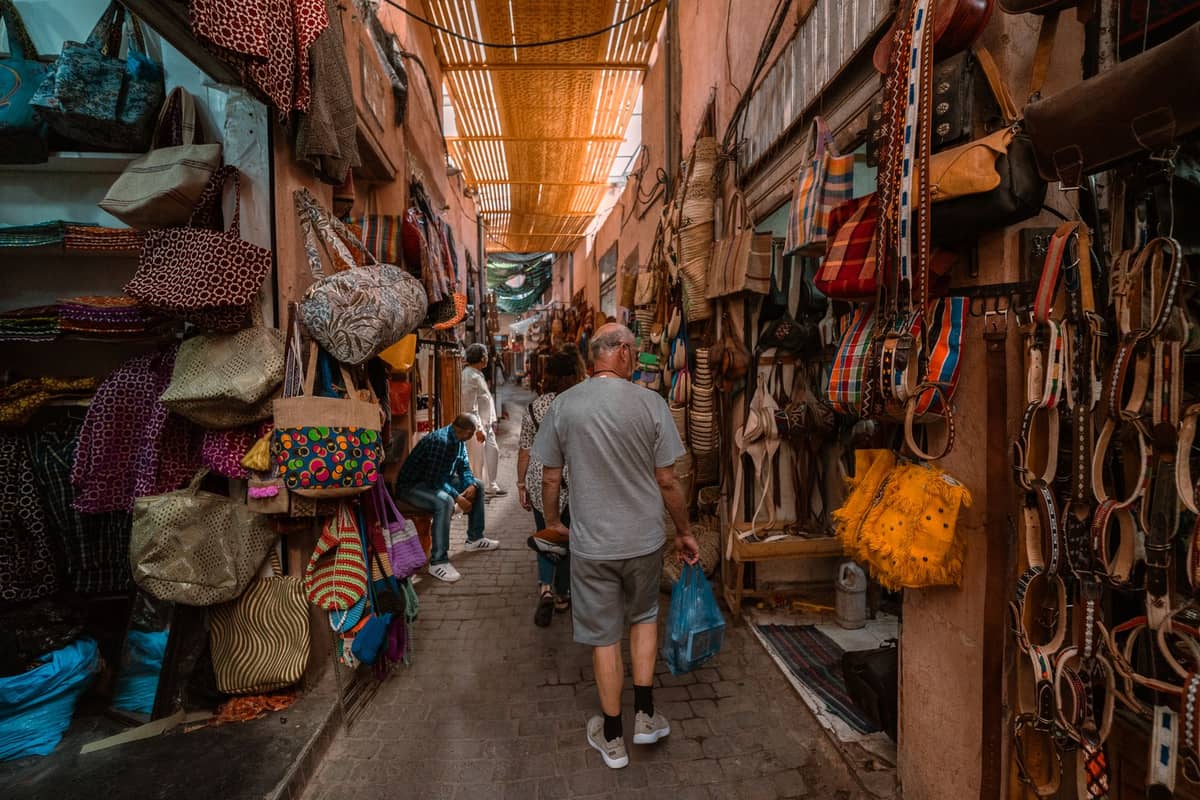
The Marrakech souks are a genuine pleasure to walk through, but the first price quoted to a foreign visitor is rarely close to what locals pay. Bargaining is normal and expected on craft items, textiles, spices, and leatherwork. On food items with visible price boards, there is less room to negotiate.
A useful rule: if you cannot walk away from a stall without being followed for half a block, you have not reached the real price yet. The souk economy runs on reading how much you want something. Starting at 40–50% of the first price and working up from there is a reasonable baseline. For fixed-price shopping with no negotiation required, the shops in Gueliz and the Sidi Ghanem design district stock quality Moroccan crafts at prices that are high by souk standards but fair for the quality and transparency.
Budget estimates for souk shopping: argan oil (100ml, good quality) 50–120 MAD; leather pouf (small) 150–300 MAD negotiated; hand-painted ceramic bowl 30–80 MAD; a decent djellaba 200–500 MAD. The Marrakech souks shopping guide covers specific souk zones, what to buy where, and how to avoid overpriced tourist-targeted stalls.
Seasonal Timing and When to Visit on a Budget
Marrakech has a semi-arid climate with hot summers (regularly above 35°C in July–August) and mild winters. For budget travelers, timing matters in two ways: temperature affects how enjoyable the city is on foot, and demand affects accommodation prices. The best time to visit Marrakech guide covers this in full, but the short version for budget planning is as follows.
Spring (March–May) and autumn (September–November) are the most comfortable seasons, but they are also peak tourist windows — Easter week and October in particular push riad rates up. December and early January see a spike around Christmas and New Year. July and August are the cheapest months for accommodation because the heat is punishing — daytime temperatures frequently exceed 38°C and outdoor sightseeing before 09:00 and after 17:00 becomes the only viable strategy. That trade-off is worth knowing before booking a cheap July flight.
ℹ️ Good to know
Visiting during Ramadan changes the city significantly: many restaurants close during daylight hours, the medina is quieter by day and lively after sunset, and some attractions adjust hours. It is not a bad time to visit for the culturally curious, but it requires flexibility in meal planning. The Marrakech during Ramadan guide explains what to expect in practical terms.
Daily Budget Breakdown: What a Realistic Day Costs
Putting the numbers together: a realistic budget day in Marrakech on the lower end looks like this. Accommodation in a basic medina guesthouse or hostel dorm: 100–250 MAD. Breakfast at a local cafe (msemen, coffee, juice): 20–30 MAD. Street food or local restaurant lunch: 30–60 MAD. Two attraction entries from the core sites: 150–200 MAD. Dinner at a non-tourist-facing restaurant: 60–100 MAD. Incidental transport (city bus or short walk): 0–20 MAD. Total: roughly 360–660 MAD per day, or approximately €32–60.
If you skip paid attractions on a given day, reduce dinner ambition, and stay in a dorm, you can bring a day below 300 MAD (around €27). If you visit Jardin Majorelle, have one sit-down meal on a terrace, and take taxis rather than buses, you will be closer to 800–900 MAD. Neither of these is wrong — the range reflects genuine choice, not overspending.
For a full itinerary that makes the most of every day without overcomplicating the logistics, the 3 days in Marrakech itinerary structures the city's highlights in a practical sequence that naturally avoids paying for the same cluster of sites twice.
FAQ
What is the cheapest way to get from Marrakech airport to the city centre?
ALSA Bus 19 is the cheapest option at 30 MAD one-way (around €3). It runs about every 30 minutes from approximately 06:20 to 22:50, stopping at the train station and Jemaa el-Fna. A return ticket costs 50 MAD and stays valid for roughly two weeks. If you arrive after the last bus, budget around 70–120 MAD for a metered petit taxi.
How much should I budget per day in Marrakech?
A genuine budget day, including basic accommodation, street food, and one or two paid attractions, costs roughly 360–660 MAD (around €32–60). Skipping attractions and eating only from street stalls and local cafes can reduce this below 300 MAD. Mixing in one upscale meal or a tourist terrace visit pushes it toward 800 MAD.
Are the Marrakech souks free to visit?
Yes, walking through the souks costs nothing. However, the major historic sites — Bahia Palace, El Badi Palace, and the Saadian Tombs — charge 100 MAD each for foreign adults, and Ben Youssef Madrasa charges 50 MAD. Budget around 350 MAD if you want to visit all four in a single trip.
Is bargaining expected in Marrakech markets?
Yes, on craft goods, textiles, leatherwork, and souvenirs. Start at around 40–50% of the first price quoted and negotiate from there. Fixed prices are the norm in supermarkets, pharmacies, and modern shops in Gueliz. Street food stalls with visible price boards also tend not to negotiate.
What are the cheapest months to visit Marrakech?
July and August offer the lowest accommodation prices because the heat (regularly above 38°C) deters many visitors. If you can handle extreme heat and limit outdoor activities to early morning and evening, this is when you will find the best deals on riads. For a balance of affordable prices and comfortable weather, late November through mid-December (before Christmas) and January–February are stronger than Easter week or October, which are peak.
Tickets & tours
Live prices and dates from our booking partner. If you book, we may earn a commission at no extra cost to you.
Planning a trip? Discover personalized activities with the Nomado app.