3 Days in Marrakech: The Perfect Itinerary
Three days is enough time to cover Marrakech's essential medina landmarks, the Jardin Majorelle complex, the souks, and at least one excellent meal in Gueliz. This itinerary is built around realistic walking distances, opening hours, and the things most guides get wrong — like Majorelle's timed-entry system and Bahia Palace's tiered ticket pricing.
Tickets & tours
Live prices and dates from our booking partner. If you book, we may earn a commission at no extra cost to you.
TL;DR
- Three days is the practical minimum to see the medina highlights, Jardin Majorelle, and the souks without feeling rushed.
- Book Jardin Majorelle tickets online in advance at tickets.jardinmajorelle.com — you cannot buy them at the gate, and peak-season queues can exceed an hour without a timed slot.
- Bahia Palace costs 100 MAD for foreign adults; Majorelle garden-only is 170 MAD, or around 330 MAD combined with the Berber Museum and YSL Museum.
- Spring (March–May) and autumn (September–November) offer the most comfortable temperatures for walking. See our best time to visit Marrakech guide for a full seasonal breakdown.
- Stay in the medina for atmosphere, or in Gueliz for convenience — both work well for a 3-day trip.
Before You Arrive: Logistics Worth Sorting in Advance
Marrakech Menara Airport (IATA: RAK) sits about 6 km southwest of the city centre, and in normal traffic you'll reach Jemaa el-Fna in 15–20 minutes by taxi. The cheapest option is ALSA Bus 19, which runs every 20–30 minutes to the main square for around 30 MAD one-way. A petit taxi to the medina typically costs 70–100 MAD — agree the fare before getting in. Pre-booked private transfers start from around €15 and make sense if you're arriving late at night or with heavy luggage.
Currency is the Moroccan dirham (MAD). Morocco is largely cash-dependent in the medina — ATMs exist in Gueliz and near Jemaa el-Fna, but smaller stalls, hammams, and guides will want cash. Electricity runs at 220V/50Hz with Type C and E plugs; bring a European-style adapter if you're coming from the UK or North America. Stick to bottled water throughout your stay.
⚠️ What to skip
Majorelle Garden does not sell tickets at the entrance. Timed QR-code tickets must be purchased in advance via tickets.jardinmajorelle.com, the only official ticket site. Third-party resellers are not accepted. In high season (April, May, October), slots sell out days ahead — book as soon as your dates are confirmed.
Day 1: The Medina Core — Mosques, Palaces, and Jemaa el-Fna
Start at the Koutoubia Mosque around 9am, when the surrounding gardens are quiet and the light is good. Non-Muslims cannot enter the mosque itself, but the minaret — the template for the Giralda in Seville and the Hassan Tower in Rabat — is one of the finest examples of Almohad architecture in North Africa, and the gardens make a calm opening to the day before the medina picks up pace.
From there, walk east through the medina to the Ben Youssef Madrasa. Built in the 14th century and expanded under the Saadian dynasty, it was once the largest Islamic school in North Africa. The courtyard's carved cedar and stucco work is genuinely extraordinary — allow 45 minutes to an hour. Admission is 50 MAD for foreign adults (verify at the site, as prices update periodically).
After the madrasa, loop south through the souks toward Bahia Palace. The palace complex, built in the late 19th century for a Grand Vizier, is one of the most impressive domestic interiors in Morocco. Foreign adult admission is 100 MAD (children aged 7–13 pay 50 MAD; under 7 free). Moroccan nationals pay 30 MAD. Book online through the Ministry of Culture portal if you want to skip the ticket queue. Allow 45–60 minutes inside.
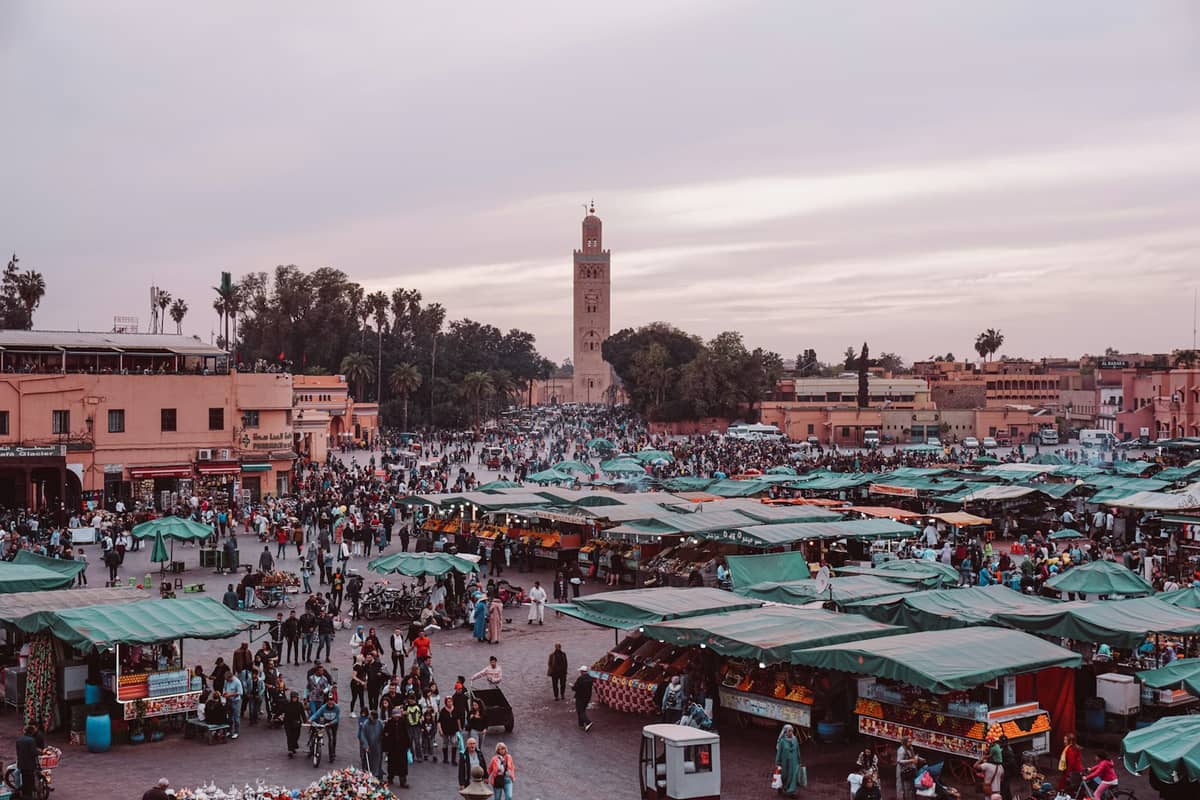
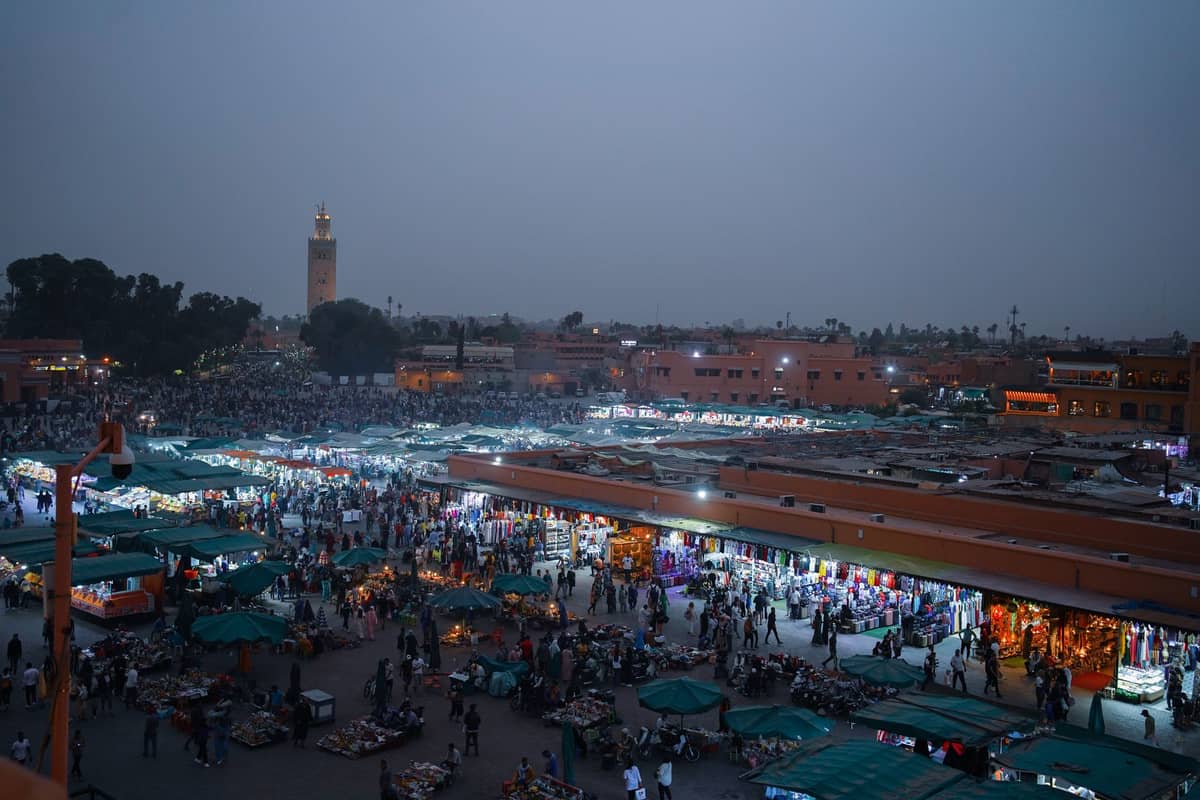
The afternoon belongs to Jemaa el-Fna. The square is least crowded in mid-afternoon and reaches its peak chaos at sunset, when food stalls set up and the snake charmers and musicians multiply. Both versions are worth experiencing. Eat dinner at one of the square's terrace restaurants for the spectacle, but know that prices here run higher and quality is inconsistent — for better food, see our eating guide for recommendations a few streets away from the tourist orbit.
💡 Local tip
The Saadian Tombs are a 10-minute walk south of Bahia Palace and share a similar era of grandeur. Admission is 100 MAD for foreign adults. If you're efficient at both Bahia Palace and Ben Youssef, you can fit all three into the same day without feeling rushed.
Day 2: Jardin Majorelle, the YSL Museum, and Gueliz
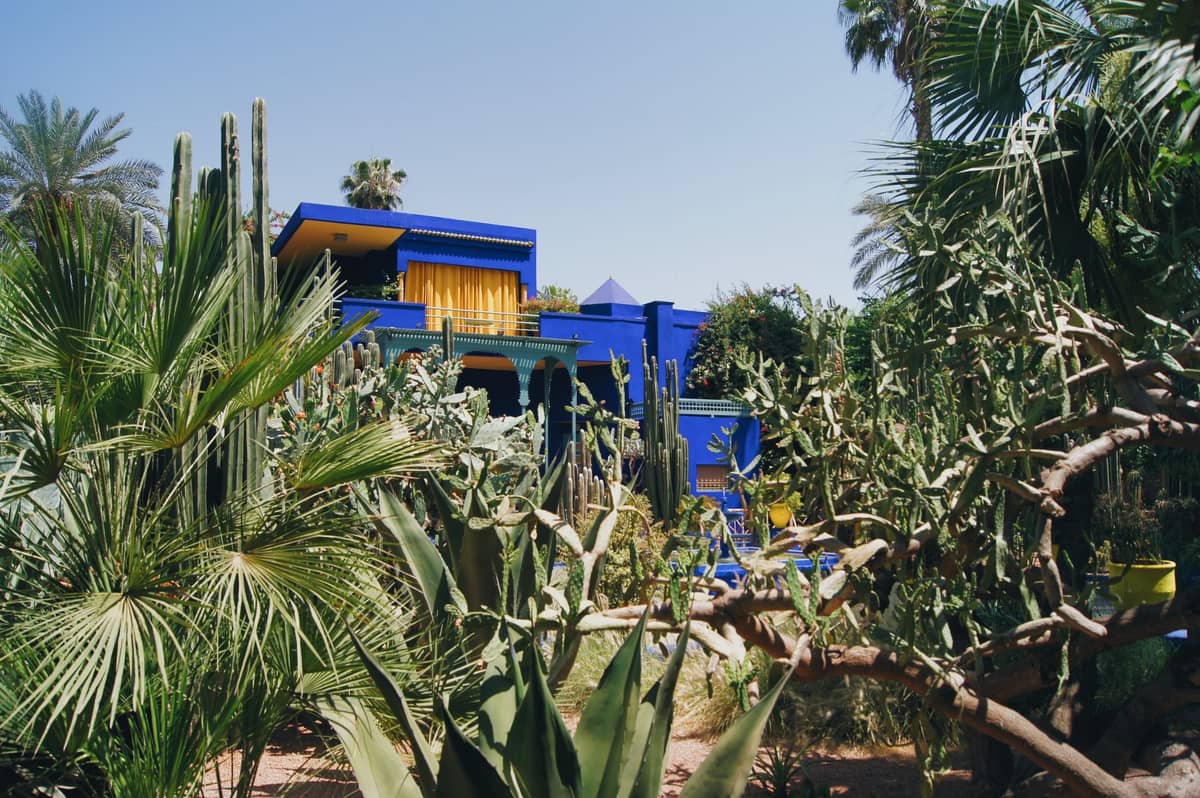
Arrive at Jardin Majorelle for your timed slot as early as possible — the 8am opening is the least crowded window, and the cobalt-blue buildings photograph better in morning light before the crowds fill the paths. The garden itself takes about 45 minutes at a comfortable pace. If you've booked a combined ticket that includes the Berber Museum (Musée Berbère) and the Yves Saint Laurent Museum, plan for at least 2.5 to 3 hours on site in total.
Ticket pricing in 2026: garden only is around 170 MAD for foreign adults (Moroccan citizens pay 75 MAD; international students 95 MAD; children under 10 free). The combined ticket covering the garden, Berber Museum, and YSL Museum runs around 330 MAD. Always confirm current prices on the official portal before booking, as they are updated periodically.
After Majorelle, walk or take a petit taxi into Gueliz, Marrakech's modern new town. The wide boulevards and pavement cafés feel like a different city. This is the best neighbourhood for lunch at a proper restaurant without tourist markup, and for picking up high-quality Moroccan design objects from boutiques along Avenue Mohammed V. The contrast with the medina is part of what makes a 3-day stay interesting — Marrakech is not one-dimensional.
- 8:00am slot at Majorelle The quietest entry window. Light is soft, paths are clear, and you can photograph the famous blue buildings without dozens of people in the frame.
- Combined ticket value The Berber Museum collection is genuinely strong — jewelry, textiles, and ritual objects from across the Atlas region. The YSL Museum is architecturally striking and worth an hour even if you're not a fashion follower.
- Gueliz for lunch Avoid eating at the garden café if you're on a budget. Gueliz has multiple good-value restaurants serving Moroccan and international food within a 10-minute walk.
Day 3: Souks, the Mellah, and a Hammam
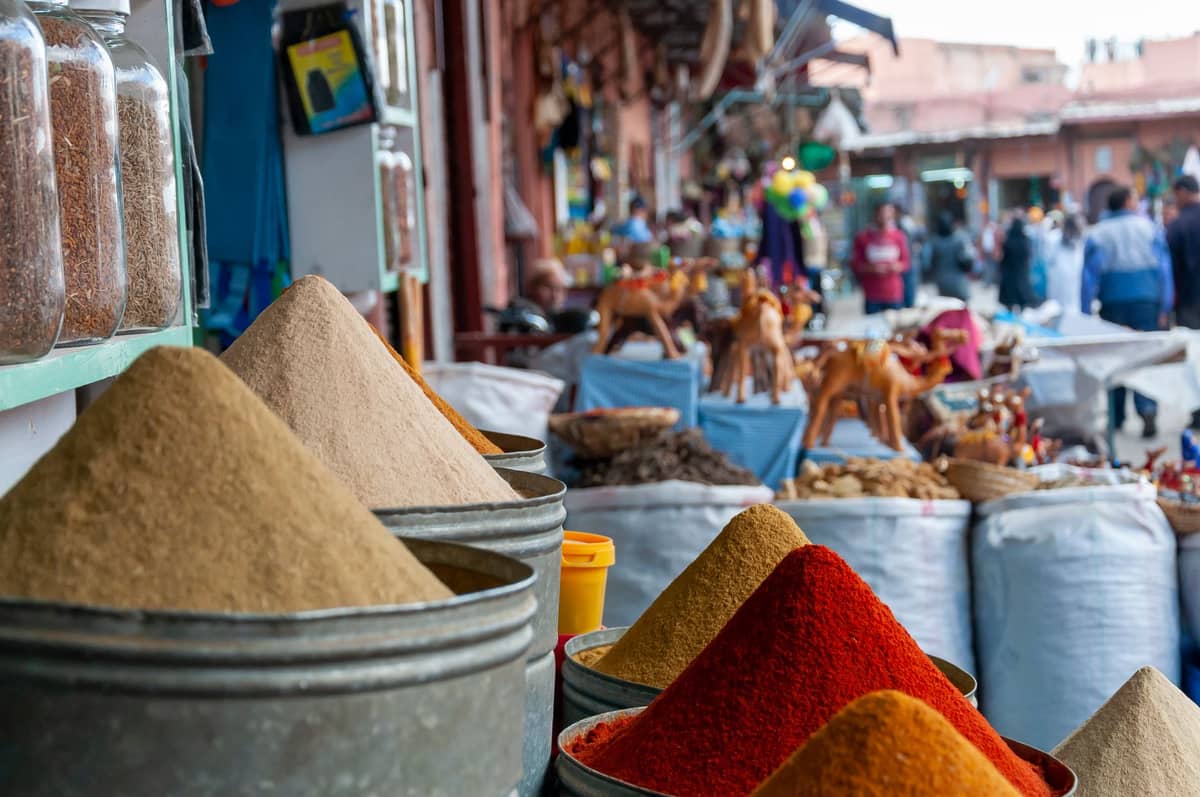
Reserve your last full day for the parts of Marrakech that require more time and patience: the souk network north of Jemaa el-Fna, and the Mellah (Jewish Quarter). The souks are organised roughly by trade — spices cluster around Souk des Épices, leatherwork near the tanneries, metalwork further north. It is genuinely easy to get lost, which is part of the appeal, but orienting yourself to a few fixed landmarks (the Ben Youssef Mosque, the Mouassine Fountain) prevents hours of unproductive circling.
The Mellah sits southeast of Jemaa el-Fna and rewards an hour of exploration. The Slat al-Azama Synagogue is still occasionally open to visitors, and the Jewish Cemetery provides a quieter, more reflective counterpoint to the commercial energy of the souks. The neighbourhood's covered market streets have a different architectural character from the rest of the medina, with wrought-iron balconies and enclosed upper floors that reflect its distinct history.
Book a hammam for the afternoon — ideally a traditional neighbourhood hammam rather than the tourist-facing spa versions, which cost significantly more for a similar scrub. Prices at authentic hammams start from around 50–100 MAD for the basic treatment; tourist hammams charge 300–600 MAD or more. Our hammam guide covers the best options at different price points and explains the process for first-timers.
✨ Pro tip
For souk shopping, mornings on weekdays are noticeably calmer than weekend afternoons. Prices for most goods are negotiable, but the opening ask in tourist-facing stalls is often 3–5x the expected sale price. Start at around 30–40% of the first price mentioned, and settle somewhere in the middle. Walk away if the negotiation isn't moving — in most cases, you'll be called back.
Where to Stay: Riad vs. Hotel
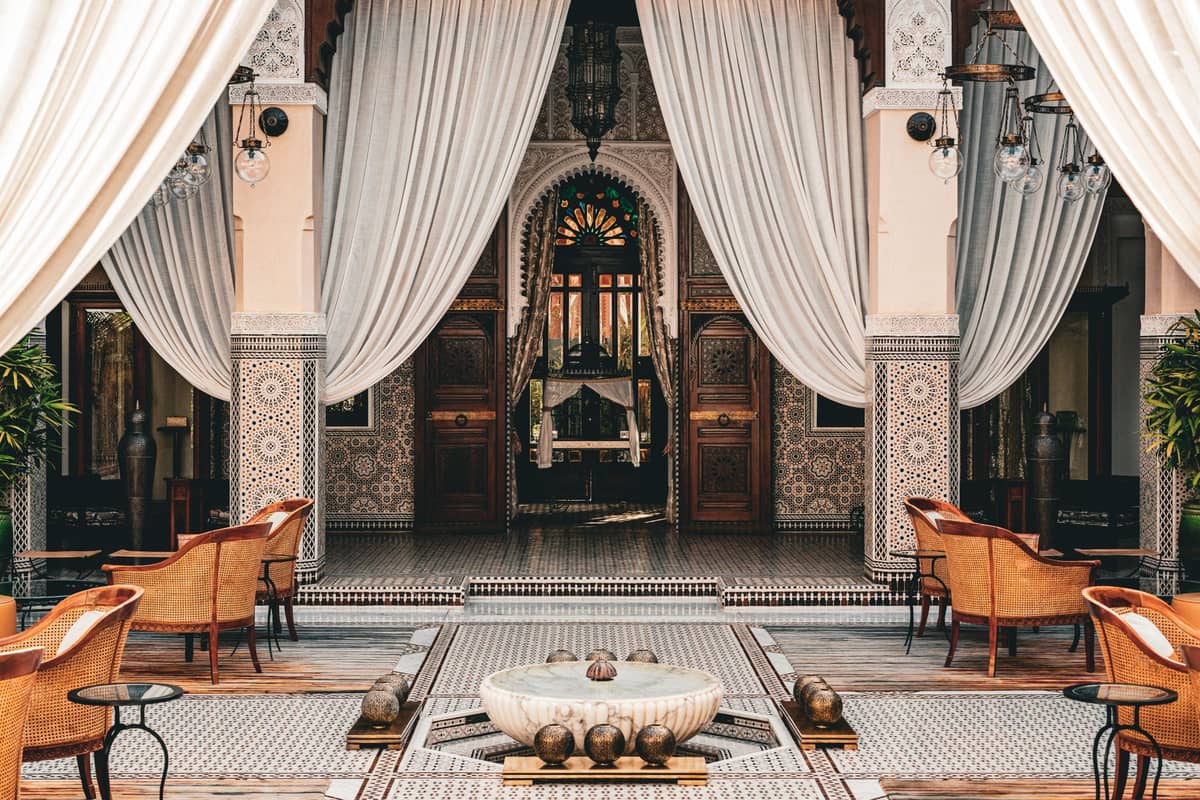
For a 3-day trip, staying in a riad inside the medina gives you an immediate immersive experience and cuts taxi costs significantly. The narrow streets mean you'll be on foot for most of Day 1 and Day 3 anyway. The trade-off is that riads vary enormously in quality, and the medina can be noisy — especially near Jemaa el-Fna — until well past midnight. Our guide to staying in a riad covers what to look for and which neighbourhoods within the medina are quieter.
If you're visiting for romance or a special occasion, Hivernage and the Palmeraie have larger luxury hotels with pools — better for relaxing around, but they put you at a distance from the medina and add 15–20 minutes of travel to every sightseeing morning. For most 3-day visitors focused on seeing the city, the medina or Gueliz makes more practical sense.
What to Manage and What to Skip
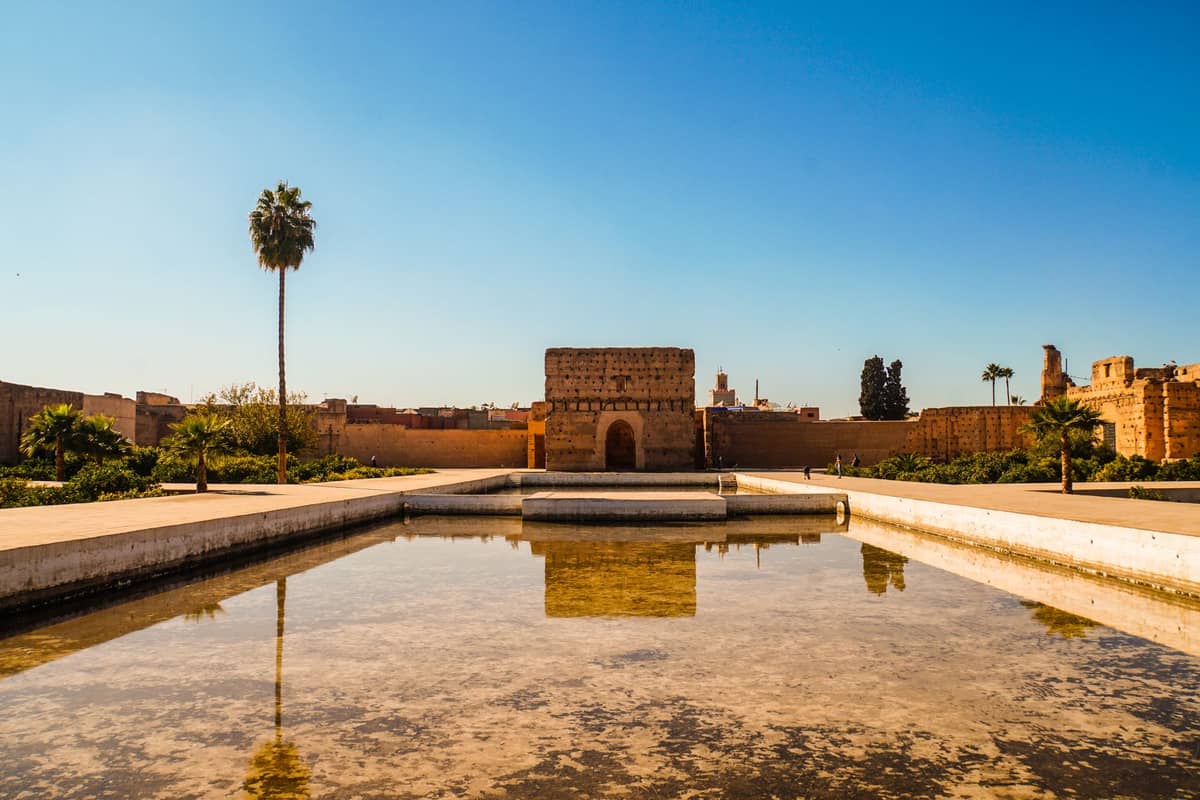
Three days is enough to cover the headline attractions without padding your itinerary with filler. The El Badi Palace ruins are interesting for context — they show the scale of what the Saadian sultans built — but the site is largely unrestored rubble. Worth an hour if you have time on Day 1 after Bahia Palace; not worth rearranging your schedule for.
The leather tanneries near Bab Debbagh are a well-known stop but come with aggressive guide pressure. You'll be led to a nearby leather shop roof terrace to view the vats, and sales pressure follows. The sight itself is impressive, but go knowing that the 'free' entry from the shop terrace comes with an expectation to buy. Alternatively, approach from street-level viewing points near Bab Debbagh to see the tanneries independently.
- Things most first-timers underestimate How physically tiring the medina is — the uneven paving, constant sensory stimulation, and navigational uncertainty add up. Build in a mid-afternoon break at a riad or café, especially in summer when temperatures exceed 35°C.
- Summer visits (June–August) Peak heat makes outdoor sightseeing between noon and 4pm genuinely uncomfortable. Shift your schedule: start at 8am, break during the hottest hours, and resume at 5pm into the evening.
- Ramadan considerations Many restaurants close during daylight hours and the medina has a different rhythm. Not a reason to avoid Marrakech, but worth understanding before you book.
- Day trips from 3-day base If you're staying longer or have a flexible 4th day, the Ourika Valley (about 35 km south) and Essaouira (2.5–3 hours west) are the two most worthwhile extensions.
ℹ️ Good to know
Dress modestly in the medina — covered shoulders and knees are appropriate for both men and women, especially near mosques and in local market areas. In Gueliz and Hivernage, standards are more relaxed. Keeping a light scarf or layer handy is practical for both cultural reasons and the variable temperatures between shaded alleys and open squares.
FAQ
Is 3 days in Marrakech enough?
Yes — three full days is the practical sweet spot for most visitors. You can cover the key medina landmarks (Ben Youssef Madrasa, Bahia Palace, Saadian Tombs, Jemaa el-Fna), spend a half-day at Jardin Majorelle and the associated museums, explore the souks and Mellah, and fit in a hammam without feeling rushed. A 4th day adds room for a day trip or slower-paced revisits. Anything under 2 nights will feel incomplete.
What is the best time of year for 3 days in Marrakech?
March to May and September to November offer the most comfortable conditions for walking. Spring brings wildflowers and moderate temperatures in the low-to-mid 20s°C. Autumn is similarly pleasant with less tourist pressure than spring. Summer (June–August) is manageable with adjusted scheduling but daytime temperatures regularly exceed 35°C. December through February is mild but can be rainy and cool at night.
How far in advance should I book Jardin Majorelle tickets?
Book as soon as your dates are confirmed, particularly if you're visiting between March–May or September–October. Peak-season timed slots sell out several days in advance. The only valid purchase point is tickets.jardinmajorelle.com — third-party sellers are not accepted at the gate.
Should I stay in the medina or Gueliz for a 3-day trip?
The medina puts you within walking distance of most Day 1 and Day 3 attractions and delivers an immersive experience from the moment you arrive. Gueliz is quieter, easier to navigate, and better for restaurant variety, but adds 15–20 minutes of transit to medina sightseeing. For a first visit focused on the historic city, the medina wins — just choose a riad at least two streets away from Jemaa el-Fna for manageable noise levels.
Can I do a day trip from Marrakech within a 3-day itinerary?
It's tight. A day trip to the Ourika Valley or Agafay Desert works if you dedicate one of your three days to it entirely. Essaouira requires a full day (roughly 2.5–3 hours each way plus time on site). If you're set on a day trip, plan it for Day 2 or 3 and accept that you'll skip one of the city's secondary attractions. A 4-day base makes day trips much more comfortable.
Tickets & tours
Live prices and dates from our booking partner. If you book, we may earn a commission at no extra cost to you.
Planning a trip? Discover personalized activities with the Nomado app.