Berber Museum (Musée Pierre Bergé des Arts Berbères): A Complete Visitor Guide
Housed in the iconic Blue Villa inside Jardin Majorelle, the Pierre Bergé Museum of Berber Arts presents one of Morocco's most carefully curated collections of Amazigh jewelry, textiles, and ceremonial objects. Small in scale but dense in meaning, it rewards visitors who take time to look closely.
Quick Facts
- Location
- Rue Yves Saint Laurent, Jardin Majorelle, Gueliz, Marrakech 40000
- Getting There
- 10-15 min petit taxi from Jemaa el-Fna; walk from central Gueliz in ~15 min
- Time Needed
- 45–90 minutes for the museum; add 30–60 min for the garden
- Cost
- Garden ~170 MAD; museum supplement ~60 MAD; combined with YSL Museum ~330 MAD (verify before visiting)
- Best for
- Cultural travelers, design lovers, and anyone curious about Moroccan Amazigh identity
What the Berber Museum Actually Is
The Pierre Bergé Museum of Berber Arts, widely known as the Berber Museum or Musée Berbère, sits inside the Blue Villa at the heart of Jardin Majorelle in Gueliz, Marrakech. It is not a large institution. The collection occupies a compact series of rooms inside the villa that Jacques Majorelle built between the 1920s and 1940s, and which Yves Saint Laurent and Pierre Bergé purchased and restored in 1980. What the museum lacks in square footage, it makes up for in curatorial precision.
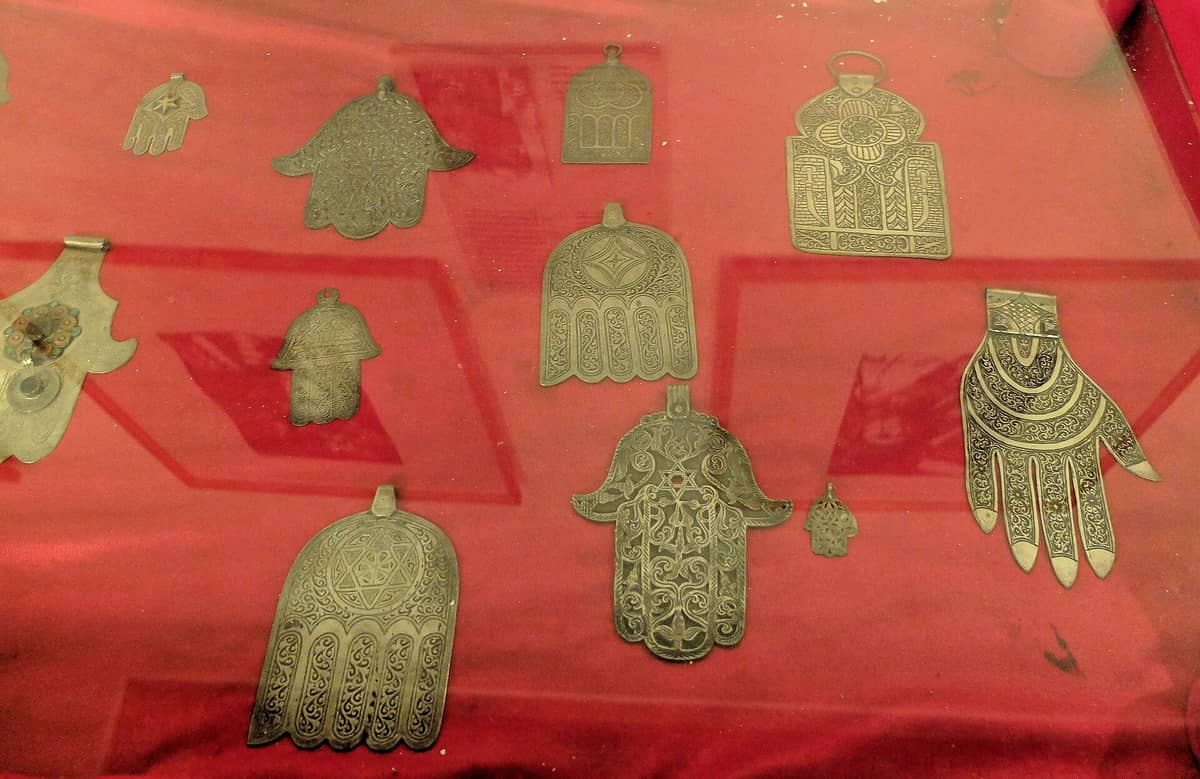
The collection focuses exclusively on Amazigh (Berber) material culture from across Morocco's distinct regions: the High Atlas, the Anti-Atlas, the Souss plains, the Rif, and the Saharan south. Around 600 objects are on permanent display, ranging from intricately worked silver fibulae and amber necklaces to embroidered wool robes, painted cedar dowry boxes, and ceremonial daggers. Each piece is labeled with its region of origin, which is useful since Berber craft traditions vary substantially from one mountain valley to the next.
💡 Local tip
The museum supplement ticket (approximately 60 MAD above the garden entry) is sold separately at the gate. If you plan to visit both the Berber Museum and the Yves Saint Laurent Museum nearby, ask about the combined ticket at the Jardin Majorelle entrance, which is reported to cost around 330 MAD total. Prices should be verified on the day, as they are updated periodically.
The Collection: What You Will See Room by Room
The display is organized thematically rather than chronologically. Early rooms concentrate on personal adornment: the jewelry here is exceptional. Berber silversmithing developed independently of the Arab goldsmithing traditions that dominated urban Moroccan craft, and the difference is visible. The pieces are heavier, more geometric, set with carnelian, coral, and amber rather than gemstones, and made to be worn in layers. The fibulae, large disc-shaped clasps used to fasten the haik (a draped outer garment), are particularly striking up close.
Further in, the textile section displays woven and embroidered items including handiras, the distinctive blankets woven by Atlas Berber women with metallic thread that catch the light in a particular way. The weaving patterns encoded tribal affiliation, marital status, and regional identity in ways that would have been immediately legible to other Berber women and largely invisible to outsiders. The wall labels do explain the general symbolism, though the depth of reading required to fully decode each pattern is honestly beyond what a single museum visit provides.
A final section covers domestic objects and architectural elements including painted wooden panels, storage chests, and agricultural tools. Taken together, the collection makes a case that Amazigh material culture represents a coherent artistic tradition on its own terms, not merely a folkloric footnote to Morocco's Arab and Andalusian heritage. For a broader understanding of Islamic architecture and Moroccan decorative traditions across the city, the Ben Youssef Madrasa and the Dar Si Said Museum provide useful counterpoints.
Tickets & tours
Live prices and dates from our booking partner. If you book, we may earn a commission at no extra cost to you.
Day trip to Atlas Mountains, Ourika Valley and Berber Villages
From 15 €Instant confirmationFree cancellationSunrise hot air balloon ride with traditional Berber breakfast
From 179 €Instant confirmationFree cancellationAgafay desert full-day tour with camel ride and Berber lunch
From 70 €Instant confirmationFree cancellationMarrakech hot-air balloon experience with breakfast in a Berber Haima
From 250 €Instant confirmationFree cancellation
The Setting: Jardin Majorelle and the Blue Villa
Understanding the museum requires understanding where it sits. Jardin Majorelle was created by French painter Jacques Majorelle over more than two decades, beginning in the 1920s. The garden surrounds a villa that Majorelle painted in an intense cobalt blue, a shade he apparently developed himself and which has since become known internationally as Majorelle Blue. The color is saturated to the point of appearing artificial in photographs, but in person, under Marrakech's strong midday light, it reads as almost architectural rather than decorative.
After Majorelle's death, the property fell into disrepair and was nearly demolished for a hotel development in 1980 before Yves Saint Laurent and Pierre Bergé acquired it, restored both the garden and the villa, and eventually installed the Berber art collection. The Jardin Majorelle foundation now maintains the site, and the museum is a permanent extension of Pierre Bergé's personal engagement with Moroccan Amazigh culture over four decades. That biographical context adds a layer of meaning to the collection, even if the objects speak clearly enough on their own.
The garden itself, with its bamboo groves, towering cacti, and reflecting pools, is technically a separate ticket purchase, but visiting the museum without walking through the garden would miss half the experience. The Jardin Majorelle garden guide covers the botanical highlights in detail. Those interested in the fashion history dimension of the site should also consider the Yves Saint Laurent Museum, located a short walk from the garden entrance on Rue Yves Saint Laurent.
How the Experience Changes by Time of Day
The museum interior stays consistent throughout the day since it is a closed, climate-controlled space with artificial lighting. What changes dramatically is the garden surrounding it. Jardin Majorelle is one of Marrakech's most-visited sites, and by mid-morning, particularly on weekends and during peak season (October to April), the narrow garden paths can become congested. Visitors queuing to photograph the Blue Villa from the main garden path will often obstruct the entrance to the museum itself.
Opening time at around 08:00 for the garden and 08:30 for the Berber Museum represents the most comfortable window to visit. The light in the garden is soft, the paths are quiet, and the museum rooms feel less rushed. Late afternoon, from around 16:30 onward, is a secondary good window as tour groups tend to have departed, though the light in the garden is lower by then. Midday from 11:00 to 14:00 is the peak congestion period and also the hottest part of the day during summer months, when temperatures in Marrakech regularly exceed 35°C.
⚠️ What to skip
During Ramadan, the museum and garden operate reduced hours that may differ from the rest of the year; exact times are confirmed annually, so check the official Jardin Majorelle website or your ticket confirmation before planning your visit during this period.
Getting There and Practical Logistics
The museum's address is Rue Yves Saint Laurent, within Jardin Majorelle in the Gueliz district of Marrakech. From the medina, a petit taxi to Jardin Majorelle takes roughly 10 to 15 minutes depending on traffic, with typical metered fares that are modest by European standards. Drivers know the destination by name. Walking from central Gueliz takes around 15 minutes, following Avenue Mohammed V toward the garden entrance.
There is no dedicated parking lot, and the surrounding streets can be tight. Visitors arriving by car should plan to park on the wider avenues in Gueliz and walk the last few minutes. Gueliz itself is worth exploring before or after the museum: it has a different character from the medina, with wide tree-lined streets, European-era architecture, and a range of cafés. The Gueliz neighborhood guide covers the local café and restaurant scene if you want to plan a half-day around your museum visit.
The museum is open every day, with the Jardin Majorelle garden generally running from 08:00 to 18:30 (last entry 18:00) and the Pierre Bergé Museum of Berber Arts operating slightly shorter hours from 08:30 to 18:00 with last entry around 17:30. Official hours should always be confirmed on the Jardin Majorelle website before visiting. Children under 10 are reported to enter the garden portion free of charge, though this should be verified at the time of booking.
Photography, Dress Code, and Practical Considerations
Photography is generally permitted in the garden, and the Blue Villa exterior is one of the most photographed subjects in Marrakech. Inside the museum, check current policy at the entrance, as restrictions on flash photography are common in museums displaying textile and organic materials sensitive to light degradation.
Dress code expectations at Jardin Majorelle are relaxed compared to religious sites in the medina, but given the broader context of visiting Marrakech, lightweight modest clothing is both practical in summer heat and appropriate. See the Marrakech dress code guide for detailed recommendations across different types of sites.
The official Jardin Majorelle site states that the garden and museums are accessible to disabled visitors, and the Pierre Bergé Museum of Berber Arts is described as wheelchair accessible. Some garden paths are gravel. Visitors with specific mobility needs can still contact the foundation before visiting if they want route details.
Is It Worth Your Time?
The Berber Museum is a rewarding cultural stop. It is compact, well-lit, and carefully labeled, and it covers material that most other Marrakech attractions do not address in any depth. If you have spent time in the medina's souks examining jewelry and textiles without understanding their origins or meaning, this museum provides the framework to recalibrate what you have seen.
The main caveat is the visitor volume at Jardin Majorelle overall. The garden and museum together attract enormous numbers, and on busy days the experience can feel like navigating a popular tourist attraction rather than a contemplative cultural space. Visitors expecting the quiet intimacy of a private villa gallery will need to manage expectations, particularly during peak season. That said, the museum rooms themselves rarely reach the congestion levels of the garden paths, and the collection quality justifies the entrance cost without reservation.
Visitors who find the museum sparks further interest in Moroccan cultural heritage should consider the Maison de la Photographie in the medina for historical documentary photography of Berber and Moroccan communities, or the Marrakech museums guide for a broader overview of what the city's museum scene offers.
Insider Tips
- Buy your tickets online through tickets.jardinmajorelle.com before arriving — there is no on-site ticket desk. Popular time slots sell out, especially during school holidays and the October-to-April peak season.
- The combined ticket covering the garden, the Berber Museum, and the Yves Saint Laurent Museum nearby offers the best value if you plan to visit all three. The YSL Museum is a 3-minute walk from the Jardin Majorelle entrance and requires roughly an hour on its own.
- The museum's jewelry room benefits from taking your time near the display cases rather than walking through quickly. The hallmarking, construction techniques, and regional variation in the fibulae and necklaces are only visible up close, and reading the regional labels enriches the souks shopping experience considerably.
- If you visit during summer, wear breathable clothing and bring water. The garden has shade but the paths can be hot between 11:00 and 15:00, and the queue outside the entrance has no cover.
- The small bookshop adjacent to the museum sells reasonably priced catalogues on Berber art and Moroccan craft traditions. These are hard to find elsewhere in Marrakech and worth browsing if the collection captures your interest.
Who Is Berber Museum (Musée Berbère) For?
- Travelers with an interest in North African cultural history and Amazigh identity
- Design and craft enthusiasts who want context for the jewelry and textiles they will see across Marrakech's souks
- Visitors combining the museum with the Jardin Majorelle garden and YSL Museum for a half-day in Gueliz
- Photographers drawn to the Blue Villa's extraordinary color and the contrast with the surrounding tropical planting
- Repeat visitors to Marrakech who have covered the main medina attractions and want to go deeper
Nearby Attractions
Other things to see while in Gueliz (Ville Nouvelle):
- Jardin Majorelle
Once a painter's private sanctuary, Jardin Majorelle is now one of Marrakech's most photographed gardens. Set on Rue Yves Saint Laurent in Marrakech's modern Gueliz area, it pairs electric-blue architecture with an extraordinary collection of cacti and subtropical plants — and a world-class museum of Berber culture at its centre.
- MACMA – Musée d'Art et de Culture de Marrakech
Founded in 2016 by private collector Nabil El Mallouki, MACMA is one of Marrakech's most coherent art museums, presenting orientalist works, early photography and contemporary Moroccan painting in a quiet courtyard setting in Gueliz. It offers a genuine counterpoint to the city's more touristic attractions.
- Marrakech Railway Station
Marrakech Railway Station (Gare de Marrakech) is the southern terminus of Morocco's national rail network, sitting in the modern Gueliz district about 3.5 km from the medina. This guide covers everything travelers need: how to reach it, what to expect inside, which trains run where, and the practical details that make the difference between a smooth departure and a stressful one.
- Église des Saints-Martyrs
Catholic worship in Marrakech centres on a quiet parish in Gueliz, the city’s modern French-influenced district. The church most visitors actually find is Église des Saints-Martyrs; Notre-Dame de Lourdes is a separate landmark in Casablanca. The Gueliz parish offers a calm, architecturally modest space and a window into Morocco’s layered religious history.
Planning a trip? Discover personalized activities with the Nomado app.