Marrakech Railway Station: The Complete Guide to Morocco's Southern Rail Hub
Marrakech Railway Station (Gare de Marrakech) is the southern terminus of Morocco's national rail network, sitting in the modern Gueliz district about 3.5 km from the medina. This guide covers everything travelers need: how to reach it, what to expect inside, which trains run where, and the practical details that make the difference between a smooth departure and a stressful one.
Quick Facts
- Location
- Avenue Hassan II, Gueliz district, Marrakech 40100, Morocco
- Getting There
- 10-15 min by taxi from Jemaa el-Fna; local buses also serve the area
- Time Needed
- 30-60 min for orientation and ticketing; arrive 20-30 min before departure
- Cost
- Free to enter; Marrakech to Casablanca approx. 100 MAD one-way (verify with ONCF)
- Best for
- Travelers connecting to Casablanca, Rabat, Fes or Tangier by train
- Official website
- www.oncf-voyages.ma
What Kind of Place Is Marrakech Railway Station?
Marrakech Railway Station, known formally as Gare de Marrakech and operated by Morocco's national rail company ONCF (Office National des Chemins de Fer), is the southern passenger terminus of the Moroccan railway network. Every scheduled passenger train that leaves here heads north. There are no passenger lines going further south. That geographic finality gives the station a particular character: it is an arrival and departure point with purpose, not a through-station where crowds pass without stopping.
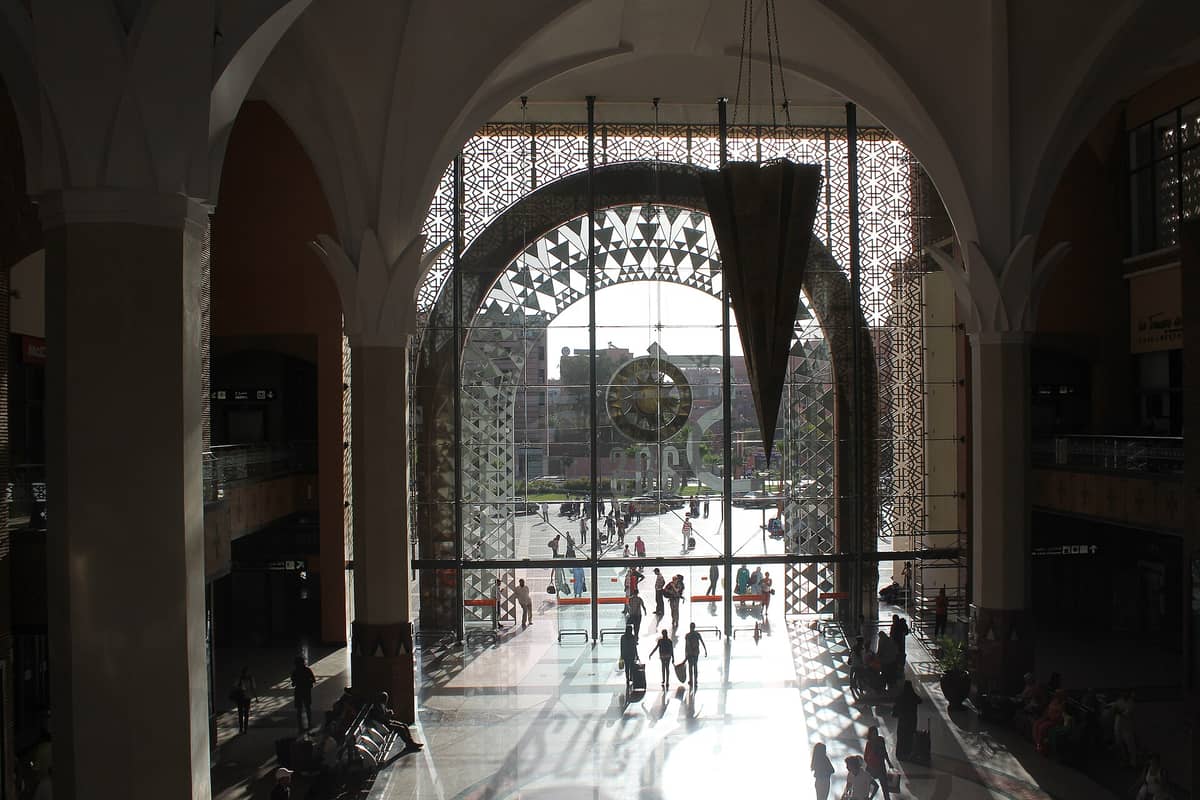
The building sits on Avenue Hassan II in Gueliz, Marrakech's modern district, about 3.5 km northwest of the historic medina and Jemaa el-Fna. It is a clean, reasonably spacious structure with a contemporary design that fits its surroundings in this orderly, French-influenced part of the city. Wide tiled floors, clear signage in Arabic and French, a waiting hall with seating, ticket windows, and a handful of small shops and cafes inside make it more functional than atmospheric.
💡 Local tip
Book your ONCF tickets in advance online at oncf-voyages.ma, especially for Friday afternoon or Sunday evening departures when seats on trains toward Casablanca fill quickly. Booking at the station window is also straightforward, but queues can build during peak hours.
The Station Inside: What You'll Actually Find
Arriving at the station for the first time, the main entrance from Avenue Hassan II opens into a hall that manages to feel simultaneously modern and slightly under-decorated. The space is functional rather than grand. The ticket counters line one wall; the departure board sits above the entrance to the platforms. The ground floor is flat throughout, which makes moving luggage easy and the station fully navigable for wheelchair users. Ramps and elevators connect to platforms, and accessible restrooms are available.
Inside, you will find a small cafe, a few shops selling snacks, water and newspapers, and a left-luggage facility. The platforms themselves are open-air and can feel genuinely hot in summer. If you are waiting for a midday train in July or August, the indoor waiting area is the better option. In the cooler months, the platforms are pleasant enough, with a view toward the broad avenues of Gueliz. There are benches on the platforms, but shade is limited.
The station does not charge entry. Anyone can walk in to explore, buy a ticket, or pick someone up. Early mornings, from around 6:00 AM when the first departures happen, the station is quiet and the tiled floors carry the sound of rolling luggage cleanly. By mid-morning and in the early evening, when trains to Casablanca tend to fill, the queues at ticket windows are longer and the waiting hall carries more noise. Late evening, after 9 PM, the station thins out significantly.
Tickets & tours
Live prices and dates from our booking partner. If you book, we may earn a commission at no extra cost to you.
Full day tour of Ouarzazate from Marrakech
From 51 €Instant confirmationFree cancellationEvening Quad Bike at Palmeraie Area with Tea Tasting from Marrakech
From 49 €Instant confirmationFree cancellationFull Day Economic Tour in Essaouira from Marrakech
From 29 €Instant confirmationFree cancellationFull Day Economic Tour of Ourika Valley from Marrakech
From 25 €Instant confirmationFree cancellation
Train Routes: Where You Can Go from Marrakech
As the southern terminus of the ONCF network, Marrakech connects directly and via interchanges to Morocco's main cities. The most traveled route is toward Casablanca (Casa-Voyageurs), with journey times typically around three hours. From Casablanca, passengers can connect onward to Rabat, Fes, Meknes, and Tangier, the latter now also served by the Al Boraq high-speed train running between Casablanca and Tangier.
Direct trains also run to Rabat. Journeys to Fes involve a change, usually at Casablanca or Sidi Kacem, and take around seven to eight hours in total. The train is significantly more comfortable than the equivalent long-distance bus for these journeys, with more legroom and the ability to move around. First-class carriages on ONCF trains are air-conditioned and reasonably comfortable; second-class is adequate but can become crowded on busy routes.
One practical consideration: the station is the starting point of journeys, which means outbound trains from Marrakech often board with open seats from the beginning. You are not boarding a half-full train that originated elsewhere. This makes the experience of finding a seat on a booked ticket straightforward, provided you board on time.
ℹ️ Good to know
A standard one-way second-class ticket from Marrakech to Casablanca was around 100 MAD (approximately US$10) as of early 2026. First-class and reserved seats cost more. Fares change and must be confirmed at oncf-voyages.ma before travel.
Getting to the Station from the Medina and Beyond
The station is about 3 to 3.5 km from the medina and around 10 to 15 minutes by taxi in normal traffic, making it one of the easier logistical moves in Marrakech. Petit taxis are the standard choice: they are metered, relatively inexpensive, and can get you from the edge of the medina to the station drop-off point directly. Expect to pay in the range of 20 to 30 MAD for a ride from Jemaa el-Fna, though the meter should always run.
Local buses also serve the Gueliz area and can get you within walking distance of the station, though navigating the bus system without prior knowledge is not the fastest option if you are carrying luggage. Ride-hailing apps including Careem and inDrive operate in Marrakech and can offer fixed app prices, which removes the uncertainty of negotiating a fare. For travelers staying in Gueliz, the station is walkable from many hotels, roughly 10 to 15 minutes on foot along the main avenue.
If you are arriving into Marrakech by train rather than departing, note that the station sits at the edge of the new town. The medina is not immediately visible from outside the station, and the wide roads of Gueliz can be disorienting if you are expecting to walk straight into a maze of souks. Budget for a taxi or clarify your hotel's location relative to the station before you arrive.
⚠️ What to skip
The station has no direct public transit link to Marrakech Menara Airport. If you are transferring between train and plane, you will need a taxi or private transfer. Allow at least 30 to 40 minutes for this connection, more during peak traffic.
Architectural and Historical Context
The Marrakech Railway Station building reflects the urban character of Gueliz more than the ornate aesthetic of the medina. Morocco's colonial-era urbanism shaped Gueliz as a planned, rectilinear district alongside the walled old city, and the station fits this pattern: it is built for function, with some attention to clean lines and modest local design elements rather than the elaborate tilework and arched facades you find in, say, the older stations of Casablanca.
As the southern terminus of the ONCF network, the station represents the limit of Morocco's current rail infrastructure. The country's rail system has expanded significantly in recent years, most visibly with the Al Boraq high-speed line between Casablanca and Tangier, but Marrakech remains connected to the main network through conventional tracks. The city's position as a major cultural and tourist destination makes this station one of the busiest in Morocco outside the Casablanca-Rabat corridor. Understanding where the station sits contextually helps when planning a wider trip: read more about getting around Marrakech to understand how trains, taxis and buses fit together.
Practical Walkthrough: What to Do When You Arrive
If you are buying a ticket at the station rather than online, head directly to the ticket windows on the ground floor. Have your destination, preferred departure time and class preference ready. Staff generally speak French and Arabic; English is spoken by some but is not guaranteed. Signage is primarily in Arabic and French, so a basic familiarity with your destination's French spelling (e.g., Casablanca, Fes, Rabat) helps. Platform numbers are shown on the departure board and are announced before trains depart.
Luggage rules on ONCF trains allow reasonable amounts of personal baggage. There is no formal luggage check-in for standard trains. Large bags go in overhead racks or between seats. If you are traveling with a significant amount of luggage and plan to use the left-luggage storage at the station before or after your journey, confirm availability and pricing directly at the counter on arrival.
For travelers planning day trips or longer excursions, the train is an underused option. The journey to Casablanca allows a day trip to Casablanca that is entirely feasible, departing early and returning in the evening. Similarly, planning a multi-day itinerary that loops through Fes and Tangier by train is one of the more rewarding ways to see Morocco slowly and comfortably.
Who This Attraction Is (and Is Not) For
Marrakech Railway Station is not an attraction in the conventional sense. There is no particular reason to visit it unless you are catching a train or meeting someone who is. Unlike certain grand European rail terminals where the architecture itself justifies a visit, the Gare de Marrakech is principally a transit hub. Travelers who are curious about it as a piece of urban infrastructure or who want to buy tickets in person will find it organized and manageable.
For travelers planning to move between Moroccan cities, the station is central to the experience. It connects Marrakech with the rest of the country more comfortably and affordably than most alternatives. Those on a budget trip to Marrakech will find the train among the best value transport options available. Equally, travelers combining Marrakech with a broader Moroccan itinerary, say, spending several days here before heading north to Fes, will find the station easy to use and well-positioned in the city.
Travelers visiting Marrakech purely to explore the medina, souks and gardens will likely never need to visit the station at all. If your plan is to fly in and out and stay within the old city, a visit here offers nothing beyond a glimpse of modern Gueliz.
Insider Tips
- Buy your return train ticket on the day you arrive in Marrakech, not the day before you leave. Weekend trains, especially Sunday evening departures toward Casablanca, sell out well in advance. Picking up a ticket early removes one decision from your last day.
- The station has a small cafe inside where the coffee is drinkable and the seating is comfortable. If you arrive early for a train, it is a calmer and cooler spot than standing on an exposed summer platform.
- First-class tickets on ONCF trains cost meaningfully more than second-class but are worth considering on the longer journeys to Fes or Tangier. The difference in comfort over five to seven hours is substantial.
- If you are arriving in Marrakech by train for the first time, note that the station's taxi rank is just outside the main entrance. Insist on using the meter. The ride to Jemaa el-Fna is short and should not be expensive; agree on nothing without the meter running.
- The ONCF app and website allow seat selection when booking. On busy routes, window seats on the right side traveling toward Casablanca offer views toward the Atlas Mountains for the first portion of the journey, until the landscape flattens.
Who Is Marrakech Railway Station For?
- Independent travelers connecting Marrakech to Casablanca, Rabat or Fes by train
- Budget travelers who want Morocco's most affordable intercity travel option
- Multi-city itinerary planners building a rail loop through northern Morocco
- Travelers staying in Gueliz who want a convenient transit hub within walking distance
- Anyone making a day trip to Casablanca and back within a single day
Nearby Attractions
Other things to see while in Gueliz (Ville Nouvelle):
- Jardin Majorelle
Once a painter's private sanctuary, Jardin Majorelle is now one of Marrakech's most photographed gardens. Set on Rue Yves Saint Laurent in Marrakech's modern Gueliz area, it pairs electric-blue architecture with an extraordinary collection of cacti and subtropical plants — and a world-class museum of Berber culture at its centre.
- MACMA – Musée d'Art et de Culture de Marrakech
Founded in 2016 by private collector Nabil El Mallouki, MACMA is one of Marrakech's most coherent art museums, presenting orientalist works, early photography and contemporary Moroccan painting in a quiet courtyard setting in Gueliz. It offers a genuine counterpoint to the city's more touristic attractions.
- Berber Museum (Musée Berbère)
Housed in the iconic Blue Villa inside Jardin Majorelle, the Pierre Bergé Museum of Berber Arts presents one of Morocco's most carefully curated collections of Amazigh jewelry, textiles, and ceremonial objects. Small in scale but dense in meaning, it rewards visitors who take time to look closely.
- Église des Saints-Martyrs
Catholic worship in Marrakech centres on a quiet parish in Gueliz, the city’s modern French-influenced district. The church most visitors actually find is Église des Saints-Martyrs; Notre-Dame de Lourdes is a separate landmark in Casablanca. The Gueliz parish offers a calm, architecturally modest space and a window into Morocco’s layered religious history.
Planning a trip? Discover personalized activities with the Nomado app.