Marrakech to Casablanca: How to Get There & What to Expect
The route from Marrakech to Casablanca is one of Morocco's most-traveled corridors, with frequent trains completing the journey in under three hours. This guide breaks down every transport option, compares fares, and tells you exactly what to expect before you board.
Tickets & tours
Live prices and dates from our booking partner. If you book, we may earn a commission at no extra cost to you.
TL;DR
- The ONCF train is the best option for most travelers: direct, air-conditioned, and around 2h 40m to 3h between Marrakech and Casablanca Voyageurs.
- Second-class train fares typically run 90–120 MAD; first class 150–180 MAD. Buses (CTM or Supratours) are marginally cheaper but slower at 3–4 hours.
- Around a dozen daily train departures operate on this route, so you rarely need to plan far ahead, though booking online in advance avoids queues.
- Grand taxis exist for this route but are not cost-effective compared to the train. See also the guide to getting around Marrakech for city transport context.
- Always verify current fares and schedules on the ONCF website or platforms like Markoub.ma before traveling, as prices update frequently.
Understanding the Route: Distance, Context & Why It Matters
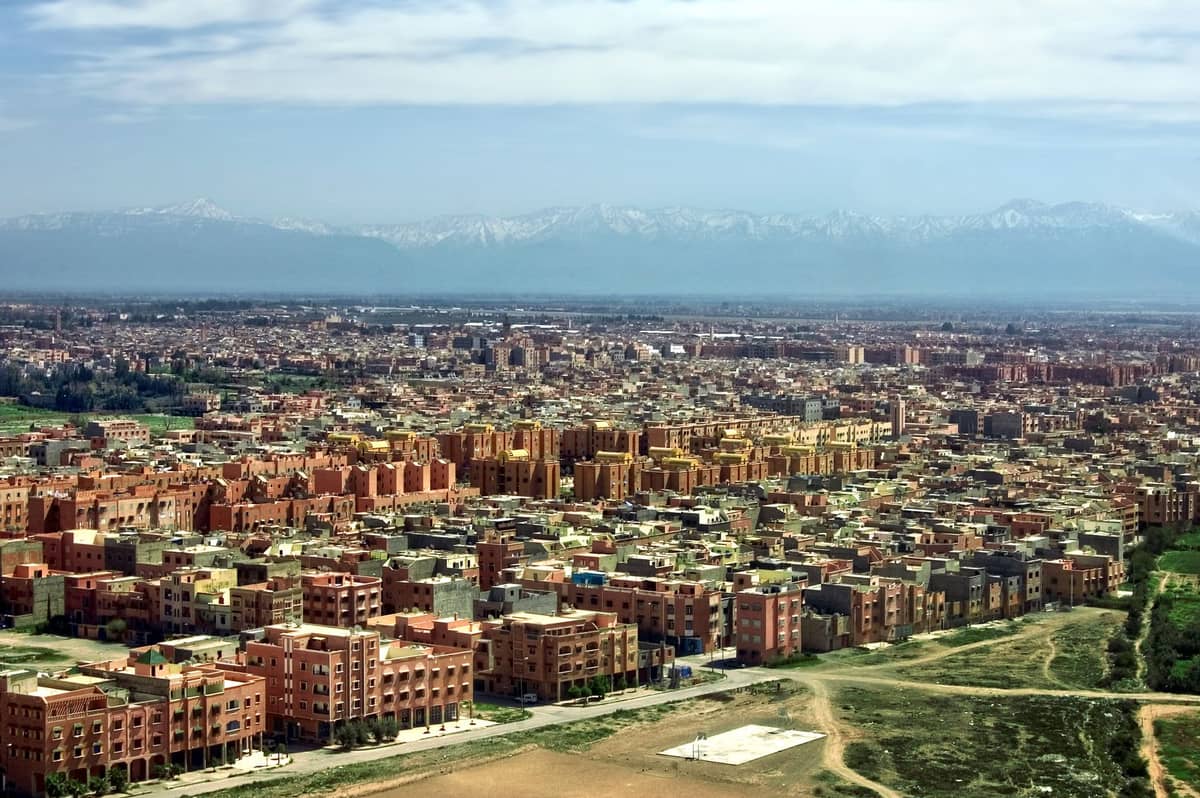
Marrakech and Casablanca sit roughly 240 km apart by road, connected by one of Morocco's most reliable rail corridors. Casablanca is Morocco's commercial capital and largest city, making this one of the country's highest-traffic intercity routes. Whether you're flying out of Mohammed V International Airport, attending a business meeting, or simply exploring beyond the medina, getting from Marrakech to Casablanca is a practical necessity for many visitors.
Marrakech itself is the capital of the Marrakech–Safi region, sitting at the northern foot of the High Atlas at around 450 meters elevation. Its central point for visitors is Jemaa el-Fna square, from which the train station (Marrakech Railway Station) is about 2 km to the northwest, reachable on foot or by petit taxi in under ten minutes.
ℹ️ Good to know
Marrakech Railway Station (Gare de Marrakech) is located on Avenue Hassan II in the Gueliz district. It has a left-luggage service, a café, and ATMs. Arrive at least 15 minutes before departure, longer during Eid or summer school holidays when the station gets crowded.
The Train: Why Most Travelers Choose ONCF
The ONCF train is the default choice for a straightforward reason: it is faster, more comfortable, and more reliable than buses on this corridor. Direct services connect Marrakech to Casablanca Voyageurs station, with a typical journey time of 2 hours 40 minutes to 3 hours depending on the specific service. That is a meaningful difference from bus travel, which typically takes 3 to 4 hours and is more subject to road traffic.
Frequency is a genuine advantage on this route. Around 10–12 daily departures run in each direction, with trains spread from early morning through to late evening. Sample afternoon and evening slots from Marrakech have included 12:35, 13:35, 14:35, 18:35, and 20:00, arriving into Casablanca roughly three hours later — always check the current ONCF timetable. This means you can be spontaneous, though booking a day or two ahead online is smart during peak periods.
- 2nd Class (Économique) Typically 90–120 MAD one-way. Comfortable, air-conditioned, and perfectly adequate for a 3-hour journey. Seats can fill up on Friday afternoons and Sunday evenings.
- 1st Class (Confort) Typically 150–180 MAD one-way. Wider seats and quieter compartments. Worth it on hot summer days when the carriage feels cooler.
- Third-party booking platforms Aggregator sites like 12Go or TicketRoutes sometimes show fares starting around 186 MAD, reflecting dynamic pricing. The official ONCF channels or Markoub.ma often offer better rates.
✨ Pro tip
Book directly through ONCF's website or app for the lowest base fares. Third-party platforms add booking fees. If you're also planning day trips or onward travel, note that Casablanca Voyageurs connects directly to the airport line (CASA Voyageurs to Mohammed V Airport takes around 45 minutes by train).
Bus Travel: CTM, Supratours & When It Makes Sense
The two major intercity bus operators on this route are CTM and Supratours. CTM is Morocco's national long-distance bus company; Supratours is operated by ONCF and often departs from near train stations. Both run air-conditioned coaches with assigned seating, and journey times are typically 3 to 3.5 hours under normal conditions, though traffic approaching Casablanca can push this past 4 hours.
Fares are marginally lower than train 2nd class: CTM starts at around 90 MAD and Supratours from around 80 MAD, with promotional fares occasionally lower. The price difference over the train is rarely more than 30–40 MAD, which makes the train a better trade-off for most travelers given the faster journey time. Where buses genuinely win is convenience of departure point for certain neighborhoods, and availability on routes where train seats are sold out.
⚠️ What to skip
Bus fares and schedules on this route change seasonally. A 50 MAD promotional Supratours fare circulates online but is not consistently available. Always check current pricing on Markoub.ma or the CTM website before planning around a specific cost.
Grand Taxis: The Option to Skip
Grand taxis in Morocco are shared long-distance vehicles, typically Mercedes saloons that carry up to six passengers. They operate on set routes and leave when full. For shorter routes like Marrakech to Ouarzazate or Essaouira, grand taxis can be practical. For the Marrakech to Casablanca run, they are not. The distance is substantial, the price per seat is not competitive with the train, and journey time is entirely dependent on traffic. Unless you are chartering the whole vehicle or there is simply no other option available, the train or bus serves this route better.
Comparing All Options Side by Side
- ONCF Train (recommended) Journey time: 2h 40m to 3h. Fares: 90–180 MAD depending on class. Frequency: around 10–12 daily departures. Pros: fastest, most reliable, air-conditioned, central arrival point. Cons: book ahead during peak periods.
- CTM Bus Journey time: 3–4 hours. Fares: from ~90 MAD. Frequency: several daily departures. Pros: slightly cheaper than 1st class train, departures from central Marrakech bus station. Cons: slower, traffic-dependent.
- Supratours Bus Journey time: ~3–3.5 hours. Fares: from ~80 MAD. Pros: ONCF-operated so coordinated with train network. Cons: similar limitations to CTM.
- Grand Taxi Journey time: varies significantly with traffic. Fares: higher per person than train. Pros: door-to-door flexibility if chartering. Cons: not practical for solo travelers, no meaningful cost or time advantage.
- Private Transfer / Car Hire Journey time: ~3 hours by road. Cost: significantly higher. Best for groups or travelers with specific schedule needs, such as an early morning airport connection in Casablanca.
Practical Logistics: Booking, Stations & What to Bring
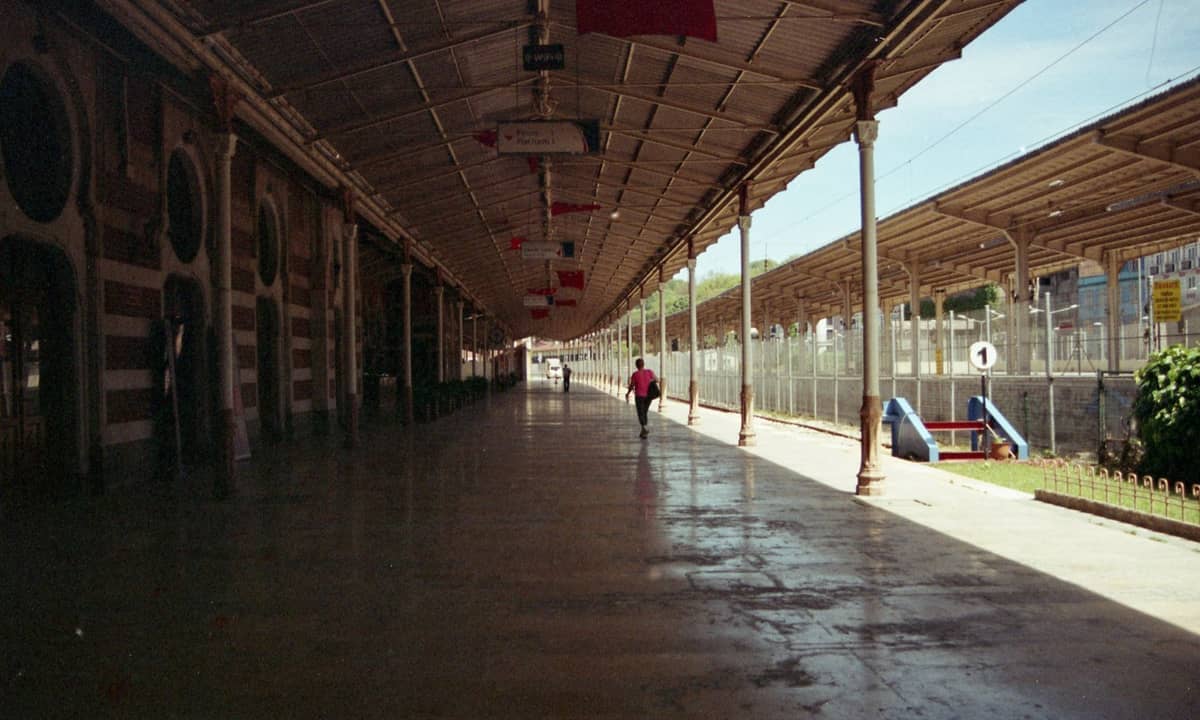
Train tickets can be purchased at Marrakech Railway Station or booked online via ONCF's official website. The Marrakech Railway Station is in the Gueliz district, about a 15-minute walk from the main boulevard or a 5-minute petit taxi ride from the medina. Having a physical or digital ticket ready speeds up boarding considerably.
If you are staying in the medina or near Gueliz, getting to the station is straightforward. A petit taxi from the Djemaa el-Fna area to the station costs around 15–25 MAD depending on the time of day. Budget 30 minutes before departure to account for taxi time and any ticket queue.
At Casablanca Voyageurs, you arrive in the commercial heart of the city. The station has good connections to city trams and taxis. If your destination is Mohammed V Airport, a separate train runs directly from Casablanca Voyageurs, making the connection seamless. Plan around 40–45 minutes for that leg, plus check-in time.
💡 Local tip
Bring water, especially in summer when temperatures in Marrakech regularly exceed 35°C. Both train and bus are air-conditioned, but platforms and boarding areas are not. A small snack helps on a 3-hour journey with no onboard catering on standard services.
If you are working out a broader Morocco itinerary, Casablanca connects onward to Rabat (around 1 hour by train), Fes (around 4 hours), and Tangier. Pair this journey with a look at the one-week Marrakech itinerary to build in the most efficient routing before or after your Casablanca leg.
For travelers arriving at Marrakech Menara Airport first before heading to Casablanca, the Marrakech airport transfer guide covers all options for reaching the city center or the train station directly. Allow at least 30–45 minutes from the airport to the station in normal traffic.
Seasonal Considerations & Avoiding Crowds
The Marrakech to Casablanca corridor sees its highest demand during summer school holidays (July–August), Eid al-Fitr and Eid al-Adha, and long weekends around public holidays. During these periods, train seats in 2nd class fill early, sometimes days in advance. If you are traveling during Ramadan, note that Morocco's timezone shifts by one hour, which can affect departure time calculations if you booked ahead.
Spring (March to May) and autumn (September to November) are the most comfortable seasons for travel in Morocco, with moderate temperatures and fewer peak-season crowds on transport. A morning departure from Marrakech during these months is genuinely pleasant: you can watch the landscape shift from the red plains around Marrakech to the Atlantic coastal flatlands approaching Casablanca.
If you are planning to return the same day, the frequency of trains makes it viable, though three hours each way leaves limited time in Casablanca for anything beyond a specific purpose. For most visitors, Casablanca is not a sightseeing destination in the way that day trips from Marrakech to the Atlas Mountains or coast tend to be. It is a major commercial city with a few genuinely worthwhile sites, but the journey is most worth it as part of onward travel rather than a day return.
FAQ
How long does the train from Marrakech to Casablanca take?
Direct ONCF trains typically take between 2 hours 40 minutes and 3 hours, depending on the specific service. This is the fastest surface transport option on this route. Buses take 3 to 4 hours and are more traffic-dependent.
How much does the Marrakech to Casablanca train cost?
Second-class fares typically run 90–120 MAD one-way. First class costs around 150–180 MAD. Third-party booking platforms sometimes show higher prices due to fees, so buying direct from ONCF or Markoub.ma usually gives better rates. All prices are subject to change, so verify before booking.
How many trains run daily between Marrakech and Casablanca?
Around 10–12 daily departures operate on this route in each direction, spread across morning, afternoon, and evening. This is a high-frequency corridor by Moroccan standards, so missing one train is rarely a crisis.
Is the bus or train better for Marrakech to Casablanca?
The train is better for most travelers. It is faster by 30 to 60 minutes, more reliable, and the fare difference versus 2nd class is negligible (often 30 MAD or less). Buses are a reasonable alternative if train seats are sold out or you are departing from near the bus station.
Can I travel from Marrakech to Casablanca airport by train?
Yes, but it requires a connection. Take the ONCF train to Casablanca Voyageurs, then transfer to the dedicated airport train (ONDA line) to Mohammed V International Airport. Total journey from Marrakech to the airport is typically around 3 hours 15 minutes to 4 hours depending on connections. Allow extra buffer for international departures.
Tickets & tours
Live prices and dates from our booking partner. If you book, we may earn a commission at no extra cost to you.
Planning a trip? Discover personalized activities with the Nomado app.