One Week in Marrakech: The Complete 7-Day Itinerary
Seven days in Marrakech gives you enough time to go deep into the medina, escape to the Atlas Mountains, and decompress in a hammam without rushing. This itinerary is structured by district and theme, with frank notes on what to skip, what to book in advance, and how to move around without getting fleeced.
Tickets & tours
Live prices and dates from our booking partner. If you book, we may earn a commission at no extra cost to you.
TL;DR
- Book Jardin Majorelle tickets online before you arrive — walk-up entry is not reliably available and timed QR codes are required.
- Spring (March–May) and autumn (September–November) offer the most comfortable temperatures for walking; summer daytime heat regularly exceeds 35°C. See the best time to visit Marrakech for a full seasonal breakdown.
- Budget around 70–100 MAD for a petit taxi from the airport to the medina, or 30 MAD for Bus 19 (ALSA Line) if you're travelling light.
- Seven days is enough to cover the medina's major monuments, one Atlas day trip, one hammam session, and the Gueliz / Majorelle axis — provided you pace yourself. For a tighter schedule, see the 3-day Marrakech itinerary as a fallback.
- The Moroccan dirham (MAD) is the local currency; many medina vendors quote prices in euros, but paying in dirhams is almost always cheaper.
Arriving in Marrakech: Airport to City
Marrakech Menara Airport (IATA: RAK) sits about 6 km southwest of the city centre. In light traffic, you are at Jemaa el-Fna in 15–20 minutes. The airport is compact and manageable, but the taxi queue outside arrivals moves slowly during peak season, and persistent touts do approach new arrivals. Having a plan before you land saves time and money.
- Bus 19 (ALSA shuttle) Cheapest option at around 30 MAD one-way. Runs every 20–30 minutes from approximately 06:00 to 23:30, terminating at Jemaa el-Fna. Takes 30–40 minutes depending on traffic. Perfectly fine if you are travelling light and have no immediate pressure on time.
- Petit taxi Typical fare is 70–100 MAD to the medina using the meter or an agreed rate. Faster and easier with luggage. Insist the driver uses the meter, or agree a price before getting in. Journey time is 15–20 minutes in normal traffic.
- Pre-booked private transfer Prices typically start from around €15 per vehicle depending on the operator and destination. Door-to-door, driver holds a name sign, no negotiation required. Worth the marginal cost on arrival day if you are staying in a riad deep in the medina where directions are complicated.
- Ride-hailing (Careem / inDrive) Available with app-fixed prices typically in the 70–100 MAD range. Confirm availability at the airport before counting on it — regulations and access points can vary.
💡 Local tip
If your riad is in the medina, your driver will likely drop you at the nearest accessible street — not your front door. Have your riad's GPS coordinates or a WhatsApp contact saved before you arrive. Many riad owners will send someone to meet you at a landmark.
For a full breakdown of every transfer option including cost comparisons and timing, the Marrakech airport transfer guide covers all the details. Once in the city, getting around Marrakech explains how petit taxis, calèches, and walking compare across different districts.
Days 1–2: The Medina Core
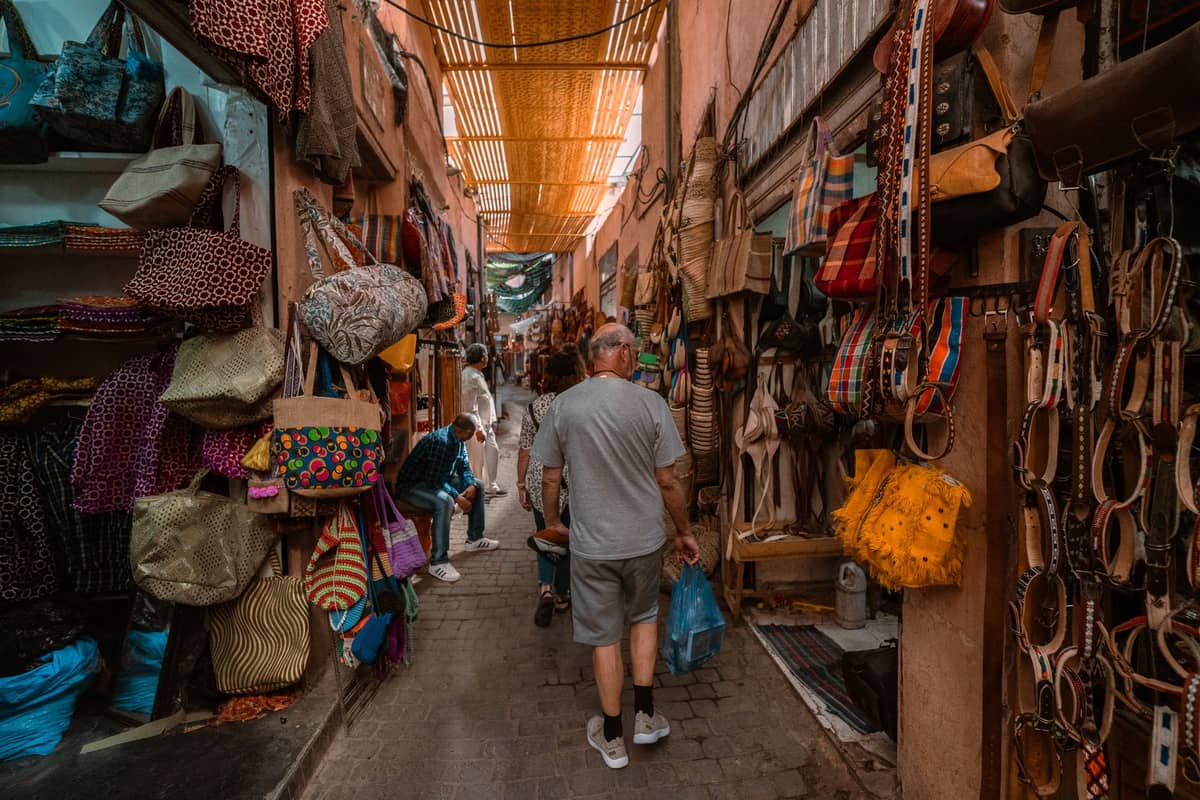
Spend your first two days in the Marrakech medina without any fixed agenda for the first afternoon. Getting lost is not a cliché here — it is how you learn to orient yourself. The medina dates to the 11th century, is a UNESCO World Heritage Site, and genuinely disorienting for first-time visitors. Give yourself an afternoon to just walk before attaching any objectives to your time.
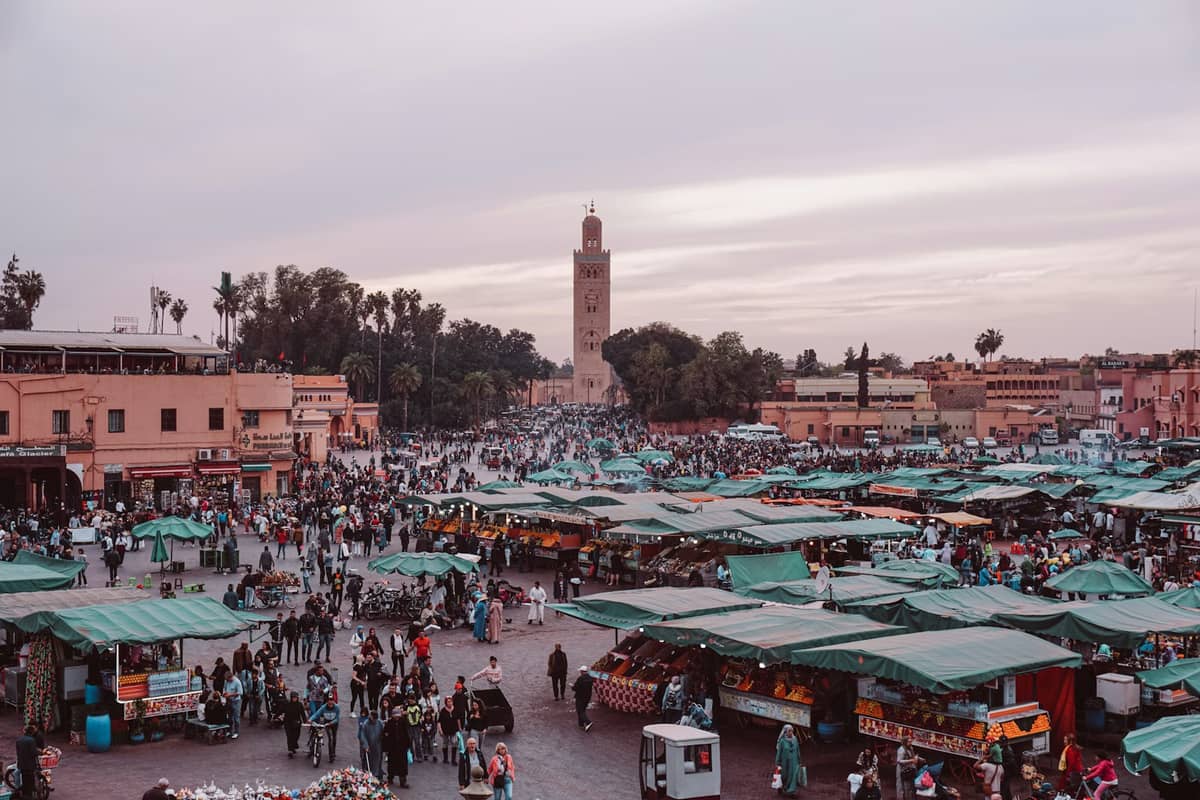
On Day 1, anchor your orientation around Jemaa el-Fna — the main square and de facto centre of the old city. During the day it hosts juice stalls, storytellers, and henna artists; after dark it transforms into an open-air food market with dozens of stalls serving harira, grilled meats, and fresh snails. Eat here at least once. It is loud, smoky, and chaotic — and it is worth it.
On Day 2, tackle the monument circuit: the Ben Youssef Madrasa is the most architecturally impressive interior in the medina, a 14th-century Quranic school with carved cedar, zellij tilework, and a central courtyard that photographs well in the morning light before crowds arrive. Pair it with the nearby Koubba Baadyin, the only surviving Almoravid structure in Marrakech. In the afternoon, head south to the Bahia Palace (open daily around 09:00–17:00, entry around 100 MAD for foreign adults) and finish with the Saadian Tombs nearby — they close earlier, so sequence accordingly.
⚠️ What to skip
Ben Youssef Madrasa tickets should be purchased at the Marrakech Museum ticket office nearby, which often sells a combined entry pass. Queues build significantly after 10:00 in peak season (March–May, October). Arrive before 09:30 to walk the courtyard without shoulder-to-shoulder crowds.
Day 3: Souks, Tanneries, and the Mouassine Quarter
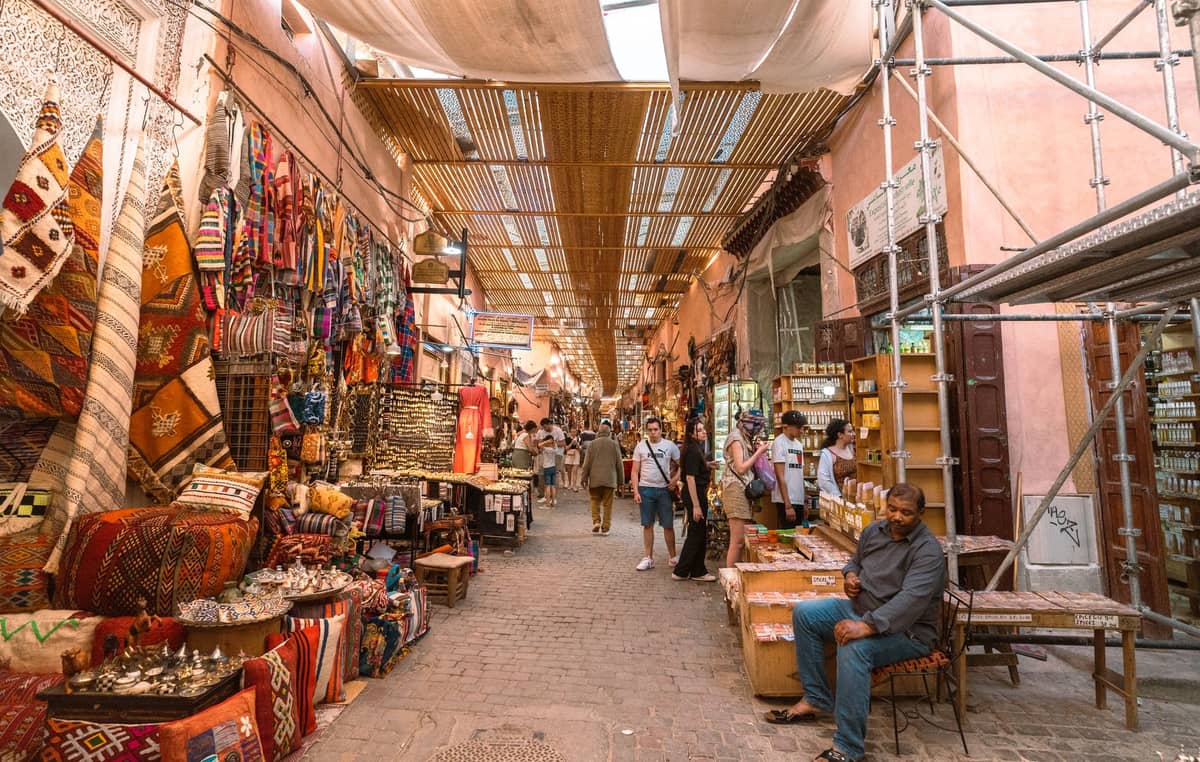
The Marrakech souks are organized by trade — spice merchants cluster near Rahba Kedima, metalworkers ring in the north, weavers and carpet dealers form their own corridors. It helps to know this before you enter, because guides who approach at the entrance will often steer you toward commission-paying shops.
For a specific detour, the leather tanneries (Bab Debbagh) are a genuine piece of working Marrakech — dye vats dug into the ground, hides drying on rooftops, workers moving between pits. The viewing terraces are run by leather shops that expect you to look at their goods afterward. That is the deal. You can decline purchasing without drama. The smell is intense; vendors hand out mint sprigs at the entrance. Go in the morning when the vats are most active.
The Mouassine quarter northwest of Jemaa el-Fna is one of the less-trafficked parts of the medina and worth an hour of unhurried walking. The 16th-century Mouassine Mosque and its adjacent fountain are a good reference point. For a curated shopping guide covering specific souk zones and what to pay, see the Marrakech souks shopping guide.
Day 4: Jardin Majorelle, Gueliz, and the YSL Museum
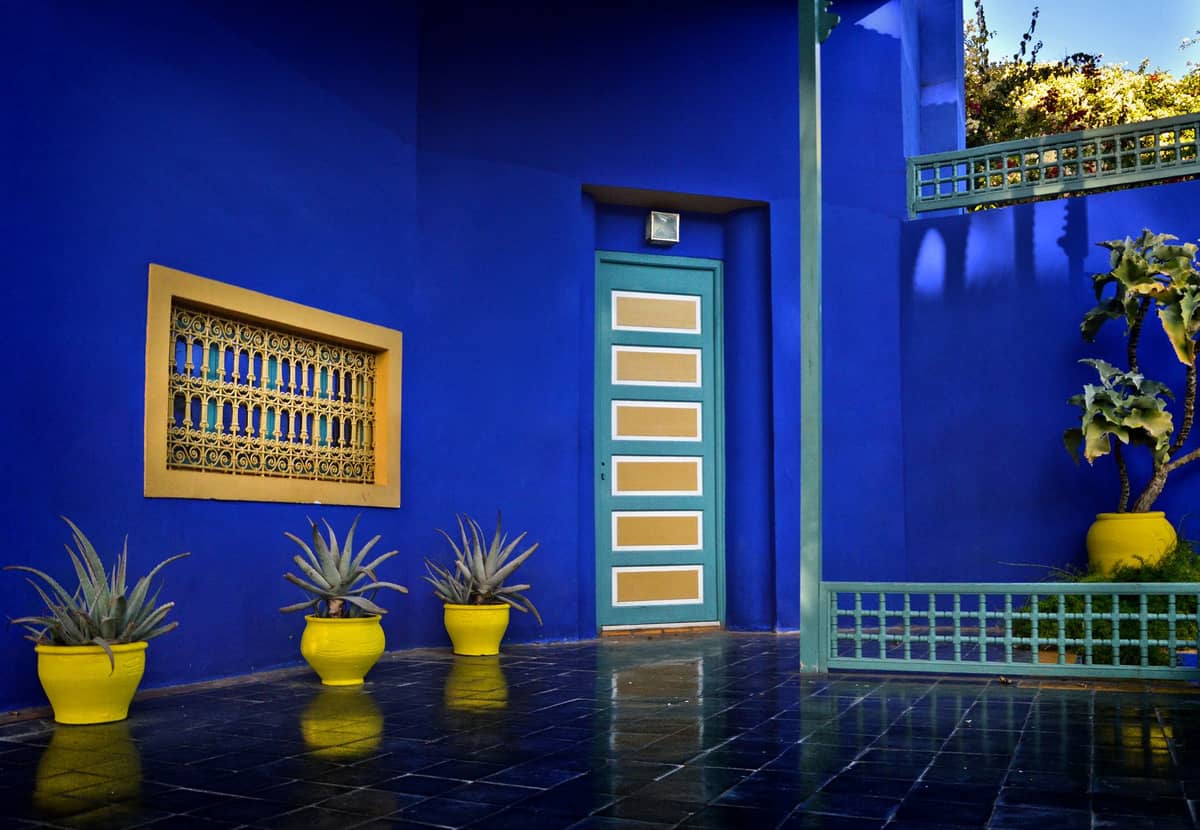
Day 4 is best spent across the old walls in Gueliz, Marrakech's modern district. The axis between Gueliz and Jardin Majorelle is walkable or a short taxi ride from the medina, and the contrast in pace is useful at this point in the trip.
The Jardin Majorelle is the city's most-visited attraction for good reason. The cobalt-blue structures, designed by Jacques Majorelle and later restored by Yves Saint Laurent and Pierre Bergé, sit inside a botanical garden with over 300 plant species. Book timed tickets in advance at tickets.jardinmajorelle.com — walk-up entry is not reliably available. The garden opens daily at 08:00 with last entry at 18:00. Current pricing runs around 170 MAD for the garden alone, approximately 230 MAD with the Berber museum, and around 330 MAD for a combined ticket including the Yves Saint Laurent Museum. Prices are updated periodically, so confirm on the official site when booking.
✨ Pro tip
Book the 08:00 or 08:30 entry slot at Jardin Majorelle. By 10:00 the paths are crowded and temperatures are climbing. The early light also makes the cobalt blue pop against the green canopy in a way that midday flat light does not replicate.
After Majorelle, spend the afternoon exploring Gueliz itself. Avenue Mohammed V has a mix of Moroccan chain stores, patisseries, and cafés. This is where locals shop, not tourists. Lunch at a Gueliz restaurant is typically 30–50% cheaper than eating in the medina for equivalent quality. MACMA (Marrakech Museum of Art and Culture) is also in this district if you want structured time indoors.
Day 5: Atlas Mountains Day Trip
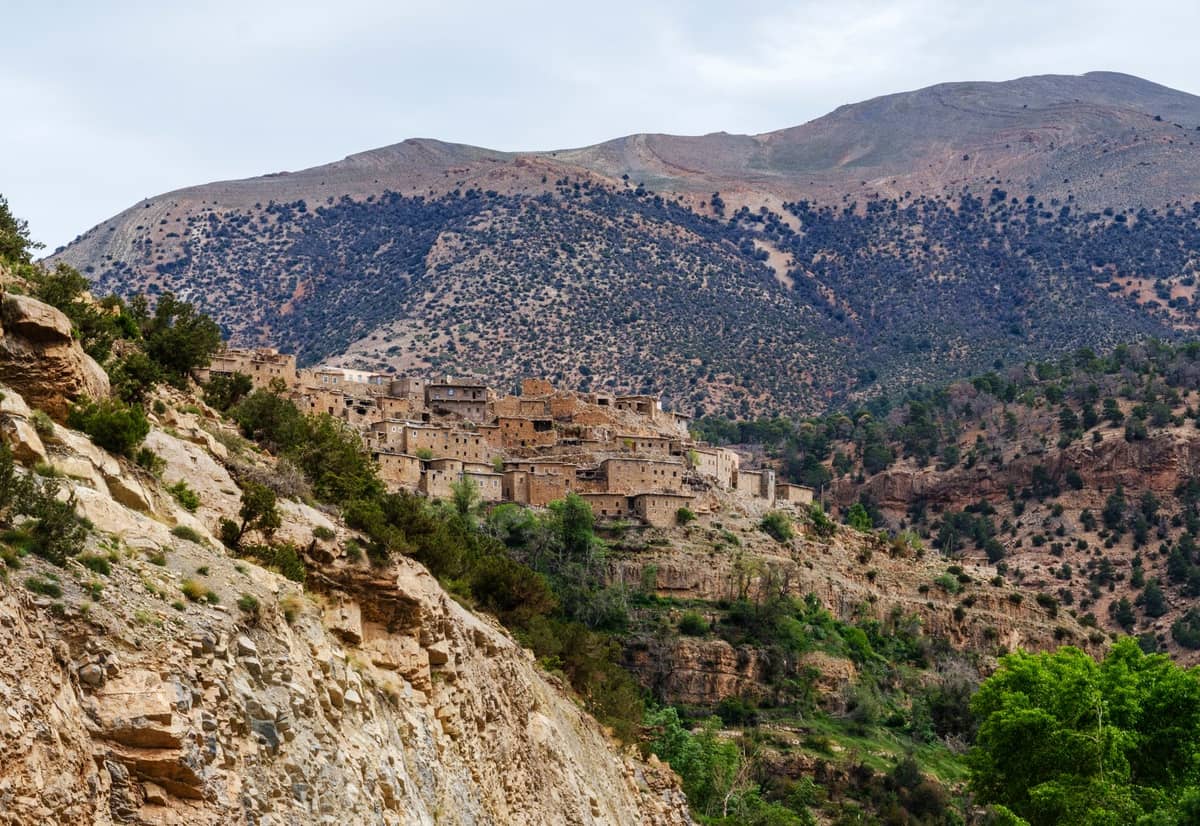
One day trip out of the city is almost essential on a 7-day visit. The Atlas Mountains begin less than an hour south of Marrakech, and the contrast with the urban medina is dramatic. The most accessible options are the Ourika Valley (about 35–40 km from Marrakech; Setti Fatma at the far end is closer to 60 km) and the village of Imlil, the base camp for treks toward Mount Toubkal, North Africa's highest peak at 4,167 m.
Ourika is better for a relaxed half-day or full day: Berber villages, the Setti Fatma waterfalls, and roadside herb and argan stalls. Imlil is better if you want to walk — even a two-hour hike up from the village gives you genuine mountain views without requiring overnight gear. A shared grand taxi from Marrakech to Imlil costs around 30–50 MAD per seat; private taxis run 300–400 MAD return. For organised trekking itineraries in the Atlas, the Marrakech trekking guide covers route options by fitness level.
Days 6–7: Hammam, El Badi Palace, and Palmeraie
By Day 6, most visitors are ready for a slower pace. This is the right time for a hammam. The difference between a tourist hammam and a traditional neighbourhood hammam matters: tourist-oriented hammams (often inside riads or spas) charge 250–500 MAD for a full scrub and massage session. Local hammams in the medina charge 15–30 MAD for entry and basic services. Both are legitimate choices depending on comfort level and what you want from the experience. The Marrakech hammam guide breaks down the options in practical terms, including what to expect if it is your first time.
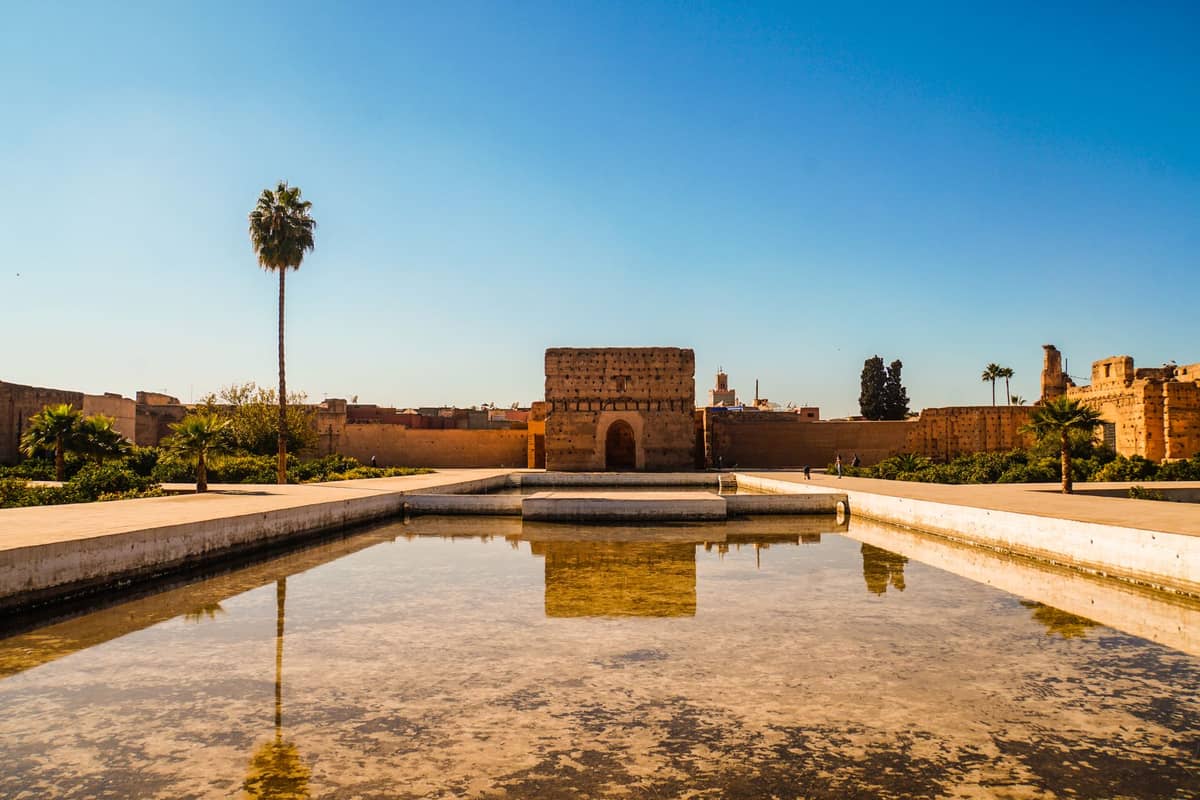
Dedicate an afternoon of Day 6 to El Badi Palace, the ruined 16th-century palace of Sultan Ahmad al-Mansur. It is deliberately underrated in some itineraries because it is a ruin rather than a polished monument — but that is exactly what makes it worth visiting. The scale is extraordinary: 360 rooms, a central pool 90 m long, and stork nests visible on every remaining wall. Entry is 100 MAD. Combine it with the Mellah Jewish quarter nearby, one of the oldest Jewish neighbourhoods in Morocco, which includes the Slat al-Azama synagogue and the Jewish cemetery.
On Day 7, if you have a late flight, the Palmeraie on the city's northern edge makes a calm final morning. The palm grove itself is large and increasingly commercialised — most visitors come for resort pools and quad biking — but it remains an interesting contrast to the dense medina. Alternatively, spend the morning at the Menara Gardens, which are free to enter and only 3 km from the airport, making them a practical pre-departure stop.
- Book Jardin Majorelle tickets the moment your Marrakech flights are confirmed — peak-season slots sell out days in advance.
- Carry small dirham notes: 10, 20, and 50 MAD denominations. Many medina vendors cannot break 200 MAD notes and will use the opportunity to shortchange you.
- Dress modestly in the medina, particularly around mosques and religious sites — shoulders and knees covered. Gueliz and Hivernage are more relaxed on this. The guide on what to wear in Marrakech covers this by district.
- Tap water in Marrakech is treated but most visitors stick to bottled water to avoid stomach issues. Budget roughly 5–8 MAD per 1.5-litre bottle from a supermarket (Carrefour or Marjane).
- If you are travelling in Ramadan, expect significantly altered hours at many restaurants and attractions, plus a different atmosphere in the medina after iftar. Read the dedicated guide to Marrakech during Ramadan before finalising plans.
ℹ️ Good to know
Marrakech follows Morocco Standard Time (UTC+1) most of the year, with a temporary reversion to UTC+0 during Ramadan. This is a government decision made annually and not always announced far in advance. If your trip coincides with Ramadan, check the current timezone before scheduling anything time-sensitive.
Practical Logistics: Budget, Language, and Getting Around
Marrakech suits a wide range of budgets. A genuine backpacker budget runs around 300–400 MAD per day covering a basic riad dorm or cheap guesthouse, medina street food, and free or low-cost sights. A mid-range independent traveller spending 700–1,200 MAD per day gets a comfortable private riad room, sit-down restaurant meals, and paid attractions. Luxury travellers can spend ten times that without difficulty — Marrakech has some of North Africa's finest small hotels.
French is widely spoken in tourism and commerce. Arabic (Darija) and Amazigh are the everyday languages. Basic French phrases open doors significantly more than English in the medina. The language spoken is rarely a barrier for independent travel, but learning 'la shukran' (no thank you, in Darija) is genuinely useful when declining touts. For more detail on safe solo navigation and common scams to avoid, the Marrakech safety guide is worth reading before you arrive.
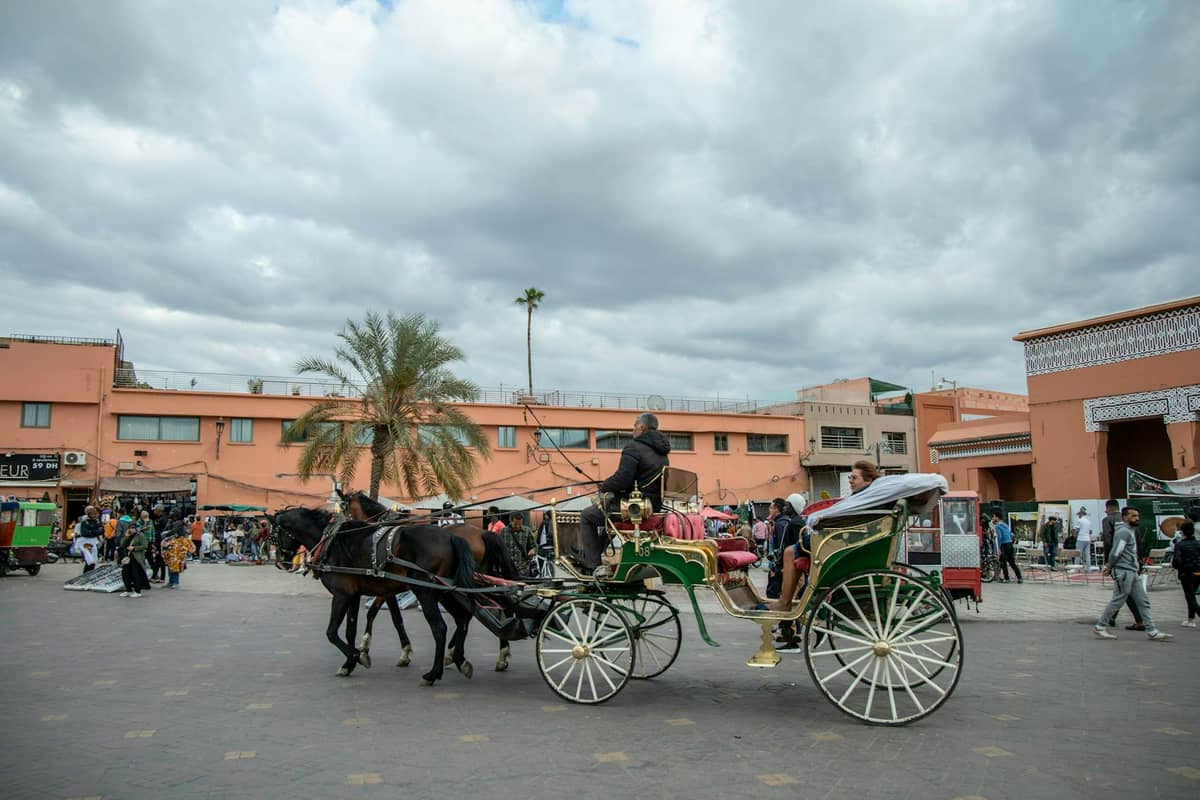
Within the city, petit taxis are the most practical paid transport. They are metered (in theory), cheap, and numerous. Agree on the meter or a price before departure. For longer journeys to Gueliz or Hivernage from the medina, expect 20–40 MAD. The medina itself is best navigated on foot — vehicles cannot access most alleys. For a full rundown of transport options including calèches, rideshares, and rental bicycles, see the guide to getting around Marrakech.
FAQ
How many days do you need in Marrakech to see the main sights?
Four full days covers the core medina monuments, Jardin Majorelle, the souks, and one day trip. Seven days allows you to go deeper: a hammam session, the Mellah, slower souk browsing, and a second day trip without feeling rushed. Less than three days means cutting significant corners.
Is it safe to walk around Marrakech at night?
The medina around Jemaa el-Fna is active and well-populated until midnight, especially the food stalls. The main tourist corridors are safe for most visitors. Darker side streets in the medina are less advisable after midnight, particularly for solo travellers. Gueliz and Hivernage are calm and low-risk at night. Standard urban precautions apply throughout.
Do you need to book Jardin Majorelle tickets in advance?
Yes, reliably. Tickets are timed QR codes sold exclusively at tickets.jardinmajorelle.com. Walk-up entry is not guaranteed and in peak season (March–May, October–November) popular time slots sell out days ahead. Book as soon as your travel dates are confirmed.
What is the best base for a week in Marrakech?
Staying in a riad inside the medina puts you within walking distance of almost everything on this itinerary and gives you the most authentic experience. Gueliz is better if you value wide streets, easier navigation, and proximity to the modern restaurant scene. Hivernage suits travellers prioritising large hotel amenities over character. Most first-time visitors prefer a medina riad for at least part of the stay.
What day trips are feasible from Marrakech in one week?
Ourika Valley and Imlil are both doable in a single day from Marrakech. Ait Benhaddou and the Draa Valley require an overnight. Essaouira on the Atlantic coast is a long day trip (about 2.5 hours each way by CTM bus) but is popular and practical. The Agafay Desert is only 40 minutes from the city and suits a half-day or overnight trip if you want a desert experience without committing to the Sahara.
Tickets & tours
Live prices and dates from our booking partner. If you book, we may earn a commission at no extra cost to you.
Planning a trip? Discover personalized activities with the Nomado app.