Mount Toubkal: Trekking North Africa's Highest Peak from Marrakech
At 4,167 metres, Mount Toubkal is the highest point in the Atlas Mountains and in all of North Africa. Reached via the village of Imlil, roughly 70 kilometres south of Marrakech, it draws serious trekkers for multi-day ascents through Berber villages, rocky scree slopes, and high-altitude snowfields. This is not a casual day hike — but for those prepared, it is one of the most rewarding mountain experiences in the Mediterranean world.
Quick Facts
- Location
- Toubkal National Park, High Atlas Mountains, Morocco — approx. 70 km south of Marrakech
- Getting There
- Shared taxi or private transfer from Marrakech to Imlil village (trailhead), approx. 1.5–2 hours
- Time Needed
- Minimum 2 days (1 night at refuge); 3 days recommended for acclimatization and comfort
- Cost
- No formal summit ticket; Refuge du Toubkal from 20–30€/night; licensed guide fees extra
- Best for
- Fit hikers, altitude seekers, Atlas culture enthusiasts, photographers
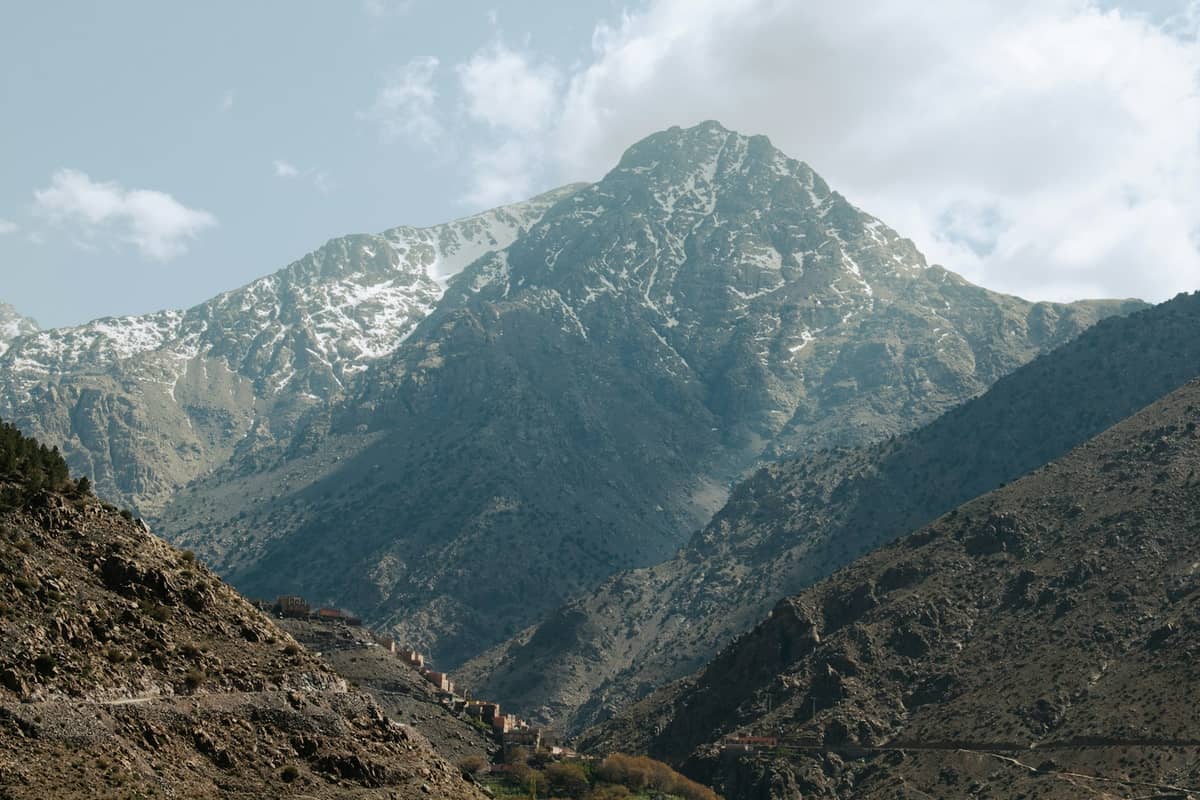
What Mount Toubkal Actually Is
Mount Toubkal, also widely referred to as Jebel Toubkal, stands at 4,167 metres (13,671 feet) above sea level, making it the highest peak in the Atlas Mountains and the highest point in all of North Africa and the Arab world. It sits within Toubkal National Park, officially administered by Morocco's Haut Commissariat aux Eaux et Forêts et à la Lutte contre la Désertification. Unlike the walled gardens and palace ruins of Marrakech, this is a raw high-altitude environment: loose scree, snow-streaked ridges in winter, and air thin enough to feel on the summit ridge.
The mountain does not have an entrance gate or ticket booth in the conventional sense. There is no fence at the trailhead, no timed entry, and no audio guide. What you encounter instead is a national park with open trail access, a small local conservation or access fee sometimes charged per person at park entry points, and a well-established mountain hut system anchored by the Refuge du Toubkal at around 3,200 metres. The experience is shaped entirely by the terrain, the season, and how well you have prepared.
⚠️ What to skip
Morocco's current regulations require licensed guides for Toubkal ascents. Attempting the summit without a guide is discouraged by park authorities and can be dangerous outside the summer season. Always verify current requirements before you go.
Getting from Marrakech to the Trailhead
The journey begins not at the mountain but at the village of Imlil, the standard trailhead for Toubkal and the last point reachable by road. From Marrakech, Imlil lies roughly 70 kilometres to the south, and the drive typically takes between 90 minutes and two hours depending on traffic leaving the city and road conditions through the Atlas foothills. The final stretch winds upward through mountain villages on a road that narrows considerably.
Most independent travellers reach Imlil by shared grand taxi from the Bab Rob taxi station in Marrakech, or by private transfer arranged through a riad or tour operator. There is no direct public bus service to Imlil. If you are combining this with other Atlas experiences, the village of Imlil merits at least an hour of exploration on its own: a compact Berber settlement with mule-handlers, walnut trees, and small guesthouses that have been hosting climbers since the 1930s.
For those pairing the trek with broader High Atlas exploration, Ourika Valley and the kasbah at Aït Benhaddou are logical additions to a week-long itinerary based in Marrakech. See the day trips from Marrakech guide for logistics on combining these routes.
Tickets & tours
Live prices and dates from our booking partner. If you book, we may earn a commission at no extra cost to you.
Djebel Toubkal 2-day trekking from Marrakesh
From 280 €Instant confirmationFree cancellationToubkal High Atlas Mountains guided trek from Marrakech
From 39 €Instant confirmationFree cancellationDay trip to Imlil Mount Toubkal from Marrakech
From 74 €Instant confirmationFree cancellationFull day tour of Ouarzazate from Marrakech
From 51 €Instant confirmationFree cancellation
The Route: Imlil to Summit
The standard two-day route from Imlil to the summit and back follows a well-worn path that climbs through the Mizane valley before ascending steeply to the Refuge du Toubkal. On day one, the hike from Imlil to the refuge covers around 1,450 metres of elevation gain over roughly 10–11 kilometres. The trail passes through the hamlet of Aroumd and then opens into a wide valley floored with boulders and sparse vegetation, with views back down toward terraced fields and the valley floor shrinking below.
The Refuge du Toubkal sits at approximately 3,207 metres. It is the principal overnight stop for summit attempts and is managed by a private operator. As of 2026, overnight stays are priced at 20 to 25 euros per night from May through October, rising to 25 to 30 euros during the November to April winter season. Meals are available at the refuge: breakfast at 5 euros, lunch at 10 euros, and dinner at 10 euros. Booking ahead, especially in the July and August high season, is strongly advised.
On day two, summit attempts typically begin before dawn, between 04:00 and 06:00. The climb from the refuge to the summit gains roughly 960 metres over about four kilometres of scree and rocky switchbacks. In good summer conditions, this takes three to four hours upward. The summit itself is marked with a metal survey post and, on a clear morning, offers views across the entire Atlas range and toward the Saharan pre-desert to the south. The descent to Imlil on the same day is feasible but long; many trekkers choose a three-day itinerary to avoid rushing.
💡 Local tip
Start your summit bid no later than 06:00. Afternoon cloud and wind build quickly at this altitude, and the scree becomes more treacherous as temperatures fluctuate. Guides typically recommend arriving at the summit before 10:00.
Seasons and Conditions: When to Go and What to Expect
The most straightforward window for a Toubkal ascent is late spring through early autumn, roughly late April to October. In these months the trails above the refuge are snow-free, temperatures at altitude are manageable (though cold nights at the refuge are normal year-round), and the risk of sudden severe weather is lower. For detailed timing advice keyed to Marrakech's broader climate, the best time to visit Marrakech guide covers seasonal conditions across the region.
Winter ascents, from November through March, are a different proposition entirely. The upper mountain is frequently covered in deep snow and ice. Crampons, ice axes, and winter mountaineering experience become necessary rather than optional. Conditions can resemble Alpine winter climbing rather than a trail hike. Several trekking agencies in Imlil and Marrakech offer guided winter ascents, but these demand a higher fitness level and proper cold-weather kit. Summit temperatures in January can drop well below -15°C with wind chill.
Spring and autumn bring their own character. Snow lingers on north-facing slopes into May. The wildflowers in the Mizane valley in April and May are remarkable: juniper, thyme, and almond trees bloom at lower elevations while the upper trail is still patchy with ice. September and October are particularly clear, with less afternoon cloud than July and August and noticeably fewer trekkers on the trail.
What the Mountain Actually Feels Like
The first hours above Imlil pass through a landscape that still feels inhabitable: stone-walled gardens, the smell of wood smoke from village houses, mules loaded with refuge supplies picking their way up the path. Above Aroumd, the valley opens and the scale shifts. The path becomes rockier, the vegetation thins to pale grasses and scattered juniper, and the ridge of peaks ahead takes on a genuinely intimidating profile.
At the refuge, the air already feels different: thinner, cooler, with a quality of light particular to high altitude that makes shadows sharp and distances deceptive. The sounds at the refuge in the evening are simple: the clatter of cooking from the kitchen, wind pressing against the stone walls, and occasional conversation between trekkers in several languages. At 3,200 metres, sleep does not come easily for everyone on the first night, and mild altitude headaches are common.
The final push to the summit is physically demanding in a way that the lower trail is not. The scree requires concentration with every step; the loose rock shifts underfoot. In summer, the trail is marked with cairns, but in low visibility these disappear quickly. The summit, when reached, is not a dramatic peak but a broad, rocky plateau. The view is the reward: a sea of ridges and valleys extending in every direction, with the Saharan south already visible as a ochre haze on the horizon.
Practical Preparation: What You Need to Know Before You Go
Toubkal is a serious mountain, and the number of under-prepared visitors who turn back or encounter difficulties is not small. Proper hiking boots with ankle support are non-negotiable; trainers or sandals are unsuitable above the refuge. Trekking poles reduce knee strain significantly on the descent. Layers are essential: temperatures drop sharply after sunset even in summer, and the summit can be 15 to 20 degrees colder than Imlil at midday.
Water sources exist on the lower trail but must be treated before drinking. Bring at least two litres of treated water for the summit push. Sun protection at altitude is more critical than it appears: UV exposure on south-facing scree can cause burns quickly, and sunglasses with UV400 protection are important. For broader guidance on what to wear and pack for the Atlas region, see the Marrakech packing and clothing guide.
Altitude sickness is a real concern above 3,000 metres for some travellers, particularly those arriving directly from sea level without acclimatization time. Symptoms include headache, nausea, and shortness of breath. Spending a night in Imlil before ascending to the refuge adds a useful acclimatization step. Descend immediately if symptoms worsen above the refuge. A three-day itinerary, with the first night in Imlil and the second at the refuge, is the most sensible approach for most trekkers.
Licensed guides can be arranged in Imlil directly or through Marrakech-based agencies. Mule hire is available for carrying heavier bags between Imlil and the refuge, which is worth considering if you are not accustomed to multi-day trekking with a full pack. For a broader view of trekking options in the High Atlas, the Marrakech trekking guide covers alternative routes and multi-day circuits beyond the standard Toubkal ascent.
Who Should Not Attempt This Trek
Mount Toubkal is honest about its demands, and not everyone should attempt the summit. Travellers with no prior hiking experience, those with heart or respiratory conditions, and anyone who finds steep, uneven terrain difficult should treat the lower reaches of the valley as their destination rather than the peak. The section between Imlil and Aroumd is genuinely scenic and accessible on a day hike; there is no shame in stopping there.
The mountain is also not suitable as a children's outing unless the children are experienced young hikers. The scree above the refuge requires confident footwork and physical endurance. Families with younger children would be better served by the gentler trails in the Ourika Valley or a half-day excursion to the lower Mizane valley from Imlil without pushing further.
Insider Tips
- Book the Refuge du Toubkal well in advance for July and August; it fills completely on weekends and during school holidays. Mid-week arrivals in shoulder season rarely need advance booking, but it is still worth confirming by email.
- Mule hire from Imlil covers the trail to the refuge but not the summit section, which is too steep and rocky for pack animals. Plan to carry a light summit pack yourself from the refuge: water, snacks, an extra layer, and your first-aid kit.
- The Café Soleil in Imlil is a traditional meeting point for guides, trekkers, and mule handlers. Arriving the evening before your ascent and spending time there gives you a realistic sense of trail conditions from people who have just come down.
- September is the best-kept secret on this mountain. Crowds are a fraction of August levels, afternoon cloud is less frequent, and the golden late-summer light on the ridge makes for exceptional photography. Temperatures at the refuge are cool but not yet cold.
- If you are spending multiple days in the High Atlas, consider whether a night in a gite in Imlil rather than rushing back to Marrakech the same afternoon genuinely adds to the experience. The village is quieter after the day-trip crowds leave, and the evening star visibility at around 1,740 metres elevation is exceptional.
Who Is Mount Toubkal For?
- Fit and experienced hikers looking for a genuine altitude challenge within reach of a major city
- Photographers seeking high-altitude Atlas landscapes, including winter snow conditions
- Travellers wanting to experience Berber mountain village culture beyond the medina tourist circuit
- Adventure travellers combining Marrakech city time with a multi-day wilderness experience
- Climbers using Toubkal as an accessible high-altitude training peak before more technical routes
Nearby Attractions
Combine your visit with:
- Agafay Desert
Just 30 to 40 kilometres southwest of Marrakech, the Agafay Desert is a rocky plateau of roughly 300 to 400 square kilometres that delivers dramatic open-sky landscapes without a multi-day Sahara expedition. It is not the sand-dune desert many visitors picture, but that distinction is part of its appeal: a raw, mineral terrain framed by the snow-capped peaks of the High Atlas, accessible within an hour of the city.
- Aït Benhaddou
Rising from the southern slopes of the High Atlas, the Ksar of Aït Benhaddou is a UNESCO World Heritage Site and one of Morocco's most architecturally striking places. Built from pisé earth and palm wood, this fortified village has stood at the crossroads of trans-Saharan trade for centuries — and remains partly inhabited today.
- Anima Garden
Set along the Ourika road 27 km south of Marrakech, Anima Garden is a three-hectare art-and-nature space created by Austrian artist André Heller. Sculptures, water features, and carefully curated plantings coexist in a setting that feels both otherworldly and deeply rooted in Moroccan landscape. It rewards slow exploration and offers a genuine contrast to the pace of the medina.
- Essaouira
Essaouira is a UNESCO-listed fortified coastal city on Morocco's Atlantic coast, roughly 2.5 to 3 hours from Marrakech by road. Its 18th-century medina, ocean-facing ramparts, and salt-aired souks offer a complete change of pace from the heat and intensity of the inland city. Entry to the medina is free.
Planning a trip? Discover personalized activities with the Nomado app.