Anima Garden: André Heller's Immersive Art Garden Near Marrakech
Set along the Ourika road 27 km south of Marrakech, Anima Garden is a three-hectare art-and-nature space created by Austrian artist André Heller. Sculptures, water features, and carefully curated plantings coexist in a setting that feels both otherworldly and deeply rooted in Moroccan landscape. It rewards slow exploration and offers a genuine contrast to the pace of the medina.
Quick Facts
- Location
- Douar Sbiti, Route d'Ourika, ~27 km south of Marrakech
- Getting There
- Free shuttle from Koutoubia car park (reserve via official site); taxi or rental car along Route d'Ourika
- Time Needed
- 1.5 to 2.5 hours
- Cost
- 140 MAD adults / 60 MAD ages 12–16 and local residents / Free under 12 (verify before visiting)
- Best for
- Art and design lovers, garden enthusiasts, couples, photographers, anyone needing a break from the medina
- Official website
- www.anima-garden.com
What Is Anima Garden?
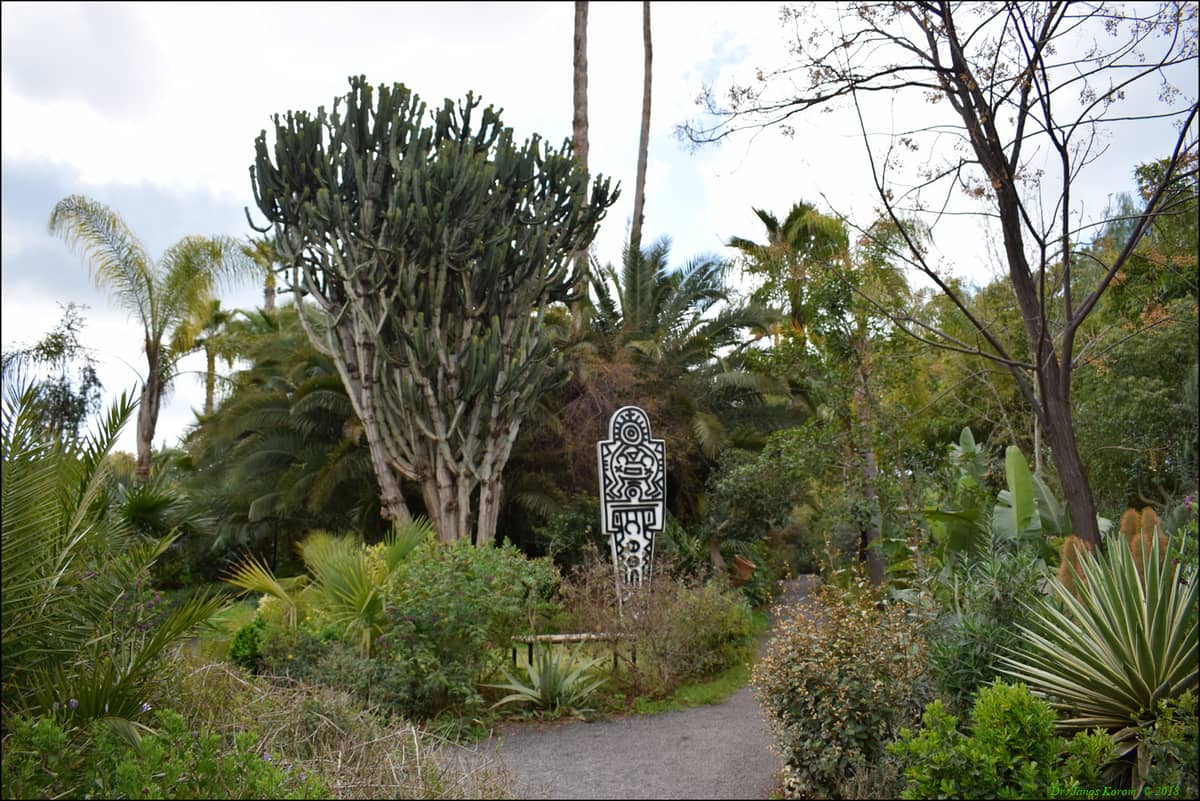
Anima Garden is the creation of Austrian multimedia artist and showman André Heller, who has spent decades building immersive garden environments across Europe and North Africa. This one, spread across roughly three hectares in the Ourika Valley foothills, opened to visitors in 2016 and has since become one of the most distinct experiences within day-trip range of Marrakech. It is not a botanical garden in the taxonomic sense, nor a conventional sculpture park. It sits somewhere between those categories: a place where oversized ceramic figures share space with flowering succulents, hand-painted tiles reflect in still pools, and the Atlas Mountains form a backdrop that no amount of artistic curation could improve.
The garden draws obvious comparisons to Jardin Majorelle in the city proper, and the comparison is fair in one sense: both are artist-conceived gardens with strong visual identities. But Anima trades the compact intensity of the Majorelle for open, wandering space and a more eclectic sensory atmosphere. Where Majorelle feels curated down to the millimeter, Anima feels more like controlled wilderness, with moments of surprise around nearly every planted corner.
💡 Local tip
Reserve your seat on the free shuttle bus from the Koutoubia car park before you visit. Capacity is limited and it operates a small number of daily round trips. Without a reservation, you may need to arrange your own transport along Route d'Ourika.
The Experience: What You Actually See and Feel
The entrance approach matters. After turning off the main Ourika road near a TOTAL service station, you follow a roughly 500-meter unpaved track before the garden gate appears. The transition is deliberate: the dusty, open plain of the Ourika corridor gives way to a dense wall of greenery, and the sound of Moroccan highway traffic fades almost immediately. The air cools noticeably under the canopy.
Inside, the garden unfolds without a single prescribed route. Paths curve through zones of different character: one area dense with towering cacti and agaves that cast sharp midday shadows; another built around water channels and reflecting pools where the light shifts constantly. Ceramic sculptures appear throughout, some large enough to walk around slowly, others half-hidden under trailing plants. The artistic references range across cultures, mixing Moroccan tilework traditions with pieces that feel more Central European or South Asian in origin. Whether that eclecticism works aesthetically is a genuinely personal judgment, but it never feels arbitrary.
Sound is part of the experience. In certain sections, ambient music plays softly. On a weekday morning visit, the overall mood is close to meditative. Birdsong, water movement, and the occasional rustle of wind through tall grasses dominate. On busier weekend afternoons, when group tours arrive, that atmosphere shifts considerably, though the garden's scale means you can generally find quieter corners.
Tickets & tours
Live prices and dates from our booking partner. If you book, we may earn a commission at no extra cost to you.
Anima Gardens and Ourika Valley day trip from Marrakech
From 95 €Instant confirmationFree cancellationSpa Treatment Experience with Lunch at a Riad from Marrakech
From 99 €Instant confirmationFree cancellationFull-day Trip in Ouzoud Waterfalls from Marrakech
From 18 €Instant confirmationFree cancellationCamel ride in Marrakech Palm Grove
From 15 €Instant confirmationFree cancellation
How the Garden Changes Through the Day
Morning visits, especially between 9:00 and 11:00, offer the garden at its most photogenic. The low-angle light cuts through the plantings at a slant, catching the glaze on ceramic pieces and throwing long shadows from the larger sculptures. Temperatures are also more comfortable, particularly important in summer when midday heat on the Ourika plain can exceed 35°C. If you plan to photograph the garden seriously, this window is the right call.
By early afternoon the light flattens, which is less rewarding for photography but fine for a relaxed walk. Late afternoon, roughly from 15:30 onward, brings a quality of light that warms the earth tones of the Moroccan-influenced sections and makes the red clay walls glow. The garden closes at 18:00 year-round, so an arrival around 15:30 to 16:00 gives roughly two hours with some of the best afternoon light, though this cuts close to closing time.
⚠️ What to skip
Anima Garden closes during Aid al-Fitr and Aid al-Adha. Check the official website before planning your visit, especially if traveling around these dates, which change annually according to the lunar calendar.
André Heller and the Garden's Cultural Context
André Heller is not a typical landscape designer. His background spans performance art, music, theater, and large-scale installations across Vienna, Dubai, and beyond. ANIMA (the name references the Latin word for soul or breath) reflects that breadth: it is conceived as a total environment, one where plants, water, sculpture, and sound are meant to work on the visitor as a unified experience rather than separate elements to be catalogued.
Morocco has a long tradition of garden-making as an art form in its own right. The Islamic garden concept, organized around water, shade, and sensory pleasure, runs through Moroccan palace design from the medieval period onward. You can see this same principle in miniature in the riad courtyard gardens of the medina, or at a grander scale at the Agdal Gardens south of the medina walls. Heller's ANIMA borrows from this tradition while operating entirely outside it, placing Morocco's landscape and light in dialogue with a distinctly contemporary and cross-cultural artistic vision.
For visitors interested in how art and design intersect with Moroccan culture more broadly, the Yves Saint Laurent Museum near Jardin Majorelle provides a useful point of comparison: another instance of a European creative sensibility leaving a permanent mark on Marrakech's visual landscape.
Getting There: Practical Logistics
Anima is 27 km south of Marrakech along the Route d'Ourika, which is also the road leading toward the Ourika Valley and, further on, the High Atlas foothills. The drive from the city takes roughly 30 to 40 minutes depending on traffic leaving the southern medina gates. The road itself is straightforward: follow signs toward Ourika. After the TOTAL service station landmark on your left, the ANIMA turnoff sign appears approximately 1 km further, on your right. A 500-meter unpaved track leads to the entrance.
The free shuttle service from the Koutoubia car park is the most convenient option for visitors without their own transport. Seats must be reserved through the official ANIMA website and the shuttle makes a limited number of round trips daily. Petit taxis from central Marrakech will reach the garden but the return journey requires prearranging a pickup time or asking the driver to wait, which is worth negotiating before departure. Ride-hailing apps such as Careem or inDrive may offer a metered return option but confirm availability in the app before relying on this.
If you are already planning a day along the Ourika corridor, ANIMA pairs naturally with a stop further up the valley. The Ourika Valley itself begins shortly beyond the garden's location, and combining both into a single southern day trip is a reasonable approach if you have your own vehicle.
ℹ️ Good to know
The unpaved access track from the main road is approximately 500 meters long. Most passenger cars handle it without difficulty, but visitors with very low ground clearance should take it slowly. The track is not suitable for cyclists.
Photography, Accessibility, and What to Bring
Photography is generally permitted for personal use throughout the garden. The ceramic sculptures, water features, and contrast between deep greens and the ochre-red soil produce strong images even with a smartphone. The best positions for wide shots tend to be slightly elevated spots on garden terraces looking back toward the Atlas Mountains. Midday light is the most challenging for photography due to harsh contrast and color-washing. A polarizing filter significantly helps with reflections in the water features.
Wear flat, closed shoes. Garden paths are mostly firm and even, but there are some uneven stone sections and the access track itself. Sun protection is essential, particularly for visits between April and October when the Ourika plain receives intense direct sunlight. There is shade within the garden but also significant open stretches. A small bottle of water is worth bringing; the on-site Café Paul Bowles serves drinks and light food, though offerings can vary by season.
The official ANIMA website notes that wheelchair users have limited access to some areas of the garden. The unpaved access track and some uneven internal paths may present difficulty. Contact the garden directly before traveling if you need to assess a specific mobility requirement.
Who Will Love It and Who Might Not
Anima Garden delivers something genuinely different from the historic sites and souks of central Marrakech. It is peaceful, visually inventive, and set within a landscape of real natural beauty. For visitors who enjoy contemporary art, unusual garden design, or simply a few hours away from the urban intensity of the medina, it is excellent value for the entry price.
That said, it is worth calibrating expectations. The garden covers three hectares, which is large enough to spend two hours without retracing steps, but it is not an all-day destination. Visitors expecting the botanical density of a major horticultural institution, or the historical depth of the Ben Youssef Madrasa or the Saadian Tombs, will be measuring by the wrong standard. ANIMA is a mood, not a monument.
Visitors who are purely focused on Moroccan history and traditional culture may find the eclectic, cross-cultural art references less engaging. Those with limited time in Marrakech and a packed itinerary of medina sites should weigh the 30-to-40-minute drive each way against what else they might see. For everyone else, the trip is worthwhile, and the drive along the Ourika road, with the Atlas growing slowly larger ahead of you, is a small pleasure in itself.
💡 Local tip
Spring visits, roughly March through May, coincide with peak flowering in the garden and the most comfortable temperatures on the Ourika road. Autumn, September through November, offers similar conditions. Summer visits require an early morning start to avoid oppressive midday heat on this sun-exposed stretch south of the city.
Insider Tips
- Book your shuttle seat on the official ANIMA website as early as possible, especially during spring and autumn peak season. The shuttle fills quickly and there is no reliable public transport alternative from central Marrakech.
- If you are driving yourself, the TOTAL service station on Route d'Ourika is your most reliable navigation landmark. Set your GPS to 'Anima Garden Marrakech' and cross-reference with the service station waypoint, as the unpaved track can be missed on the first pass.
- Arrive when the garden opens at 9:00 if photography is a priority. The first 90 minutes offer dramatically better light than midday, and you will have the sculpture paths almost entirely to yourself on weekdays.
- The garden's eclectic art references are worth researching in advance. A brief look at André Heller's other projects, including the Heller Garden on Lake Garda in Italy, adds layers to what you are seeing and makes the cultural cross-referencing more rewarding.
- Combine the visit with a drive further along Route d'Ourika toward the valley. Even stopping at one of the roadside cafes with Atlas Mountain views adds a dimension that makes the southern detour feel like a full half-day rather than a single attraction visit.
Who Is Anima Garden For?
- Art and design enthusiasts looking for contemporary work in a natural setting
- Couples seeking a peaceful, photogenic escape from the medina
- Photographers after strong light, texture, and color composition
- Families with children over 8 who can engage with the sculptural environment
- Repeat Marrakech visitors who have covered the major medina monuments and want something different
Nearby Attractions
Combine your visit with:
- Agafay Desert
Just 30 to 40 kilometres southwest of Marrakech, the Agafay Desert is a rocky plateau of roughly 300 to 400 square kilometres that delivers dramatic open-sky landscapes without a multi-day Sahara expedition. It is not the sand-dune desert many visitors picture, but that distinction is part of its appeal: a raw, mineral terrain framed by the snow-capped peaks of the High Atlas, accessible within an hour of the city.
- Aït Benhaddou
Rising from the southern slopes of the High Atlas, the Ksar of Aït Benhaddou is a UNESCO World Heritage Site and one of Morocco's most architecturally striking places. Built from pisé earth and palm wood, this fortified village has stood at the crossroads of trans-Saharan trade for centuries — and remains partly inhabited today.
- Essaouira
Essaouira is a UNESCO-listed fortified coastal city on Morocco's Atlantic coast, roughly 2.5 to 3 hours from Marrakech by road. Its 18th-century medina, ocean-facing ramparts, and salt-aired souks offer a complete change of pace from the heat and intensity of the inland city. Entry to the medina is free.
- Imlil Village
Perched at roughly 1,740 metres in the High Atlas Mountains, Imlil Village is the main staging point for treks to Jebel Toubkal, North Africa's highest peak. It's a working Amazigh (Berber) mountain community that has gradually absorbed trekkers, guesthouses, and mule handlers into its daily rhythm, without losing the feel of the agricultural valley it was built around.
Planning a trip? Discover personalized activities with the Nomado app.