Ourika Valley: The High Atlas Escape from Marrakech
Ourika Valley is a natural river valley in the foothills of the High Atlas Mountains, roughly 60km southeast of Marrakech. It offers terraced Berber villages, a fast-flowing river, and a trail to a series of waterfalls above Setti Fatma — all accessible as a half-day or full-day trip without a formal entrance fee.
Quick Facts
- Location
- High Atlas foothills, ~60km southeast of Marrakech, Morocco
- Getting There
- Grand taxi from Bab Er Rob (~30–40 MAD/seat shared), onward local buses or minibuses from Marrakech, or private/tour car (1–1.5 hrs drive)
- Time Needed
- Half day minimum; full day recommended to reach Setti Fatma waterfalls
- Cost
- Free to enter; pay only for transport, food, guides. Shared day tours from ~€15–25/person
- Best for
- Hikers, nature seekers, culture enthusiasts, families wanting a break from city heat
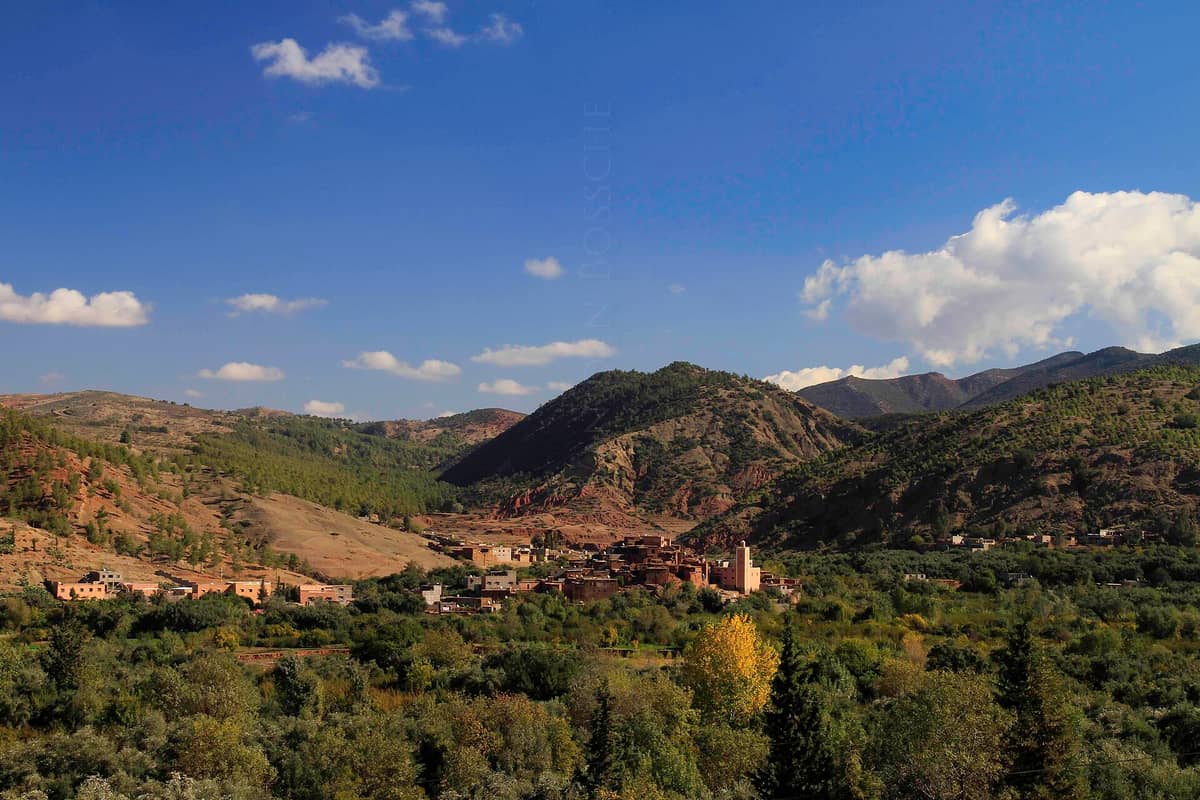
What Ourika Valley Actually Is
Ourika Valley is not a park with a gate, a ticket booth, or a fixed itinerary. It is a living valley in the High Atlas foothills, about 60 kilometres from Marrakech, carved by the Ourika River and rising from roughly 470 meters near the plains of Marrakech to around 1,500 meters at the village of Setti Fatma. Berber (Amazigh) communities have farmed the terraced slopes here for centuries, and the valley remains agricultural, residential, and tourist-facing all at once.
The road follows the river the entire way, passing small villages, roadside herb stalls, and cafés with terraces that hang directly over the water. Most visitors treat Setti Fatma as the endpoint, where a popular trail climbs past a series of seven waterfalls. But the valley rewards slower exploration — the middle sections, where the river is shallower and the canyon walls tighten, are often more photogenic and far less crowded than the village itself.
ℹ️ Good to know
There is no entrance fee to Ourika Valley. You pay only for what you use: transport, meals, a local guide if you want one, and parking if you drive yourself.
How the Valley Changes Through the Day
Early morning, before 9am, the valley feels like it belongs to the people who live in it. Farmers are already moving along the road, the river is audible from a surprising distance, and the air carries the smell of cedar smoke and damp earth. The light is soft and angled, catching the terraced fields on the opposite canyon wall. If you can arrange an early departure from Marrakech, this is the version of the valley worth chasing.
By late morning, the tour buses and day-trip vehicles start arriving in volume, particularly at Setti Fatma. The village's main strip of restaurants fills quickly, and the trailhead to the waterfalls can become genuinely congested on weekends and during Moroccan public holidays. The path itself is narrow and rocky, and when two streams of hikers are passing in opposite directions, progress slows considerably.
Afternoons, particularly in summer, bring a useful advantage: many day-trippers leave after lunch, and the valley quiets again by 3pm. If you have your own transport or have arranged a private tour, arriving in the early morning and staying through the afternoon gives you the best of both windows. Sunset from the upper trail above Setti Fatma, with the valley floor lit in amber below you, is worth the extra hour.
💡 Local tip
Aim to arrive at Setti Fatma before 10am or after 2pm to avoid the worst of the midday crowds on the waterfall trail. Weekdays are significantly quieter than weekends.
Tickets & tours
Live prices and dates from our booking partner. If you book, we may earn a commission at no extra cost to you.
Full Day Economic Tour of Ourika Valley from Marrakech
From 25 €Instant confirmationFree cancellationDay trip to Atlas Mountains, Ourika Valley and Berber Villages
From 15 €Instant confirmationFree cancellationAnima Gardens and Ourika Valley day trip from Marrakech
From 95 €Instant confirmationFree cancellationFull-day excursion to Ourika Valley from Marrakech
From 29 €Instant confirmationFree cancellation
The Setti Fatma Waterfalls: What the Hike Is Really Like
The trail to the waterfalls begins at the far end of Setti Fatma's restaurant strip, where the valley narrows sharply and the river becomes noisier. The path climbs steeply over boulders and stone steps, with the first waterfall reachable in around 20 to 30 minutes at a moderate pace. The trail is not marked in any formal sense, and parts of it require using both hands on wet rock. Sandals are a poor choice; proper walking shoes with grip make a meaningful difference.
The first waterfall is the most visited and the most photographed. It drops into a narrow pool, and the mist is immediately noticeable. Most casual visitors stop here. The second and third falls require another 15 to 20 minutes of climbing each, and the path becomes less worn and more satisfying. There are officially seven falls in total, but reaching all of them requires a serious half-day hike and solid fitness.
Local guides offer their services at the trailhead and inside the village. For first-time visitors, hiring one for the lower falls is a modest cost and ensures you take the safest route on slippery sections. For those who have hiked in the region before, the lower trail is manageable independently, but the upper sections benefit from local knowledge.
⚠️ What to skip
The Ourika River has flooded severely in the past, with a devastating flash flood in 1995 causing widespread destruction in the valley. Flash floods can still occur after heavy rain in the Atlas mountains, sometimes with little warning at valley level. Check weather forecasts before visiting, and avoid the riverbed and low-lying café terraces after significant rainfall upstream.
The Valley's Berber Heritage and Cultural Context
Ourika Valley is Amazigh (Berber) territory in the most direct sense: the villages along the river are inhabited by communities whose language, architecture, and agricultural practices predate Arab settlement in Morocco by many centuries. The terraced fields that staircase up the valley walls are hand-built and irrigated through traditional gravity-fed channels called seguias, some of which are still in active use.
The Berber Museum at Jardin Majorelle in Marrakech provides an excellent grounding in Amazigh material culture before or after a valley visit, and the Majorelle Berber Museum holds one of the most significant collections of Amazigh artifacts in North Africa. Understanding what you are looking at in the valley, from the geometric patterns on woven goods sold at roadside stalls to the layout of the traditional earthen houses, is considerably richer with that context.
Several villages in the valley host small cooperative shops selling argan oil products, saffron, and hand-dyed textiles. Prices are generally reasonable compared to the Marrakech medina, and the goods are more likely to be locally produced. The women who run many of these cooperatives appreciate unhurried browsing and are often willing to explain production methods to curious visitors.
Getting There from Marrakech
The valley is reached by a fully paved road heading south-southeast from Marrakech along the S513, following the Ourika River corridor. The drive from central Marrakech to Setti Fatma takes approximately 1 to 1.5 hours by car, depending on traffic leaving the city.
The cheapest independent option is the public bus #25 from Marrakech (approximately 7.5 MAD each way, journey around 45 to 60 minutes to the valley), with onward grand taxis available to reach Setti Fatma. Shared grand taxis depart from Bab Er Rob in the medina and run directly up the valley for around 20 to 50 MAD per seat depending on destination. Full-day hire of a grand taxi for a group typically runs 300 to 800 MAD and is worth considering if you have three or more people. For those who prefer structure, organized day trips from Marrakech start at around €15 to 25 per person. See day trips from Marrakech for a broader comparison of Atlas valley excursions.
If you are driving yourself, the road is straightforward and well-signed. Parking near Setti Fatma is informal and paid to local attendants; spaces fill up quickly on weekend mornings. Motorcycles and small cars can park closer to the trailhead than larger vehicles.
When to Visit and What to Expect Seasonally
Spring, roughly March through May, is the most rewarding season for Ourika Valley. Snowmelt from the High Atlas keeps the Ourika River running fast and loud, the vegetation on the valley walls is at its greenest, and temperatures sit comfortably in the low-to-mid 20s Celsius at valley level. The waterfalls carry more volume and the air smells of wild herbs, particularly thyme, which grows densely along the upper trails. For a detailed overview of spring conditions across the city, see the guide to Marrakech in spring.
Summer visits are possible but demanding. Valley temperatures in July and August regularly exceed 35°C at lower elevations, though the river itself provides some relief. The waterfalls at Setti Fatma are a genuine draw in summer precisely because the spray and shade near the falls is noticeably cooler than the open road below. Start early and plan to be back on the road by early afternoon.
Autumn brings settled weather and quieter roads, and the light in September and October is particularly good for photography. Winter is the most unpredictable season: the road can be affected by rain-related damage or mud in lower sections, and the upper trail to the falls can become slippery or icy. The valley in winter is largely empty of tourists and fully occupied by locals going about their lives, which has its own appeal.
💡 Local tip
Pack a light layer even in summer. The valley sits significantly higher than Marrakech city, and evenings cool quickly. A windproof shell is useful above the first waterfall at any time of year.
Practical Details and What to Bring
Ourika Valley is an outdoor destination, and the most common visitor regret is arriving underprepared for the walking. Proper footwear is the single most important consideration: the waterfall trail involves wet rock, loose gravel, and uneven stone steps. Bring sufficient water, as the riverside cafés do sell bottles but at a premium farther up the trail. Dress modestly as a baseline courtesy in what remains a rural farming community; long trousers or a light skirt and covered shoulders are appropriate. For general guidance on dress norms in Morocco, the what to wear in Marrakech guide applies equally here.
Photography is unrestricted in the open landscape, but always ask permission before photographing individuals, particularly women and children in villages. Cash is essential; there are no ATMs in the valley and the riverside restaurants and stalls operate entirely in Moroccan dirhams.
The valley is not set up for wheelchair users or those with significant mobility limitations. The waterfall trail requires sustained uphill effort over rough terrain, and even the flat river areas near the cafés involve uneven ground. Visitors who cannot manage the hike can still enjoy the valley's lower sections from café terraces overlooking the river, which is a genuinely pleasant way to spend a morning without any hiking at all.
Ourika Valley pairs naturally with a broader exploration of the High Atlas region. Those interested in longer treks can continue further into the mountains toward Imlil village, the main base for Atlas trekking. The Setti Fatma waterfalls themselves are detailed separately with more specific trail information.
Insider Tips
- The middle section of the valley, between kilometers 30 and 45 from Marrakech, sees almost no tour traffic and has several cafés with riverside terraces that are quieter and cheaper than those in Setti Fatma itself. Stop here before or after the village.
- The herb and spice stalls along the main road sell fresh-cut thyme, rosemary, and dried saffron at a fraction of medina prices. Bring a small bag to carry purchases.
- If you are hiring a grand taxi for the day from Bab Er Rob, negotiate the price before departure and confirm it includes waiting time at Setti Fatma. Most drivers will wait 2 to 3 hours without additional charge if agreed upfront.
- The second and third waterfalls above Setti Fatma are significantly less crowded than the first and are worth the extra 30 to 40 minutes of climbing. The path becomes more natural and less trampled above the first fall.
- Avoid visiting on the day immediately after heavy Atlas rainfall. The river runs brown with sediment, the trail becomes hazardous, and the atmosphere around the cafés is tense due to flood risk. A blue-sky day in Marrakech does not always mean clear weather in the mountains.
Who Is Ourika Valley For?
- Hikers and walkers wanting a manageable High Atlas trail without needing a full trekking itinerary
- Families with older children looking for an outdoor day out with a payoff waterfall at the end
- Visitors on a second or third trip to Marrakech who want something beyond the medina
- Photographers working in natural landscapes, particularly in spring and early autumn
- Travelers interested in Amazigh culture and traditional Atlas agriculture in a living, working context
Nearby Attractions
Combine your visit with:
- Agafay Desert
Just 30 to 40 kilometres southwest of Marrakech, the Agafay Desert is a rocky plateau of roughly 300 to 400 square kilometres that delivers dramatic open-sky landscapes without a multi-day Sahara expedition. It is not the sand-dune desert many visitors picture, but that distinction is part of its appeal: a raw, mineral terrain framed by the snow-capped peaks of the High Atlas, accessible within an hour of the city.
- Aït Benhaddou
Rising from the southern slopes of the High Atlas, the Ksar of Aït Benhaddou is a UNESCO World Heritage Site and one of Morocco's most architecturally striking places. Built from pisé earth and palm wood, this fortified village has stood at the crossroads of trans-Saharan trade for centuries — and remains partly inhabited today.
- Anima Garden
Set along the Ourika road 27 km south of Marrakech, Anima Garden is a three-hectare art-and-nature space created by Austrian artist André Heller. Sculptures, water features, and carefully curated plantings coexist in a setting that feels both otherworldly and deeply rooted in Moroccan landscape. It rewards slow exploration and offers a genuine contrast to the pace of the medina.
- Essaouira
Essaouira is a UNESCO-listed fortified coastal city on Morocco's Atlantic coast, roughly 2.5 to 3 hours from Marrakech by road. Its 18th-century medina, ocean-facing ramparts, and salt-aired souks offer a complete change of pace from the heat and intensity of the inland city. Entry to the medina is free.
Planning a trip? Discover personalized activities with the Nomado app.