Marrakech in Spring: Why March–May Is the Best Time to Visit
Spring unlocks Marrakech at its most rewarding: temperatures sit between 22°C and 30°C, the souks and gardens are at their most photogenic, and the brutal summer heat hasn't arrived yet. This guide covers the month-by-month weather reality, what to do, what to watch out for, and how to plan a spring trip that actually delivers.
Tickets & tours
Live prices and dates from our booking partner. If you book, we may earn a commission at no extra cost to you.
TL;DR
- March–May delivers daytime highs of 22–30°C, making it the most comfortable window for walking the medina and doing day trips.
- March and April still carry a real chance of rain — pack a light layer and don't expect wall-to-wall sunshine.
- May can spike toward 38–40°C on hot wind days, so it straddles spring and early summer — check forecasts closely and plan around indoor attractions as a backup.
- Spring coincides with increasing tourist numbers, especially around Easter — book riads and popular tours at least 3–4 weeks in advance.
- If Ramadan falls in spring (it shifts annually), expect altered rhythms across the city — our Ramadan in Marrakech guide covers exactly what changes.
Month-by-Month Weather Breakdown
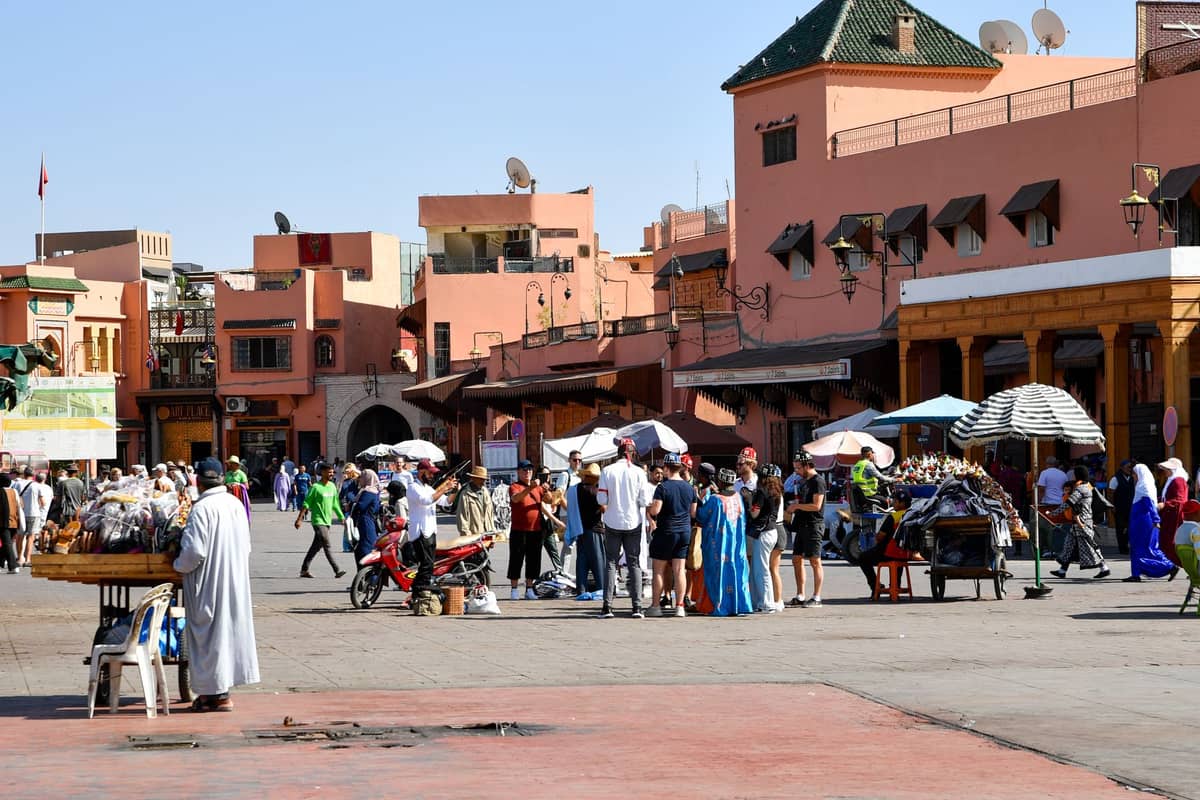
Spring in Marrakech is not one uniform season. March, April, and May each feel distinctly different, and treating them as interchangeable leads to packing the wrong clothes and mismanaged expectations.
March is the most variable month. Daytime highs average around 22–23°C, which feels pleasant in sunshine but noticeably cool in the shade. Nights can drop to 9–10°C, cold enough to make a jacket essential. Rainfall is still relatively common — March sits within Marrakech's wetter half of the year, and short afternoon showers are plausible. The upside: the air is clear, the sky is a sharp blue when it's not raining, and the Atlas Mountains visible to the south are often still snow-capped, which makes the city's backdrop dramatic.
April is the transitional month. Highs climb to 24–26°C, nights become more comfortable at around 12–14°C, and the chance of meaningful rain drops compared to March. It's widely considered the most reliably pleasant of the three months. The gardens and parks around the city — Jardin Majorelle, the Menara Gardens, Le Jardin Secret — are at peak greenery. Crowds begin to build from mid-April onward as European Easter holidays arrive.
May accelerates quickly. Average highs reach 27–30°C, but hot desert winds called chergui can push temperatures to 38–40°C for stretches of several days with little warning. By late May, you're essentially at the edge of summer. The dry heat makes physical sightseeing tiring between noon and 4pm. The trade-off is almost zero rainfall and long evenings with daylight until around 8pm. If you're visiting in May, structure your days around early morning exploration and late afternoon activity.
⚠️ What to skip
May heat spikes are unpredictable. A week forecast at 28°C can turn into 40°C within 48 hours when hot winds come off the Sahara. If you're planning intensive walking tours or Atlas day trips in May, build in flexibility and always carry at least 1.5 litres of water per person.
Why Spring Outperforms Other Seasons for Most Visitors
The case for spring is largely about what it avoids. Summer in Marrakech — June through August — delivers relentless heat above 35°C most days, frequently crossing 40°C in July. Exploring the medina under that sun is genuinely unpleasant unless you're entirely comfortable in extreme heat. Winter (December–February) is mild but can feel raw, with nights near 5–7°C and a real chance of rain during what should be sightseeing days.
Spring threads between these extremes. The Jardin Majorelle is at its most photogenic in April, when the bougainvillea is flowering and the garden hasn't been scorched by summer. The Menara Gardens olive groves are dense and green. Outdoor terraces at riads and restaurants are comfortable in the evenings. Day trips into the Atlas Mountains are feasible without battling extreme heat at lower elevations.
- Outdoor sightseeing Spring mornings (7am–noon) offer ideal walking temperatures for the medina and palace districts, unlike the midday inferno of summer.
- Gardens and parks March–April is peak flowering season. Jardin Majorelle, Le Jardin Secret, and the Agdal Gardens all look their best.
- Atlas Mountain day trips The mountains are accessible year-round, but spring offers snow on the high peaks and green valleys at lower altitude — a striking combination. By July the valleys are dry and the ascent brutal.
- Photography The light in March and April is softer than summer. Golden hour lasts longer, and dust haze is minimal compared to June.
- Hammams and indoor culture Cool March nights make a hammam feel restorative rather than just a tourist activity. The Saadian Tombs, Ben Youssef Madrasa, and city museums are comfortable to visit without competing with peak summer coach tours.
Spring Crowds and Booking Reality
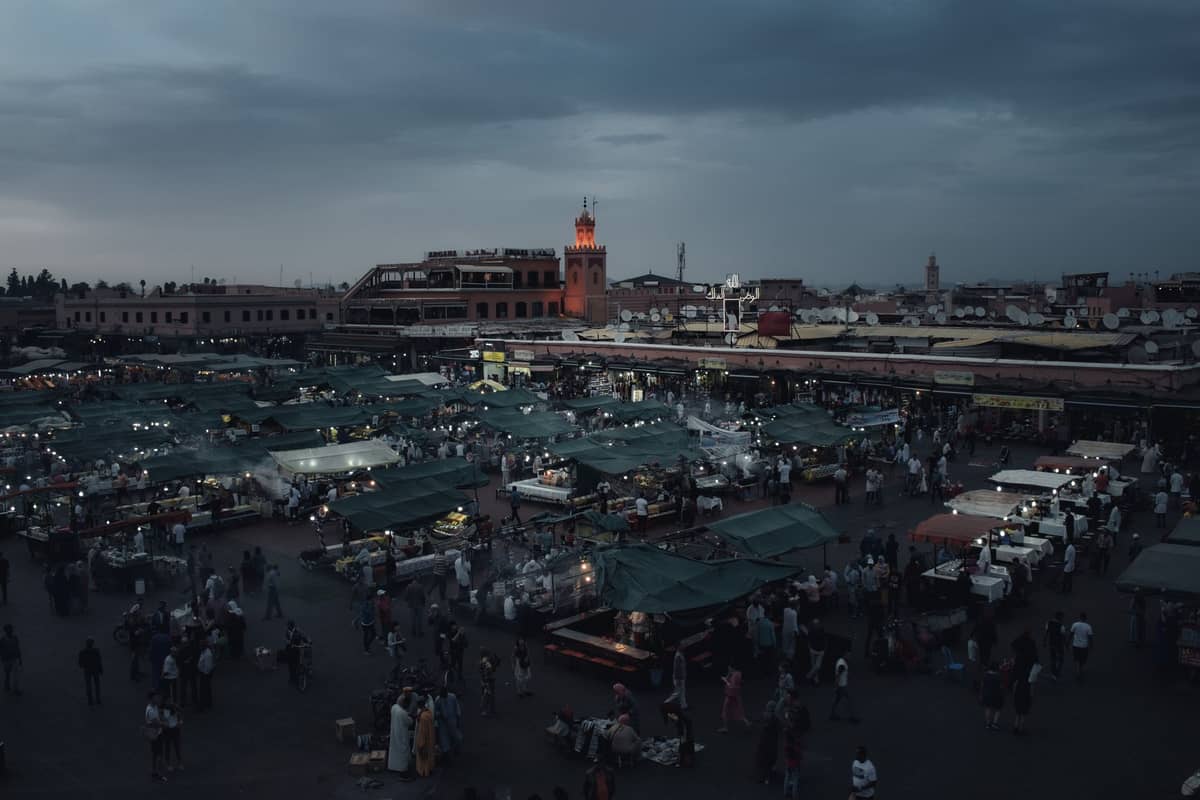
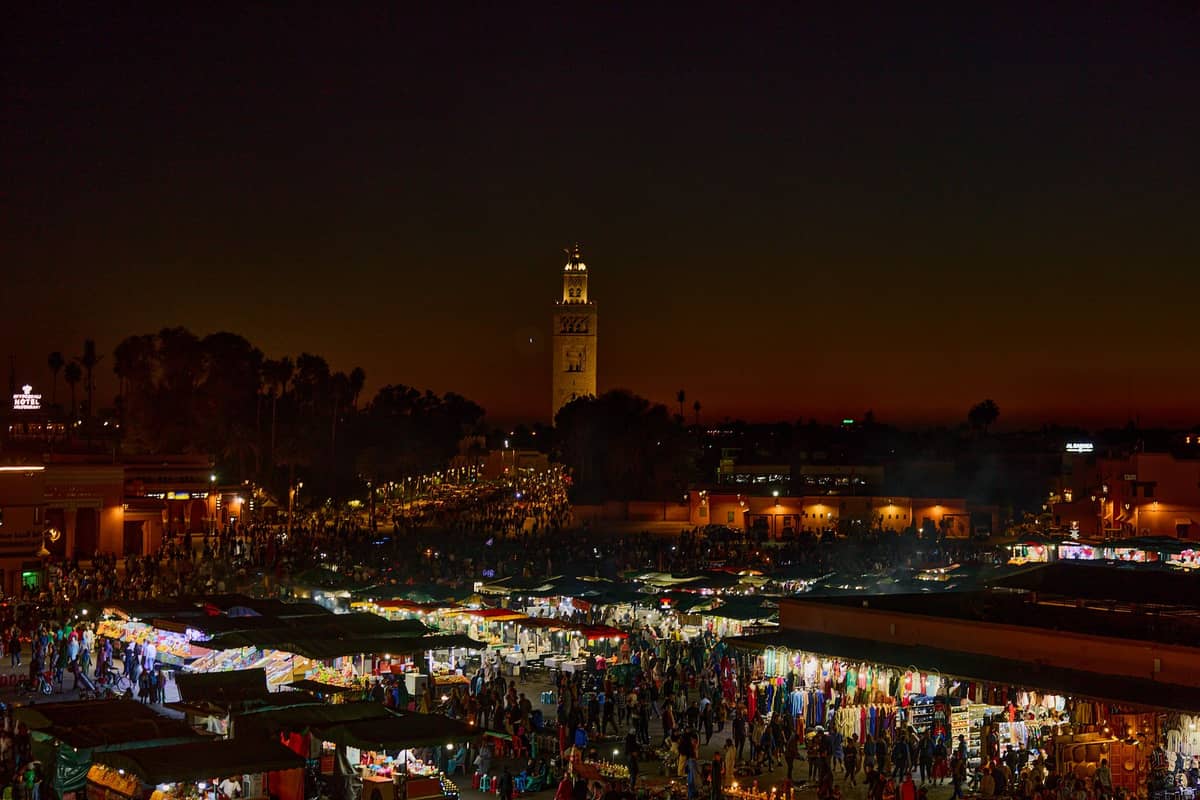
Spring is not a secret. March through May is one of the two peak tourist windows in Marrakech (the other being October–November). European visitors, particularly from France, Spain, the UK, and the Netherlands, flood the city during school holiday periods, most significantly around Easter. Expect Jemaa el-Fna to be at near-maximum capacity on Easter weekend. Popular riads in the medina fill up weeks in advance for mid-April dates.
For accommodation, the best riads in the medina typically require 3–6 weeks advance booking for April dates. Budget options in Gueliz or Hivernage are easier to secure last-minute, but you'll lose the experience of staying inside the old city walls.
💡 Local tip
If your dates are flexible, target the first two weeks of March or the last week of May. You'll get spring weather without Easter crowds, and riad prices are typically 15–25% lower than peak Easter rates.
Early March is quiet. The medina feels like a functioning city rather than a tourist circuit. Guides, cooking classes, and souk tours are easier to book on short notice, and you'll negotiate better prices in the markets without the social pressure of a queue behind you. The trade-off is cooler weather and the occasional rain day.
What to Do in Marrakech in Spring
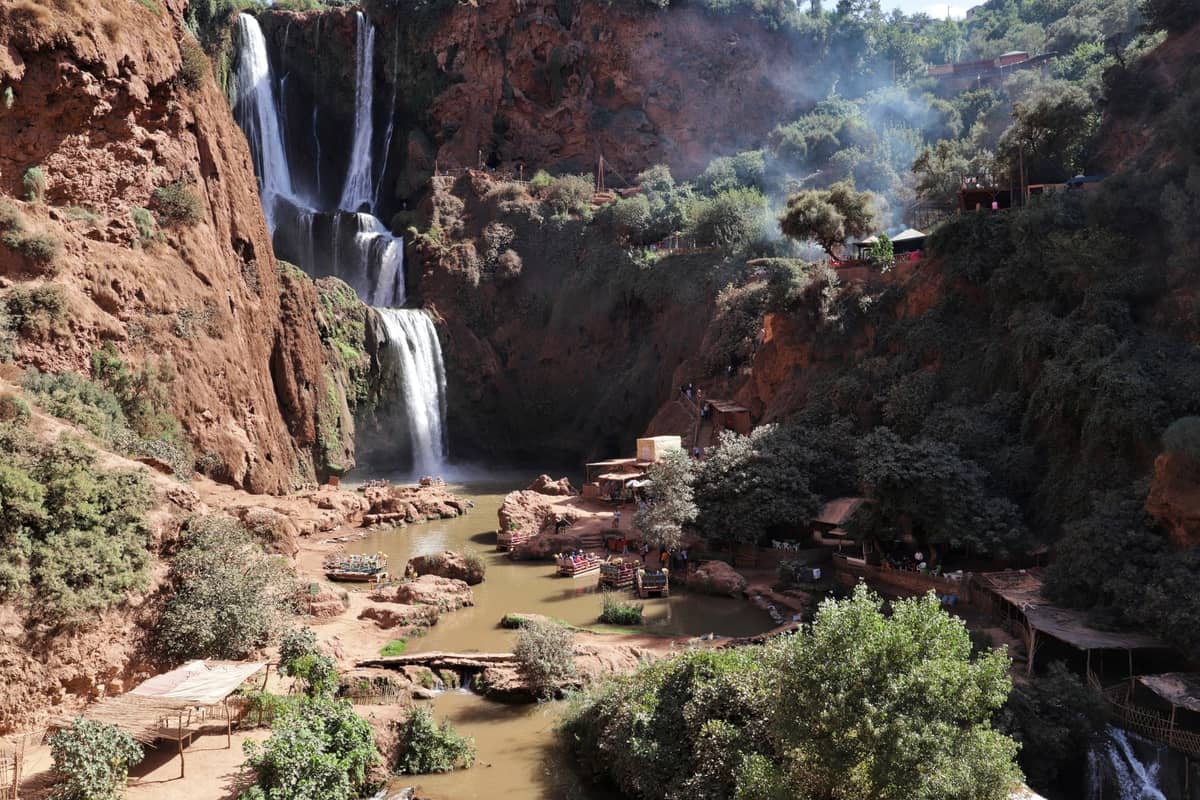
Spring is the best season to combine city exploration with Atlas Mountain day trips. The Ourika Valley is lush and the waterfalls at Setti Fatma are fed by snowmelt, making them more dramatic than in summer. A day trip to the Ouzoud Waterfalls is particularly rewarding in April, when flow is high and the surrounding vegetation is green.
Inside the city, spring mornings are ideal for the medina souks, the Ben Youssef Madrasa, and the Bahia Palace. These sites are best visited before 10am to beat both heat and tour groups. The Saadian Tombs open early and are significantly more manageable in the first hour after opening.
- Hot air balloon flights over the Marrakech plains — spring visibility is outstanding and temperatures at altitude are comfortable
- Hammam sessions — cool evenings in March make a proper hammam and massage restorative; book at least a day in advance for quality establishments
- Cooking classes — market visits for ingredients are comfortable in spring mornings before heat builds
- Agafay Desert day trips or overnight stays — the rocky desert south of the city is spectacular in spring light without summer's brutal temperature
- Walking tours of the Mellah Jewish Quarter and Kasbah district — these areas reward slow exploration, which only works comfortably in moderate temperatures
✨ Pro tip
The leather tanneries at Bab Debbagh, near the eastern medina gate, are best visited in spring. Summer amplifies the smell to overwhelming levels. In March or April, with a mint sprig from a nearby shop, the visual experience is remarkable without the same sensory assault. The much larger Chouara tannery is in Fes, not Marrakech.
Practical Planning: What to Pack, Wear, and Know
Clothing is the area where most spring visitors get it wrong. For March, pack layers: a light jacket for evenings, a long-sleeved option for cool mornings, and lighter clothes for warm afternoons. For May, pack for summer with a backup layer for the occasional cool evening. Modesty matters in the medina regardless of temperature — shoulders and knees covered is the practical standard, not just a cultural nicety. See our Marrakech dress code guide for specifics.
Sun protection is non-negotiable from April onward. The Moroccan sun at 31°N latitude is strong even when air temperatures feel moderate. SPF 50, a wide-brimmed hat, and quality sunglasses will make full days outside sustainable. In March, overcast days can lull visitors into skipping sunscreen — a mistake that becomes apparent by 3pm.
On the practical logistics side: the Menara Airport (IATA: RAK) is 6km from the city centre, with journey times of 15–20 minutes by taxi in normal traffic. The ALSA Bus 19 runs every 20 minutes to Jemaa el-Fna for around 30 MAD. Taxis from the airport rank run approximately 70–100 MAD to the medina. Verify fares before your trip as they are updated regularly. The Moroccan dirham (MAD) is the local currency — most medina transactions are cash only, so carry small denominations.
- Pack for a 15°C range — spring days swing dramatically between morning and afternoon
- Stick to bottled water; while Marrakech's tap water is treated, travellers' stomachs frequently react differently
- Download Careem or inDrive before arriving — app-based pricing removes the negotiation guesswork for in-city journeys
- Morocco uses Type C and E plugs at 220V/50Hz — UK and US visitors need adapters
- Morocco Standard Time is UTC+1; check for Ramadan period adjustments before travel as the government occasionally shifts clocks
The Ramadan Variable
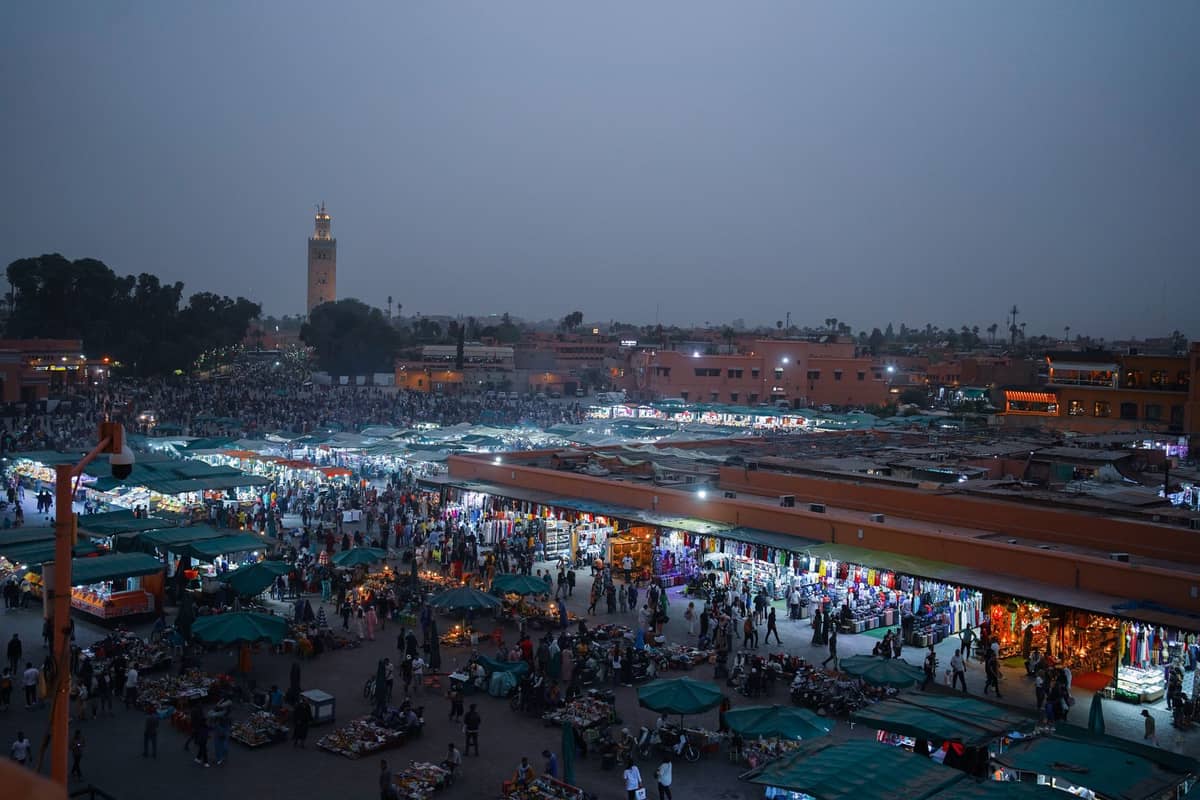
Ramadan moves earlier by roughly 11 days each year. In some years it falls entirely or partially within the spring window of March–May. Visiting Marrakech during Ramadan is a genuinely different experience from any other time — not worse, but different, and not for every traveller. Some restaurants open only in the evening, daytime street food largely disappears, and the city's rhythm shifts to nocturnal. Read our guide to visiting Marrakech during Ramadan before booking if there's any overlap with your dates.
FAQ
Is March too cold for Marrakech?
Not too cold, but cooler than most visitors expect. Daytime highs average around 22–23°C, which is comfortable for walking. Evenings and early mornings drop to 9–10°C, so a jacket is needed. March also carries a real chance of rain. If you're hoping to lounge by a rooftop pool, March is the wrong month — if you want comfortable sightseeing and thinner crowds, it's ideal.
How busy is Marrakech in spring compared to summer?
Spring is one of the busiest tourist periods, especially mid-April around Easter. However, crowds are distributed differently than in summer: spring visitors tend to be more active sightseers rather than pool-only resort guests. The medina feels lively but functional. Peak Easter weekend is the most intense period — if you want spring weather without that pressure, target early March or late May.
What should I pack for Marrakech in April?
April is the most balanced month. Bring light daytime clothes suitable for 24–26°C, a light jacket for evenings (temperatures drop to around 12–14°C), comfortable walking shoes, SPF 50 sunscreen, and at least one modest outfit (covered shoulders, knees) for medina exploration. A small daypack with a water bottle is essential for full-day itineraries.
Are the Atlas Mountains accessible from Marrakech in spring?
Yes, and spring is arguably the best time. Lower valleys like Ourika are lush and green from winter rainfall, the Setti Fatma waterfalls are fed by snowmelt and at high flow, and high-altitude routes like the path toward Mount Toubkal are passable but still carry snow above 3,000m. Day trips from Marrakech are comfortable at mountain altitude even when the city feels warm. Book transport and guides in advance for April trips.
Is it worth visiting Marrakech in May, or is it already too hot?
May is viable but requires realistic expectations. Average highs of 27–30°C are manageable with smart scheduling: sightsee from 7–11am and 4–7pm, rest in your riad during the midday heat. The real risk is hot wind events (chergui) that can push temperatures to 38–40°C for several consecutive days with little warning. If you're sensitive to heat, April is safer. If you don't mind heat and want lower rain probability and longer evenings, May delivers.
Tickets & tours
Live prices and dates from our booking partner. If you book, we may earn a commission at no extra cost to you.
Planning a trip? Discover personalized activities with the Nomado app.