Ouzoud Waterfalls: Morocco's Tallest Falls, a Long Day Trip from Marrakech
Ouzoud Waterfalls drop 110 metres through olive groves into a mist-filled gorge in Morocco's Middle Atlas, about 150 km northeast of Marrakech. Entry is free, wild Barbary macaques roam the trails, and old grain mills still grind at the summit. It is one of the most rewarding day trips from Marrakech for travellers who want dramatic scenery without a long trek.
Quick Facts
- Location
- Tanaghmeilt, Azilal Province, Middle Atlas — approx. 150 km northeast of Marrakech
- Getting There
- By car: 2.5–3 hrs from Marrakech via N8 then R208. By public transport: bus to Azilal or Beni Mellal, then grand taxi to Ouzoud
- Time Needed
- 3–5 hours on site; full day when combined with the drive
- Cost
- Free entry. Parking ~10–20 MAD, local guide ~30–50 MAD/person, boat ride ~20 MAD/person
- Best for
- Nature lovers, photographers, families, day-trippers from Marrakech
- Official website
- ouzoudwaterfalls.org
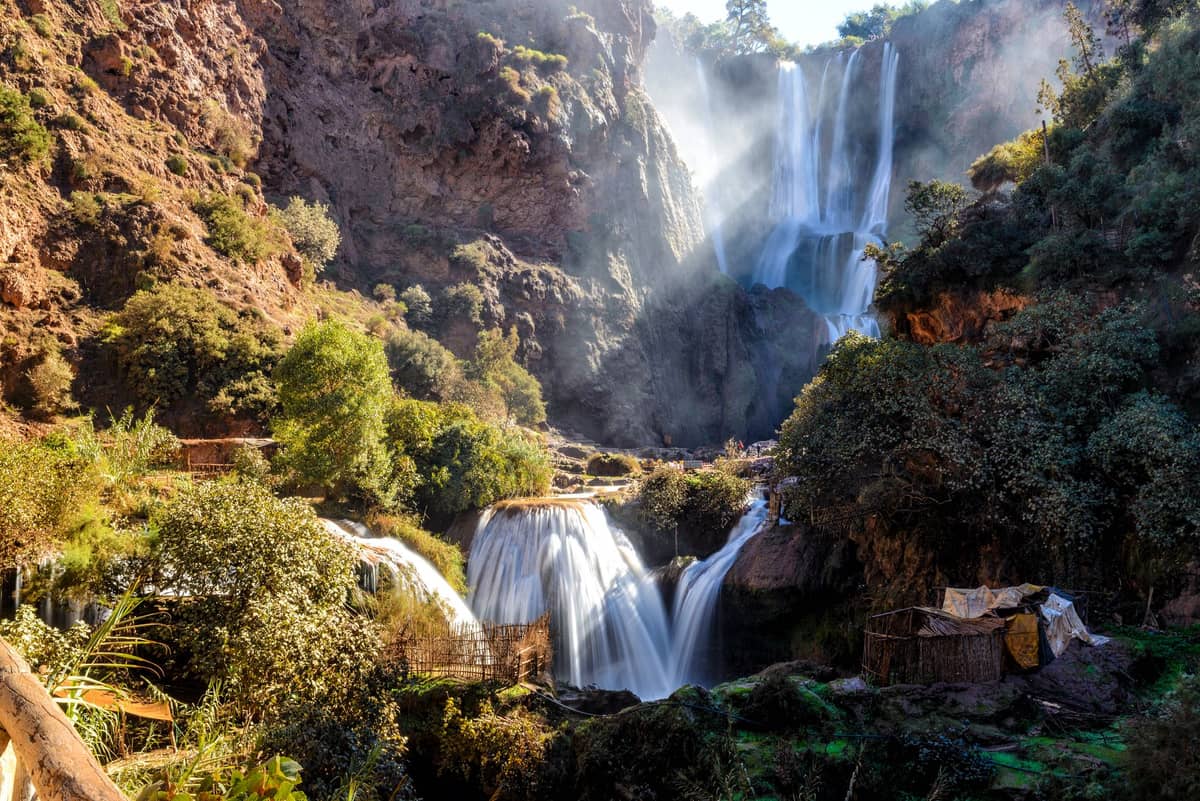
What You Are Actually Coming to See
The Ouzoud Waterfalls are the tallest waterfalls in Morocco, plunging approximately 110 metres in three tiered cascades down a red-rock gorge carved by the Oued el-Abid river. They sit at around 1,060 metres elevation in the Middle Atlas, surrounded by olive, fig and carob trees rather than the desert palms many visitors expect after leaving Marrakech. The landscape catches people off guard in the best way: this is green, humid, and cool compared to the city.
The Arabic name 'Ouzoud' translates roughly as 'the act of grinding grain', a reference to the old olive and grain mills perched at the top of the falls that are still operational today. Watching millers at work beside a 110-metre drop is not something you find at most waterfalls. The site also has a resident population of wild Barbary macaques, Morocco's only native primate, who move through the gorge vegetation and interact with visitors along the lower trails.
💡 Local tip
Arrive before 09:30 if you are driving from Marrakech. The viewing platforms and lower trails fill up quickly on weekends and during Moroccan school holidays. Mid-week visits in spring or autumn offer the best combination of full water flow and manageable crowd levels.
The Visit From Top to Bottom
Most visitors park in the village above and walk down through a strip of cafés and souvenir stalls toward the falls. The descent takes about 15–20 minutes on a path of stone steps and packed earth that gets progressively steeper. The sound reaches you before the view does: a deep, continuous roar that builds as you descend through the olive groves. At a certain point in the path you clear the tree line and the full height of the falls becomes visible, water splitting into three channels across a broad cliff face.
At the base, a wide natural pool collects the water. Local operators run small wooden boats out onto this pool, offering a close-up view of the falls from the water for around 20 MAD per person. The experience is short — five to ten minutes — but being in the spray zone directly beneath the cascades is worth it, especially in spring when water volume is highest. Bring something waterproof for your bag and camera if you take the boat.
Several trails loop through the gorge vegetation, some following the riverbank downstream and others climbing back up through terraced olive groves to the mills at the summit. A full circuit on foot takes two to three hours at a relaxed pace, though you can see the main falls and return in under an hour if time is limited. The terrain involves uneven stones, exposed roots, and occasional narrow ledges. Anyone with knee or ankle problems should take the descent slowly and consider hiring a local guide, who can suggest the most manageable route.
Tickets & tours
Live prices and dates from our booking partner. If you book, we may earn a commission at no extra cost to you.
Full Day Economic Tour of Ouzoud Waterfalls from Marrakech
From 39 €Instant confirmationFree cancellationOuzoud Waterfalls private tour from Marrakech
From 20 €Instant confirmationFree cancellationEssaouira, Ourika Valley and Ouzoud Waterfalls tours from Marrakech
From 99 €Instant confirmationFree cancellationPrivate tour to Ouzoud Waterfalls from Marrakech
From 75 €Instant confirmationFree cancellation
How the Experience Changes by Time of Day
Morning light hits the falls from the east, creating strong rainbows in the mist by mid-morning on clear days. This is the best window for photography of the water itself. The spray catches the light at roughly 09:00–11:00 and produces visible arcs in front of the main cascade, particularly from the lower viewing platforms.
By midday, tour groups from Marrakech arrive in force. The terrace cafés overlooking the falls from the gorge edge fill up and the boat queue grows. If you want calm, eat lunch early at one of the terrace restaurants while you still have the view to yourself, then let the midday rush pass before heading back down to the base.
Late afternoon, after about 15:30, the crowds thin and the light turns golden on the cliff walls. The macaques tend to be most active in early morning and late afternoon, foraging along the trails and occasionally approaching visitors who are sitting quietly. Do not feed them — it disrupts their foraging behaviour and makes them aggressive toward other visitors.
Getting There From Marrakech
Ouzoud is about 150–160 km from Marrakech and there is no direct tourist train or scheduled bus link. The most practical options are a rented car, a private driver, or an organised day tour. If you are already planning day trips from Marrakech, Ouzoud is consistently one of the most popular options and many agencies offer guided transport.
By car, take the N8 northeast from Marrakech toward Beni Mellal, then follow the R208 and local signed roads to Ouzoud village. The drive takes around 2.5 to 3 hours depending on traffic and road conditions. The road is paved throughout but includes mountain sections with tight bends in the final stretch. Parking in the village costs around 10–20 MAD per vehicle.
For travellers without a car, the public transport option involves taking a CTM or regional bus from Marrakech to Azilal or Beni Mellal, then a grand taxi for the final leg to Ouzoud. This adds significant time and requires flexibility with return schedules. It is practical for budget travellers who are comfortable with loose timing but not ideal for a day trip with limited hours.
ℹ️ Good to know
Organised day tours from Marrakech typically depart early morning and return by early evening, costing between 150–350 MAD per person depending on group size and operator. They include transport and sometimes a guide at the falls, but confirm exactly what is covered before booking.
When to Go: Seasons and Water Flow
The falls run year-round, but the volume of water varies considerably. Spring (March to May) is the peak season for water flow, when snowmelt from the Atlas combines with winter rains to push the falls to their fullest. The gorge is lush, the air is cool and moist, and the noise at the base is genuinely impressive. This is the ideal season to visit, which also makes it the busiest. If you are planning travel around this period, the spring travel guide for Marrakech covers the broader regional conditions in useful detail.
Summer (June to August) sees reduced water volume and significant heat at the lower elevations. The falls remain active but are narrower and less dramatic. The site is still visited heavily by domestic tourists during Moroccan summer holidays, particularly in July and August. If you go in summer, start as early as possible — the walk down in mid-afternoon heat is uncomfortable and the base pool area becomes extremely crowded.
Autumn (September to November) offers a good balance: the heat has eased, the olive harvest is underway in the surrounding groves, and the crowds are thinner than spring. Water levels are lower than spring but still adequate. Winter visits are possible and quiet, but water temperature at the base is very cold and some of the lower paths can be slippery after rain.
⚠️ What to skip
Avoid visiting on Moroccan public holidays and summer weekends if crowds concern you. The paths narrow sharply in the gorge and the space at the base of the falls is limited. On peak days, moving through the lower section requires patience.
Practical Details and What to Bring
Entry to the waterfall area is free. There are no gates, no tickets, and no booking required. The natural site is open at all hours, though the surrounding infrastructure — cafés, boat operators, local guides — operates during daylight, roughly 08:00 to 18:00.
Wear shoes with grip. Sandals and flip-flops are a common mistake here — the lower paths are wet with spray year-round and the stone steps become slick. Light hiking shoes or trail runners are sufficient. Bring a layer: even in summer, the gorge base is noticeably cooler than the plateau above, and in spring the mist can soak through light clothing within minutes. For a broader overview of what clothing works well across Marrakech's varied terrain and temperatures, the Marrakech packing and dress guide is worth reading before your trip.
Carry cash in Moroccan dirhams. The village and gorge operate entirely in cash — there are no card readers at the boat operators, guide stations, or small cafés. Bring enough for parking, a guide if you want one, a boat ride, and food and drinks. A budget of 100–200 MAD per person covers all the optional extras comfortably.
The site is not wheelchair accessible. The paths to the base of the falls involve steep stone stairs, uneven ground, and narrow ledges. The upper viewing area near the mills offers a partial view of the falls and is somewhat more accessible, but still requires careful footing on unpaved ground. Local guides and, occasionally, donkeys are available for visitors who find the descent challenging but not impossible.
Is It Worth the Trip?
The 5–6 hour round-trip commitment from Marrakech is the main obstacle, and it is worth being clear-eyed about that. If your time in the city is limited to two or three days and you have not yet seen the medina, the souks, or major monuments like the Saadian Tombs or the Bahia Palace, prioritise those first. Ouzoud rewards travellers who specifically want natural scenery and are happy to spend most of a day in transit.
For those who make the trip, the scale of the falls is genuinely surprising. Morocco is not typically associated with spectacular waterfalls, and standing at the base of a 110-metre drop surrounded by olive groves and wild macaques has a real sense of discovery. The site has commercial elements — the café strip above, the persistent souvenir sellers near the path — but they stay in the upper village and do not intrude on the gorge itself.
Travellers who have already done Ouzoud and are looking for further natural scenery around Marrakech might consider the Ourika Valley, which is closer and faster to reach from the city, or the high-altitude route toward Imlil village in the Atlas foothills.
Who should skip it: travellers who are not comfortable with steep uneven terrain, anyone visiting Marrakech for fewer than three full days and wanting to focus on the city itself, and visitors during summer peak periods who are sensitive to heat and crowds. The falls are also less impressive in late summer when water levels drop — if you are arriving in September, check recent photos online before committing to the drive.
Insider Tips
- The best rainbow appears in the mist at the base between roughly 09:30 and 11:00 on sunny days. Position yourself on the lower left viewing platform (facing the falls) for the clearest arc in the spray.
- Hire a local guide from the village for 30–50 MAD per person rather than following the main tourist path. Guides use alternative routes through the olive terraces that avoid the worst of the midday crowd bottlenecks.
- The terrace cafés on the gorge rim serve freshly squeezed orange juice and Moroccan mint tea at reasonable prices. Eat or drink here early before the tour groups arrive, then use the timing to head back down when the base area is quieter.
- Barbary macaques along the lower trails look approachable but bite if startled or offered food. Keep snacks inside your bag and do not make direct eye contact or extend your hand toward them.
- If you are driving from Marrakech, the return road via a different route through Demnate adds about 30 minutes but passes a natural stone bridge called Imi n'Ifri, a secondary geological curiosity that requires no extra cost and breaks up the drive back.
Who Is Ouzoud Waterfalls For?
- Nature and landscape photographers, particularly in spring when water volume and light conditions are both optimal
- Families with older children (roughly 8 and up) who can manage the descent on foot
- Travellers on a multi-day Marrakech itinerary looking for a full-day excursion away from the city
- Wildlife enthusiasts interested in seeing wild Barbary macaques in their natural gorge habitat
- Hikers who want a manageable but scenic trail without the altitude commitment of the High Atlas
Nearby Attractions
Combine your visit with:
- Agafay Desert
Just 30 to 40 kilometres southwest of Marrakech, the Agafay Desert is a rocky plateau of roughly 300 to 400 square kilometres that delivers dramatic open-sky landscapes without a multi-day Sahara expedition. It is not the sand-dune desert many visitors picture, but that distinction is part of its appeal: a raw, mineral terrain framed by the snow-capped peaks of the High Atlas, accessible within an hour of the city.
- Aït Benhaddou
Rising from the southern slopes of the High Atlas, the Ksar of Aït Benhaddou is a UNESCO World Heritage Site and one of Morocco's most architecturally striking places. Built from pisé earth and palm wood, this fortified village has stood at the crossroads of trans-Saharan trade for centuries — and remains partly inhabited today.
- Anima Garden
Set along the Ourika road 27 km south of Marrakech, Anima Garden is a three-hectare art-and-nature space created by Austrian artist André Heller. Sculptures, water features, and carefully curated plantings coexist in a setting that feels both otherworldly and deeply rooted in Moroccan landscape. It rewards slow exploration and offers a genuine contrast to the pace of the medina.
- Essaouira
Essaouira is a UNESCO-listed fortified coastal city on Morocco's Atlantic coast, roughly 2.5 to 3 hours from Marrakech by road. Its 18th-century medina, ocean-facing ramparts, and salt-aired souks offer a complete change of pace from the heat and intensity of the inland city. Entry to the medina is free.
Planning a trip? Discover personalized activities with the Nomado app.