Imlil Village: The High Atlas Trekking Hub Above Marrakech
Perched at roughly 1,740 metres in the High Atlas Mountains, Imlil Village is the main staging point for treks to Jebel Toubkal, North Africa's highest peak. It's a working Amazigh (Berber) mountain community that has gradually absorbed trekkers, guesthouses, and mule handlers into its daily rhythm, without losing the feel of the agricultural valley it was built around.
Quick Facts
- Location
- Commune d'Asni, Al Haouz Province, Marrakesh-Safi Region — approx. 60–65 km south of Marrakech city centre
- Getting There
- Grand taxi or private car from Marrakech (Bab Doukkala/Bab er Robb stands): ~75–90 min. Or bus to Asni + shared grand taxi for the final 17 km up to the village.
- Time Needed
- Half-day for a village walk; full day for a valley hike; 2–3 days minimum for Toubkal summit attempts
- Cost
- Free to enter the village. Fees apply for guided treks, mule hire, and accommodation (paid in Moroccan dirham, MAD).
- Best for
- Trekkers, hikers, Atlas Mountain day-trippers, and travellers wanting a break from city heat
What Imlil Actually Is
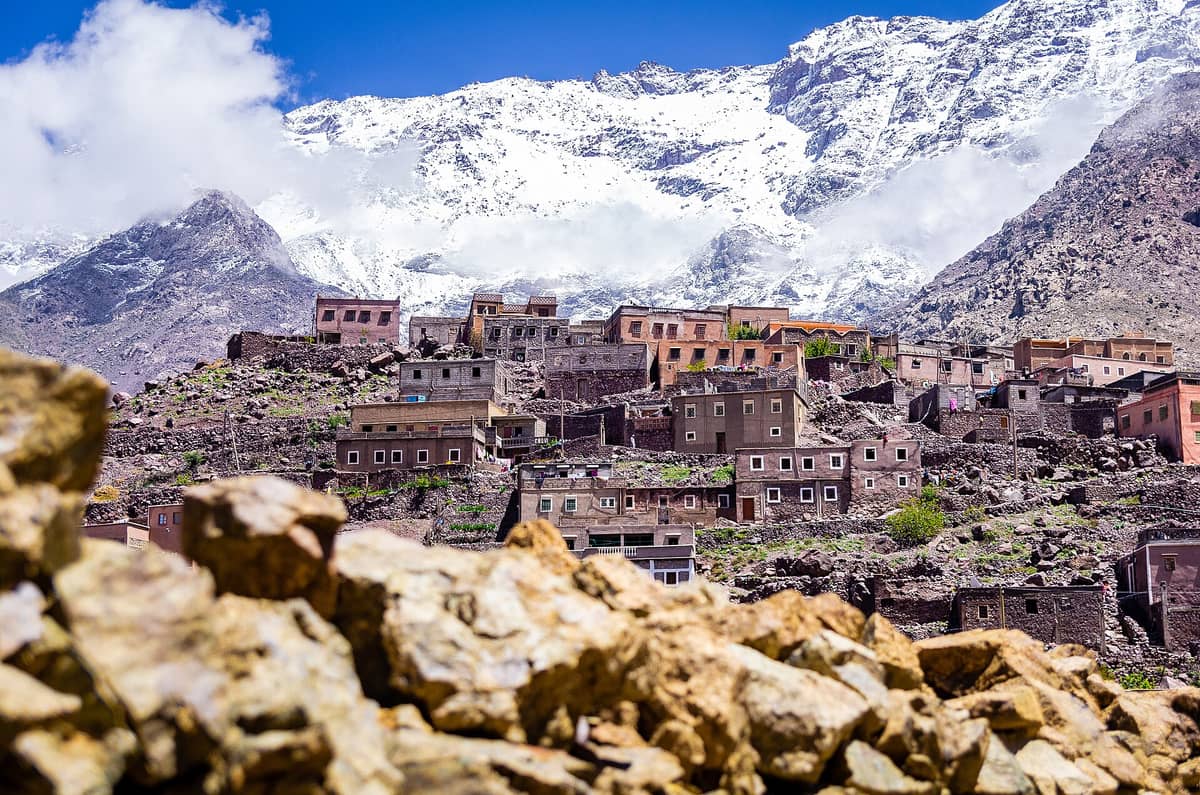
Imlil Village is not an attraction in the conventional sense. There is no ticket booth, no guided tour of a monument, and no set opening hours. It is a real, functioning Amazigh Berber community built into a steep valley in the High Atlas Mountains, sitting at approximately 1,740 to 1,800 metres above sea level. Walnut and apple orchards terrace the hillsides. Mules carry supplies up paths that no vehicle can navigate. The smell of woodsmoke drifts out of guesthouse kitchens well before sunrise when trekkers prepare for early starts.
What transformed Imlil from a farming hamlet into a trekking base is its position: it is the primary trailhead for Jebel Toubkal, the highest peak in North Africa at 4,167 metres. As walking routes through the High Atlas gained popularity during the latter half of the 20th century, guesthouses, guiding services, and gear rental shops gradually filled the lower village. That layering of traditional Berber life and mountain tourism infrastructure is the defining character of the place.
Travellers coming specifically for Mount Toubkal should treat Imlil as the operational base, not the destination itself. Travellers who are simply looking for a mountain day trip from Marrakech will find the valley scenery, the village paths, and the sharp drop in temperature reason enough to make the journey.
Getting There from Marrakech
The road south from Marrakech climbs steadily through the foothills of the Atlas before following the Mizane Valley up to Imlil. The journey covers roughly 60 to 65 kilometres by road and typically takes between 75 and 90 minutes depending on traffic leaving the city and road conditions on the upper stretch.
The most practical independent option is a shared grand taxi from Marrakech's Bab Doukkala or Bab er Robb taxi stands. Some taxis run directly to Imlil; others go only as far as Asni, the market town 17 kilometres below the village, where you change to a second shared taxi for the final climb. Per-seat fares are paid in MAD and are low by any measure, though the exact amounts change and should be confirmed on the day. A private grand taxi hired exclusively gives more flexibility on timing and avoids the wait for a full complement of passengers.
💡 Local tip
If you are staying overnight or planning a multi-day trek, pre-booking a private transfer from Marrakech removes the complexity of the Asni changeover and ensures you arrive with energy intact. Several guesthouses in Imlil can arrange this in advance.
There is no direct public bus service all the way to Imlil. For context on wider transport logistics around the region, the getting around Marrakech guide covers taxi stands and intercity options in detail.
Tickets & tours
Live prices and dates from our booking partner. If you book, we may earn a commission at no extra cost to you.
Imlil village and Atlas Mountains private tour from Marrakech
From 30 €Instant confirmationFree cancellationDay trip to Atlas Mountains, Ourika Valley and Berber Villages
From 15 €Instant confirmationFree cancellationDay trip to Imlil from Marrakesh
From 60 €Instant confirmationFree cancellationDay trip to Imlil Mount Toubkal from Marrakech
From 74 €Instant confirmationFree cancellation
The Village on Arrival: What You Will Find
The road ends at a small car park at the lower edge of the village, where mule handlers wait alongside guides with laminated trekking certificates. In the mornings, particularly between 7am and 9am, this area is at its most active: trekking groups load supplies onto mules, guesthouse owners exchange logistics with guides, and the smell of mint tea comes through open doorways. By early afternoon, much of the foot traffic has moved up into the valley and the lower village quiets down considerably.
Walking uphill from the car park, the paths narrow quickly. Flat concrete gives way to uneven stone, and the lanes between stone houses are often barely wide enough for two people to pass. Small shops sell energy bars, trail mix, and basic trekking supplies at the kind of markup you would expect from a remote mountain location. A few cafes serve tagine and harira soup; the quality is functional rather than exceptional, though eating at altitude with a view down the valley has its own appeal.
The village mosque anchors the upper section. Calls to prayer echo sharply between the stone walls at dawn and dusk, a sound that carries differently at altitude than it does in the city. Evenings in Imlil are cool even in midsummer, and cold to very cold from October through April. Most guesthouses provide blankets and some have wood-burning stoves, but packing an extra layer is not optional.
Trekking from Imlil: The Practical Picture
The main draw for most visitors is the trail network that extends from the village into the surrounding High Atlas. The full Marrakech trekking guide covers the range of routes in detail, but in brief: the path to Toubkal summit typically involves a first-day hike from Imlil at around 1,740 metres to the Toubkal Refuge at around 3,207 metres, followed by a summit push to 4,167 metres the next morning. The ascent is non-technical in summer but demands solid fitness, appropriate footwear, and acclimatisation awareness.
Shorter options suit travellers on a day trip. The valley walk toward Sidi Chamarouch, a riverside Berber shrine about two hours above the village, is achievable without a guide and gives a strong sense of the landscape without committing to the full Toubkal circuit. The trail passes terraced gardens, walnut groves, and a series of stream crossings before arriving at the shrine, which is a locally significant site. Dress modestly if visiting.
Hiring a licensed guide through one of the registered agencies in the village is strongly recommended for anything beyond the valley floor walks. The High Atlas weather can change with very little warning, and route-finding above the snowline in spring or autumn requires local knowledge. Mule hire is available for luggage or for travellers who cannot manage steep ascents on foot; prices are set per day and negotiated directly with the handler.
⚠️ What to skip
Altitude sickness is a real risk above 3,000 metres, even for fit travellers. Imlil itself at 1,740m is not high enough to cause issues for most people, but moving quickly from Marrakech (around 460m) to the Toubkal Refuge (3,207m) in a single day can trigger symptoms. Ascend gradually, hydrate well, and descend immediately if you develop a severe headache, nausea, or confusion.
When to Go and What to Expect from the Weather
The most reliable trekking windows are late spring (April to June) and early autumn (September to October). During these months, Imlil typically sits in clear, cool air with daytime temperatures at village level in the range of 15 to 22 degrees Celsius and significantly colder nights. Wildflowers appear on the lower slopes in April and May, and the valley has a greenness that it loses by midsummer.
Midsummer (July and August) is workable, with the heat of Marrakech making the mountain air feel dramatically fresher on arrival. The upper trails above 3,500 metres are generally snow-free, and summit success rates for Toubkal are high. The trade-off is that this is also when the village is at its most crowded, with European trekkers in particular filling guesthouses.
Winter visits (December through February) require serious preparation. Snow regularly closes the upper trails, and the Toubkal summit in winter is a mountaineering objective requiring crampons and ice axe experience. The village itself remains open and some guesthouses operate year-round, but conditions at altitude are genuinely harsh. That said, Imlil in the snow is a striking place, and the quieter season means less competition for accommodation.
For those planning around Marrakech's broader seasonal patterns, the best time to visit Marrakech guide provides useful context on how city conditions relate to Atlas weather.
Imlil as a Day Trip vs. an Overnight Stay
A day trip from Marrakech is perfectly viable if your goal is simply to see the village and walk a portion of the valley. You arrive by mid-morning, eat lunch at a local cafe, walk toward Sidi Chamarouch or explore the upper village lanes, and return to Marrakech by late afternoon. It is a long day given the 90-minute drive each way, but the change in environment, altitude, and temperature makes it feel thoroughly worthwhile.
Staying overnight changes the experience entirely. The village has a genuine rhythm that only becomes apparent once the day-trippers have left. Dinner in a guesthouse typically involves a shared table, a multi-course Berber meal starting with vegetable soup and harira, and conversation with other trekkers about routes and conditions. The stars at this altitude, away from city light pollution, are exceptional on clear nights.
For travellers combining Imlil with other High Atlas or southern Morocco experiences, it pairs naturally with a day trip to the Ourika Valley, which offers a softer, lower-altitude version of the Atlas landscape and is well-suited to families or less active travellers. Alternatively, the day trips from Marrakech guide maps out how to combine Imlil with other excursions efficiently.
Accessibility and Who Should Think Carefully Before Going
Imlil is built on steep, uneven terrain. The village paths are rocky and often stepped, with no paving on the upper lanes and limited flat ground. Standard wheelchairs cannot navigate most of the village, and even with mobility aids the lower access road is the realistic limit for visitors with significant mobility constraints. There are no formal accessibility facilities in most local accommodation.
Travellers who are looking purely for comfortable sightseeing, a nice restaurant, or a relaxing afternoon may find Imlil underwhelming. The village is functional and genuine, not polished. There are no historical monuments to visit, no formal museums, and limited shopping beyond trekking supplies and locally produced argan oil or handicrafts. If a mountain atmosphere and physical activity are not the point of your trip, the drive alone probably does not justify the round-trip time.
ℹ️ Good to know
What to bring: sturdy walking shoes (non-negotiable even for a short valley walk), a warm layer regardless of the season, sun protection at altitude, and sufficient cash in MAD. There are no ATMs in the village; withdraw money in Marrakech before leaving.
Insider Tips
- Leave Marrakech before 7:30am to arrive at Imlil by 9am when the light on the valley walls is cleanest for photography and the day-trip crowds have not yet built up. The hour between 9am and 10am is the best window to negotiate guide rates and mule hire before demand peaks.
- Guesthouse prices in Imlil are negotiable outside July and August, particularly for multi-night stays. Rooms that appear fully priced online can often be reduced by 20 to 30 percent if you arrive in person on a quiet day and ask directly.
- The cafe at the lower car park area tends to charge more than places 10 minutes uphill into the village. Walk past the mule handlers, turn up the main path, and you will find smaller family-run options with comparable food at noticeably lower prices.
- Imlil sits on the edge of Toubkal National Park. The park entry fee is charged at the trailhead above the village, not in the village itself. Make sure you have exact change in MAD as the wardens rarely have float for large notes.
- Mobile signal in Imlil is patchy and effectively absent once you move up the valley. Download offline maps of the High Atlas (Maps.me or Google Maps offline area) before leaving Marrakech, and share your itinerary with someone who is not on the trail with you.
Who Is Imlil Village For?
- Trekkers targeting Jebel Toubkal or multi-day High Atlas routes
- Marrakech visitors wanting a day of cold air, mountain scenery, and physical activity
- Travellers interested in Amazigh Berber culture and rural Moroccan life
- Photographers drawn to high-altitude light, terraced valleys, and traditional stone architecture
- Anyone escaping the heat of Marrakech in summer, when the roughly 1,300-metre gain in altitude makes a tangible difference
Nearby Attractions
Combine your visit with:
- Agafay Desert
Just 30 to 40 kilometres southwest of Marrakech, the Agafay Desert is a rocky plateau of roughly 300 to 400 square kilometres that delivers dramatic open-sky landscapes without a multi-day Sahara expedition. It is not the sand-dune desert many visitors picture, but that distinction is part of its appeal: a raw, mineral terrain framed by the snow-capped peaks of the High Atlas, accessible within an hour of the city.
- Aït Benhaddou
Rising from the southern slopes of the High Atlas, the Ksar of Aït Benhaddou is a UNESCO World Heritage Site and one of Morocco's most architecturally striking places. Built from pisé earth and palm wood, this fortified village has stood at the crossroads of trans-Saharan trade for centuries — and remains partly inhabited today.
- Anima Garden
Set along the Ourika road 27 km south of Marrakech, Anima Garden is a three-hectare art-and-nature space created by Austrian artist André Heller. Sculptures, water features, and carefully curated plantings coexist in a setting that feels both otherworldly and deeply rooted in Moroccan landscape. It rewards slow exploration and offers a genuine contrast to the pace of the medina.
- Essaouira
Essaouira is a UNESCO-listed fortified coastal city on Morocco's Atlantic coast, roughly 2.5 to 3 hours from Marrakech by road. Its 18th-century medina, ocean-facing ramparts, and salt-aired souks offer a complete change of pace from the heat and intensity of the inland city. Entry to the medina is free.
Planning a trip? Discover personalized activities with the Nomado app.