Things to Do in Marrakech: The Complete Guide
Marrakech rewards visitors with centuries of Islamic architecture, world-class gardens, hammams, mountain day trips, and one of the most theatrical main squares on the planet. This guide covers the best things to do in Marrakech, with real prices, seasonal advice, and a clear take on what is worth your time.
Tickets & tours
Live prices and dates from our booking partner. If you book, we may earn a commission at no extra cost to you.
TL;DR
- Start in the medina: Jemaa el-Fna is the gravitational centre of Marrakech — visit at dusk when the square transforms into an open-air theatre.
- Jardin Majorelle now requires advance online booking via tickets.jardinmajorelle.com — adult entry is 170 MAD and time slots sell out fast.
- Bahia Palace is open 09:00–17:00 daily (reduced hours during Ramadan) at 100 MAD for foreign adults; it is the medina's most accessible historic interior.
- Spring (March–May) and autumn (September–November) offer the most comfortable temperatures for sightseeing. See the full seasonal breakdown in our best time to visit Marrakech guide.
- The city divides cleanly into the historic medina and the modern Gueliz district — most major attractions are in or just outside the medina walls.
The Medina: Where to Begin
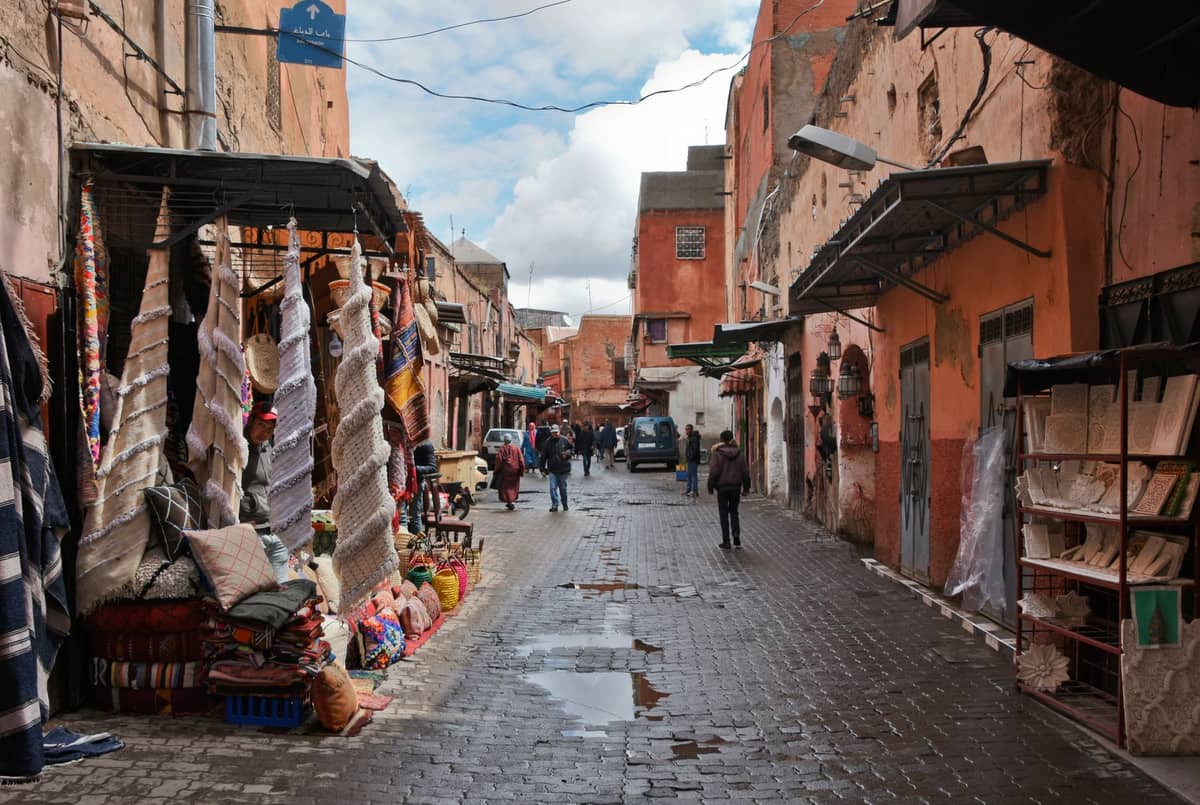
Nearly every first-time visitor anchors their stay in Marrakech's medina, the UNESCO-listed old city enclosed by 19 kilometres of 12th-century walls. It is genuinely disorienting at first: the lanes narrow without warning, addresses are approximate, and the architecture changes every hundred metres. That sense of layered history is exactly the point.
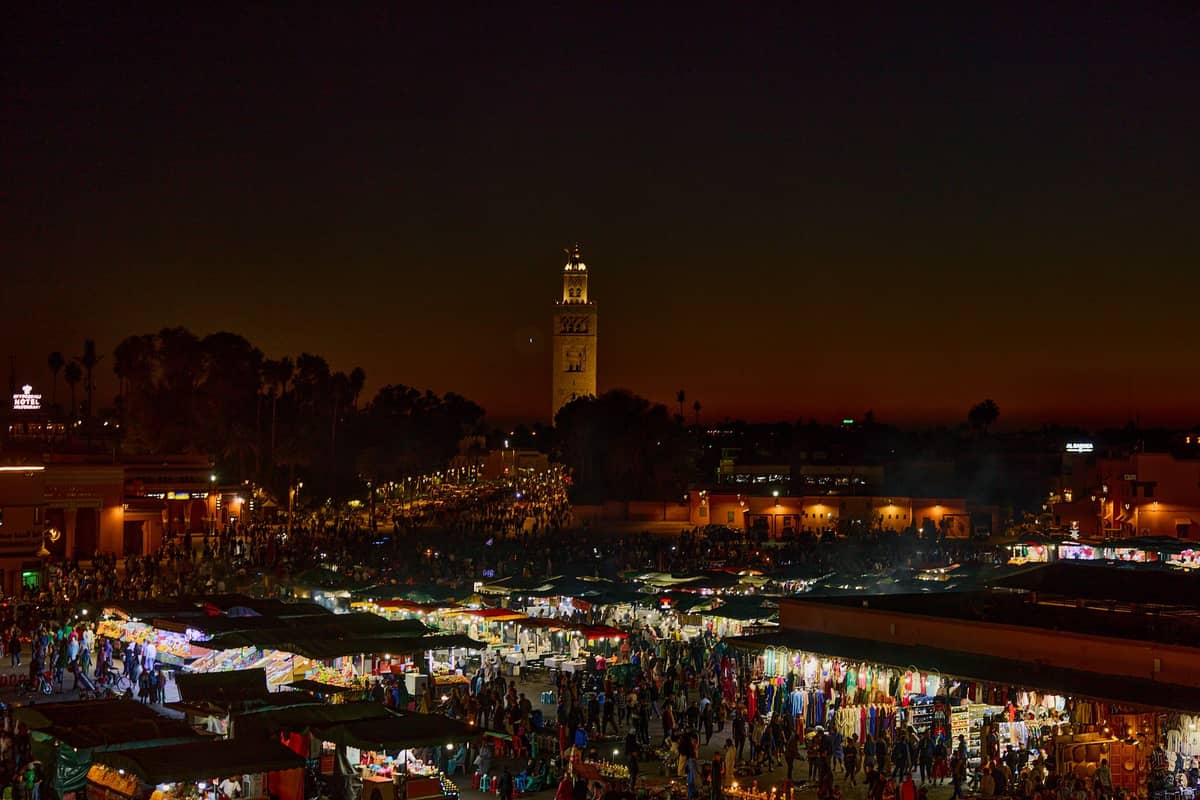
The Jemaa el-Fna square is the logical starting point. During the day it is relatively calm, with orange juice vendors, calèche horses, and the occasional snake charmer. By late afternoon it shifts completely: storytellers, gnawa musicians, acrobats, and dozens of food stalls set up a spectacle that has continued in more or less the same form for centuries. Arrive around 18:00–19:00 for the full effect. The food stalls are an experience in themselves, though prices at the central rows tend to be tourist-inflated — walk to the outer edges for better value.
Directly above the square, the Koutoubia Mosque is the city's most recognizable landmark. Non-Muslims cannot enter, but the exterior and the surrounding garden are open and worth the short walk, especially in the early morning before crowds build.
💡 Local tip
When navigating the medina, download an offline map before you go — Google Maps works reasonably well for major landmarks, but the narrower derbs (alleyways) are often mislabelled or missing. A riad address alone is not enough to find it; ask your accommodation for a WhatsApp pin.
Historic Sites and Palaces
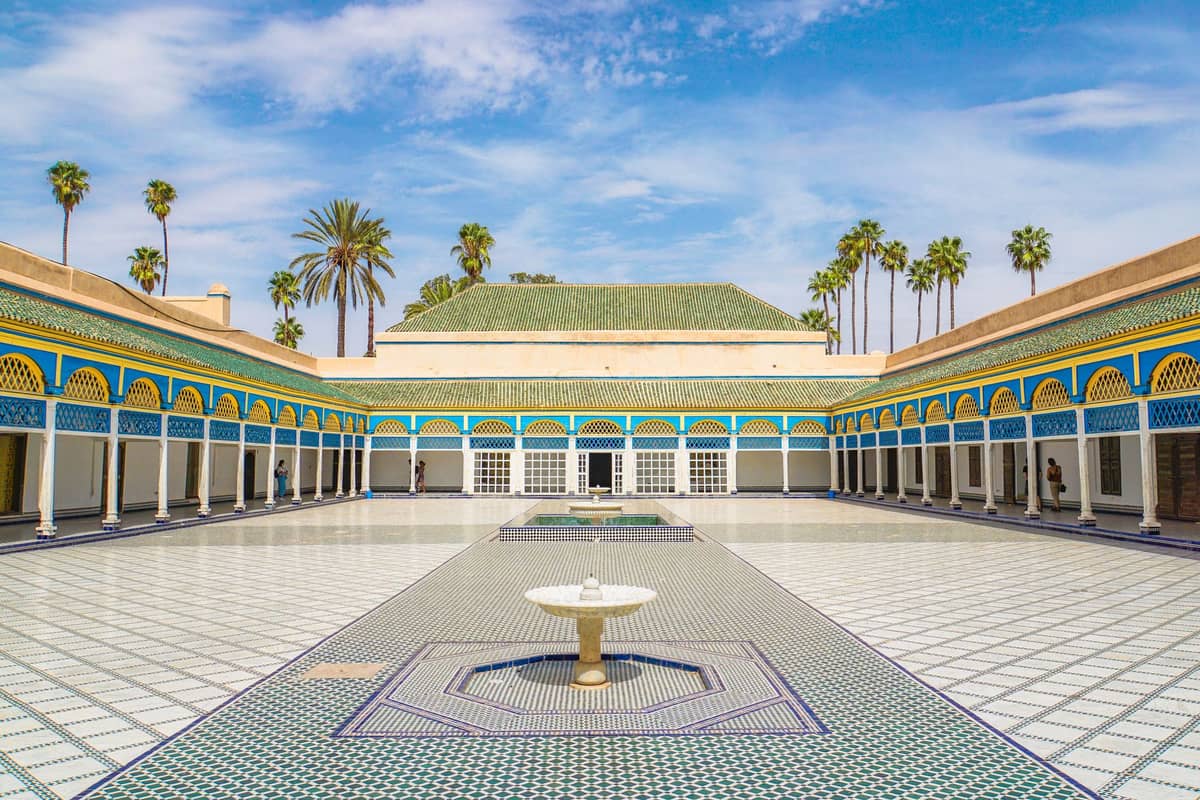
Marrakech's concentration of historic Islamic architecture is one of the strongest arguments for visiting. The city was the capital of the Almoravid and Almohad dynasties, and that legacy shows in the quality of its monuments.
- Bahia Palace Built in the late 19th century for a grand vizier, Bahia ('Brilliance') spans about 8,000 square metres with a succession of tiled courtyards, carved stucco, and cedar ceilings. Open daily 09:00–17:00 (shorter hours during Ramadan). Foreign adult admission: 100 MAD. Book morning visits on weekdays to avoid tour groups.
- Ben Youssef Madrasa Founded in the 14th century and rebuilt in the 16th, Ben Youssef Madrasa has some of the finest zellige, carved plaster, and cedar wood in Marrakech. The central courtyard is among the most photographed interiors in Morocco. Check current opening hours before visiting as restoration work occasionally closes sections.
- El Badi Palace Once among the most opulent palaces in the Islamic world, El Badi today is a satisfying ruin. The sunken gardens and stork-topped walls give a strong sense of scale. Far fewer visitors than Bahia Palace, and the rooftop views over the medina are genuinely useful for orientation.
- Saadian Tombs Discovered only in 1917 after being sealed for two centuries, the tombs contain the remains of the Saadian dynasty in an intricately decorated mausoleum. The site is small and gets crowded quickly; arriving at opening time is strongly recommended.
For a deeper understanding of the city's Islamic heritage, the Marrakech Islamic architecture guide covers the Almoravid Koubba, the Tin Mal Mosque outside the city, and the architectural logic connecting them all.
⚠️ What to skip
Bahia Palace reduced its opening hours and raised foreign visitor admission to 100 MAD. Older articles still quote 70 MAD and 08:00 opening — both are outdated as of 2026. During Ramadan, hours typically shift to around 10:00–16:00. Always verify on the day.
Gardens and Green Spaces
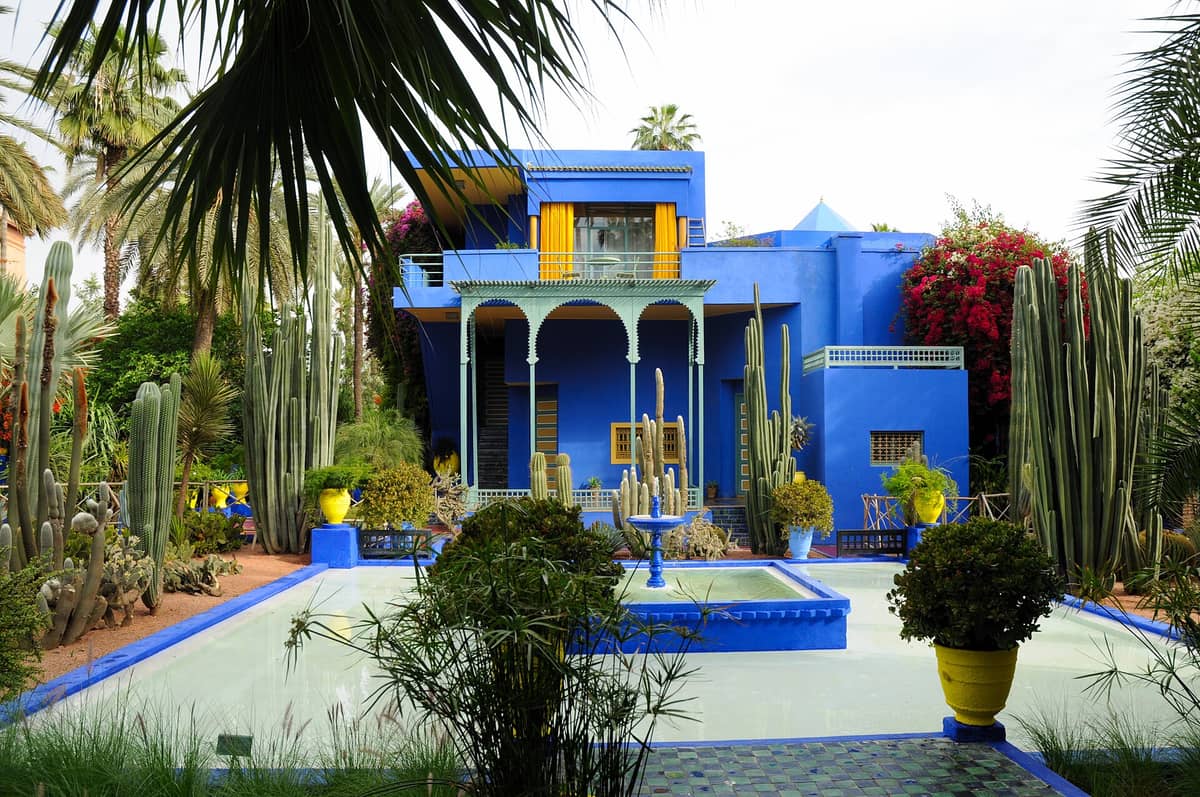
Gardens carry real weight in Marrakech's identity. In a city that can exceed 40°C in July, walled green spaces are as much practical relief as aesthetic experience. The quality ranges from world-class to functional, and it is worth choosing carefully given the entrance fees involved.
The Jardin Majorelle is the city's most famous garden and justifiably so. Designed by French painter Jacques Majorelle in the 1920s and restored by Yves Saint Laurent in the 1980s, it is a 2.5-acre composition of cobalt-blue buildings, cactus gardens, and lily-covered pools. Adult entry costs 170 MAD for foreign visitors. Critically: tickets must be purchased online at tickets.jardinmajorelle.com, and time slots regularly sell out days in advance during peak season (March–May and September–November). There is no walk-up ticket sales at the gate. The adjacent Yves Saint Laurent Museum is bookable separately and worth combining if fashion or design interests you.
The Menara Gardens offer a quieter alternative. The olive groves and central reflecting pool with Atlas Mountain backdrop produce one of the most reproduced views in Marrakech photography. Entry to the gardens themselves is free; a small fee applies for the pavilion interior. The gardens are 3 km southwest of the medina and best reached by taxi. The Le Jardin Secret in the medina itself is smaller but architecturally significant, with a restored 19th-century riad structure and two distinct garden styles.
✨ Pro tip
Book Jardin Majorelle tickets at least 3–5 days ahead during school holidays and long weekends. Visit at opening time (08:00) on weekdays for the lowest crowd density — by 10:30 the paths become genuinely congested. The light is also better for photography in the first hour.
Souks, Shopping, and the Tanneries
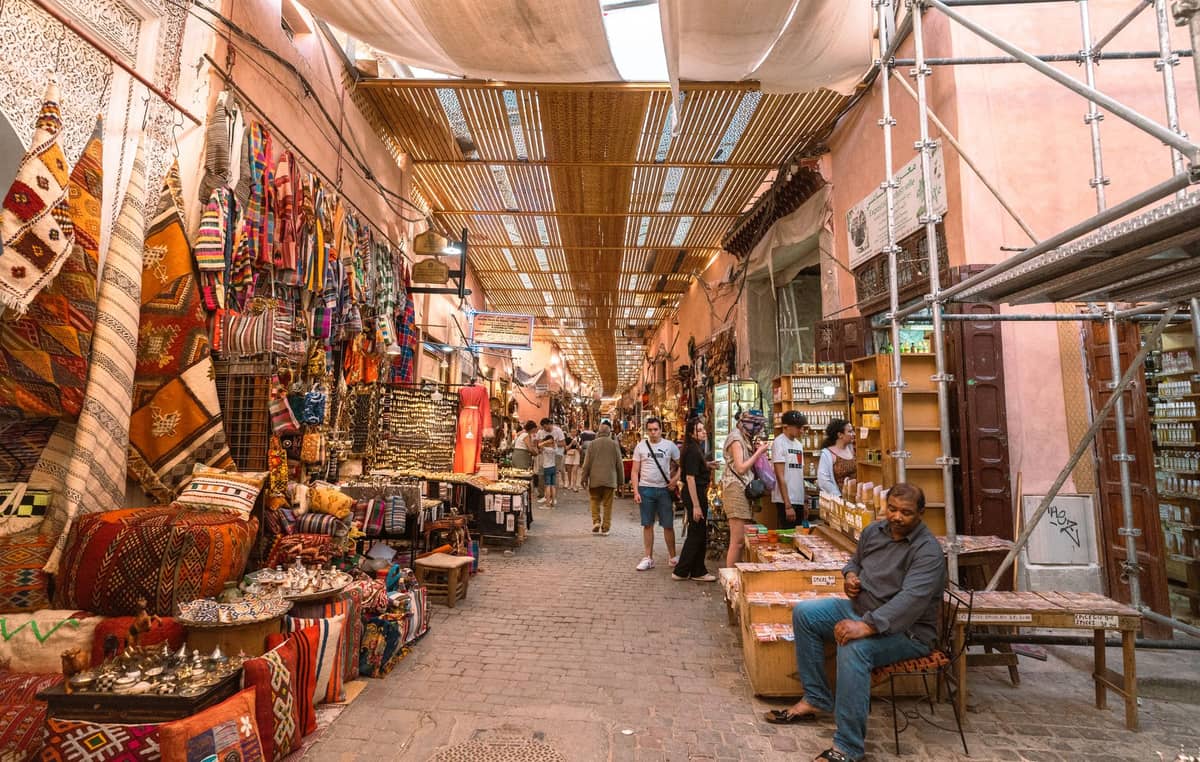
The Marrakech souks north of Jemaa el-Fna are organized by trade: the Souk des Babouches for leather slippers, Souk Cherratin for saddlery, Souk Smata for shoes, Souk des Tapis for rugs. The logic of the layout becomes clearer on a second visit. On a first visit, getting lost is almost inevitable and not necessarily a problem — the lanes eventually funnel back to familiar landmarks.
The leather tanneries near the Chouara district are among the most photographed sights in Marrakech. Viewing terraces overlook the dyeing pits from several tannery-adjacent leather shops — entry to the terrace is usually free if you browse the shop, though you will be strongly encouraged to buy. The smell is significant (fresh mint offered at the entrance is not decorative). What the photos rarely convey is the physical scale: the vats are smaller than expected, and the spectacle is better during morning working hours, roughly 09:00–12:00.
For a more edited shopping experience outside the medina pressure, the Sidi Ghanem design district is a 20-minute taxi ride away and home to contemporary Moroccan designers, ceramics studios, and concept stores. Prices are fixed and broadly higher than souk prices, but the quality and authenticity of the products is more consistent. See our Marrakech souks shopping guide for bargaining tactics and what to buy.
Hammams, Wellness, and Slower Days
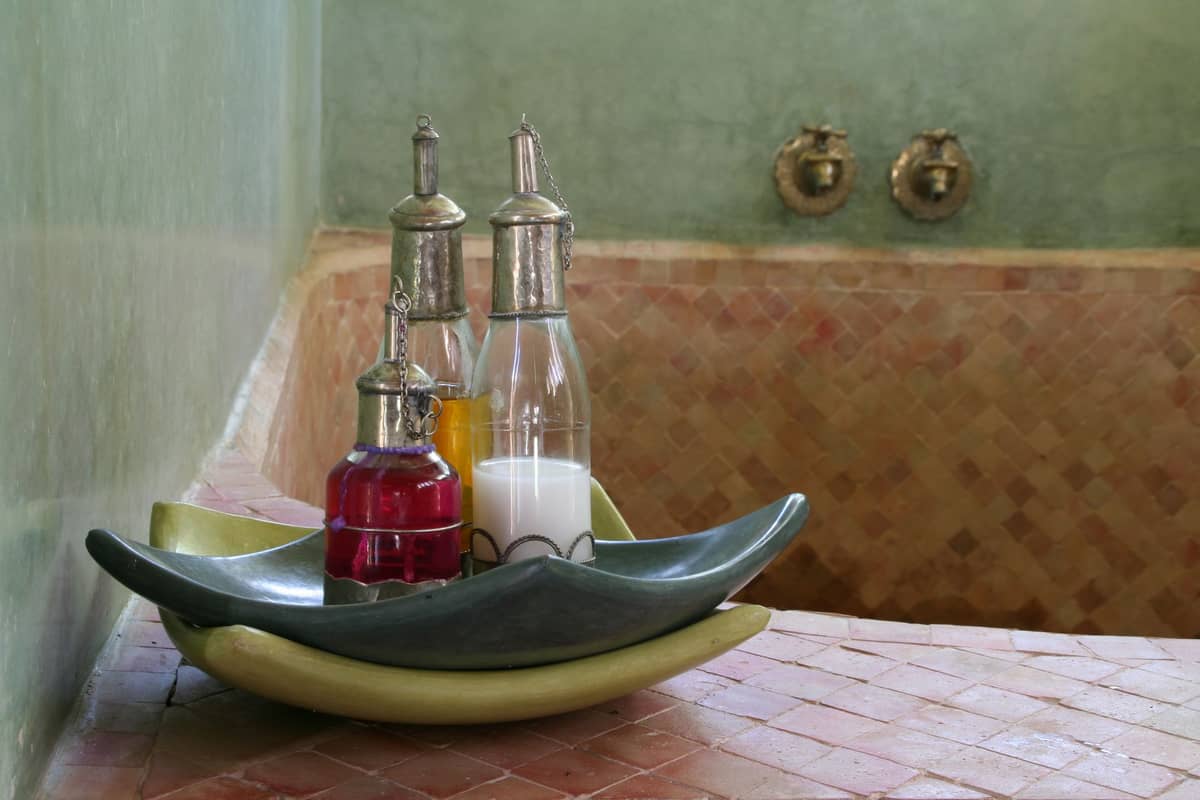
A hammam is not optional in Marrakech — it is part of how the city functions. Traditional neighbourhood hammams charge as little as 15–20 MAD for a basic scrub and steam session, while tourist-oriented hammams in and around the medina charge 200–600 MAD for a more structured experience with private rooms and argan oil treatments. Both are valid depending on your appetite for immersion versus comfort.
The practical split: local hammams like those in the Bab Doukkala neighbourhood offer authenticity but require some tolerance for communal spaces and basic facilities. Tourist hammams such as those near the Mouassine quarter provide a more predictable experience with English-speaking staff. Our Marrakech hammam guide ranks the best options across both categories with current pricing.
Day Trips: Desert, Mountains, and Coast
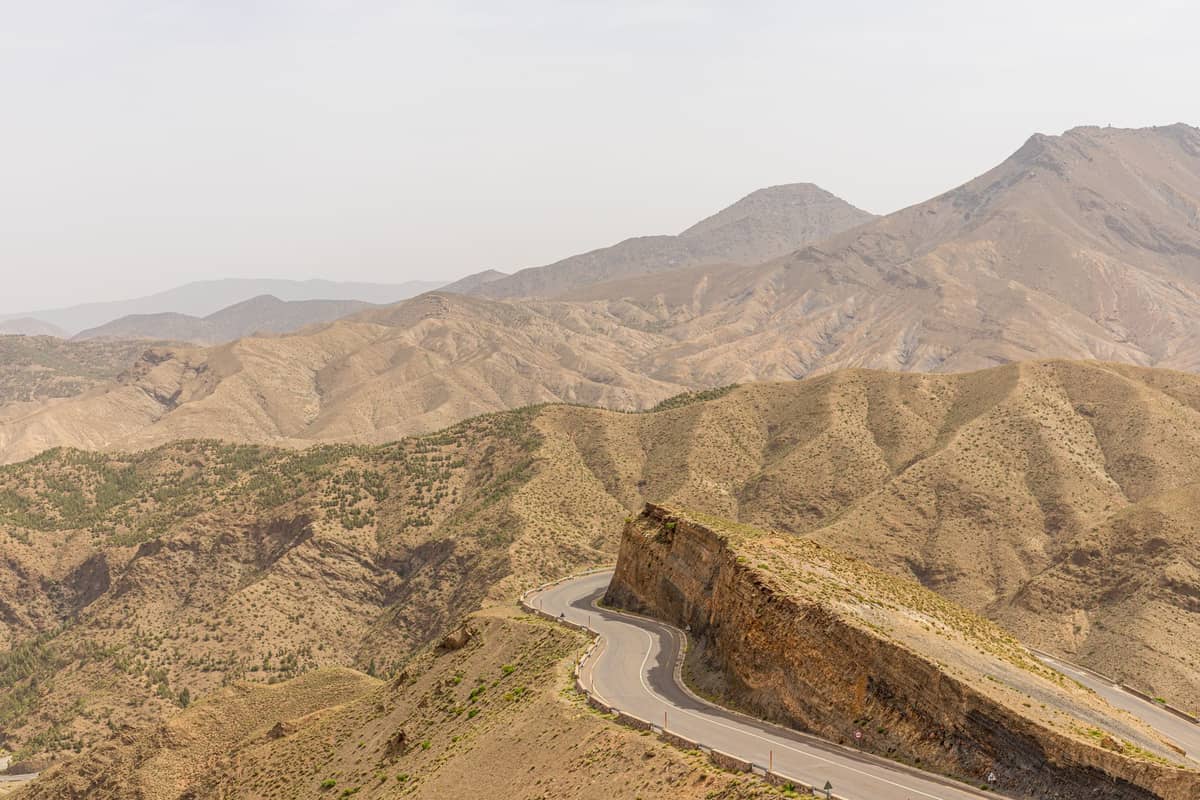
Marrakech's geography makes it an excellent base for day trips. The High Atlas mountains begin less than 50 km south; the Atlantic coast is under three hours west; and the Saharan pre-desert begins less than four hours away. The range of excursion options is one of the strongest practical arguments for basing yourself here rather than in Fes or Casablanca.
- Agafay Desert A rocky desert plateau 40 minutes from central Marrakech, the Agafay offers sunset camel rides, quad biking, and luxury desert camp dinners without the multi-day commitment of the Sahara. Good for travellers with limited time. See the full breakdown in the Marrakech Agafay desert guide.
- Ourika Valley and Setti Fatma One hour south, the Ourika Valley is the quickest Atlas escape from Marrakech. Berber villages, market stalls, and the Setti Fatma waterfalls reward a half-day trip. The road gets congested on Sunday mornings when a large local market runs.
- Essaouira The Atlantic port of Essaouira is 2.5–3 hours west. It offers a dramatically different atmosphere: sea wind, gnawa music, blue-and-white medina walls, and a fishing harbour. A full day is the minimum to do it justice; an overnight stay is better.
- Ouzoud Waterfalls Morocco's highest waterfalls at 110 metres, about 2.5 hours northeast of Marrakech. Barbary macaques live in the surrounding trees. Most visitors join an organized group tour; independent travel by bus requires two connections and takes significantly longer.
For trekking and high-altitude options, the villages of Imlil and the trails toward Mount Toubkal (4,167 m, North Africa's highest peak) are accessible as a long day trip but are better as an overnight. Our day trips from Marrakech guide covers logistics, costs, and realistic time estimates for all the main excursions.
Practical Planning: When to Go and How to Get Around
Marrakech operates on Morocco Standard Time (UTC+1). During Ramadan, Morocco typically shifts the official clock back one hour to GMT, which can affect booked transport times; restaurant hours, attraction schedules, and public transport frequency also change. Visiting during Ramadan is a genuine cultural experience but requires flexibility: many restaurants do not open until iftar (sunset), and some attractions keep reduced hours. If your priority is sightseeing efficiency, avoid the final week of Ramadan and the Eid holiday that follows.
Temperature is the biggest practical variable. Spring (March to May) sits in the low 20s to high 20s Celsius with comfortable nights. Summer peaks above 35–40°C in July and August, making afternoon sightseeing genuinely unpleasant. Autumn mirrors spring conditions. Winter daytime temperatures reach the mid-teens to near 20°C, but nights can be cold and some riad rooms are poorly heated. December and January require layers.
Getting around within the medina is almost entirely on foot; the lanes are too narrow for vehicles. Petit taxis handle journeys between the medina and Gueliz or Hivernage for around 20–40 MAD for most routes. Agree on a fare or insist on the meter before getting in. Ride-hailing apps including Careem and inDrive are available in Marrakech and offer transparent pricing. Our guide to getting around Marrakech covers all transport options in detail, including the airport bus (Line 19, around 30 MAD) and private transfer costs.
ℹ️ Good to know
Morocco uses the dirham (MAD). At the time of writing, 1 EUR converts to approximately 10–11 MAD, though rates fluctuate. Currency exchange is available at the airport (rates are poor), banks in Gueliz, and ATMs throughout the city. ATMs in the medina have low withdrawal limits; Gueliz has better-networked machines. Avoid unofficial money changers.
First-time visitors often underestimate how much there is to do across three or four days. Our 3 days in Marrakech itinerary builds a practical sequence that prioritizes the highest-value sites without backtracking across the medina. For a full week, the one-week Marrakech itinerary adds day trips and deeper neighbourhood exploration.
FAQ
Do I need to book Jardin Majorelle tickets in advance?
Yes, and this is no longer optional. The garden's official site (tickets.jardinmajorelle.com) is the only place to buy tickets, and time slots sell out days ahead during peak season (spring and autumn). Walk-up purchases at the gate are not available under current policy. Adult admission for foreign visitors is 170 MAD.
How many days do you need in Marrakech to see the main sights?
Three full days covers the core medina attractions (Jemaa el-Fna, Bahia Palace, Ben Youssef Madrasa, Jardin Majorelle, and the souks) at a reasonable pace. Add a fourth or fifth day if you want to include a day trip to the Agafay Desert, Ourika Valley, or Essaouira.
What is the best time of year to visit Marrakech for sightseeing?
March to May and September to November give the most comfortable temperatures for outdoor sightseeing, typically ranging from the low 20s to around 28°C. July and August regularly exceed 38°C, making midday exploration uncomfortable. December to February is mild by day but can be cold at night, and some high-altitude day trips become inaccessible due to snow.
Is the Marrakech medina safe to explore independently?
The medina is generally safe for independent exploration during the day and into the evening. The main practical challenge is persistent touts near the main souks and Jemaa el-Fna — a firm but polite refusal is usually sufficient. Solo female travellers report more unwanted attention than couples or groups; our Marrakech solo travel guide covers specific strategies. Keep copies of your accommodation address in Arabic.
Are there things to do in Marrakech beyond the medina and historic sites?
Significantly. The Gueliz district has contemporary galleries, French-influenced cafes, and the best independent restaurants in the city. Sidi Ghanem is worth a half-day for design and craft studios. The Palmeraie offers resort facilities and horse riding. And the surrounding region — Atlas Mountains, Agafay Desert, Ourika Valley — adds another full dimension to the city as a base.
Tickets & tours
Live prices and dates from our booking partner. If you book, we may earn a commission at no extra cost to you.
Planning a trip? Discover personalized activities with the Nomado app.