Sidi Ghanem Design District: Marrakech's Creative Industrial Quarter
Sidi Ghanem is a roughly 175-hectare industrial zone northwest of Marrakech that has quietly transformed into the city's most serious design destination. Expect craft workshops, furniture showrooms, textile studios, and concept boutiques spread across wide warehouse streets, all free to enter and best explored on a weekday morning.
Quick Facts
- Location
- Zone Industrielle Sidi Ghanem, Route de Safi (RN7), northwest Marrakech
- Getting There
- Petit taxi ~30 MAD from Gueliz (10 min); ALSA bus L15 from Jamaa El Fna / Arset El Bilk
- Time Needed
- 2–4 hours for a focused browse; half a day if you plan to shop seriously
- Cost
- Free to enter the district; pay only for purchases or services
- Best for
- Design lovers, interiors shoppers, photographers, and anyone tired of medina souvenir pressure
What Sidi Ghanem Actually Is
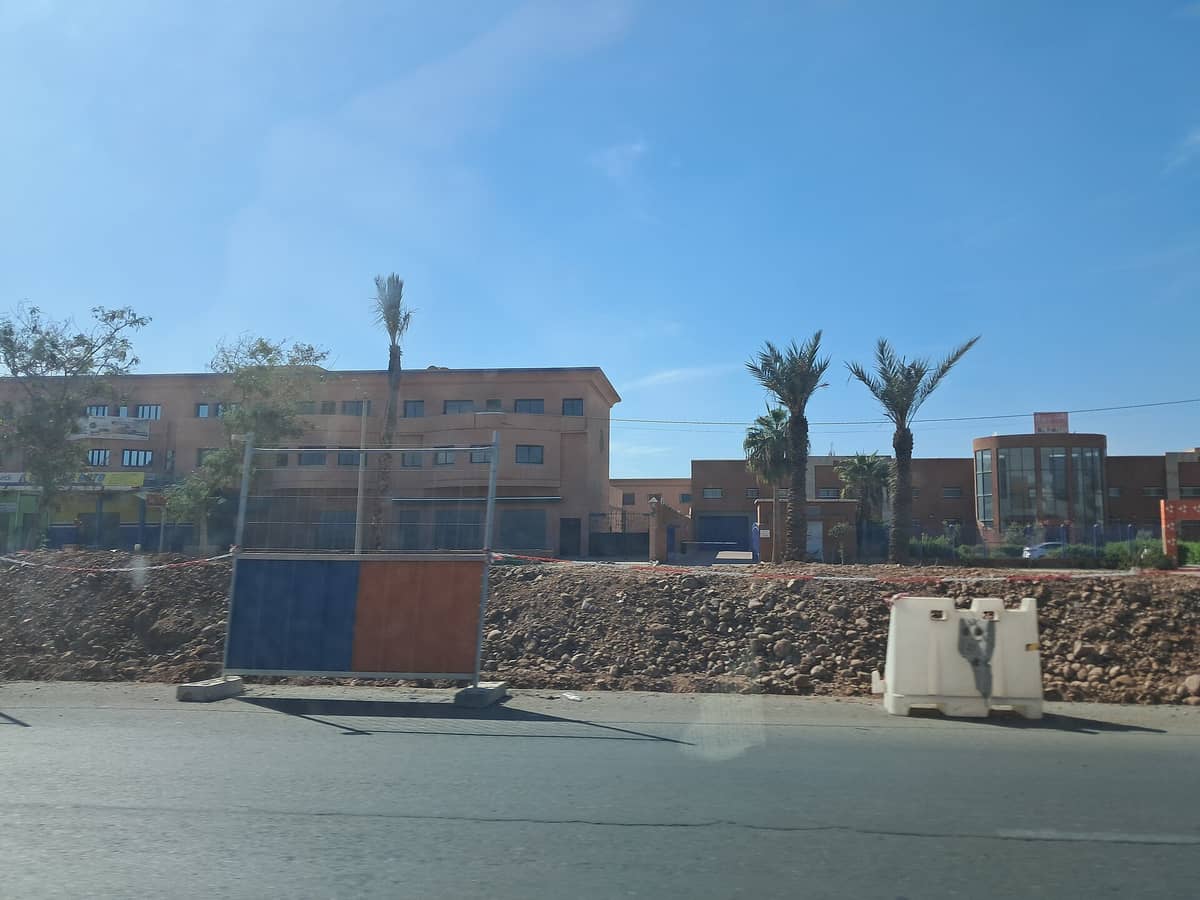
The Sidi Ghanem Design District is an officially classified zone industrielle in the Menara arrondissement of Marrakech, running along the Route de Safi (RN7) about 10 minutes by taxi northwest of Gueliz. It covers roughly 175 hectares of warehouse-lined streets laid out in a functional grid, and it looks nothing like the rest of Marrakech. There are no minarets visible, no narrow alleys, no carpet vendors chasing you down the street.
What it does have is a concentration of Moroccan designers, craftspeople, furniture makers, ceramicists, lighting studios, textile importers, and concept stores that have, over the past two decades, converted standard industrial units into polished showrooms with workshop space behind them. You can often see the production happening through open warehouse doors while browsing finished pieces displayed on the shop floor.
This dual function of workshop-and-boutique sets Sidi Ghanem apart from the medina souks. In the souks you negotiate over mass-produced pieces with tourist pricing baked in. Here, you are often buying directly from the maker, at prices that reflect actual materials and craft.
💡 Local tip
Sidi Ghanem has no unified opening hours. Most showrooms follow a Monday to Saturday, roughly 09:00–18:00 pattern and close on Sundays. Some close Saturday afternoon. Go on a Tuesday or Wednesday morning for the widest choice of open doors.
How the District Feels at Different Times of Day
Arrive before 10:00 on a weekday and Sidi Ghanem is calm to the point of feeling abandoned. The wide industrial streets have little shade, but the air is cooler and the light is flat and soft, good for photographing objects in showrooms. Most spaces are just opening: metal shutters rolling up, staff arranging stock, and the smell of fresh paint or wood lacquer drifting out from the production bays.
By midday, especially on Thursdays and Fridays, the zone picks up. Interior designers and local decorators, who account for a significant share of trade here, move between showrooms with clipboards and swatches. Cafes within the district fill with a noticeably mixed crowd: Moroccan professionals, European expats based in Marrakech, and occasional tourists who have made the trip out specifically to shop. The atmosphere is purposeful rather than leisurely.
Late afternoon, from around 16:00, some smaller studios start winding down. If you want to speak at length with a maker or get a showroom largely to yourself, 09:30 to 11:30 is consistently the most productive window. Avoid Saturday afternoon: closures cluster then, and you may find a third of your target destinations shuttered.
⚠️ What to skip
The district is exposed and largely treeless. In summer (June–August), midday temperatures frequently exceed 35°C on open warehouse streets. Morning visits become less optional and more essential. Bring water.
Tickets & tours
Live prices and dates from our booking partner. If you book, we may earn a commission at no extra cost to you.
Full day tour of Ouarzazate from Marrakech
From 51 €Instant confirmationFree cancellationEvening Quad Bike at Palmeraie Area with Tea Tasting from Marrakech
From 49 €Instant confirmationFree cancellationFull Day Economic Tour in Essaouira from Marrakech
From 29 €Instant confirmationFree cancellationFull Day Economic Tour of Ourika Valley from Marrakech
From 25 €Instant confirmationFree cancellation
What You Will Find Here
The range of businesses is broader than most guides suggest. Furniture dominates numerically: upholstered pieces using Moroccan textiles, zellige-topped tables, wrought-iron lighting, hand-knotted rugs sold off the roll. But Sidi Ghanem also contains ceramics studios where tableware is made and sold on the same premises, natural cosmetics producers (argan oil, rose water, black soap formulations) distributed here at wholesale-adjacent pricing, and fabric houses selling by the metre.
Several spaces operate as hybrid concept stores with a small cafe inside. This is useful practically: you can sit, assess what you have seen, and plan which warehouses to revisit without leaving the district to find refreshment.
The design aesthetic you encounter across most showrooms leans toward a contemporary take on Moroccan craft: clean lines, natural materials, tadelakt plaster surfaces, brass hardware, and undyed wool. It is a curated version of the aesthetic that originally made riads in the medina famous internationally, but sold here at prices set for a trade market rather than a tourist one.
There are also a handful of strictly industrial suppliers here, auto parts and construction materials, evidence of the zone's original purpose. These are easy to walk past and do not disrupt the overall character of the design quarter.
Getting There and Getting Around
The most practical option is a petit taxi from Gueliz or the medina. Fares from Gueliz run around 30 MAD on the meter, and the journey takes about 10 minutes outside rush hour. Ask for 'Zone Industrielle Sidi Ghanem' rather than just 'Sidi Ghanem'; most drivers know it. A navigation address that works reliably is around 326 Rue Principale, Zone Industrielle Sidi Ghanem, 40110 Marrakech.
ALSA bus line L15 connects Jamaa El Fna / Arset El Bilk to the zone and is significantly cheaper, though journey times are longer and less predictable. For a quick half-day trip, the taxi is worth the marginal cost difference.
Once inside the zone, the grid layout is navigable on foot if the weather is tolerable. In summer heat, or if you are planning to visit a spread of showrooms across the full industrial zone, keeping your taxi driver on standby or using a ride-hailing app (Careem and inDrive operate in Marrakech) to move between clusters of showrooms makes the visit far less exhausting. The wide streets have irregular sidewalks and few pedestrian crossings, so wheelchair users and visitors with mobility limitations should check individual venues in advance.
ℹ️ Good to know
Driving here yourself is straightforward: from Gueliz, take Boulevard Abdelkrim Al Khattabi toward the RN7 (Route de Safi) and follow signs for the industrial zone. Street parking is available directly outside most showrooms.
Shopping Here vs. Shopping in the Medina
Both Sidi Ghanem and the medina souks sell Moroccan craft, but the experience is structurally different. The souks reward patience and negotiation, and the atmosphere is theatrical. Sidi Ghanem is more transactional in the best sense: prices are generally fixed or close to it, quality control tends to be higher, and the context of being in a designer's own workshop means you can ask specific questions about materials, provenance, and lead times for custom orders.
That said, Sidi Ghanem is oriented partly toward trade buyers and interior designers. Minimum order quantities apply at some wholesale-focused vendors. If you want a single candle or a pair of cushion covers, many retailers will sell to you happily; if you are trying to furnish an entire riad, this is almost certainly the more efficient and fairly priced starting point.
Bargaining is less expected here than in the medina. Prices are often on tags. This does not mean negotiation is impossible, particularly on larger orders, but aggressive haggling is out of place and unlikely to build goodwill with vendors who sell professionally to architects and hotels.
Photography and Practical Details
Sidi Ghanem photographs well. Warehouse interiors with tall ceilings, natural materials, and carefully arranged objects make for strong composition. Most showrooms allow photography for personal use; it is courteous to ask before photographing inside smaller artisan workshops where work is in progress.
The exterior street scenes, industrial facades with hand-painted signage and occasional art installations near some of the larger design houses, are fair game and often more interesting photographically than you would expect from an industrial zone.
If you are building a broader picture of Marrakech's contemporary creative scene, Sidi Ghanem pairs well with exploring the city's wider art scene, which has grown considerably in the past decade.
💡 Local tip
Shipping larger purchases internationally is possible: several showrooms work regularly with international freight forwarders and can arrange crating and shipping for furniture or fragile items. Ask at the point of purchase rather than after the fact.
Insider Tips
- Many showrooms have a wholesale side and a retail side operating from the same space. If you are buying in volume, introduce yourself as a buyer rather than a tourist: pricing conversations shift noticeably.
- The zone's cafe-concept stores are worth targeting specifically. A handful of them serve good coffee and light food in interiors that are essentially free design exhibitions. They are not tourist-oriented and feel nothing like the mint-tea-and-pastilla circuit near Jemaa el-Fna.
- Some of the most interesting production happens in workshops that do not have prominent signage. If a shutter is open and there is visible work happening inside, it is generally acceptable to walk in and look. The artisans are accustomed to visitors.
- If you are visiting during spring or autumn and combining Sidi Ghanem with a broader Marrakech itinerary, the district pairs naturally with a morning at the Jardin Majorelle followed by a taxi out to the zone for the afternoon. The two are thematically coherent: both represent a version of Marrakech design culture aimed at an international eye.
- Avoid arriving in a large group or on an organised tour bus. Several showrooms actively prefer individual buyers and designers; groups create a tourist-attraction dynamic that can make pricing conversations harder and staff less forthcoming about bespoke or custom options.
Who Is Sidi Ghanem Design District For?
- Interior design enthusiasts and architects looking to source Moroccan craft at trade-adjacent prices
- Return visitors to Marrakech who have already covered the major medina attractions and want something different
- Travellers planning to spend seriously on home goods, furniture, or textiles rather than small souvenirs
- Photographers interested in industrial-meets-craft aesthetics away from tourist-oriented compositions
- Expats or long-stay visitors furnishing homes or riads in Morocco
Nearby Attractions
Combine your visit with:
- Agafay Desert
Just 30 to 40 kilometres southwest of Marrakech, the Agafay Desert is a rocky plateau of roughly 300 to 400 square kilometres that delivers dramatic open-sky landscapes without a multi-day Sahara expedition. It is not the sand-dune desert many visitors picture, but that distinction is part of its appeal: a raw, mineral terrain framed by the snow-capped peaks of the High Atlas, accessible within an hour of the city.
- Aït Benhaddou
Rising from the southern slopes of the High Atlas, the Ksar of Aït Benhaddou is a UNESCO World Heritage Site and one of Morocco's most architecturally striking places. Built from pisé earth and palm wood, this fortified village has stood at the crossroads of trans-Saharan trade for centuries — and remains partly inhabited today.
- Anima Garden
Set along the Ourika road 27 km south of Marrakech, Anima Garden is a three-hectare art-and-nature space created by Austrian artist André Heller. Sculptures, water features, and carefully curated plantings coexist in a setting that feels both otherworldly and deeply rooted in Moroccan landscape. It rewards slow exploration and offers a genuine contrast to the pace of the medina.
- Essaouira
Essaouira is a UNESCO-listed fortified coastal city on Morocco's Atlantic coast, roughly 2.5 to 3 hours from Marrakech by road. Its 18th-century medina, ocean-facing ramparts, and salt-aired souks offer a complete change of pace from the heat and intensity of the inland city. Entry to the medina is free.
Planning a trip? Discover personalized activities with the Nomado app.