Marrakech's Islamic Architecture: A Traveler's Guide
Marrakech holds some of the finest examples of Islamic architecture in North Africa. This guide covers the key monuments, what you can actually enter as a non-Muslim, current entry fees, the best times to visit, and how to get the most from each site.
Tickets & tours
Live prices and dates from our booking partner. If you book, we may earn a commission at no extra cost to you.
TL;DR
- Marrakech's Islamic architecture spans mosques, madrasas, and palaces built between the 12th and 19th centuries — each with distinct styles and access rules.
- The Ben Youssef Madrasa is the most accessible major Islamic monument for non-Muslims, open daily 09:00–19:00 (50 MAD for foreign adults).
- The Koutoubia Mosque interior is closed to non-Muslims — no exceptions, regardless of guides or tours. The exterior and gardens are free and worth the visit.
- Bahia Palace combines Islamic courtyard design with later Andalusian influences; official tickets are 100 MAD for foreign adults and can be booked online through the Ministry of Culture.
- Spring (March–May) and autumn (September–November) offer the most comfortable temperatures for walking between sites. See our best time to visit Marrakech guide for a full seasonal breakdown.
Why Marrakech Is a Landmark of Islamic Architecture
Marrakech was founded in the 11th century by the Almoravid dynasty and quickly became a major centre of Islamic civilization in the western Mediterranean. The city's architectural heritage reflects centuries of dynastic ambition: the Almohads who built the Koutoubia in the 12th century, the Marinids who expanded and refined the Ben Youssef complex, and the Saadians who left behind one of Morocco's most ornate funerary monuments. Each period brought new interpretations of Islamic architectural principles — geometric zellige tilework, stucco muqarnas, cedarwood ceilings, and arched courtyard galleries — all of which survive in remarkable condition across the medina today.
What makes Marrakech particularly rewarding for architecture enthusiasts is density. The major monuments are concentrated within the walled medina, most within walking distance of Jemaa el-Fna. A serious architectural visit can cover four or five major sites in a single day, though rushing defeats the purpose. Two days at a measured pace is far more rewarding.
ℹ️ Good to know
Morocco's active mosques — including the Koutoubia — are closed to non-Muslims. This applies to virtually all mosques in Marrakech. The Hassan II Mosque in Casablanca is the notable exception in Morocco. Plan your itinerary around exterior visits, madrasas, and palaces rather than mosque interiors.
The Koutoubia Mosque: The City's Architectural Anchor
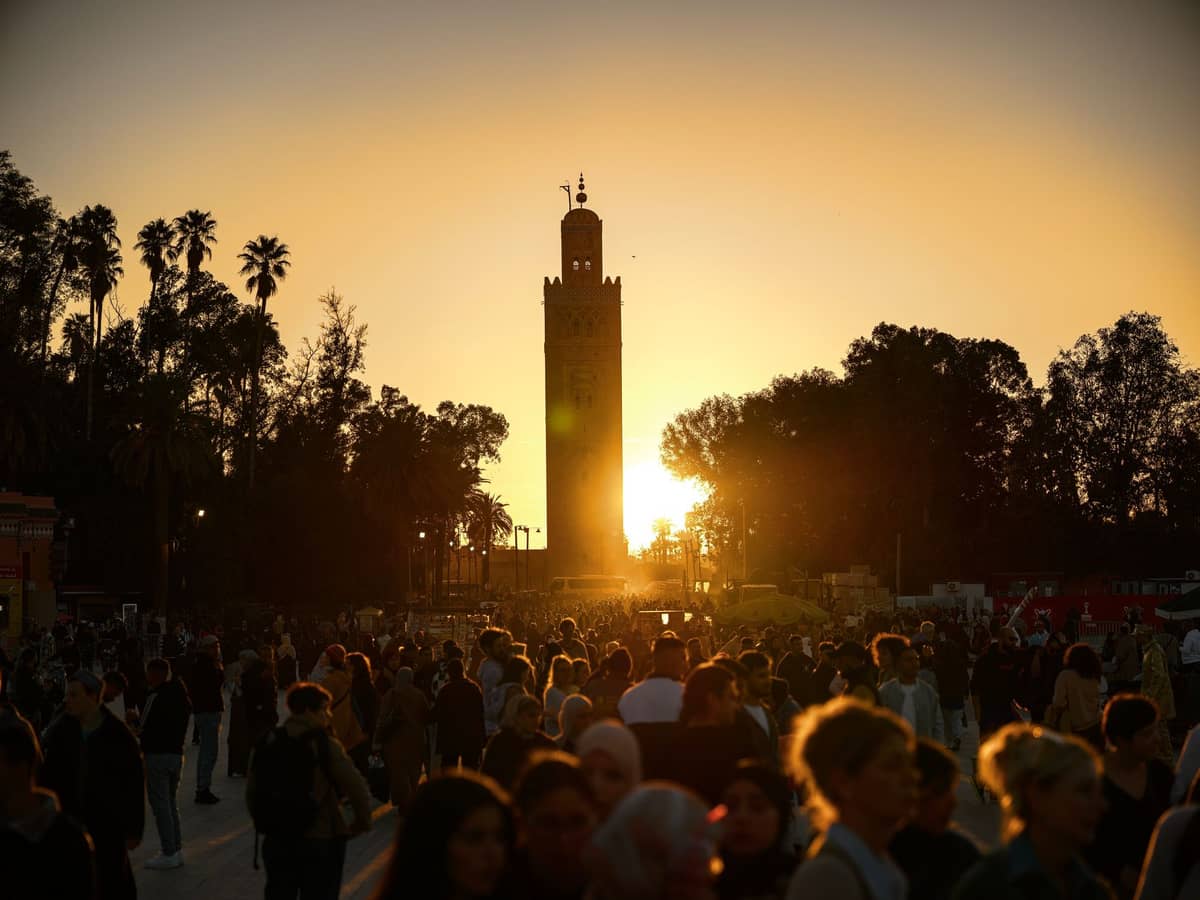
The Koutoubia Mosque is the defining landmark of Marrakech, its 77-metre minaret visible from much of the medina and from the road in from the airport. Built under the Almohad caliph Yaqub al-Mansur in the late 12th century, the minaret established a proportional template that influenced Giralda in Seville and the Hassan Tower in Rabat — both built by the same dynasty around the same period. The decorative banding of blind arcades, geometric screens, and ornamental merlons on the Koutoubia minaret represents Almohad aesthetic restraint at its most refined.
Non-Muslims cannot enter the mosque under any circumstances — this is a firm rule, and guides who claim otherwise are misleading you. What you can do is spend meaningful time in the surrounding rose gardens, which are well-maintained, free to enter, and give excellent sightlines to the minaret at multiple distances. Early morning light, around 07:00–08:30, is ideal for photography before the crowds arrive. The gardens are also a pleasant alternative to the medina's lanes if you need a quieter 30 minutes.
⚠️ What to skip
Do not linger at the mosque's entrance gates during the five daily prayer times. Visitors are asked to move back from the main doorways during prayers as worshippers enter and exit. The gardens remain accessible, but showing obvious curiosity at the entrances during prayer times is considered disrespectful.
Ben Youssef Madrasa: The Interior You Can Actually Enter
For anyone serious about Islamic architecture in Marrakech, the Ben Youssef Madrasa is the essential interior experience. Originally founded in the 14th century under the Marinid sultan Abu al-Hassan, the madrasa was extensively rebuilt in the 16th century under the Saadian sultan Abdallah al-Ghalib, who transformed it into one of the largest theological schools in North Africa. It ceased functioning as a religious school in the mid-20th century and was later restored and opened to visitors.
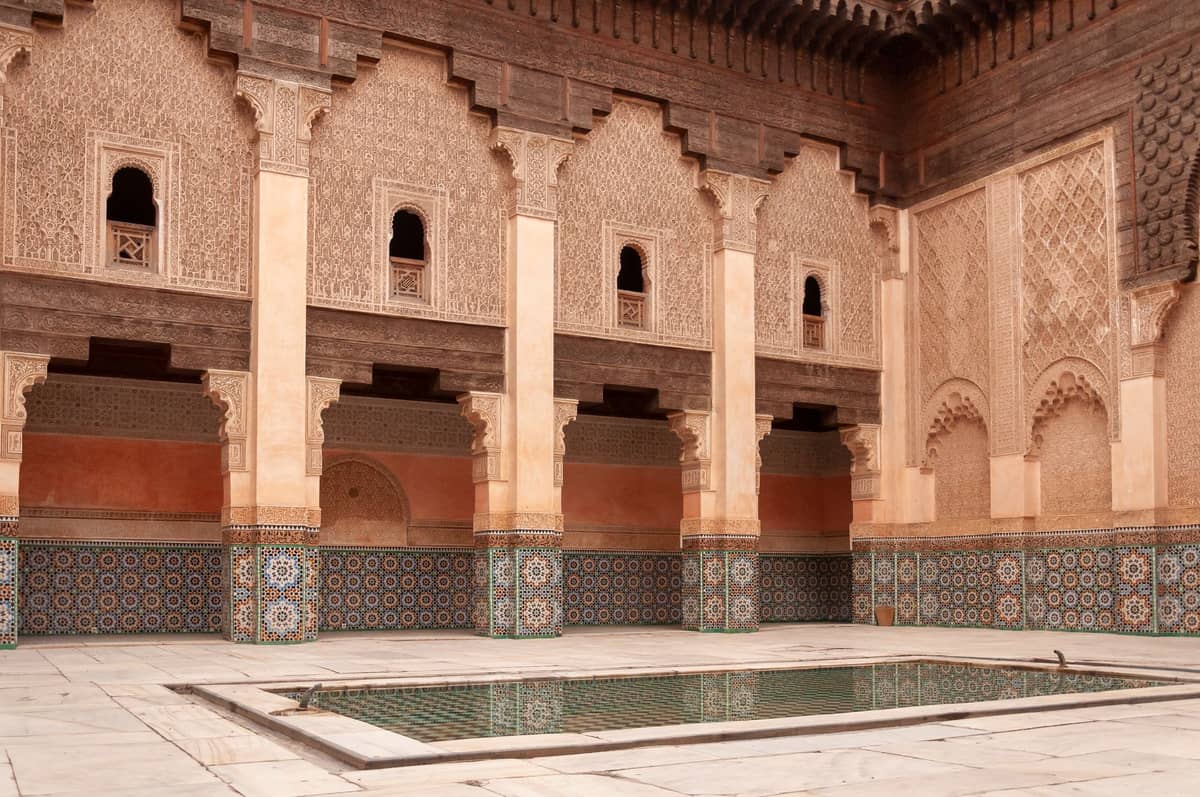
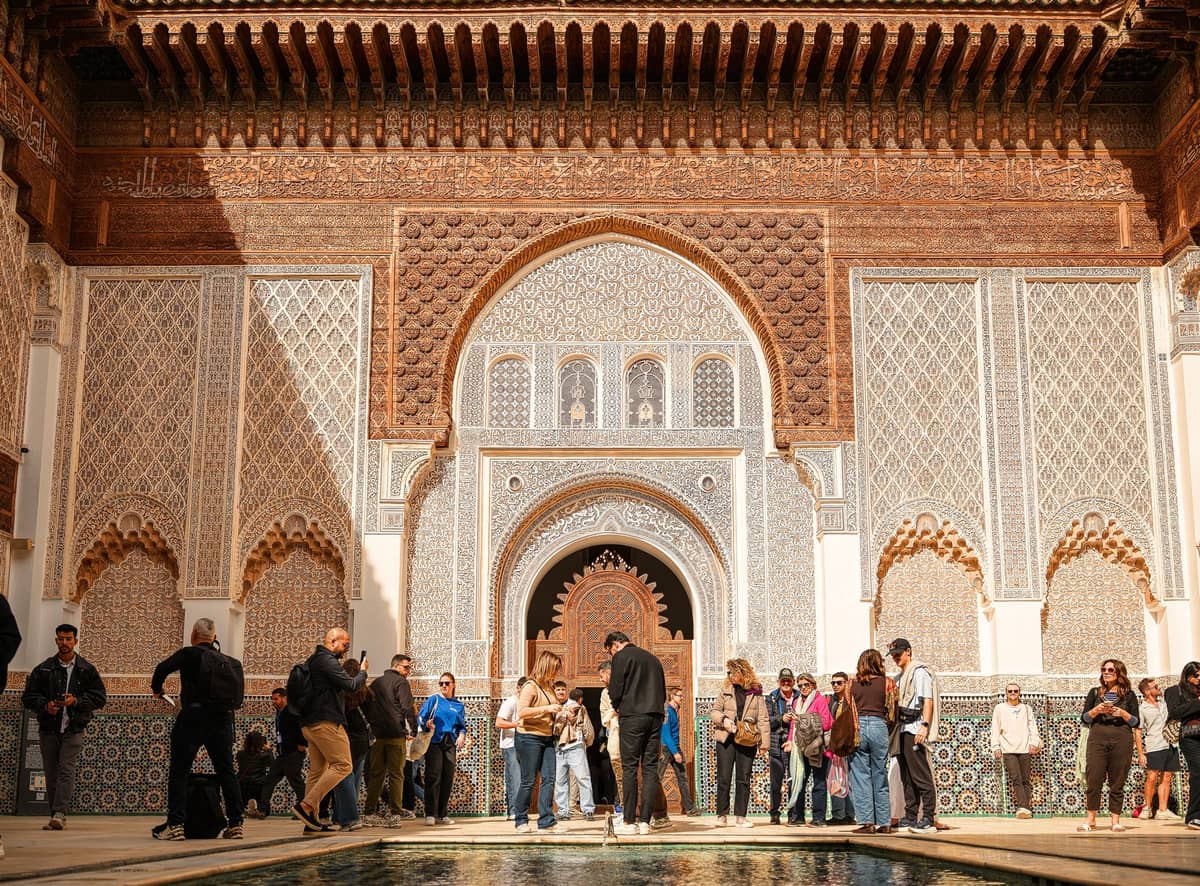
The courtyard is the centrepiece: a large marble-floored space with a central pool, framed by three tiers of decoration that read almost like a grammar of Moroccan Islamic ornament. The lower walls are covered in geometric zellige tilework; above that, a broad band of carved stucco bearing intricate arabesques and calligraphic inscriptions from the Quran; above that, a cedarwood clerestory with carved lattice screens and corbelled brackets. The proportions are meticulous. Spend time in the upper galleries, which give you a close view of the stucco carving and a different perspective on the courtyard below.
- Opening hours Daily 09:00–19:00 (last entry 18:30). Reduced hours during Ramadan: 09:00–16:30.
- Entry fees Foreign adults 50 MAD; Moroccan adults 20 MAD; children under 12 years 10 MAD; groups of 21 or more 30 MAD per person.
- Tickets Tickets are sold at the entrance. The official online system at medersabenyoussef.ma has been under maintenance — confirm on the site before you go. Arrive at opening in high season (March–May, October) to avoid queues.
- Time to allow 45–90 minutes for a thorough visit. Architecture and photography enthusiasts should allow the full 90 minutes.
- What to wear Dress modestly — covered shoulders and knees. Scarves for women are advisable but not always mandatory; err on the side of caution.
✨ Pro tip
Arrive at Ben Youssef Madrasa when it opens at 09:00. By 10:30, tour groups fill the courtyard and the central pool reflection shot becomes impossible. Midweek mornings in October or April are the quietest. The madrasa is located just north of the souks, making it a logical first stop before exploring the Marrakech Souks.
Bahia Palace and El Badi: Islamic Palatial Architecture
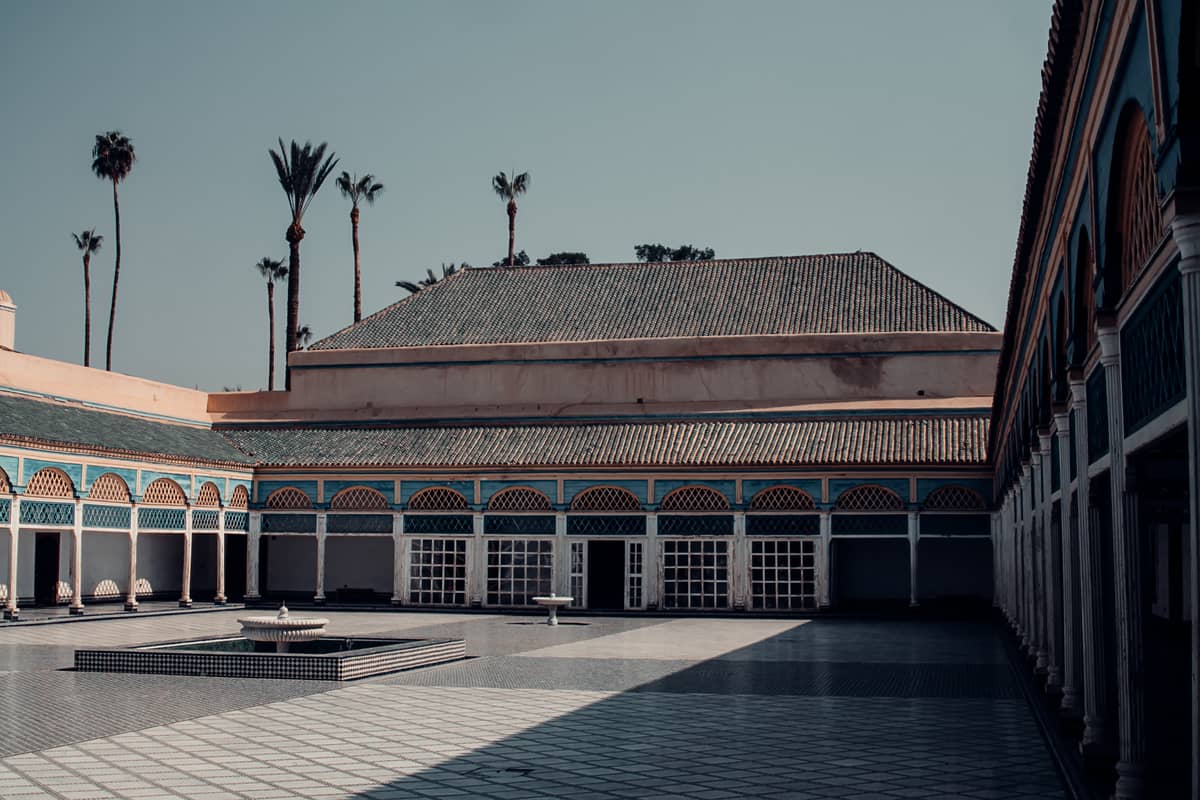
The Bahia Palace was built in the late 19th century for Ba Ahmed ibn Musa, grand vizier to Sultan Moulay Abd al-Aziz. It is a sprawling complex of over 150 rooms arranged around a sequence of gardens and courtyards, blending Moroccan Islamic design with Andalusian influences. The painted cedarwood ceilings are exceptional — each room differs in its geometric pattern and colour palette, and the craftsmanship reflects the finest artisans of late 19th-century Marrakech. The large riad garden courtyard, planted with orange trees and bordered by zellij-faced columns, gives a good sense of how palatial Islamic residential architecture balanced interior seclusion with spatial generosity.
Entry fees for Bahia Palace: foreign adults 100 MAD, foreign children aged 7–13 pay 50 MAD, children under 7 enter free. Moroccan nationals pay 30 MAD (adults) and 10 MAD (children 7–13). Free entry for Moroccan nationals every Friday and on the first day of national and religious holidays. Official online booking is available through the Ministry of Culture e-services platform. Some third-party guides still quote 70 MAD — ignore these; check the official source before visiting. For a broader view of the city's palatial heritage, the Marrakech palaces guide covers additional sites worth combining.
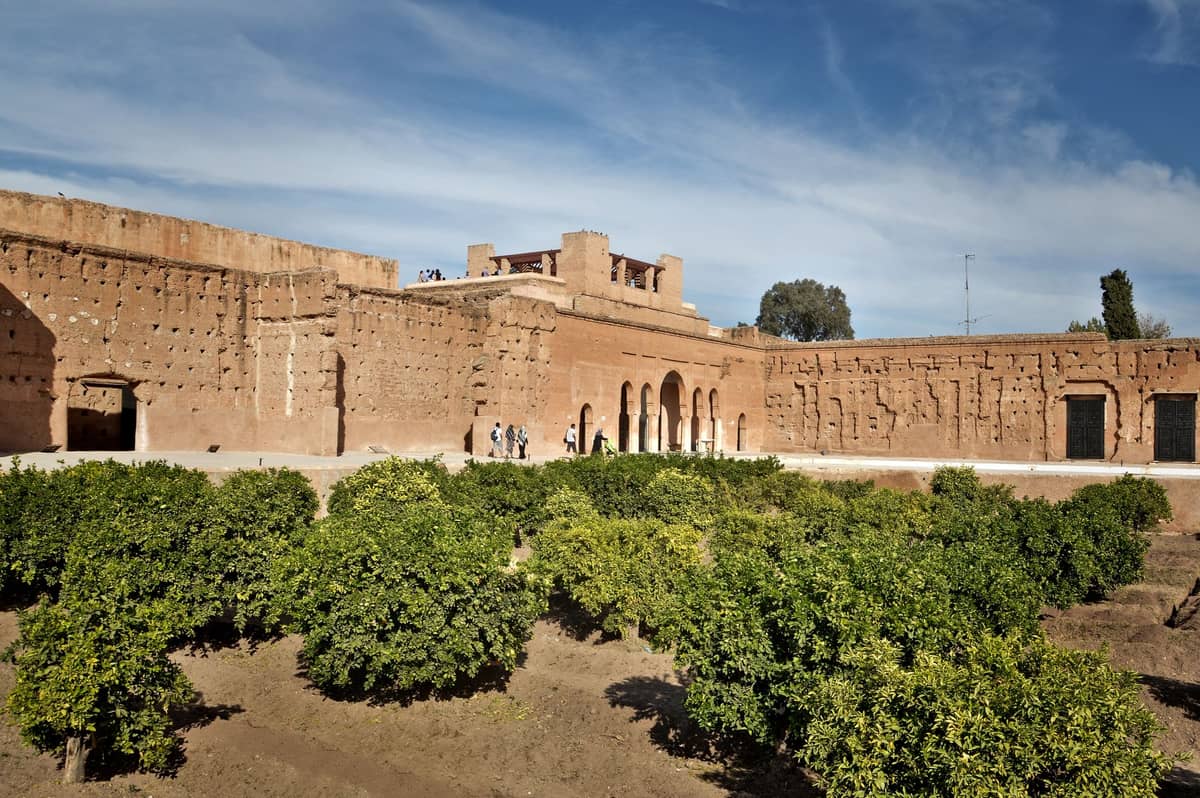
Nearby, the El Badi Palace represents an earlier and more ambitious chapter. Built by the Saadian sultan Ahmad al-Mansur following the 1578 Battle of the Three Kings, it was once described as one of the most magnificent palaces in the Islamic world, its halls decorated with gold, marble from Carrara, and onyx imported from Sudan. Today it stands in deliberate ruin — the Alaouite sultan Moulay Ismail stripped it of its materials to build his own palace complex in Meknes in the late 17th century. What remains is a vast sunken courtyard with pools, orange trees, and the skeletal walls of towers and pavilions. The scale alone is worth the visit, and the storks nesting in the ramparts add a particular atmosphere.
The Saadian Tombs and the Koubba Baadyin: Two Extremes
The Saadian Tombs were sealed by Moulay Ismail after he plundered El Badi and were only rediscovered via aerial photography in 1917. The funerary complex contains the mausoleums of the Saadian sultans and their families, decorated with the finest Moroccan craftwork of the 16th century. The Chamber of the Twelve Columns, with its carved stucco, polychrome zellige plinth, and intricately painted cedarwood dome, is considered one of the masterpieces of Moroccan Islamic decorative arts. The site is small and crowds peak between 09:30 and 12:00; arrive before the tour buses or after 15:00.
At the other end of the timeline sits the Koubba Baadyin (also written Qubba al-Ba'adiyyin), a small domed ablution pavilion dating from the early 12th century. It is the only surviving Almoravid structure in Marrakech — the dynasty that founded the city — and its carved stone dome interior shows the earliest development of the muqarnas (honeycomb vaulting) and geometric star patterns that would define Moroccan Islamic architecture for centuries. The site is small and rarely crowded, making it an underrated stop for architectural enthusiasts.
Practical Planning: Combining Sites into a Route
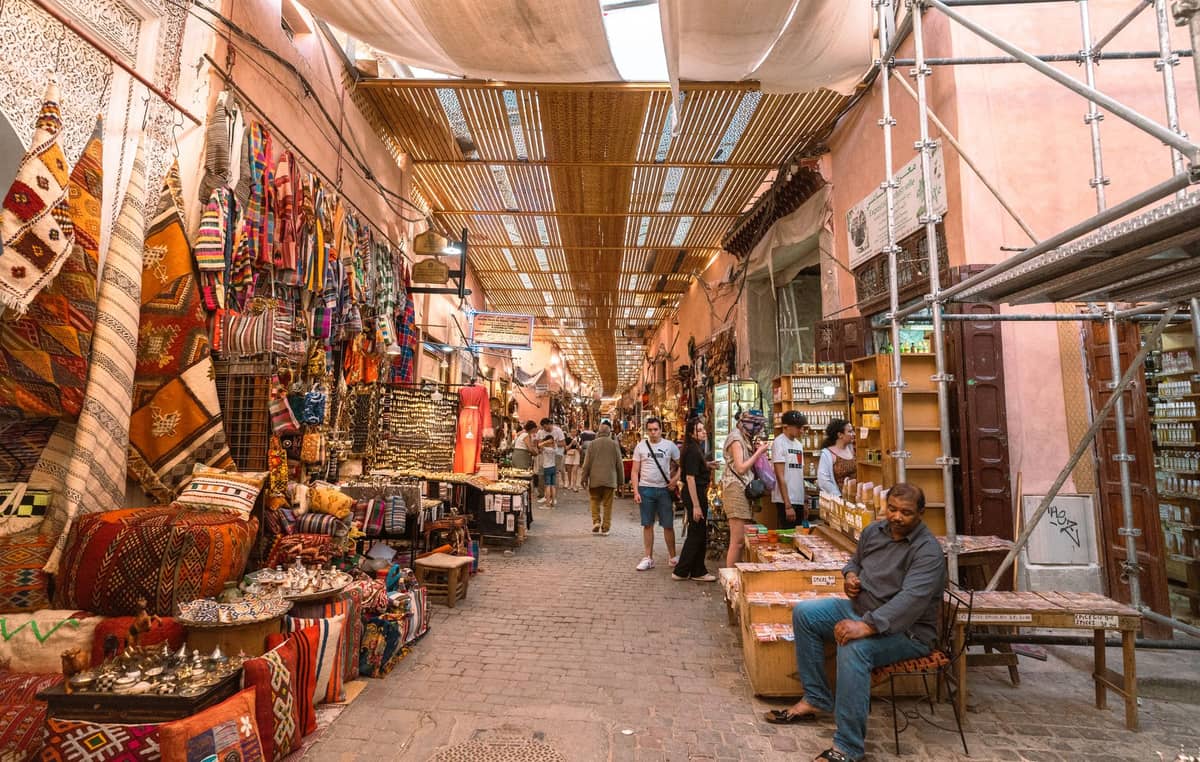
The main Islamic architecture sites cluster in two areas of the medina. The northern cluster centres on Ben Youssef Madrasa, the Koubba Baadyin, and the Marrakech Souks. The southern cluster covers Koutoubia Mosque, El Badi Palace, Bahia Palace, and the Saadian Tombs. Both clusters are roughly 20–30 minutes apart on foot through the medina lanes. A logical one-day route: start at Ben Youssef (09:00), walk south through the souks, pause at the Koutoubia gardens at midday, then continue to El Badi, the Saadian Tombs, and finish at Bahia Palace in the late afternoon. Budget around 6–7 hours at a comfortable pace.
- Wear comfortable, flat shoes — the medina's lanes are uneven stone and compressed earth, and some sites have threshold steps.
- Carry water, especially between April and October; there are few cafés between the major southern sites.
- Photography is permitted at all the sites listed above (as of current information), but check on-site signage as policies can change.
- Hire a licensed official guide (from the tourist office or a reputable riad) if you want historical context — the architecture becomes far more legible with someone explaining the dynastic and symbolic meanings.
- If visiting during Ramadan, confirm reduced opening hours for Ben Youssef Madrasa (closes around 16:30) and factor in mid-afternoon lulls at other sites.
- Budget roughly 350 MAD per foreign adult for entry to Ben Youssef, Bahia Palace, El Badi, and the Saadian Tombs combined, based on current official prices.
For a structured route that incorporates these sites alongside other medina highlights, the Marrakech walking tour guide provides a detailed sequence with timing. If you're planning a full trip framework, the 3 days in Marrakech itinerary allocates specific days for architecture visits alongside souks and day trips.
💡 Local tip
The medina's internal streets can be disorienting even with a map. For the southern cluster (Bahia, El Badi, Saadian Tombs), it's worth hiring a petit taxi from Jemaa el-Fna to the Bahia Palace entrance rather than walking — the route through the Mellah quarter is easy to lose. From Bahia, El Badi and the Saadian Tombs are both a 5-10 minute walk.
FAQ
Can non-Muslims enter any mosques in Marrakech?
No. Virtually all active mosques in Marrakech, including the Koutoubia, are closed to non-Muslims. This is standard practice throughout Morocco. The exterior of the Koutoubia and its gardens are freely accessible, and the Ben Youssef Madrasa (a former theological school, not an active mosque) is open to all visitors. If mosque interiors are a priority, the Hassan II Mosque in Casablanca is the only major mosque in Morocco that admits non-Muslims on guided tours.
How much does it cost to visit the major Islamic architecture sites in Marrakech?
Based on current official prices: Ben Youssef Madrasa costs 50 MAD for foreign adults; Bahia Palace costs 100 MAD for foreign adults; El Badi Palace and the Saadian Tombs each cost 100 MAD per foreign adult. The Koutoubia exterior and gardens are free. Prices are set by the Moroccan Ministry of Culture and can be verified on the official e-services platform before your visit, as they are subject to change.
What is the best time of day to visit Ben Youssef Madrasa?
Opening time (09:00) is by far the best. Tour groups typically arrive from 10:00 onward and the courtyard becomes very crowded by mid-morning. A secondary window opens in the late afternoon, roughly 16:00–18:30, when morning tour groups have departed. During Ramadan, the madrasa closes earlier at around 16:30, so plan accordingly.
What architectural styles are represented in Marrakech's Islamic monuments?
Marrakech's Islamic architecture spans several distinct styles. The Koutoubia Mosque and Koubba Baadyin represent Almoravid and Almohad periods (11th–12th centuries), characterised by geometric ornamentation and early muqarnas vaulting. The Ben Youssef Madrasa and Saadian Tombs reflect the Saadian period (16th century), with elaborate combinations of zellige tilework, carved stucco, and painted cedarwood. Bahia Palace represents late 19th-century Moroccan craftsmanship with Andalusian courtyard influences. Together they form a coherent visual history of Islamic architectural development in Morocco.
Is Marrakech's Islamic architecture comparable to other Moroccan cities like Fes?
Fes is generally considered to have the greater concentration and density of Islamic monuments, including the Bou Inania and Attarine madrasas, numerous mosques, and the world's oldest continuously operating university. Marrakech compensates with individual monuments of exceptional quality — the Ben Youssef Madrasa and the Koutoubia are among Morocco's finest examples of their respective types. For travellers with limited time, Marrakech is the more practical base; for dedicated architectural study, a combined trip is ideal. The guide on travelling from Marrakech to Fes covers logistics for doing both.
Tickets & tours
Live prices and dates from our booking partner. If you book, we may earn a commission at no extra cost to you.
Planning a trip? Discover personalized activities with the Nomado app.