Self-Guided Walking Tour of the Marrakech Medina: The Complete Route Guide
The Marrakech medina is one of the most walkable historic city centers in North Africa, with landmark palaces, royal tombs, souks, and mosques all within 20 minutes of Jemaa el-Fna. This guide maps out a practical self-guided route with real entry prices, opening hours, timing advice, and warnings about common tourist mistakes.
Tickets & tours
Live prices and dates from our booking partner. If you book, we may earn a commission at no extra cost to you.
TL;DR
- The medina is compact: Bahia Palace, the Saadian Tombs, and the main souks are all within a 15-20 minute walk of Jemaa el-Fna.
- Entry fees are real: major monuments charge around 100 MAD per adult for foreign visitors. Budget accordingly.
- Spring (March-May) and autumn (September-November) offer the most comfortable walking temperatures. Summer heat regularly exceeds 35°C. See our best time to visit Marrakech guide for a full seasonal breakdown.
- Ramadan shortens opening hours at most monuments by one hour or more. Always check on the day.
- This route pairs well with a visit to the Marrakech souks, which require no entry fee and are best explored in the morning before crowds peak.
Why Walk the Medina Yourself
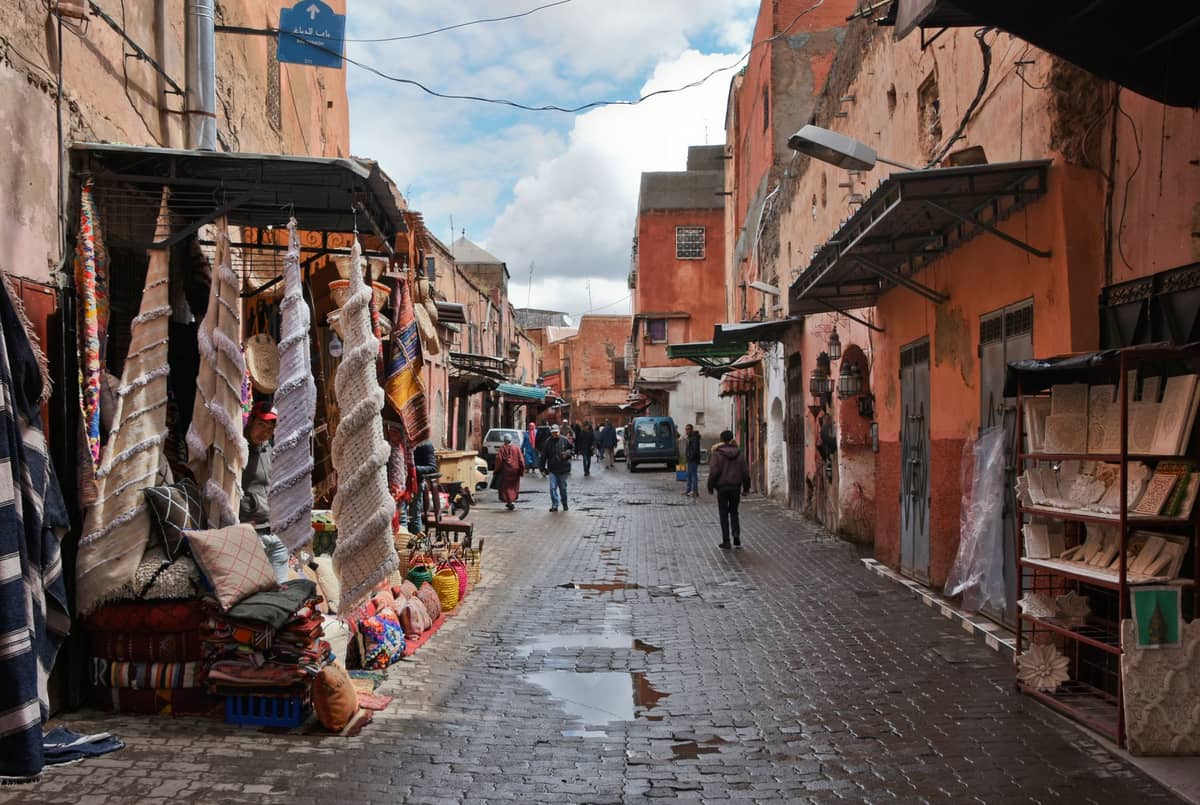
The Marrakech medina is a UNESCO World Heritage Site and the historic core of one of Morocco's largest cities. Its streets were laid out centuries before the car was invented, which means the entire district is pedestrian by necessity. That layout, maddening at first, is actually what makes it ideal for self-guided exploration. You cannot get so lost that a taxi cannot rescue you, and the main landmarks are close enough together that doubling back costs you minutes, not hours.
Guided tours exist and have their merits, but they rarely let you linger where you want to linger. A self-guided approach lets you spend 90 minutes inside Bahia Palace if the tilework holds you, or cut the Saadian Tombs to 30 minutes if you are not a history reader. The route described below is a half-day loop of roughly 4-5 km, covering the medina's southern and central zones. Add the souks and it stretches to a full day.
💡 Local tip
Start by 9:00 AM. The medina's narrow alleys heat up fast, most monuments open at 09:00, and the souk lanes are far more manageable before 11:00 when tour groups arrive. Late starters in July and August will find the walk genuinely punishing by midday.
The Route: A Half-Day Loop from Jemaa el-Fna
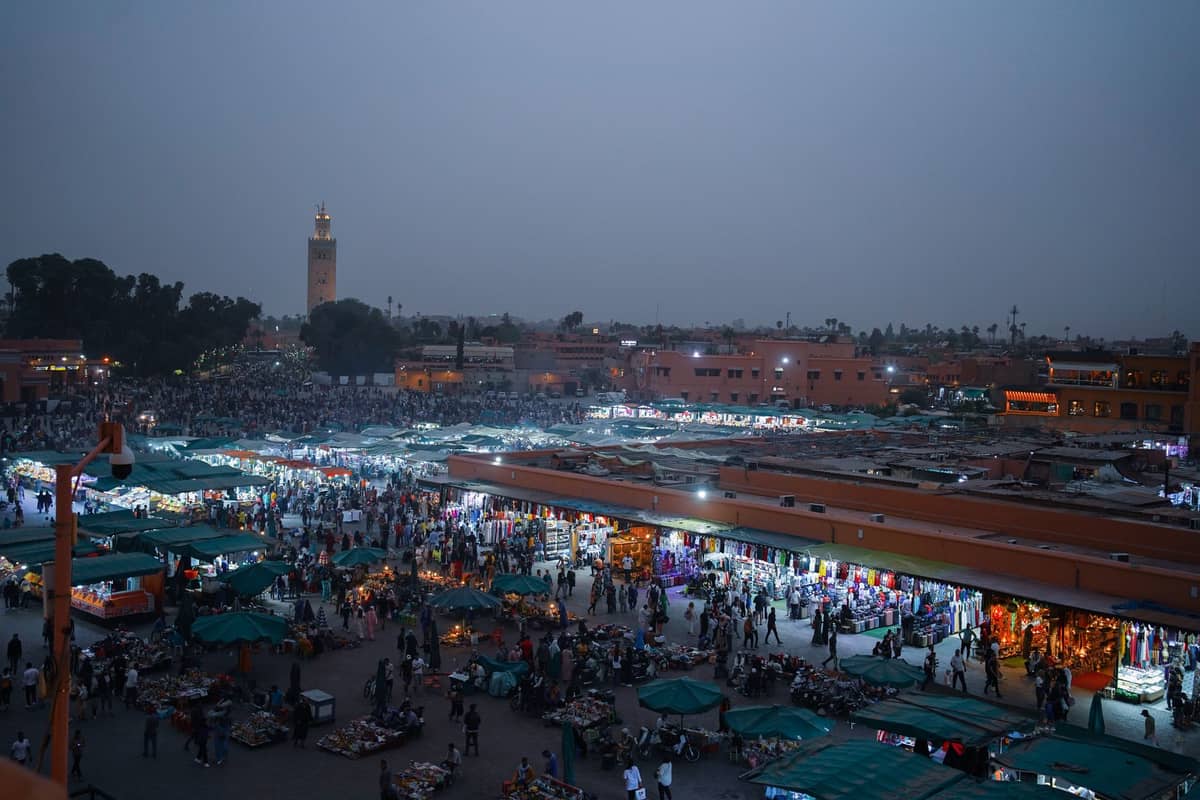
The logical starting point is Jemaa el-Fna, the main square at the heart of the medina. From here, the route heads southeast through the Riad Zitoun el-Jedid area toward the palace district, then loops back northwest through the Kasbah and Mellah before returning via the main souk arteries.
- Stop 1: Jemaa el-Fna (0 min) Your orientation point. In the morning, it is relatively calm with juice stalls and a few snake charmers. Note the Koutoubia Mosque minaret to the west — the tallest structure in the medina at 77 metres and a useful landmark for re-orienting yourself throughout the walk.
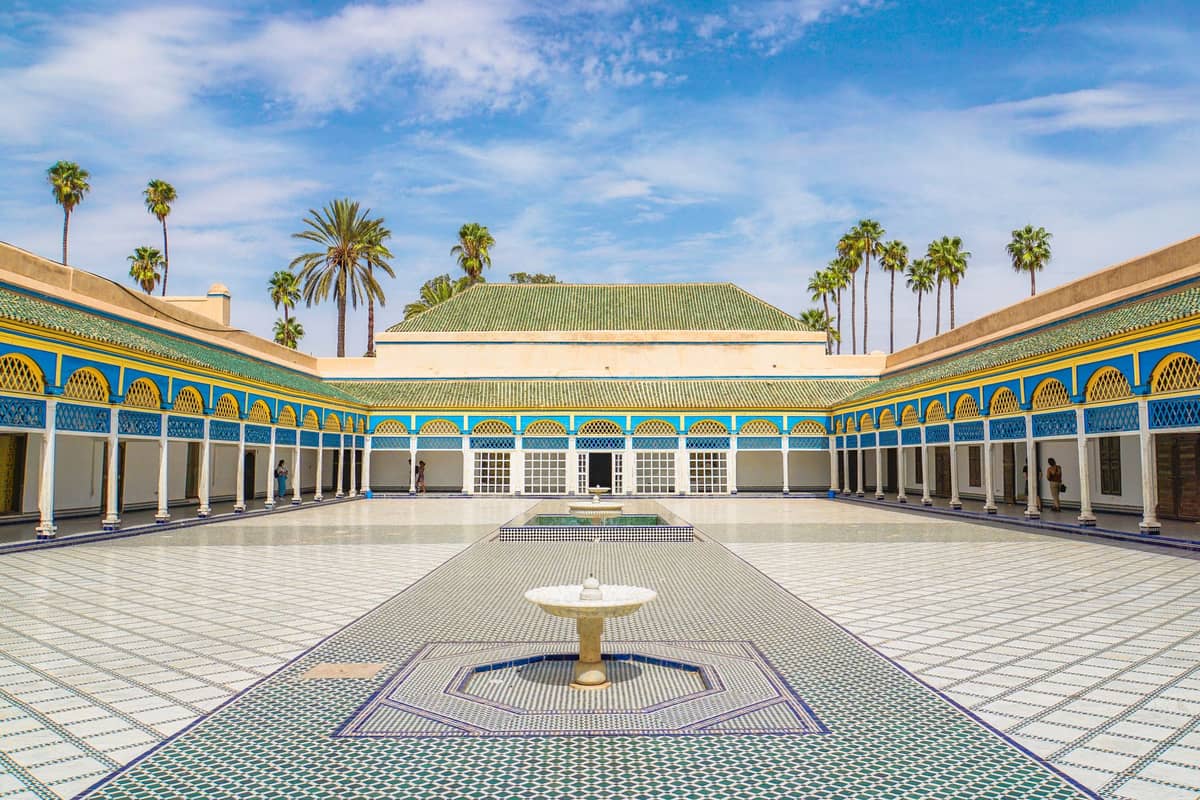
- Stop 2: Bahia Palace (10-15 min walk southeast) A 19th-century vizier's palace with some of the finest painted cedarwood ceilings and zellij tilework in Marrakech. Entry: 100 MAD adults, 50 MAD children aged 7–13, under 7 free. Open daily 09:00-17:00 (possibly to 18:00 in summer). Allow 60-90 minutes. Tickets are sold on-site and via the Moroccan Ministry of Culture e-services portal.
- Stop 3: Saadian Tombs (10 min walk from Bahia Palace) Royal tombs dating to the 16th century, rediscovered in 1917 and accessed via a narrow passage beside the Kasbah Mosque. Entry: 100 MAD adults, 50 MAD children 7-13. Moroccan nationals pay 30 MAD. Open daily 09:00-16:45. Tickets available on-site or via the Moroccan Ministry of Culture online portal.
- Stop 4: Mellah (Jewish Quarter) (5 min walk) Morocco's oldest Jewish quarter, established in the 16th century. The Slat al-Azama synagogue and the Jewish cemetery are both worth a short detour. The area feels noticeably quieter than the rest of the medina, with wrought-iron balconies typical of the Mellah's distinct architecture.
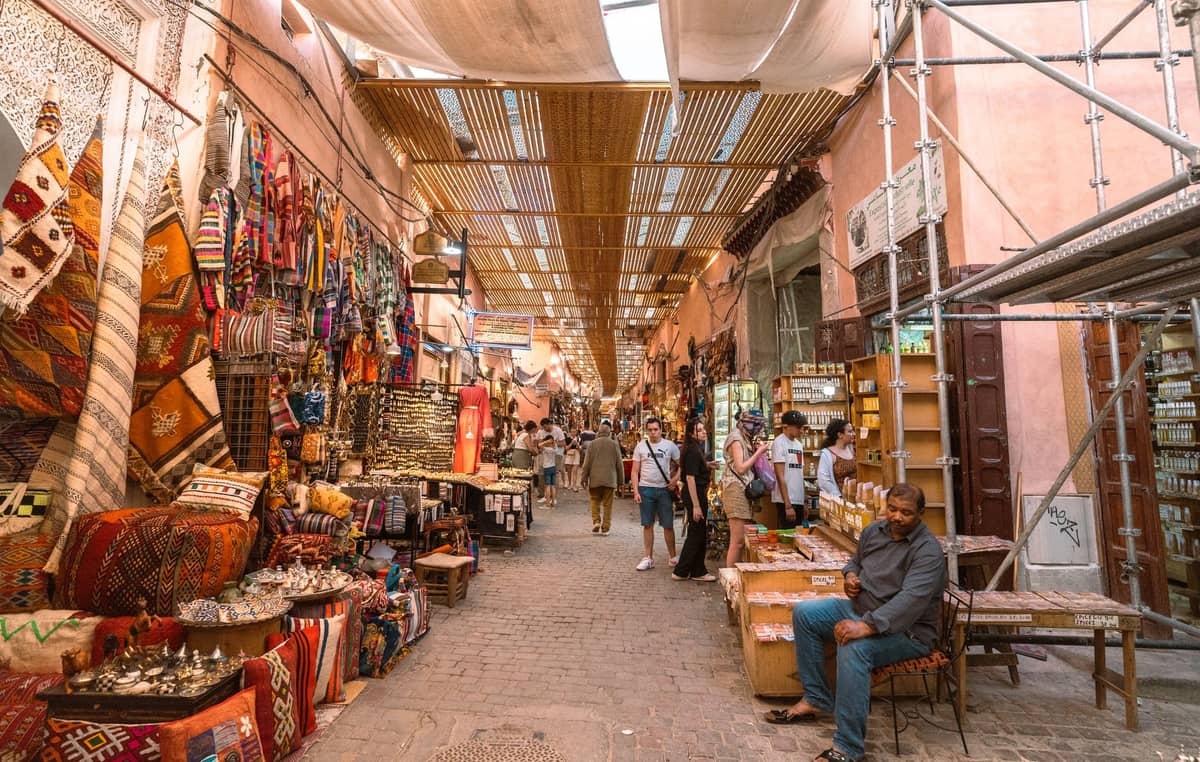
- Stop 5: Marrakech Souks (20-25 min walk north from the Mellah) The souk district spreads north of Jemaa el-Fna. No entry fee. Key areas include the leather souk, spice souk (Rahba Kedima), and the dyers' souk (Souk des Teinturiers). Allow 60-120 minutes depending on shopping interest.
The total walking distance for this loop is approximately 4-5 km, but factor in that medina streets rarely go in straight lines. What looks like a 10-minute walk on a map can take 20 minutes on the ground. Allow 4-5 hours for the full loop including monument visits, or 6-7 hours if you add serious souk time.
Key Monuments: Entry Fees, Hours, and What to Expect
One of the most common mistakes first-time visitors make is assuming that because the medina itself is free to walk, the monuments inside it are too. They are not. Here is what the main stops actually cost as of 2026, with a clear take on whether each is worth the price.
- Bahia Palace: 100 MAD adults / 50 MAD children 7–13 Worth it. The palace covers over 8,000 square metres of interconnected courtyards, reception halls, and residential apartments. The painted ceilings in the Grand Courtyard are exceptional. Foreign children aged 7–13 pay 50 MAD; under 7 enter free. Moroccan residents pay 30 MAD and enter free on Fridays. Hours: 09:00-17:00 daily (check locally for summer extension to 18:00 and Ramadan reductions). Tickets are also available via the Ministry of Culture e-services portal.
- Saadian Tombs: 100 MAD adults / 50 MAD children 7-13 Worth it, but expect crowds between 10:00 and 14:00. The tombs are compact — most visitors spend 30-45 minutes. The Chamber of the Twelve Columns, containing the tomb of Sultan Ahmad al-Mansur, is the architectural highlight. Moroccan nationals and residents pay 30 MAD (adults) and 10 MAD (children), with free entry on Fridays and the first day of national and religious holidays. Tickets also available via the Ministry of Culture e-services portal. Hours: 09:00-16:45 daily (last entry around 16:30).
- Ben Youssef Madrasa: 50 MAD foreign adults (confirm locally) A Quranic school founded in the 14th century and rebuilt in the 16th, with some of the finest zellige and carved stucco in Marrakech. Less visited than the Saadian Tombs, which means you can take your time with the carved stucco and cedar screens without jostling for space.
- Koutoubia Mosque: exterior only for non-Muslims No entry fee, but non-Muslims cannot enter. The gardens surrounding the mosque are free to walk and provide a good open-air rest stop before or after the souks. The minaret is the architectural model that influenced the Giralda in Seville and the Hassan Tower in Rabat.
⚠️ What to skip
Opening hours at Bahia Palace and the Saadian Tombs are shortened during Ramadan, typically by at least an hour, with earlier afternoon closures. If your visit coincides with Ramadan, check the hours on the day at the ticket window rather than relying on published times. For full context on how Ramadan changes the medina, see our guide to visiting Marrakech during Ramadan.
Navigating the Medina: Practical Orientation
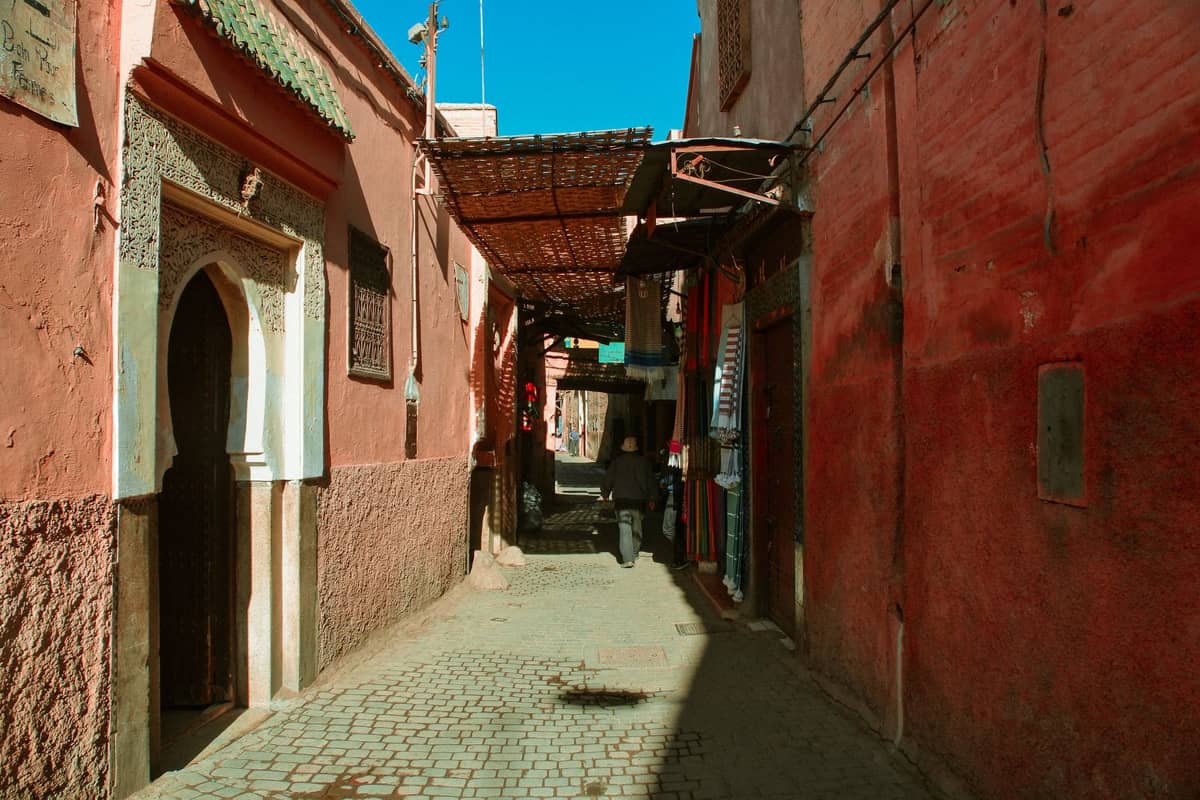
The medina's street layout follows no grid. Derbs (dead-end alleyways) branch off main thoroughfares without warning, and passages that look like shortcuts often terminate at a locked door. Google Maps works reasonably well in the medina but loses accuracy in the narrowest derbs. Download an offline map before you go, and identify two or three fixed landmarks to return to when you lose your bearings: the Koutoubia minaret to the west, the main entrance gates like Bab Agnaou to the south, and the central junction at the top of Rue Riad Zitoun el-Jedid.
The medina divides loosely into zones. The southern section, containing Bahia Palace, the Saadian Tombs, and the Mellah Jewish Quarter, is less chaotic than the northern souk district and good for morning visits. The souk district north of Jemaa el-Fna is the most commercially intense part of the medina, with fixed-price shops rare and aggressive but usually friendly touts a constant feature. The key is to walk with purpose: stopping and looking uncertain is an invitation for someone to offer to guide you somewhere you did not ask to go.
✨ Pro tip
The 'false guide' problem is real but manageable. If someone falls into step beside you and starts pointing out directions, they will expect payment at the end. A firm 'la shukran' (no thank you) early on is kinder than a prolonged conversation. Most locals are simply going about their day and are not interested in tourists at all — the ones who approach you in the souks are the exception, not the rule.
What to Add If You Have More Time
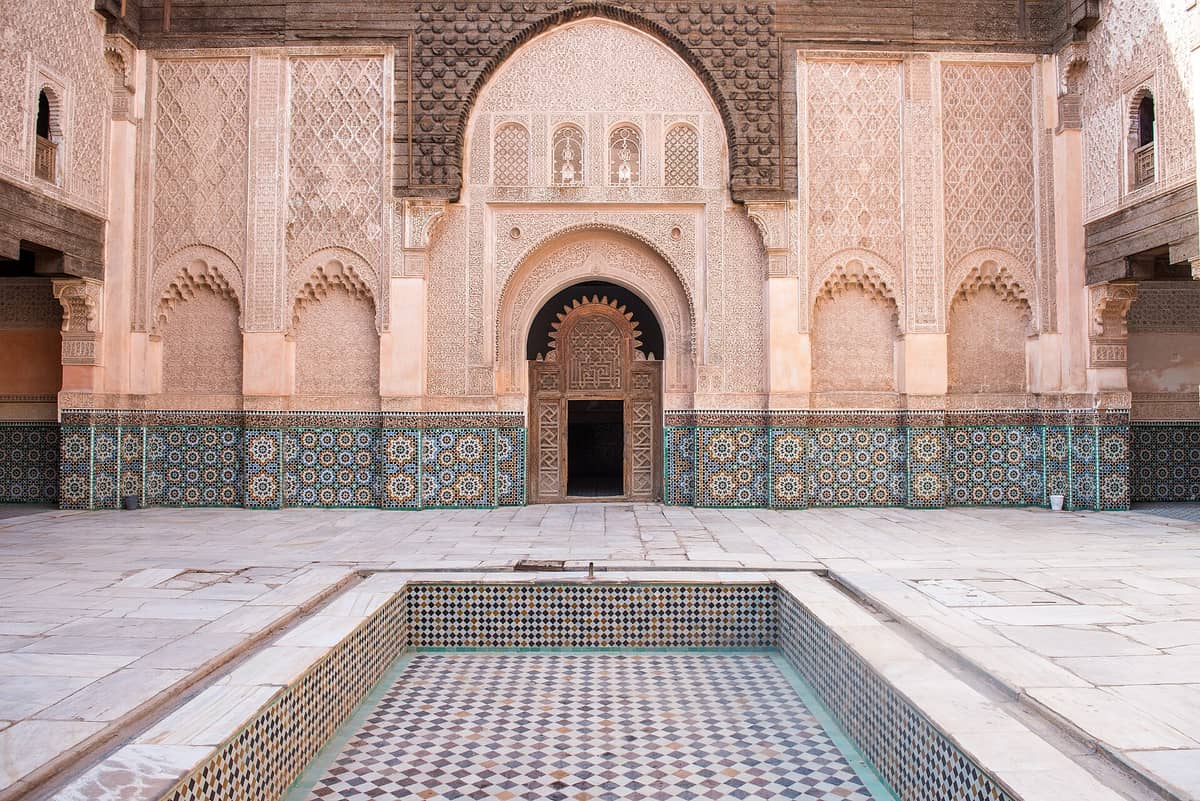
The core loop described above covers the medina's southern heritage zone. If you have a full day, the northern medina adds several more worthwhile stops. The Ben Youssef Madrasa sits near the top of the main souk zone and rewards slow visitors who study the carved stucco panels. The Le Jardin Secret on Rue Mouassine is a restored 16th-century riad with a rooftop terrace that provides rare altitude and a view across the medina's roofscape.
For a contrast with the dense urban fabric of the medina, the Jardin Majorelle is a 15-minute taxi ride from Jemaa el-Fna in the Gueliz direction. It is not part of the medina walk, but pairs well as an afternoon addition — cooler, shaded, and visually distinct from everything else in Marrakech. Entry fees are higher than the palace monuments (around 170 MAD for the garden alone; confirm on tickets.jardinmajorelle.com), and afternoon queues in peak season are significant. Book online in advance — there is no gate sales option.
- Maison de la Photographie (Mouassine area): rooftop terrace with panoramic views, small but well-curated collection of vintage Moroccan photography
- Souk des Teinturiers (Dyers' Souk): dyeing vats in primary colors, best light for photography in morning hours
- Mouassine Fountain Quarter: quieter residential lanes around a 16th-century fountain, good for understanding what the medina looks like away from tourist routes
- El Badi Palace ruins: 16th-century palace, now an open-air archaeological site, particularly atmospheric in low afternoon light
Practical Planning: What to Carry, Wear, and Know
Footwear matters more than most guides admit. Medina streets are uneven, often cobbled, and sometimes wet from cleaning water or drainage. Sandals are fine in cooler months but become uncomfortable on long walks. Closed shoes with grip are better. For clothing, modest dress is practical as well as respectful: lighter layers in summer, something that covers shoulders and knees in the heritage sites and souks. See our Marrakech dress code guide for specific guidance by season and situation.
Carry cash in Moroccan dirhams (MAD). Many monument ticket offices still prefer cash, and many souk vendors do not accept cards either. ATMs are available on the edges of the medina near Jemaa el-Fna and along Avenue Mohammed V in Gueliz, but are harder to find inside the narrow lanes. Budget approximately 250-300 MAD per adult for entry fees to Bahia Palace, the Saadian Tombs, and one or two smaller sites, plus whatever you intend to spend in the souks.
ℹ️ Good to know
Tap water in Marrakech is treated but most visitors and locals prefer bottled water, especially in summer. Carry at least one litre if you are walking in warm weather. Traditional neighborhood fountains exist in residential sections of the medina.
The medina's streets are technically navigable by motorbike and small delivery vehicles, so pedestrians need to stay alert in wider lanes. The tightest derbs are foot-traffic only. If you are traveling with young children, a carrier is more practical than a stroller for most of the route. For a full breakdown of family logistics, see Marrakech with kids.
FAQ
How long does a self-guided walking tour of the Marrakech medina take?
A focused half-day route covering Jemaa el-Fna, Bahia Palace, the Saadian Tombs, and a pass through the Mellah takes around 4-5 hours including monument visits. Adding the full souk district and additional sites like the Ben Youssef Madrasa extends this to a full day of 7-8 hours. The walking distances themselves are short (4-6 km total), but narrow streets, monument queues, and the inevitable getting-lost factor add significant time.
Do I need to book tickets in advance for medina monuments?
For Bahia Palace and the Saadian Tombs, you can buy tickets on-site or use the Moroccan Ministry of Culture e-services portal. Queues at Bahia are rarely long outside peak summer months. Jardin Majorelle (outside the medina) is the one site where advance online booking is required — there is no ticket desk at the gate.
Is it safe to walk the medina alone?
Yes, for most visitors. Petty theft (bag snatching, pickpocketing) occurs but is not rampant. Standard urban precautions apply: keep your phone in a front pocket, use a bag worn across the body rather than over one shoulder, and avoid displaying expensive cameras in the densest souk lanes. The medina is busy throughout the day and the presence of other visitors and residents makes the main routes feel safe. Solo women travelers report more unwanted attention in the souks but rarely feel unsafe. For a fuller picture, see our Marrakech safety guide.
What is the best time of day to walk the medina?
Early morning (08:30-11:00) is best: cooler temperatures, lighter crowds, and better light for photography. The souks are at their most photogenic before tour groups arrive around 10:30. Midday in July and August should be avoided for outdoor walking if possible — temperatures can be very high. Late afternoon (16:00-18:00) is the second-best window, when the light is warmer and the square at Jemaa el-Fna begins its evening transformation.
Can I combine the medina walk with a day trip?
You can, but it makes for a long day. The medina walk alone fills a half-day comfortably. If you want to combine it with an afternoon excursion, the Ourika Valley (45 minutes south) or Agafay Desert (45 minutes southwest) are the closest day-trip options. A dedicated medina morning followed by an afternoon departure works well logistically. For full day-trip options from Marrakech, see our day trips from Marrakech guide.
Tickets & tours
Live prices and dates from our booking partner. If you book, we may earn a commission at no extra cost to you.
Planning a trip? Discover personalized activities with the Nomado app.