Marrakech with Kids: The Complete Family Travel Guide
Marrakech rewards curious families with sensory-rich souks, open-air squares, and day trips that children actually remember. This guide covers the best kid-friendly attractions, how to get around with young travellers, when to visit, and what to realistically expect from a medina with a stroller.
Tickets & tours
Live prices and dates from our booking partner. If you book, we may earn a commission at no extra cost to you.
TL;DR
- Spring (March to May) and autumn (September to November) are the most comfortable seasons for families — summer heat regularly exceeds 35°C and is genuinely difficult with young children.
- The medina is walkable but dense — narrow alleys and uneven surfaces make strollers impractical in the old medina; a baby carrier is a better choice for under-twos.
- Private transfers from Marrakech Menara Airport (RAK) cost from around €15 per vehicle and take 15–25 minutes — far easier than the bus when travelling with luggage and children.
- Top family activities include Jardin Majorelle, camel rides in the Palmeraie, hot-air balloon flights, and the Ourika Valley day trip.
- Several outdoor parks and pool venues operate only from late March to early November — verify opening dates before booking.
Is Marrakech a Good Destination for Families?
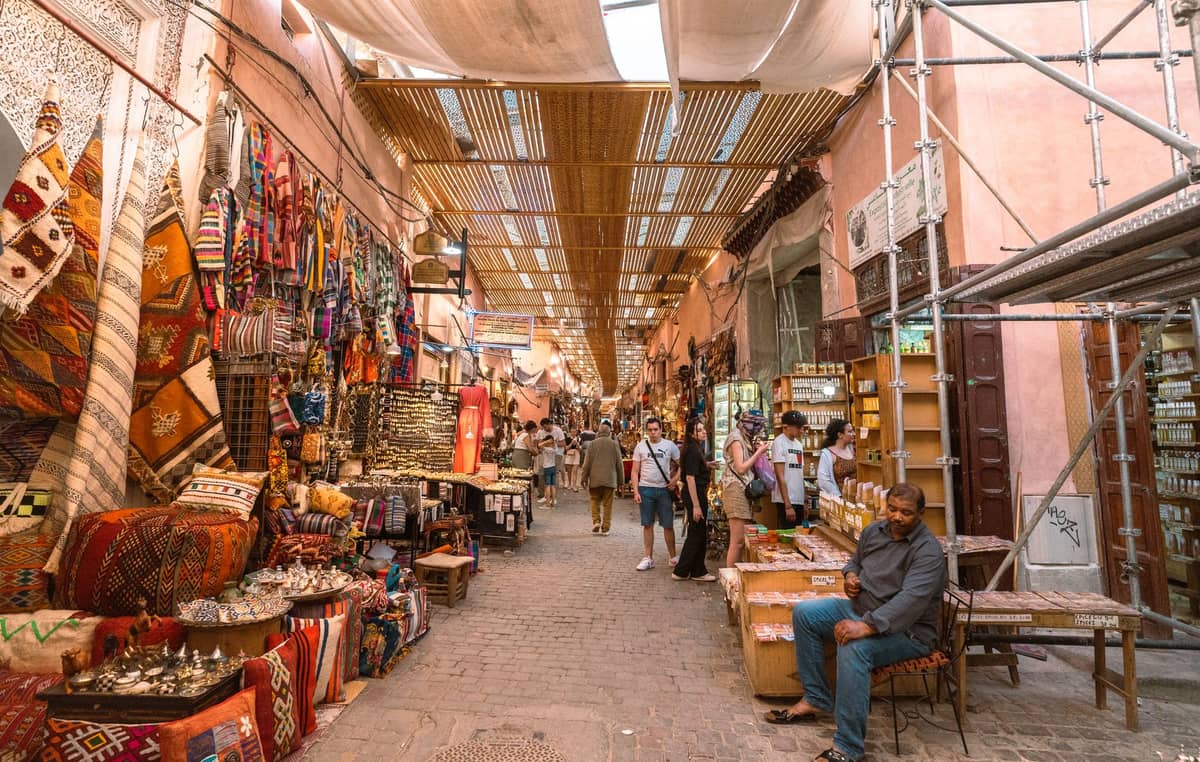
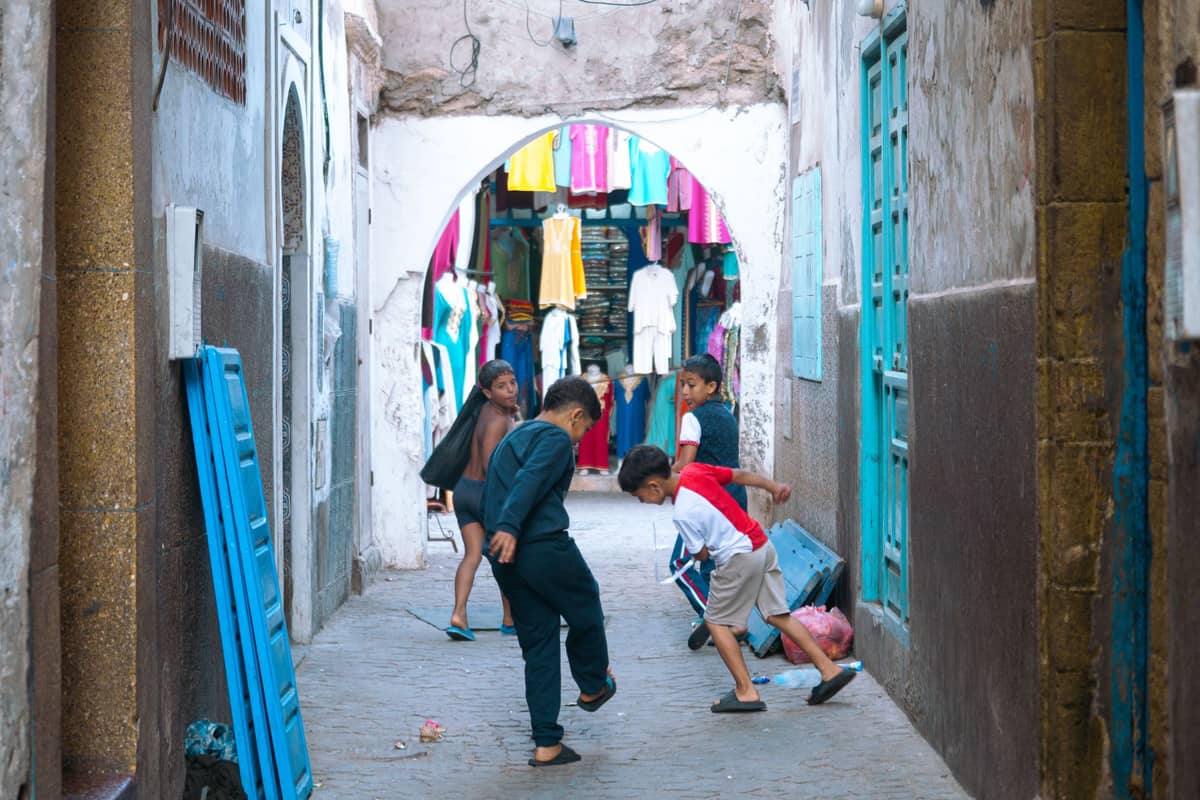
Marrakech is genuinely good for families, but it requires realistic expectations. This is not a beach resort with child-focused infrastructure at every turn. The medina is one of the most intact historic city centres in North Africa, with narrow alleys, motorbikes sharing pedestrian lanes, and very few pavements. Children who are curious and reasonably adaptable will thrive here. Toddlers who struggle with overstimulation or very long walking days may find it exhausting.
The strongest argument for bringing kids is the sheer variety of experiences within a small geographic area. You can spend a morning at Jemaa el-Fna square watching acrobats and musicians, an afternoon at Jardin Majorelle's vivid gardens, and then head to the Palmeraie for a camel ride before sunset. That kind of day is memorable for a ten-year-old in a way that few European city breaks can match.
ℹ️ Good to know
Moroccan culture is warm toward children. Locals frequently interact positively with kids, which can make the travel experience feel welcoming rather than stressful. That said, the medina does attract persistent vendors — children can become a soft target for sellers near high-traffic sites.
When to Visit Marrakech with Kids
Timing is the single most important decision for a family trip to Marrakech. The city has a semi-arid climate and the temperature range across the year is dramatic. Daytime highs in July and August regularly exceed 38°C, sometimes reaching 42°C. Managing that heat with children — especially under-fives — is genuinely hard work and limits outdoor sightseeing to early morning and late afternoon only.
- March to May (Best) Daytime temperatures in the low-to-mid 20s°C rising toward 30°C by late May. The Ourika Valley and Atlas foothills are green and accessible. Most outdoor parks and seasonal venues have reopened. Crowds are moderate.
- September to November (Excellent) Heat gradually drops from the high 20s°C in September to the low 20s°C by November. Pool venues are still open in September. Crowds thin out after mid-October, which means less queuing at major sites.
- December to February (Good for older kids) Mild daytime temperatures around 17–20°C, cooler evenings. Fewer tourists. Several outdoor seasonal parks close. Snow is visible on the High Atlas — dramatic backdrop for day trips. Not ideal for families relying on pool-based activities.
- June to August (Difficult) Extreme heat that genuinely limits what families can do before 9am and after 5pm. Air-conditioned riads and malls become essential. Only recommended if you have a riad with a pool and realistic daily plans that front-load activities at dawn.
If you are travelling during Ramadan, the experience changes considerably. Many cafés and restaurants operate reduced hours during daylight, which affects family meal logistics. For a deeper look at what changes, our Ramadan travel guide covers the practicalities in detail.
Getting to Marrakech and Around the City with Children
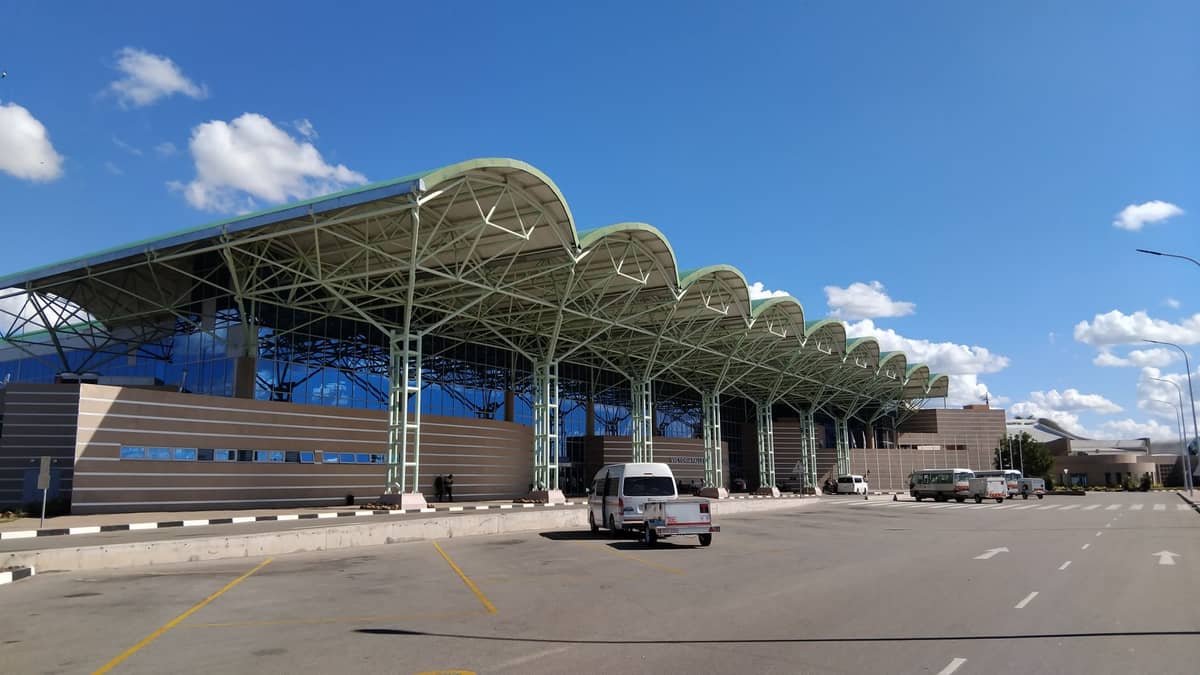
Marrakech Menara Airport (IATA: RAK) is located about 6 km southwest of the city centre, with journey times to Jemaa el-Fna of roughly 15–20 minutes in normal traffic. For families, the transfer choice matters more than it does for solo travellers.
- Private transfer (recommended for families) Pre-booked door-to-door, from around €15 per vehicle. The driver meets you in arrivals, handles luggage, and drops you at your riad entrance. Worth every dirham when you have car seats, pushchairs, and tired children.
- Petit taxi (practical for older children) Fixed-fare ranks at the airport charge around 70–100 MAD by day (roughly 50% night surcharge after 20:00–21:00). Taxis are small and take 3 passengers maximum — two adults plus a child is fine, larger families need two taxis.
- ALSA Bus Line 19 (budget option) Runs every 20–30 minutes to Jemaa el-Fna and Gueliz, costing around 30 MAD one-way or 50 MAD return. Journey time is 25–40 minutes. Workable for families travelling light, but navigating with luggage and a pushchair is cumbersome.
Within the city, the medina is best explored on foot — it has no car access in most areas. Gueliz and Hivernage, the modern districts, are more navigable by taxi or ride-hailing apps such as Careem and inDrive. For a full breakdown of options including costs, see the getting around Marrakech guide.
⚠️ What to skip
Strollers in the medina are more trouble than they are worth. The alleys around the souks are unpaved, narrow, and shared with motorbikes and laden donkeys. A front or back baby carrier gives you far more freedom and keeps your hands free. Save the pushchair for wide boulevards in Gueliz or the gardens.
Best Kid-Friendly Attractions in Marrakech
The best family activities in Marrakech fall into three categories: outdoor green spaces where children can run freely, cultural sites with enough visual impact to hold a child's attention for an hour, and active experiences outside the city. Below are the most reliably successful options, based on what genuinely works rather than what every guide repeats.
- Jardin Majorelle The cobalt-blue garden is compact (around 1 hectare) but packed with cactus forests, lily ponds, and vivid colour that children respond to instinctively. Plan for 45–60 minutes. Arrive at opening time (08:00) to avoid queues. Garden admission is around 170 MAD; the Berber Museum inside is an add-on (around 230 MAD combined). Book online at tickets.jardinmajorelle.com — there is no gate sales option.
- Camel rides in the Palmeraie Short camel treks (30–60 minutes) through the palm groves on the city's northern edge. These are tourist-oriented but genuinely enjoyable for children aged 4 and up. Prices vary by operator — compare before booking. Early morning or late afternoon is essential to avoid midday heat.
- Jemaa el-Fna square at dusk The evening transformation of the square — acrobats, storytellers, snake charmers, food stalls lighting up — is a spectacle that older children remember for years. Go at around 18:30–19:00. Keep close watch on younger children in the crowd.
- Ourika Valley day trip About an hour's drive south of the city into the Atlas Mountains (longer to Setti Fatma). The valley has a river, Berber villages, and waterfalls at Setti Fatma that older kids can hike to. One of the most naturally scenic half-day escapes from the city.
- Hot-air balloon over the Agafay Desert Sunrise flights last around 1 hour and depart from outside the city. Most operators accept children aged 5 and above (check minimum age before booking). This is the kind of experience that justifies the entire trip for children who are old enough to appreciate it.
- Kawkab Jeux indoor play centre (Gueliz) An indoor soft-play area in the Centre Harti, Gueliz, designed for children roughly aged 1–8. Entry starts from around 25 MAD. A useful fallback on very hot afternoons or if you need children occupied while adults rest.
For families with teenagers who want more active options, consider the trampoline parks in Gueliz (around 90 MAD per hour) or laser and VR gaming venues (current prices vary by operator). A cooking class in a riad is also well-suited to older children — many providers offer family sessions where kids actively participate in making pastilla or tagine. The Marrakech food guide lists reputable options.
✨ Pro tip
Seasonal outdoor parks near Marrakech (including pool and animal-based venues) typically operate roughly April to October only, with higher prices in summer when pool access is included. A family admission to a larger park runs around 160–200 MAD per child and 240–300 MAD per adult depending on season. Always verify current dates and prices directly with the venue before booking, as they change annually.
Practical Family Logistics: Food, Sleep, and Safety
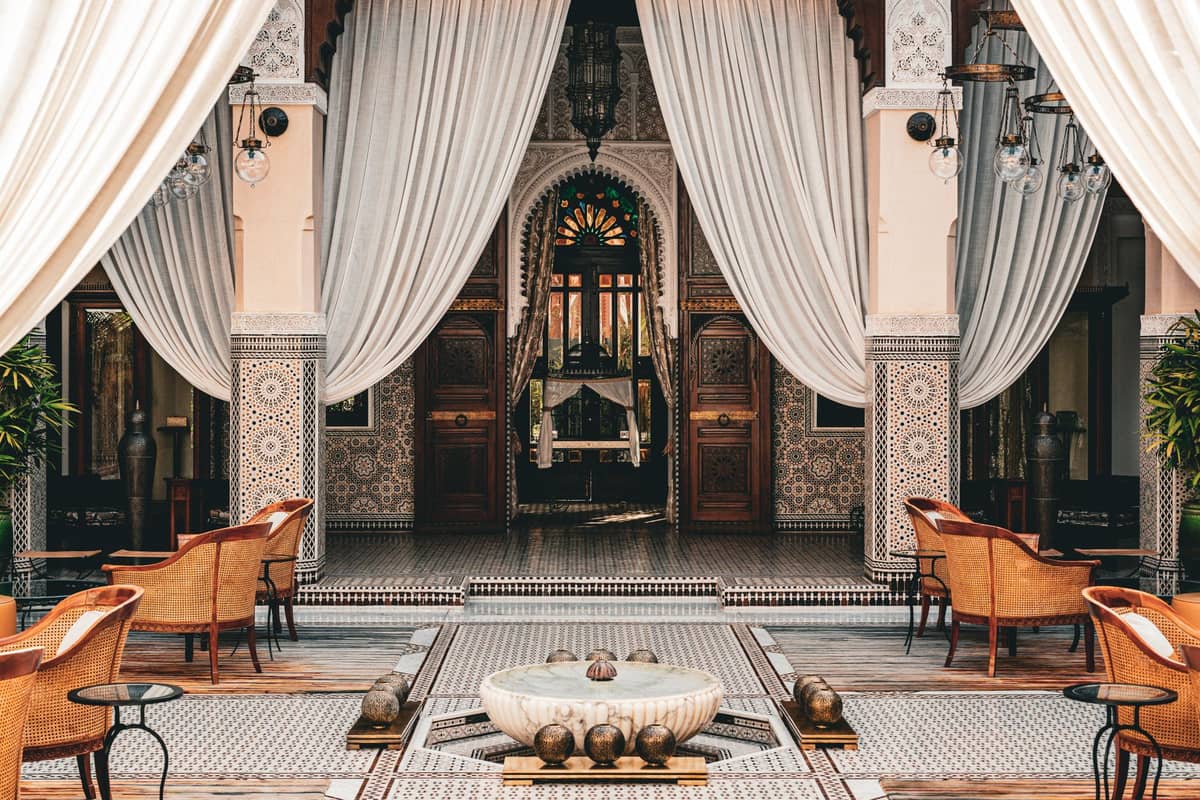
Staying in a riad inside the medina gives children a genuine experience of Marrakech's historic architecture — courtyards, fountain tiling, and rooftop terraces. The trade-off is that the alleyways around many riads are hard to navigate at night, and finding your riad for the first time with children and luggage in tow is reliably stressful. Ask your riad for a precise GPS pin before arrival, not just an address.
Hotels in Hivernage and Gueliz offer larger rooms, easier car access, and pools — useful if you have under-fives. The trade-off is distance from the medina, which means more taxi rides. For families who want both pool access and medina proximity, a handful of larger riads in the northern medina have small plunge pools, though these are rarely suitable for lap swimming.
On food: Marrakech restaurants are generally family-friendly in practice, even if they do not advertise children's menus. Tagines, couscous, and Moroccan flatbreads (khobz) are well-tolerated by most children. Avoid raw salads and unpasteurised dairy for younger children. Stick to bottled water — municipal tap water is treated, but traveller's stomach is a real risk for children unaccustomed to local bacteria. Street food from Jemaa el-Fna stalls is exciting for older children but represents a higher hygiene risk for under-fives.
On safety: Marrakech is generally safe for families. Petty scams targeting tourists exist, particularly around Jemaa el-Fna, but they rarely escalate. The main risks for families are traffic (motorbikes move fast through medina alleys), heat exhaustion in summer, and getting lost in the souks. Read the Marrakech safety guide for specifics on what to watch for and how to handle common situations calmly.
What to Skip (and What's Overrated for Families)
Not every Marrakech attraction works for children. The Saadian Tombs are visually striking but take about 20 minutes to walk through — the queues outside often run longer than the visit itself, and younger children are rarely engaged by funerary architecture. Worth doing if queues are short; skip it if you have a full day.
The Ben Youssef Madrasa is architecturally exceptional and worth 30 minutes, but it has no interactive elements and minimal labelling in English. Teenagers who have some context will get more from it than primary-school children. Similarly, the tanneries district is visually memorable but the smell is intense — young children and anyone with sensitivities should know this before going.
Snake charmers and performing monkeys in Jemaa el-Fna are a well-known tourist spectacle, but the animal welfare situation is genuinely problematic, and the handlers use aggressive pressure tactics once children show interest. Teach children to look without engaging, or steer clear entirely if you prefer not to field the conversation.
💡 Local tip
Build rest time into every afternoon between roughly 13:00 and 16:00. The heat during this period in spring through autumn makes outdoor sightseeing unpleasant, and most Moroccan locals follow a similar pattern. A riad courtyard or a cool café is the right call. Children (and adults) arrive at the evening's activities in far better shape if the midday slowdown is respected.
Day Trips from Marrakech with Children
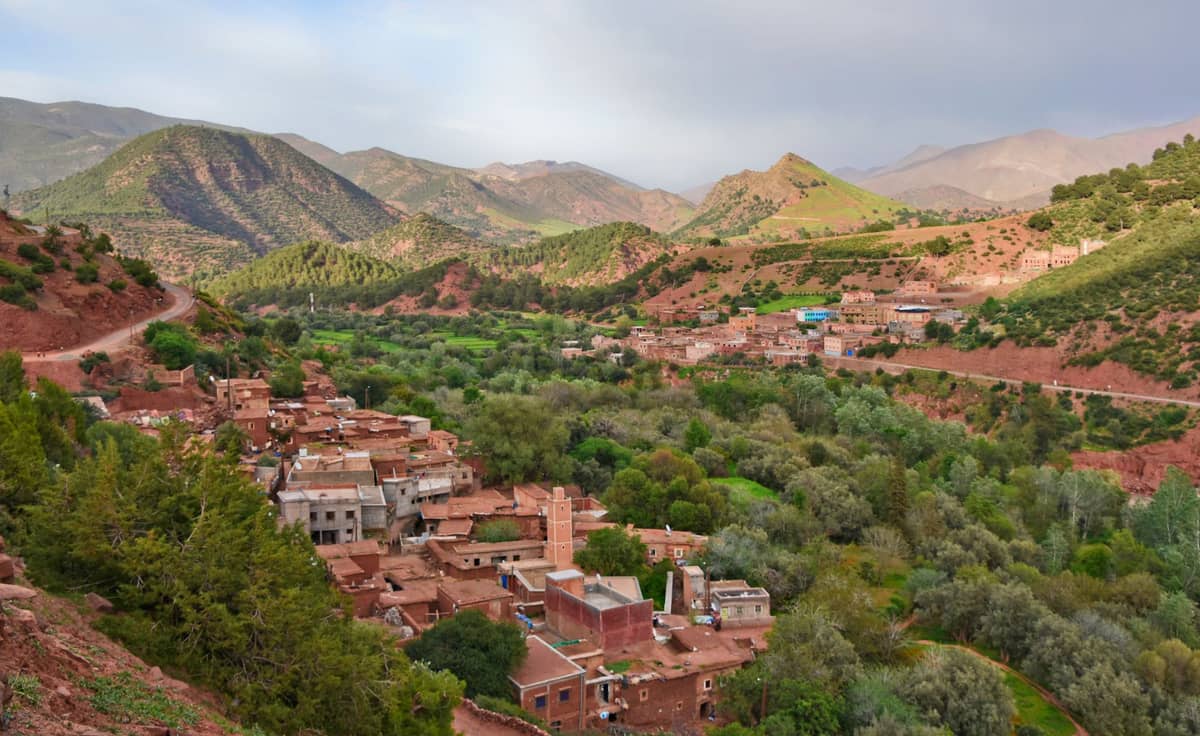
The geography around Marrakech makes it one of the better bases in Morocco for day trips. The High Atlas Mountains begin just 30 km south of the city. The Ourika Valley is the easiest Atlas day trip — paved road, clear signposting, and a river that children can paddle in. The Ouzoud Waterfalls, about 150 km northeast, are more spectacular but require a longer drive (around 2.5–3 hours each way) — better suited to families with children aged 7 and above who can handle a full day in a vehicle.
The Agafay Desert (a rocky desert plateau about 30 km from the city) is excellent for a half-day family excursion — quad biking, camel rides, and Bedouin-style lunch in tented camps are all available and well-suited to children aged 5 and above. For a full overview of what to plan across several days, the 3-day Marrakech itinerary includes realistic scheduling that works for families.
FAQ
What age is Marrakech suitable for children?
Marrakech works well for children from about 4–5 years old and up. Toddlers and babies can come, but the medina's uneven surfaces, heat, and stimulation make it physically demanding. Families with older children (7–14) tend to find the best balance of engagement and manageability. Teenagers, especially those interested in history or culture, often find Marrakech genuinely compelling.
Is it safe to bring kids to the Jemaa el-Fna square?
Yes, but with supervision. The square is safe in the broad sense, but it is crowded, loud, and populated with vendors and performers who target families with children. Keep young children physically close, establish a meeting point before you enter the crowd, and be prepared to say no firmly and often to approaches from performers wanting payment.
Do riads in Marrakech have facilities for children?
Most traditional riads are not purpose-designed for children — ornate tiling, open courtyards, and steep internal stairs require supervision of toddlers. However, many riads are happy to provide cots, early dinners, and flexible breakfast times. A riad with a plunge pool is worth seeking out for warm-season visits. Always confirm the specifics directly with the property before booking.
Can children do a hot-air balloon flight over Marrakech?
Most operators accept children aged 5 and above, though minimum age policies vary. Sunrise flights are the standard format, meaning a 5:00–5:30 am departure, which works better for children who are early risers. The flight itself lasts around one hour over the Agafay plateau or palm groves. Book in advance as family-friendly morning slots fill quickly, particularly in spring and autumn.
What is the best time of year to take children to Marrakech?
March to May and September to October are the most practical periods for families. Temperatures in these windows are warm but not extreme, seasonal parks are open, and the city is not at peak crowd capacity. Avoid July and August unless you have guaranteed air conditioning and a pool, and are comfortable limiting sightseeing to mornings only.
Tickets & tours
Live prices and dates from our booking partner. If you book, we may earn a commission at no extra cost to you.
Planning a trip? Discover personalized activities with the Nomado app.