What to Eat in Marrakech: The Definitive Moroccan Food Guide
Marrakech is one of North Africa's great eating cities, where tagine-fuelled lunches, slow-cooked tanjia, and 5-dirham snail soup sit alongside rooftop restaurants charging ten times as much. This guide covers every dish worth trying, what it should cost, and exactly where in the medina to find the real thing.
Tickets & tours
Live prices and dates from our booking partner. If you book, we may earn a commission at no extra cost to you.
TL;DR
- Marrakech food is aromatic rather than fiery: spices like cumin, ginger and cinnamon dominate, not chili heat.
- Street snacks cost 3–15 MAD; a full street-food meal rarely exceeds 60 MAD if you eat where locals eat.
- Jemaa el-Fna's tourist stalls are pricier but still reasonable — and worth experiencing at least once. See our guide to Jemaa el-Fna Square for context.
- Tanjia is not just a tagine: it's a Marrakech-specific dish cooked in a clay urn in furnace ashes and worth seeking out.
- For a broader view of the city's eating scene by neighborhood, pair this guide with our where to eat in Marrakech overview.
The Foundation: What Moroccan Cuisine Actually Tastes Like
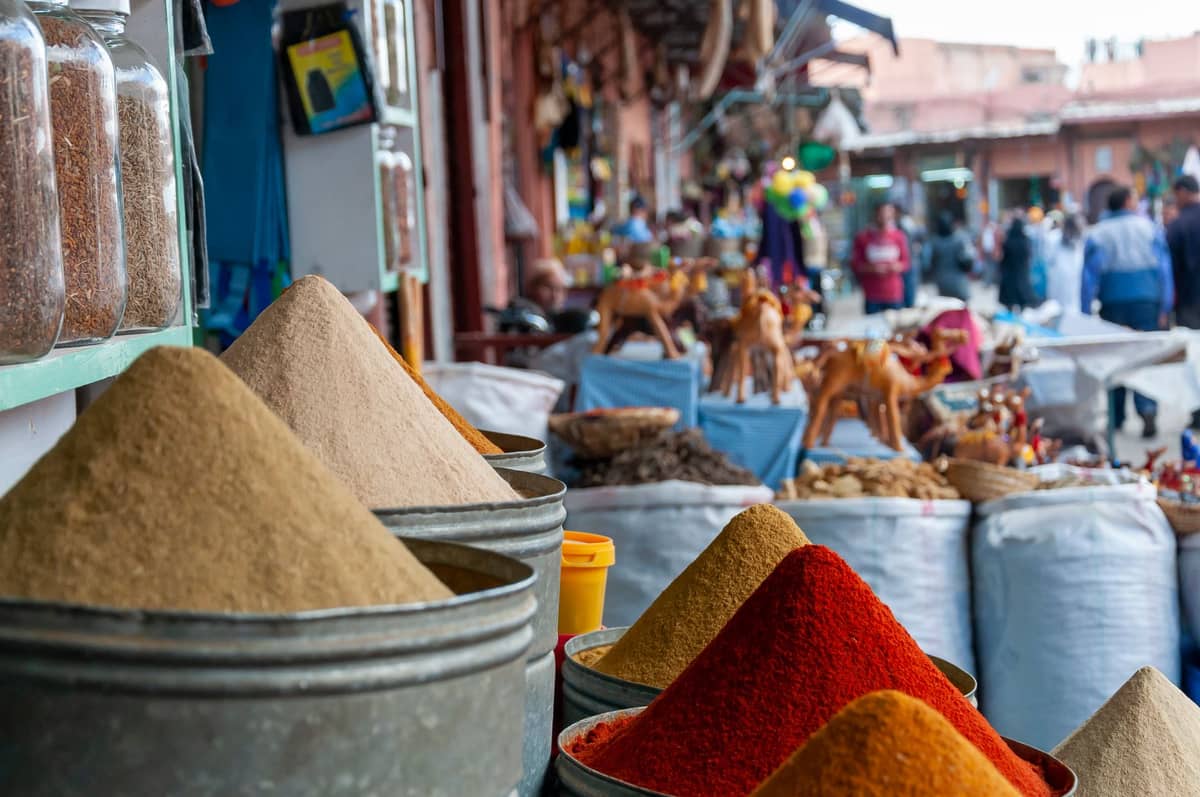
The single biggest misconception about Moroccan food is that it's spicy. It isn't, at least not in the chili-heat sense. Marrakech cooking builds flavor through layered aromatics: cumin, paprika, ginger, turmeric, cinnamon, preserved lemon, and saffron. The result is deeply savory and complex, sometimes sweet-and-salty (think lamb with prunes or chicken with preserved lemon and olives), but rarely mouth-burning. If you want heat, harissa paste is usually available on the side at restaurants and stalls.
Most dishes are built around three proteins: lamb, chicken, and beef. Fish features more in coastal cities like Essaouira, though you'll find it in Marrakech restaurants too. Vegetarians are reasonably well served by tagines of vegetables, briouats stuffed with cheese or spinach, and the chickpea-heavy bissara soup. Vegan travelers need to ask carefully, as butter (smen) and animal fat appear in many dishes that look plant-based on menus.
ℹ️ Good to know
Couscous is traditionally a Friday dish in Moroccan households, eaten after Friday prayers. You'll find it in medina restaurants daily as a tourist staple, but if you want the full Friday-lunch experience — large communal platters, slow-cooked meat, sweet caramelized onions — aim for a neighborhood restaurant around midday on a Friday.
The Dishes You Actually Need to Try
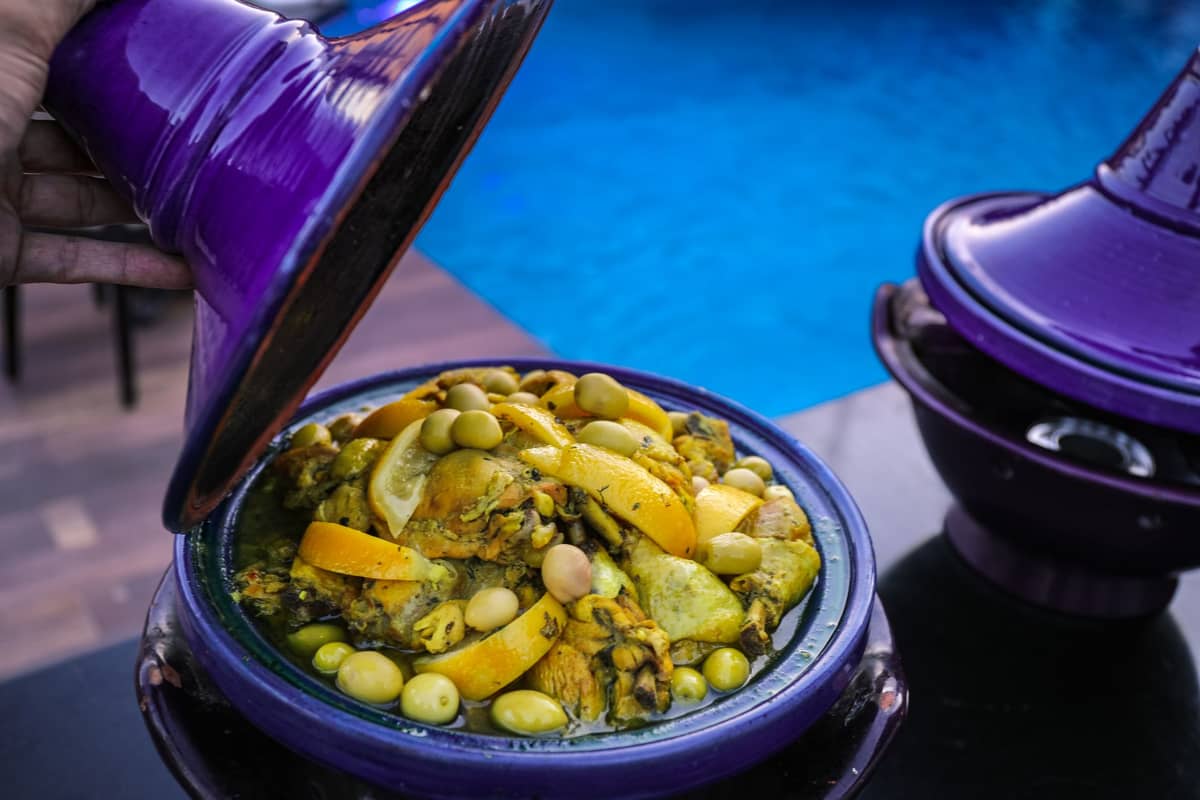
Tagine is the obvious starting point. It refers both to the conical clay pot and the slow-cooked stew inside it. The most common versions are chicken with preserved lemon and olives, and lamb with prunes and almonds. At a decent medina restaurant, expect to pay 50–100 MAD per person. Tourist-facing rooftop restaurants on or near Jemaa el-Fna can charge 160–360 MAD for essentially the same dish. The clay pot looks good in photos but isn't the marker of quality.
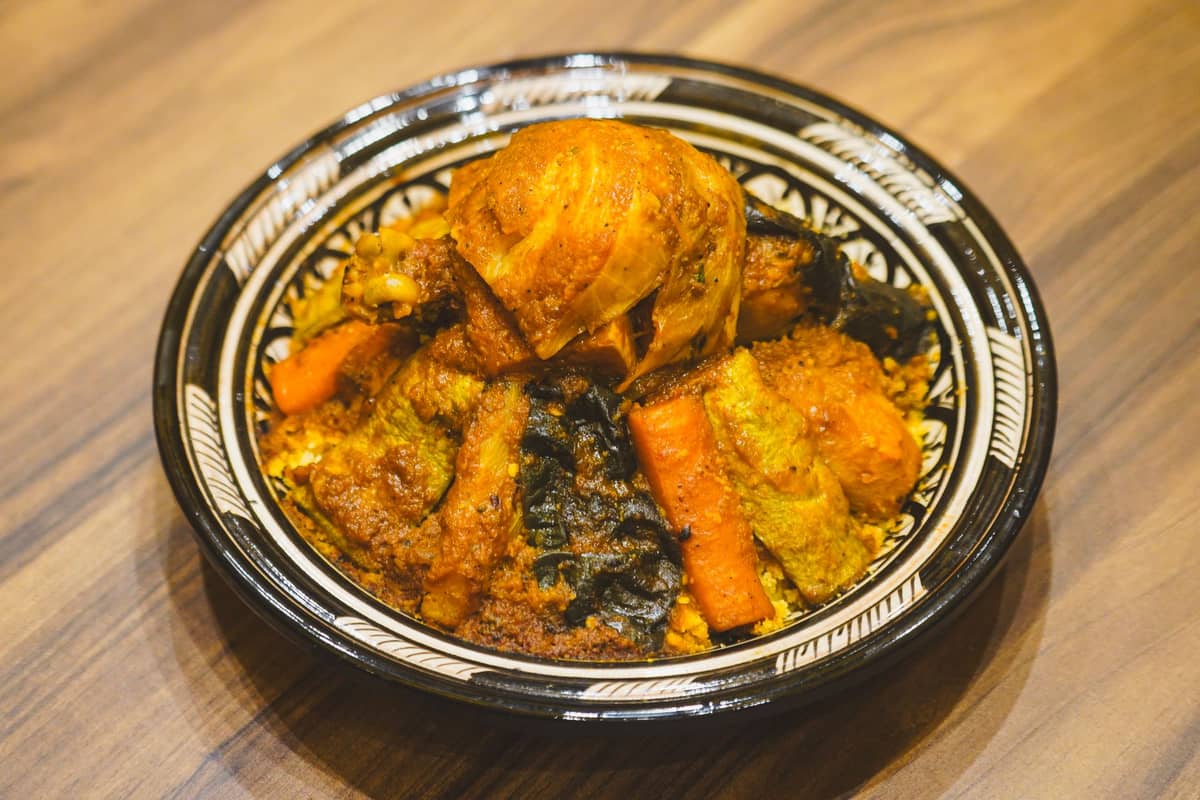
Tanjia deserves its own paragraph because almost no one explains it properly. It's considered the true specialty of Marrakech, distinct from tagine in both method and flavor. Meat (usually beef or lamb) is packed into a clay urn with preserved lemon, cumin, smen (aged butter), and water, then sealed and left at a hammam furnace or traditional bakery furnace for several hours. The result is fall-apart meat with an earthy, concentrated flavor you won't get from stovetop cooking. Expect to pay around 80–150 MAD per portion at local restaurants in the medina.
- Harira Morocco's most beloved soup: a thick, tomato-based broth with chickpeas, lentils, vermicelli, fresh herbs and a squeeze of lemon. Traditionally served to break the fast during Ramadan, but available year-round. A bowl costs 10–15 MAD at street stalls, often served with dates and chebakia (a honey-sesame pastry).
- Bissara A pureed fava bean soup drizzled with olive oil and cumin, eaten particularly in winter mornings. One of the cheapest and most filling street foods in the medina, at around 5–10 MAD a bowl.
- Babbouch (snail soup) Snails simmered in a spiced broth of thyme, anise, ginger and more — served by the bowlful from carts around Jemaa el-Fna. About 5–10 MAD at local carts; up to 20–25 MAD on tourist-facing stalls. The broth is the real point, not just the snails.
- Msemen and meloui Square flatbreads (msemen) and round spiral flatbreads (meloui), cooked on griddles by street vendors. Eaten for breakfast or as a snack with argan oil and honey, or filled with kefta. About 3–5 MAD each.
- Brochettes (grilled skewers) Lamb, beef or kefta skewers grilled over charcoal, served with bread and a small salad. A classic square-meal option at Jemaa el-Fna evening stalls: a mixed plate runs 80–150 MAD at the main numbered stalls, or 30–60 MAD at smaller medina grills away from the square.
- Pastilla (bastilla) A filo-pastry pie traditionally filled with pigeon or chicken, almonds and eggs, dusted with cinnamon and icing sugar. Sweet-savory and unlike anything else. Found at mid-range to upscale Moroccan restaurants rather than street stalls.
⚠️ What to skip
The numbered food stalls on Jemaa el-Fna are a legitimate experience, but touts will grab your arm and recite menus at you. Agree on the price before sitting down, and check the bill against the menu when it arrives. Overcharging tourists is common at specific stalls. The stalls aren't a scam — just go in with clear expectations.
Street Food in the Medina: What to Buy and Where
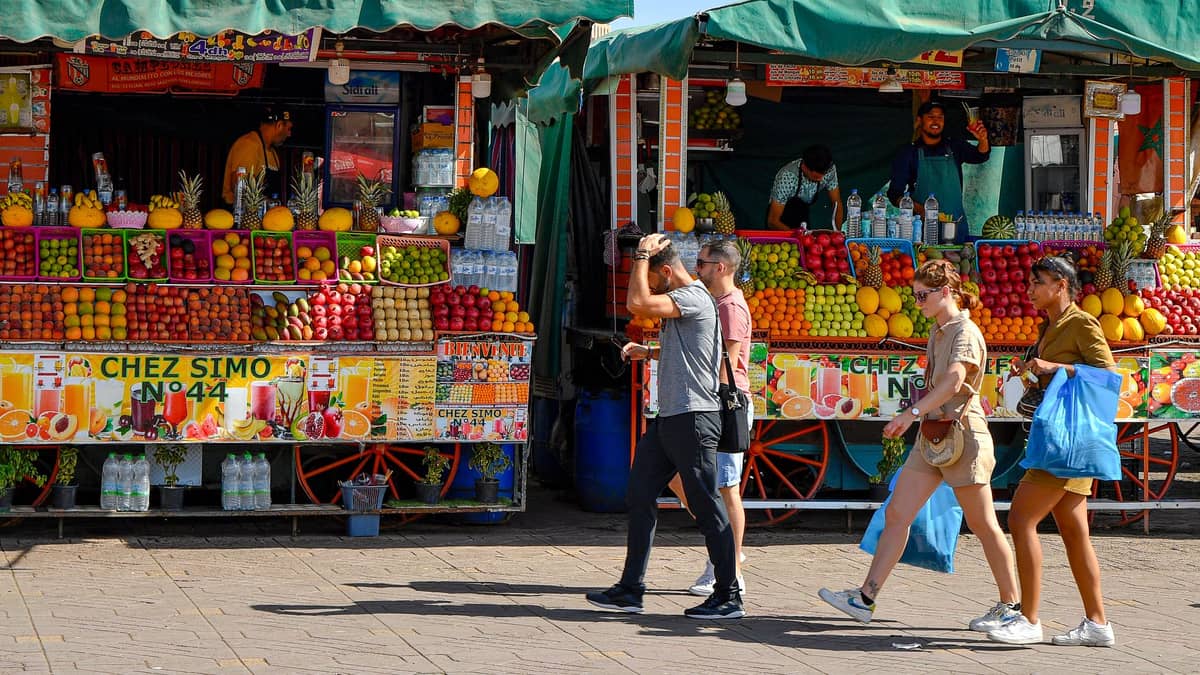
The best street-food territory in Marrakech is not the main square — it's the lanes running off it. The area around the Mouassine quarter and the streets between Jemaa el-Fna and the Ben Youssef Madrasa are where you'll find vendors selling msemen off the griddle, bowls of harira from huge pots, and fresh orange juice at local prices. The further you walk from the tourist concentration, the closer prices get to what locals pay.
Fresh-squeezed orange juice is the iconic Jemaa el-Fna purchase. During the day, with a little negotiation, you can get a glass for 4–6 MAD. By evening, when the square fills with tourists, some stalls push prices to 10 MAD or more. It's still cheap — the real issue is being pressured into buying before agreeing on a price. Point, confirm the price, then pay. Sfenj (Moroccan doughnuts fried in oil, similar to a dense churro) are sold from portable carts and cost 1–2 MAD each; they're best eaten immediately, while hot.
For a proper street-food circuit, start before 9 AM when vendors are fresh and queues are local. Bissara and msemen with tea make a filling breakfast for under 20 MAD total. Midday, the grilled meat stalls fire up — kefta sandwiches in khobz bread for 15–20 MAD. Late afternoon, snail-soup carts appear. Evening, the full Jemaa el-Fna food theatre begins: dozens of stalls, grilled fish, stewed sheep's heads, and harira by the cauldron.
Marrakech Restaurants: From Local Diner to Riad Kitchen
Beyond street food, Marrakech has a broad restaurant spectrum. At the budget end, small local diners (called "restaurants populaires") in the medina serve tagine, couscous, and harira for 40–80 MAD a head including bread and a soft drink. These places rarely have menus in English and the decor is functional at best, but the food is often better than places charging three times as much. The medina has dozens of them concentrated near the Mellah and in the streets north of Jemaa el-Fna.
Mid-range riad restaurants occupy a different category. Many riads in the medina open their courtyard kitchens to non-guests for set-menu dinners (150–350 MAD per person), usually offering traditional three-course meals: salads, tagine or pastilla, and dessert with mint tea. Quality is variable. The setting is often beautiful, the food sometimes generic. The strongest options tend to be riads that specialize in home-style cooking rather than production-line tourist menus. Our guide to staying in a riad in Marrakech covers how to tell the difference.
For contemporary Moroccan cuisine and international options, the neighborhood of Gueliz (the modern new town west of the medina walls) has Marrakech's best concentration of restaurants for travelers who want something other than a tagine. Gueliz has wine-serving restaurants, French bistros, pizza places, and Moroccan restaurants with modern interpretations of classic dishes. Prices run higher than the medina — 150–400 MAD per person for dinner with drinks — but the experience is more relaxed and less tourist-saturated.
✨ Pro tip
Alcohol is available in Marrakech at licensed restaurants and hotels, but not at traditional medina eateries or street stalls. If you want wine with dinner, you need to either eat in Gueliz, book a hotel restaurant, or find one of the handful of medina restaurants with a liquor license. Mint tea is the universal alternative and excellent — ask for it 'khfif' (light on sugar) if you prefer it less sweet.
Seasonal Eating and Ramadan Considerations
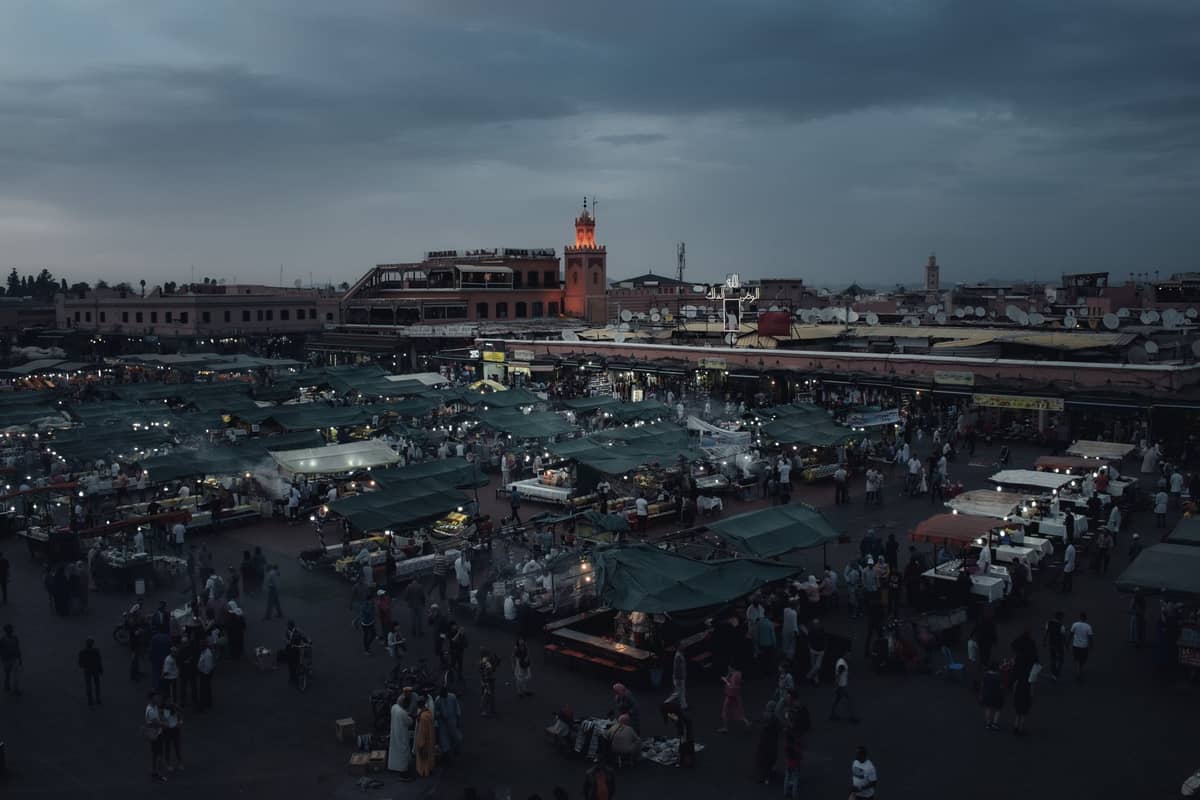
Timing affects what you eat in Marrakech more than most visitors realize. During Ramadan, restaurants in the medina largely close during daylight hours, but the city transforms at sunset (iftar): street stalls set up specifically to sell harira, chebakia, dates, and sellou (a sesame-almond-flour mixture), and the atmosphere around Jemaa el-Fna becomes uniquely charged. Eating in Marrakech during Ramadan is a distinctly different experience — worth it if you're prepared. Our guide to visiting Marrakech during Ramadan explains the logistics in detail.
In summer (June–August), heat above 35°C affects what locals eat and when. Street vendors operate early morning and in the evening; midday eating shifts indoors to air-conditioned spaces. Avoid anything sitting in open trays in direct sun. Chilled avocado smoothies (popular at juice stalls) and cold pastilla are warm-weather adaptations worth trying. In winter, the hearty soup culture intensifies: bissara and harira vendors do brisk trade from early morning in the cooler months, and tanjia is at its most comforting.
Practical Eating Tips: Prices, Hygiene, and Avoiding Tourist Traps
All prices in Morocco are in Moroccan dirham (MAD). At current rates, 10 MAD is roughly 1 USD and just under 1 EUR, though exchange rates shift. Cards are accepted at upscale restaurants and some mid-range places, but street stalls, local diners and small cafes are strictly cash. Carry small bills — vendors rarely have change for a 200 MAD note.
- Drink bottled water: municipal water in Marrakech is treated, but most travelers prefer bottled to avoid stomach upsets. A 1.5L bottle costs 4–6 MAD at medina shops.
- Eat hot food freshly cooked: in summer especially, avoid dishes that have been sitting out. Grilled meat and freshly made soup are safer bets than cold salads from stalls.
- Tipping is expected: round up or leave 5–10% at sit-down restaurants; a few dirhams at street stalls is appreciated but not mandatory.
- Don't eat solely on Jemaa el-Fna: the square is an experience, not the benchmark for Marrakech food. Walk five minutes in any direction and prices drop significantly.
- Cooking classes are worth considering: a half-day class (typically 300–600 MAD per person) usually includes a market visit and teaches you to make harira, tagine, and pastilla from scratch — good value as both activity and food experience.
Budget travelers can eat well in Marrakech for 60–100 MAD per day if they stick to street food, local diners, and markets. Mid-range eating — a mix of street snacks and one sit-down meal — runs 150–250 MAD per day. For context on managing a tighter overall budget across accommodation, transport, and food, see our guide to Marrakech on a budget.
💡 Local tip
Moroccan mint tea (atay) is served everywhere and is almost always free or nominally priced at local cafes. However, in tourist-facing tea shops — especially those attached to carpet stores or souvenir shops — 'complimentary' tea often comes with significant pressure to buy. Accept tea from a cafe where you've sat down to eat; decline it in shops unless you're genuinely happy to browse.
FAQ
What is the best food to try in Marrakech?
Tanjia is the dish most specific to Marrakech — slow-cooked meat in a clay urn, deeply savory and unlike anything you'll find elsewhere. Beyond that: harira soup, msemen flatbread for breakfast, fresh orange juice on Jemaa el-Fna, and a proper tagine (lamb with preserved lemon or chicken with olives) at a local medina restaurant. Avoid judging tagine quality by whether it's served in a clay pot; that's decoration, not a quality indicator.
Is street food in Marrakech safe to eat?
Generally yes, if you follow basic principles: eat food that's freshly cooked and hot, avoid dishes sitting in the sun for extended periods, and stick to bottled water. Harira, grilled brochettes, msemen and bissara are all low-risk. In summer, apply more caution with cold dishes at stalls. Stomach upsets in Marrakech usually come from tap water or ice, not cooked street food.
How much does food cost in Marrakech?
Street snacks (msemen, sfenj, harira) run 3–15 MAD each. A full street-food meal with juice costs 30–60 MAD. Local restaurant tagine or couscous: 50–100 MAD per person. Jemaa el-Fna evening stall plates: 80–150 MAD. Riad set-menu dinner: 150–350 MAD. Gueliz restaurant meal with drinks: 200–400 MAD. The price spread is wide because the same dish can cost four times more in a tourist-facing setting than a local one.
Is Marrakech food spicy?
No, not in the chili sense. Moroccan cuisine in Marrakech relies on aromatic spices — cumin, paprika, ginger, cinnamon, ras el hanout — rather than heat. Most dishes are mild enough for anyone who eats Indian or Mexican food occasionally. Harissa (a chili paste) is available as a condiment if you want heat, but it's not standard in most dishes.
Where should vegetarians eat in Marrakech?
Vegetarian options exist but require some navigation. Vegetable tagines, harira, bissara, msemen with honey, and zaalouk (smoky eggplant salad) are all vegetarian. However, many dishes use animal fat or stock that isn't declared. For reliable vegetarian options with clear labeling, Gueliz has several cafes and restaurants catering to this. In the medina, state clearly 'bila lahm' (without meat) and verify that means no meat stock too.
Tickets & tours
Live prices and dates from our booking partner. If you book, we may earn a commission at no extra cost to you.
Planning a trip? Discover personalized activities with the Nomado app.