Where to Eat in Marrakech: The Complete Food Guide
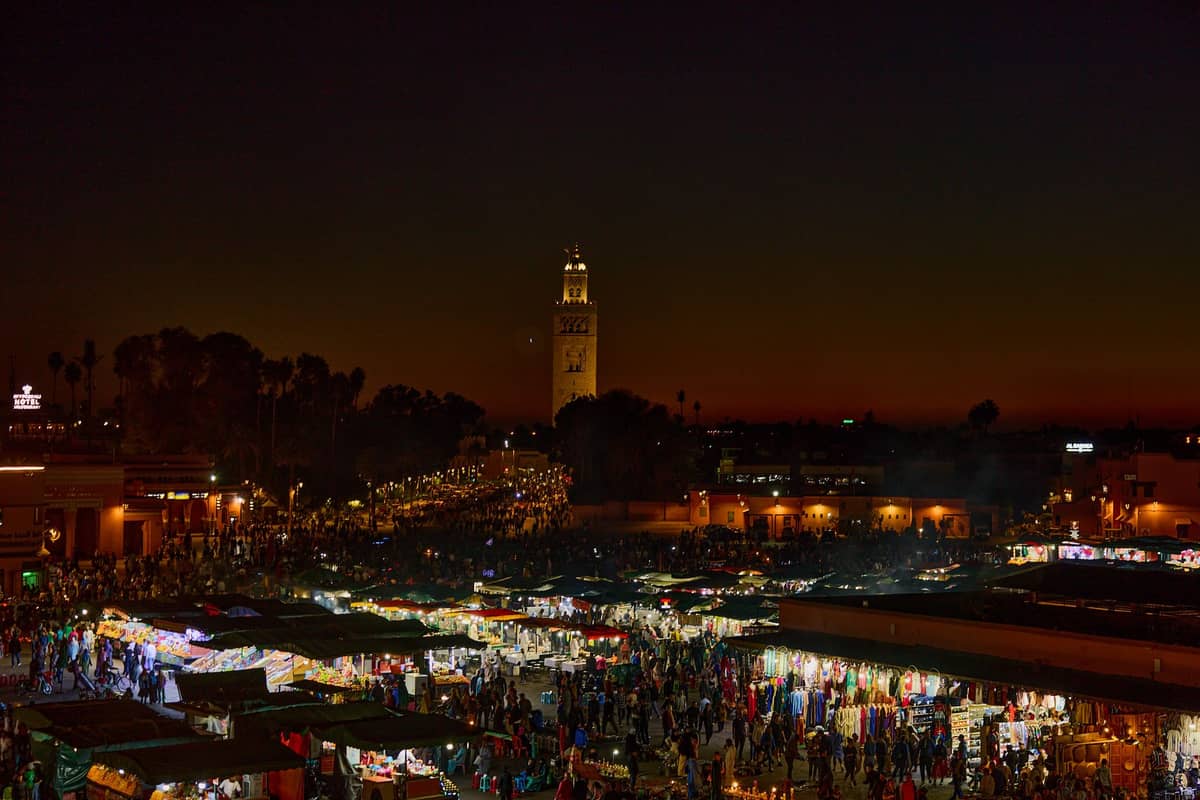
Marrakech serves one of the most distinctive food cultures in North Africa, from smoky food stalls on its famous main square to candlelit riad dining rooms. This guide covers every budget tier, the best neighborhoods for eating, what to order, and which tourist traps to skip.
Tickets & tours
Live prices and dates from our booking partner. If you book, we may earn a commission at no extra cost to you.
TL;DR
- Street food on Jemaa el-Fna costs 30–80 MAD per person and is genuinely worth trying, not just a tourist novelty.
- Mid-range restaurants like Nomad and Le Jardin run roughly 200–350 MAD per person; palace dining at Dar Yacout or Dar Moha usually sits around 500–900 MAD, though drinks can add significantly.
- The medina is the best area for traditional Moroccan food; Gueliz offers more international and contemporary options.
- Book popular rooftop and palace restaurants in advance during spring and autumn high season.
- Alcohol is available at licensed restaurants and hotels but not at traditional medina spots — check before you go.
Understanding Marrakech's Food Scene by Budget
Marrakech has a wider price range than most visitors expect. The gap between a dirham-and-change harira soup near the souks and a multi-course dinner in a palace restaurant is enormous, and both experiences exist within a few hundred metres of each other. Understanding that gap before you sit down saves a lot of awkward bill shock.
At the budget end, simple medina eateries serve tagine or couscous for 40–70 MAD, and a full meal with a soft drink rarely exceeds 100 MAD per person. These are worker's lunch spots and small family-run places with plastic chairs and no English menu. The food is often excellent.
Mid-range restaurants, which make up the bulk of well-reviewed spots in travel guides, land between 150 and 400 MAD per person including non-alcoholic drinks. This is the most competitive tier in Marrakech, where you find well-designed riads converted into restaurants, rooftop terraces, and menus that balance Moroccan classics with modern presentation. Fine dining and palace restaurants sit above this, typically running about 500–900 MAD per person, with the very top hotel tables in the Palmeraie sometimes reaching 1,200 MAD or more.
ℹ️ Good to know
Prices in Marrakech are quoted in Moroccan dirham (MAD). As of 2026, 10 MAD is roughly €0.90–0.95 / $1.05–1.10, though exchange rates fluctuate. Always confirm current rates before your trip.
Food Stalls on Jemaa el-Fna: What to Know Before You Eat
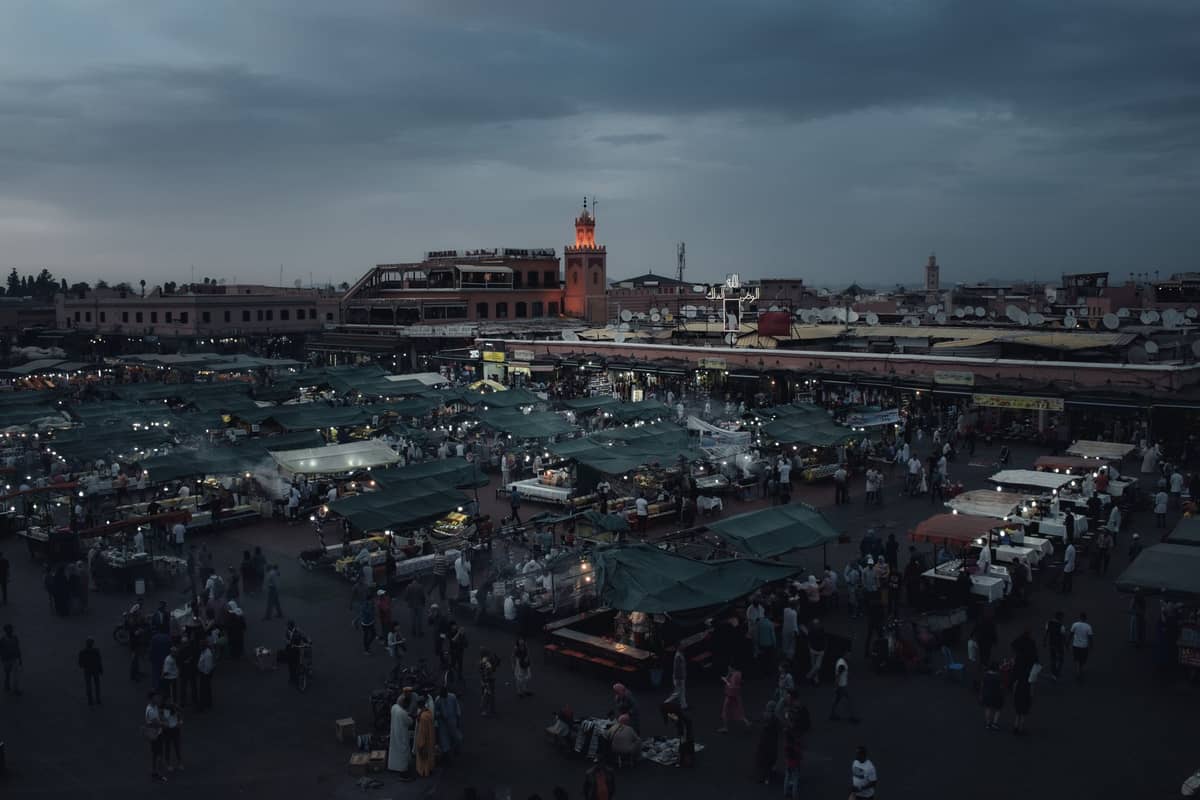
The food stalls on Jemaa el-Fna square are the most famous eating experience in Marrakech, and they are frequently misrepresented in both directions. They are not the finest food in the city, but they are also not a trap to avoid. They are a legitimately good, inexpensive way to eat grilled meats, snails in broth, Moroccan salads, and fried fish in the open air while watching one of the world's more extraordinary public spaces do its thing after dark.
Stalls number in the dozens and appear from early evening, reaching full activity around 9–10pm. The aggressive touting from stall assistants is real and can feel overwhelming on your first visit. A simple, firm 'no thank you' and continued walking works better than engaging. Once you choose a stall and sit down, the experience is generally smooth.
Typical costs run 30–80 MAD per person for a plate of kefta skewers, merguez, half a grilled chicken, or a tagine. A full spread for two including drinks sits comfortably under 200 MAD. The main thing to check: look at the displayed price list at each stall before ordering and confirm prices verbally if you are ordering anything not on the board. Disputed bills are the main complaint from travelers, not food quality.
⚠️ What to skip
A small number of Jemaa el-Fna stalls use high-pressure tactics and inflate bills after the meal. Always check the posted prices before sitting down, confirm individual item costs if you are unsure, and count your change carefully. This affects a minority of stalls, but it is common enough to mention.
- Grilled meats (kefta, merguez, brochettes) The safest and most consistently good option. Served with bread, olives and harissa.
- Snails in cumin broth (babouch) A Marrakech street food classic, sold from large pots for a few dirhams a bowl. Divides opinion, but worth trying.
- Moroccan salads Usually a set of three to five cold vegetable preparations, excellent as a starter.
- Harira soup A thick, tomato and lentil soup served with dates and chebakia pastry, especially popular during Ramadan evenings but available year-round.
- Freshly squeezed orange juice A Jemaa el-Fna institution. The juice carts on the square perimeter serve large glasses for 4–6 MAD. Do not skip this.
Where to Eat in the Medina: Reliable Options by Type
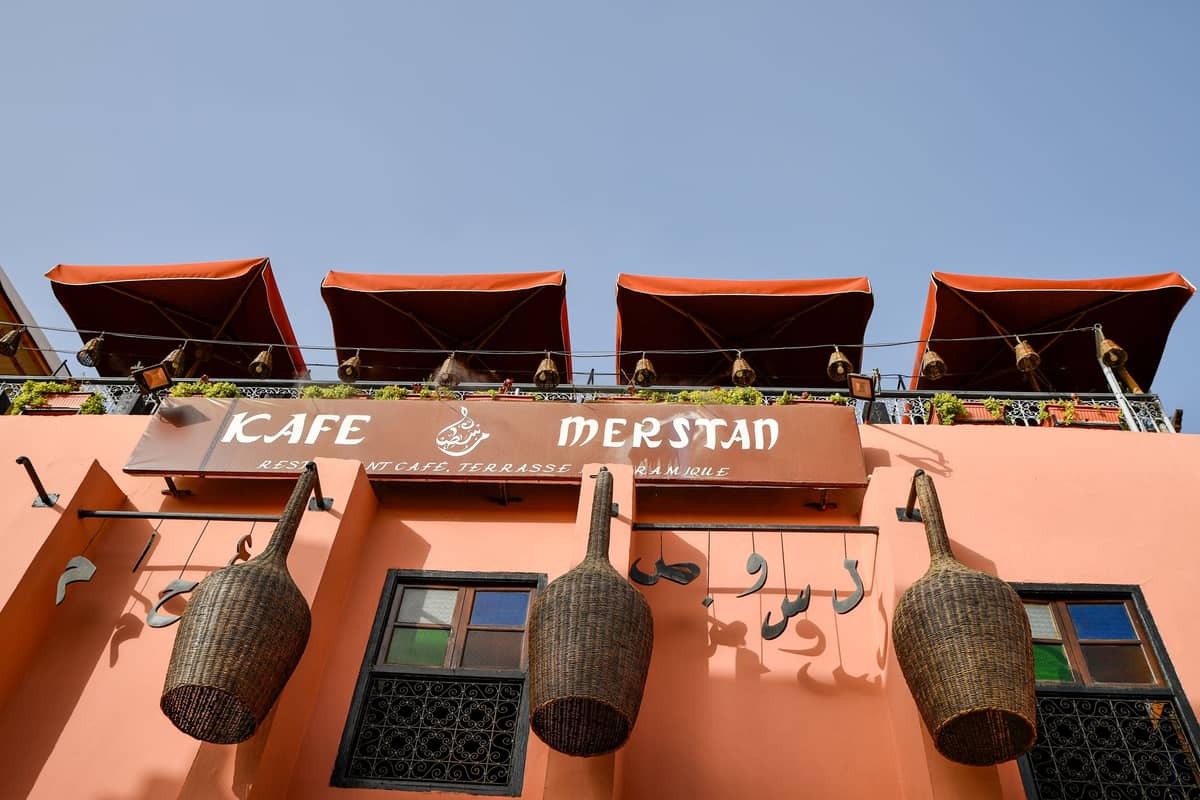
The medina is where you find the full spectrum of Marrakech food: workers' cafes, family restaurants, rooftop terraces aimed at tourists, and serious riad dining rooms that require advance booking. The concentration of restaurants around the Mouassine quarter and north of Jemaa el-Fna is highest, but quality is inconsistent. The restaurants immediately adjacent to the square tend to lean on location rather than food.
For traditional Moroccan food at a fair price, walk two to three minutes into the medina away from the square. You will find small spots serving tagine, couscous on Fridays, pastilla (the sweet-savory pigeon or chicken pie that is one of the most distinctive dishes in Moroccan cuisine), and bissara (a fava bean soup that is the standard cheap breakfast across Morocco). These places rarely have English signage; pointing at what others are eating works perfectly well.
The rooftop restaurant category is worth approaching with some skepticism. A handful are genuinely excellent, with good food and views that justify the price. Many others serve adequate food at mid-range prices primarily because the view is the product. Check recent reviews specifically mentioning food quality rather than atmosphere before booking a terrace lunch.
💡 Local tip
Friday is the day for couscous in Morocco. If you want the dish at its best, with a proper slow-cooked broth and vegetables, eat it at a Moroccan household-style restaurant on Friday lunchtime, not from a tourist menu on a Tuesday evening.
Gueliz and the New Town: A Different Kind of Eating
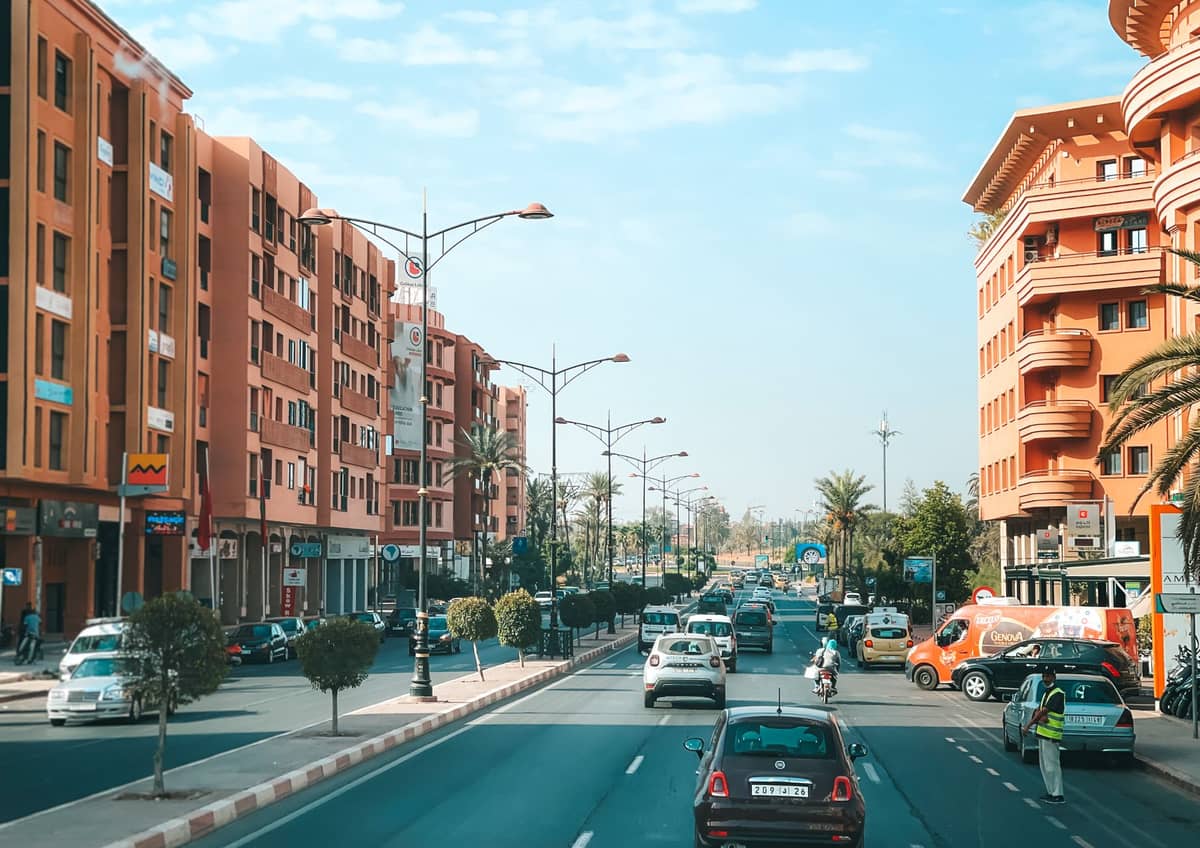
Most food guides for Marrakech focus almost entirely on the medina, which leaves Gueliz underrepresented. The new town has a genuinely good restaurant scene that is less theatrical but often more consistent in quality. You will find French-Moroccan brasseries, Italian restaurants, sushi, and a number of contemporary cafes where locals in their twenties actually eat. The atmosphere is less 'Arabian Nights', more 'any stylish North African city'.
For travelers staying in Gueliz or Hivernage, this is also where you find licensed restaurants serving alcohol without the complexity of navigating the medina at night. Al Fassia, one of the most respected traditional Moroccan restaurants in the city and run entirely by women, is located in Gueliz and is considered by many food-focused visitors to produce better Moroccan cooking than more famous medina establishments. Booking ahead is advisable.
Palace and Riad Dining: Worth the Price or Overhyped?
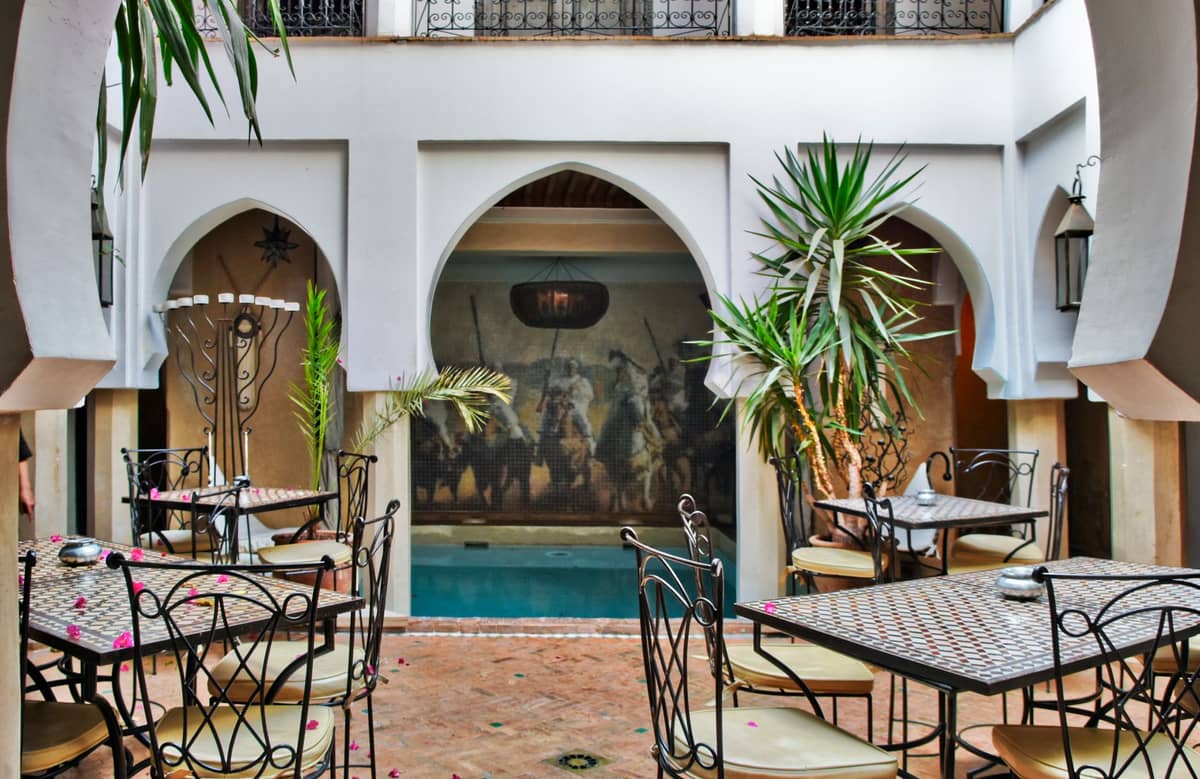
Marrakech has a tradition of grand riad restaurants that serve multi-course Moroccan feasts in ornate settings: zellige tilework, central courtyards with fountains, musicians playing Andalusian music. The experience is real and can be genuinely special. The food is variable.
In practice, the top-tier palace restaurants are priced for the experience as a whole, not purely for the cooking. At around 500–900 MAD per person, you are paying for the architecture, the theatre, and the occasion. If that is what you want for a special evening, several venues deliver it well. If you are primarily interested in the best Moroccan food in the city, you may find more technically accomplished cooking at a well-run mid-range restaurant at a fraction of the cost.
For those planning a special evening out, it is worth reading the Marrakech food guide for deeper context on Moroccan cuisine before you go. Understanding the difference between a properly made bastilla and a quick-service version, or what distinguishes a real preserved lemon tagine from a shortcut version, helps you calibrate expectations and choose restaurants more confidently.
✨ Pro tip
Book palace and popular riad restaurants at least 48–72 hours in advance during high season (March–May and September–November). Some well-known spots, particularly smaller riad dining rooms with limited covers, fill up faster than the hotel restaurants. Most accept bookings via their official website or WhatsApp.
Practical Details: Reservations, Alcohol, Tipping, and Ramadan
Reservations are not required for street food or simple medina cafes, but they matter for anything with a rooftop view or a reputation. During peak months, walk-in availability at popular mid-range restaurants in the medina can be limited by early evening. Most accept same-day bookings by phone or message; English is widely understood at tourist-focused restaurants.
Alcohol availability is an important planning factor. Traditional Moroccan restaurants in the medina, particularly smaller family-run places, are almost always alcohol-free. Licensed restaurants, hotel restaurants, and most contemporary venues in Gueliz do serve wine and beer. Wine is predominantly Moroccan in origin and ranges from serviceable to quite good. Expect to pay roughly 40–90 MAD for a glass of house wine at a mid-range licensed restaurant.
If your visit falls during Ramadan, eating patterns shift significantly across the city. Most restaurants remain open for tourists during the day, but local-facing cafes and street food activity concentrates heavily around the evening iftar meal after sunset. This creates a unique atmosphere at Jemaa el-Fna after dark during Ramadan that is unlike any other time of year. The guide to Marrakech during Ramadan covers the practicalities in full.
- Tipping: 10% is standard at sit-down restaurants where service is not included. At simple cafes, rounding up the bill is sufficient.
- Tap water: locals often drink it, but most visitors opt for bottled water (still widely available for 3–8 MAD at shops, more at restaurants). Avoid ice at very basic establishments.
- Dress code: no formal dress code at most restaurants, but modest clothing is appropriate in traditional medina settings. Shorts are fine at contemporary Gueliz venues.
- Vegetarian options: widely available at traditional Moroccan restaurants. Tagines and couscous dishes are frequently vegetable-based. Vegan options require more searching but exist.
- Opening hours: many medina restaurants do not serve lunch before around 11am–12pm and some pause service in the late afternoon. Evening service typically runs until about 10–11pm, later in summer.
Budget-conscious travelers will find Marrakech very manageable. It is entirely possible to eat well across three meals a day for under 150 MAD per person in the medina. The Marrakech budget travel guide covers this in detail, including how to find the worker's lunch spots that rarely appear on tourist maps but serve the best-value food in the city.
FAQ
Is street food in Marrakech safe to eat?
Generally yes, with reasonable care. The food stalls on Jemaa el-Fna and busy market streets serve large volumes of freshly cooked food, which means turnover is high and items rarely sit around. Stick to hot, freshly cooked items rather than pre-prepared salads or sauces that have been sitting out. Most travelers eat street food in Marrakech without any problems. Using bottled water for drinking is advisable regardless of where you eat.
What is the best area to eat in Marrakech?
For traditional Moroccan food, the medina — particularly the streets north of Jemaa el-Fna around Mouassine and the souks — offers the widest range at every price point. For contemporary dining, licensed restaurants, and a less touristy atmosphere, Gueliz is the better choice. Most visitors eat mainly in the medina and are satisfied, but a meal in Gueliz gives useful perspective on the wider city.
How much does food cost in Marrakech?
Street food and simple medina restaurants: 30–100 MAD per person. Mid-range restaurants: 150–400 MAD per person. Palace and fine dining restaurants: 500–900 MAD per person, with top hotel venues reaching 1,200 MAD or more. The range is wide, and both ends of the spectrum are accessible within the medina.
Do I need to book restaurants in advance in Marrakech?
For simple cafes and street food, no. For popular rooftop restaurants, well-known riad dining rooms, and anything with a good reputation, yes — especially during high season (spring and autumn). Same-day bookings work for less-famous spots; famous ones can be booked out days or a week in advance during busy periods.
Can I get alcohol with my meal in Marrakech?
Yes, but not everywhere. Licensed restaurants, hotel restaurants, and contemporary venues in Gueliz and Hivernage serve wine and beer. Traditional medina restaurants and street food are alcohol-free. If alcohol with your meal matters to you, check the restaurant's status before booking or look specifically for licensed venues in Gueliz.
Tickets & tours
Live prices and dates from our booking partner. If you book, we may earn a commission at no extra cost to you.
Planning a trip? Discover personalized activities with the Nomado app.